SUPPORT COPY: Your April 2026🐬 Mosquito Lagoon & Indian River Fishing Report
Published: Wed, 04/01/26
Updated: Wed, 04/01/26
Mosquito Lagoon & Indian River Fishing
Newsletter Issue # 201 April 1, 2026
Mosquito Lagoon and Indian
River:
Now that springtime is in full swing, the fishing is getting really good in the Mosquito Lagoon and Indian River. The water levels are down and the water is clear, which is great for sight fishing.
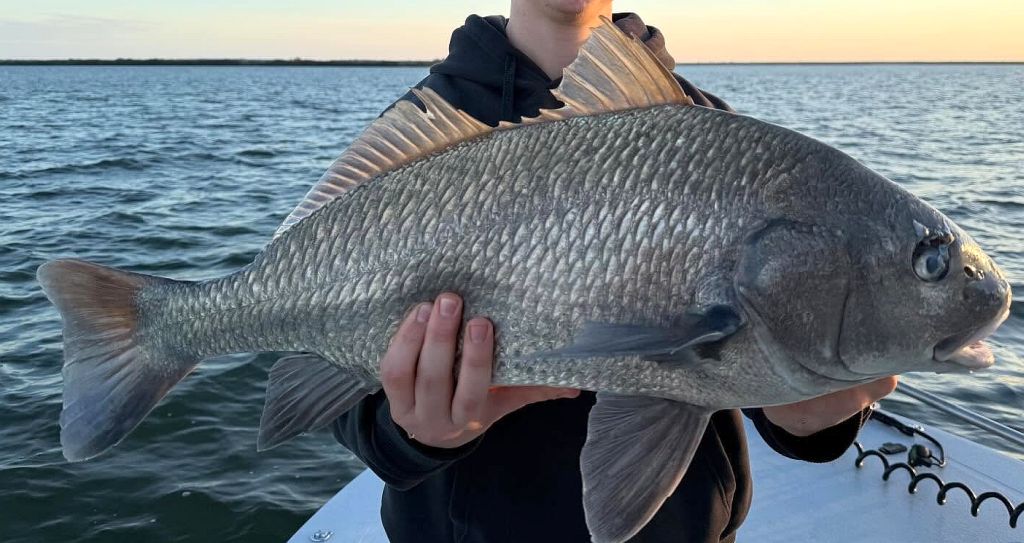
The black drum bite in all our lagoons systems continues to be "on fire" and the redfish are still schooled up and eager to eat.
In the Mosquito Lagoon the fishing guides are reporting huge schools of black drum (some
estimated at over 1,000 fish) tailing on the shallow grass flats in the early morning hours or schooling up in the deeper holes when the wind picks up.
In the Indian River from Titusville to Melbourne, the best bite is reported to be around the Max Brewer Bridge and the Jensen Beach Causeway. Some big black drum are being caught tight to just abouit any structure; particularly the oyster bars and bridge pilings in the river.
In the Banana River near Cocoa Beach and Merritt Island, the bite has been consistent for smaller "puppy drum" in the 5 to 15 pound catergory. The slot size fish are scattered mostly around the dock pilings and bridge fenders. Large schools
have been moving through the deeper channels in these areas.
With the April 1st full moon approaching, we can expect one last major push of big females moving into the shallows to spawn in all of these areas.
For big black drum, a fresh quartered blue crab is by far the preferred bait of choice. For slot-sized drum, most anglers prefer using live or frozen shrimp, or sand fleas.
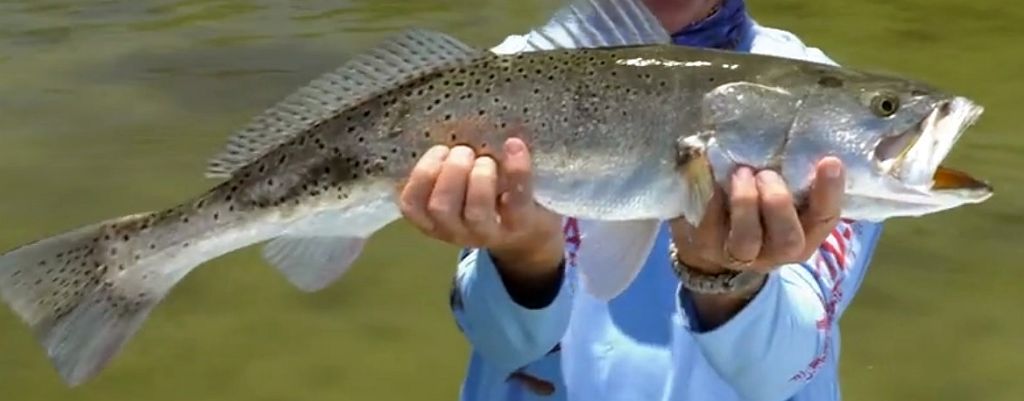
April is a prime month to catch gator sea trout in East Central Florida, especially on topwater
baits.
As the flats heat up, the seatrout will be feeding heavily before their spawning season which runs from May through late summer. During this same time period throughout our lagoon system, baitfish like pigfish, pinfish, croakers, mullet and mojarra start moving back into the seagrass beds to spawn. This convergence makes for some great topwater fishing.
Sea trout are low light hunters that feed best early in the morning and at sunset, which is the best time to cast topwater plugs like the Chug Bug, Badonk-A-Donk, Skitter Walk, Zara Spook, or anything resembling a baitfish to catch them.
As the water warms up, usually around 9:00 am, the topwater bite will die down and the fish will move into the deeper water along the drop offs adjacent to the flats.
This is when plastic swim baits like Creme's Spoiler Shad, D.O.A. Cal Shad Tails, and saltwater Shad Assassin baits can be used to get down to the fish.
Large baits over 6" will catch larger trophy size trout but 3″ to 5″ paddle tail baits will generally entice more bites, especially when some Pro-Cure Gel is smeared on the bait.
The Northern section of the Mosquito Lagoon near New Smyrna Beach is currently the hotest spot for "Gator" trout over 25 inches in our area.
Target the sandy potholes and light-colored spots in the middle of the grass flats where the larger trout often sit motionless waiting to ambush baitfish.
In the Indian River from Titusville down to Melbourne, you can find big trout along the deeper grass edges around any kind of structure in 3 to 5 feet of water.
As the sun warms the water throughout the day, the fish move into "skinny" water (less than 2 feet) to sun themselves.
The "No-Motor-Zone" in the Banana River is also holding solid numbers of larger fish in extremely shallow water where they are often mixed in with the schools of redfish and black drum.
During the winter months sea trout primarily feed on shrimp. Although the trout will still eat shrimp, the larger gator size trout are currently transitioning to a fish heavy diet. Natural colored 5 inch jerkshads, live pinfish or pigfish, and topwater baits work best for the bigger "sows.
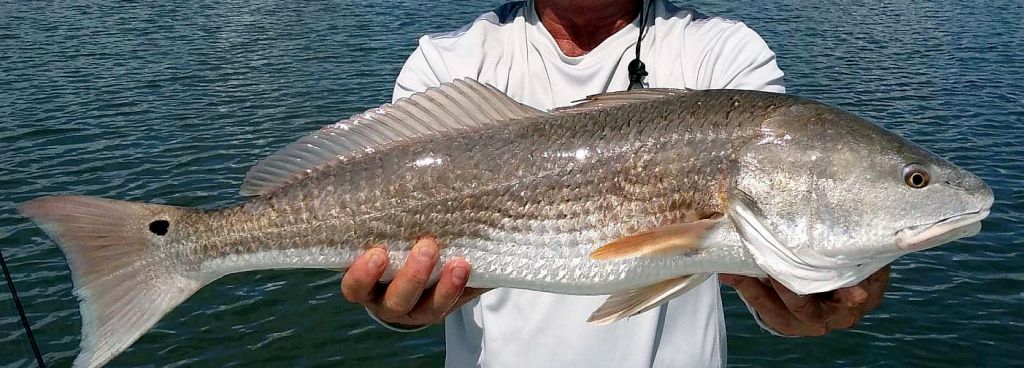
Redfish schools in the lagoon system are transitioning from their massive winter congregations into smaller, more active spring groups.
The Northern and central sections of the Mosquito Lagoon from George's Bar up to around J.D.s Fish Camp remains a top spot for
schools of 10 to 50 fish, with occasional pods of 200 fish or more still holding in the deeper sloughs and potholes during the cooler morning hours. Look for them in the shallow grass flats between New Smyrna Beach and the Kennedy Space Center
Schools of 10 to 50 fish are the norm right now, with occasional larger pods
of 200+ still holding in deeper sloughs and "potholes" during cooler mornings. Look for them in the shallow grass flats betweenNew Smyrna Beach and the Kennedy Space Center throughout the day.
In the Indian River from Titusville to Melbourne the redfish have already dispersed and
can be found around the oyster bars and the shallow grass flats. Fish in this area are often intermingled with large sea trout and sometimes black drum.
In the Banana River around Cocoa Beach, the bite for smaller slot size and "rat reds" is steady around the edges of the mangroves and docks. Undersize fish are
abundant in this area right now and are being caught mainly on live shrimp.
As the water warms you can find the fish aggressively tailing in the grass as they search for shrimp and crabs. On calm mornings you can often see the V shaped wakes the cruising reds make as they travel from one
area to another.
Gold spoons, 3 inch DOA shrimp, and topwater plugs are staples that will catch reds just about anywhere. For skinny water, unweighted or light 1/8th oz. jigheads, or small Creme paddletail baits work best.
Fly fishermen using tan or olive colored shrimp and crab patterns in size 2 to 6 have been catching some nice tailing reds in skinny water throughout the lagoon system.
The key right now is to be stealthy when sight fishing for redfish. The
water in the lagoon system is quite clear in most areas.
Although most of the fish in the lagoon system are in the 24 to 27 inch range, Bull Redfish over 40 inches are beginning to show up more frequently in the shallows as we head into April, especially in the northernmost section of the Indian River across from the Scotsmoor boat
launch.
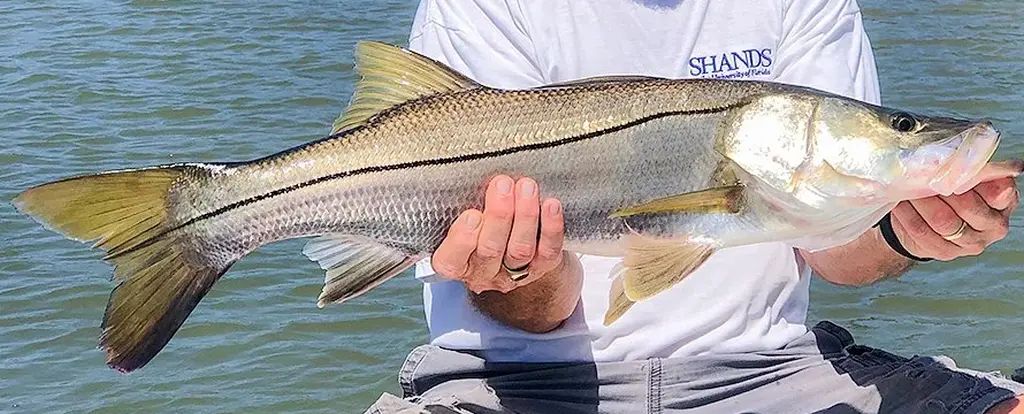
Although the snook in the northern backwaters of the Mosquito Lagoon took a pretty good hit during this past February freeze, they are still being caught around the sandy potholes on the flats as they sun themselves.
On sunny afternoons, look for snook in extremely shallow (1–2 feet) water over dark,
muddy bottoms or in the sandy pot holes. The fish are there to soak up the heat and will often hit a well presented fly or unweighted soft plastic bait.
In the Indian River, the snook bite is very consistent around the bridge and dock pilings, especially at night. The snook have been staging in these areas as the move
towards the inlets and are aggressively hitting live baits, jigs, and lipped diving plugs.
Live shrimp is currently the most reliable "go to" bait for dock or bridge fishing but DOA Shrimp, Vudu Shrimp, and white bucktail jigs have also been catching good numbers of snook. On calm mornings when the water temperatures hit the
70 degree mark, you can get explosive strikes on topwater plugs like the Skitter Walk and Zara Spook.
The night bite in most areas has been outperforming the day bite, especially around the fenders and shadow lines of the SR-520 and A. Max Brewer bridges. A fresh jumbo live shrimp tipped on a jig head is a hard bait to
beat for black drum, snook, redfish, and larger sea trout in any of these areas..
Along the beaches just inside of Port Canaveral, Ponce and Sebastian Inlets where there is a tidal influence; good numbers of snook up to 38 inches are being caught. Most of these fish are being caught on live shrimp but croakers, spots, and most other live baits are also working well.
Playalinda and Area Beaches:
The pompao, whiting and black drum bite at area beaches
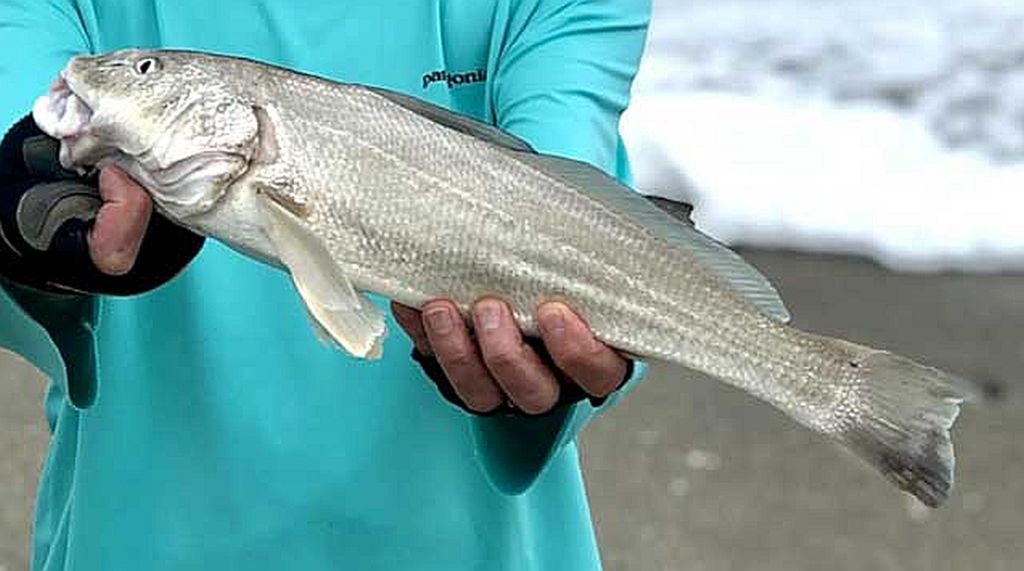
has been just short of phenomenal for the past couple of weeks or so. For whatever reason, whiting migrate en masse through Central Florida beaches during April and hang around all month feeding on sand fleas, coquina clams, and other small crustaceans.
Loca surf fishermen have been reporting consistent catches of keeper
pompano and so called "bull" whiting on sand fleas, small pieces of live shrimp, and clam strips with and without fishbites. Ideal conditions for whiting and pompano are a clean, greenish colored surf with waves in the two to three foot range.
Standard two and three hook pompano rigs with a variety of colored floats are taking
the majority of fish along with some nice size juvenile black drum. Personally, I prefer a two hook surf rig with a 20 pound fluorocarbon leader, #1 short shank live bait hooks, and a 3 oz pyramid or Sputnik sinker to hold bottom.
During heavy surf conditions, clam flavored fishbites tipped over a live or dead sand flea
has become one of the baits of choice for many surf fishermen in our area. The sand flea, fishbites tipped combo stays on the hook longer and keeps the sand flea from rotating off the hook during a cast or in a rough surf.
Big whiting much prefer live baits, not the freezer burned stuff. Fresh sandfleas or freshly peeled shrimp are by far the best baits for withing; with quality frozen shrimp as a good second choice.
Surf anglers fishing with live mullet or cut baits this month can expect to catch bluefish, Spanish mackerel, and a variety of sharks off the beach.
Right now farther out from the sand in the first troughs and
just past the breakers; some sizeable schools of bluefish in the 15 to 25 pound category, along with some nice schools of Spanish mackerel are meandering down the beach.
Surf anglers with long rods can occasionally target these fish by tossing small silver spoons, Gotcha plugs, Lhure Jensen spoons and Mirrolures past
the breakers.
When the bait pods are thick in the surf and the Mackerel and blufish come in to feast on them, artificial baits can be deadly.
Farther south
of us around the worm rocks off the beaches at Patrick Space Force Base, surf fishermen are making good catches of bull whiting, palmetto, snook, juvenile black drum, and some keeper pompano. Sand fleas and live shrimp are baits of choice around the Treasure Coast with fish gum.
As water temperatures continue to warm up
in the surf, the bite for whiting, croaker, juvenile black drum, bluefish and Spanish mackerel is expected to improve dramatically, especially for whiting.
Shark fishing enthusiasts will find a nice variety of larger species in the surf and just out past the breakers this month. Blacktips, bull harks, hammerheads, and a lot of
large sandbar sharks have been wandering closer to shore just outside of the breakers.
Chunked baits, live baits, and fresh shrimp are all good baits for juvenile blacktips.
For larger sharks, most anglers use large chunks of bonito, tuna heads, stingray wings, or whole fish carcass for bait on large circle hooks with wire leaders and stout terminal tackle.
When specifically fishing for sharks from the beach or from land; remember to complete the free FWC land based shark course
and carry the permit on your person
To get the permit, you need to take an educational course at MyFWC.com/SharkCourse which consists of a quiz and some educational
videos. After you create an account and pass the test, (which you can re-take if you fail) your certificate will have an ID code unique to you.
Port Canaveral Nearshore and Offshore:
Although the celebrated "March Madness" at Port Canaveral has concluded, lots of cobia are still migrating into our area.
The cobia migration along Florida’s Space Coast peaks in the spring. As nearshore and
offshore water temperatures climb into the 68°F to 75°F range, cobia begin to move northward into our area from southern Floridawaters. Better numbers of cobia normally begin showing up off Cape Canaveral between late March and early May.
With our nearshore water
temperatures now in the 72 to 75 degree mark, we are seeing better numbers of cobia shadowing the manta rays and holding around the navigation buoys and towers, channel markers, color breaks and areas where baitfish congregate.
Right now nearshore anglers can find both cobia and tripletail hanging around the marker buoys,
weed lines, and other floating near shore structure out of Port Canaveral. The fish should continue to be with us in even better numbers throughout the month.
With the West wall of the Gulf Stream currently around 34 nautical miles east of Port Canaveral,
anglers willing to endure the recent wind conditions are reporting a highly productive bite rfor Mahi, blackfin tuna, and sailfish.
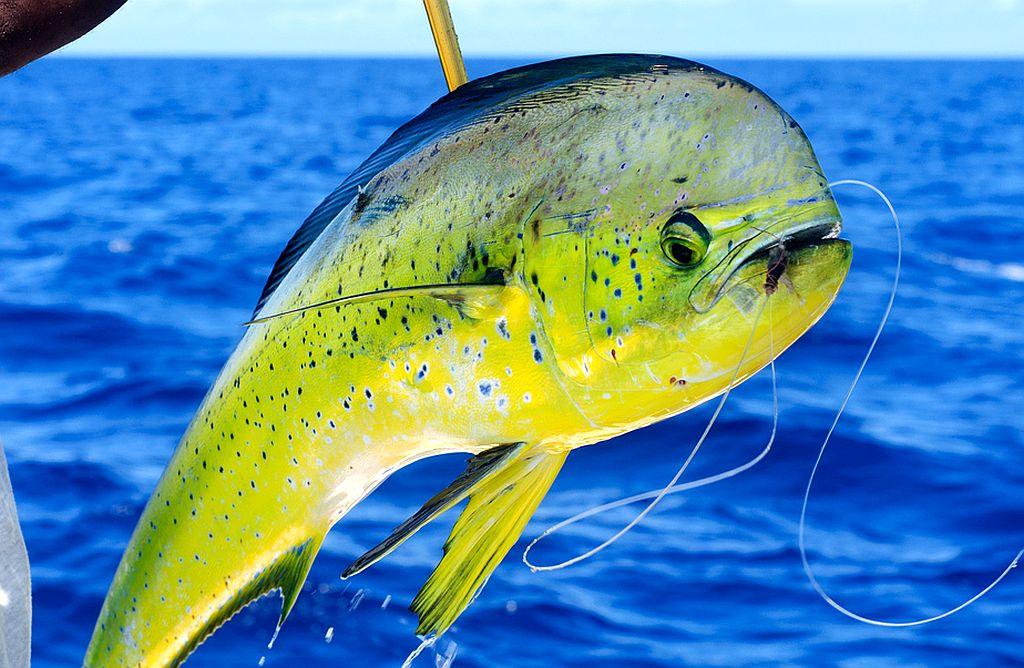
Dolphin fishing peaks this month in the Gulf Stream off Central Florida. The Southeasterly trade winds push sargassum, debris, and flying fish up against the western wall of the current,
creating a virtual highway for mahi. A "hard edge" formed by the recent swells and dirty inshore water is also helping to make the offshore mahi easy to locate.
Mahi are notoriously short strikers which is why trolling spreads for mahi are generally with small baits. Small ballyhoo are easily swallowed by the fish and a couple of small naked lures behind a bird or teaser usually makes for easier hookups. Because dolphin are curious fish,
a daisy chain of plastic squid, birds, or "bowling pins" is always helpful in getting the attention of these aggressive green monsters.
The bite for sailfish and wahoo has also been very good along the edges of the Gulf Stream and the deeper reef lines. Some nice blackfin tuna are being caught mixed in with the trolled
spreads, particularly near the 21 and 27 Fathom Ridges.
For those anglers not able to make the full run to the Gulf Stream, the intermediate reefs are providing steady action for king mackerel. On the 8A and Pelican Reefs, the kingfish run is in full swing with some "smoker" kings up to 40 lbs being reported recently.
Slow trolled frozen minnows or live baits on stinger rigs over the reefs will generally produce kingfish in the 10 pound range. Larger kings are normally caught closer to shore during the spring months.
Right now trolling dead cigar minnows or ballyhoo has been more consistent than live baits, which have been difficult
to find recently due to the rougher seas.
As we progress into the summer months, the bite for both mahi and kingfish on the 70 to 90 foot reefs will continue to improve
After being virtually non-existent in our waters for almost a decade, the black sea bass are beginning to make a comeback off Port Canaveral and Sebastian Inlet.
Black sea bass are one of the most aggressive bottom species and are being caught in water as shallow as 50 feet; out to the 90 foot reefs.
The fish will usually pounce on a bait before any snapper has a chance. Chicken rigs with circle hooks and sliding sinker rigs both work well on lighter tackle for these fish. Larger fish will occasionally hit jigs tipped with a strip bait or squid.
In federal Atlantic waters, the fish must measure 13" total length
with a 7 fish per person bag limit.
Bottom fishing out of Port Canaveral this month around the wrecks and reefs should be good for a variety of species includiong triggerfish, lane snapper, mangrove snapper, mutton snapper, vermillion snapper, black sea bass, amberjack, cobia, and African pompano. Squid, sardines,
pilchards, chunked reef fish, and live baits all work well on bottom species. Keeping a pitch rod handy while targeting bottom fish is always a good idea in the event a cobia shows up.
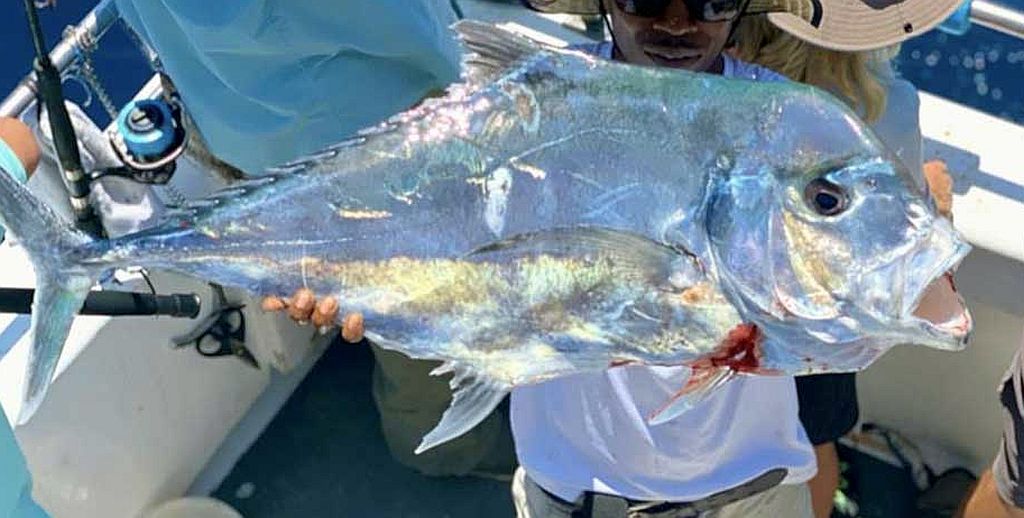
Some bottom fishing anglers specifically target 20 to 40 pound African pompano this month with white bucktail jigs, butterfly jigs, or flashy live baits suspended 20 to 30 feet off of structure in 120 to 300 feet of water.
Nearshore shark fishing is still providing nonstop action for everybody and has been on fire for hammerheads, bulls, blacktips and plenty of larger sandbar sharks. The wrecks in the 80 to 120 foot depths are also holding some very large goliath groupers.
Port Canaveral and all of the inletsis a "hot zone" right now for massive schools of 70lb plus black drum ("Big Uglies"). Schools were reported last week just outside the Port and near the jetties as they move through during their spring spawn.
Haulover Canal:
The bite for black drum and redfish in Haulover Canal has been relatively consistent for anglers fishing with sections of live blue crab and chunks of fresh cut ladyfish or mullet for bait.
Anglers tossing live shrimp around the bridge pilings are still catching some keeper mangrove snapper and an occasional slot size black drum.
Boaters fishing the deep holes
at the entrances to the canal are reporting catches of black drum and redfish on select jumbo shrimp, half of a blue crab, live pinfish, and chunk baits.
Many anglers fish the banks of the canal for sea trout and big snook. Your best bet for catching a big snook or gator size speckled sea trout is to toss a live jumbo
shrimp tight along the banks under the mangroves.
Shrimping at Haulover Canal should be ramping up this month with some good pulls of jumbos expected. Night shrimping along the banks of the canal is usually very productive when the wind generates a decent current.
Unlike the smaller shrimp that are generally caught in the vacinity of Oak Hill; Haulover shrimp are consistently much larger.
Anglers targeting the bull redfish and oversize black drum in the canal gear up with heavy rods, 30 to 60 pound Power Pro or other brand, 30 pound and heavier fluorocarbon leaders, 8/0 circle hooks, and enough weight to hold bottom. The braid is more forgivng to abrasion from the coquina.
Don't forget to check out the fishing deals on the link below.