SUPPORT COPY: Your May 2025🐬 Mosquito Lagoon & Indian River Fishing Report
Published: Thu, 05/01/25
Updated: Thu, 05/01/25
Mosquito Lagoon &
Indian
River
Fishing
Newsletter Issue # 190May 1, 2025
Mosquito Lagoon and Indian River:
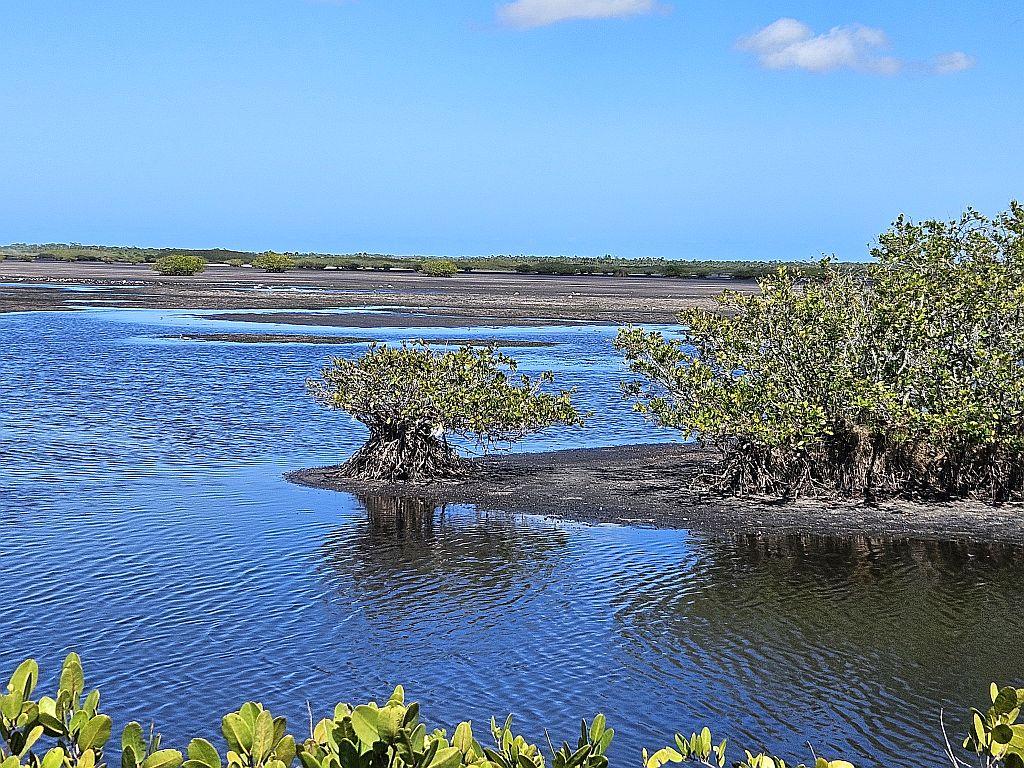
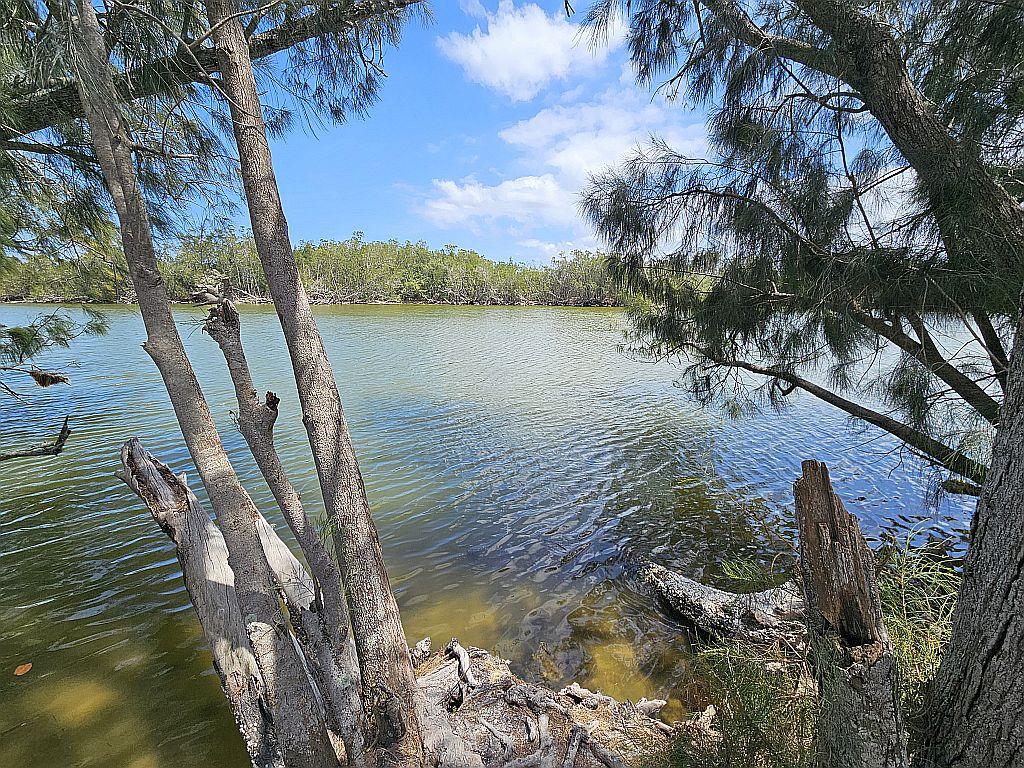
Right now the water levels in the Mosquito Lagoon and Indian River are way down and the water is
clear enough to sight fish. The April showers we were expecting never panned out to the extent expected.
The waters in the mud flats around Gator Creek, East Gator Creek, Peacocks Pocket Road, Bio Lab Road, and other areas in the Merritt Island National Wildlife Refuge are now mostly dried up.
The good part about this scenario is that the fish are concentrated in
what little water remains. If you can find where they are at, it's like shooting fish in a barrel or fishing in a virtual fish hatchery.
If you are fishing the Mosquito Lagoon, you can find redfish under the mangrove branches off the canals. If you are fishing the grass flats, the reds are around the schools of mullet;
along with sea trout, black drum, and an occasional snook.
Many of the guides have their clients casting a 5" saltwater shad assassin in the Gold Pepper Shiner, Silver Mullet, or New Penny colors rigged on a wide gap worm hook with a Penn battle IV 3000 size reel on a 7 ' medium action Penn rod for these redfish.
Right now in the lagoons, the biggest redfish are generally found in the deeper channels of the intercoastal and near shore along the beaches.
Around our area, cut baits work extremely well on big redfish and they are really simple to catch. Both inshore and near shore reds can be caught on a cut pinfish, cut mullet, or cut ladyfish on a knocker rig or sliding sinker rig with a 6/0 or 7/0 circle hook.
When using live or cut baits, you can expect to catch redfish anywhere from 15" to 50".
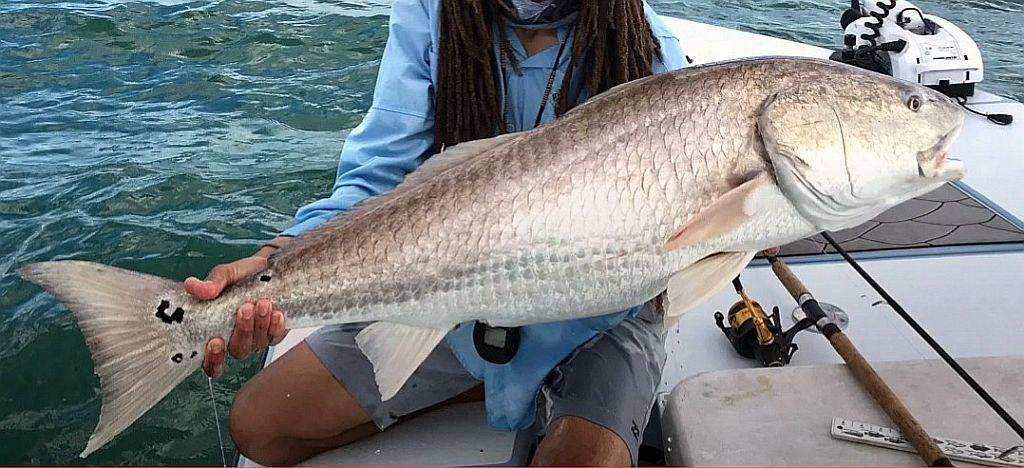
Most of the fish inshore are commonly less than 30". Bull reds up to 50" like the one below are now being caught offshore, along the beaches, and along the inlets.
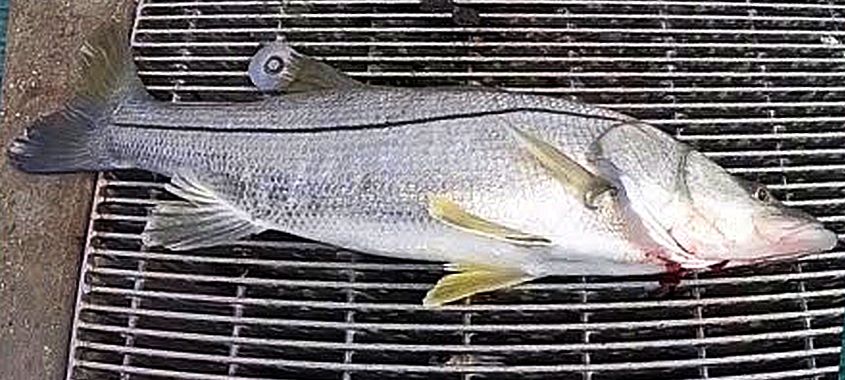
The snook bite this past week has been extremely good and is expected to remain so throughout this month.
In the backwaters, the fish have been
congregating around ambush points near the schools of baitfish in the shallows and close to the mangrove roots. Freelined jumbo shrimp or shrimp on a wide gapped jig head works well on these fish.
Many areas in the Mosquito Lagoon, around Melbourne, EuGalle, and Sebastian that have plenty of mullet or greenies
schools are holding good size snook around structure closest to the baitfish.
A 5" assassin soft plastic jerk bait in the pilchard color or a top water chugging plug with a black top has been working really well to get these snook to bite.
The black drum bite in the lagoon system is still very good.
Black drum in the 8 pound plus category can be found in smaller schools along with redfish and in smaller pods .
The best bait to catch them with right now is with a live shrimp either freelined or fished on a jighead.
On sunny days with good site fishing conditions, many anglers target them with soft plastic baits smeared up with Pro Cure or some other scent, and fly fishermen with flies patterns that resemble a shrimp or crab.
Bank fishermen in the Titusville are have been
catching black drum and redfish on live and dead shrimp around the causeway, under the bridge, around the dock pilings, and the dropoffs in the river.
Despite the dried up mud flats along Gator Creek, Catfish Creek, Pumphouse Road, Bio Lab Road, Patillo Creek and other areas in the
Merritt Island National Wildlife Refuge around Titusville; black drum, rat to slot size redfish, and spotted sea trout are still being caught around the shorelines and dropoffs. Single fish and small pods of drum travel the shorelines mostly in the mornings and close to dusk where they are being caught mostly on live shrimp.
The mud flats along Gator Creek and East Gator Creek are almost dried up.
What little water remains has the fish concentrated into small areas making them easy targets for anglers tossing small plastic Creme, or D.O.A. paddletail baits. Slot and under size redfish, sea trout, and black drum are chasing glass minnows and mud minnows in these areas and can be caught in the early morning and late afternoon hours on those baits.
May is a good month to target pompano in the river system.
Schools of spawning Pompano like to hang out around the spoil islands and sandy or shell strewn flats where they forage for tiny clams and crustaceans. The pompano can also be found following stingrays, sharks, or
manatees that stir up the bottom unearthing the mollusks that they feed on.
One of the best ways to locate river pompano is to slowly cruise along the deep edge of a point, flat, or spoil island and watch for pompano skipping out of the boat's wake. When you spot a "skipper", immediately stop the boat and fan cast the area
with live sand fleas or a small pompano jig.
Pink or yellow banana style jigs or small shrimp imitations work well when hopped off the bottom. Hopping the jig or bait is important to create a small puff of sand that attracts the fish.
May is still a good month to catch gator sea trout in East Central Florida, especially on topwater baits.
The early morning hours, late evenings, and at night is when big gator sea trout can be found following the bait pods or mixed in among the redfish or black drum on the flats.
This is when the fish become prime targets for anglers tossing topwater lures like the Chug Bug, Badonk-A-Donk, Skitter Walk, Zara Spook, or anything resembling a baitfish.
During daylight hours as the waters warm up and the topwater bite dies down the fish move off the flats into the deeper water
along the drop offs adjacent to the flats.
This is when plastic swim baits like D.O.A. Cal Shad
Tails, Creme's Spoiler Shad, and saltwater Shad Assassin baits can be used to get down to the fish. Normally 3″ to 5″ paddle tail baits will get more bites, especially when some Pro-Cure Gel is smeared on the bait, but baits over 6" or more will catch larger trout.
The Sheepshead bite has slowed down a bit but they can still be found around the bridge pilings, sea walls, coquina outcroppings, and rocky jetties in our area. The fish that are being landed right now are smaller but they still taste great on the table.
Playalinda and Area Beaches:
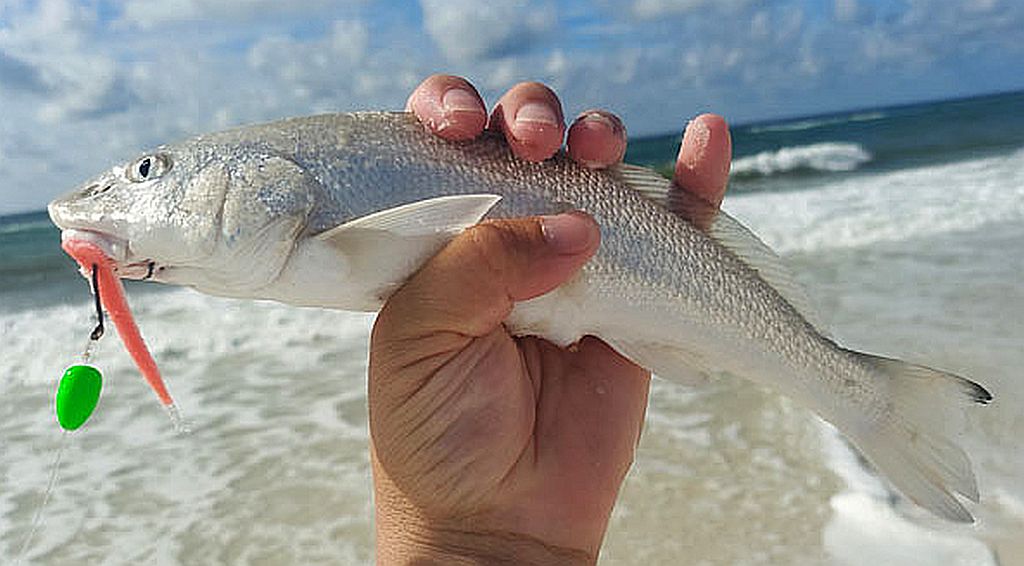
Anglers at Playalinda using live sand fleas, sand fleas tipped with fishbites, and small pieces of shrimp on standard 2 and 3 hook pompano rigs are still catching whiting and a few late season pompano in the surf.
Beginning this month, the surf fishermen
who have been targeting pompano and whiting will slowly begin to shift their focus to targeting whiting, croakers, jacks, and palometas which are more available during the warmer months.
For the past few weeks, surf fishing has been hit or miss in our area. Successful outings were dependent on what tides you fished and where
the southeast winds pushed the dirty water, weeds, and flotsam.
The surf anglers who were lucky enough to find some clear water, have been landing some nice size whiting, juvenile black drum, margates, a few pompano, and some snook by anglers using live baits and lures.
Two and three hook pompano rigs with orange, yellow or pink floats have been getting
the most action lately, and depending on the waves and current; nothing more than a 4 or 5 oz pyramid sinker should be needed to hold bottom.
Although sand fleas are usually the bait of choice for most surf fishermen, the best bait for the past few weeks has been small, peeled, thumbnail pieces of fresh dead or freshly frozen
shrimp. If you don't use small pieces of peeled shrimp on your rigs, the fish will usually clean your hooks before you see the bite. In addition, larger baits fly off your hooks much more easily than small baits when you make longer casts.
Clam flavored fishbites tipped with live or dead sand fleas was the bait of
choice for many surf fishermen in our area during heavy surf conditions. The fishbites stay on the hook and keep the sand flea from rotating off the hook.
South of us in the Cocoa and Melbourne area, surf fishermen swear that freshly frozen Blue Magic shrimp from Florida Shrimp Company catches more fish than brown shrimp or
wild caught species. Not sure if we believe it but fresh baits do make a big difference in the bite.
Anglers fishing live and cut mullet this month can expect to catch bluefish, Spanish mackerel, out of season snook, jacks, and a variety of sharks off the beach.
These species can also be caught by surf fishermen throwing small silver spoons, Gotcha plugs, Lhure Jensen spoons and Mirrolures past the breakers or into the troughs.
Shark fishermen this month will still
find a nice variety of larger sharks out from the surf. Blacktips, bulls, hammerheads, and large sandbar sharks occasionally meander near shore just outside of the breakers.
Chunk baits, live baits, and fresh shrimp are good baits for smaller blacktips.
For larger sharks most anglers have been using
Large chunks of bonito, fish heads, stingray bodies or wings, and fresh fish carcasses are all good baits for larger sharks. Wire leaders, large circle hooks, and stout
tackle are the norm for land based shark fishermen.
The free FWC land based shark course permit must be carried on your person when fishing for sharks from the beach.
To get the permit, you need to take an educational course at MyFWC.com/SharkCourse which consists of a quiz and some educational videos. After you create an account and pass the test, (which you can re-take if you fail) your certificate will have an ID code unique to you.
Port Canaveral Nearshore and Offshore:
Today kicks off the grouper season in Atlantic state and federal waters.
Along
our coast shallow water species like back, gag, red, and scamp grouper can be found on the reefs, ledges, and any structure in the 80 to 300 foot depths.
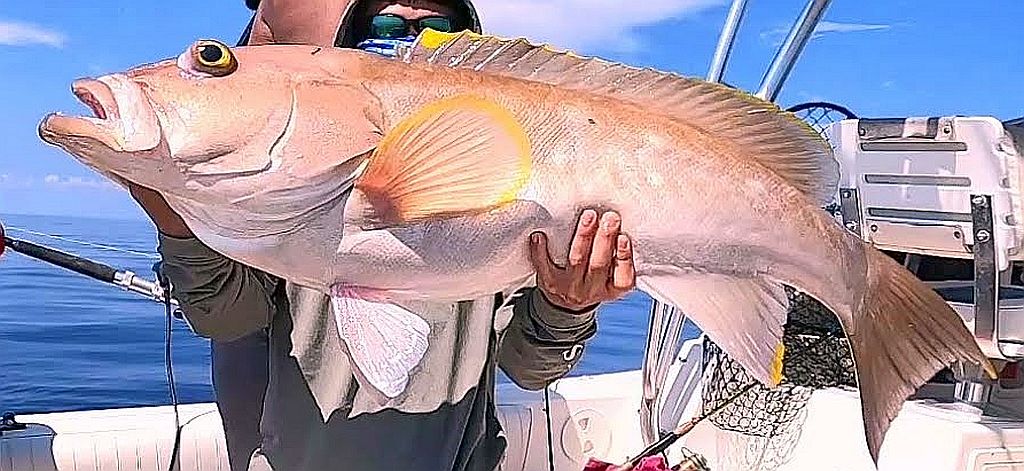
Deep water snowy grouper in the 500 foot and deeper depths, can be harvested by deep droppers until June 30th. while yellowedge groupers (below)
can be harvested year round.
When you get on a good grouper spot, lean toward fishing with large baits like blue runners, live pinfish, big grunts, butterflied whole menhaden, or wide bodied butterfly jigs. Smaller baits will usually get snatched up by the red snapper.
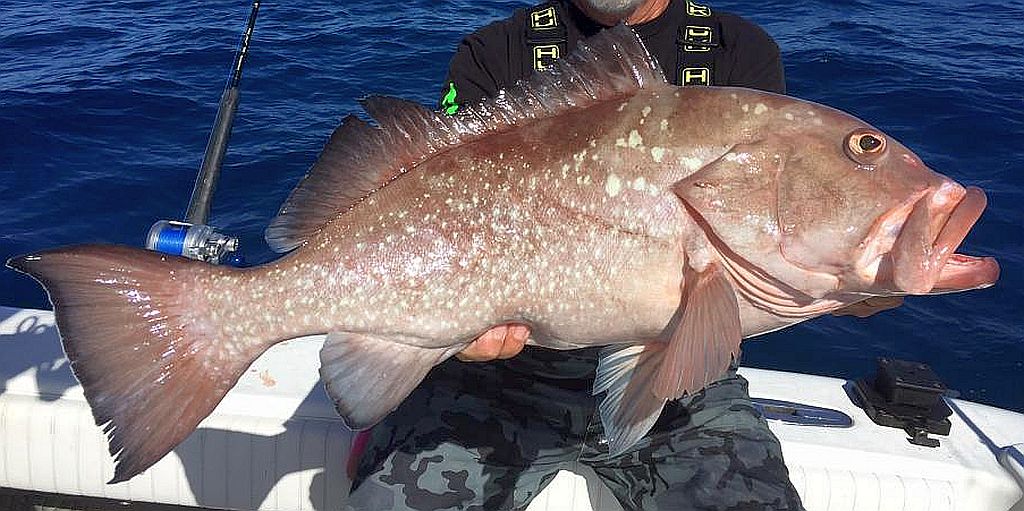
Out of Port Canaveral this month, Red Grouper will be the best bet for many offshore anglers.
Although they are found in waters at depths up to 200 feet; most fish are caught closer inshore on the 60 to 100 foot reefs. Pound for pound Red Grouper are probably
the best fighters of the shallow water groupers, but they only grow up to 30 or 40 pounds in size. Most fish caught will be perfect table size; 10 to 12 pounders.
A crab or jumbo shrimp fished on a lead head jig works especially well on these fish but dead sardines, grunts, pinfish, and baits meant for other groupers will all work on red groupers.
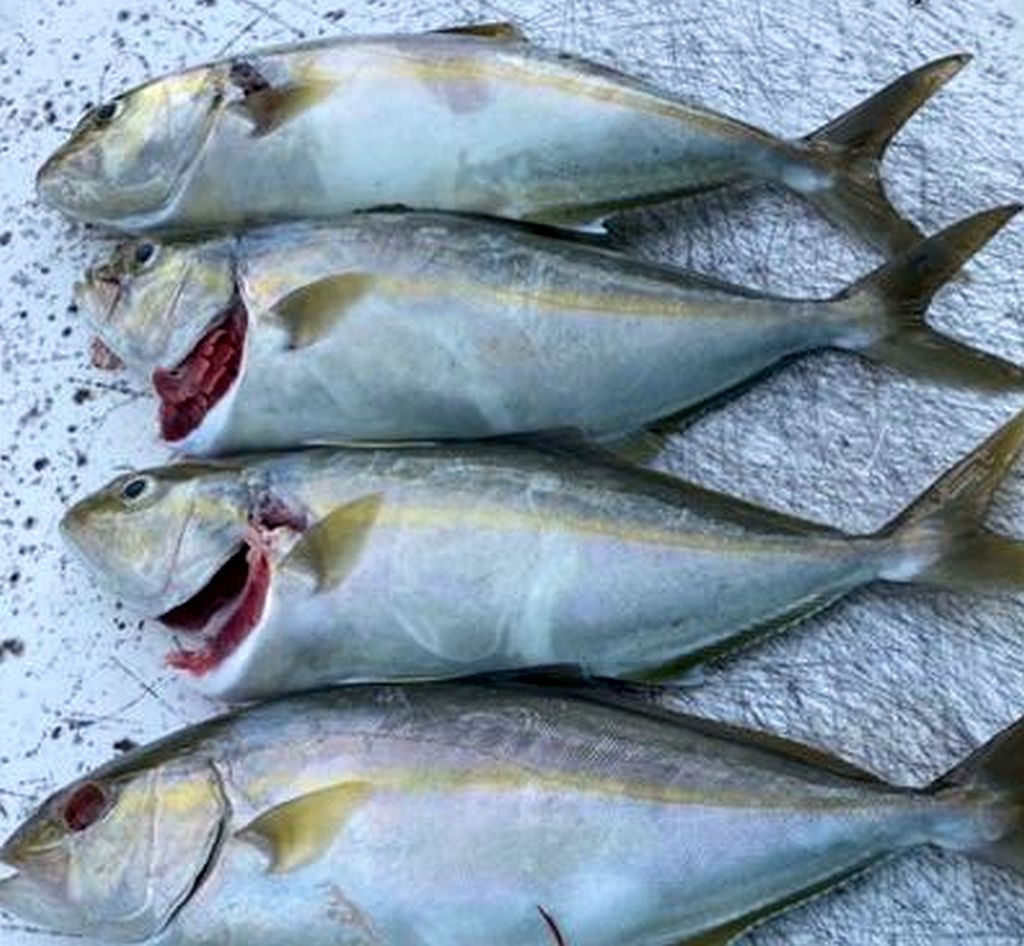
Closer to the beach on the 160 to 240 foot reefs, the migration of banded rudderfish or Amberines (below) commences this month.
Amberines, often confused with juvenile amberjack, are a close relative to Pacific yellowtail that is sold in Japanese sushi restaurants as hamachi.
Amberines can be found from mid water down to about 20 feet off the bottom around natural ledges with sharp relief. They are easily caught with small speed jigs, bucktails, cut baits,
and smalllive baits.
Cut through their gill rakers to bleed them and ice them down immediately after landing for some incredible tasting sushi.
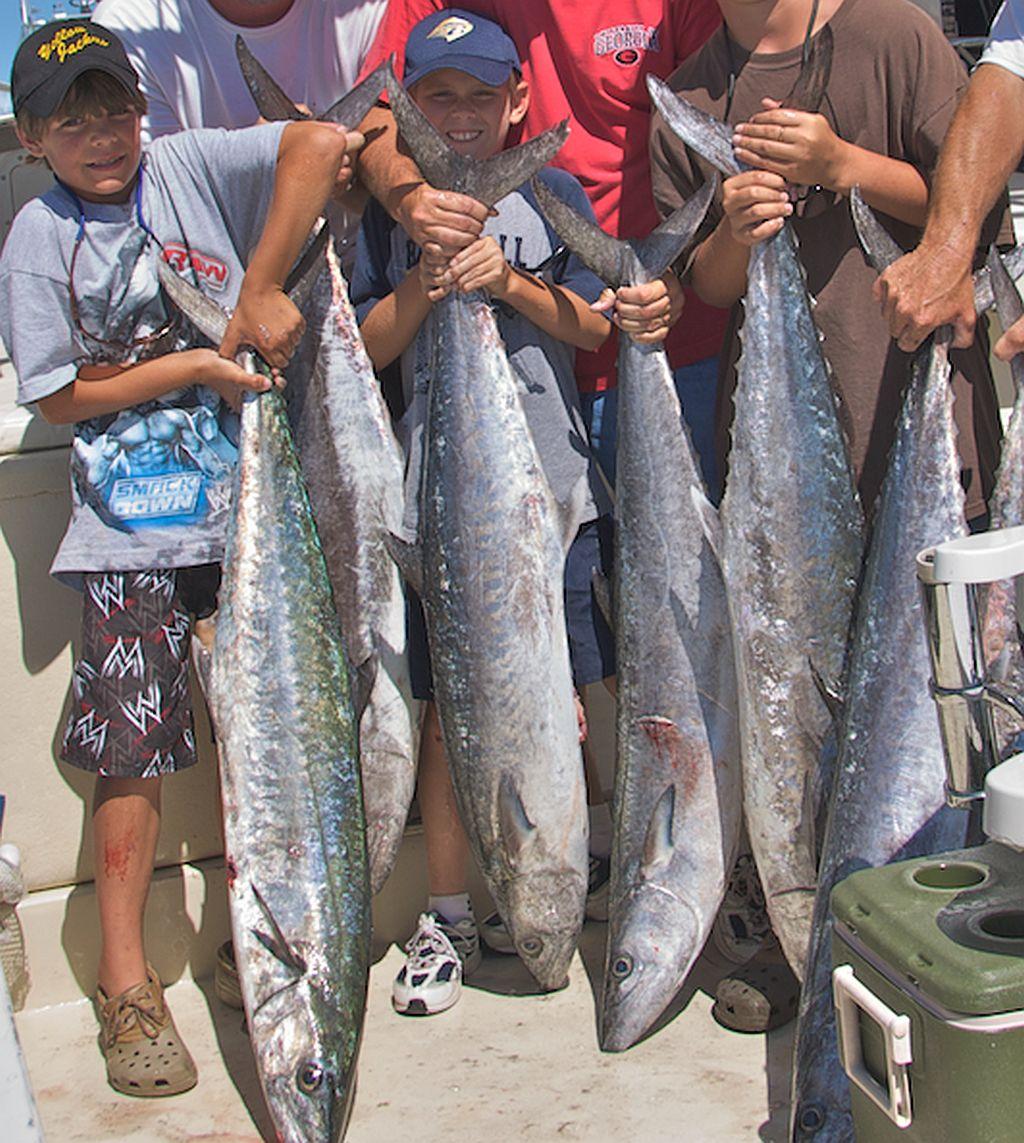
King mackerel anglers slow trolling offshore are targeting fish in 65 to 90 feet of water. Right now just about any structure at these depths seem to be holding good numbers of kingfish.
Live pogies, live pilchards and live greenies are the top baits but frozen cigar minnows, what we call "spinning minnows", rigged on a 2 hook stinger rig have also been working well if you don't want to find and catch your own live baits.
Most of the king mackerel caught are running about 10 to 15 pounds, but a few anglers have been getting fish up to 20 pounds. Larger kings are generally caught closer to shore during the spring months.
The kingfish bite on 8A, Pelican,and the other 70 to 90 foot reefs in our area will continue to improve well into the summer months.
The dolphin run is also really starting to pick up in our region. The dolphin are eagerly striking live and cut baits when you find them around floating objects.
Offshore anglers trolling around temperature breaks and rips, especially those associated with the western
edge of the Gulf Stream have been getting good numbers of fish.
Green and Yellow, Blue and white, or red and black colored trolling skirts or a small naked ballyhoo seem to be working best for dolphin right now.
Most of the fish caught are running 4 to 8 pounds, but this time of the year there are also a few dolphin out there in the 15 pound class that can grab your bait.
As nearshore and offshore water temperatures climb into the 68°F to 75°F range, cobia begin to move
northward from southern Florida into our area region.
Good numbers of cobia usually arrive off Cape Canaveral between late March and early May.
With
water temperatures now hitting the 78 degree mark, greater numbers of cobia are being seen shadowing the manta rays and converging around the navigation buoys, towers, channel markers, color breaks and congregations of baitfish nearshore.
Cobia in our are respond well to a variety of live and artificial baits.
May is when offshore chicken rigging is on fire for lane snapper, mutton snapper, vermillion snapper, mangrove snapper, triggerfish, grouper and an occasional cobia. Squid, sardines, pilchards, chunked reef fish, and live baits all work well on bottom species. Having a rigged pitch rod handy is always a good idea when targeting
bottom species in the event a cobia shows up.
Haulover Canal:
The black drum and
redfish bite in Haulover Canal is still pretty consistent for anglers fishing with sections of blue crab and large chunks of fresh cut ladyfish or mullet.
Anglers fishing the bridge pilings with live shrimp are still catching mangrove snapper and a few slot size drum.
Anglers fishing a live jumbo shrimp along the banks of the canal this month still have a good chance of
hooking up with a big snook, however, they are now "catch and release".
Serious bank fishermen who target bull reds and black drum in the canal have learned to gear up with heavy rods, 30 to 60 pound Power Pro, 40 pound and heavier fluorocarbon leaders, 8/0 circle hooks, and enough weight to hold bottom. The rig gets the fish in fast and keeps
breakoffs to a minimum.