SUPPORT COPY: Your February 2025🐬 Mosquito Lagoon & Indian River Fishing Report
Published: Sat, 02/01/25
Mosquito Lagoon & Indian River Fishing
Newsletter Issue # 187
February 1, 2025
Mosquito Lagoon and Indian River:
Although the blast of arctic air that moved into Central Florida last week adversely affected the fishing in the shallow waters of the Mosquito Lagoon and north Indian River, the bite is beginning to pick up.
The freezing temperatures we experienced from north
of New Smyrna down to Melbourne, Fl. put the snook in our area into a state of shock; which is totally understandable.
Most of the snook and some sea trout moved into deeper water where they remain until the water temperatures began to warm up again. These deeper water fish can be caught on lighter tackle with live
baits and small soft artificial plastic lures fished very slowly.
Although the water temps in the northern Mosquito Lagoon and Indian River were in the 55 to 59 degree range, today they are 59 to 61 degrees and should be back to around the mid 60’s by the time you read this report.
A warming trend that should raise the water temperatures into the 65 to 66 degree range is in the forecast this week for Central Florida that should greatly improve the bite for all our inshore species.
The
redfish, sea trout, black drum and snook have all been chewing well after this past front, but despite the pleasant weather, the bite for the past couple of weeks has been pretty slow.
During the afternoon hours, lone gator sea trout could be found mingled among the schools of redfish and black drum that have been
cruising the deeper eastward facing ledges adjacent to the shallow flats.
.
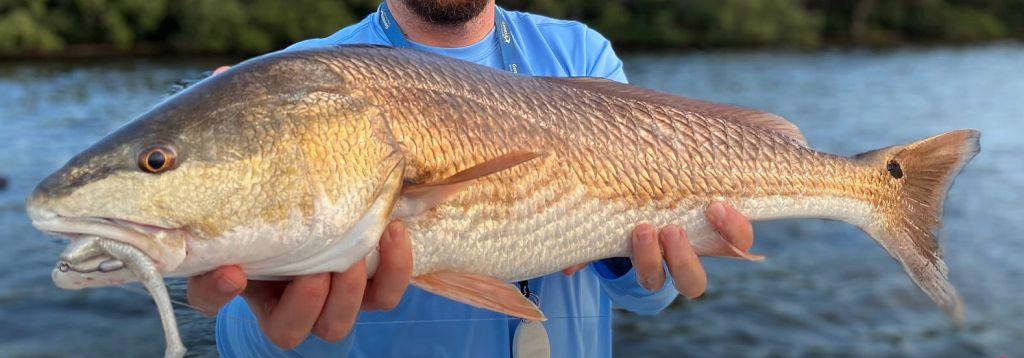
In the Mosquito Lagoon and Indian River right now, a lot of redfish are being caught along the natural shorelines covered with mangroves with cut baits.
Later in the month as the warms up the redfish and black drum will be found foraging for an easy meal on the mud flats and shallow sandy flats.
The speckled sea trout are now holding off
the edges of the dropoffs, especially along the residential canals, the barge canal, and the holes and dropoffs along the causeways.
Small saltwater assassin jigs and little 2" crappie dappers or small 2" plastic crappie baits on small 1/8th oz jig heads are working well on
these fish as well as the smaller reds.
Down sizing your baits and presenting them with slower retrieves is the key to triggering bites in clean, cool water temperature conditions. Small soft plastic swimbaits, live shrimp, and cut baits have been working well on redfish, sea trout, and black drum.
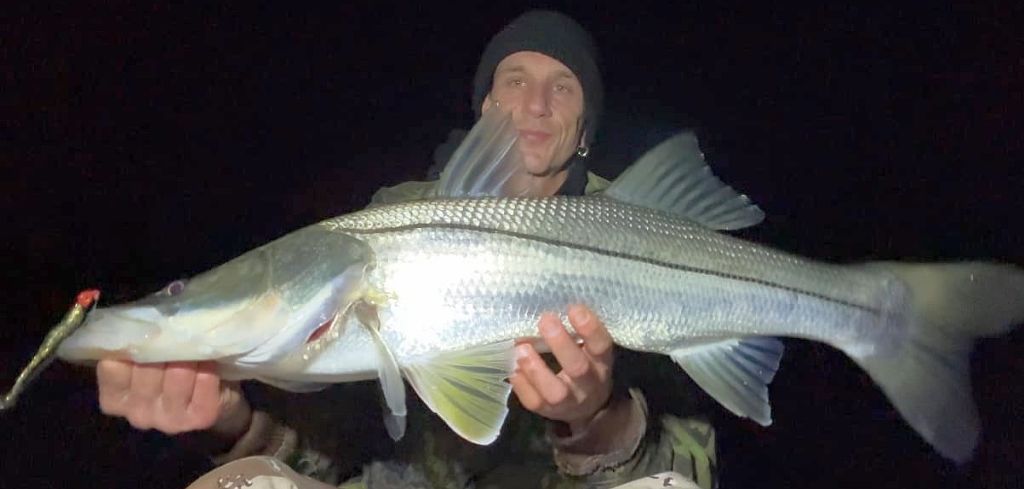
Despite the challenging conditions we had earlier in the week, this past weekend’s calmer weather allowed many kayak anglers targeting the mangroves and deeper water docks to pick up some nice snook, especially in areas with visible baitfish activity.
The snook are dark colored from the cold and can be found cruising the shorelines in mangrove covered areas.
Skip casting dark colored Tsunami 3.5″ paddle tail baits, D.O.A. jerkbaits, 3 1/2" paddle tail baits on 1/8th oz. jig heads, 5" jerk shads on 1/8th oz. weedless hooks and topwater baits like the Badonk-A-Donk is a great way to get a hookup when the fish are tight on the bank under the mangroves.
A frisky live shrimp tipped on a jig head will always produce good results on snook, slot redfish, and some larger
sea trout if they are in the area. In fact, this month almost every fish species in our lagoon system can be caught on a live shrimp.
As we look ahead into February, the forecast promises even more beautiful weather and a bite that should be on fire throughout our region.
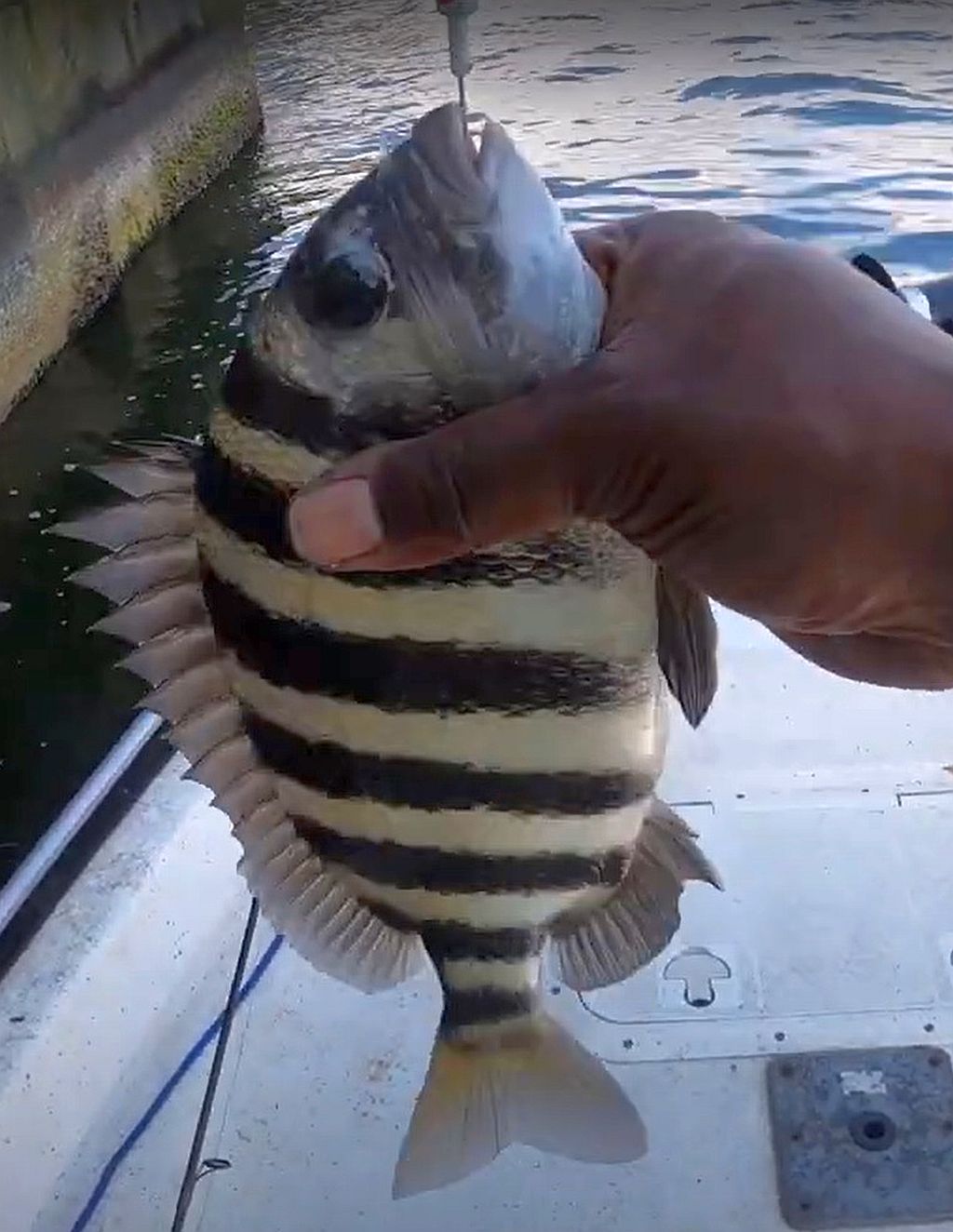
February is when sheepshead mania peaks on the Space Coast.
Large schools of sheepshead congregate in large spawning groups on nearshore structure to spawn during the winter months making them easy to catch.
Sheepshead are plentiful, don't need fancy tackle
to catch, are easy to find, fight hard, and taste great.
Find some rocky, craggy, reef like structure around clean deep water this month and you will probably find some sheepshead. Bridge pilings, sea walls, rocky jetties, coquina outcroppings, and shallow water near shore reefs and wrecks are all areas likely to hold
sheepshead this month.
Surf anglers should look for beaches with extensive reefs like those in Satellite Beach and at Patrick Space Force Station. Bank fishermen can find them at Ponce Inlet, Jetty Park at Port Canaveral, Sebastian Inlet State Park, and around any bridge piling. The fishing piers at the A. Max Brewer Bridge, the docks behind the condos in Titusville, the pilings at the railroad bridge, and the bridge fenders at Haulover Canal are also productive areas to target sheepshead.
A favorite rig to catch them with
from a boat, pier, or sea wall is a single hook dropper loop bottom rig made of 20 pound fluorocarbon and a 1 or 2 oz bank sinker, with a loop knot above the weight and a sharp No. 1 or No. 2 hook. The rig keeps tension on the line which allows the angler to feel the slightest bite, and the rounded edges on the bank sinker minimizes snagging.
Many sheepshead anglers just use a long #2 hook with a small split shot and about three feet of fluorocarbon leader the catch these bait stealers.
The preferred bait for sheepshead is a small or medium size sand flea. Larger fleas are
more easily picked off the hook by these notorious bait stealers whereas a small sand flea is often eaten in one bite; hook and all.
The black drum bite this month should continue to excel as the month progresses.
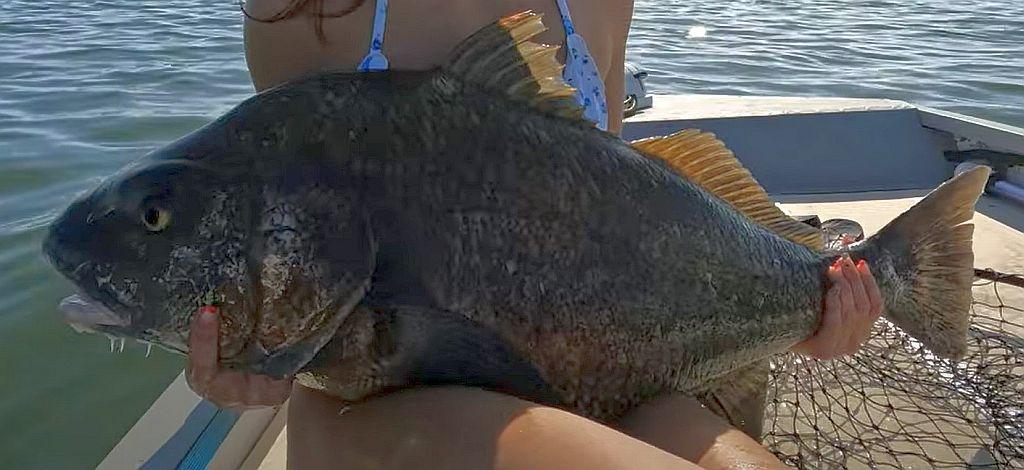
Today, large schools of black drum in the
30 to 60 pound class have been reported in the 3 to 6 foot deep flats in the north Indian River and Mosquito Lagoon preparing to spawn. Most of the fish in the Indian River are in the 30 to 50 pound class.
In the Mosquito Lagoon you can find them down south around the Cucumber Island area and
up north between the Tiger Shoal and George's Bar area in some of the deeper dropoffs and deep water areas. These fish are in the 25 to 50 pound class with most fish between 25 and 30 pounds.
On a calm day you can spot the schools pushing water or schooling close to the surface
trying to get warm. Large shrimp, cut crab, sand fleas, or any live crustacean will catch these fish. A large live shrimp on a jig head works really well
The shallow flats in the northern part of the Indian River around Patillo Creek, the shallow flats along Bio Lab Road, the mud flats along Gator Creek Road, and the
southern section of the Mosquito Lagoon will also be holding small to medium size schools of black drum.
In the Banana River Lagoon small schools of black drum have been showing up around the drop offs next to the causeways, around the bridges, and the spoil islands.
Black drum and sheepshead are still the best bite around the Rockledge, Coco, and Port St. John areas of the Indian River.
Some of these drum can reach the 50-pound mark, so you may need to use larger tackle
than when fishing for these guys.
Anglers fishing live or fresh dead shrimp, sections of blue crab, fiddler crabs, fresh clams, and sand fleas have been catching black drum up to 12 pounds in these areas.
Playalinda and Area Beaches:
Its been cold for the past couple of weeks and with some beaches reporting water temperatures as low as 55 degrees, surf fishing on the beach has been
slow.
From Playalinda Beach down to Patrick Space Force Base, the fishing for pompano hasn't been that great. Cold weather coupled with three foot waves, a hard North to South current and a headwind made fishing tough for most local anglers who had been reporting meager catches of bluefish, black drum, whiting, a few
small seasonal sharks, and some Margates farther south around Patrick.
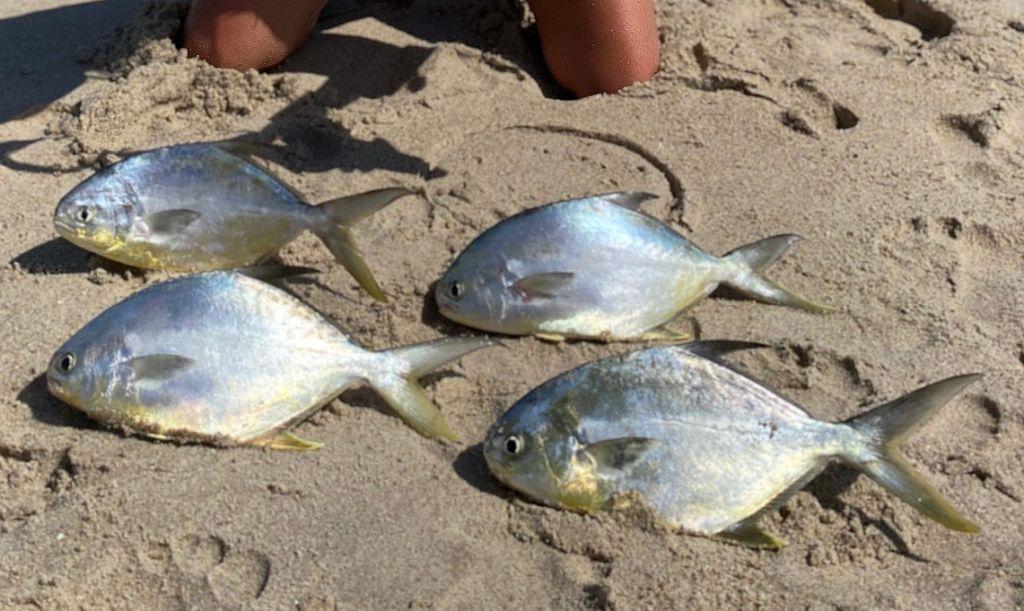
However, with the new moon phase and last weeks decent weather conditions, the bite has been improving with some impressive catches of big redfish, whiting, and a few good pompano.
Pompano prefer water temperatures in the 68-72°F
range. Today (1-31-2025) the water temperature is 58.6°F and is expected to rise to 66.6°F in the next 10 days which should dramatically ramp up the bite in our area. Look to target pompano during the early mornings and the mid day warm up on the evening tides. Tides coinciding with sunrise and sunset are even better.
As water temperatures are consistently in the mid 60s, the pompano become more active. As water temperatures get into the high 60s to low 70 degree range, the larger "keeper" pompano will be moving closer to the beach within casting range along with the bluefish, mackerel, and flounder.
The name of the
game from now on is to put your baits out in cleaner water around the right washouts and troughs, preferably in areas with bait.
When fishing rough surf use Sputnik sinkers to hold bottom and check your baits frequently. Many anglers at Playalinda use up to 6 oz. sinkers to hold
bottom.
Always try to use fresh baits when possible. You can keep them on your rigs by using a piece of FishGum or Fishbites. These help a lot to keep your baits from being stolen or working loos in the surf.
Although long
casts to the outer troughs are where the larger fish usually reside, they can often be right in the first trough at your feet. It's a good idea to set out several rods at different distances from the sand until you find out where the fish are running. If you don't get bit in an hour or so, move to another area. If you’re looking to catch a lot of fish, it’s better to move along the coast following the daily pressure lines and weather patterns.
Pompano schools are constantly on the move but they do concentrate in certain areas for relatively long periods when food is abundant. Learn to read the water in the surf to get more bites.
Live sand fleas can be tough to locate on the beach during February, but local bait shops in the Titusville and Melbourne areas usually keep live and frozen fleas in stock. Use blanched sand fleas when live fleas are hard to find.
On the days when the pompano and drum are schooling along the outer sandbars and troughs; small “goofy “ style jigs in pink, orange and chartreuse will get these fish to bite.
The best time to target them with jigs is between the cold fronts when a warming trend makes the fish more
aggressive.
Today, the Black drum, sheepshead, whiting and pompano are biting on sand fleas and fresh cut or small live shrimp on 1/4 to 3/8th ounce jig heads just outside the surf break in the Canaveral Bight area. These same fish often move closer in to the beach within casting range of surf fishermen.
Surf fishermen targeting sharks this month will find a lot of small blacktips and bonnet heads in the surf. Fresh shrimp, whole or chunk baits, and live baits all work well on these fish. As the month progresses and the spring baitfish run commences, larger sharks will be more
plentiful.
Surf anglers targeting larger blacktip, hammer heads, black nose, and bull sharks use stingray wings, large chunked baits, or fresh fish carcasses for bait on large circle hooks with wire leaders and heavy tackle to get the job done.
When fishing for sharks from the beach; remember to complete the free FWC land based shark course and carry the permit on your person.
To get the permit, you need to take an educational course at MyFWC.com/SharkCourse which consists of a quiz and some educational videos. After you create an account and pass the test, (which you can re-take if you fail) your certificate will have an ID code unique to you. Refresher courses are
available.
Port Canaveral Nearshore and Offshore:
As long as the north winds allow anglers to venture offshore, the fishing forecast for Port Canaveral this February should be great.
Offshore anglers pulling live baits can expect to hook into kingfish, mahi, sailfish, cobia, bonita, wahoo, and blackfin tuna when the surface water temperatures get into the 66 degree range.
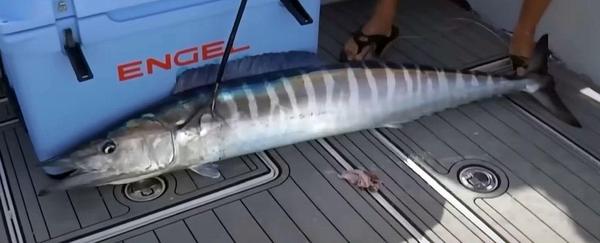
Anglers making the run to the gulfstream have been doing pretty good high speed trolling for wahoo during the afternoons. Large dark colored high speed lures and swimming plugs have been producing better results than brightly colored
lures. Black and blue, purple and black, and red and black are generally the most productive colors.
While large, dark colored trolling lures are used to catch wahoo, small dark colored lures work best for blackfin tunas. Dolphin are suckers for
blue and white or pink and white skirts in front of small to medium size ballyhoo baits.
High speed trollers running 5 to 10 knots with multiple lines were catching Wahoo in the same general areas of Pelican, 8A, and the other 70 to 150 foot reefs where anglers slow troll for
Kingfish.
The bite for king mackerel and some scattered dolphin has started to pick up outside of the Port on the 70 to 90 foot reefs. Live baits on a stinger rig normally work best but live baits are harder to find this time of the year. In addition, February is when the
kingfish can get really picky. If you don't pull a live bunker or threadfin in front of their face, the kingfish sometimes just don't eat. For the last couple of days the kingfish bite on 8A has been just fine using frozen minnows
A few anglers pulling spoons and planers with a sea witch skirt in front of a strip bait have been making good catches of kingfish in these same areas.
Although there are specific tactics commonly used to target kingfish and wahoo; small Islander
lures with a ballyhoo will generally work on both species. The guys targeting Wahoo, just ramp up their trolling speed a bit.
Pelican and 8A often have some big king mackerel on them but most kings this time of the year are in the 6 to 10 pound category.
The Ocean Obsession out of Sunrise Marina at Port Canaveral has a stellar reputation for getting their customers on fish.
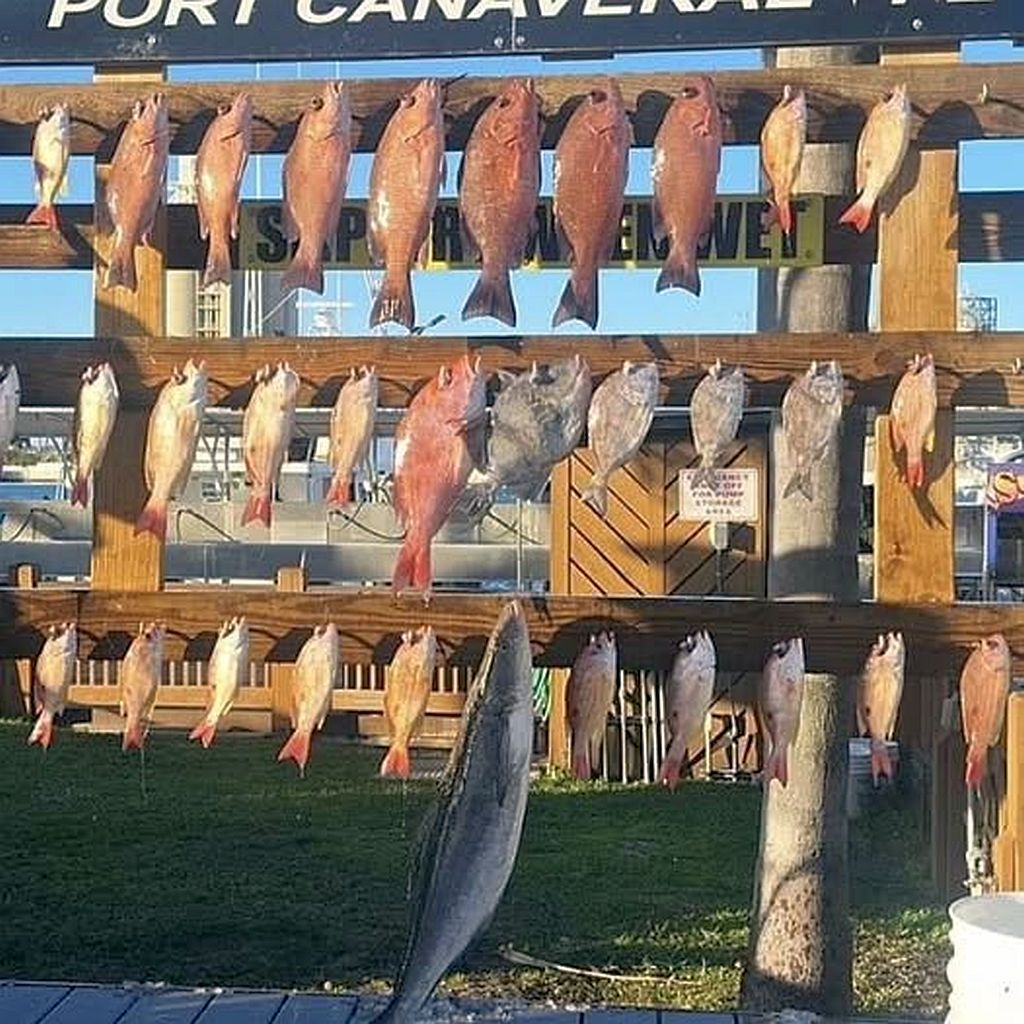
Right now bottom fishing anglers out of the Port are catching good numbers of Lane, mangrove, vermillion and mutton snapper along with some triggerfish and a few cobia. The bottom fishing for snapper has been very good in
the 90 to 160 foot depths. Bottom fishing on 21 was also very good with some quality amberjack and Red snapper caught.
The snapper bite on most of the structure out of Port Canaveral is reportedly good by anglers fishing frozen squid, sardines, pilchards, chunked reef fish, and
live baits on standard chicken and bottom rigs.
With the good weather window we have predicted for this week it might be a good time to get offshore and catch some of these species.
The near shore bite we had last month with the massive schools of bull redfish near the Port and around the tip of the cape should continue throughout this month. .Look for diving birds to find the fish or locate one of the large schools of bunker.
The redfish are not picky and will eat just about anything you put in front of them. Bucktail jigs, cut baits, jumbo shrimp, cut crab, and bunker will all work on bull reds that are now running up to 35 pounds or more.
The
tripletail and cobia that have been seen hanging around the marker buoys, weed lines, and other floating structure out of Port Canaveral will still be around this month, but in better numbers.
Small bucktail jigs tipped with a piece of live shrimp or squid is all you need to hook into a tripletail.
A large bucktail with a whole squid or a live bait is sufficient for cobia.
When the water temperatures hit the 68 degree mark, local anglers start looking for Cobia tracking the Manta rays in the 50 to 90 foot depths offshore. About this time last year, we had an excellent cobia
run with several giant ling caught.
This month when the waters warm up a bit, look around the 55 foot depths on sunny days for Manta rays and cobia.
The waters off Patrick SFB have always been a good area to scope out.
Closer to shore, bluefish are abundant out of port Canaveral with mostly under size fish up to 15 inches being caught.
The bite for black drum, redfish, pompano, bluefish, and sheepshead along the jetties at Ponce Inlet and at Jetty Park has been on fire and should continue for the next few weeks.
Shrimp, fiddler crabs, sections of blue crab, and crab knuckles are baits of choice for anglers along the jetties.
St. Johns River:
Florida gets a lot of rain which during the summer months breaches the banks of the St. Johns river and floods into the surrounding pasture lands. A tropical storm or hurricanes like Milton and
Helene makes the flooding even more widespread.
The annual flooding of thousands of acres of grasslands creates a nursery for grass shrimp, minnows, and juvenile bass, crappie, bluegills, etc. to feed and breed with minimal interference from predatory species.
As populations explode during the rainy summer months; the water levels in the St. Johns during the winter and spring inevitably drop and the flooded shallows drain back into the main river channels flushing uncountable numbers of grass shrimp and minnows into the river.
This phenomenon creates a buffet for just about every predatory fish in the St. Johns river as well as some fantastic light tackle fishing.
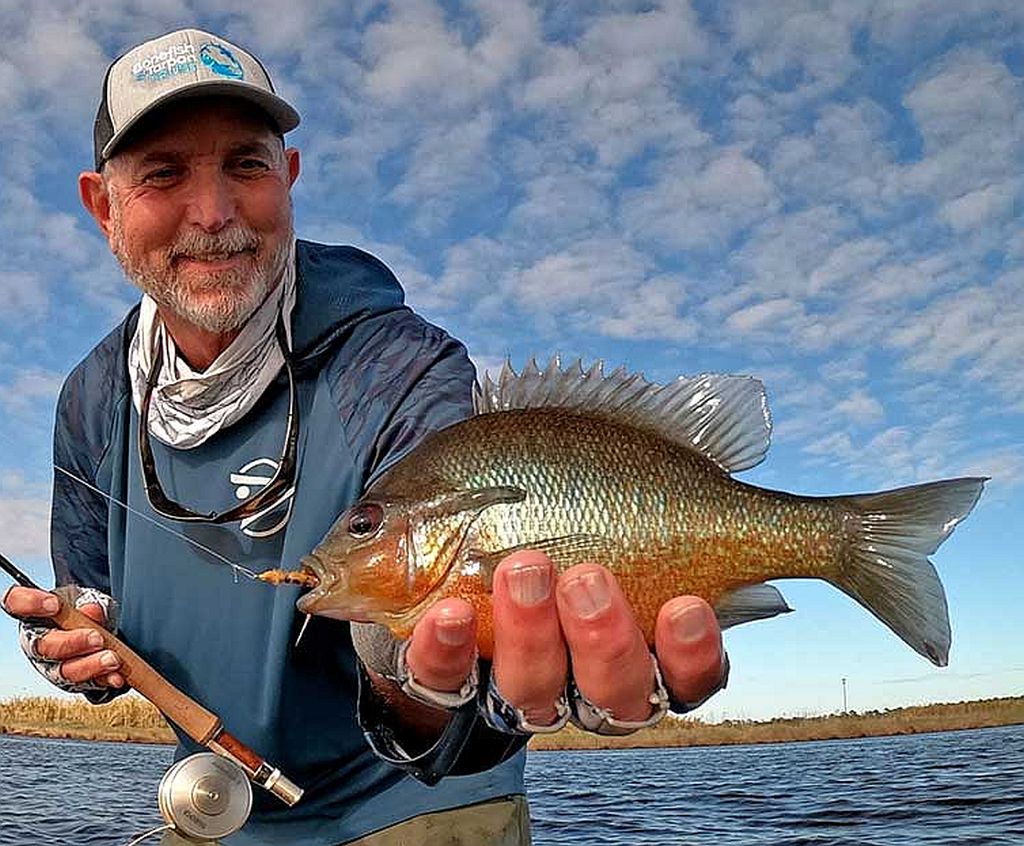
Crappie, bluegill, other panfish, largemouth bass, catfish, bowfin, gar, as well as American and hickory shad gorge on the flushed
in bounty of minnows and shrimp.
Fishing for these species isn't complicated. Look for fish busting on the schools of shrimp and minnows.
All you need to catch them is an ultralight spinning rod with a pocketful of panfish jigs or a light weight fly rod with some small streamers or shrimp patterns.
Jig colors generally don't matter but on occasion the fish get picky so carry an
assortment.
Small streamer flies produce the most hits but small panfish poppers or other noisy surface patterns also work well. Carry some Clouser Minnows to get down deep where the shad and larger fish stay or bring a second rod with a sinking fly line to get your lure down
deep.
"Matching the hatch" will get the most bites. Since minnows and grass shrimp are less than an inch in length, use streamers and jigs that are an inch to an inch and a half long. A two inch bait is too big and results in little to no action.
Timing this phenomenon is the trickiest part. It varies from year to year and it is happening right now, and could last for another month or so.
If you like to catch a ton of fish (50 or more) a day on ultralight tackle, not is the time to head over to the St. Johns River and give it a try
Haulover Canal:
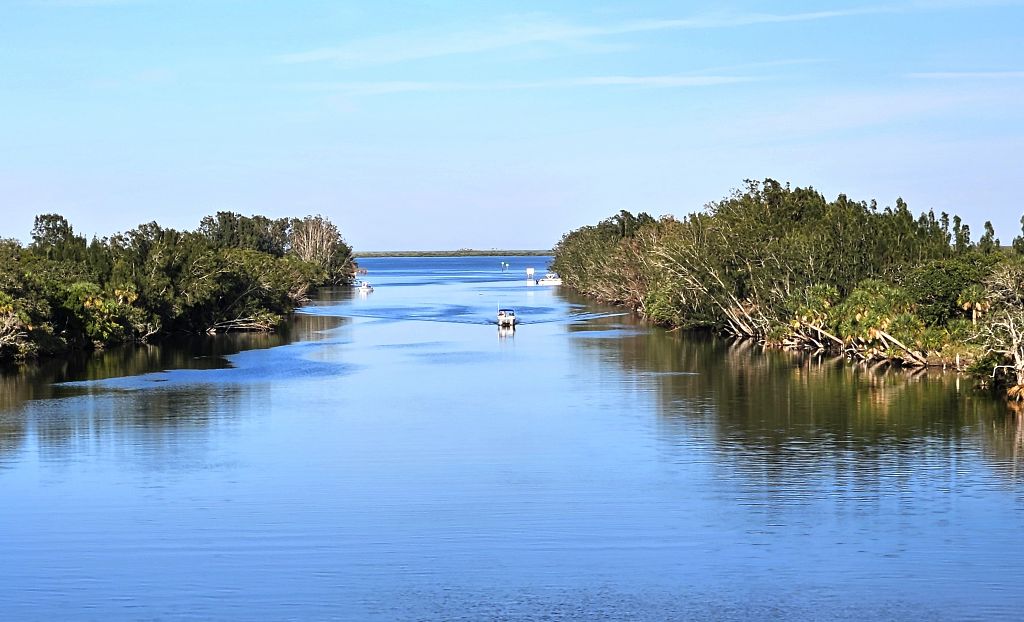
The cold fronts in our area make the deeper waters of Haulover Canal a haven for black drum, redfish, sea trout, snook, tarpon, Mangrove Snapper, and a variety of other species.
Land based fishermen along the coquina outcroppings and bridge fenders at Haulover this month target mangrove snapper and sheepshead that frequent these areas in greater numbers this month.
Live shrimp and small cut baits are used for mangrove snapper while sheepshead prefer fiddler crabs, small sand fleas, and small pieces of live shrimp.
Fishing a live or fresh dead shrimp, or small chunks of freshly caught fish on a 2/0 or 3/0 circle hook, with a small split shot or two to get the bait close to the bottom, is a good way to catch Mangrove snapper in this area without getting hung up on every cast.
.
Redfish are now strictly catch and release in East Central Florida, but anglers this month can catch some of the largest bull redfish of the season from the canal.
Live blue crabs, crab
knuckles, jumbo shrimp, large live pinfish or mullet, and large cut baits, work especially well during the winter months.
The larger, oversize baits account for more big redfish in the 40 inch and over category being caught than any other
bait. They also minimize the by catch of hard head catfish and stingrays.
Right now, black drum up to 60 pounds are also being caught in Haulover. The fish have been sheltering in the deep waters of the canal during the last
cold front and are moving into the deeper flats in preparation for the spawn.
Sections of blue crab, jumbo shrimp, and clams are baits of choice for drum in our area
Serious fishermen who target the bull reds and huge black drum in the canal gear up with stout rods, 30 to 60 pound Power Pro or other brand braid, 30
pound or heavier fluorocarbon leaders, 8/0 circle hooks, and enough weight to hold
bottom.
The deep holes at both mouths of the canal to the Mosquito Lagoon and the Indian River consistently produces big fish..
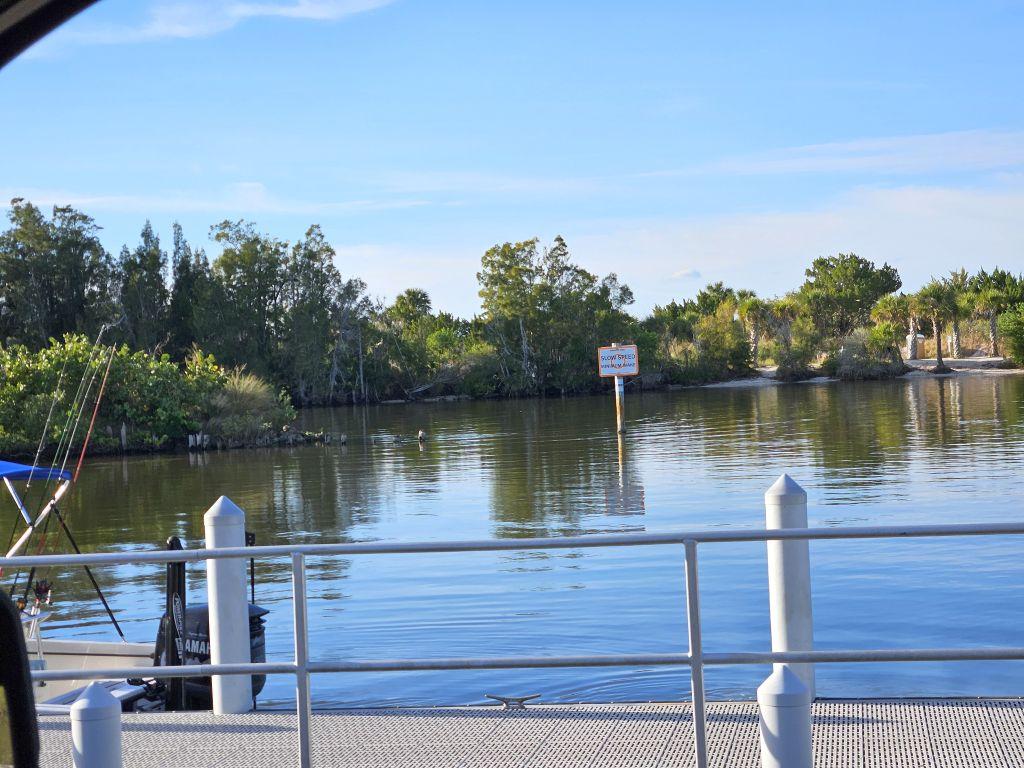
Boaters can launch their vessels from the Bairs Cove boat ramp or the Beacon 52 boat ramp, and anchor off the ICW at either mouth of the canal.
The best bite for black drum and bull redfish is normally just before and a few days after a cold
front rolls through the area, and around the full moon.
Haulover Canal is also one of the better areas for netting large shrimp in our area.
Most sport shrimpers concentrate their efforts around the railroad bridge, the A. Max Brewer Bridge, the fishing piers, and the ICW up north around Edgewater and Oak Hill; but the size of shrimp in these areas are generally smaller than those netted along the banks at Haulover.
 .
.
 Large schools of sheepshead congregate in large spawning groups on nearshore structure to spawn during the winter months making them easy to catch.