SUPPORT COPY: Your October 2024🐬 Mosquito Lagoon & Indian River Fishing Report
Published: Tue, 10/01/24
Updated: Tue, 10/01/24
Newsletter Issue # 183
October 1, 2024
Mosquito Lagoon & Indian River Fishing
Mosquito Lagoon and Indian River
Water levels in the Mosquito Lagoon and Indian River are up and the fish are loving it.
The rains combined with good numbers of finger mullet have made fishing for sea trout, redfish, black drum, and snook extremely productive in most areas.
Plenty of redfish are being caught in the lagoon system right now particularly around the inlets.
In the New Smyrna area along the ICW channel all the way down to Oak Hill, the fish are beginning to move back inside around the mangrove shorelines throughout the system.
Single redfish have been busting on baitfish along the shorelines in the middle and northern section of
the Mosquito Lagoon and some smaller schools of reds are on the larger flats like Tiger Shoal and the Plantation Island flat.
Anglers wading the shorelines, shallow flats, and spoil islands in the northern Indian River and throughout the Mosquito Lagoon system have been making nice catches of redfish, sea trout, and snook on a variety of baits.
A live fingerling mullet on a 2/0 or 3/0 circle hook fished tight against the mangrove trees is one of the best ways to get a strike from a big snook or sea trout, especially along the mangrove covered shorelines between Hog Point and Campbell's Pocket.
There is a ton of baitfish out there right now so if you are an artificial guy, try the Slammin Shad in the 4 inch size or a 5 inch straight tail on a 1/8th oz. jig head. Anglers wade fishing the shorelines are reporting that an erratic zig zag retrieve has been working best on snook.
Although wade fishing is productive in most areas of the lagoon system, watch out for gators especially in the northern Indian River and southern Mosquito
Lagoon areas. There are some really big water lizards out there that can make you have a really bad day.
Every year around late September and early October "bull" redfish gather up to spawn in the deep water flats of the northern Indian River across from the Scotsmoor boat launch.
These breeders can be caught on live baits, cut baits, or blue crabs. Gold spoons, large swim baits, and a variety of topwater plugs are also effective, especially when sight fishing.
When the larger "Bull" redfish schools make their appearance in the deeper flats, anglers can expect hookups with fish
in the 40 inch plus category.
The black drum bite in our area has been consistent with singles and smaller pods roaming along the banks and hiding underneath the overhanging mangrove trees in all the lagoon systems.
Most bank fishermen
toss a live or fresh dead shrimp and wait for a fish to bite. Live or blanched sand fleas and fiddler crabs will often gin up more action.
A lot of anglers sight cast to black drum on the flats with either live shrimp or small 1/16 oz. R&R tackle yellow or white tail jigs that seem to work well, especially when spiked with some Pro-Cure Inshore formula.
The topwater sea trout action in our lagoon system has been really good during the first hour or two of the mornings. Larger spotted sea trout are being caught around the mullet pods that are milling on the shallow flats
and tight against the shorelines.
Rapala Skitterwalk topwater plugs and any topwater bait that resembles a finger mullet will work when fished properly. When the top water action slows down, Saltwater Assassin 4 or 5 inch
Sea Shads and straight tailed Shad baits will usually get bites.
One of the most productive "go to" baits right now for sea trout in our area is a 4 or 5 inch Saltwater Assassin Sea Shad tail rigged on a 1/8 th oz. jig head. The Mullet color is reported to be working best, but the general rule is dark colors for dirty water and light colors for clear.
Peacock Pocket Road
is supposedly completed but is still not open to vehicle traffic. Several anglers I spoke with park at the shallow water launch and ride the road on various off road vehicles to fish the ponds and waters along the banks. The vegetation along the roadway hinders landing fish but with the rise in water levels, some very large sea trout, redfish, and black drum can now be found foraging in the shallow marsh areas that were previously inaccessible during the summer months.
The best way to fish for any of these species right now is sight casting to foraging fish from the bank. Another way is to stage at the entry points to the ponds and fish live mullet, cut baits, or noisy top water plugs that draw the fish to the bait.
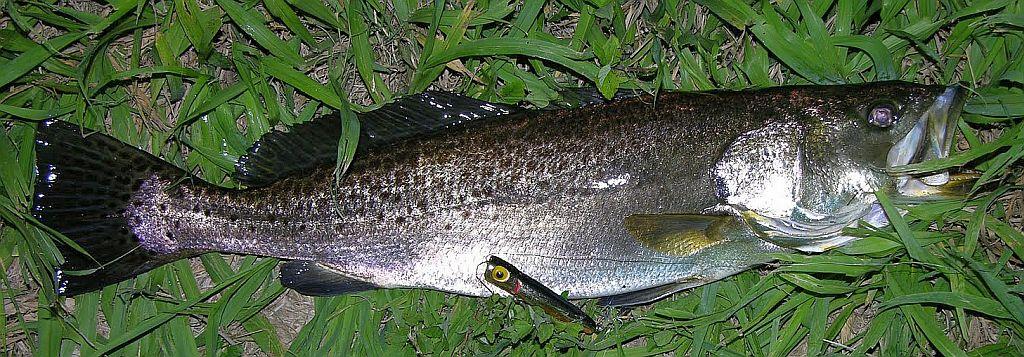
Most sea trout in our area are running in the 1 to 3 pound range. Larger fish up to 7 pounds are generally caught on live pinfish, croakers, D.O.A. Baitbusters, and topwater baits.
The tarpon bite along the
deeper dredge holes and channels along the ICW in the Indian and Banana Rivers has been good this month for mid size and juvenile fish. Most of the larger 60 to 140 pound fish are shadowing the fall mullet run along the surf break.
Juvenile and larger tarpon up to 100 pounds can be found along the deeper channels and in the southernmost portion in
the Mosquito Lagoon around the mangroves and open culverts. When the pumps are turned on, the discharge area from the pump station at the entrance to Bio Lab road can look like a fish hatchery.
During the summer months, the Vistas and ditches along the road going into the Canaveral National Seashore are often good spots to target juvenile tarpon and ladyfish. You will often see fly fishermen tossing a variety of patterns to these fish that usually respond well to
a well placed lure.
The
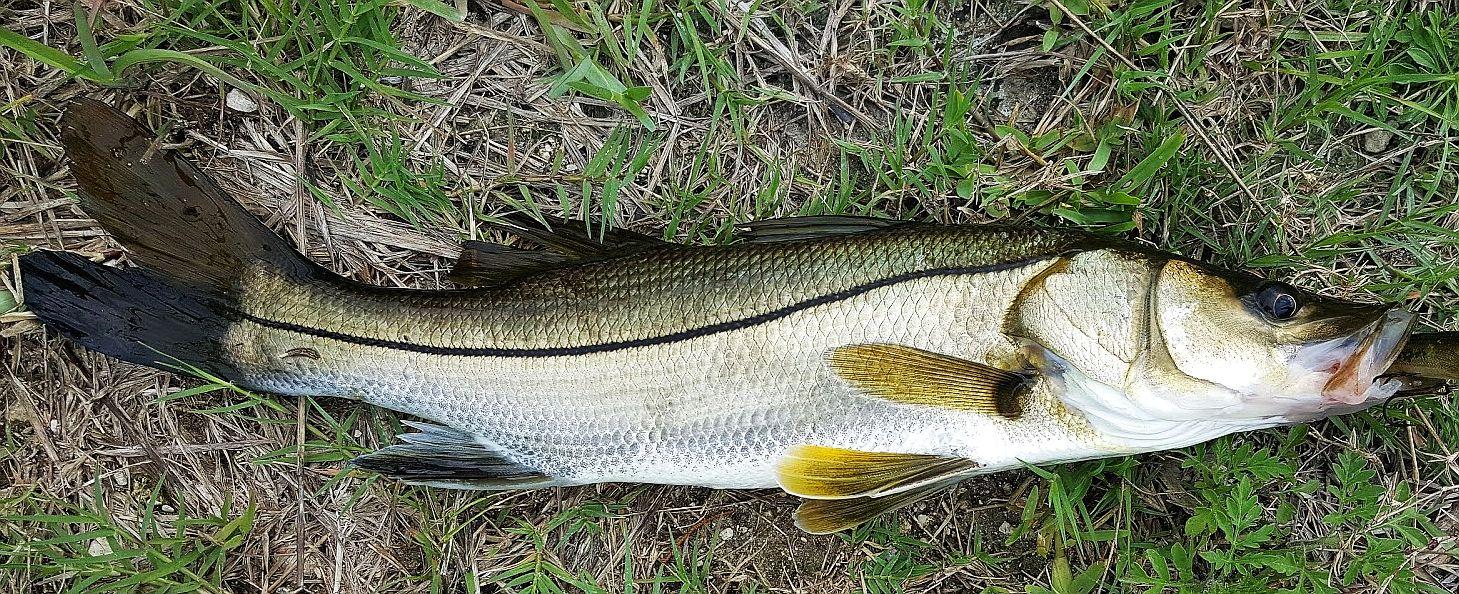
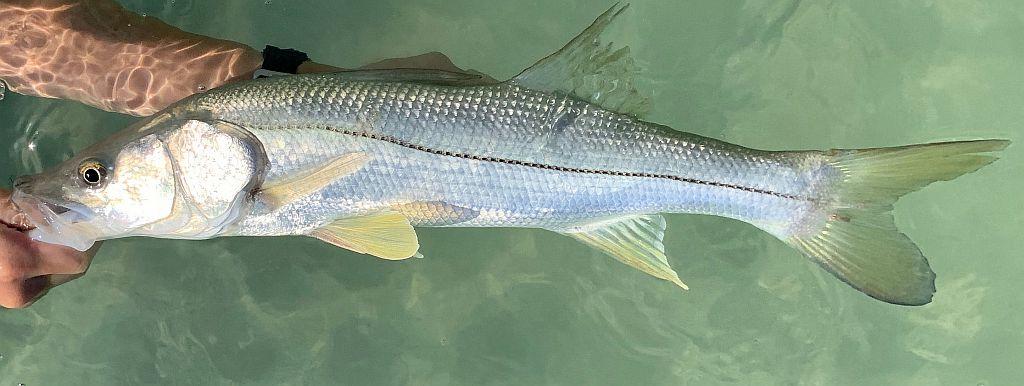
Snook bite in our region has been really solid this year with all of our inlets holding Snook of all sizes. Over slot and some slot size fish have been holding tight under the mangroves throughout the system. A live fingerling mullet on a 2/0 or 3/0 circle hook fished tight against the mangroves is the best way to get a strike from these fish.
Along the
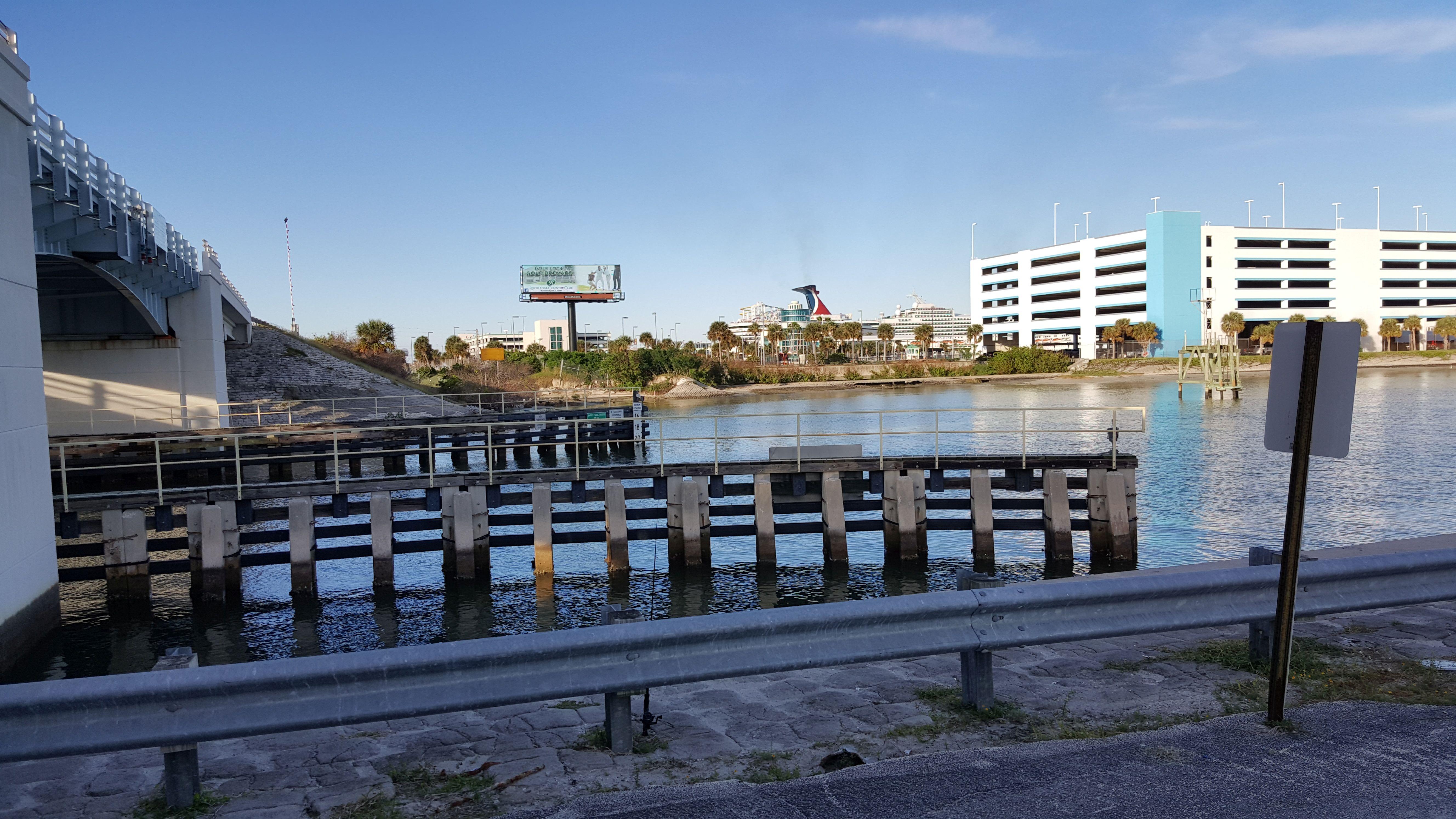
boat docks, sea walls, and jetties in Port Canaveral, the snook bite has been good, especially at night. R&R Flair Hawks, Saltwater Assassin 5" or 6" Swimbaits, lipped diving plugs, and live baits are all good producers. During the day, a live finger mullet is by far the best bait to use around the pilings, sea walls, and dock pilings.
Large swimbaits, live select jumbo shrimp, or a 10 to 12 inch mullet rigged on a 5/0 to 7/0 circle hook are the best baits for large snook in the 29 to 40 inch category. The best bite usually occurs during the change of the tide and about midway during outgoing tides.
Snook in our area average 20 to 30
inches.
Surf and Inlet Fishing
The fall mullet run along the Space Coast is in full swing right now which makes surf fishing for snook, bluefish, jacks, redfish, Spanish mackerel, sharks, and tarpon the thing to do this month. When the baitfish migration moves farther south in a few weeks and the water temperatures drop, fishing in the surf for whiting and pompano will ramp up.
The baitfish migrate from north to south, so when you locate a concentration of mullet, start fishing south of where you find the pod until the action slows down; then move south to the next access point and repeat the same procedure. This is a tried and proven method for surf fishermen that will keep you in the action.
Many surf fishermen in our area like to "wade fish" the beaches during the mullet run. Along the Space Coast, most of the beaches are accessible to anyone and with the fall mullet run in full swing, wade fishing is a great way to catch a lot of fish.
For this type fishing you need a reel
that is basically waterproof. APenn Slammeror Penn Authority reel in the 4500 or 5500 size seated on a 7 foot or 8 foot medium/heavy
action rod with 15 to 30 pound Power Pro or other type braid, with a Saltwater Assassin Artemis Shad in the Silver Mullet, Green Hornet, or the new Pilchard color is all you need to catch fish.
You can catch a 2 pound fish or one 120 pounds; you never know what will hit but with this rig you at least have a chance of landing a big one.
Although surf fishing along the Space Coast is always a mixed bag of species, large Snook continue to be the highlighted target of the day for many anglers.
In our region, the stretch of beach from Patrick Space Force Base down to Sebastian Inlet is the best area for catching large snook in the surf. Productive areas for targeting snook, Spanish mackerel, bluefish, and tarpon during their feeding frenzies is
around the Coquina worm rocks, and in the troughs and run-outs. The best baits to use are what is migrating through the area at the time.
Although a 6" Artemis Shad mimics pretty much anything that's in the surf right now, surf anglers using live or chunked mullet and any artificial resembling a baitfish will usually get bit. On many
days, glass minnows and horn bellies (Atlantic Bunker) are the best bait for snook.
October is arguably one of the best months for surf fishing in East Central Florida and Playalinda Beach in the the Canaveral National Seashore is one of the better, least advertised "hot spots" for pompano during the winter months.
Many areas on the beach have stakes outlining the turtle nesting areas but except for the occasional surf fisherman, the beaches are virtually uninhabited, especially during the week days.
Most surf anglers stake out their rods and wait for migrating pompano to swim
into their baits. A better option is to find and follow the migrating fish by stopping at the various beach access points and scoping the water for runoffs, washouts, and other likely hot spots where the pompano could be feeding.
When there is not action over a period of time, pick up and move to another access point.
Surf fishermen targeting
pompano, whiting, and juvenile black drum normally use long rods with 2 or 3 hook dropper rigs with sand fleas, fishbites, clams, or fresh peeled shrimp as bait. This rig is an effective fish catcher for whiting and pompano from Playalinda Beach all the way past Cocoa Beach to Sebastian.
A lot of anglers walk the beach casting into the nearshore first and second troughs with Goofy Jigs or live baits for whiting and juvenile black drum.
Most of the pompano in our area right now are in the 1 to 2 pound category, but later on in the month as the water cools down, larger fish
will be the norm.
Needless to say, with all of the migrating baitfish running up and down our beaches, the shark bite has been on fire.
Almost any species of shark can be caught in the surf this month, regardless of whether you are
targeting them or not, but from Cocoa Beach to Melbourne Beach, blacktip sharks are the most commonly caught species.
All sizes of tarpon are also being hooked from the beach around the bait pods from Playalinda Beach all the way down past Melbourne Beach. Live or cut mullet and large swim baits are your best bet for landing a big tarpon from the
beach.
Port Canaveral Offshore and Nearshore
The Wahoo and sailfish bite
peaks out of Port Canaveral this month. Both wahoo and sailfish prefer cooler water temperatures and fast moving baits.
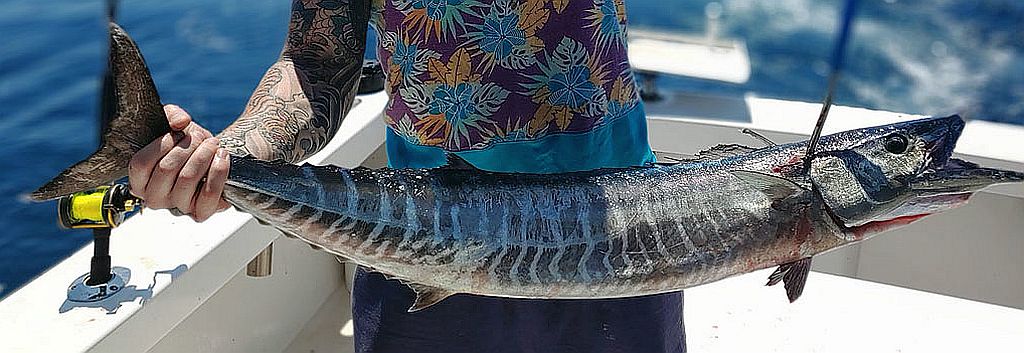
Offshore anglers pulling high speed lures along the rips, temperature breaks, and ridges like the Oculina Bank and the 27 fathom ridge should have an extremely productive month for Wahoo, who have a penchant for eating fast moving targets
like Bonita, flying fish, blackfin tuna, and small king mackerel.
Large dark colored lures pulled at 9 to 15 knots or more will usually get hookups from wahoo. Purple and black Islander lures are used by a lot of captains out of
the port for wahoo, blackfin tuna, king mackerel, and sailfish. 24 to 36 ounce inline trolling sinkers help to keep the lures down to where the fish are.
Our wahoo can run anywhere from 20 to over 40 pounds, with most of the larger fish coming in during the winter months when the water temperatures are in the 73 to 76 degree range.
The bite for southerly migrating sailfish
should get better later on this month after the next cool spells. As the schools start balling up baitfish offshore, smaller lures, smaller live baits and downsizing to lighter leaders are preferred by most anglers. Matching the size of the hatch is important for sailfish.
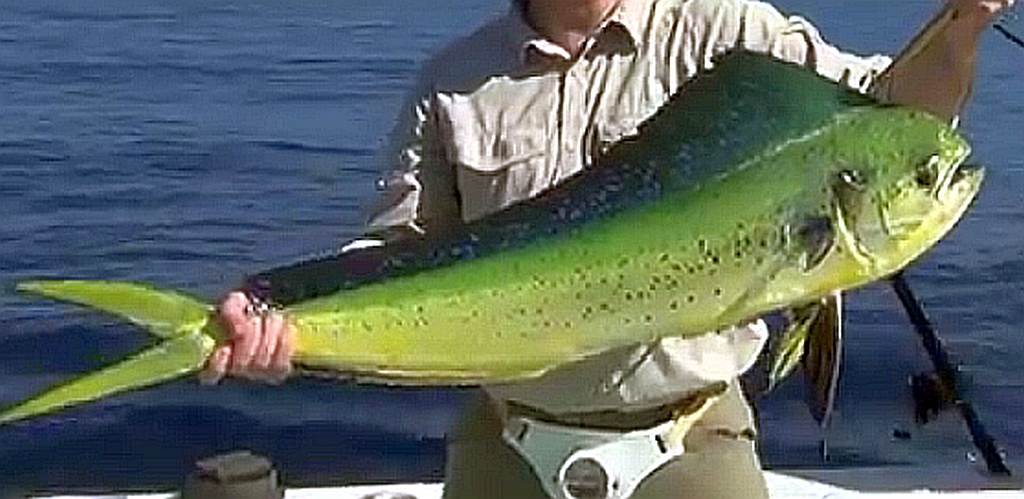
Right now the dolphin are starting to show up in our area in better numbers.
The guys that have been trolling full spreads of skirted ballyhoo in 200 to 350 feet of water on the Western edge of the Gulf Stream where the water cleans up have been bringing home some pretty good catches.
A green and yellow or blue and white Tracker or Sea Star Islander lure over a medium size ballyhoo pulled at 5 to 6 knots is pretty much standard fare for these fish.
Around floating debris and weeds, try pitching live pilchards or even a live finger mullet on a 4/0 or 5/0 circle hook with a 40 or 50 pound test leader. If there are dolphin in the area, it shouldn't take long before one comes around. Multiple hookups right now are common.
The average dolphin in our area right now is around 5 to 10 pounds.
Offshore anglers out of Port Canaveral have been catching good numbers of mangrove snapper on the reefs and wrecks in 90 to 130 feet of water. A mixed bag of triggerfish, black sea bass, snapper, AJs, Scamps, Red Grouper, and Gag grouper is usually available to bottom fishermen during the winter months. Live and cut baits are usually fished on a knocker rig or
chicken rig for these fish, but deep jigging with vertical speed jigs also works well. Grunt plugs, sardines, and any live bait reef fish are always good baits for grouper, AJs, and snapper.
Farther north of the port, anglers have been catching mixed bags of AJs and snapper in depths of 100 feet and more on the same
baits.
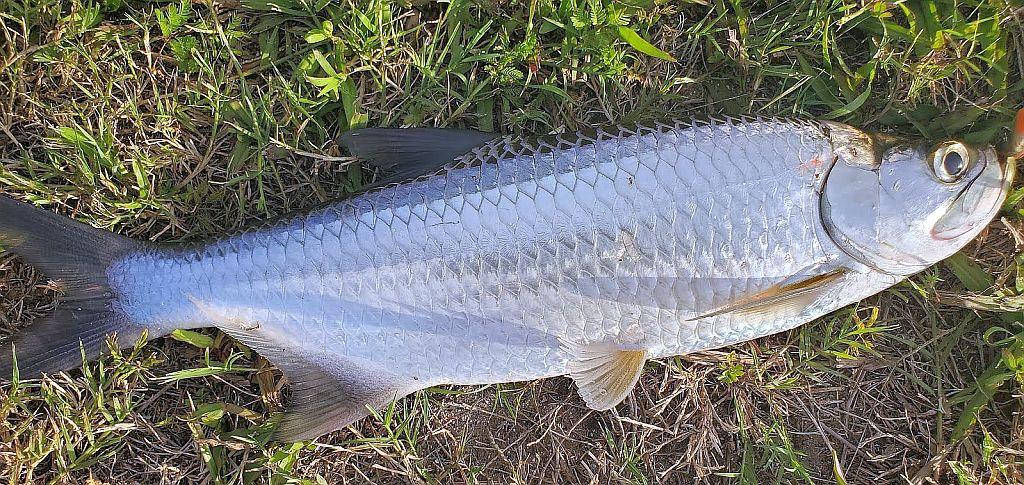
Our inshore and nearshore coastal waters are loaded with Tarpon right now. You can see them busting on mullet and rolling along the beach within easy access of surf fishermen and anglers running close along the beach.
Fishing a
netted mullet on about 6 feet of 40 to 80 pound leader with a 7/0 to 8/0 circle hook, with or without a float, is one of the best ways to hook into one of these fish.
Beach tarpon this month have been running anywhere from 60 to 140 pounds.
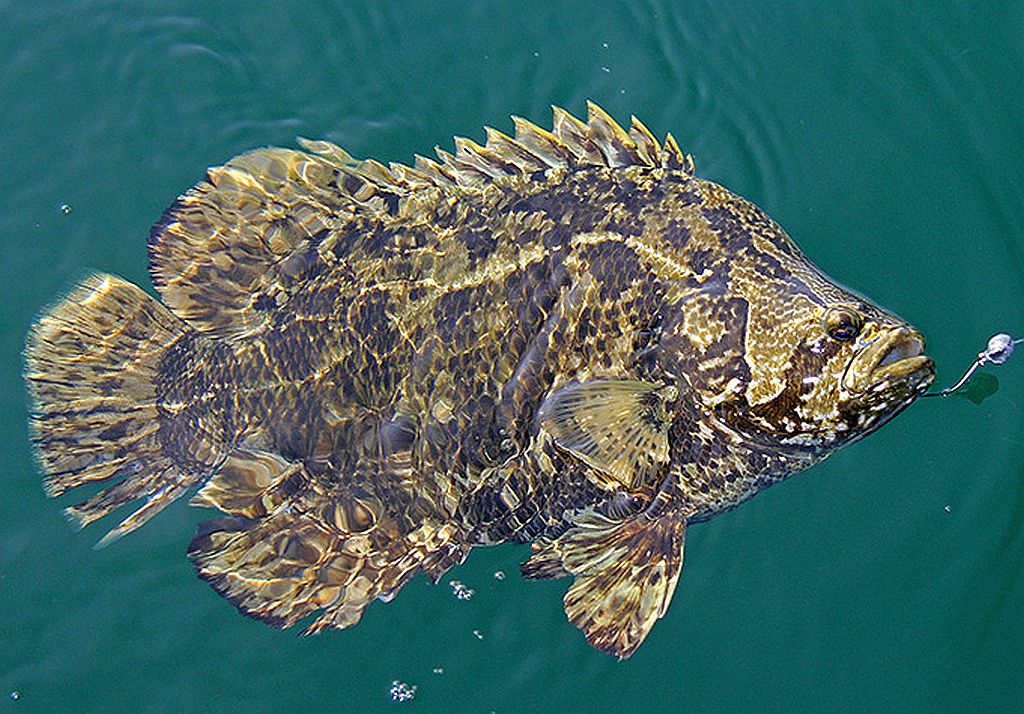
Tripletail in our area usually arrive about 3 to 4 weeks into the fall mullet run and right now they are being seen in good numbers.
Tripletail will usually eat a select jumbo size shrimp or a live or cut finger mullet rigged on a saltwater assassin 1/4 oz. jig head. When they get picky, use a 2/0 size circle hook with a split shot weight on a live
shrimp.
The fish are holding nearshore outside of the surf zone among floating debris, color changes, and around the channel markers.
Most tripletail are running round 3 to 8 pounds, but fish up to 15 pounds are not uncommon.
The October king mackerel bite is always good in our region. Slow trolling a live mullet, pogie,
sardine or bunker on a stinger rig around the bait pods is the most popular way to catch them. Targeting the bait pods, small ledges, and scattered bottom structure close to the beach usually productive for kings this time of the year.
Pulling a black and blue Sea Witch or a diving plug on a down rigger or planer on the
60 to 90 foot reefs this month will usually produce fish this month.
Most kingfish caught in our area run about 10 to 15 pounds, with a few larger ones always coming into the mix.
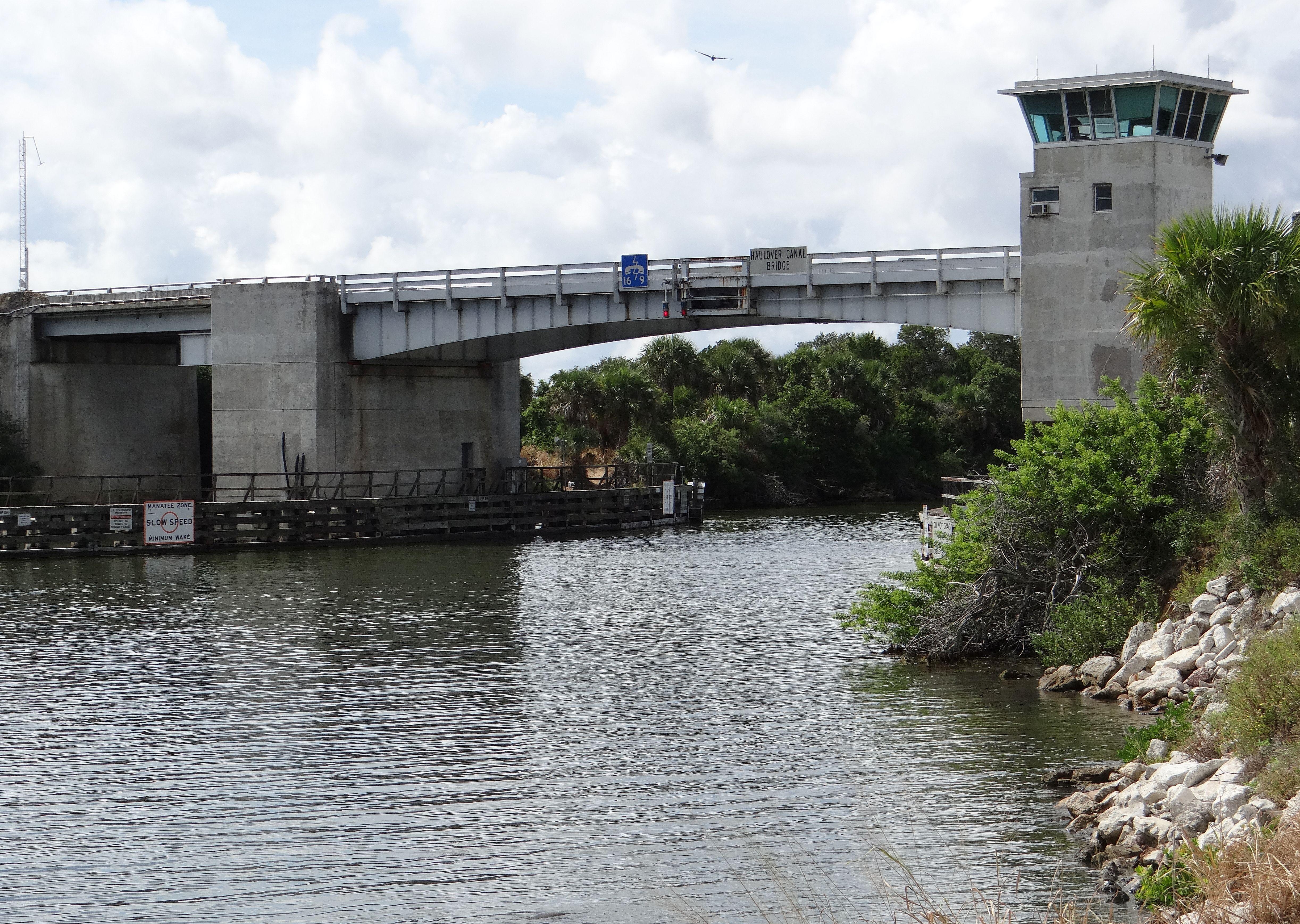
Haulover Canal
Almost every month we write about the variety of species that can be taken in Haulover Canal, but during the September and October spawning migration, almost
everybody fishes for "bull redfish" in the canal.
Unlike the redfish in other coastal areas that migrate offshore to spawn, our unique redfish population spend their entire lives in the shallow lagoon estuary.
The fish use Haulover Canal to travel from the Mosquito Lagoon into the deep water flats of the Indian River for their annual spawning ritual.
The five mile wide section of the Indian River between Mims and Scottsmoor north of Titusville is where the redfish gather into huge spawning schools..
As the reds move through the canal this month, shore fishermen using a whole live blue crab, a
large pinfish or mullet, or a large chunk bait have an opportunity of picking up a trophy red in the 40 pound plus category. Keep the bait on or near the bottom with an appropriate weight and to use a heavy fluorocarbon leader with a 5/0 or 6/0 VMC circle hook as terminal tackle.
Anybody who fishes Haulover Canal on a regular basis will tell you that it's
a good idea to use Power Pro or some other braided line as your main line. Braided lines are stronger and are more resistant to cutoffs from the Coquina rocks that line the banks of the canal. The rocks can easily abrade and weaken monofilament lines, especially with a really big fish.