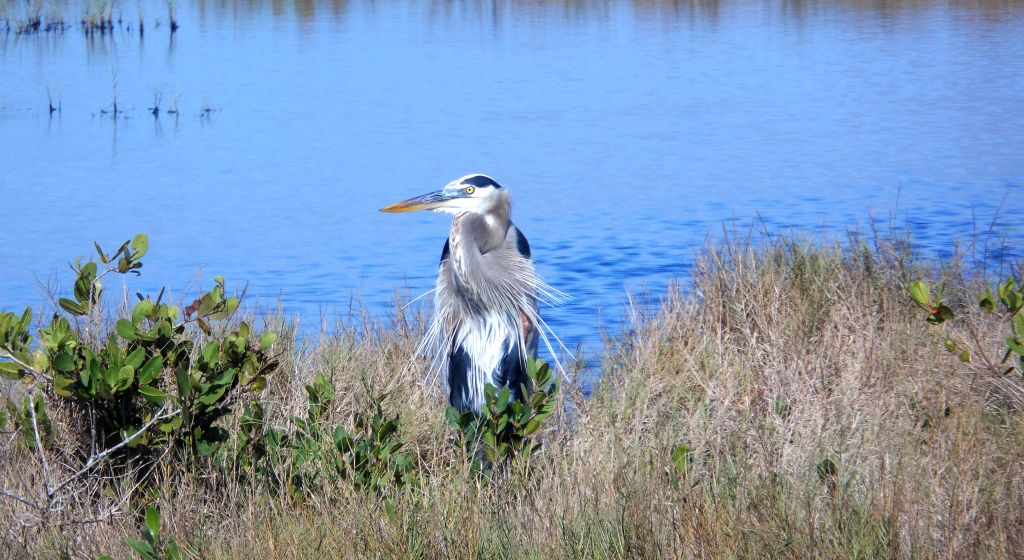
The Mosquito Lagoon and Indian River
As air temperatures on the Space Coast begin to trend higher this month and the fish begin to feel the heat, start looking for trout, redfish, black drum, and sheepshead laying up under the mangroves and structure throughout our region.
As the summer sun warms up the water this month; snook, sea trout, redfish, and black drum will be staging in the cooler low light water areas around docks, mangrove overhangs, and bridges coming out to feed on glass minnows and fingerling mullet, especially during the morning and evening hours.
Stealthily wading the shallows on an early summer morning is one of the best ways to find fish and hone up on your skip casting skills.
Skip casting underneath docks, mangroves, and other overhanging structure with a soft plastic shrimp or jerk bait mimics a panicked baitfish or shrimp and often produces instant reaction strikes. A live shrimp on a 1/8th to 1/4 oz. jig head will also get the job done.
Although hard plastic top water Chug Bugs and diving baits produce using this method, they do not skip well. Soft plastic D.O.A. Shrimp and weedless jerk baits on the other hand skip like a stone and result in more strikes.
The speckled sea trout bite in our area was really good during April, but it gets even better in May.
With the full moon flying by us we are seeing he effects of it right now. The first light bite has been pretty good, the mid morning bite slows down considerably, and the mid day bite starts to pick back up again.
Currently the Mosquito lagoon, Indian River, and Banana River all have good numbers of sea trout in them of all sizes. The sea trout are still staying kind of deep in 2 to 4 feet of water, whereas the black drum and reds are coming up shallower along the shorelines.
The dredged and natural channels around the mosquito impoundments in the Mosquito Lagoon and the deep drop offs around the spoil islands from Titusville to Sebastian hold a plethora of fish this time of the year.
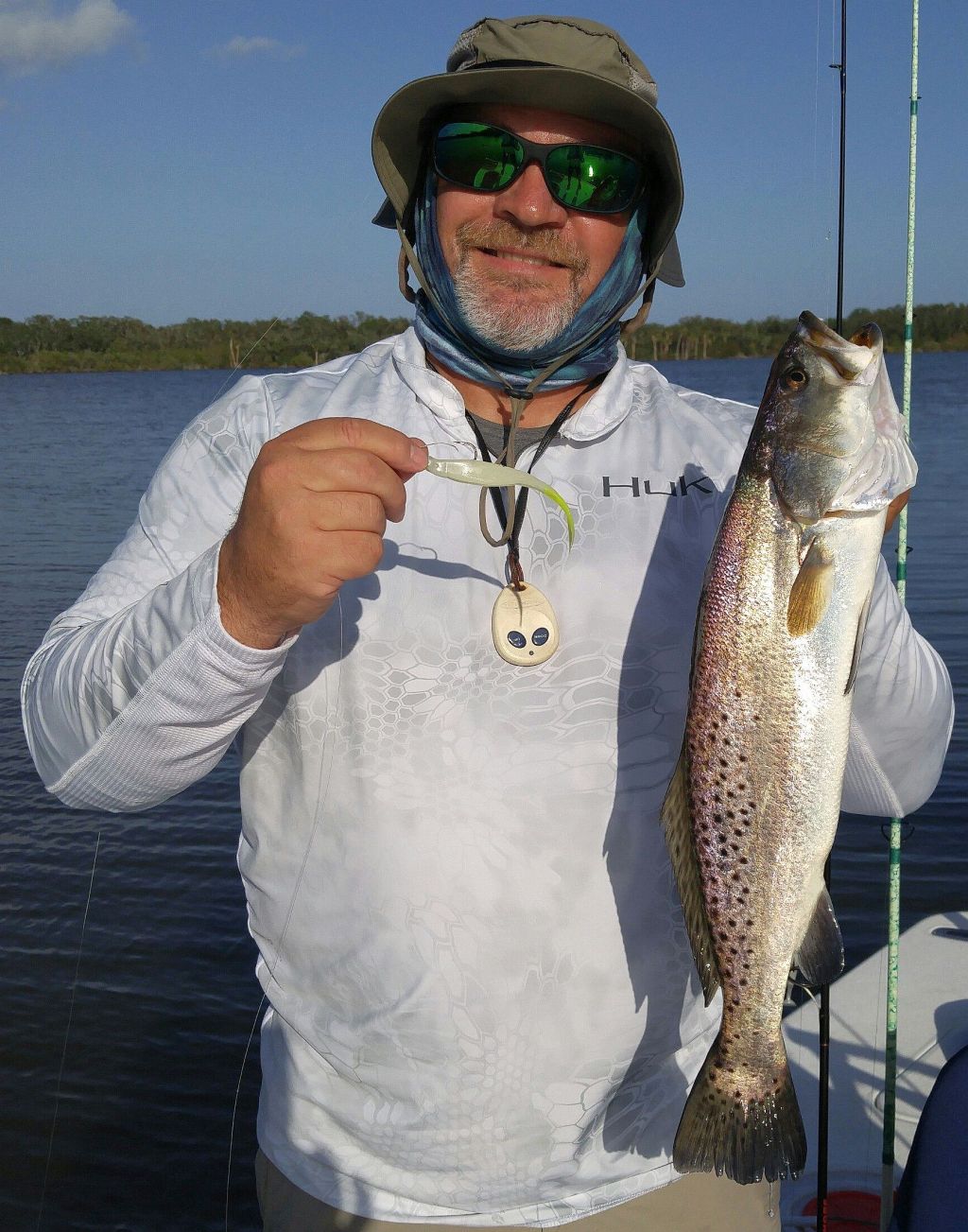
Anglers have been catching good sized sea trout throughout our region on both live baits and artificial lures.
Although live baits normally work better than artificial baits, the exception is first thing in the morning when you can find pods of mullet and glass minnows milling around on the flats and along the mangroves.
To locate ambush spots where deep water meets the shallows, many anglers use Google Earth to do their preliminary scouting.
These areas are where you can often find large egg laden females in their spawning mode roaming the shallower flats around pods of baitfish.
During the early morning hours from first light until around 9:00 am, the egg laden females are less cautious and will often strike almost any large topwater bait that mimics a silver mullet.
Anglers fishing these areas have been catching speckled sea trout in the 19 to 25 inch range on larger sized "walk the dog" style topwater baits like the Skitterwalk, XPS Slim Dog, Badonk-A-Donk, Zara Spook, and Chug Bug.
The 5" Saltwater Shad Assassin rigged on a 5/0 wide gap weedless worm hook and the D.O.A. Baitbuster fished around the bait pods are also deadly baits for gator trout, especially when smeared up with some Pro-Cure Inshore Formula Gel.
We have not had any reports of huge gator trout in the 30 inch range being caught so far this year, but several 26 and 28 inch fish fish were reported over the past weeks in the northern section of the Indian River and Mosquito Lagoon under the mangroves and along the banks in the Edgewater area.
From very first light to about 15 to 20 minutes after sunup seems to be the best time to fish for really big gator trout..
Fishing live pilchards, pogies, croakers, or mullet in the residential canals, creek mouth openings, and anywhere there is mangrove cover available this month can potentially get you a hookup with a gator trout.
The Dragon Point area where the Banana River and Indian River meet is another good area to target large sea trout. Anglers fishing live baits around the rocky areas, docks, and mangroves usually do well in this area.
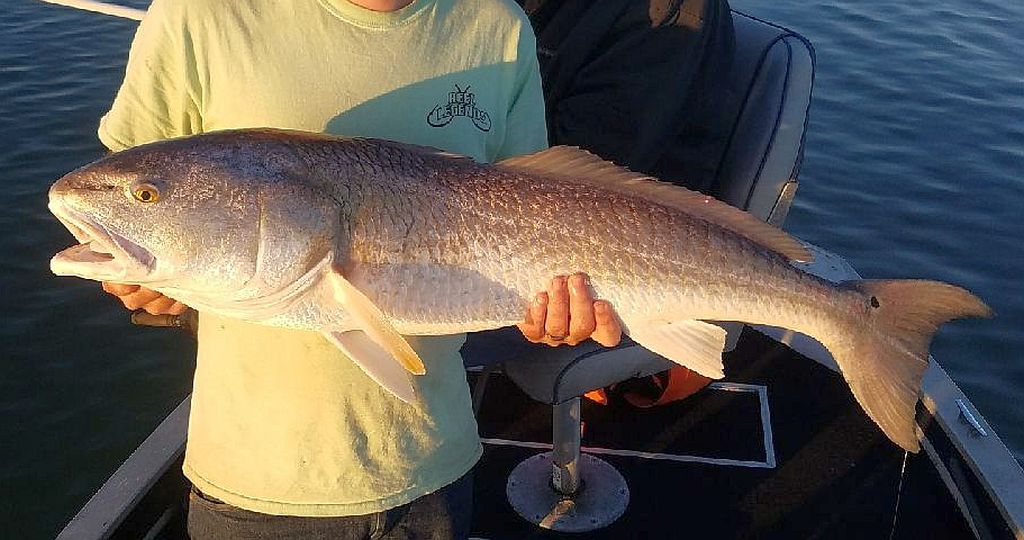
The redfish fish bite on the shallow flats and along the overhanging mangroves on the east side of the Mosquito Lagoon has also been pretty good last month and should continue throughout this month.
Target very shallow water areas where mullet and other baitfish are milling around in good numbers. They are usually in these areas trying to get away from the dolphin that are trying to make a meal of them. You can expect to find reds among the pods in these areas, especially early and late in the day.
Paddle tail saltwater assassins, gold spoons, and small topwater baits that don't create too much of a disturbance are good baits for very shallow water areas. A chunked mullet or ladyfish rigged on a circle hook is also deadly.
A lot of anglers fishing the Mosquito Lagoon target the mullet pods in the early mornings with nothing but large topwater plugs until about 9:00 am when the bite stops. They then go to paddle tail baits, jigs, or gold spoons to find the fish later in the mornings.
Although they are still catch and release only in our area, the majority of reds caught are in the 20 to 26 inch category.
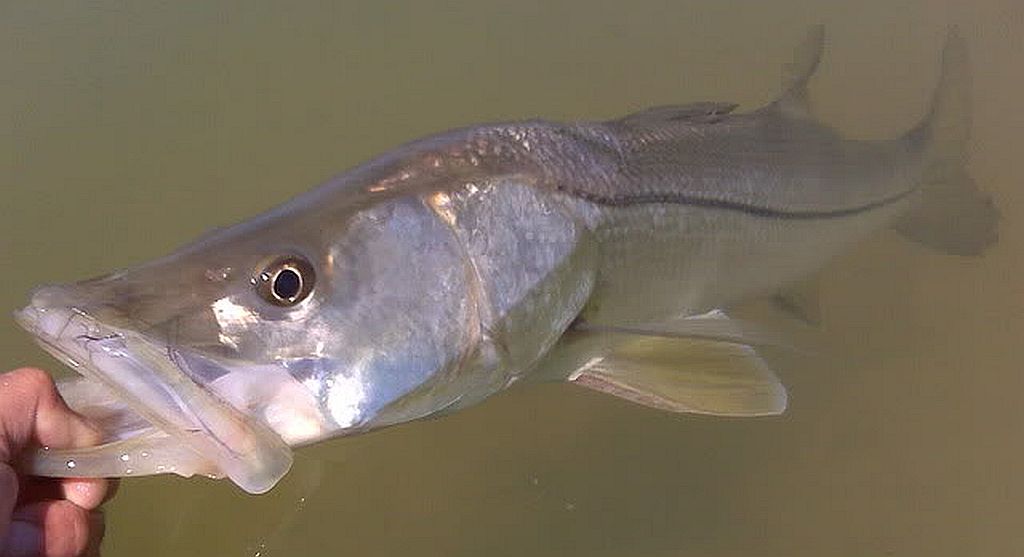
The snook bite last month in the lagoon system has been steady, especially in the vicinity of Ponce Inlet.
In the Edgewater and New Smyrna areas of the river, anglers targeting the docks and pilings with live croaker, spots, or mullet during the last portion of the incoming tide were catching a lot of slot and over size snook.
Night fishing with R&R Flairhawk Jigs and lipped diving plugs along the shadow lines produces good numbers of snook and when the tide is not ripping too fast around the pilings, a live jumbo shrimp is one of the best baits to use for big snook in that area.
The best time to fish a live shrimp around the bridges is during a tide change when the water flow is slow or just beginning to pick up. Fishing the oyster bars in Spruce Creek, Calalusia Creek, Brown's Bay and a couple of other backwater bays can also be productive.
Most snook caught in the Ponce Inlet area have been running in the 21 to 30 inch category with a few larger fish in the mix.
The black drum bite in the lagoon system is still going strong.
Slot size drum continue to roam the flats foraging on shrimp, crabs, and other crustaceans. The usual haunts like the bridges, channels, spoil islands, and deeper waters of Haulover Canal are also producing some larger drum in the 20 to 30 pound category.
When you see a school of drum wagging their tails on the flats, toss a live shrimp or a jig head sweetened with a piece of peeled shrimp, sand flea, or a strip of Fishbites ahead of the fish and slowly drag the bait along the bottom. Dragging the bait covers more territory and creates little puffs of muddy sediment that attracts feeding fish.
Slowly dragging a 4 inch saltwater assassin sea shad tipped with Fishbites along the bottom in the deeper flats is a great way to locate black drum. Hop the bait over the bottom for best results.
The majority of black drum caught in our area right now have been running in the 15 to 30 pound category.
Playalinda and Area Beaches
Spring surf fishing along the Space Coast means big catches of pompano, whiting, bluefish, flounder and sharks.
Pompano will be infiltrating our waters as they make their way back north for the summertime. Whiting will be on the inside or second trough as they scour the surf for crustaceans, and from Patric Space Force Base south to Sebastian Inlet, flounder will be ambushing a variety of baits in the surf.
The Blacktip shark run this month will also be in full swing along the the surf for anglers interested in catching them from the beach.
The key to finding and remaining on schools of pompano depends on water temperature and water clarity.
Pompano prefer water temperatures in the 66 to 74 degree range and shades of green and blue water for clarity. Finding both scenarios improves the probability of catching fish.
Because of they cover so much ground, pompano are tough for most anglers to fish for. They move up and down the beach and can be here one day and gone the next.
Most surf anglers targeting pompano on rigs with a variety of colored floats and beads make decent by-catches of whiting, black drum, and bluefish. The combination of sand fleas, clams, and fresh shrimp tipped with Fishbites is a killer bait for all species. For the best shot at catching some pompano this week, try fishing the incoming tide with live sand fleas or fresh shrimp on a standard two or
three hook surf rig with enough lead to hold bottom.
Most pompano and whiting in our area have been running around 1 to 2 pounds, with an occasional heavier fish in the mix.
Flounder are ambush predators that take a variety of live and artificial baits. The flounder run in our area starts off in March and pretty much fizzles out at the end of May. Surf casters using medium action rods and artificial plastic swim baits, buck tail jigs, and even diving plugs fishing the first and second troughs produce flounder from the surf every year.
Pompano, whiting, bluefish, Jack Crevalle, and croakers are in the surf during April and May, along with a lot of blacktip sharks.
Surf fishermen targeting sharks are having a bonanza fishery all along our East Central area beaches.
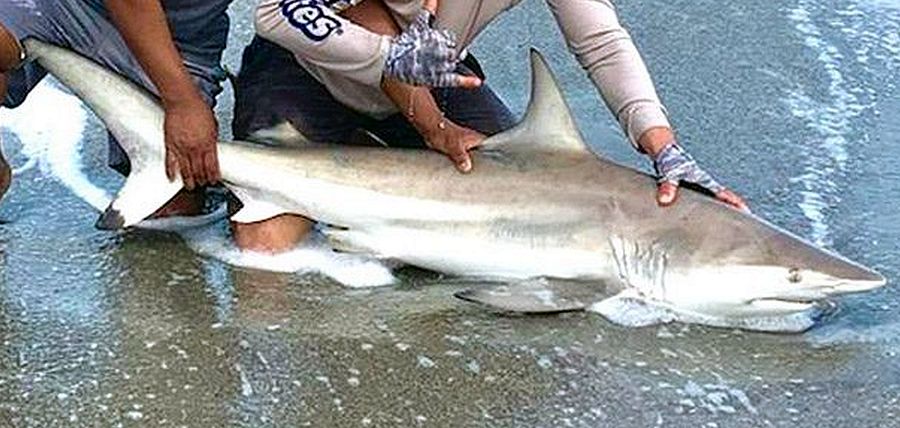
Blacktips, lemon sharks, bonnet heads, and bull sharks made up the majority of catches along our beaches. Fresh chunks of bluefish, ladyfish, or mullet tossed into the first and second troughs are where most bites occur but fresh baits presented beyond the surf break won't last long before a shark or tarpon will pick it up.
When you specifically target sharks, use appropriate tackle. Heavyweight rods, high capacity reels, braided line in the 60 pound or heavier class, and 100 pound or better mono or wire leaders with large 12/0 to 15/0 circle hooks are the norm for these heavyweights.
Also, keep your free shore fishing shark permit with you when fishing from the beach.
Blacktips in our area have been running anywhere from 20 to 90 pounds.
Port Canaveral Offshore and Nearshore
May is prime time for offshore fishing on the Space Coast.
Although dolphin tends to peak in April, the more favorable seas in May allow big boat offshore anglers to prowl the Gulf stream for dolphin, sailfish, wahoo, blackfin, and yellowfin tuna.
On the east side of the Gulf Stream, yellowfin tuna are an obsession to anglers able to make the 80 to 120 mile run necessary to intercept the migrating baitfish, yellowfins, and diving birds that give them away. The action for yellowfin tuna has been reported good around the 120 mile buoy by captains trolling naked or skirted ballyhoo and cedar plugs. Hooking up with tunas in the 40 pounds category is common right now.
The experience of seeing miles of weed lines, pilot wales, whale sharks, flying squid, sunning marlin, and yellowfin tuna blasting away at schools of flying fish more than justify the exorbitant fuel bills required to make the run.
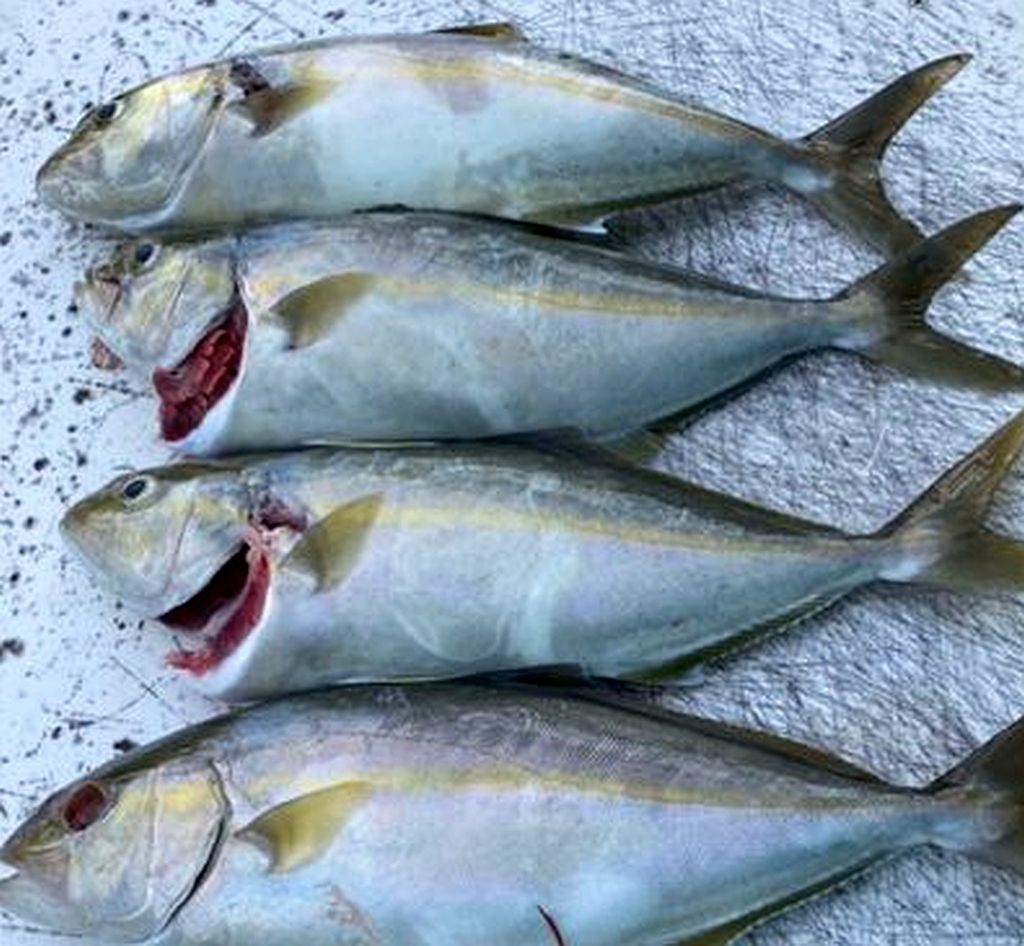
Closer inland on the 160 to 240 foot reefs, the migration of banded rudderfish or Amberines commences this month. Amberines, often confused with juvenile amberjack, are a close relative to Pacific yellowtail that is sold in Japanese sushi restaurants as hamachi.
Amberines can be found from mid water down to about 20 feet off the bottom around natural ledges with sharp relief. They are easily caught with small speed jigs, bucktails, cut baits, and small live baits.
Cut through their gill rakers to bleed them and ice them down immediately after landing for some incredible tasting sushi.
May is when a good number of anglers head out to target grouper on the bottom, however, the increase in shark predation and a sharp decrease in grouper numbers in recent years has made successful outings only for skilled anglers who can crank a fish off the bottom faster than a sandbar or bull shark can chase it.
Despite the decrease in numbers, bottom fishing for grouper and throwback red snapper has been good. Live baits work best on knocker rigs or with 3 way rigs, 80 to 100 pound leaders, and 8/0 to 10/0 circle hooks. A good grouper rig that many charter captains start out using is a 12 to 16 ounce sinker with 100 pound main line and about 5 feet of 80 to 100 pound mono as a leader.
The kids can be kept busy on the reefs catching trigger fish and sea bass using chicken rigs and small chunk baits or squid as bait. Triggers hang a little higher off the bottom so once you hit bottom, crank it up a few feet.
Most of the charter boats out of Port Canaveral will be running out to structure in the 160 to 240 foot depths for gag, scamps, and red grouper.
Deep sea fishermen out of Sunrise Marina in Port Canaveral and fishing off the Ocean Obsession have reported catching solid fish when they are able to get out. Lane snapper, vermillion snapper, mangrove snapper, black sea bass, and triggerfish are the main species caught with occasional hookups with cobia and kingfish.
The Lane snapper bite along the natural ledges in 70 to 90 feet of water out of the Port and the artificial reefs outside of Ponce Inlet has been especially good. Anglers have been using cut squid and sardines, live fingerling mullet, and large live shrimp as bait for Lane Snapper on two drop rigs. Small vertical speed jigs have also been producing nice catches.
Most Lane snapper are running 2 to 3 pounds with some in the 4 to 5 pound range.
Sharks deservedly get a bad rap from deep sea fishermen but this month schools of cobia, sometimes numbering in the hundreds, can often be seen following packs of bull sharks along the 90 foot reefs. If the water temperatures cool off, they will move into shallower areas like Bethel Shoals off of Sebastian or the many mapped shoals northeast of Port Canaveral. This can give bottom fishermen in the area a pleasant surprise with a cobia in the boat.
Offshore dolphin fishing along the weed lines, rips, color changes, and temperature breaks with small skirted or naked ballyhoo should improve as the month progresses. Right now anglers pulling green and yellow, blue and white, zucchini, and pink and white skirts over ballyhoo are picking up some nice fish when they can be located. The dolphin that are now in the area are concentrated in small packs so when you find fish, work the
area thoroughly. Most dolphin right now are in the 5 to 10 pound category.
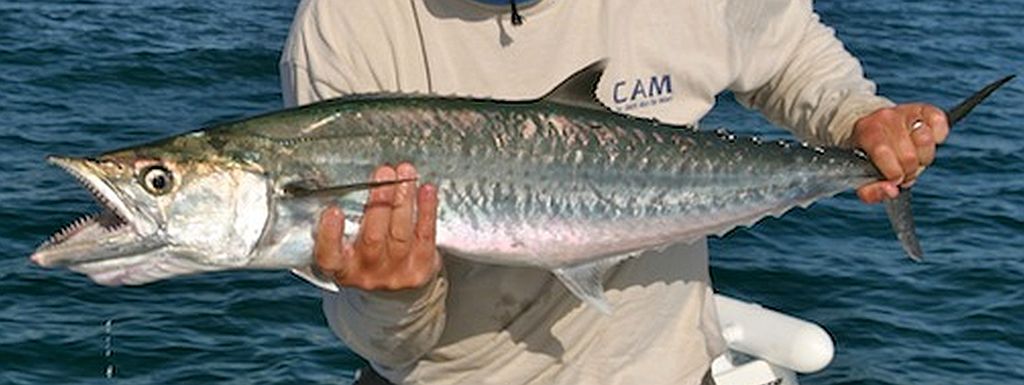
The King Mackerel bite this month out of Port Canaveral can be on fire one day and less than stellar the next.
The key to catching them in our region is to "run and gun" as necessary. If the 70 to 90 foot reefs don't produce fish, move farther inshore where the larger kings tend to move, especially after a big blow. Target weed patches closer to the beach where baitfish are hiding and you will frequently find king mackerel underneath.
The kingfish bite on most of the reefs and wrecks in the 60 to 90 foot depths out of Port Canaveral this month should be good for anglers slow trolling live or frozen baits on wire stinger rigs. Strip baits behind a planer also work well when the fish are down deep.
The 8A and Chris Benson Reefs our of Port Canaveral, Pelican Flats to the east and southeast in 70 to 80 feet of water, and the artificial reefs out of Ponce Inlet are also good spots to target kingfish.
Many anglers in our area who don't like fooling around with live baits go after kingfish with lipped diving plugs and large spoons during the early morning hours and later on in the afternoons during low light periods.
Kingfish in our area generally run anywhere from 8 to 15 pounds, with occasional fish tipping over 20 pounds. Many of the larger King Mackerel caught in the shallower 35 to 55 foot depths out of the port can exceed 50 pounds.
As the nearshore waters continue to warm this month, the bite along the beaches and inlets for snook, tarpon, bull redfish, Jack Crevalle and other inshore species will continue to improve.
The tripletail bite during March was really good and almost as good during April. This month the bite for trips, especially larger fish, is expected to ramp up around any type of floating structure, the channel markers, weed lines, floating debris, and even slicks or "scumlines".
Live shrimp, small jigs, and small flies are all good baits for tripletail. Right now the fish are running in the 5 to 10 pound category.
Until Next Time,
Tight Lines, and Bent Rods!