Your January 2024 🐠 Mosquito Lagoon & Indian River Fishing Forecast
Published: Mon, 01/01/24
Mosquito Lagoon & Indian River Fishing |
|||
|
Newsletter Issue # 174 Fishing Forecast January 1, 2024   We Hope You All Have A Happy New Year! Mosquito Lagoon and Indian River: Florida's recreational season for spotted seatrout opens up today for the Central East region and from the way things are shaking out, we should have some decent wintertime fishing this month for speckled sea trout, redfish, and black drum. A lot of anglers will also be targeting snook around the deeper shorelines and mangroves before the winter temperatures set in. For the past few days, the snook bite has been good for anglers fishing tight under the mangroves during the early morning and late afternoon hours when the fish are most active. Skip casting dark colored 3 1/2" paddle tail baits on 1/8th oz. jig heads or 5" jerk shads on 1/8th oz. weedless hooks has been the best method for catching them right on the bank. 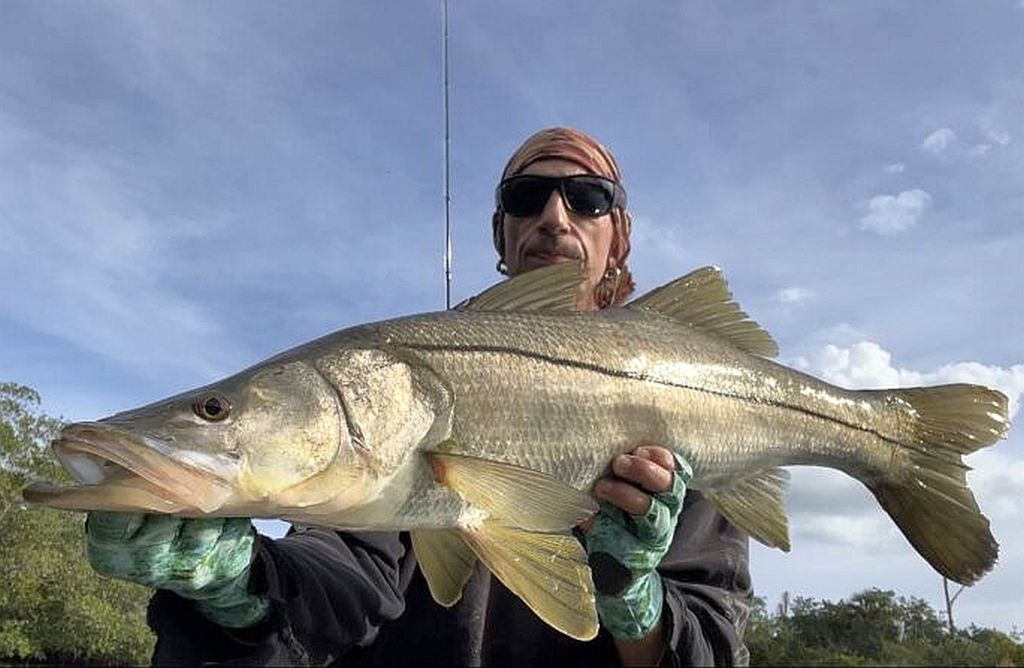 Although true gator size sea trout are not as plentiful as they have been in past years, a lot of females in the 6 to 9 pound and over category are still out there waiting to be caught. A lively pinfish, croaker, mullet, or jumbo shrimp fished under a noisy popping cork is a hard bait to beat for catching large sea trout. During January and colder periods in general, you can usually find a lot of under slot sea trout stacking up in the deeper holes, channels, and sloughs throughout our lagoon system. Suspending plugs, plastic Saltwater Assassin baits, small jigs, and Johnson Sprite type spoons will all produce fish over the
next couple of months when fish slowly.
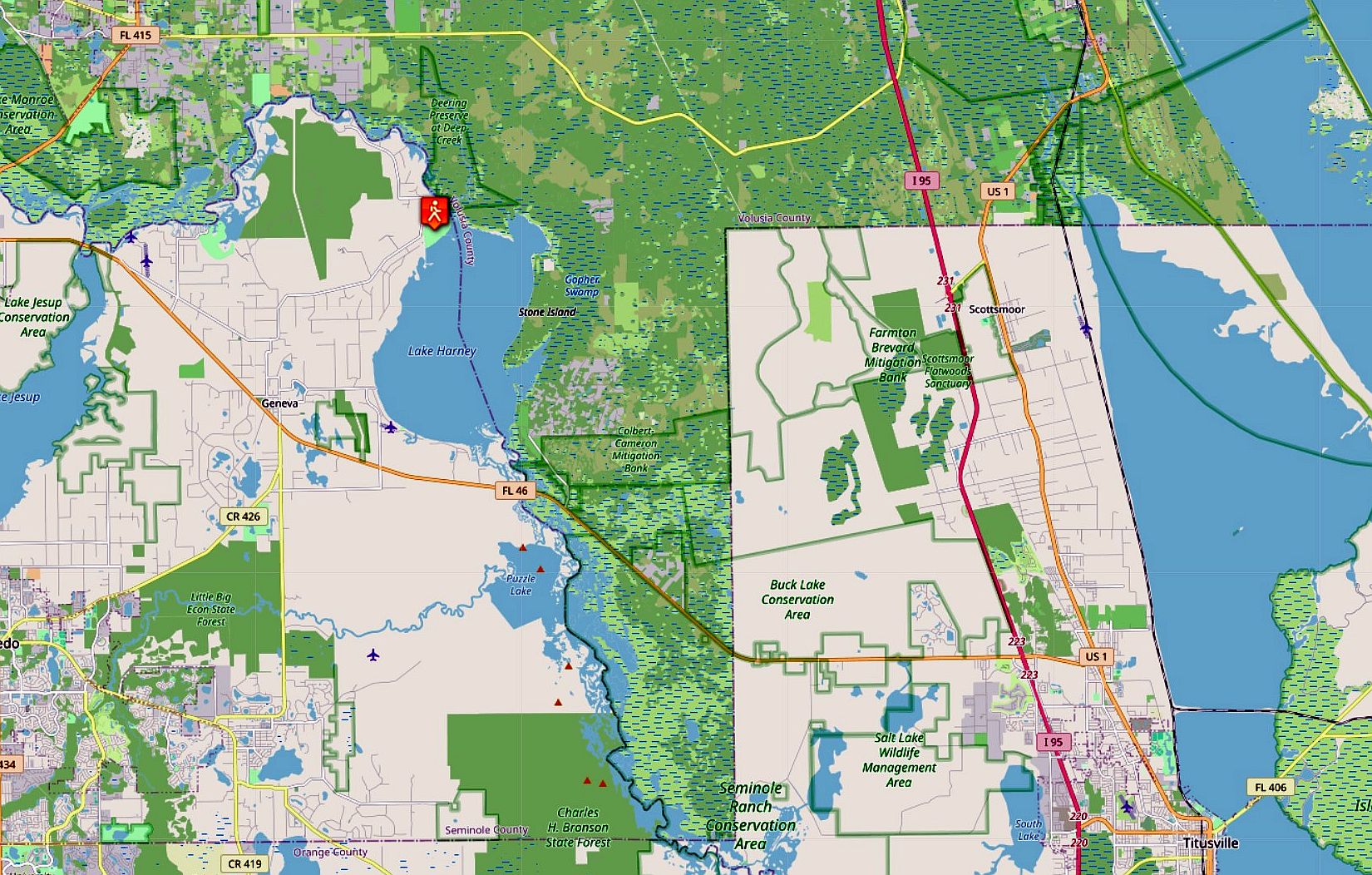
For anglers who prefer using artificial baits; plastic D.O.A. type Jerk baits and jigs have been the go to lures for most fishermen, but topwater lures also produce fish at times. Around the entrance to Bio Lab Road, juvenile tarpon up to 40 inches have been rolling on tiny glass minnows. Fly fishermen tossing Deceivers and spin fishermen using small Creme paddletail baits have been getting hookups, but in the confined brush lined spaces, few fish are being landed for pics. Black drum in our area spawn during the spring and will usually school up well into April and May. 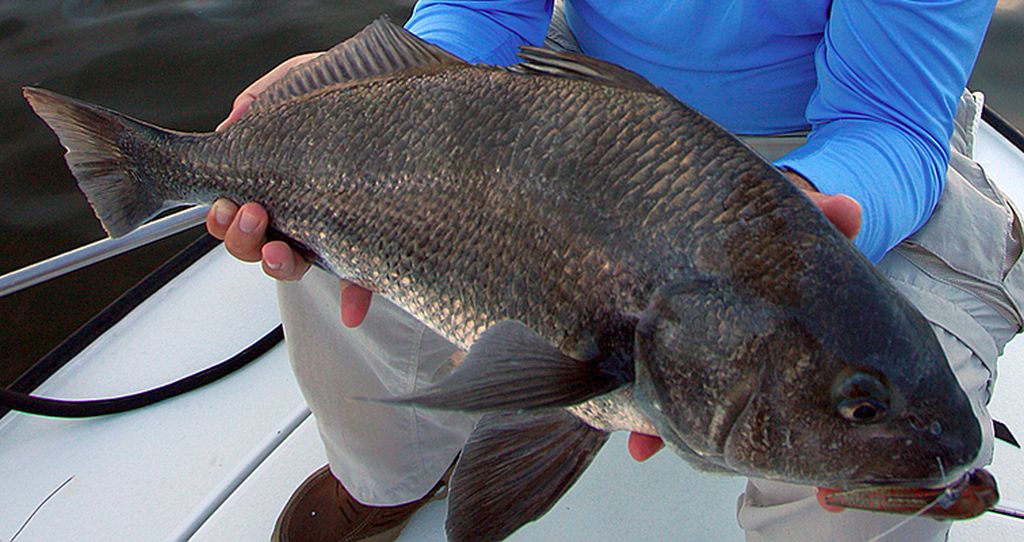 During the winter months to early spring, black drum up to 12 pounds gather up into large schools in the Mosquito Lagoon, Banana, and Indian Rivers. In the southern part of the Mosquito Lagoon; anglers can find single fish, along with medium to large schools of black drum cruising the shallow flats along the Bio Lab Road area. Around Christmas week, a large school of drum was meandering about 100 yards north of the boat launch for several days before moving south along the road. Several bank fishermen in this area reported catching black drum in and over the slot on live and fresh dead shrimp. Some speckled sea trout, undersize mangrove snapper, and the usual bycatch of catfish and rays were also reported. On the deeper flats in the northern section of the Indian River and in the deeper waters in the Patillo Creek area, anglers fishing live shrimp on a sliding sinker rig and on jig heads are beginning to catch some nice slot size drum. Live or dead shrimp, cut mullet, chunked lady fish, and pieces of blue crab all work well this time of the year on black drum and reds in these deeper areas. The shallow mud flats along Gator Creek and East Gator Creek road also hold small pods of slot size black drum. On calm days you can sometimes see them tailing on the shallow mud flats along East Gator Creek Road. Fish live or dead shrimp for these fish. The bite for for sheepshead and mangrove snapper is starting to get hot on structure close to moving water in both the Mosquito Lagoon and the Indian River. 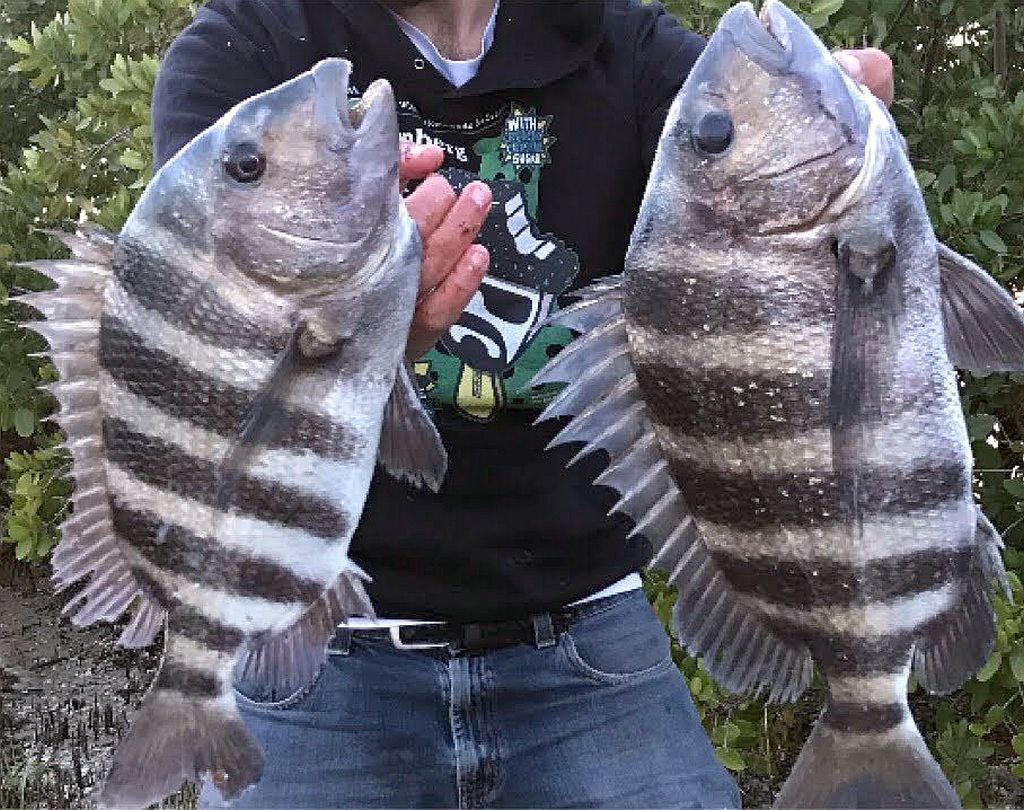 Colder water temperatures make most gamefish sluggish, but for sheepshead and mangrove snapper, the conditions couldn't be more favorable. Right now sheepshead are hanging around any rough encrusted structure. Anglers dropping live shrimp or fiddler crabs around bridge pilings, residential dock pilings, jetties, and rocky outcroppings have been catching some keeper mangrove snapper and good numbers of sheepshead. Small fiddler crabs, sand fleas, live shrimp, and any other crustacean you can get on a small hook will work on sheepshead. Many successful anglers use a long shank #2 hook with a small split shot and about three feet of fluorocarbon leader for these bait stealers. The dock pilings behind the condos in Titusville, both the fishing piers at the A. Max Brewer Bridge, the pilings at the railroad bridge, and the fenders at Haulover Canal are all good areas to target sheepshead right now. Prior to the last cold front, the fishing has also been pretty good for pompano in the cleaner, deep waters along the spoil islands and mangrove shorelines farther south of us. Chartreuse and yellow nylon jigs and Doc's Goofy Jigs were taking most fish around the islands. The cooler water temperatures we have been experiencing are beginning to concentrate sea trout, black drum, redfish, snook and juvenile tarpon into the deeper holes along the flats, channels, drops off adjacent to the flats, and residential canals where the water temperatures are a bit more stable. Anglers can fish in these areas later in the day using live shrimp on a jig head or small split shot fished around the docks or overhanging mangroves. Cut pinfish, ladyfish, or mullet on a circle hook is another option to get these fish to hit. And for anglers who fish artificial baits, a 2" or 4" Saltwater Assassin or Sea Shad tail fished super slow will also get bites. The fish will not chase a fast moving bait during colder periods. Shallow creeks like those in the northernmost section of the Indian River along North Shiloh Road are often overlooked by anglers, but redfish, snook, and juvenile tarpon in the deeper waters of the Indian River make their way into the dark mud bottom creeks during the winter months to forage for small crabs, shrimp, and small baitfish. 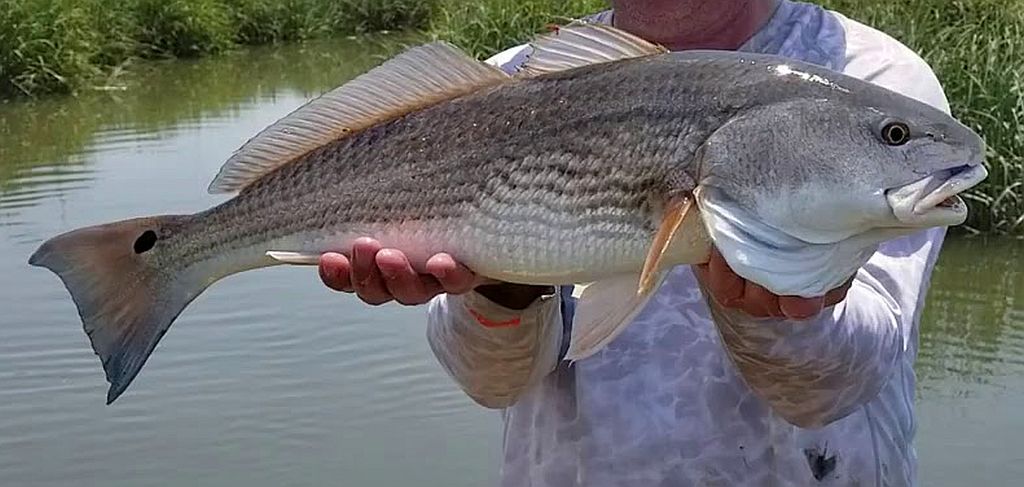 The best time to fish these creeks is later in the afternoons when the sun warms the water over the dark mud bottom. Live or dead shrimp and cut baits work best for these fish during the winter months. Later on in the spring when the water warms up, artificial baits will out fish live baits. During the early morning hours, look for schools of redfish, black drum, and lone gator sea trout cruising the deeper eastward facing ledges. As the sun rises and the water starts to warm up, the schools of drum and redfish will start moving onto the shallow sandy flats. Most anglers targeting redfish on the shallow flats find that the best bite for singles, pairs, and small pods occurs prior to a cold front. Live shrimp, crabs, cut baits, and cut mullet are usually the baits of choice for these fish. Fly fishermen looking for a trophy redfish on the fly know that January is a peak month for sight fishermen in our lagoon system. Any pattern that resembles a crab or a shrimp on the flats will get hit when fished slow or at a standstill. Although the water in the lagoon system is not yet crystal clear throughout; most areas provide visibility good enough for some decent sight fishing opportunities. As the weather gets colder and fewer anglers venture out on the water, the water quality will improve for even better sight casting. Playalinda and Area Beaches: January is an outstanding month for Playalinda and other Central Florida Beach surf fishermen targeting Pompano; especially when the cold fronts begin to move into our area. Consistent water temperatures in the mid 60s will keep the pompano active and push bluefish, mackerel, and flounder into our inlets. When the water temperatures get into the high 60s to low 70 degree range, the larger "keeper" pompano will begin moving closer to the beach within casting range of surf anglers. 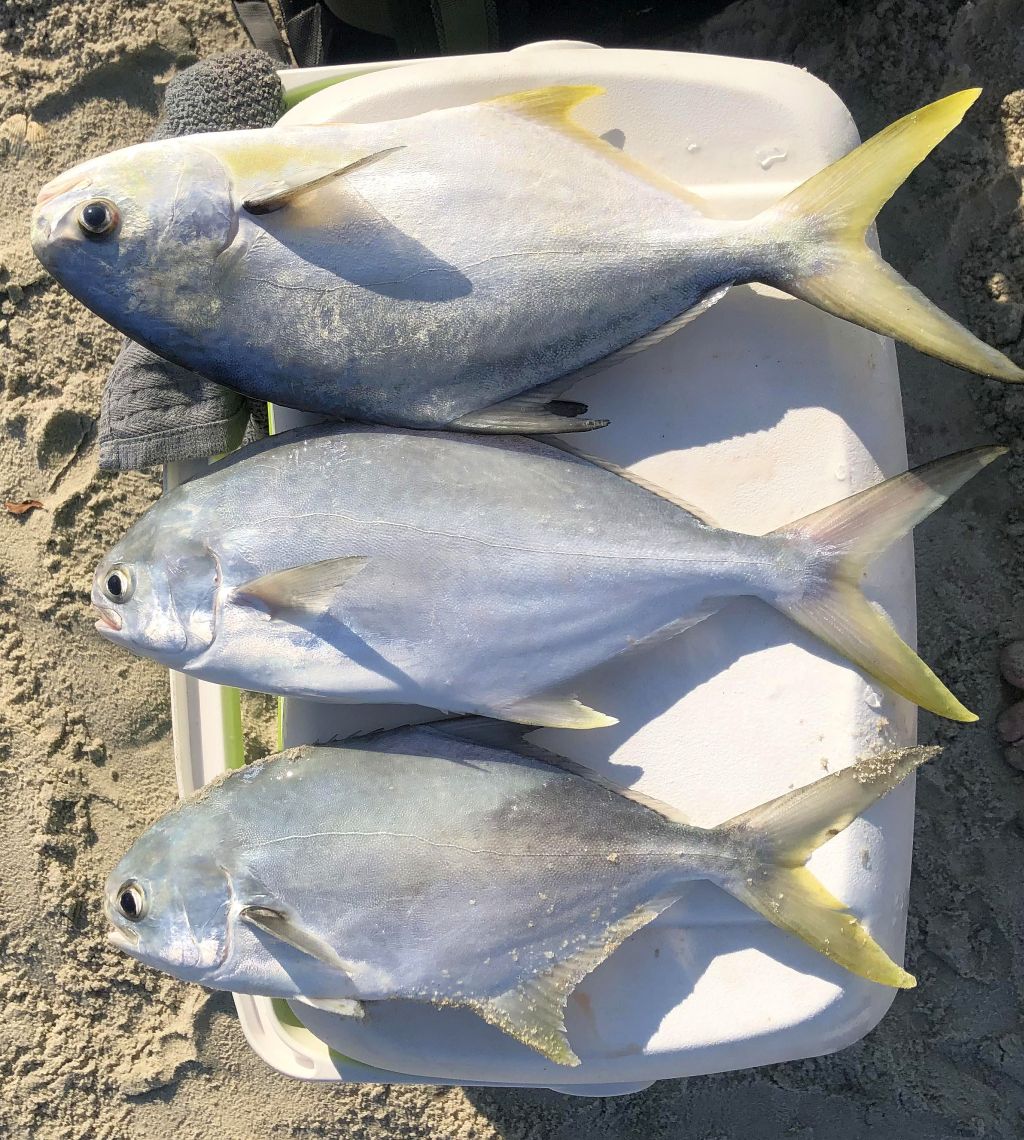 Right now along Central Florida beaches, we are beginning to see more schools of keeper fish moving closer to the sand. Live sand fleas are definitely the bait of choice for the majority of Pompano fishermen but during the winter months they are sometimes hard to find. When fleas are scarce, small pieces of fresh shrimp works almost as good. Many surf fishermen substitute Fishbites, blanched sand fleas, salted clam strips, Fish Gum, or small bits of shrimp tipped with Fishbites on 2 or 3 hook pompano dropper rigs with or without colored floats, when live sand fleas are not available. In the Coco and Melbourne beach areas, many surf fishermen targeting pompano use a simple Frisky Fins pompano rig or a Pompano Rich rig with some fresh shrimp or clam, tipped with fish gum or Fishbites. A lot of died in the wool pompano fishermen try a variety of combinations and custom tie their own pompano rigs. The best bite recently was on "electric chicken" Fishbites with a piece of fresh shrimp for bait. Surf fishermen in the Cocoa Beach and Cape Canaveral areas have also been catching black "puppy" drum, whiting, flounder, and bluefish in their search for pompano. Fishermen tossing small silver spoons, Gotcha lures, and Rapala X-Rap lipped diving plugs can expect to make good catches of bluefish, Spanish mackerel, ladyfish, and jacks this month from the beach. Knowing how to read the water on the beach is what makes the difference between a successful fishing trip and a skunk. Too often anglers, including myself, get in a hurry to set up and waste time fishing an area where there are few if any fish. Successful surf fishermen are able to distinguish depth changes, runouts, troughs, and ebbing waters off of the rip currents that pose the best opportunities for holding fish, even in the most challenging of conditions. Set your baits out at varying distances until you find where the fish are located and then relocate your lines into that area. Many anglers toss their baits out a country mile when the fish are schooling at their feet in the first trough. Surf fishermen specifically targeting sharks continue to make good catches of blacktips on whole and fresh chunked baits. A few larger sharks in our area have been caught from the beach by anglers using an entire fish carcasses for bait.  Andrew Berube and Bobby Minotti of Eastern Florida Shark Hunters safely landed and released this 13 foot Hammerhead shark (above) while fishing from the beach a couple of weeks ago. The sharks seem to have specific preferences on a daily basis, so vary your baits and methods. Not much can be done about it except to reel faster or set another rod out specifically rigged for catching sharks. A wire or heavy mono leader with a large hook on a sliding sinker rig and a live or half of a whiting will get the job done! Port Canaveral Nearshore and Offshore: Mahi, Bonito, Sailfish, Blackfin Tuna, Wahoo, and Snapper are the best bets this month for anglers able to get offshore to drag a bait.
When the surface water temperatures offshore get into the 66 degree range, look for scattered blackfin tuna, wahoo, and dolphin around rips and color changes near the western edge of the Gulf Stream. 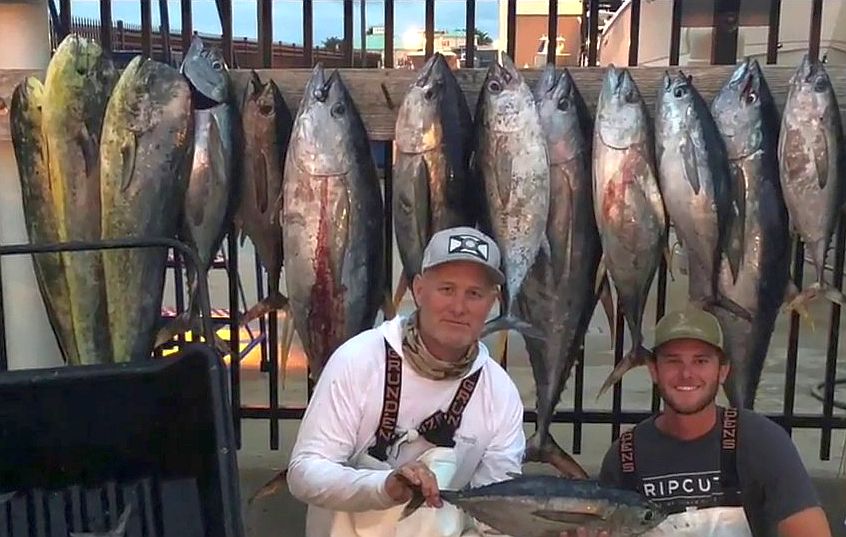 Large, dark colored trolling lures are generally used to catch wahoo, while small dark colored lures work best for blackfin tunas. Dolphin are usually suckers for blue and white or pink and white skirts in front of small to medium size ballyhoo baits. The current cold front has caused many anglers to fish nearshore out of Port Canaveral but when the winds are cooperating offshore, bottom droppers on charter and deep sea party boats out of the port make good catches of amberjack, mangrove snapper, mutton snapper, lane snapper, black sea bass, triggerfish, groupers, and cobia that also show up over the reefs. The snapper bite in particular peaks during January and anglers targeting them can find most snapper species in depths as shallow as 50 feet this month. The snapper bite on most of the 60 to 130 foot structure is reportedly good with anglers using frozen squid, sardines, pilchards, mullet, and live baits on standard chicken rigs and bottom rigs. Nearshore this month, as long as the seas are relatively calm, the bite for Kingfish along the 60 to 90 foot reefs should be consistent for anglers slow trolling live pilchards, mullet, or pogies, and dead sardines on stinger rigs. King mackerel will also strike spoons and plugs trolled deep with a planer, Sea Witch and bait strip combinations. Manta rays begin showing up this month and when they arrive, the cobia will be tagging along with them. Cobia will occasionally follow sea turtles and bull sharks over the shallower reefs. On calm days with good visibility, nearshore anglers will be able to sight fish for Cobia using hair jigs, jig and eel combos, and a variety of live baits. The inclement weather we are having has made for some tough inshore fishing. Closer to the beach, the fishing for redfish and snook has been slow. However, the fishing for jacks, bluefish, Spanish mackerel, ladyfish, sheepshead, and snapper has been been pretty good when the seas are calm enough for small craft to get out. Anglers slow trolling Rapala X-Rap lipped diving plugs and small spoons are catching most of these species off the beach but s mall live fingerling mullet or pilchards will also get them to strike. The water in the inlets has been silty on the incoming tides and dark from the rain mixed fresh water on the outgoing tides, but these conditions will gradually clear up as the month progresses. This week's cold front should keep the pompano off the beach moving and provide cleaner water that will improve the bite for mackerel, bluefish, and pompano.  After the cold front we had last week, near shore anglers should start seeing better numbers of tripletail, weakfish, and possibly a few more cobia showing up. A few tripletail were caught along the buoys, weed lines, and near shore wrecks last month but January is when the larger fish start appearing around surface structure. This weeks cold temperatures is producing a hot bite in the shipping channel and deep water turning basins and at Port Canaveral. Sheepshead, pompano, mangrove snapper, whiting, permit, blue runners, snook, and a few redfish are also hitting live shrimp on a light (1/8 to 1/4 ounce) jig head around the drop offs and rocky areas at the port. The sheepshead bite in particular has been off the charts around rough structure. As water temperatures outside Port Canaveral continue to fall down into the middle 60 degree range, the action should only get better. St. Johns River American Shad: Every Christmas in East Central Florida, anglers eagerly await the American Shad spawning migration up the St Johns River. Like Salmon, American shad are an anadromous species that spend four or five years in the ocean before returning to their freshwater birthplaces to spawn. Every major river along the Eastern coast of North America, from the St. Johns River in Florida, to the St Lawrence River on the Canadian boarder, will experience the annual winter spawn of these two to five pound fish. 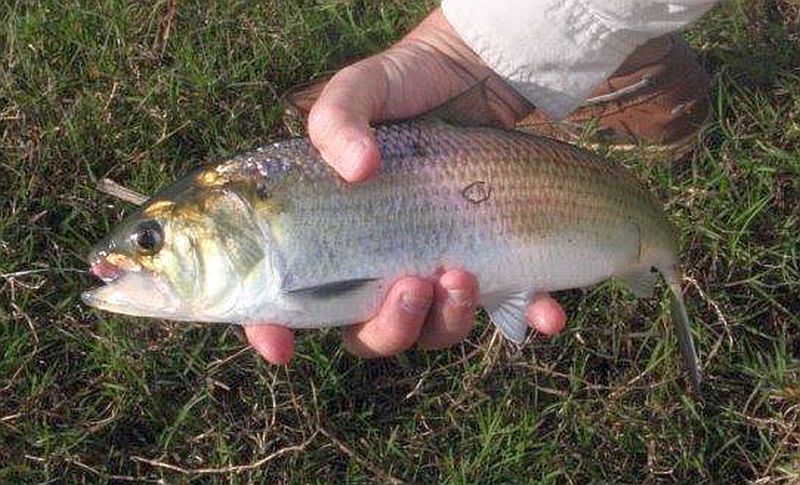 Along with their smaller cousin the Hickory shad, American shad generally begin to show up in the Middle Basin of the St. Johns River in early December and continue to migrate upstream in small schools throughout the season. The peak of the run is from mid January through mid February, but each year is slightly different. Depending on the year, water levels, and temperatures, shad can be caught in the Middle and Upper Basins of the St. Johns and tributaries like the Econlockhatchee River until sometime in March; but fish can be in the river as early as May and as late as October. When water levels are low, many anglers hike in from the Brumley Road trailhead to fish the Econ with light spinning and fly tackle. The middle and upper basins of the river are considered to be prime shad fishing areas. On the lower part of the Middle Basin where the water is deeper and wider, most shad fishing is done south of Lake Monroe and north of Lake Harney. The Mullet Lake Park, Cameron Wright Park, and Lemon Bluff areas is where boaters launch to slow troll small lures until they locate a school of fish. When a concentration of fish is located, they drop anchor to fish the area. American shad travel in loose schools so where one fish is found, you can expect to find others. Anglers will generally catch several fish using this technique before the fish move on; then the tactic is repeated until more fish are found. Most anglers in this area use small shad darts, jigs, or small spoons. Fly fishermen use sinking lines and weighted flies to get their lures down closer to the fish. On the upper part of the Middle Basin, the best shad fishing occurs south of Lake Harney and north of S.R. 50 (C.S. Lee Park, Hatbill Park, and the Highway 50 Boat Ramp). The most popular area is the section of river between S.R. 46 and Puzzle Lake, which includes the mouth of the Econ. When the water is in its banks, the river from Puzzle Lake through Hatbill to S.R. 50, twists and turns in a maze of swift current winding channels. Although this entire stretch of river is perfect for shallow draft boats, kayaks, and canoes, it also has a lot of airboat traffic and the largest concentration of 10 foot plus alligators in the country. It is also a good area for fly fishermen and anglers using conventional light spinning tackle. Both American and Hickory shad are found in areas of the river with a good current and a nice firm, clean bottom. Shad are broadcast spawners and do not normally congregate in slow moving water with mucky or silty bottoms. Good areas to target are areas of the river that split and come together, the heads and tails of pools in the river bends, areas outside the current along deep pools, eddies and seams, areas where the speed of the current increases or decreases, and areas where the water depth noticeably changes. American Shad in the St Johns River appear to do little to no feeding during their spawning migration, however, they will still strike bright, flashy lures. The trick to catching shad is to look for spawning or feeding fish. Spawning fish will generally ignore a fly or lure. Feeding fish on the other hand will aggressively nail flies and small lures on the top or just under the surface.  />Shad darts, small fixed hook Nungesser and Johnson spoons, plastic or hair panfish jigs, and
small Road Runners are all classic lures for shad fishermen using light or ultralight spinning tackle. />Shad darts, small fixed hook Nungesser and Johnson spoons, plastic or hair panfish jigs, and
small Road Runners are all classic lures for shad fishermen using light or ultralight spinning tackle.A 4 wt to 6 wt fly rod with a sinking line and small #4 to #8 weighted patterns that hug the bottom is perfect for catching shad. The fish don't seem to care about patterns or color as much as the profile of the fly. When searching for shad, look for diving birds that feed on small minnows or concentrations of grass shrimp. It's a good bet that areas where birds are feeding are probably where the shad are feeding. The best way to find where the fish are on any given day is to talk to local fishermen, bait shop owners, local shad fishing guides, or search the internet for shad fishing reports. When you find a general area, congregations of fishermen along the bank or anchored just off the bank will be a dead giveaway to where the fish are holding. Don't be shy about asking questions, most anglers are happy to provide information about the bite and what baits are hot. Shad fillets are sweet and delicate but they have a lot of tiny bones that should be removed before cooking. The roe is a delicacy that is hard to beat when lightly sautéed in garlic butter. The average size for shad in the St Johns is around 2 to 3 pounds. There is a 10 fish aggregate bag limit for American and Hickory Shad if you plan on harvesting them. A freshwater and saltwater fishing license is required to fish for them. Haulover Canal The cold fronts in our area make the deep waters of Haulover Canal a holding area for black drum, redfish, sea trout, snook, tarpon, Mangrove Snapper, and a variety of other species.
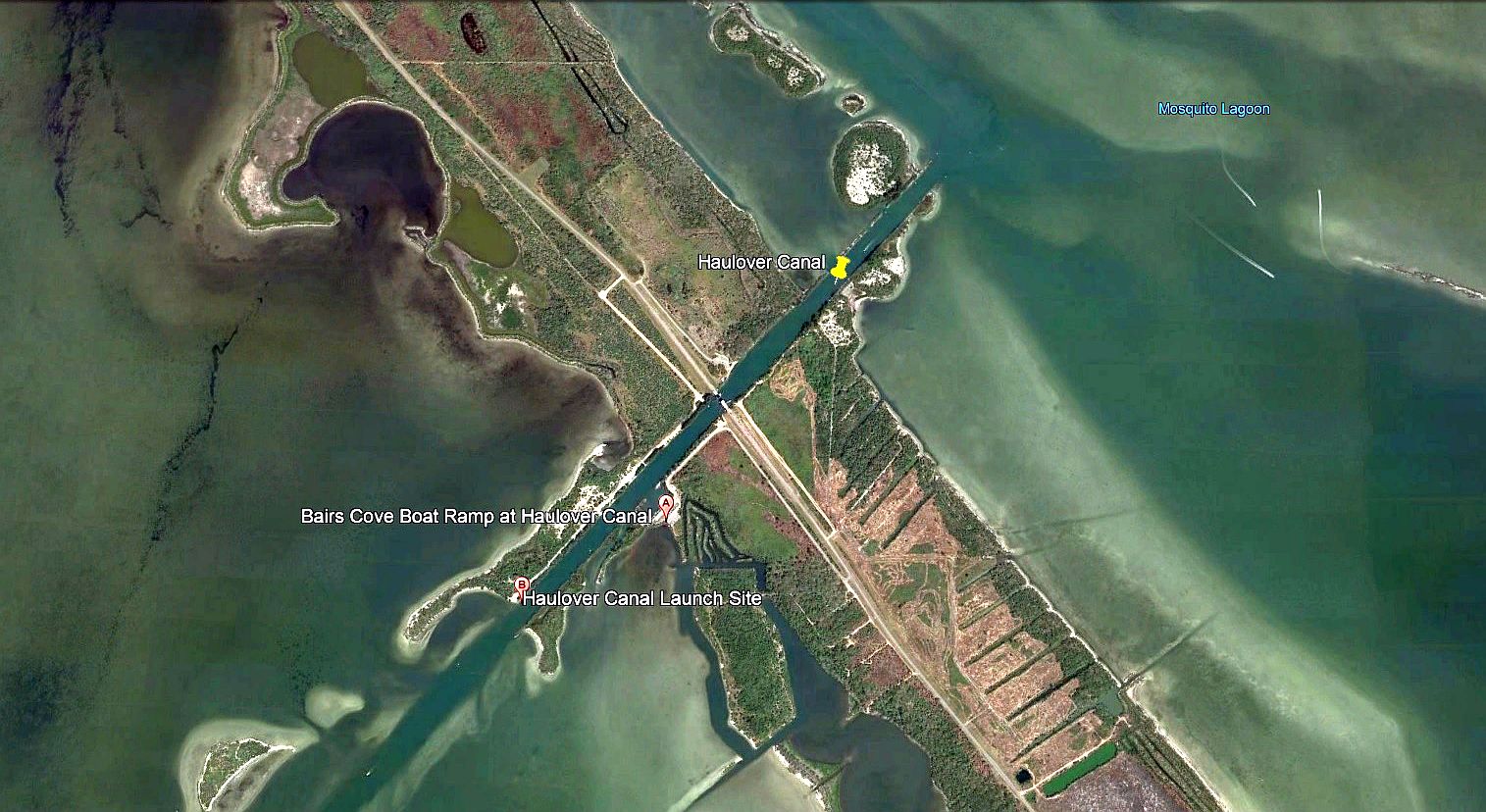
During most days after Christmas when many of us took vacations, both sides of the canal were usually lined with anglers fishing for Mangrove snapper, reds and big black drum. Last week land based fishermen along the coquina outcroppings and bridge fenders at Haulover were catching some keeper mangrove snapper on live shrimp, mullet, and small cut baits. 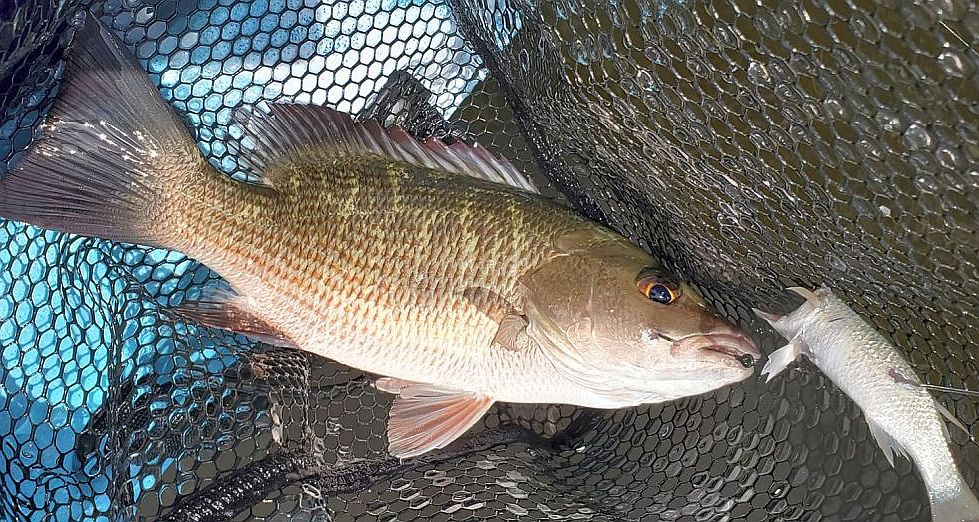 Live and fresh dead shrimp or small chunks of freshly caught fish on a 2/0 or 3/0 circle hook, with a small split shot or two to get the bait close to the bottom, is a good way to fish for Mangrove snapper in this area without getting hung up on every cast. Anglers using heavier barrel sinkers usually
find themselves spending a lot of time re-rigging.
Although they are strictly catch and release, some of the largest bull redfish in our area are taken from the deep waters of the canal by anglers using live blue crabs, jumbo shrimp, live pinfish or mullet, and large cut baits, especially during the winter months. Larger, oversize baits account for more big redfish in the 40 inch and over category being caught than any other bait. They also minimize the bycatch of hardhead cats and stingrays. Serious fishermen specifically targeting bull reds use stout rods, 30 to 60 pound Power Pro or other brand braid, 30 pound or heavier fluorocarbon leaders, a 6/0 circle hook, and enough weight to hold bottom in order to stop the heavyweight reds from breaking off on the outcroppings. The deep holes at the mouth of the canal to the Mosquito Lagoon and on the Indian River side consistently produces bull reds and large black drum. When the bite is on, you can often see several boats anchored in these areas dunking live crab or shrimp after reds and big black drum. . Boaters can launch their vessels from the Bairs Cove boat ramp or the Beacon 52 boat ramp, and anchor off the ICW at either mouth of the canal. The best bite for black drum and bull redfish is normally just before and a few days after the cold fronts roll through the area, and around the full moon. Shrimp and blue crab sections are by far the most productive baits of choice for most black drum anglers. The banks of Haulover Canal are definitely one of the better areas for netting large shrimp in our area. Most sport shrimpers concentrate their efforts around the railroad bridge, the A. Max Brewer Bridge, the fishing piers, and the ICW up north around Edgewater and Oak Hill; but the size of shrimp in these areas are consistently smaller than those netted in Haulover. Until next time, Tight Lines, bent rods, and a safe, prosperous, New Year to you all!
|
|||