Your December 2022 🐟 Mosquito Lagoon & Indian River Fishing Report
Published: Thu, 12/01/22
| Newsletter Issue # 161 | December 1, 2022 |
||||||
Mosquito Lagoon & Indian River Fishing |
|||||||
 The Mosquito Lagoon and Indian River:
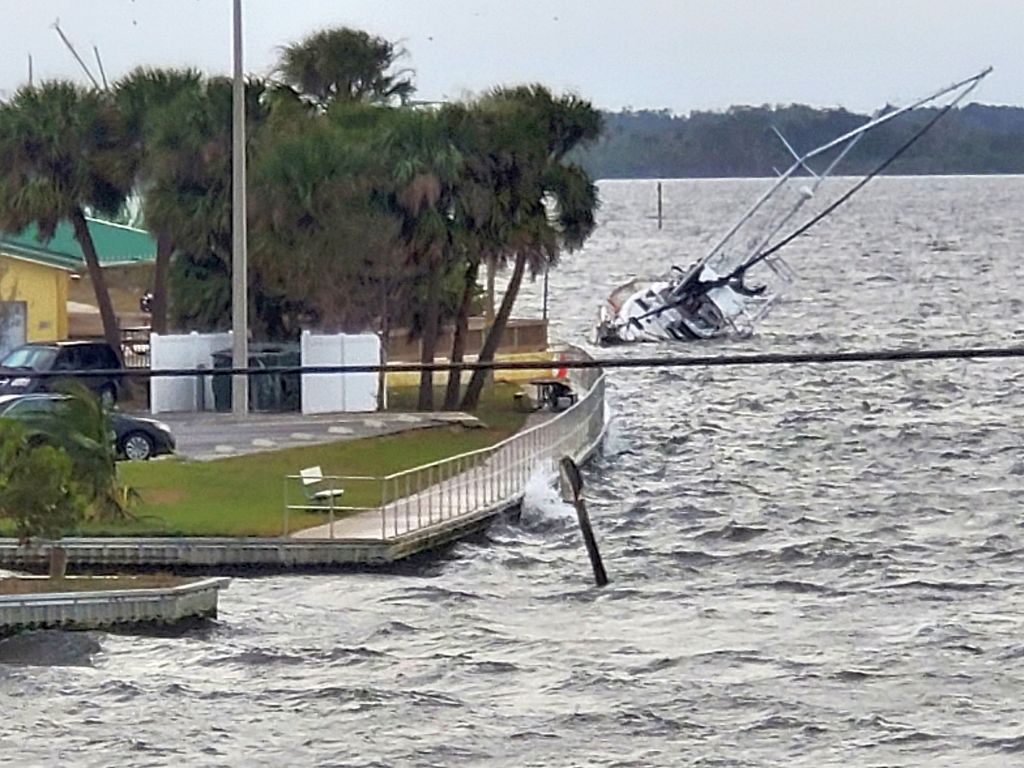
The Fall post Hurricane Nicole bite has been good throughout the Space Coast for redish, sea trout, snook, black drum, and jacks. The higher water levels are continuing to recede and the clarity of the water has been getting better throughout the past month. Until the higher water levels disappear, look for fish foraging in areas not usually accessible to them. You can cover a lot of water during high water conditions with spoons and shallow plugs. Savvy anglers are still targeting the bait pods in shallow areas along the shorelines in the backwaters of the lagoon system. The fish will be either mixed in among the baitfish or holding close to them around the pods. Live finger mullet and shrimp, along with a variety of surface and sub surface plugs and soft plastics have been producing good numbers of fish in these areas. 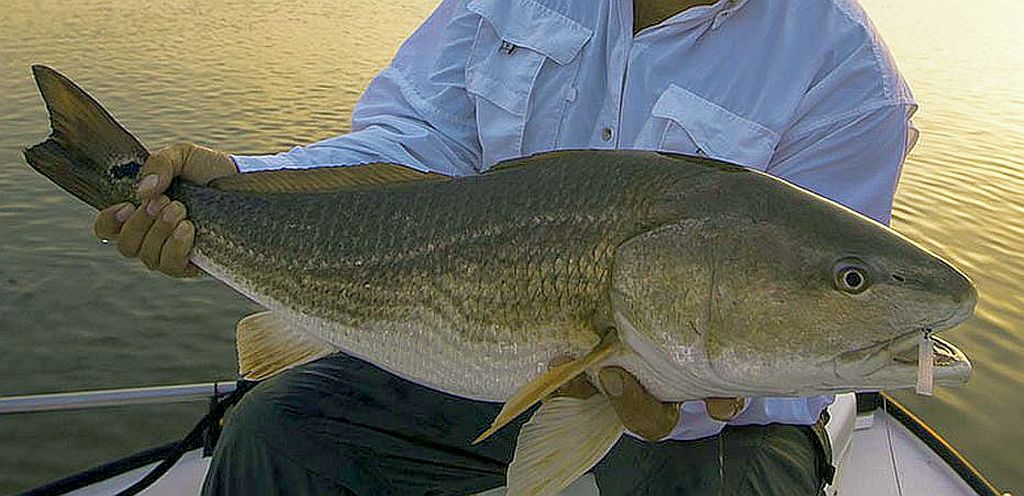 The Rapala Subwalk in the moss back shiner, mullet, or pilchard color and 3 to 5-inch Rapala lures seem to be preferred by the fish on most days. In the lagoons this past week, the best action has been using cut mullet or ladyfish for bait. Good numbers of 24 to 30 inch reds are being caught on these baits fished tight to naturally vegetated shorelines. The 1000 Islands area near Cocoa Beach, the area around Dragon Point, Mathers Bridge, and the flats in the middle and southern portions of the Mosquito Lagoon are producing good numbers of redfish right now. Fresh cut mullet has been by far the best bait for these fish and has been producing twice as many bites over frozen chunks of bait. Last month, the temperatures in our lagoon system started to cool down contributing to the more aggressive feeding behavior of most species before the colder winter months. Despite the cooler water temperatures, there are still quite a few tarpon around our area and until until we get a good cold arctic blast to push them out, they should remain with us. Black drum are beginning to school up in the Indian River and the site fishing for redfish, sea trout, and Snook has been getting better in the lagoon backwaters as well. Black drum are similar to their cousin the red drum, but their feeding habits are much less predatory. Black drum are more cumbersome and are often just too lazy to chase baitfish and unless it has an easy meal; it prefers feeding on dead crustaceans and mollusks. They will bite on live blue crabs, fiddler crabs, and shrimp and will occasionally take a live finfish if they are feeling frisky; but more often than not, black drum will not expend the energy it takes to chase down a meal. The bite for bull redfish in our lagoon systems has been consistent and should remain that way well into January. The larger bulls have been stacking up in deep holes, around bridges, in the deep water channels, and around various types of deep water structure . Baits of choice for bull redfish are large blue crabs, live pinfish, and large fist size chunks of mullet or ladyfish. Standard fish finder rigs with enough weight to hold bottom are normally used to catch large reds. Anglers at Haulover Canal have been using 1 to 4 oz. sinkers with 5/0 to 7/0 circle hooks on stout fluorocarbon leaders for these fish. Cold weather in Central Florida generally means a hot midday bite for most species and this month is no exception. Fish in our area have already adjusted to the temperature drop and have changed their feeding patterns accordingly. For the past couple of weeks, the morning bite on most days has been slow, but from mid morning till around late afternoon, the action usually picks up. For the past weeks since Nicole, the backwater and inshore bite has been best later on in the day; around 2:00 pm. Spotted sea trout are referred to as Gator trout in our area when they exceed 6 pounds in weight and during the Wintertime, fishing for gator sea trout in deeper waters with well defined thermoclines produces good numbers of big fish. In between cold fronts, sea trout will generally stage close to their winter holes on the flats and move only short distances. Because the fish are usually less aggressive and want to test or "mouth" artificial lures a lot before they commit to a strike, live baits work best for winter trout. Most
winters produce many gator sea trout in excess of 30 inches.
Right now in the shallow flats and around the mangrove banks of the Indian and Banana River Lagoons, spotted sea trout have been feeding in the deeper holes and along the drop offs. In several areas, schools of smaller sea trout are holding along the edges of the channels and dredge holes in the ICW. Small sea shad tails on a jig head smeared up with some Pro-Cure or fresh shrimp works best on these fish, and you can often catch 50 or more fish in a very short period of time when you hit a school. Downsize your baits and slow down your presentations during the colder winter months. Small plastic Creme Spoiler Shad or Saltwater Assassin baits in the 2 to 4 inch size produce well on trout when fished slowly on the bottom. During the winter months, juvenile and larger size Snook will be holding tight to the mangrove trees along the shoreline and the banks of shallow mud bottom creeks in the lagoon system. In these areas they will occasionally swim out to strike a live shrimp, finger mullet, or a well placed lure; but skipping a bait under overhanging vegetation works best. Many of the deeper residential canals in the Coco area contain dredge holes with deep layers of mud or silt that provide an additional 2 to 3 degrees of warmth that attract shrimp and baitfish. These areas normally hold schools of silver trout, speckled sea trout, smaller Snook, and an occasional redfish. A proven technique for catching these fish is to free line a live shrimp on light line with only a small split shot sinker and a small cork to keep the bait in the water column just above the bottom. Live finger mullet, pigfish, and mojarras also produce using this technique. The trick is to fish the bait super slow. The largest Snook, sea trout, and redfish stage around mangrove roots, older docks, and areas where there is little to no human activity. Abandoned docks, bulkheads, rarely used canals, and even moored, abandoned, or partially sunken boats will often hold baitfish that the larger fish target. Port Canaveral Offshore, Nearshore, and Inlet Fishing: December is when Port Canaveral offshore anglers start targeting migrating Wahoo, Mahi, blackfin tuna, kingfish, and sailfish. It's the time to start rigging ballyhoo and concentrating on the weed lines and temperature breaks. The December kingfish run out of the Port makes for some of the best fun you can have on the water. However, Hurricane Nicole churned up the nearshore waters and caused a lot of beach erosion. Currently due to the off season hurricane, there is no end in sight for the wind offshore. Nearshore anglers have been catching a lot of jacks in the 1 to 5 pound range, bluefish, tripletail, Spanish Mackerel, mangrove snapper, bull redfish, and a few bull whiting along the inlets . 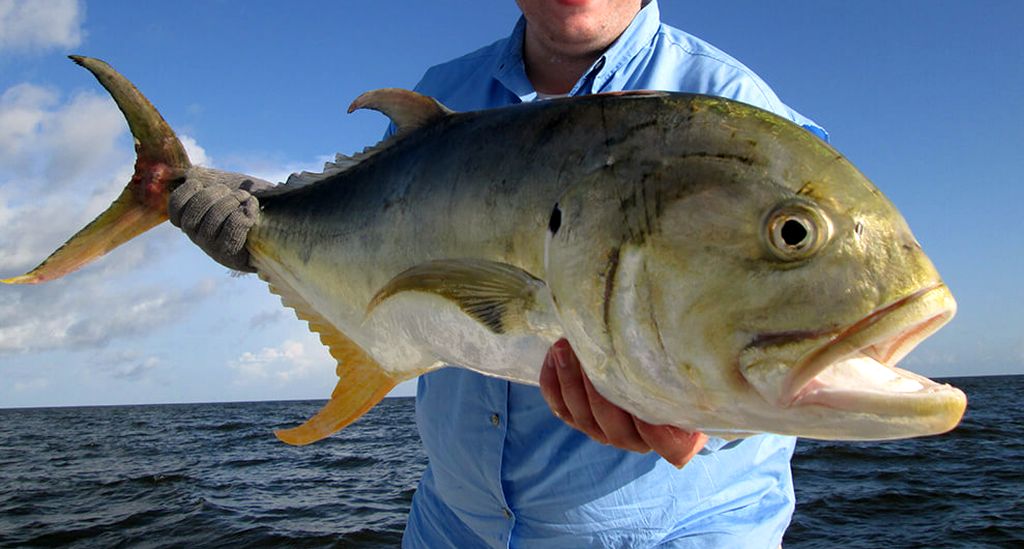 Charters last week reported nearshore catches of over 100 fish per day trip. When the choppy water conditions offshore settle down and it's safe again to chase fish, anglers will be heading farther out to target sailfish, wahoo, and mahi. Kingfish and Mahi are normally found around the weed lines, temperature breaks, and color changes in depths up to 500 feet. Blackfin tuna and wahoo are caught by anglers trolling skirted ballyhoo in the 180 to 240 foot depths. As December progresses and the weather continues to cool down, the fishing for Wahoo and Sailfish, who prefer cooler water temperatures, will improve dramatically. A lot of fish will be caught in shallower water this month on slow trolled live baits by anglers targeting inshore kingfish. Don’t make the mistake of passing up fish to find fish. Start fishing in 100 feet or so and be sure to put out some black and purple skirted or naked ballyhoo for sails as you go deeper. 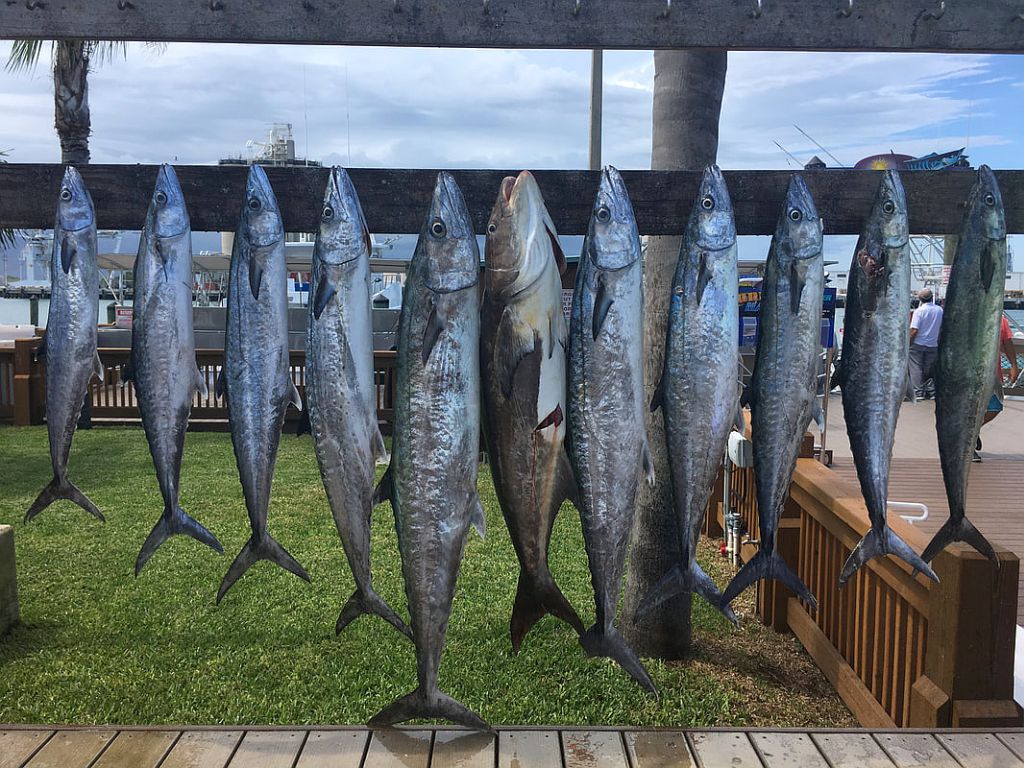 Bottom fishing can be extremely productive during the winter months, but weather conditions are volatile and change rapidly. When the ocean allows deep sea fishing out of Port Canaveral, anglers should be picking up good numbers of mangrove, vermillion snapper, trigger fish, porgies, and gray or scamp grouper over the 160 foot and deeper wrecks and reefs. Anglers can also expect king mackerel, cobia, and the usual variety of sharks to be holding over the 70 to 120 foot reefs and wrecks throughout our area. Canaveral Bight will be the hot spot for bull redfish, Spanish mackerel, bluefish, pompano, whiting, and an occasional tarpon when the northwestern cold fronts start to swing into our area. Right now, some tarpon are still cruising nearshore in the bite tearing up the baitfish schools. Find the bait and you'll catch fish. Canaveral Bight is a 5 mile stretch of shoreline immediately north of Port Canaveral that becomes a winter refuge when the cold fronts arrive. Because of security concerns at the adjacent Canaveral Space Force Station, the beach is closed to the public but boaters can still access the Bight and can be seen in good numbers during the winter months anchored just outside of the breakers. When the cold fronts hit our area, better numbers of winter run flounder will start showing up near shore just outside of the breakers, inside of Port Canaveral, and around the jetties at the west end of Jetty Park. When the flounder run gets into high gear, the sea walls at Ports End Park, the pier at the park, and most other accessible areas will be crowed with anglers after these tasty fish. Most anglers target flounder with finger mullet, mud minnows, or live shrimp on short sliding sinker rigs. Many anglers use small hair jigs tipped with a small piece of shrimp for bait or a bare jig head tipped with a live mud minnow or finger mullet. Bouncing the baits on the bottom or just off the bottom covers more ground and helps to find concentrations of fish. Most of the winter flounder that are caught in our area are under 5 pounds, but doormats of up to 8 pounds are occasionally landed. Flounder season opens December 1st with new size and bag limits. Surf Fishing:
The two late season hurricanes we endured have caused a lot of beach erosion and made fishing conditions a lot to be desired by many surf fishermen who hit the sand.
Fishing conditions have since improved and anglers have found some exceptional fishing for bluefish, juvenile black drum, whiting, Spanish mackerel, and sharks. Some keeper pompano are being caught in some areas of northern and southern Brevard County but you need the patience to release a lot of the small fish. Winter pompano prefer deep water and move around until they locate a food source at the right water temperature where they congregate in tight schools. 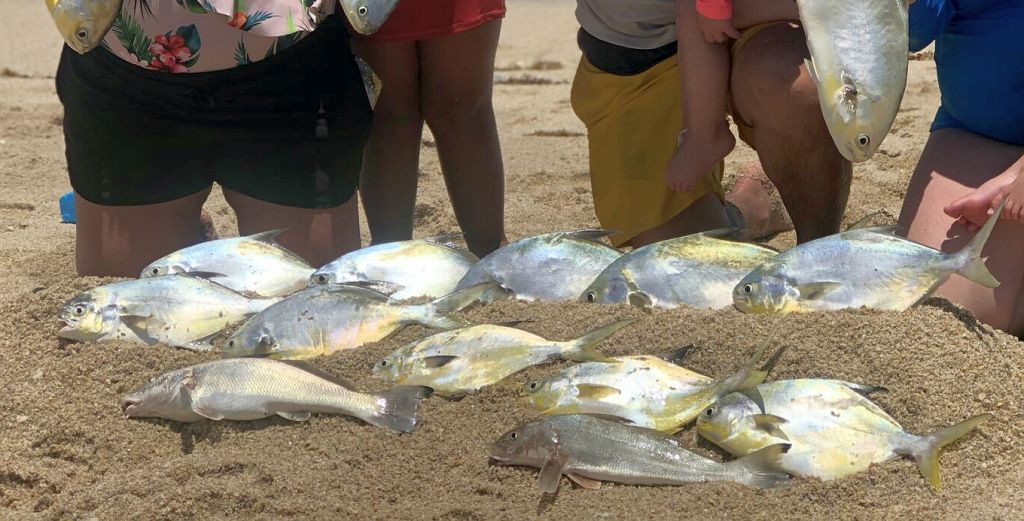 The recent cold fronts have dropped the water temperature in the surf and we are beginning to experience almost ideal water conditions for pompano. When the temperature is in the preferred range, between 65 and 78 degrees F., the fish will be moving into our area in greater numbers. Top baits of choice for pompano, whiting, and black drum in our area are sand fleas, clams, and shrimp with or without Fishbites, and not necessarily in that order. The clam scented strips of Fishbites, work almost as well as fresh clams and won't come off the hook. For some reason, surf anglers using two and three hook pompano rigs with chartreuse or white floats have been getting more bites than anglers using bare hook rigs. December offers plenty of opportunities for catching bluefish and Spanish mackerel in the surf along our coast, regardless of the surf size or wind conditions. 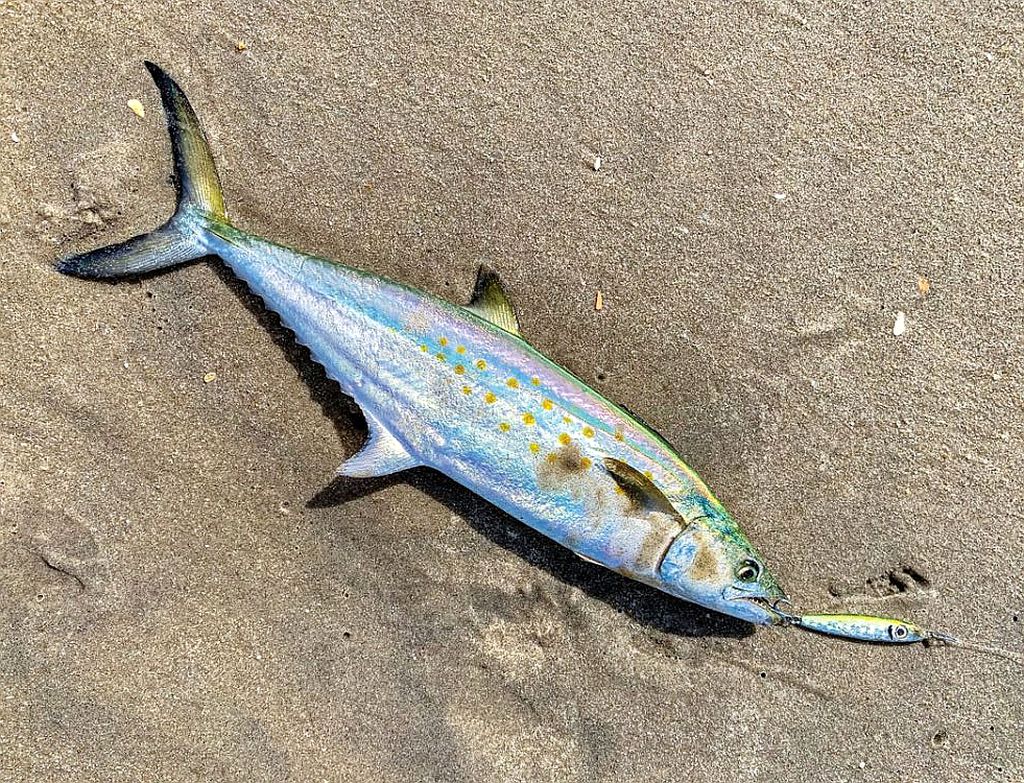 Fish the first trough and slightly beyond with chunked baits, small plugs, or rapidly retrieved spoons like the Lure Jenson for both species. Casting in the first trough and slightly farther out can also hook you up with a jack Crevalle or ladyfish. As our temperatures continue to drop around the Melbourne area, the beach bite will continue to pick up bringing in pompano, whiting, drum, permit, croakers, and spots. Pompano rigs with Fish Gum, fresh dead shrimp or clams are baits of choice in this area and usually get the job done. Pompano Rich’s pompano rigs, Frisky Fins (rattle rigs), and Salty pompano rigs have been deadly around Melbourne beaches and are the three go to set ups for many beach fishermen. The shark fishing in the surf that we have been reporting about every month is still ongoing along our beaches.  Although blacktip sharks are the main attraction in the surf, many other species of sharks are now being caught up and down our coastline. The drop in water temperature has brought in the baitfish and the dinner table species, which have also attracted the sharks. When targeting sharks from land; remember to complete the free FWC land based shark course and carry the permit with you. To get the permit, you need to take an educational course at MyFWC.com/SharkCourse which consists of a quiz and some educational videos. After you create an account and pass the test, (which you can re-take if you fail) your certificate will have an ID code unique to you. Refresher courses are also available. Get out on the beach early in the morning for the best action regardless of species; the bite usually slows down and comes to a halt later in the day. Haulover Canal:
Haulover Canal fishing during the month of December is almost always good for bull redfish and oversize black drum. During Thanksgiving week, bank anglers and boaters anchored along the banks at Haulover were catching mostly oversize Black Drum along with a few bull reds up to 44 inches. Although boaters normally anchor at both entrances to the canal, several boaters during Thanksgiving week anchored along the bridge abutments (click pic below) fishing jumbo shrimp along the bottom. 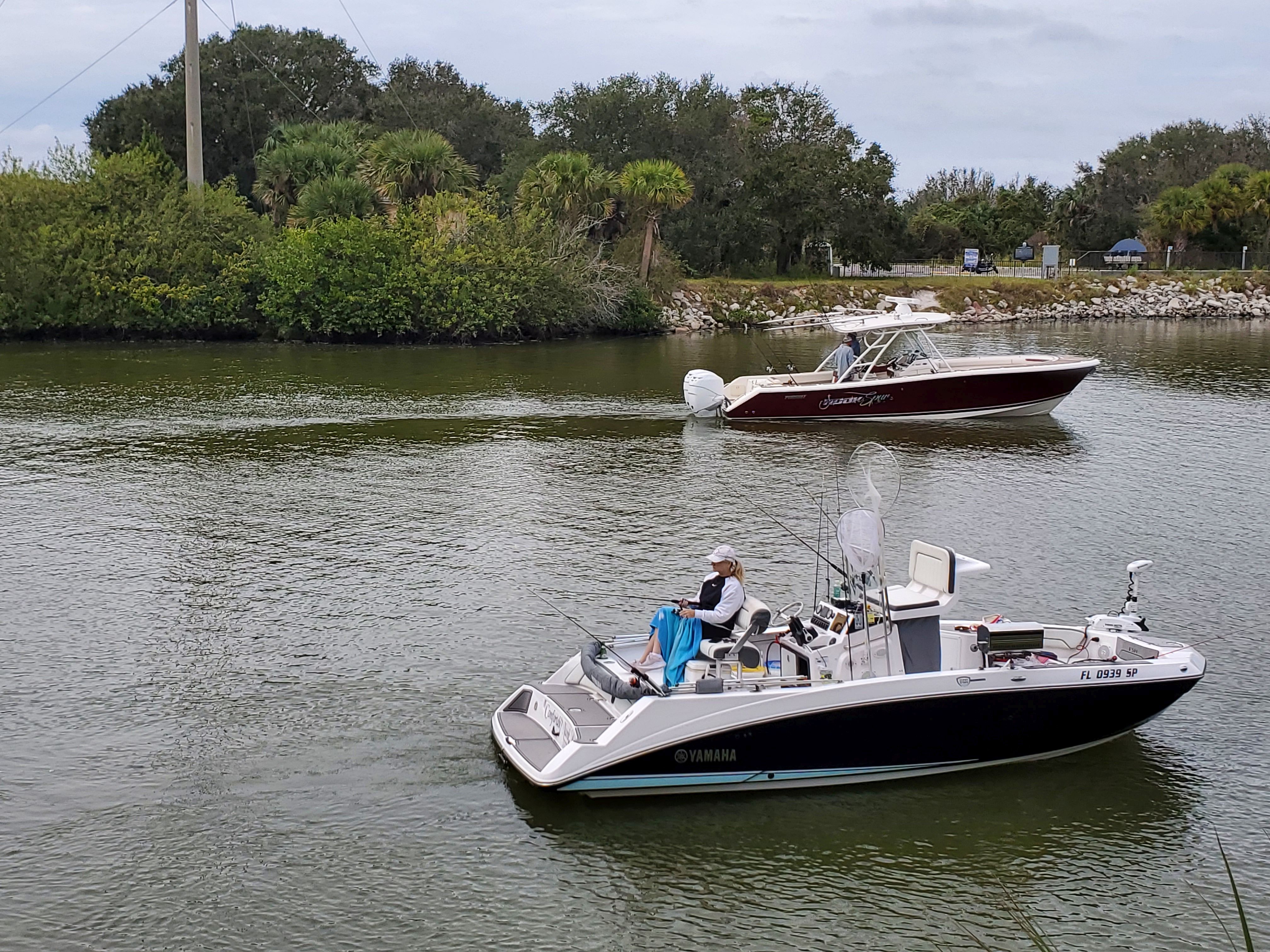 The redfish bite is normally the most consistent at Haulover, but lately a lot of anglers have been hooking oversize black drum. Most of the larger redfish were caught by anglers using a whole blue crab for bait on sliding sinker rigs and enough lead to hold bottom. The anchored anglers aparently targeting black drum were using shrimp for bait. A few bank fishermen were using chunks of cut mullet. The majority of black drum caught in Haulover are in the 10 to 14 pound category but anglers frequently land some huge drum in this area. Redfish in Haulover can run from slot size all the way up to 46 inches in length. Some bank fishermen during the Thanksgiving Holiday were targeting Mangrove Snapper along the Coquina outcroppings west of the bridge using live and fresh dead shrimp. The areas underneath the bridge and the Coquina outcroppings on the south side of the canal seemed to be the most fished for mangroves. 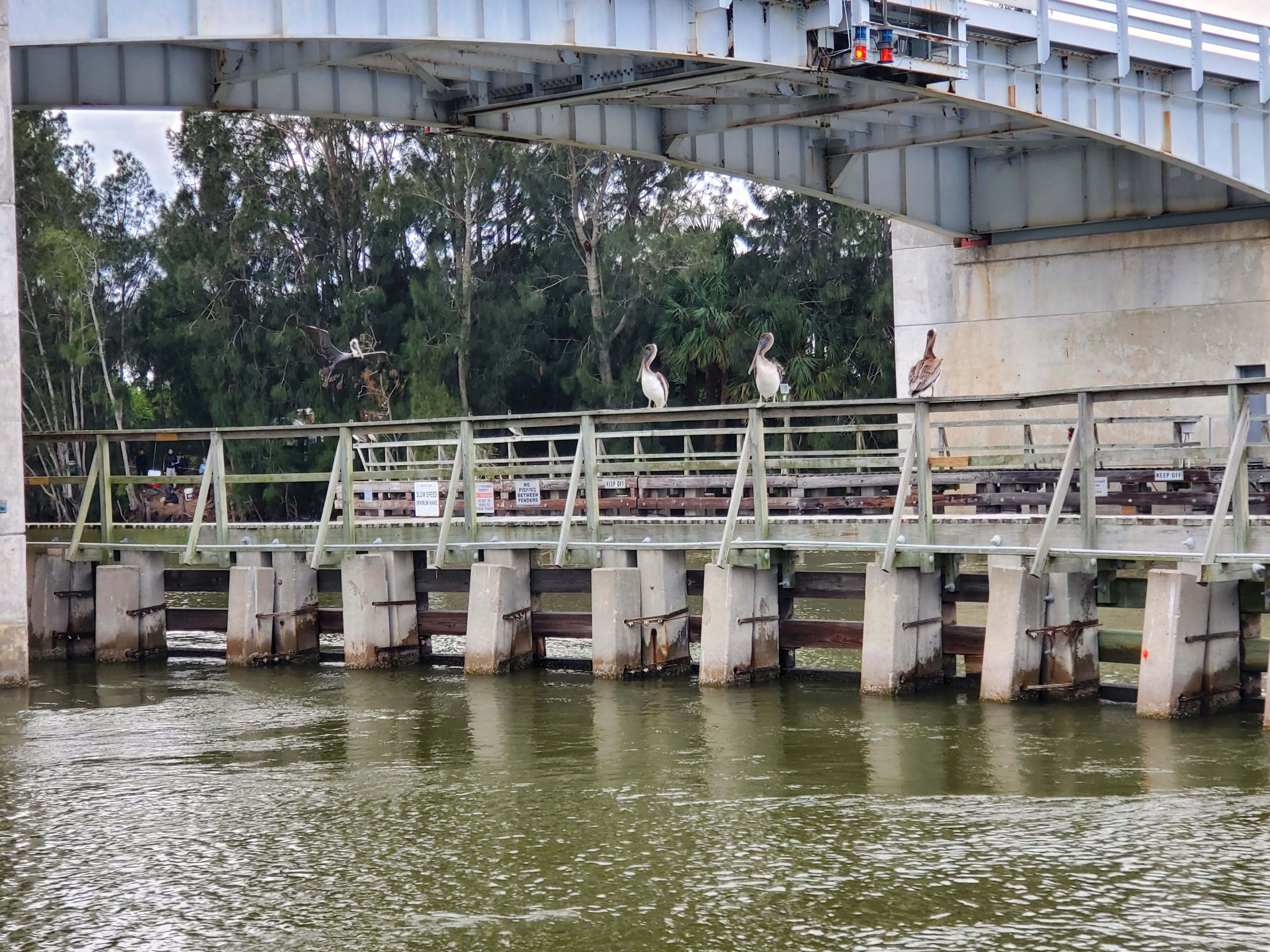 Small 2/0 or 3/0 circle hooks with just enough split shot to get a live shrimp close to the snapper is all you need to catch these tasty fish. Small cut baits also work well for mangroves. When fishing around the Coquina outcroppings at the canal, small diameter braided lines like Power Pro are recommended as the main line, with fluorocarbon leaders up to 20 pounds as terminal tackle. Shrimping along the banks of Haulover Canal used to be popular with local residents, but fewer people seem to be interested in shrimping these days. The shrimp still run in good numbers and are considerably larger than those netted in the Oak Hill area and farther north, but the shrimpers have disappeared. The northwest side of the railroad bridge and both fishing piers at the A. Max Brewer bridge are also popular spots for sport shrimpers using dip nets. Recently, more shrimpers have been tossing cast nets from the sea walls under the A. Max Brewer Bridge with varied success. Way too tiring for me... Until next time,
Tight Lines and bent rods!
|
|||||||
| Link One | Link Two | Link Three | Link Four | Link Five | Unsubscribe to this newsletter |