|
Although the cooler temperatures we have been having over the past few weeks has brought cleaner water into our lagoon systems, the high 20 to 25 knot winds we had over the past weeks prevented a good many anglers from getting out to fish. The die hard fishermen that did manage to wet a line had to work hard for their bites.
That being said, the redfish bite in our lagoon systems is hot right now! The bull redfish bite has been consistent and should stay that way throughout this month, well into January.
Although it was cold and windy last week, the redfish didn't seem to care; in fact the colder the temperatures got, the more consistent the redfish bite became.
Redfish from 18″ to over 45″ long have been showing up in good numbers throughout our lagoon system.
The bite for smaller "slot size" redfish has been good in areas where the shallow flats drop off into deeper holes; especially in areas with a muddy bottom and lots of mullet.
If you find a shallow flat that is a foot or less in depth with some mangroves and pockets of water 2 to 3 ft deep, you will probably find some slot size redfish in the area.
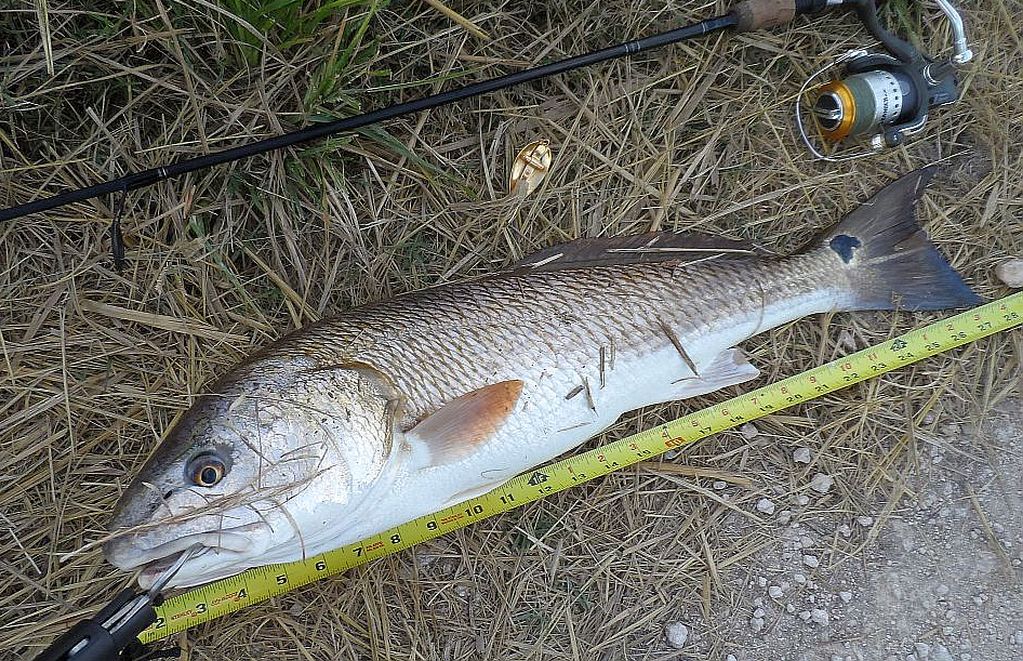
Artificial soft baits like the Gulp line, or plastic saltwater Bass Assassin baits work well in these areas and will get the job done.
The larger bull redfish have been stacking up in deep holes, around bridges, in the deep water channels, and around various types of deep water structure.
Baits of choice for bull redfish are large blue crabs, live pinfish when available, and large fist size chunks of mullet or ladyfish offered on a standard fish finder rig with enough weight to hold bottom.
Depending on the water depth and amount of current, anglers at Haulover Canal have been using 1 to 4 oz sinkers with 5/0 to 7/0 circle hooks on stout fluorocarbon leaders to catch these fish.
When the cold weather arrives here in Central Florida, it generally means a hot midday bite for most species.
The fish in our area have already adjusted to the temperature drop and have changed their feeding patterns accordingly. For the past couple of weeks, the morning bite on most days has been slow, but from mid morning till around late afternoon, the action usually picks up.
Except for some dink sea trout, the shallow flats that would normally produce good bites first thing in the morning have not been very productive.
On the days when the air temperatures dropped from the 60s to the low 40s, the fish have been holding in the deeper water areas of the lagoon in 3 to 6 feet of water, in the dredge holes, and throughout the residential canals where the water temperature is more stable and insulated from overnight temperature fluctuations.
In the shallow flats and mangrove banks of the Indian and Banana River Lagoons, spotted sea trout are feeding in the deeper holes and along the drop offs. In many cases you can also find schools of trout sea holding along the edges of the channels and dredge holes in the ICW.
Small sea shad tails on a jighead smeared up with some Pro-Cure works best on these fish, and you can often catch 20 to 30 fish in a very short period of time.
Catching spotted sea trout in the morning hours this time of the year is a matter of downsizing your baits and slowing down your presentations. As the water temperatures become colder this month, it's becomes more important to slow your artificial baits way down or even switch to fresh dead shrimp or cut baits.
Small plastic Creme Spoiler Shad or Saltwater Assassin baits in the 2 to 4 inch size have been working well on trout when fished slowly on the bottom. When the trout bite drops off or you get tired of landing fish, move out onto the sun warmed flats in the late afternoon to hunt for redfish.
On sunny days you can often spot redfish cruising the shallow flats and mangrove edges of the Indian and Banana River Lagoons feeding on glass minnows right next to the sun exposed shorelines. On days like this you can often get a hookup if you can get a cast ahead of them before they spook.
Juvenile and larger size snook are also holding tight to the mangrove trees along the banks in these areas and will swim out to strike a live shrimp, finger mullet, or a well placed lure, if you can make a tight cast to the bank.
Right now in the north Indian River, the areas along the causeway east of Parrish Park, under the A. Max Brewer Causeway bridge, and around the shorelines of Catfish Creek Loop cut baits are working better than any other bait for redfish and spotted sea trout.
The banks of the Indian River around Titusville are almost always lined with anglers dunking either a cut bait or a live mullet. Find a spot where you can see schools of mullet milling around, cast out a cut chunk of fresh bait, and wait. It usually doesn't take long before a redfish sniffs out your bait and you get hooked up.
The upcoming cold fronts we can expect this month generally produce some quality fishing for big gator sea trout, redfish of all sizes, black drum, and Snook.
When the northwest cold fronts start blowing in and the water temperatures drop sharply, the deeper water cuts and canals in the lagoon systems turn into fish sanctuaries.
The intersections of many of the deeper residential canals contain dredge holes with deep layers of mud or silt that provide an additional 2 to 3 degrees of warmth that attract shrimp and baitfish. These areas will normally hold schools of silver trout, speckled sea trout, smaller Snook, and often redfish.
Snook caught during the winter months in the canals and creeks are usually smaller juveniles.
.
The largest Snook, sea trout, and redfish hang around mangrove roots, older docks, and areas where there is little to no human activity. Abandoned docks, bulkheads, rarely used canals, and even moored, abandoned, or partially sunken boats will often hold baitfish that the larger fish target.
The largest wintertime Snook haunt the inlets at Ponce, Sebastian, and the Inlet and deep water turning basin at Port Canaveral.
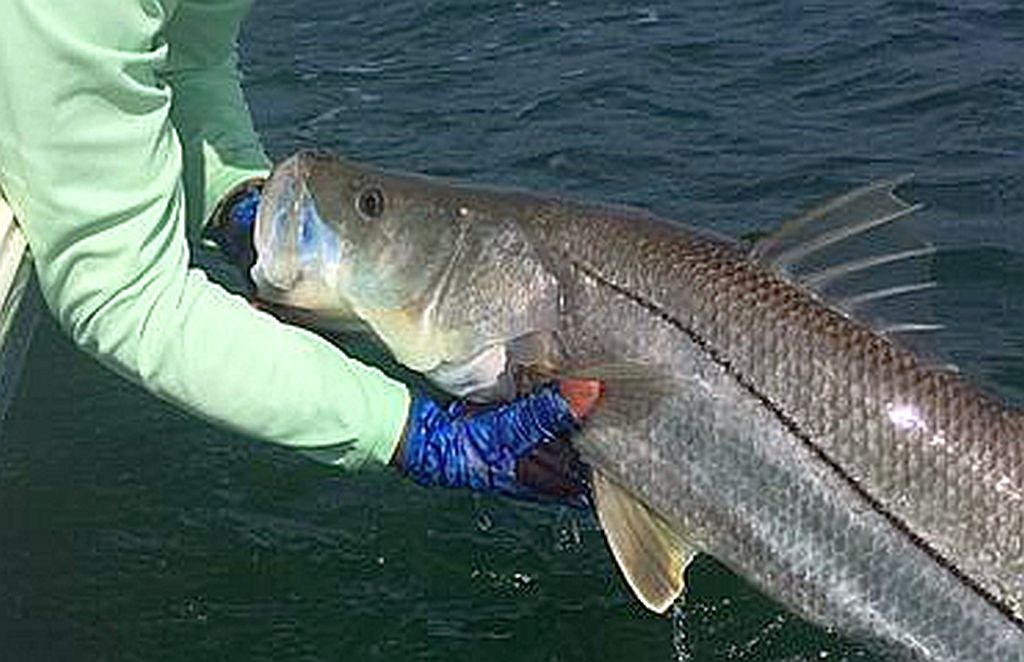
The residential canals around Cocoa Beach and Patrick AFB is usually good fishing during the cold fronts. A proven technique for this type of winter time fishing is to free line a live shrimp on light line with only a small split shot sinker and a small cork to keep the bait in the water column just above the bottom. Live fingerling mullet, pigfish, and mojarras also produce well using this technique. The trick is to fish the bait
super slow.
Winter time in East Central Florida is historically when fly fishermen from all over the country head to the Mosquito Lagoon to sight fish for big redfish and gator sea trout in the clear shallow flats.
The destruction of the sea grasses over the years by the brown algae plague caused by fertilizer runoffs has reduced the numbers of large redfish schools and has caused the death of many sea manatees. Despite the reduction in lush sea grass beds, the schools of reds are still around (albeit in smaller numbers) and you will still see a lot of fly fishermen tossing shrimp and crab pattern flies to the reds, gator sea trout, and black drum on the cleaner flats.
Fly tackle in the 8wt to 9 wt category is generally used to catch bull redfish in water that is only a couple of feet deep. Great fun!
Surf Fishing:
The wave heights, wind, and king tides that we had a couple of weeks ago made fishing conditions a lot to be desired by most surf fishermen who decided to hit the sand. On good days when conditions improved, the anglers who persisted found some exceptional fishing for pompano, whiting, bluefish, juvenile black drum, and a lot of blacktip sharks.
Small numbers of pompano are now being caught in the northern and southern regions of Brevard County. If you have the patience to release a lot of small pompano, you will eventually get paid off with some really nice keepers that are starting to arrive in our area.
Winter pompano congregate in tight schools. They prefer deep water and will move around until they locate a food source at the right temperature.
The recent cold fronts have been slowly dropping the water temperature in the surf and we are now experiencing almost ideal water conditions for pompano. When the temperature is in the preferred range, between 65 and 78 degrees F., the fish will be in our area in greater numbers.
The top baits of choice right now for pompano, whiting, and black drum on the beach has been clams, sand fleas, and shrimp in that order.
For some reason clams have been outperforming sand fleas and shrimp, but you can use Fishbites, in the clam scent which works just as well and won't come off the hook as easy.
Surf anglers who are using pompano rigs with white and chartreuse floats have been getting more bites than anglers using bare hook rigs.
The Northerly winds that are forecasted through the early part of this week should improve the water clarity and fishing conditions on the beach considerably. This should also improve the bite for pompano, whiting, and black drum.
December offers plenty of opportunities for catching bluefish and mackerel in the surf along our coast, regardless of the surf size or wind conditions.
Surf anglers fishing the first trough and slightly beyond with chunked baits or rapidly retrieved spoons like the Lure Jenson should be able to hook up with both species. Casting to the first trough and slightly farther out can also hook you up with a jack crevalle or ladyfish, both of which have been holding there in steady numbers.
The shark fishing in the surf that we have been reporting about every month has yet to diminish, and there doesn't seem to be an immediate end in sight.
Although blacktip sharks are the main attraction in the surf, multiple species of sharks are now being caught up and down our coastline. The drop in water temperature has brought in the baitfish and the dinner table species, which have also brought in the sharks.
When targeting pompano, whiting, or black drum; beef up your tackle or expect plenty of breakoffs from hungry sharks.
Right now the waters around the Space Coast are a competitive arena for sharks taking advantage of hooked fish, so when you hook into a whiting or a pomp, get the fish in quick.

If you're going to target sharks from land; remember to complete the FWC land base shark course and carry the paperwork with you. As of July 1, 2019 an annual no cost shore based Shark Fishing Permit is required if you fish from shore or any structure attached to shore.
To get the permit, you need to take an educational course at MyFWC.com/SharkCourse which consists of a quiz and some educational videos. After you create an account and pass the test, (which you can re-take if you fail) your certificate will have an ID code unique to you. Get more information HERE.
You will then need to log in to GoOutdoorsFlorida.com, click “Purchase a License”, go to "Shore-based Shark Fishing Permit" and click “Add to Cart” where you can type in your unique ID code to get your permit. It is a free add on to your fishing license that you need to print out and keep on your person while fishing.
Often during the month of December surf fishermen often find that they have the entire stretch of beach at Playalinda to themselves, especially during the weekdays. This is a perfect time to target the sharks that cruise the beach just outside of the breakers.
The higher numbered lots are preferred areas to fish for them, but sharks in the 3 to 6 foot category are always a possibility anywhere along our coastline.
Get out on the beach early in the morning for the best action; the bite usually slows down and comes to a halt around 8:30 am.
Port Canaveral Nearshore and Offshore Fishing:
December is an excellent month to fish for King Mackerel out of Port Canaveral.
Nearshore the fishing has been on fire for a variety of monster sharks and breeder redfish that are starting to show up. The breeder reds normally show up in good numbers from now until January.
The finger mullet and greenies will still be abundant this month for inshore anglers to enjoy some light tackle action from reds, snook, jack crevalle, bluefish, mackerel, triple tail, pompano, flounder, sheepshead and a plethora of other species.
As the northwestern cold fronts start to swing into our area, Canaveral Bight will be the hot spot for bull redfish, Spanish mackerel, bluefish, pompano, whiting, and an occasional tarpon around the bait pods. Right now, some large schools of tarpon have been cruising nearshore in the bite tearing up the schools of bunker. Find the bait and you'll find the fish.
Canaveral Bight is a 5 mile stretch of shoreline immediately north of Port Canaveral that becomes a winter refuge when the cold fronts arrive.
Because of security concerns at the adjacent Canaveral Air Force Station, this area of the beach is closed to the public but boaters still have access to the Bight and can be seen in good numbers during the winter months anchored just outside of the breakers.
Offshore the rough seas are dictating what to fish for and when.
For a good portion of last month, the seas did not allow for much offshore fishing but on the calm days immediately following rough seas, there has been some really good trolling along the edges of where the water changes from "muddy" to blue.
Anglers have been catching good numbers of Mahi along with black fin tuna, wahoo, and an occasional sailfish around the color changes. All you have to do is head east until the water changes color.
The bottom fishing anglers out or Port Canaveral have been picking up good numbers of vermillion snapper, trigger fish, porgies, and an occasional gray or scamp grouper over the 160 foot and deeper wrecks and reefs.
This month anglers can expect king mackerel, cobia, and the usual variety of sharks to be holding over the 70 to 120 foot reefs and wrecks throughout our area.
The most popular method for catching kingfish in our area is to slow troll mullet, pogies, and live or frozen sardines on stinger rigs. You can also find some cobia over the 70 to 90 foot reefs and wrecks outside of the Port.
When the cold fronts hit our area, better numbers of winter run flounder will start showing up near shore just outside of the breakers, inside of Port Canaveral, and around the jetties at the west end of Jetty Park.
When the flounder run gets into high gear, you will find the sea walls at Ports End Park, the pier at the park, and most other accessible areas crowed with anglers after these tasty fish.
Most anglers target flounder with finger mullet, mud minnows, or live shrimp on short sliding sinker rigs.
A few guys use small hair jigs tipped with a small piece of shrimp for bait, or a bare jighead tipped with a live mud minnow or finger mullet. Bouncing the baits on the bottom or just off the bottom covers more ground and helps to find concentrations of fish.
Most of the winter flounder that are caught in our area are under 5 pounds, but doormats of up to 8 pounds are occasionally landed.
|
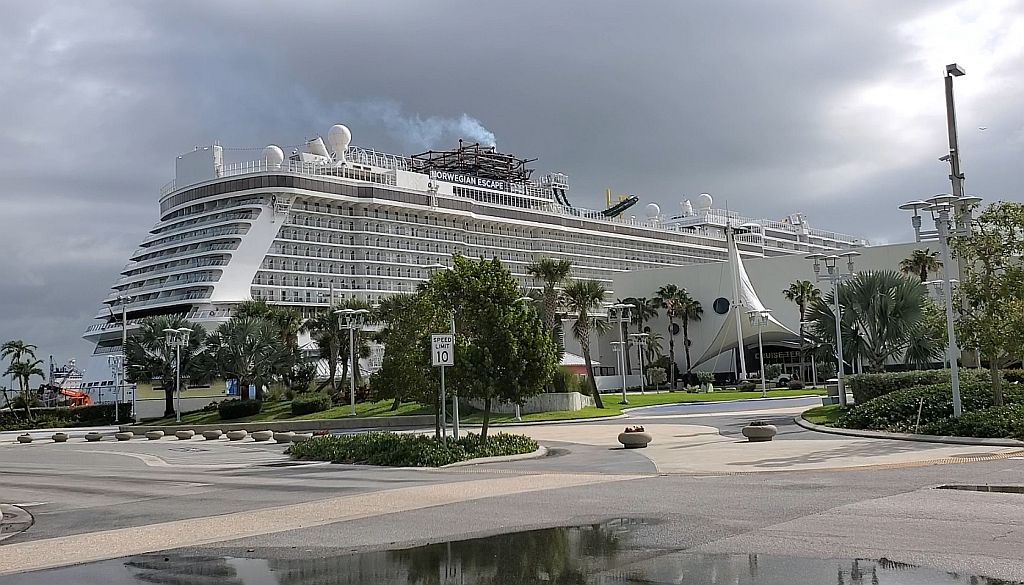
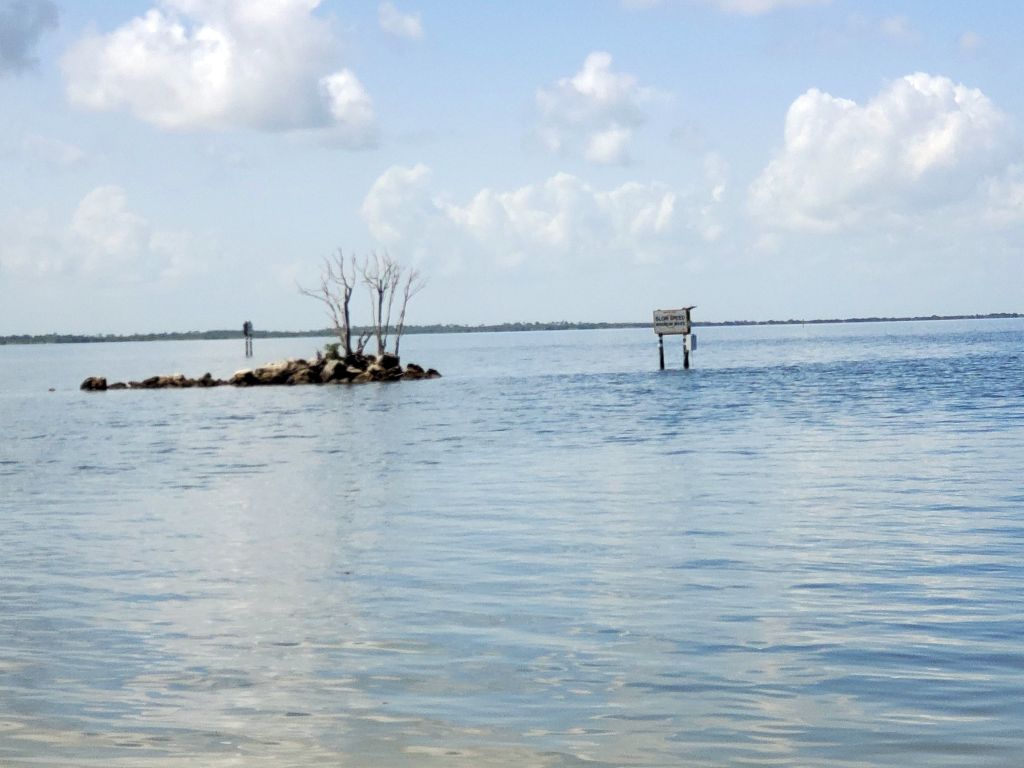 During Thanksgiving week, the guys at Haulover were landing oversize Redfish and Black Drum at both entrances to the canal, but the deep hole on the Indian River side (pic at left) seemed to be where most of the oversize reds were being
hooked.
During Thanksgiving week, the guys at Haulover were landing oversize Redfish and Black Drum at both entrances to the canal, but the deep hole on the Indian River side (pic at left) seemed to be where most of the oversize reds were being
hooked.