Your March 2018 Mosquito Lagoon & Indian River Fishing Report
Published: Thu, 03/01/18
| Newsletter Issue # 102 | March 1, 2018 |
Mosquito Lagoon & Indian River Fishing |
|
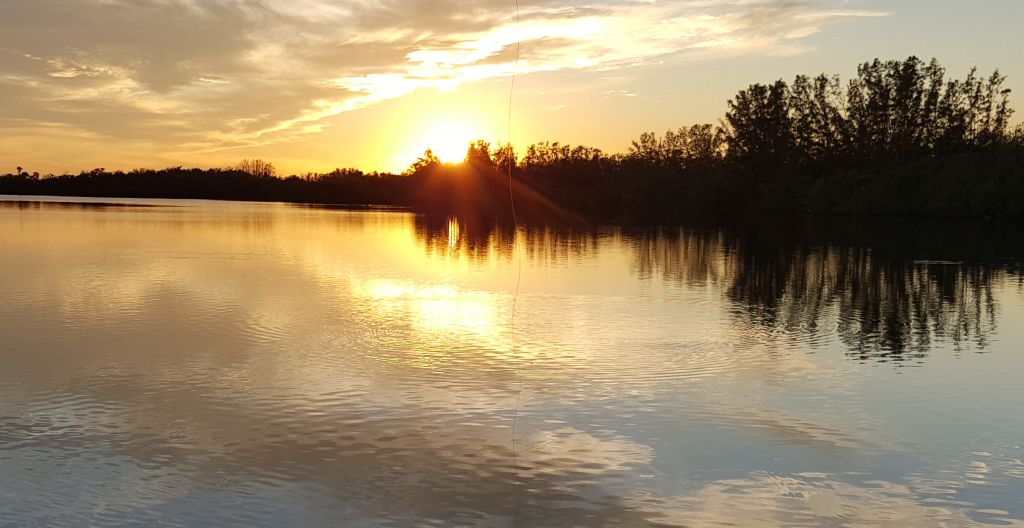 The Mosquito Lagoon and Indian River Since late February, black drum and smaller redfish have been schooling up on the flats of the Mosquito Lagoon and Indian River. This activity should continue throughout the month of March and well into spring. The best times to locate feeding schools on the flats is early in the morning and later on in the day when you can easily find them tailing. During the afternoon hours, you can often find them cruising along the edges of the flats near the mullet pods. Depending on the color of the water, most of the fish are being caught on either live baits, cut baits, or jerk baits. In the Titusville area, fishermen have been making good catches of black drum along the edges of the flats using live or fresh dead shrimp for bait. Although most of the black drum caught along the flats are in the 15 to 30 pound category, some monsters are always caught that exceed the 50 pound mark. This time of the year, the largest black drum and bull redfish are usually found around deeper water structure near the bridges and pilings along the causeways. Last week some really nice oversize redfish and large black drum were caught in several areas along the deep water channel edges of the Inter Coastal Waterway at Titusville. Although shrimp and fresh clams are the baits of choice, a lot of oversize redfish in the deeper flats of the north Indian River across from the Scotsmoor shallow water boat launch are being caught on live baits. The biggest fish have been eating fresh pieces of blue crab, live pin fish, mullet, and large select jumbo shrimp.  The depletion of sea grass in many areas of the Indian River and Mosquito Lagoon has made catching slot size redfish and sea trout more of a challenge lately. The depletion of sea grass in many areas of the Indian River and Mosquito Lagoon has made catching slot size redfish and sea trout more of a challenge lately. The sparseness of the sea grasses has made it more difficult for the fish to find food and hide themselves from the marauding schools of dolphin that patrol the hard, muddy bottom flats. As the waters warms up in March, the Mosquito Lagoon shoreline along Bio Lab Road, just south of Haulover Canal can provide some good fishing when the winds are in your favor. The potholes in the grass flats there, and farther South around the Whale Tail and Pelican Island, offer some nice sea trout and redfish opportunities for top water fishermen. Despite the cold snap last month that killed a good number of snook and juvenile tarpon along BioLab Road, the shallow water flats continue to be a great place to target speckled sea trout, sheepshead, black drum, and all sizes of redfish like the slot red, left. BioLab Road can be accessed south of the boat launch, where it meanders along the southern shoreline of the Mosquito Lagoon and ends at Playalinda Beach Road. It provides several areas for vehicle parking, launching a kayak or canoe, and a ton of areas for wade fishing the lagoon. If you plan on wade fishing, keep out of the ditches that lie between the road and the lagoon. There are some huge gators in the ditches that can cause serious damage to a wade fisherman. Next to Peacocks Pocket road, which is now closed to vehicle traffic, BioLab road is one of my favorite areas for top water fishing for sea trout and redfish early in the mornings and later on in the afternoon. Blind casting a SkitterWalk or Chug Bug around the potholes and open areas in the grass beds, or tossing a weedless Johnson's Sprite spoon is a good way to locate and catch fish. The road is barricaded at 6:00 pm sharp during the winter months, so take heed. Peacocks Pocket road is also a good area to fish for oversize redfish and an occasional gator sea trout if you don't mind taking a nice hike. The road was severely damaged during the last hurricane and has been closed to vehicle traffic ever since. Peacocks Pocket road has not been mowed for quite some time. Tthe banks of the marsh canal are overgrown with foliage which makes casting and landing fish a challenge, but the fish have not been pressured and are relatively easy to catch when you can locate them. Target the entrance to the ponds and the deeper water areas, particularly around the culverts. The best time to catch a red or big sea trout is early in the morning and late in the afternoon just at dusk. The fish move from pond to pond along the marsh canal and can be seen pushing a wake or blasting bait fish along the bank. Pack up a couple of Chug Bugs, gold spoons, and jerk baits the next time you feel like getting some exercise and try it out. This type of fishing is not for everybody. Casting is difficult, and you have to be willing to lose some lures and fish when you hook them on the stickups and heavy growth along the bank. Shiloh Road is another area that is under fished because of the road closures. Most guys put in a kayak or canoe to fish the deeper water flats of the north Indian River, but you can take a hike along the road and get some good fishing in for sea trout, ladyfish, juvenile tarpon, and slot reds on both sides of the road. There are a couple of large ponds that harbor oversize reds and some very large sea trout, but they are a long hike from the barrier. 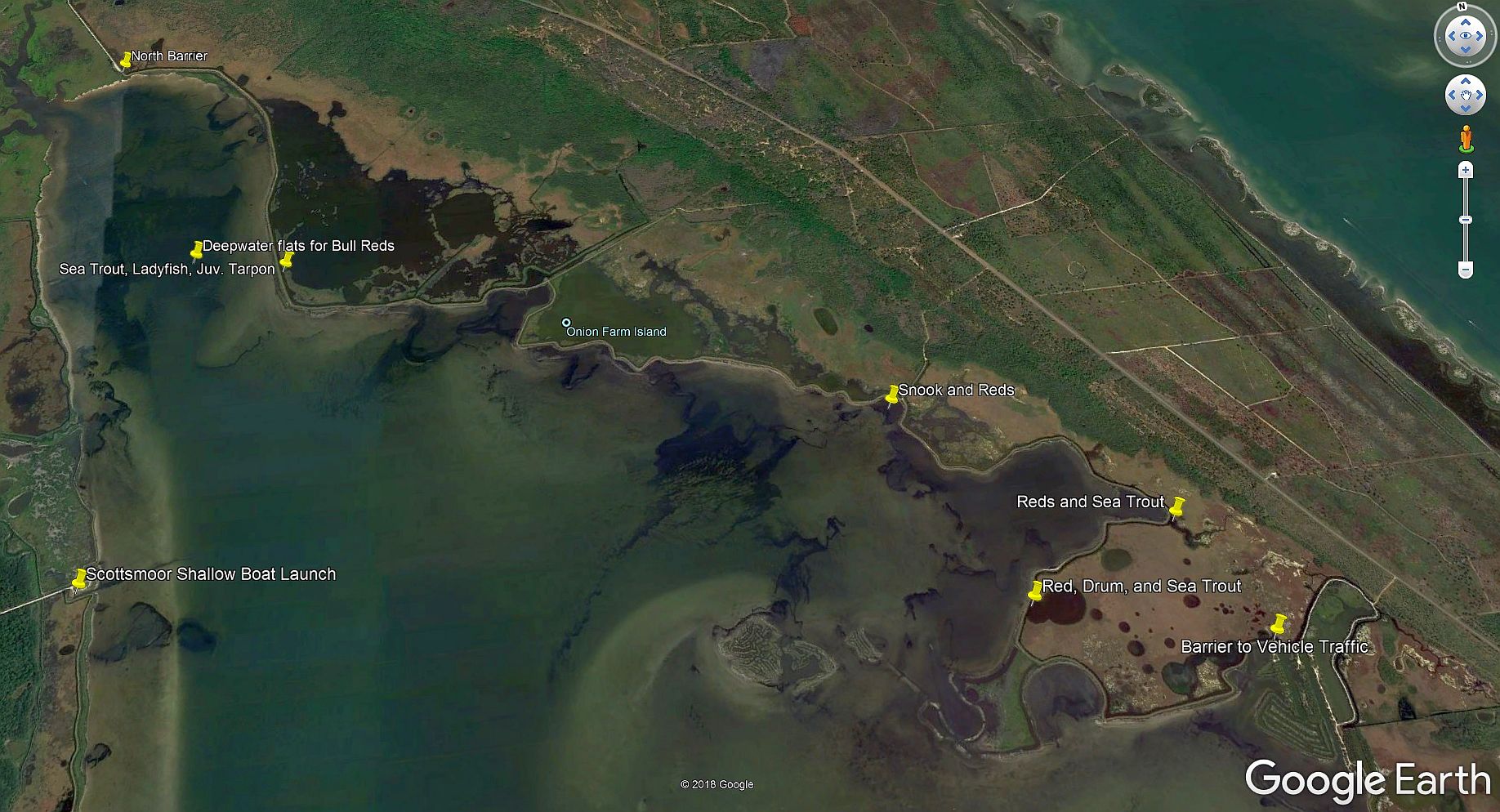 When the spring run of baitfish begin to invade the lagoon systems this March, fish the leeward sides of the islands for reds and big trout. The strong March winds will push the pods of baitfish, along with the weeds, into areas where they tend to congregate in the calmer waters of the spoil islands, bridge abutments, and protected shorelines. This is especially true when the winds have been blowing for several days in the same direction. The floating sea grasses are pushed toward the windward shorelines leaving the leeward areas free from floating grass. These conditions are perfect for fishing topwater baits, soft plastic baits, or suspended baits for gator sea trout. The leeward sides of the klinker islands, West of Tiger Shoal and across from the ICW north of the Beacon 42 boat ramp, is a good area to target with a Skitter Walk , Zara Spook, Chug Bug, Badonk-A-Donk , or any other topwater bait smeared up with some Pro-Cure and fished with a slow steady retrieve. When the sea grasses start to pile up along the banks, switch to a soft paddle tail bait rigged weedless or on a jighead. March is also a good month to start targeting sheepshead along the docks and bridges. The pilings close to the deeper channel at the A. Max Brewer Bridge, the two fishing piers, and at the railroad bridge are all good spots to drop a fiddler crab or a live sand flea this month. Small pieces of shrimp are also effective. Offshore And Nearshore Fishing Every Spring when water temperatures hit the 67 to 70 degree mark, reports of Manta Rays cruising the beaches south of Port Canaveral start coming in, and if the seas remain calm and we get a good spring run of baitfish, we will have all the ingredients for an exceptional Cobia sight fishing season out of Port Canaveral. 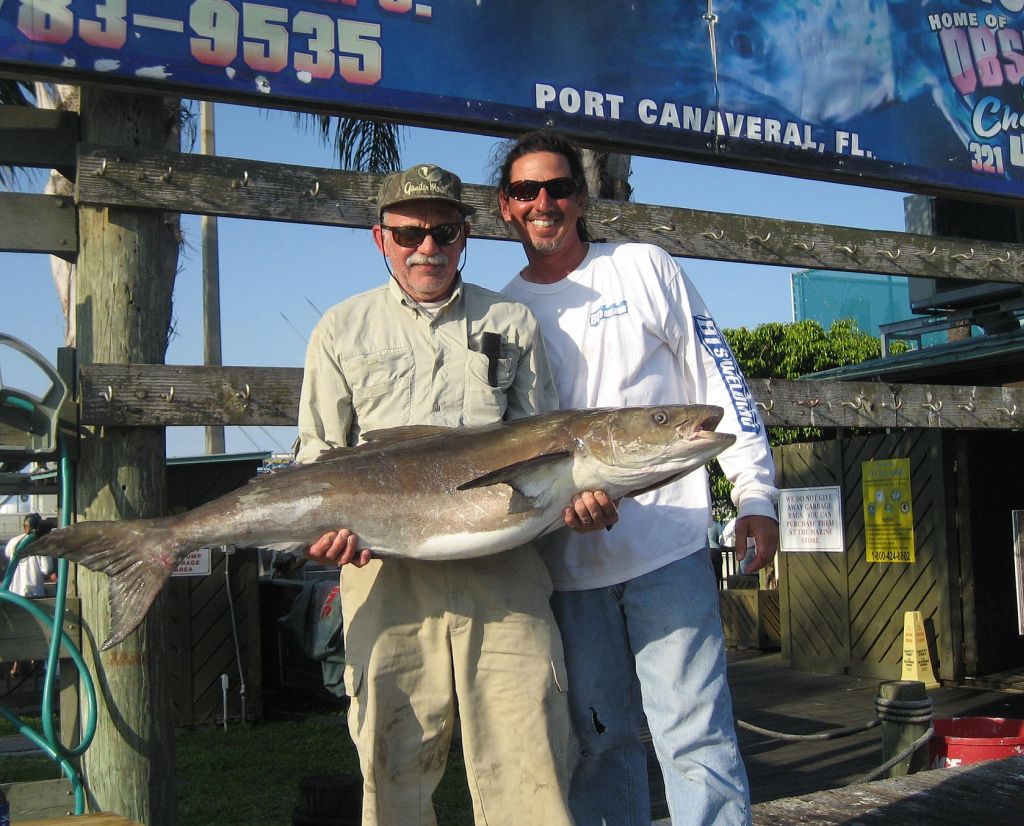 During March and April, Cobia are often spotted right on the surface in anywhere from 30 to 60 feet of water, which makes them a perfect target for anglers who enjoy sight fishing. The best light conditions for sight fishing Cobia is between 10:00 am and 3:00 pm. when they are most visible to anyone targeting them. Although Cobia are often spotted shadowing large Manta Rays, they will also travel with large sharks. Large brightly colored jigs, jig and eel combos, live blue crabs, live eels, menhaden, pogies, mullet, pinfish, or a lively jumbo shrimp hooked through the tail with a 3/0 or 4/0 octopus hook will get you bit when you spot one. A lot of guys out of Port Canaveral use a two or three ounce chartreuse jig with a 20 pound spinning outfit and a length of 40 pound fluorocarbon as a shock leader for Cobia. Toss your jig or bait to one side of the ray and and hang on. Cobia will usually take the jig or live bait on the drop. Keep a tight line and if the fish doesn't take the bait on the first drop, work the bait back to your boat and try again. Most of the Spring Cobia caught out of Port Canaveral are in the 20 to 30 pounds category, but we can expect fish in the 60 to 70 pound category and larger to be caught every year. Currently, Amberjack in the 20 to 25 pound category have been holding on the wrecks in the 220 to 280 depths out of Port Canaveral. Live baits and jigs have been getting their attention, but because the sharks have been so thick lately, most anglers are having a hard time getting a fish into the boat in one piece. The shallower reefs in the 70 to 90 foot depths are where the King Mackerel have been schooling these past weeks. If you see sharks are in the area, keep a rod rigged with a jig to target Cobia. On most days, the Cobia will follow the sharks over the reefs. Some good places to target Kingfish right now are the Coast Guard bottom, the Lumps, 8A, and Pelican Flats. Inside of Port Canaveral, along the main shipping channel leading into the Basins, the annual weakfish migration can keep you busy. When the Weakfish arrive, they can usually be found suspended just above the bottom in the middle basin, in 10 to 15 feet of water. Fishing a drop shot rig with live shrimp works well, or you can just put a live shrimp on a jig head to get the bait down to the fish. 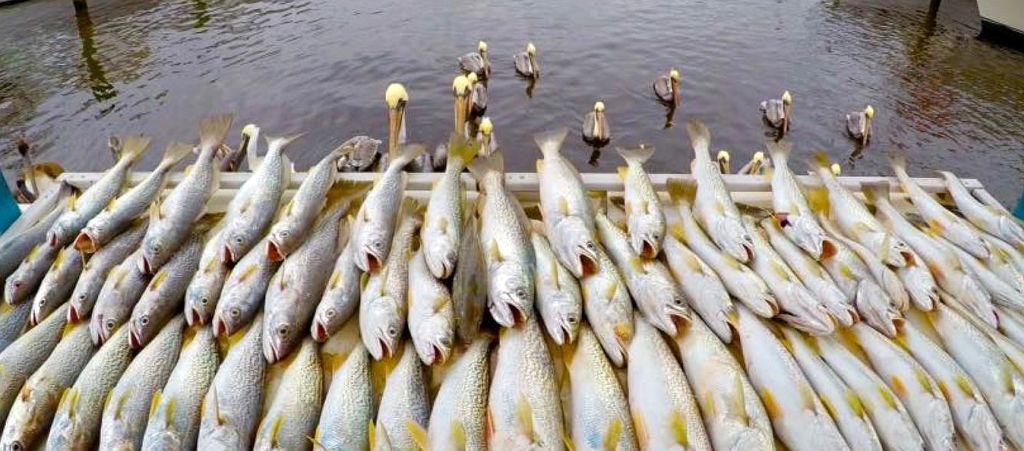 Surf Fishing Although whiting and pompano will continue to be the most targeted species this month along our beaches, a lot of surf fishermen are hoping that the huge migrating bluefish we had come inshore last year will repeat itself. For a couple of weeks last year, surf fishermen and boaters running just outside the surf were able to catch blues in the 18 to 22 pound category. 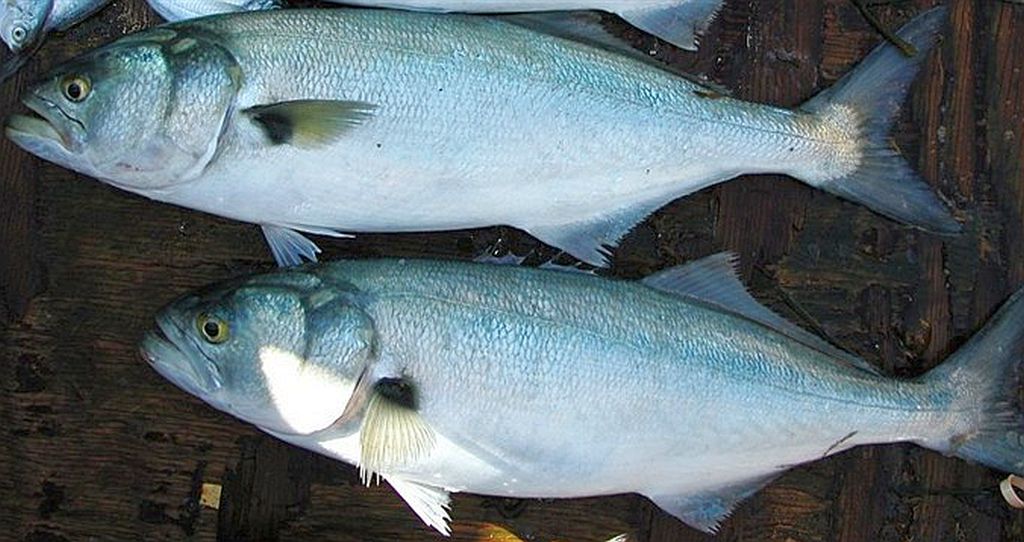 Large Krocodile spoons with a 6 to 8 inch wire leader, a stout rod, and a reel loaded with 30 pound Power Pro or other braid is all you need to tackle one of these bruisers. A lot of guys use plugs and replace the treble hooks with single bait hooks. Although most of the blues caught last year averaged 12 to 14 pounds, several of 20 pounds and at least one 22 pound "chopper" bluefish was caught in the surf between Sebastian and Port Canaveral. If the big blues don't come inshore this March, all is not lost; the Pompano, whiting, Spanish mackerel, and bluefish will still be on the menu this month. Haulover Canal 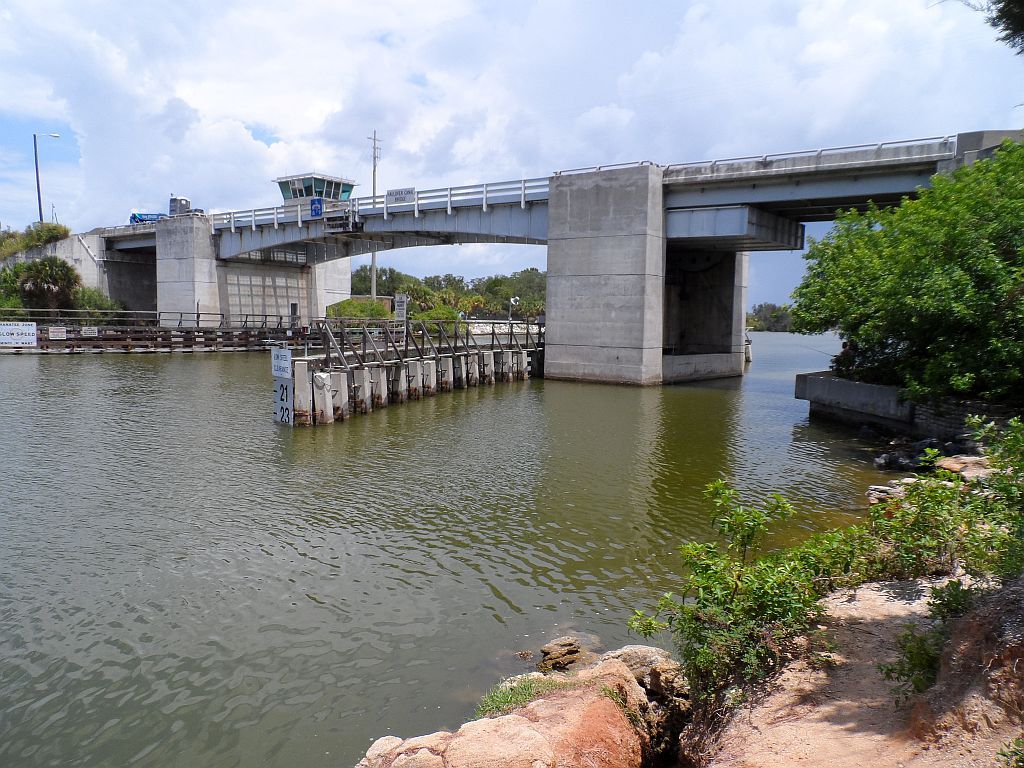 The bank fishermen at Haulover Canal have been making good catches of mangrove snapper, big black drum, and oversize bull redfish throughout February, and the guys targeting big black drum and oversize reds, should do just as well if not better this month. Most of the bank fishermen I spoke with this past week were using shrimp, cut baits, and blue crab on a variety of rigs. A few fishermen were catching mangrove snapper, juvenile black drum, pinfish, catfish, sting rays, and an occasional sea trout, but most were targeting black drum and redfish. 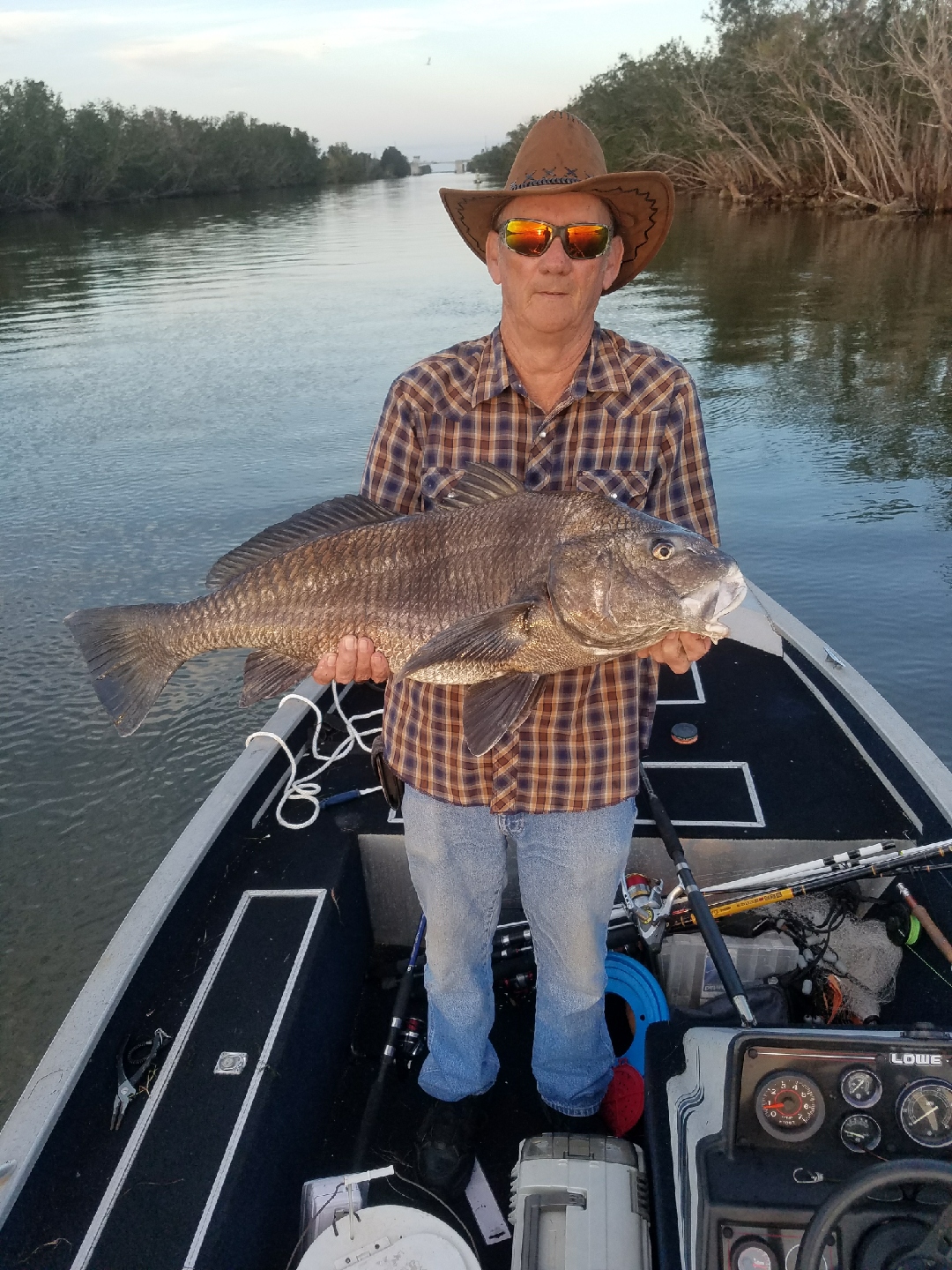 Up until yesterday, nobody I spoke with had caught a redfish or black drum of any size, but Jack Sexton and his grandad caught several oversize redfish and drum this past Sunday evening using shrimp and blue crabs for bait. Up until yesterday, nobody I spoke with had caught a redfish or black drum of any size, but Jack Sexton and his grandad caught several oversize redfish and drum this past Sunday evening using shrimp and blue crabs for bait. When I spoke with him, Jack and his grandfather had just started fishing but he was kind enough to share a few pics with me of their previous catches. 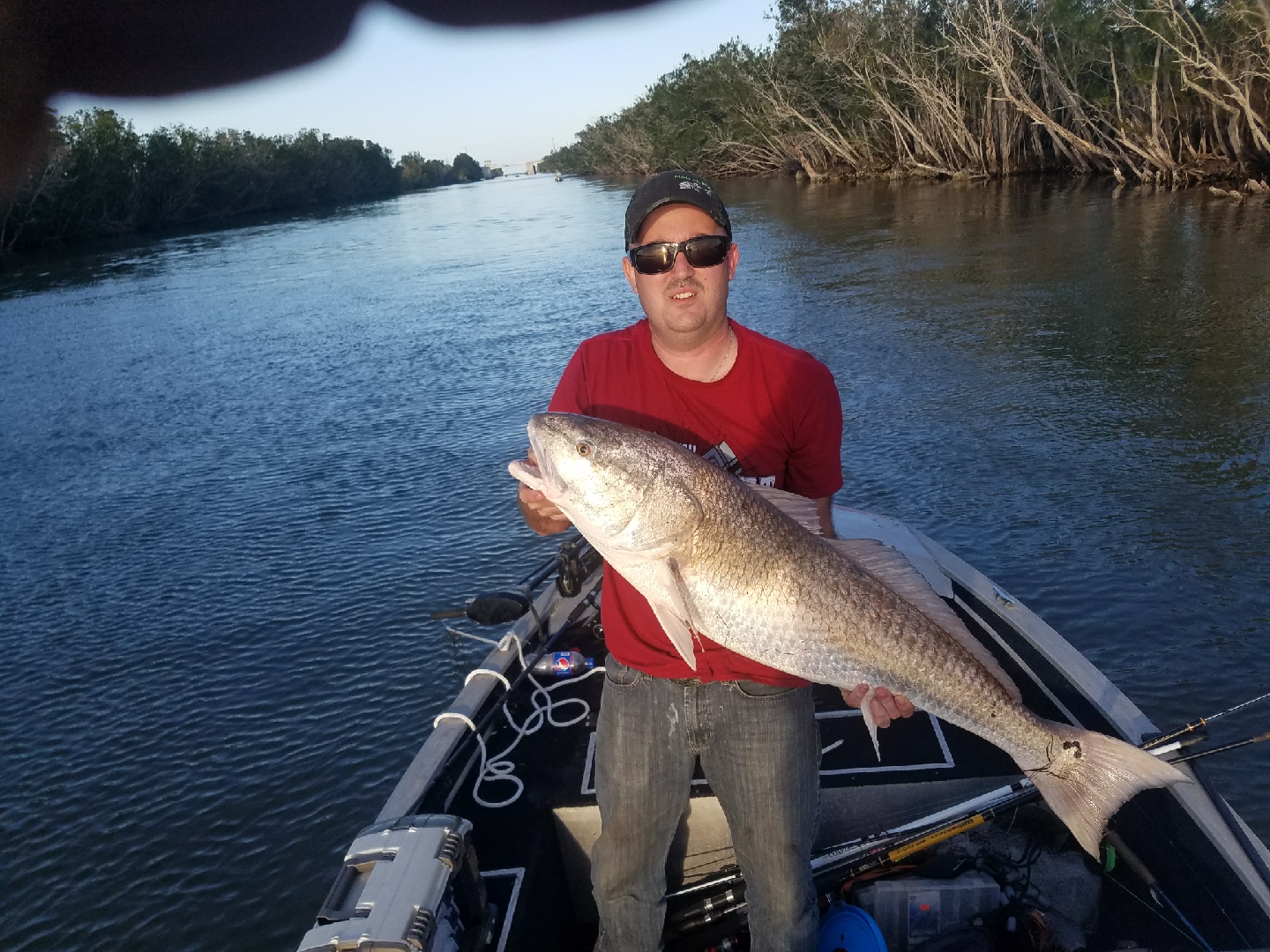 As I was leaving Haulover Canal, I stopped to talk to a couple of other bank fishermen who told me that they had been catching bull redfish in the 20 to 30 pound category last week when there was little to no water movement in the canal. They had also been using pieces of blue crab, shrimp, and chunks of mullet for bait. The only black drum that I saw caught yesterday looked like it was in the 8 to 10 pound category. Good eating size. The gentleman who caught it was using a fresh dead shrimp on a sliding sinker rig. I didn't have time to get any shrimping reports this month, but if the weather gets colder, you can expect to see some boats anchoring along the banks of the canal close to dusk looking for some of the jumbos that drift by. The pic of the biggest black drum below, was sent to Jack by his friend who said it weighed in at 75 pounds and was caught in Edgewater using a shrimp for bait. I'd really like to know how long it took him to get that fish in... 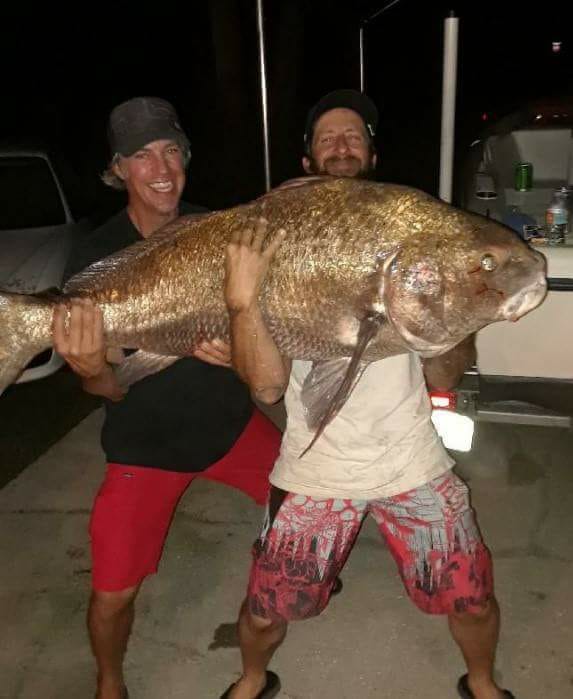
|
|
| Link One | Link Two | Link Three | Link Four | Link Five | Unsubscribe to this newsletter |