Your February 2018 Mosquito Lagoon & Indian River Fishing Forecast
Published: Thu, 02/01/18
Mosquito Lagoon & Indian River Fishing |
|||
|
Newsletter Issue # 101 Fishing Forecast February 1, 2018 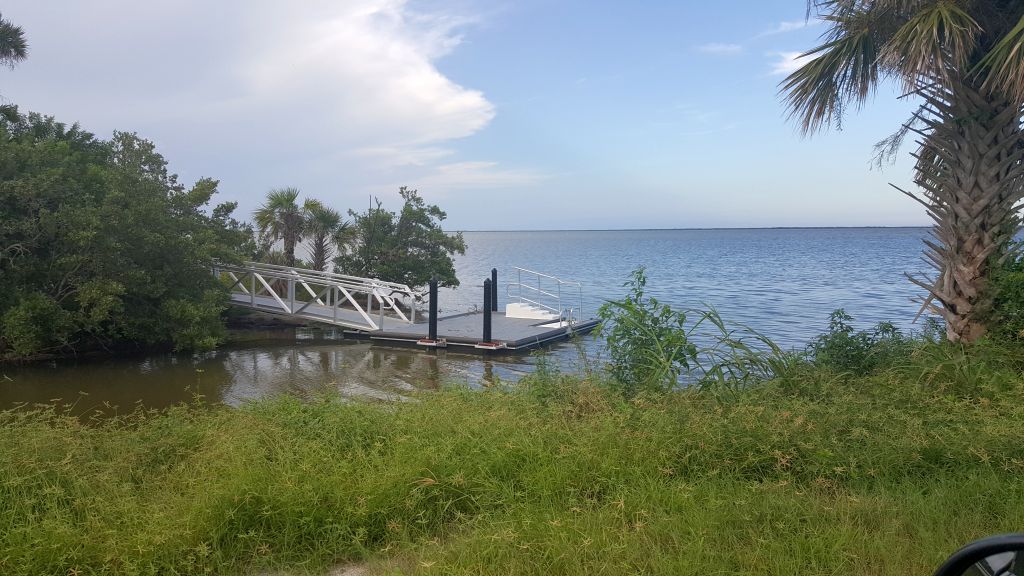 The Mosquito Lagoon and Indian River The fishing success rate for the Mosquito Lagoon and Indian River improves dramatically once you learn the characteristics of each species from season to season. For sea trout and redfish during the high temperature summer months, you need to be out on the water before daybreak, quit fishing around 9:00 a.m., and then return to fish the last hour or two until dusk. This is particularly true with speckled sea trout, not so much with redfish that can be targeted throughout the day. During the winter months when the water temperatures drop into the low 60s, there is no need to get on the water until around noon for sea trout. Sight fishing is excellent during the winter months, especially for fly fishermen targeting big redfish and gator sea trout. Black drum congregate in large schools during the winter months and can also be caught by fly fishermen. However, live and artificial bait fishermen account for the majority of black drum caught in our lagoon systems. 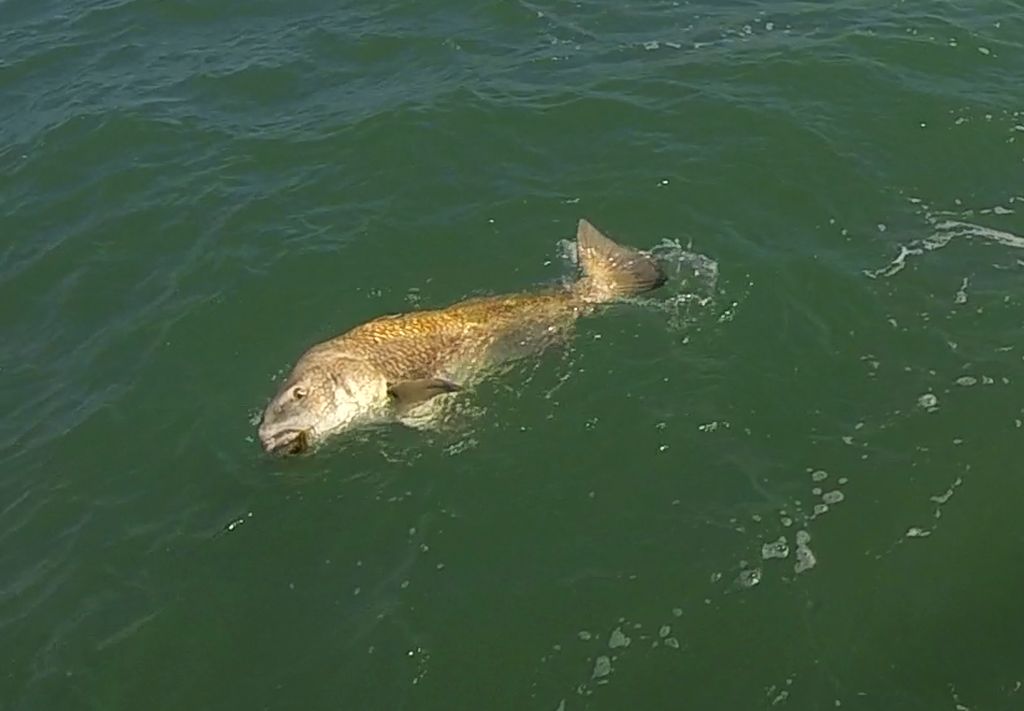 The cold fronts that we experienced during January forced the redfish, black drum, and speckled sea trout in the Indian River, Banana River, and Mosquito Lagoons into the deeper residential creeks and canals. During the past week or so, water temperatures have been on the rise and the fish have started to move out of the deeper water canals back into the deeper sloughs, potholes, and depressions on the flats of the southern Mosquito Lagoon and northern Indian River. If you prefer fishing with artificial baits, a 4 inch Saltwater Assassin Sea Shad in the Opening Night color has been working well on sea trout and redfish when the water is clean and clear. Smear some Pro-Cure on your lures, fish your bait slower than usual, and use long casts to get more hookups. When water conditions are murky or heavily stained, darker colors like the Watermelon with Red Flake color are usually more productive. Gold Johnson's Sprite Spoons are also a good choice when you want to cover a lot of water, quickly. If you are a live bait fisherman, a live shrimp under a DOA Deadly Combo or a Cajun Thunder float is deadly for both sea trout and redfish. If you're targeting black drum, a fresh section of blue crab, a piece of live or salted clam, or live, fresh dead, or even a "stinky" day old shrimp is a hard to beat bait. I recently spoke with a couple of fishermen in the Patillo Creek area who were catching slot size black drum on "stinky", almost rotted shrimp, while other bank fishermen in the same area who were using fresh dead shrimp were getting skunked. I'm pretty sure it's the smell that attracts a bite. From December to February, some of the best fishing in the Banana River, Indian River, and northern Mosquito Lagoon occurs between the cold fronts. However, extended periods of freezing temperatures can make for some miserable fishing conditions and serious fish kills. This was last observed during the early part of January along the banks of Bio Lab Road, Patillo Creek, Haulover Canal, and many other areas where juvenile tarpon and Snook could not access deeper waters quickly enough. Most of the dead fish were juvenile tarpon but there were a lot of nice size snook littering the shoreline. Depending on the severity of our winter, February can be a great month to sight fish "gator" sea trout on the flats in the Mosquito Lagoon and Indian River. Some real real trophies in the 9 to 13 pound category are caught every year around the cold fronts when they lay up in the sandy potholes. When the water temperatures begin to drop into the 60s, the larger fish can be found basking in the sun in very shallow water on the flats along the shorelines, and in the potholes. As the sun rises and warms the water, they can be easily spotted on the shallow muddy or sandy bottoms that gradually taper off into deeper grass flats. When the fish migrate into these areas, they usually don't become active until late in the afternoon. Keep your eyes peeled for telltale movements around patches of sea grass and pay particular attention to the darker spots on the sandy bottoms. Target them with live mullet, jumbo live shrimp, or very slowly fished soft plastic lures.  Although Peacocks Pocket road, L Pond road, Shiloh Road and most of the other roads in the Merritt Island National Wildlife Refuge have been closed to vehicle traffic, you can still walk them and find some good fishing opportunities for sea trout and an occasional redfish when the water levels are up. Although Peacocks Pocket road, L Pond road, Shiloh Road and most of the other roads in the Merritt Island National Wildlife Refuge have been closed to vehicle traffic, you can still walk them and find some good fishing opportunities for sea trout and an occasional redfish when the water levels are up. Most bank fishermen will be concentrated along the causeway, Catfish Creek, and Haulover Canal fishing for black drum and slot reds. Because very few anglers bother walking the unimproved roads, the fish in these areas haven't had much fishing pressure and are much less wary. Pack a few gold spoons, DOA CAL jerkbaits, some topwater baits, some extra leader material, a bottle of Pro-Cure to smear on your baits (in case the fish are fussy), and a few bottles of water in a backpack; grab a couple of rods and you're in business. I usually carry two extra rods with different lures held onto my backpack with velcro straps, just in case. Start by fishing the deeper holes in the ponds and marsh canals with small plastic DOA Shrimp or Saltwater Assassin Sea Shads using a very slow presentation. If you don't know where the holes are, use a gold spoon with a slow steady retrieve to cover as much territory as you can until you get a fish or a hit, then switch over to plastic baits. Concentrate on the culverts and gradually fish shallower until you start getting hits. The fish along the dike roads often hold in the most unlikely areas. Depending on the weather conditions and water levels, the ponds, culverts, and marsh canal along the roads can produce some great fishing, especially without the commotion of vehicle traffic. Playalinda Beach If you are a dyed in the wool surf fisherman and don't mind braving the weather along the often desolate beaches of East Central Florida, late January and February is when the Pompano bite usually peaks. You will often find yourself alone on long stretches of beach like the one below at Lot #8 at Playalinda.
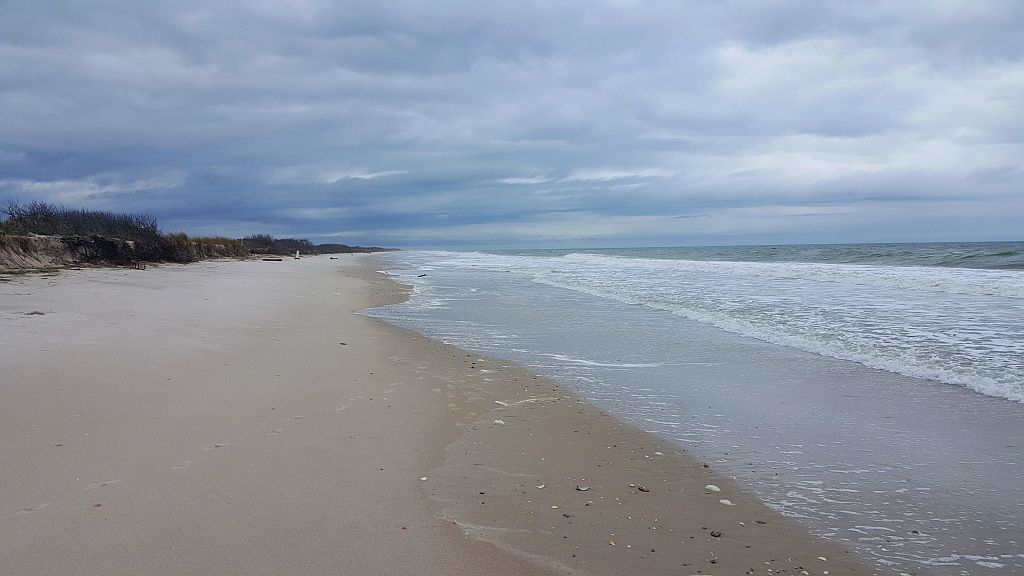 Early morning incoming and full high tides are generally recognized as when Pompano feed best, however any moving water can be productive, especially before or just after a cold front rolls through. The Pompano bite that was literally "on fire" at the beginning of December has peaked, and even though some good catches are still being made, the past couple of weeks have not been as good as many of us expected. The cold weather and rough surf is hard to fish but the fish are still there if you can get out to them past the breakers. 4 oz. to 5 oz. sinkers are sometimes needed to hold bottom, especially if you are using a braided line. Most surf fishermen use a standard two or three hook rig with colored foam attractors and sand fleas, shrimp, or clams as bait. Live sand fleas are tough to locate during February, but fortunately the Pompano at Playalinda Beach find clams just as tasty. Fresh or salted clam strips are an excellent bait for pompano, whiting, and juvenile black drum. I prefer salted clams cut into 1/2 inch wide strips. They stay on the hook forever. During the first week in December, the pompano fishermen at Lots #1 and #2 were catching the most fish on the last part of the outgoing tides, with only a few fish reported from the higher numbered Lots. Last month, the surf fishermen at the higher numbered Lots seemed to be catching more and larger pompano. The point is that the fish constantly travel up and down the beach along the troughs where you catch them one day, and not get a bite the next. If you are fishing a rip or other structure on the beach and don't get a bite in an hour or so; move and try another location.  Pompano can grow as large as 8 pounds, but most of the fish caught in the surf in our area are usually in the 2 to 4 pound category. Pompano can grow as large as 8 pounds, but most of the fish caught in the surf in our area are usually in the 2 to 4 pound category. Right now most of the pompano that are being caught on the beach at Playalinda are in the 16 to 18 inch category with only a few under size fish in the mix. If you hit the beach early in the morning on the days where 3 ounces of lead is needed to hold bottom during a moving tide, and position your live sand fleas in the troughs between the sandbars or along the outer edge of the surf break, you should expect a decent pompano bite at Playalinda Beach throughout the winter months. Of course the fish have to be there. Port Canaveral Offshore and Nearshore  Offshore If we have another mild winter with fishable seas, look for schools of pogies out of Port Canaveral to be pulling Cobia around the 60 to 70 foot offshore reefs. When the inshore water temperatures hit the 68 degree mark this month, we should find some free swimming Cobia following the manta rays and some fish off of our beaches. These same conditions may also pull in the bigger "smoker" Kingfish off of Playalinda and south to Canaveral Bight, Cocoa Beach, and Patrick AFB. Moderate weather conditions will also hold the smaller "snake" kingfish (over the 24 inch minimum) along Pelican Flats. In addition to Cobia and King Mackerel, Dolphin, Wahoo, and the packs of Sailfish in areas southeast of Canaveral will be the species most targeted by the majority of anglers out of the Port this month. On days when you can safely venture offshore, dragging a naked or skirted ballyhoo in the 160 to 280 foot depths should produce decent numbers of fish. Flotsam, color changes, rips, and temperature breaks in the 160 to 280 foot depths can all hold fish, but if you don't run into any surface features and the bite is slow, trolling over bottom structure like the Cones or the 27 fathom ridge will almost always produce fish. Both of these areas are popular "go to" spots out of Port Canaveral with most captains slow trolling ballyhoo, frozen sardines, or live mullet on wire stinger rigs. If you can find shrimp boats anchored in the 130 to 150 foot depths, you will also have a good chance of picking up a Blackfin tuna or a Cobia around the by catch. Catches of Wahoo in the 30 to 40 pound category, and blackfin tuna are not uncommon month. Haulover Canal  The deeper waters of Haulover Canal between the North Indian River and the Mosquito Lagoon are loaded with fish throughout the year and although Haulover is best known for bull redfish and big black drum, the canal also holds speckled sea trout, Snook, ladyfish, mangrove snapper, whiting, sheepshead, gag grouper, tarpon, stingrays, and catfish.
Currently, bank fishing is only permitted during daylight hours, however, the best time to fish the canal is at night, by boat. Anchor off from the bank, drop a live pinfish, a section of a live blue crab, or a jumbo shrimp just off the bottom and you could hook into a big black drum, bull redfish, sea trout, or a snook. On most days at Haulover you will find a number of bank fisherman dunking a variety of baits for black drum, redfish, and mangrove snapper. Many of them congregate at the bridge and spend a lot of time re-rigging their terminal gear due to cutoffs on the Coquina outcroppings. From experience, I can tell you that you will do much better bank fishing from areas closer to either mouth of the canal. The fish constantly move back and forth through the canal from the Indian River to the Mosquito Lagoon and can be caught almost anywhere 10 to 20 feet out from the bank. Baits of choice are live, fresh dead, or frozen shrimp, clam strips, cut "chunked" baits, or a fresh section of blue crab on a sliding sinker rig with just enough weight to hold bottom. Black drum will be the staple catch during February with most bank fishermen. The night shrimping along the banks at Haulover Canal also picks up during February however, I have no up to date information on pulls at this time. The upper fishing pier at the A. Max Brewer Causeway Bridge has been opened for fishing and shrimping, but the lower pier is still damaged from the hurricane and remains closed until repairs can be made by the County. Until next time,
Tight Lines and bent rods!
|
|||