Your September 2017 Mosquito Lagoon & Indian River Fishing Report
Published: Fri, 09/01/17
| Newsletter Issue # 97 Fishing Forecast | September 1, 2017 | ||
Mosquito Lagoon & Indian River Fishing |
|||
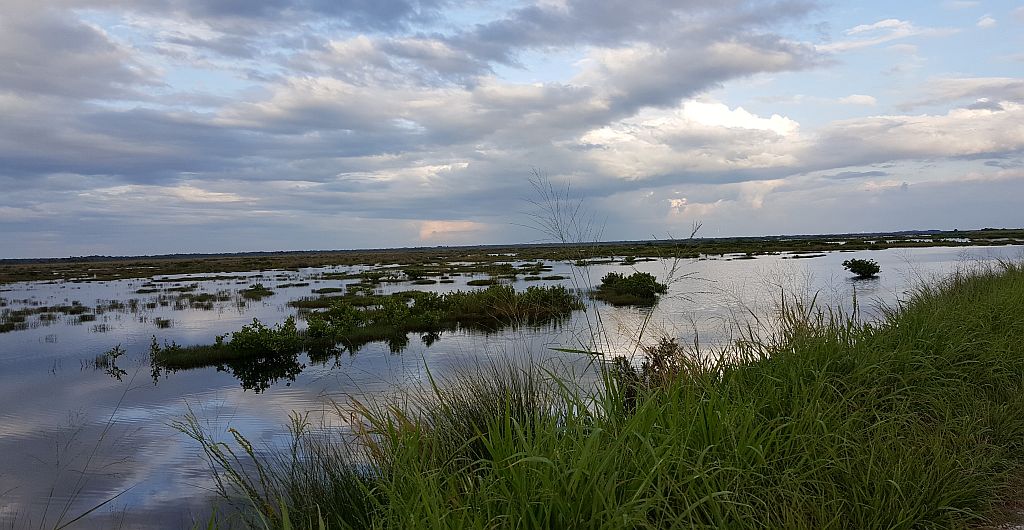 The Mosquito Lagoon and Indian River
September 1st. heralds the re-opening of Snook season throughout East Central Florida, which means that we can again harvest keep some of our catch for the table. Although Sebastian Inlet is noted for the abundance of Snook in the Inlet and around the jetties, good numbers of Snook are starting to stack up around the inlets and jetties at Ponce Inlet and Port Canaveral. 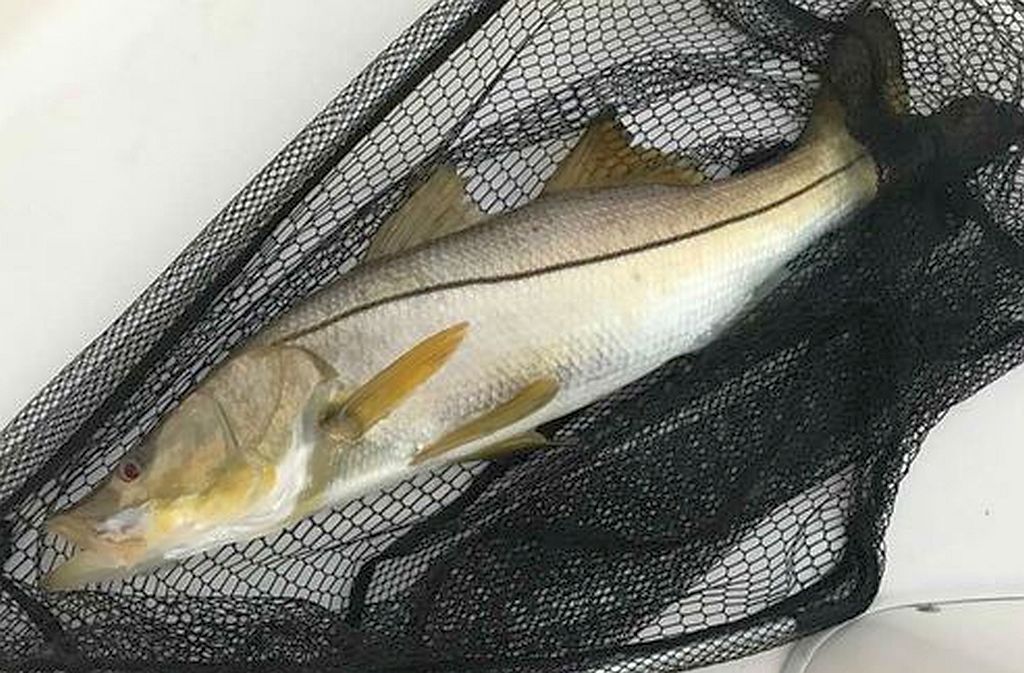 Right now the mullet are still north of us in the North East region, but we're starting to see good numbers of Menhaden, Croakers, and Pinfish coming in around our inlets. Right now the mullet are still north of us in the North East region, but we're starting to see good numbers of Menhaden, Croakers, and Pinfish coming in around our inlets.Once the mullet hit our area, the Snook bite will really blow up in Ponce, Canaveral, and Sebastian. Most of the guys fishing the inlets are using 50# fluorocarbon leaders and 30# to 50# Sufix 832 braided line because it casts farther and holds up better along the rocks and pilings. The bridge fenders along the north and south causeway bridge in New Smyrna, and the fenders along the A1A bridge that goes over Sebastian Inlet are also great places to catch Snook throughout the year, but in the next couple of weeks there will be some fantastic Snook fishing in these and the Canaveral area. This past month, the local guides have been targeting the Snook and sea trout in the Mosquito Lagoon early in the mornings around the bait schools on the shallow grass flats with plugs and twitch baits. Although the north Indian River in our area is not known for Snook, night fishing along the lighted docks, bridge fenders, pilings, and mangrove shorelines is especially productive during September. Rapala has a new X-Rap in the Mullet color which should work great when the mullet run gets down here, and another in the Pinfish color that looks fantastic in the water. Later on in the day, fish the deeper water areas with soft plastic or live baits. Most of the Snook that are being caught right now are running from 28" to 44" in length. For all of you fly fishermen who are looking to score a heavyweight redfish on the fly; the north Indian River in late August and September is the place to be. Big brooding females along with the smaller males gang up into tight schools this time of the year and seek out the deeper water flats of the northernmost Indian River, north of 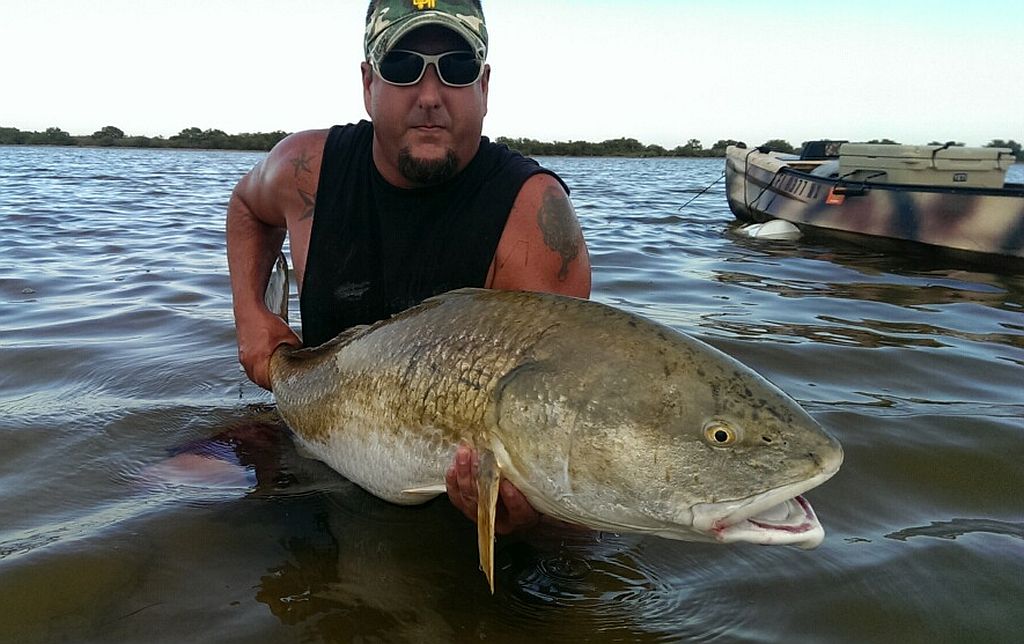 Titusville past the raised railroad bridge that supplies the Kennedy Space Center. Titusville past the raised railroad bridge that supplies the Kennedy Space Center. The fish in the Mosquito Lagoon and north Indian River spend their lives in the lagoon system and unlike other populations, do not migrate offshore to spawn. Instead, they travel through Haulover Canal to seek out deeper waters of the north Indian River to spawn. The 5 to 8 foot depths of the river are prime areas to target these fish which average 20 pounds, but frequently reach 30 to 35 pounds. Several IGFA fly rod records have been made with Indian River redfish, among them a 32 pounder on a 12 pound tippet by Christine Perez. If you're going after one of these bull redfish on the fly; a 9 weight outfit with floating or sinking line is recommended as the bare minimum. 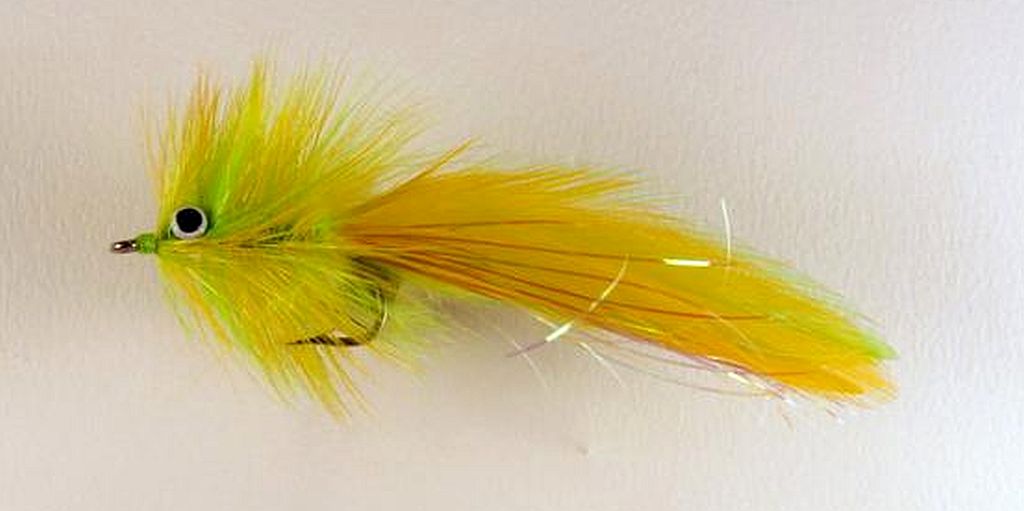 Large 3 1/2"" to 5" flies like the "Indian River Redfish Fly" (left) or any other large silhouette body fly, will get you a hookup if they're eating. Large 3 1/2"" to 5" flies like the "Indian River Redfish Fly" (left) or any other large silhouette body fly, will get you a hookup if they're eating.At certain times, especially a during full moon phase, you can see dozens to hundreds of spawning redfish concentrated in tight schools. Quite a sight! For fishermen using conventional gear, a large fresh cut chunk of ladyfish, half of a fresh crab, a live pigfish, or a jumbo live shrimp on a 5/0 to 7/0 VMC hook will get you a hookup if the fish are in the area. Gold spoons, large jerkbaits, and at times top water baits smeared up with some Pro-Cure Inshore formula also work well for you artificial bait fishermen. In the Mosquito Lagoon, live bait fishermen using fresh cut ladyfish have been catching slot size redfish in the potholes between Widgeon Bay and Galliniper Point. A few gator size sea trout are also being caught in the Mosquito Lagoon near the mullet schools on Skitterwalks and other top water baits early in the morning at dawn and later in the evening at dusk. During the rest of the day, try chasing after redfish, ladyfish and tarpon, or better yet, get yourself a brew. Nearshore And Offshore Fishing The King Mackerel that have been closer to the beach during the summer are now in their spawning mode and have moved off into the deeper 80 to 120 foot wrecks and reefs. Most of the Kingfish that are being caught right now aren't real big "smokers", but they are averaging 12 to 16 pounds. Slow trolling stinger rigs between 1 and 1.5 knots seems to be producing the best results. Don't be surprised if a sailfish, blackfin tuna, mahi or an occasional cobia comes into your spread. Most of the bigger kingfish have been taken on downriggers by guys trolling ribbonfish. Mangrove Snapper, which are usually considered an offshore species, have been coming in following the mullet and baitfish along the oyster bars, pilings, and rocky areas along the bridges. Fish for them using smaller or cut baits with a small lake shot or enough weight to just hold bottom on a little VMC circle hook. The little fish will start to pick away at the bait until a bigger fish comes along and hammers it. Some good areas to fish right now are around the sea walls and bridge pilings throughout the Ponce Inlet area, and all along the Halifax River. Also check out the areas around the bridge pilings on the 528 bridge, the Pineda Causeway bridge in the Indian and Banana Rivers, and any of the Inlets in our area. Most of the Mangrove Snapper that are being caught right now are running 1 to 3 pounds. If you like to catch flounder, this is the time of the year you have been waiting for. They have finally started showing up in the 35 to 90 foot depths out of Ponce Inlet and out of Port Canaveral. Flounder generally strike small baits like fingerling mullet, mud minnows, etc. and the best way to catch them is to put them on a jig head, knocker rig, or a sliding sinker rig with a very short leader to keep the bait right on the bottom. They will usually not come up for a bait which is why a lot of guys fishing sliding sinker rigs with longer leaders don't do well with them. Tarpon and Shark have been following the shrimp boats outside of Ponce Inlet vacuuming up the by-catch. A bunch of guys are having a ball fishing with freshly culled shrimp by-catch from the shrimp boats, on large VMC circle hooks. Some of the tarpon are in the 100 pound plus range. Surf Fishing
When the fall mullet run begins in the next couple of weeks, surf fishermen in our area can expect to catch almost any predator that swims in the Atlantic Ocean.
Along Playalinda Beach, bluefish, Spanish Mackerel, big Jacks, redfish, and a variety of shark can be caught almost anywhere off the beach and along our inshore waters on a variety of live, artificial, and chunk baits. The majority of shark caught in the surf will be less than 5 feet in length, however some species like the Bull Shark, Nurse Shark, Bonnethead, and Hammerhead in the 6 to 10 foot category are always a potential catch.
When the water begins to cool down in the late fall and winter, the Pompano bite should perk up and sand fleas, cut pieces of clam, or small pieces of shrimp will be the baits of  choice. choice.Pier fishermen in Daytona Beach and Coco Beach often get the first crack at the fall run of Spanish Mackerel. The extra distance off of the beach gives pier fishermen the extra advantage they need to reach the mackerel before they move in closer to the beach where the surf fishermen set up. The Sunglow Pier, next to Crabby Joe's, provides rod rentals and a bait and tackle shop. It is open from 6 am to 10pm daily and charges $7.00 for adults, and $3.00 for children. The Main Street Pier in Daytona does not charge fishermen for use of the pier. Most of the guys casting Gotcha plugs, tandem rigged bucktail jigs, and small spoons from any of our piers during the fall migration will wind up with a Mackerel dinner. Haulover Canal
Haulover Canal fishing is good all year round, especially around August and September when the "Bull" redfish move from the relatively shallow water flats of the Mosquito Lagoon through the canal into the deeper water flats of the north Indian River to spawn. Most of the breeding redfish caught will be well over the slot in the 25 to 35 pound category, but they are great fun to catch when you hook into one. A heavy 30# fluorocarbon leader on a knocker or sliding sinker rig, with a large 5/0 or 7/0 circle hook will minimize break-offs and help you land more fish. The Black Drum, Speckled Sea Trout and Snook also turn on when the weather starts cooling down this month in the canal. The Snook bite during the evenings and at night was good last month around the banks of the canal and at the pilings around the bunkers. The guys using live mullet on a jig head, live pinfish, bright colored Rapala X-Raps, Rapala X-Rap Twitchin' Mullet and 5" Saltwater Bass Assassins, seemed to be doing particularly well. It's a good idea to use at least a 30# or 40# fluorocarbon leader to minimize break offs around the Coquina outcroppings. Last but not least are the tarpon that you often see cruising through the canal. Last month several anglers reported tarpon in the 100 pound class being hooked but not landed. To get the big boys, you need to gear up for them. Most of the guys that I spoke with who hooked into a tarpon were not specifically targeting them and lost their fish.
One thing is a gimmie when fishing Haulover during September; you can never be sure what you're going to catch. Till Next Month, Good Fishing & Tight Lines To You All!
|
|||
| Link One | Link Two | Link Three | Link Four | Link Five | Unsubscribe to this newsletter |