Your July 2017new Mosquito Lagoon & Indian River Fishing Forecast
Published: Sat, 07/01/17
| Newsletter Issue # 95 Fishing Forecast July 1, 2017 | |||||||
Mosquito Lagoon & Indian River Fishing |
|||||||
With our Independence Day celebration just around the corner, inshore fishermen in our area can continue to enjoy excellent fishing opportunities for spotted sea trout, redfish, snook, tarpon, and a variety of sharks. Summer is officially here, and so are the high temperatures that are typical of Central Florida's lagoons. Sight fishing on the Mosquito Lagoon can be fabulous early in the morning hours when the fish are feeding on the shallow water grass flats, before the mercury rises. Look for tailing redfish in the earliest part of the morning and for sight fished sea trout and smaller slot redfish in the sandy potholes later on as the sun comes overhead. The late afternoon bite just before dark, can also produce some good fishing when most of the other anglers are leaving the lagoon. Over time, the fish have learned to start feeding as day comes to a close and the fishing pressure lightens up. So far this year, the water clarity in the Mosquito Lagoon has been unbelievably clear. The algae blooms that have been turning the waters around Titusville and the Space Center a nasty dirty brown color has been absent to minimal, and in some areas the sea grasses are showing signs of a comeback. Good numbers of speckled sea trout are being caught in the shallower parts of the Mosquito Lagoon by anglers using top water plugs like SkitterWalks, Chug Bugs, Zara Spooks , Mirrolures, the smaller 3.5" size Badonk-A-Donk, and pretty much anything that resembles a Silver Mullet. The finger mullet population is exploding in the lagoons, there are plenty of shrimp in the grass flats, and the pinfish and pigfish appear to be just the right size for gator seatrout to eat. With all these factors coming together, we can safely predict that the excellent sea trout bite we have been enjoying will continue throughout the upcoming month. Although "walk the dog" type top water plugs and the larger five inch jerk baits have been the best producers of large trout during the early morning hours and later on towards dusk; the Z-Man Pop Shadz rigged weedless on a 5/0 bass worm hook has proven to be be a killer bait when lots of floating weeds make fishing conventional top water baits impossible. These soft plastic floating lures are easy to plop or chug along the surface, are virtually weedless, and catch fish. The re-opening of Bio Lab Road to vehicle traffic allows anglers access to some really great wade fishing opportunities along the southern section of the Mosquito Lagoon. Early morning sight fishing with a topwater bait or a 5" Saltwater Assassin jerk bait rigged weedless and fished underneath the floating grass later in the day can produce some outstanding results. The redfish bite has also been good in our area. The reds have been moving around quite a bit with changes in the wind direction, but once you find them they are generally pretty eager to eat. Live Target, DOA shrimp, or a 3" MinnowZ will often get you a hookup when a good presentation is made. With cleaner water and more and more fishing pressure, the redfish get "spooky", but longer casts and a good presentation can usually produce results. For live bait fishermen, it's hard to beat a live pigfish either free lined or dangling underneath a Cajun Thunder popping cork. Live mullet and pinfish also work well when fished around the bait pods. Although a lot of the sea trout caught this past month have been running in the 1 to 4 pound category, plenty of gator sea trout in the 9 pound and over category have been caught on the flats by anglers using live pigfish throughout the day. In the Indian River Lagoon north of Titusville, the improved water clarity has made it possible for anglers to sight fish sea trout and redfish again. April, May, and June sight fishing opportunities in this area was a hit or miss proposition, but with the continued invasion of finger mullet into this area, and the the improvement in water clarity, we expect July to be a stellar month for both species. Fishing a live finger mullet around the bait pods, or any appropriately sized lure that imitates a finger mullet, is pretty much a no-brainer this time of year. Peacocks Pocket road in the Merritt Island National Wildlife Refuge at Titusville is still closed to vehicle traffic, but it still can be walked if you feel up to it and have no medical problems. The deeper areas of the marsh canals, and the dropoffs adjacent to some of the grassy ponds are good areas to target with a topwater Chug Bug smeared with some Pro-Cure and fished very slowly early in the morning. Some nice sea trout and oversize redfish cruise the marsh but the 9 mile plus walk can get to you if you're out of shape. 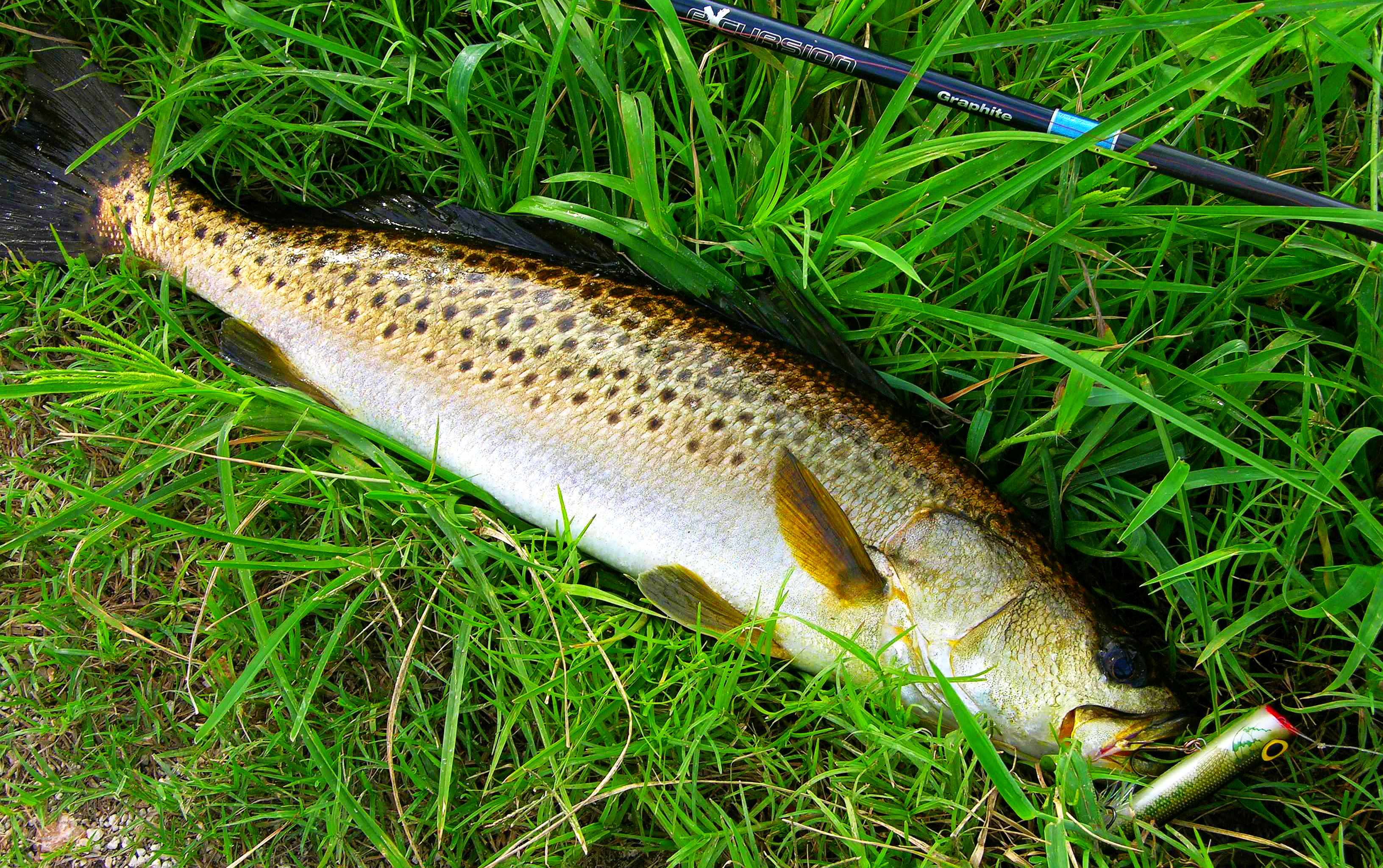 An Assassin Sea Shad, a Z-Mann Minnowz, or a Diezel Minnowz is also a good bait to use along the canals. Use light colors like pearl white during low light periods, and darker colors when the sun comes out. Fishing a live finger mullet in the ponds and marsh canal may hook you up with an oversize redfish or a gator size sea trout almost any time of the day, but the best bite is early and late this time of the year. The problem right now and until the road is reopened, is toting a bucket full of live bait to a fishing spot. The fishing piers and the causeway around the bridge in Titusville has also been producing some nice slot size redfish. Live mullet, cut baits, or half of a fresh blue crab on a sliding sinker rig with a 4/0 or 5/0 Owner hook is what most of the guys use. Some slot size black drum are also being caught in this area and around Catfish Creek Loop closer to dusk on live and dead shrimp. Because of the substantial amount of rainfall we have been getting, the tarpon fishing has been getting decent in the feeder creeks and residential canals; anywhere you have a lot of moving water. The runoff has been flushing glass minnows and baby speckled sea trout into the lagoons from the feeder creeks where the juvenile tarpon have been feeding on them, so if you have a little topwater skitterwalk in the trout pattern, you should be able to get some action. Most of the "baby" tarpon right now are running 3 to 12 pounds, but some are pushing the 30 pound mark, and you could come across a few in the 50 to 60 pound range. Patillo Creek and some areas around Shiloh Road hold juvenile tarpon and big ladyfish which are fun to target with light spinning tackle or fly rods. Nearshore and Offshore July is when many nearshore East Central Florida kayakers get a chance to hook up with Tarpon, Kingfish, and possibly even Cobia, often within only a half mile off the beach. 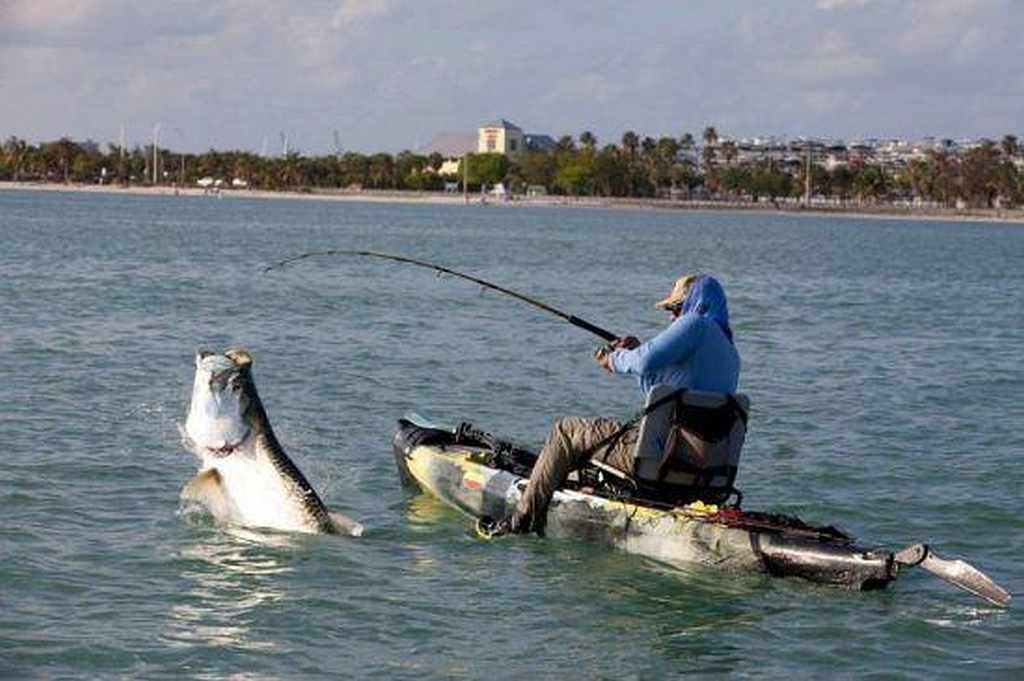 When the pods of baitfish draw these gamesters close to the beach, you can usually find them by watching the birds. Diving pelicans and gulls are usually a dead give away to the presence of pilchards, pogies, or mullet in the area. Paddle out to where the birds are diving, bait up with a pilchard, pogie, or better yet an 8" to 10" mullet, and hang on for a long tow when a good fish hits. Right now closer to shore the sharks and tarpon have been moving up and down the beaches, and around the tip of the Cape. Most of the tarpon caught will be in the 75 to 125 pound range. Blacktips, some Bull Sharks, Blacknose, Fine Tooth, Nurse, Spinner Sharks, Sharpnose, and an occasional Hammerhead can be found just outside any of our inlets right now. Standard cut bait rigs on the bottom with a piece of either 50 to 90 pound single wire, or 90 to 270 pound multi strand wire to prevent cutoffs is all you need to get a hookup right now. Most of the sharks will be under 6 feet in length, so a long leader isn't necessary; however, hammerheads usually run in the 8 to 10 foot range and need longer leaders. A little farther offshore from 50 to 90 feet of water, the King Mackerel bite is still going on pretty strong. Slow trolling blue runners, pogies, and sardines on stinger rigs is the tried and true method used to catch kingfish. The guys fishing for Kingfish in the 50 to 90 foot depths have also been catching dolphin slow trolling blue runners, pogies, and sardines on their stinger rigs, so don't be surprised when you pick one up The Dolphin bite has also been good these past few weeks but you need to get ether in the 50 to 90 foot depths or run way out to the 250 foot or deeper depths to get them. Look for concentrations of flying fish or other baitfish, a weedline or a rip, or a temperature break. Farther north outside of Ponce Inlet, the guys are following the shrimp boats for tarpon and sharks. The mangrove snapper bite has also been good on the deeper reefs and wrecks from 80 to 120 feet of wate. Use cut squid or sardines floating back in you chum slick. Farther out from 160 to 250 feet of water, scattered grouper and amberjack are hanging on the ledges and larger features. Live pogies,croakers, or grunts are the baits of choice. Around the entrance to Port Canaveral tese past few weeks and inside the basins, there have been reports of flounder up to 3 pounds being caught on live baits. Pilchards, shrimp, mud minnows, small croakers, or finger mullet on a jig head or a sliding sinker rig fished right on the bottom, or hopped along the bottom, seems to be the best way to get a hookup. Surf Fishing Surf fishing during the month of July can be extremely productive if you can get out before the crowds storm the beach.  Because the schools are all out, local and out of state families will be flooding most of our public beaches to swim, sun bathe, shell, jog, or just stroll along the beach. Because the schools are all out, local and out of state families will be flooding most of our public beaches to swim, sun bathe, shell, jog, or just stroll along the beach. If you are an avid surf fisherman, try to set your rods out before the sun is up, and be prepared to leave the beach before 10 am. Don't bother fishing on a weekend unless you have a private section of beach staked out. The crowds will overwhelm you. A lot of surf fishermen like to fish from 5:00 to 9:00 pm in the late afternoon, especially during an incoming tide. The beaches are cooler and the fish generally bite better closer to dusk. Keeping all this in mind, it's also good to know that Space Coast beaches can be divided into several different types of topography. Along the Northern part of our coast, the Canaveral National Seashore that stretches from New Smyrna Beach south to Port Canaveral, has a sandy bottom. You can access it at Titusville, at Playalinda Beach and from the north end at New Smyrna Beach. Unless you work at NASA or are in the Air Force, the beach South of Playalinda Beach to Port Canaveral is off limits. Along this section of the beach, a deep trough generally forms just offshore of the shore break, followed by a sandbar, and then deeper water. The best fishing along this stretch of beach is usually inside the near trough. During July, when the whiting really start getting thick along these beaches and in most other areas of Central Florida, many surf fishermen switch to short river rods with small hooks on a sliding sinker rig to catch a mess of fish. Sand fleas and small pieces of peeled shrimp and are the baits of choice for whiting. The best bite usually occurs in the early morning hours, preferably during the middle, to the end of an incoming tide. Unless you are targeting sharks or tarpon, many inexperienced surf fishermen using long surf rods with pyramid sinkers, and two or three hook dropper hooks, tend to overcast the whiting that are running up and down the near troughs. South of Port Canaveral, around the towns of Cape Canaveral and Cocoa Beach, the bottom is still sandy but the trough is less pronounced. The beaches around Patrick Air Force Base, south to the Town of Indialantic, are full of coquina ridges and Sabellariid Worm rocks in the surf. During the month of July, the Sabellariid Worm Reefs are a magnet for Snook, black drum, Margate, Lookdowns, whiting, mackerel, bluefish, redfish, Tarpon, and a variety of sharks. Last week a friend of mine fishing with live shrimp and fish bites in the morning on an incoming tide got a mixed bag of Margate, black drum, ladyfish, sheepshead, a small nurse shark, and a slot redfish. Snook fishing in the surf is excellent this time of the year along the five mile stretch of submerged worm rock. During the summer months, Snook in the 30 pound category are often caught on that stretch of beach. Rig a live 12" or larger mullet, or a live pogie on a sliding sinker rig with a piece of 40 pound fluorocarbon leader and cast out past the worm rocks. The best bite is usually at first light and again at dusk until a couple of hours after dark, preferably during a high tide when there is more water over the reef. The challenge will be landing the fish without it breaking off in the rocks. The surf between Melbourne Beach to Vero Beach is a good area to fish for Tarpon in the surf. Most of the fish caught in the surf will be under 100 pounds, but tarpon in the 150 pound category are always a possibility. In the 20 to 40 foot depths farther offshore, tarpon in the 150 pound category can be targeted using live pogies, herring, mullet, or pilchards. Lobstering The July 26-27 sport lobster season is just around the corner and some of the best spiny lobstering outside of the Florida Keys is available to East Central Florida residents right outside of Port Canaveral. 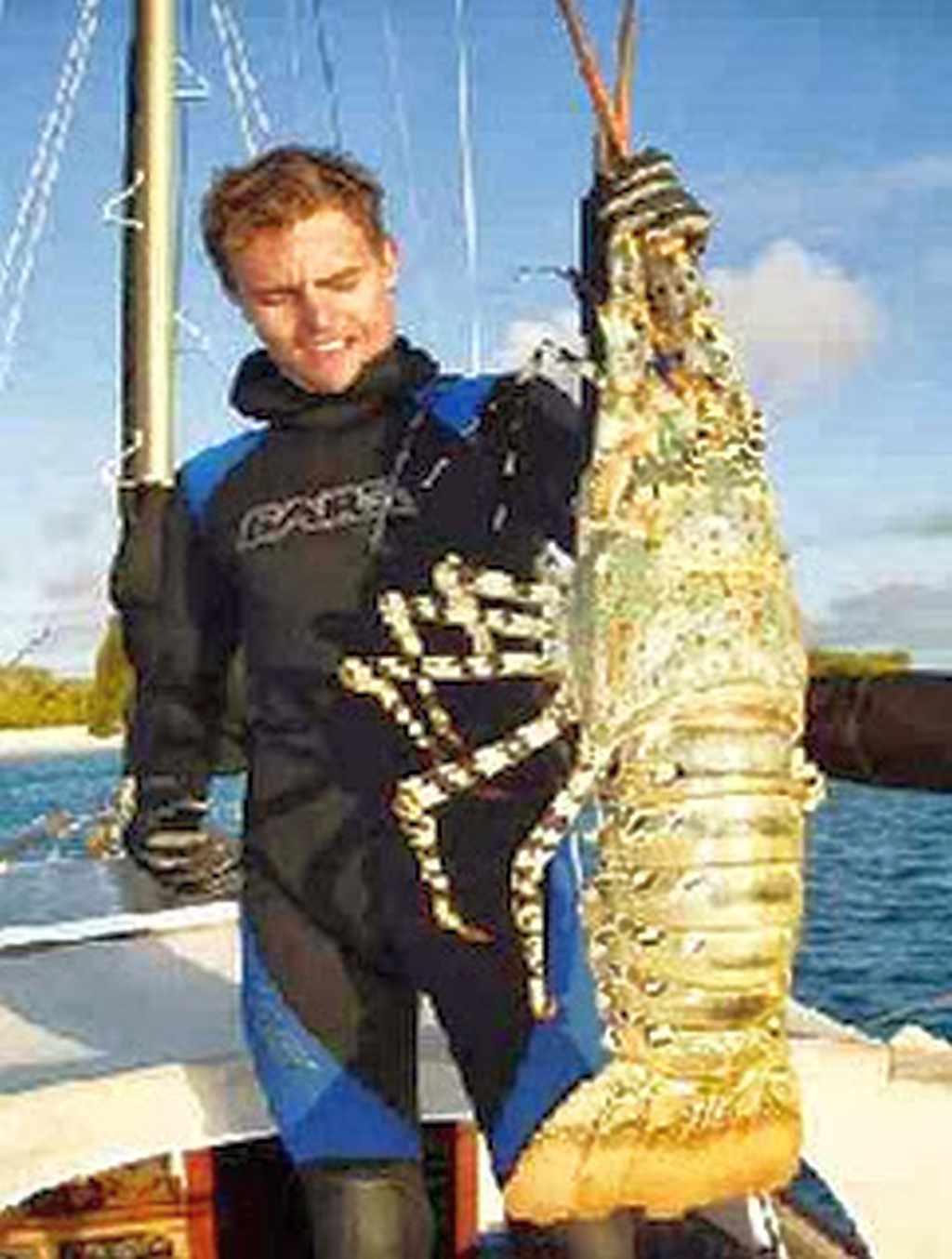 Divers between Port Canaveral and Fort Pierce commonly catch "bugs" in the 5 to 6 pound category, but some real giants over 10 pounds are routinely taken. Divers between Port Canaveral and Fort Pierce commonly catch "bugs" in the 5 to 6 pound category, but some real giants over 10 pounds are routinely taken. Unlike their counterparts in the Florida Keys, the deep water lobsters around our area get a chance to grow, and they grow big! If the cold water up-welling is not widespread, the largest bugs should be found around low profile bottom structure in about 40 to 50 feet of water, particularly between Sebastian and Vero Beach. The largest bugs in our area are found in the 50 to 90 foot depths however, small boaters who cannot access these depths can still hunt them on the shallower water artificial reefs out of Ponce Inlet. The divers of the inshore reef south of Vero Beach to Sebastian Inlet also do surprisingly well during the early season before the reefs get picked over. Wabasso Beach is also a popular area for beach divers. Snorkelers can swim out to 15 or 20 feet of water where some giant spiny lobsters have been caught during past years. The Wabasso, Disney Beach area has produced "bugs" up to 15 pounds. For size, the waters out of Port Canaveral, Sebastian Inlet, and Fort Pierce Inlet can't be beat. Our sport lobster mini season this year is on July 26th and 27th, followed by the regular season opening on August 6th. It begins at 12:01 am on Wednesday the 26th, and ends at 12:00 midnight on Thursday, the 27th. Click on the icon below for additional information on the 2017 Florida Spiny Lobster Season 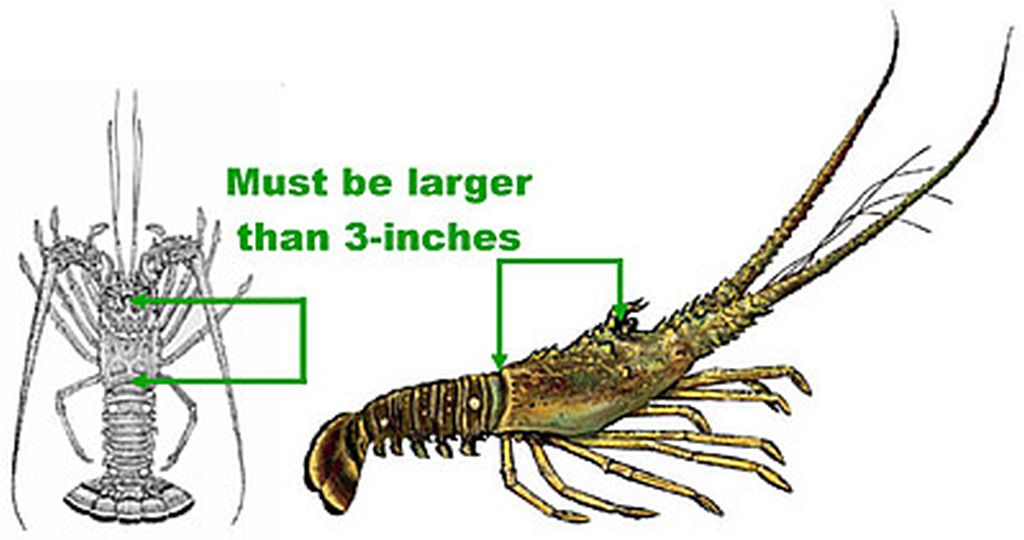 Till Next Month, Good Fishing & Tight Lines To You All Until next time,
Tight Lines and bent rods!
|
|||||||
| Link One | Link Two | Link Three | Link Four | Link Five | Unsubscribe to this newsletter |