Your May 2017 Mosquito Lagoon & Indian River Fishing Report
Published: Mon, 05/01/17
| Newsletter Issue # 93 Fishing Forecast | May1, 2017 | |||||||
Mosquito Lagoon & Indian River Fishing |
||||||||
Now that the windiest days of March and April are no longer with us, we can look forward to some great weather for sight fishing the Space Coast. If you enjoy wade fishing, May is a prime month to slide off your boat and wade the flats and the edges of the sand bars in the Indian River and Mosquito Lagoon systems. When targeting sea trout and redfish, your minimum wade fishing arsenal should include at least a DOA 2 ¾” shrimp, a CAL jerk bait, a Gold spoon, and a couple of top water lures. If you are after slot size redfish or speckled sea trout, try targeting the potholes on the shallow flats with either a Z-Man, a Saltwater Assassin, or a Trigger X soft plastic bait on a light 1/16th or 1/8th ounce worm hook, especially when there is a lot of grass on the water. April, May, and June are arguably the best months to fish for large spotted sea trout, and with the mild winter we had this year, you can bet that some really big fish will be targeting the pods of finger mullet. Solitary females in the 5 to 11 pound and over category are always roaming the flats, and several over 9 pounds were reportedly caught during April. Your best bet for catching a gator size trout is to fish around the bait pods early in the morning and late in the afternoon towards dusk, with a large top water plug, or with a live croaker, pinfish, or finger mullet freelined or dangling under a Cajun Thunder rig. 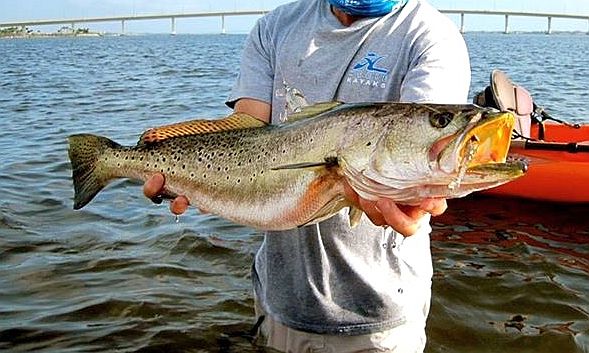 Some of the best top water hardbaits that have been proven fish catchers in our area, are the Rapala Skitter Walk, the MirrOlure Top Dog, Chug Bug, Heddon's Super Spook or Zara Spook, the Badonka Donk, the XPS Slim Dog. Some of the best top water hardbaits that have been proven fish catchers in our area, are the Rapala Skitter Walk, the MirrOlure Top Dog, Chug Bug, Heddon's Super Spook or Zara Spook, the Badonka Donk, the XPS Slim Dog. The smaller (08) size Rapala Skitterwalk, or one of the new Salty Snack lures by Assassin bait co. fished near the bait pods offers a more subtle presentation which will often catch more fish in clearer water. The soft plastic Salty Snack can also be rigged weedless on a 5/0 wide gap VMC hook when you're fishing around a lot of floating grass. Smear your baits up with some Pro-Cure to increase your chances of a hookup. Twitch baits like Bomber's Saltwater Grade Mullet, Storm's Twitch Stick, and Offshore Angler's Red Eye Mullet can also produce big fish when slowly worked around the mullet pods. As the daytime temperatures continue to increase, the ticket to successful top water fishing is to be on the water at first light. Unless it is an overcast or a rainy day, the bite on the flats will usually slow down and quit around 9:00 am when the fish move out into deeper water. You can usually catch smaller trout with live shrimp on popping corks during the day, when you locate the schools. If the brown algae doesn't become a big problem, some of the most productive flats to fish for gator trout will be in the Mosquito Lagoon. Historically, some of the largest sea trout have been caught from the Tiger Shoal area north to Three Sisters Creek, and farther north in the Mosquito Lagoon, from Plantation Island to the Slippery Creek area. In the Indian River north of Mims up to Turnbull Creek past Scotsmoor, Georges Flats, and farther south around Dummit Cove, some very large sea trout have also been caught on the flats. The east side of the Merritt Island Natonal Wildlife Refuge paralleling Peacocks Pocket road, has also produced some very large sea trout in past years. Right now the guides are reporting some giant redfish from the smaller to medium sized schools that are in the Indian River north of Titusville, and in the deeper water flats of the Mosquito Lagoon near the pole and troll zone. The deeper 4 to 6 foot waters adjacent to the shallower flats throughout the Mosquito Lagoon can be fished throughout the day with soft plastic baits, hair jigs tipped with a Gulp shrimp or a grub tail, Johnson Sprite or Aqua Dream spoons, or twitch baits for slot size sea trout, redfish, ladyfish, or even bluefish. Usually the bank fishing in the Merritt Island National Wildlife Refuge improves considerably during May as the numbers of finger mullet 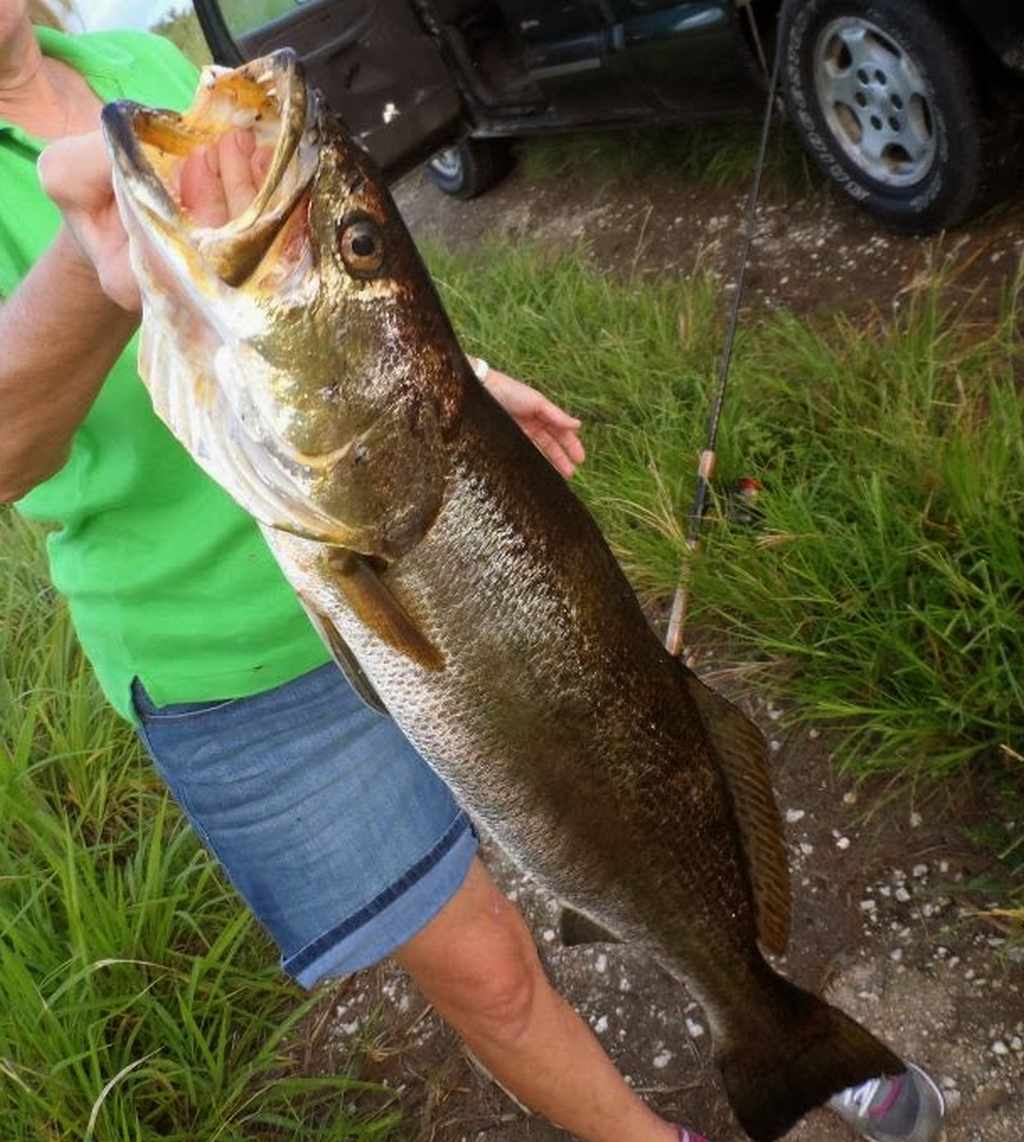 increase in the lagoon system, however, for the past couple of months, the water levels in the marsh have been extremely low and with the low oxygen content in the near stagnant water of the
marsh canals, dead fish (primarily garfish) are everywhere. increase in the lagoon system, however, for the past couple of months, the water levels in the marsh have been extremely low and with the low oxygen content in the near stagnant water of the
marsh canals, dead fish (primarily garfish) are everywhere.Because of the lack of funding, Peacocks Pocket road, Bio Lab road, Shiloh road, L. Pond road, and almost all of the other dike access roads in the refuge remain closed for repairs. Some of the best fishing spots in the Refuge that were once easily accessed by vehicle to bank fishermen, are now only available to hikers, bikers, and anglers using kayaks or canoes. Farther south in the Merritt Island and Satellite Beach canals, good numbers of juvenile tarpon can be seen rolling on the glass minnow pods. Fly fishermen using streamer flies that imitate the small minnows that the Tarpon are feeding on can have a ball throughout the upcoming months. Spin fishermen using small jigs can also take advantage of the juvenile tarpon in the canals. Snook Snook fishing on the Indian River in the early mornings can bring some serious rod bending action as they head to the flats for an early morning or late afternoon meal. Baitbusters, DOA shrimp, and topwater baits are all great lures to use along the mangrove shorelines, docks, and bridges to tempt a snook into biting. A live baitfish or live shrimp is hard to beat when freelined around the docks, inlets, seawalls, or bridges. 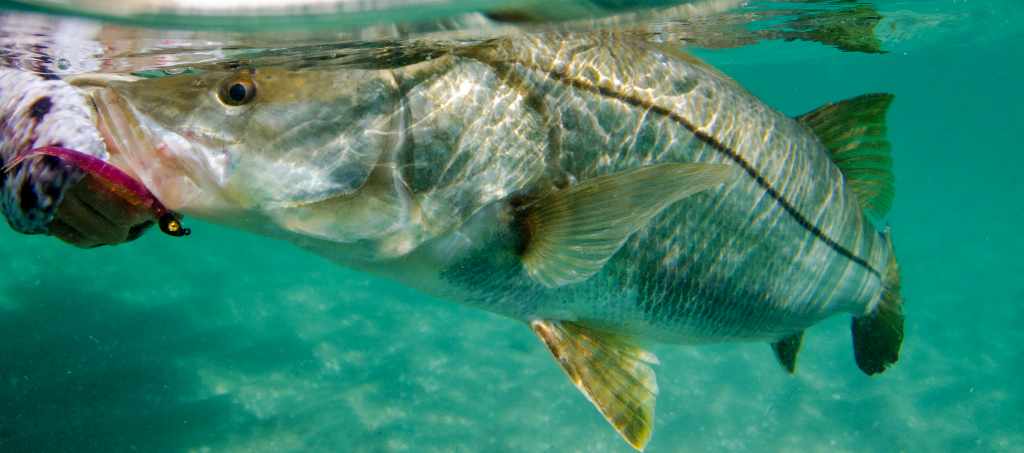 DOA Terror Eyez, feather jigs, and brightly colored deep diving plugs will also work well, especially when the water is moving. A great spot that is underutilized for Snook in our region is the deep water channel at the mouth of Port Canaveral, and the turning basins inside of the Port. The security zones and limited shoreline access make the Port less popular to fishermen, and except for the Pier at Jetty Park, there are few spots for shoreline fishermen to cast. Because the locks on the west end of the Port minimize the velocity of tidal flow, the deep waters and minimal current make the channels inside the Port a magnet for baitfish and the predators that follow them. The larger snook are attracted to the deeper water habitat, where in many places the channels are almost 50 feet deep. The strictly enforced security measures in the Port tend to limit boat fishermen. All boats anchored or under power must remain at least 25 feet from all docks and bulkheads, 100 feet from a berthed ship, and 200 feet from a naval vessel. The Trident Basin, the eastern most turning basin, and the west turning basin (when cruise ships are present) are closed to boaters. 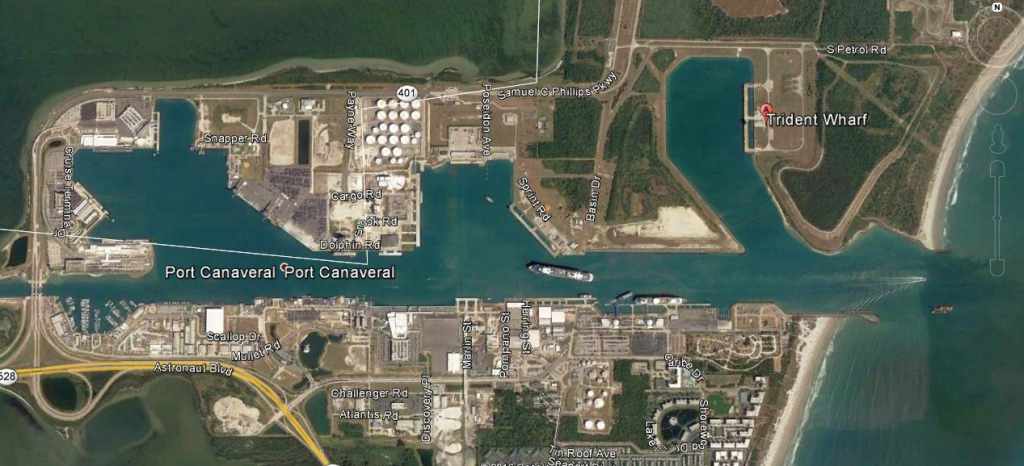 Because of these limitations to fishing, the Snook population in the Port is unbelievable and they run huge; in the 20 to 30 pound category. Most of the Snook caught are at night around the shaded zones under the lights around the wharfs, piers, and docks. Most night time fishermen use live mullet or Croakers for bait, with heavy tackle. Some of the regulars toss DOA BaitBusters around schools of mullet, and Mirrorlure 77M21 in a scaled mullet finish when fishing around the north jetty at the mouth of the Port where the tide is stronger. You can launch your boat at Port's End Park or the new Freddie Patrick Park on the south side of the Port. Playalinda Beach and South Canaveral National Seashore surf fishermen can look forward to catching whiting, pompano, bluefish, some Spanish mackerel, and a variety of shark in the surf during May.
 Use sand fleas or fresh clam strips if you're targeting Pompano. If Whiting is on the agenda for dinner, use fresh sand fleas, small pieces of peeled shrimp, or small fresh pieces clam. Use sand fleas or fresh clam strips if you're targeting Pompano. If Whiting is on the agenda for dinner, use fresh sand fleas, small pieces of peeled shrimp, or small fresh pieces clam.The best times to fish Playalinda beach is during the higher phase of the tidal cycle, about 2 hours on either side of high tide. If the tide occurs in the early morning hours, it's even better. Target the troughs and deeper sloughs that form just past the shore break. Usually about 20 to 30 yards past the first trough, submerged sandbars form. The waves approach the sandbar and break up to reform again over the trough, only to break up again as they reach the shore. As the waves break onto the shore, the sand fleas that are constantly burrowing in the sand are dislodged and pulled out into the troughs where the whiting and Pompano are waiting for them. A variety of fish cruise the troughs and wait just offshore to grab sand fleas and any other bait as it is pulled out to sea. When the tide goes out and the troughs becomes too shallow for the fish, they move out past the sandbar where they can still be caught, but the bite usually slows down dramatically. Shark Beginning in May, you should expect to catch almost any species of shark near in the surf or just off shore. With the relatively dirty waters closer to shore, you could find hammerheads, black tips, bull sharks, spinners, and bonnet heads in the surf zone, as well as on the East Central Florida reefs and wrecks. 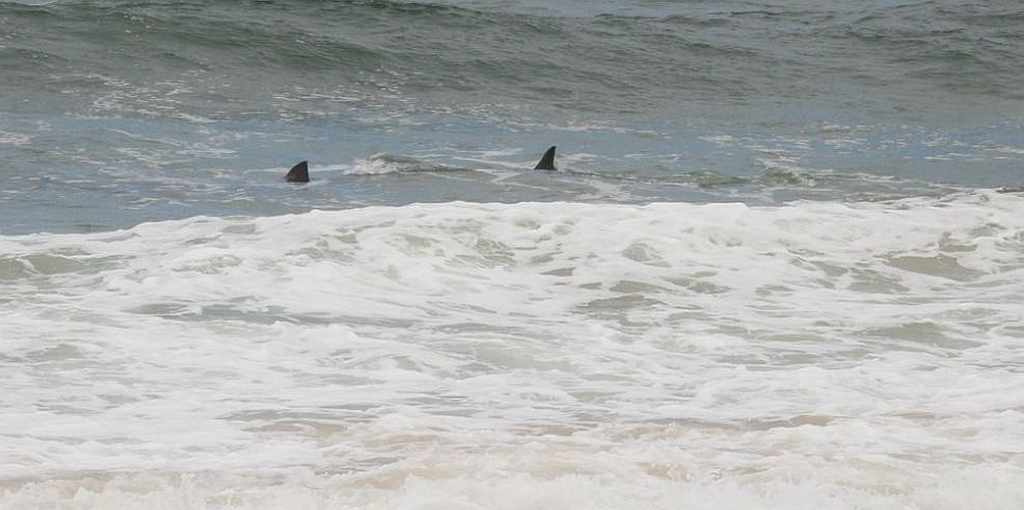 If you plan on targeting big sharks in the surf zone, you will need a wire or cable leader with a large VMC circle hook for terminal tackle, and a chunk of Bonita, Mackerel, mullet, ladyfish, or other bloody or oily fish for bait. Common sense dictates that you stay away from bathers and surfers when shark fishing. Some really large sharks are being caught right now in the surf just off the beach in very shallow water and although most are chasing bait fish, mistaken identity bites occur every year. Most of the shark you will catch from the beach will be in the 25 to 75 pound category, but bull sharks and hammerheads can easily exceed 200 pounds.
The stretch of beach behind the Officer's Club at Patrick AFB is a good area for catching big sharks and snook. A sliding sinker rig with a heavy, live bait hook, and a live 8" -12" mullet for bait should get you a hookup if they are in the area. ________________________
Offshore and Near Offshore Fishing
Port Canaveral This past week, the yellowfin tuna have been showing up on the eastern side of the Gulfstream in good numbers. 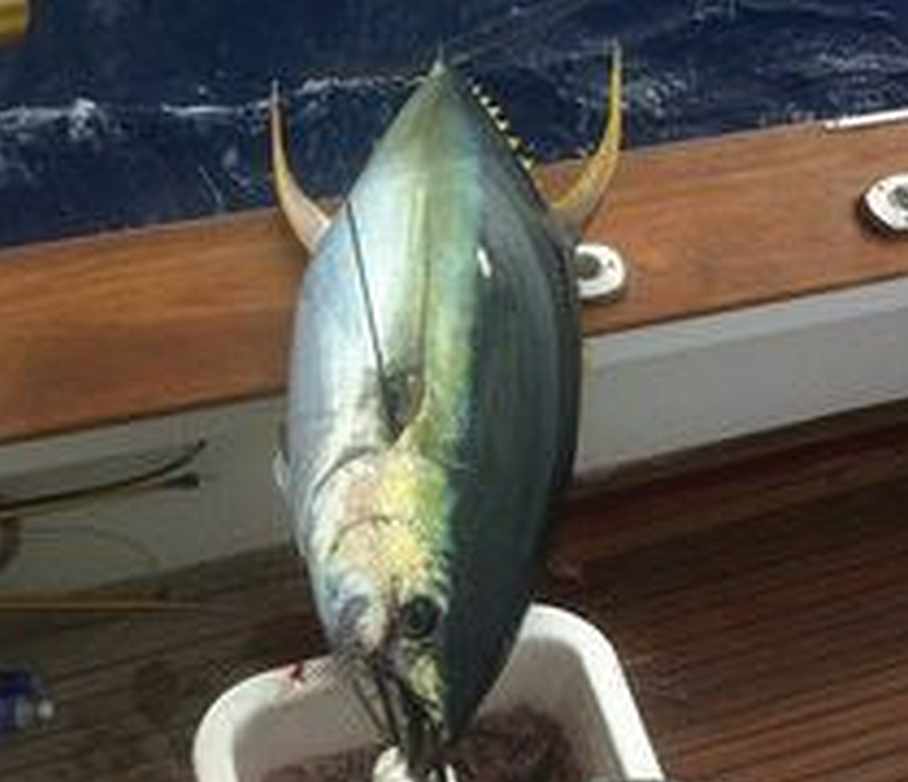 The largest yellowfin caught in the recent “Other Side” tournament this past weekend weighed in at a whopping 110 pounds. The largest yellowfin caught in the recent “Other Side” tournament this past weekend weighed in at a whopping 110 pounds. Several others weighed in at 80 to 100 pounds. Quite a few blackfin tuna in the 90 to 120 foot depths were showing up closer to Port Canaveral on this side of the Gulf stream during the earlier part of the week, but by mid week, the waters closer to shore dirtied up. The baitfish and flying fish have relocated out into the 250 to 350 foot depths where the best trolling action seems to be right now. Once the inshore waters begin to clean up again; the dolphin, wahoo, and sailfish should be back in the 120 foot depths for anglers dragging ballyhoo. Bottom fishing for most grouper species kicks off May 1st. and if you don't own your own boat, there are several "Party Boats" and a plethora of "Deep Sea" fishing boats at the Port that offer Half Day, Full Day, and night shark fishing trips. Most of the Grouper species, Sea Bass, various Snapper species, Trigger Fish, Amberjack, King Mackerel, Cobia, Mahi Mahi, Sharks, and Sailfish will all be on the menu this month. Ponce Inlet Farther north at Ponce Inlet, the dolphin, sailfish and blackfin tuna are beginning to show up in better numbers. 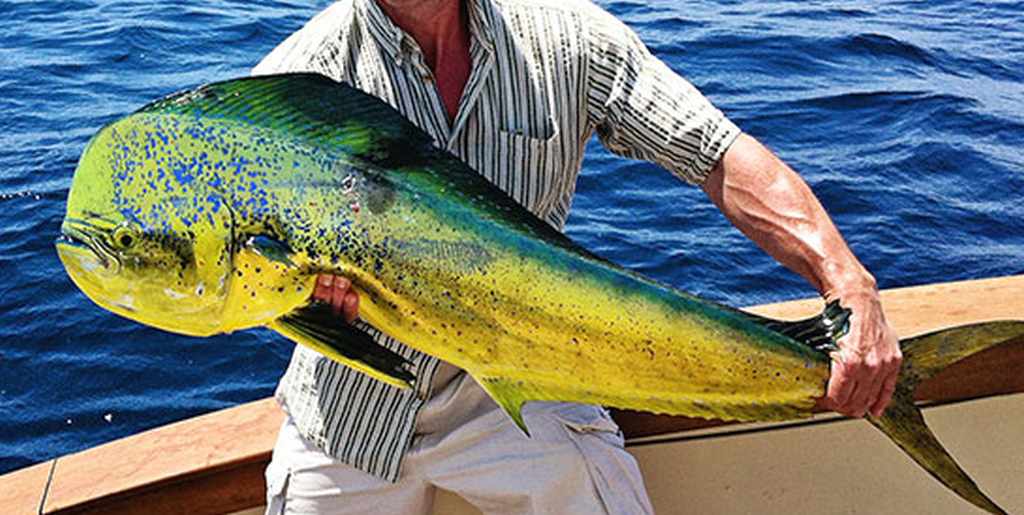 When trolling, look for flying fish or other baitfish that gather around the temperature breaks, color changes, and rips. For tuna and sailfish, most of the anglers have been using small, dark colored purple and black, red and black, or all black colored skirts around smaller size ballyhoo. For dolphin, most of the guys have been using green and chartreuse or blue and white skirts. Some of the dolphin are weighing in over the 20 pound mark. Bottom fishermen on the reefs inside the 120 foot mark have been making good catches of redeyes and triggerfish on cut sardines, squid, and other cut baits. For you grouper fisherman farther offshore, the recreational season for most grouper species opens up May 1st. in all Atlantic state waters. Click on this link for the current grouper REGULATIONS. Till Next Month, Good Fishing & Tight Lines To You All!
|
||||||||
| Link One | Link Two | Link Three | Link Four | Link Five | Unsubscribe to this newsletter |