Your April 2017 Mosquito Lagoon & Indian River Fishing Report
Published: Sat, 04/01/17
| Newsletter Issue # 93 | April 1, 2017 |
||
Mosquito Lagoon & Indian River Fishing |
|||
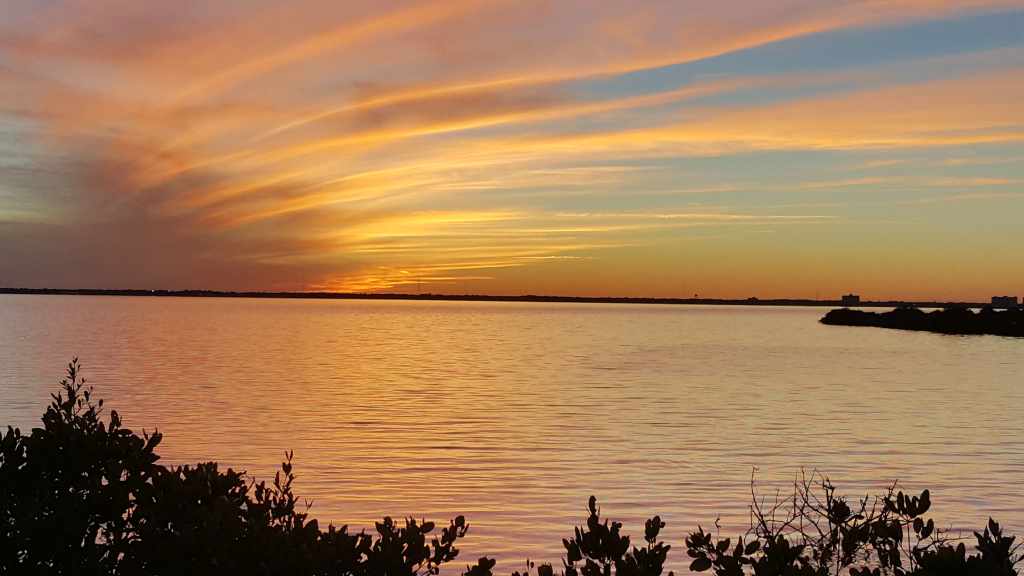 The Mosquito Lagoon and Indian River The windy fishing conditions we had last month should gradually taper off during the month of April to give us some decent sight fishing opportunities. Despite the windy conditions and low water levels, March turned out to be another banner month for redfish and for giant gator sea trout in the Mosquito Lagoon and Indian River lagoons.
During April, breeder black drum are also on the agenda for many fishermen in the Mosquito Lagoon and Indian River lagoon systems and right now, the drum bite is hot from Daytona to Vero Beach. One of my favorite areas to fish for gator sea trout during March and April is along Peacocks Pocket and Bio Lab Roads however, both roads have been closed for an indefinite period because of damage done to the roads by Hurricane Matthew. Most bank fishing is now concentrated along the A. Max Brewer causeway, the Catfish Creek, and East Gator Creek areas. According to Layne L. Hamilton, the refuge manager, the MINWR has been suffering from severe funding problems, which is why the dike roads have not yet been repaired and may never be reopened for vehicle traffic. For those of you who care about the road closures as much as my wife and I do, I strongly suggest making a call, sending an email, or a writing a letter to your representative in Congress about the road closures and lack of funding for the Merritt Island National Wildlife Refuge. Florida's 8th District Congressman is Bill Posey - CLICK HERE Florida's 6th District Congressman is Ron Desantis - CLICK HERE Other public officials. Historically, most politicians only pay attention to our issues when enough of us raise our voices to our representatives; they love keeping their seats. Playalinda Beach 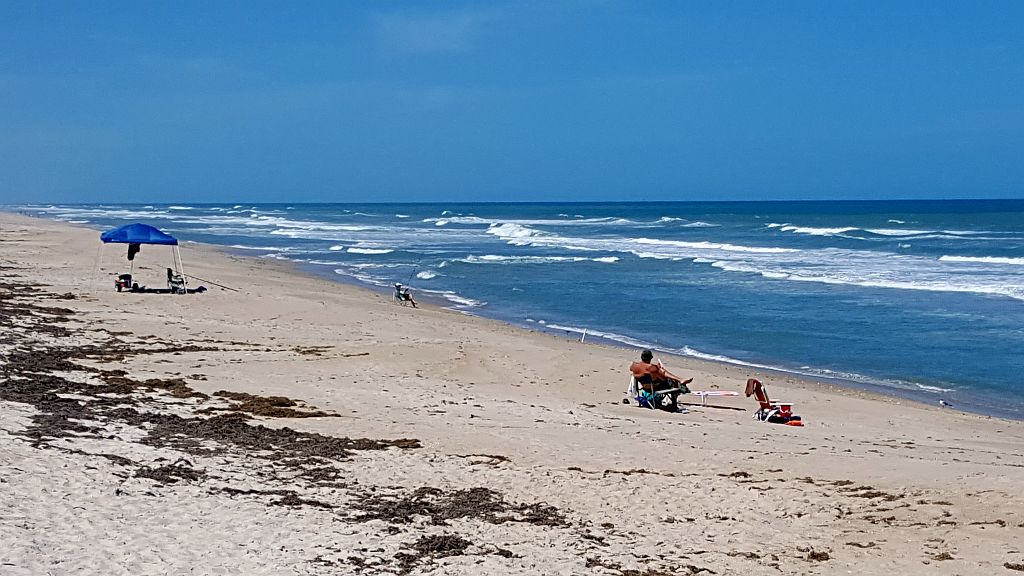 As the waters warm and the baitfish migration starts to rev up, we should see some decent surf fishing for bluefish, Spanish mackerel, whiting, and other predators that follow the schools. Last week when I visited the beach, the water temperature at Lots #9 and #10 was 69 degrees F., which is about 3 degrees cooler than the mean water temperature for this time of the year. This should normally make for some decent pompano fishing, but the guys I talked to said that the pompano were only hitting sporadically on live sand fleas when the surf was calm enough to fish for them. Hitting the beaches early in the morning, just after a low tide as it starts to come back in and tossing a fresh piece of clam or a live sand flea into the deeper troughs between the sandbars, is usually a productive tactic. Although Pompano grow as large as 8 pounds, most of the fish caught in the surf in our area will weigh between 2 and 4 pounds. Almost all of the fishermen I talked with last week were fishing with dead shrimp and were catching a few small to medium sized whiting, however, I must mention that they were fishing on the end of an outgoing tide. When the baitfish start to show up in the surf again, we should start seeing bluefish in the 12" to 20" range, Spanish mackerel, and good numbers of shark in the surf again. Try to fish early in the mornings on the last half of an incoming tide for the best bite. The bigger blues usually run just outside of the second set of breakers and are suckers for a live finger mullet or the head part of half of a mullet. At Playalinda Beach, the troughs at lots #9, #10, and #11 are deeper than in some of the other areas, but this is always subject to change. Earlier last month, lots #2 and #3 were hot for pompano. Port Canaveral Offshore and Nearshore Far Offshore For the next three months, Yellowfin Tuna will be the topic of discussion for anglers in bigger boats out of Port Canaveral willing to make the 90 mile trek to the eastern edge on the "other side" of the Gulf Stream. Although a good number of anglers who captain 30 foot vessels make the run every year, the fishery is primarily for the larger 40-50 foot sportfishermen. 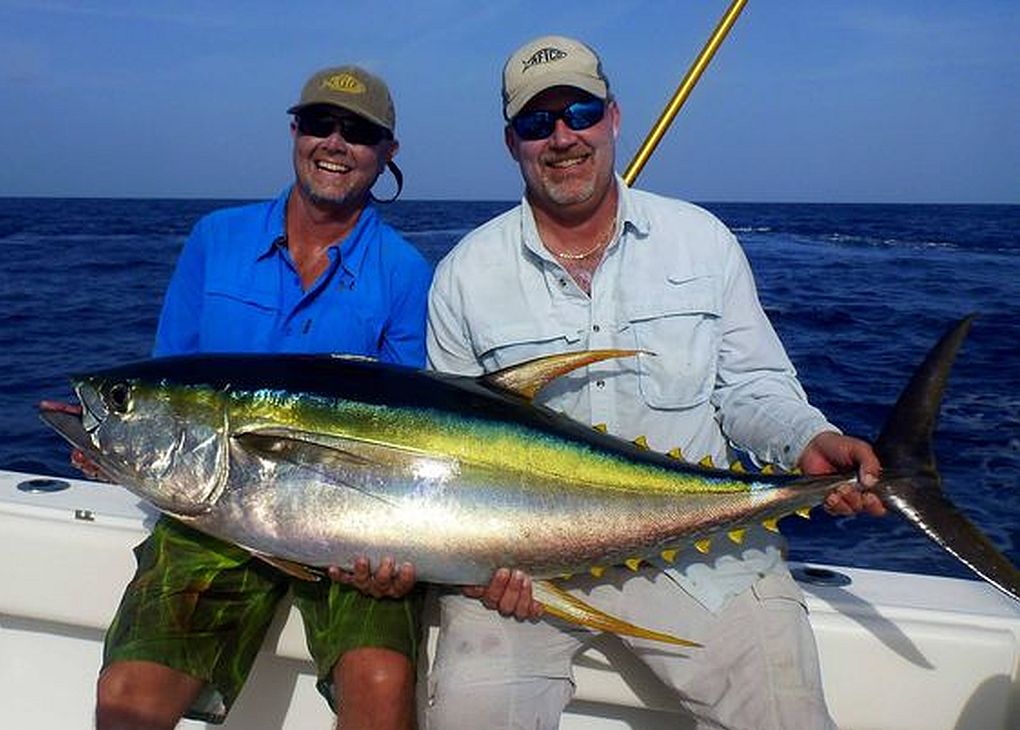 The migrating schools of yellowfin are located by the captains using strong on board radar systems to find the large schools of birds that dip and dive above the baitfish schools that the big tuna target. Most of the early season yellowfins are less than 60 pounds but as the season progresses, fish in the 90 to over 100 pound class are routinely taken. Offshore 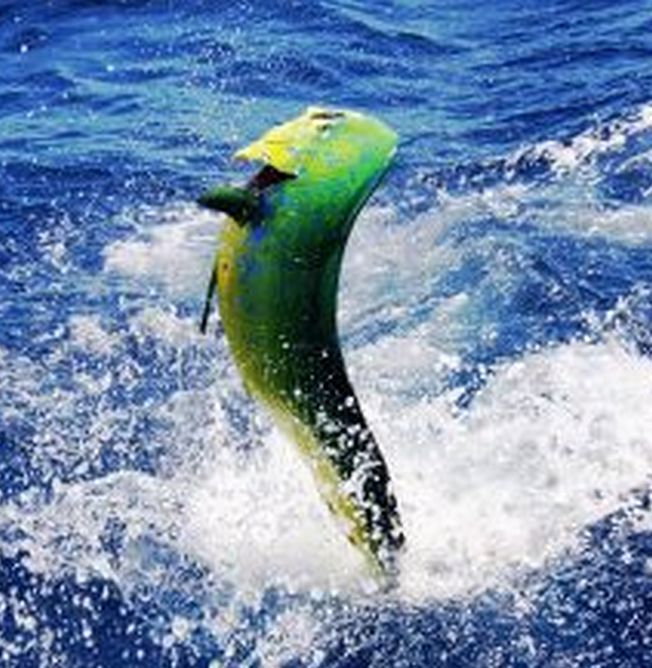 Now that we are finally seeing some nicer weather offshore, the bite is beginning to improve for king mackerel and dolphin. Now that we are finally seeing some nicer weather offshore, the bite is beginning to improve for king mackerel and dolphin.From Daytona to Port St. Lucie, the dolphin bite has been steady and anglers are targeting them anywhere from 150 feet of water out. In some areas the 90 foot depths have been more productive. For the past week, the kingfish have been the most prominent target for offshore anglers. They continue to show up closer to shore scattered in with the Cobia. Most anglers have been catching them slow trolling with naked or skirted live Ballyhoo or Cigar Minnows. The bottom bite out of Port Canaveral and Sebastion Inlet has been producing nice catches of Amberjack and the usual Snapper species starting in at the 60 foot depths, on out to the deeper wrecks and reefs. Cape Canaveral in particular has been hot. Nearshore Port Canaveral holds some of the biggest tripletail in the world and from April thru late summer, they are one of the most cooperative near shore species to target.  In general, the best time to fish for tripletail is from late April thru the summer, and in the fall around November . Tripletail are delicious on the dinner table. They are fond of hanging around the channel marker buoys, crab trap anchor lines, surface debris, flotsam, and weed lines and can be caught on live shrimp, jigs, and other small lures. The species is tailor made for small boaters venturing out of the Port. Haulover Canal 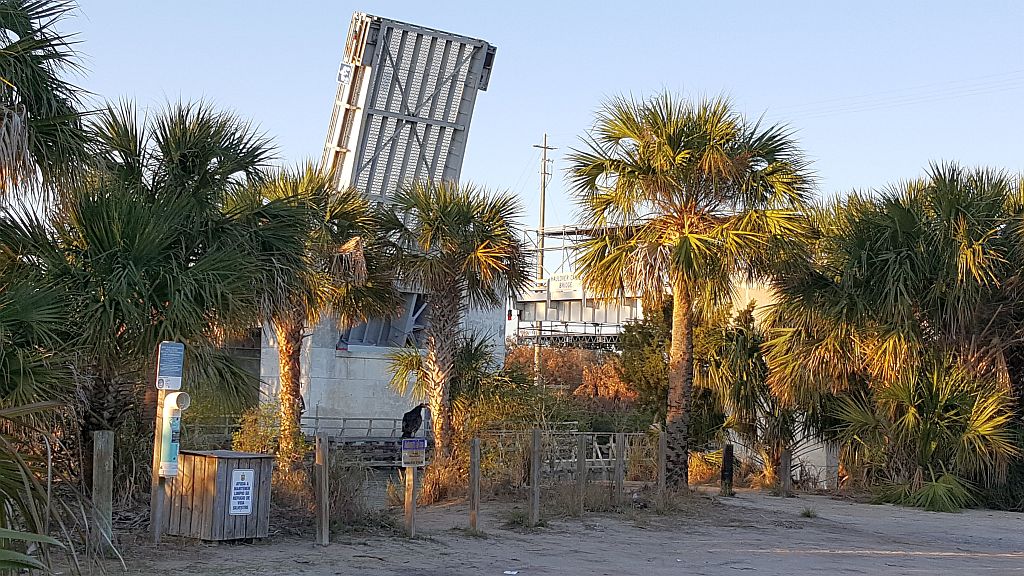 The bridge has been closed for the past month and will remain closed for repairs for at least another couple of weeks, but the closure has not deterred fishermen or shrimpers from accessing the area. Many of our area guides use the Bairs Cove boat launch as a starting point for their charters. It provides easy access to both the northern portion of the Indian River as well as the Mosquito Lagoon, but many fishermen launch their boats and anchor at the mouth of the canal to fish for big black drum and bull redfish. Preferred baits of choice are sections of fresh blue crab, fresh cut baits, and large shrimp. Remove the legs and top half of the blue crab, section it or use it whole, and skewer it onto a 5/0 to 6/0 circle hook. A two to three foot length of 30 or 40 pound fluorocarbon leader, and 30# - 60# Power Pro or other braid for the main line, will keep the fish from breaking off on the submerged Coquina rocks that line the canal. Most of the guys use a standard sliding sinker rig, but three way swivel rigs with a bank sinker to the bottom are also gaining in popularity. Grouper also inhabit the depths of the canal under the ledges, and a live pinfish, croaker, or silver mullet on either of the above rigs will get you a hookup if they are interested. Lastly, the shrimping from the fishing piers on the Indian River has been on fire for the past month. What you may not know is that a small group of sport shrimpers have also quietly been lining the banks of Haulover Canal dipping up the jumbos that drift by their lights. Although fishing from the bank after dark is prohibited at Haulover Canal, night fishing and shrimping just off of the banks from a boat can produce some some nice fish and a bucket of really large shrimp. Until next time, Tight Lines and bent rods! |
|||

| Link One | Link Two | Link Three | Link Four | Link Five | Unsubscribe to this newsletter |