Your January 2017 Mosquito Lagoon & Indian River Fishing Forecast
Published: Sun, 01/01/17
| Newsletter Issue # 89 Fishing Forecast January 1, 2017 | ||||||||
Mosquito Lagoon & Indian River Fishing |
||||||||
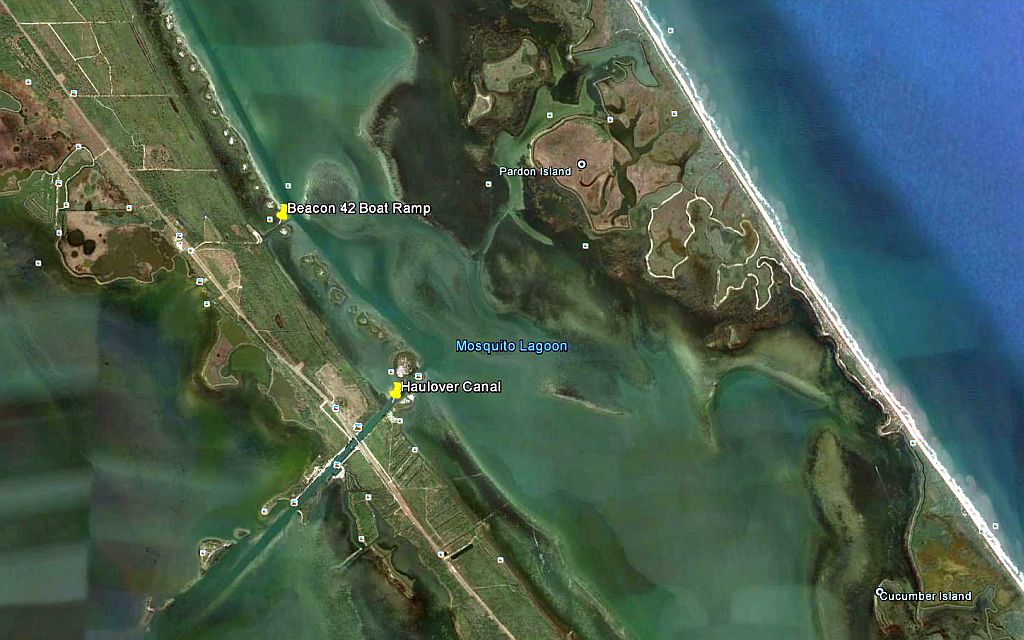
osquito Lagoon & Indian River Wishing You A Happy New Year! Despite some challenging weather conditions, the fishing on the Mosquito Lagoon during December has been excellent. Some of the best fishing in the Indian River and Mosquito Lagoon systems occurs during the months of December and January, but the cold fronts also bring some of the most challenging weather conditions that make sight fishing a hit or miss proposition. So far this past year we lucked out with a mild winter and some great "Indian Summer" fishing conditions, and we haven't had to deal with colder water fishing temperature patterns until this past week's cold front. If these fair weather Summer fishing conditions remain with us after the front, we should continue to enjoy some of the best fishing of the year for giant "bull" redfish, black drum, sea trout, and even some tripletail when the winds and swells calm down out of the Port. Several guides I know reported outings with multiple catches of 20 to 30 giant bull redfish over 25 pounds during December. One guide out of Mosquito Lagoon Bait & Tackle told me that one of his fares actually got tired of catching redfish and asked if there was anything else they could catch. Although there have been a few days of good sight fishing during the last couple of weeks, for the most part, the winds and weather made sight fishing next to impossible for even the best anglers; and most of the fishing done for bull redfish during December was conventional, with live or cut baits. Last week, the middle area flats around Pardon Island, directly across from Haulover Canal, was producing some nice slot redfish. The areas adjacent to Eddy Creek and around Pelican Island were also hot areas to target. The area near JB’s fish camp southward to Tiger Shoal near the middle of the Mosquito Lagoon, and Whale Tail to the south, is always fished pretty hard, but the redfish schools can usually be found in both of these areas during January. Saltwater Assassin 4-inch sea shad tails rigged on a 1/16th or 1/8th ounce jig head in the Fried Chicken, Bone Diamond, and silver phantom with chartreuse tail colors, are deadly on redfish and sea trout in these areas. Despite the summer brown algae blooms and the gradual depletion of the sea grass beds, we still have some of the best sea trout fishing in the world in East Central Florida's Mosquito Lagoon, Indian River, and Banana River. During January, the smaller sea trout can usually be found along the transition edges of the flats where the water drops down to 3 to 6 feet or more. Catch these fish on live shrimp under a popping cork, small jigs, or small top water baits. The Tiny Torpedo, Zara Spook Puppy, small size Chug Bug, and small Rapala Skitter Walk all
work well. The redfish bite in the north Indian River Lagoon has been sporadic. Last week the redfish and small schools of black drum were tailing around the islands across from the Peacocks Pocket shallow water launch, but were spooky and hard to catch. Baits of choice in this area were live shrimp on a popping cork, a 4" Saltwater Assassin Shrimp or a 4" Sea Shad, and Gold Johnson's Sprite spoons. The annual Peacocks Pocket road closure has most bank fisherman concentrated along the A. Max Brewer causeway, the Catfish Creek, and East Gator Creek areas. Some decent catches of redfish, black drum, and a few sea trout were reported on live baits, cut mullet, chunks of ladyfish, and live or dead shrimp. 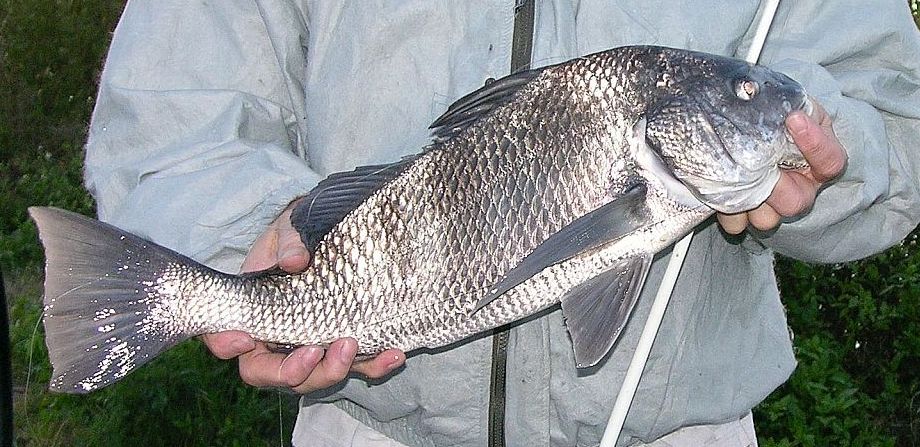 For Black Drum, a live or peeled dead shrimp fished right on the bottom is a hard to beat bait. Jig heads with a small piece of peeled shrimp, Zmann jerkbaits smeared up with some Pro-Cure, and white hair jigs also work for black drum, but during the winter months, a shrimp is definitely the "go to" bait of choice. For those of us who bothered to walk the marsh canal along Peacocks Pocket road, the sea trout and an occasional redfish were accommodating. Baits of choice are DOA CAL jerkbaits, Creme Paddletail baits, and topwater Chug Bugs. I also had some success, (mostly short strikes) on gold Johnson Sprite and gold hammered spoons. 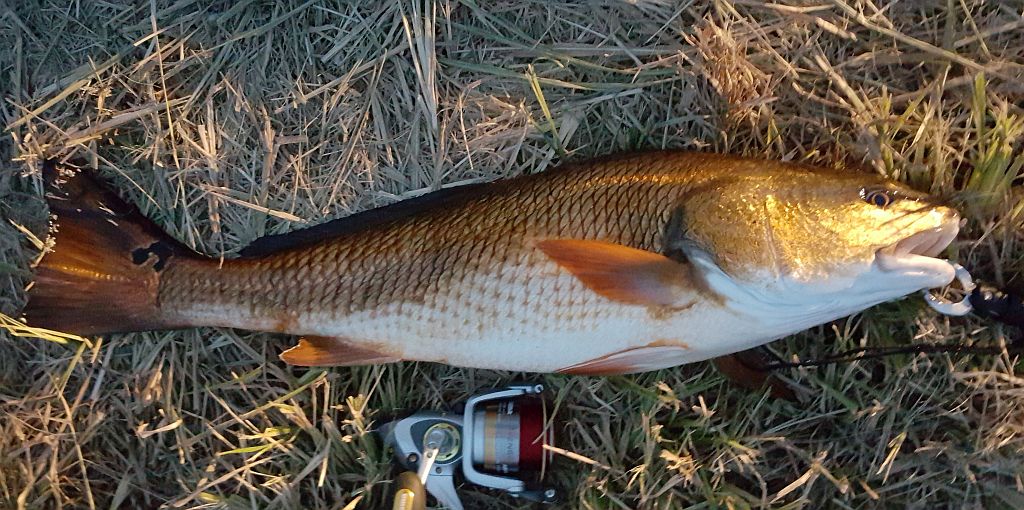 Canals, protected shallow bays, and sunny shorelines are excellent areas to find both trout and reds soaking up the suns warmth and sucking up some sluggish baitfish and crustaceans. - See more at: http://floridasportfishing.com/inshore-break/#sthash.x0U2ZRkl.dpuf
Canals, protected shallow bays, and sunny shorelines are excellent areas to find both trout and reds soaking up the suns warmth and sucking up some sluggish baitfish and crustaceans. - See more at: http://floridasportfishing.com/inshore-break/#sthash.x0U2ZRkl.dpu
When the water starts to cool down this month, the fish in the Indian River will start moving into the shallower mud flats over darker bottom. These areas are always a few degrees warmer than the surrounding water and tend to draw in fish. Playalinda Beach
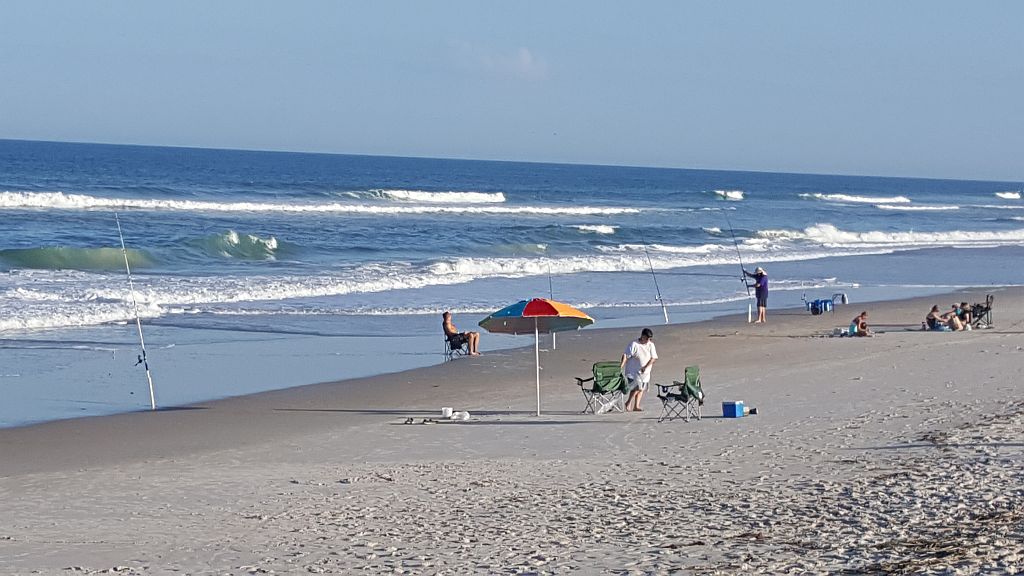
January is usually e a stellar month for Playalinda Beach surf fishing,l especially when the cold fronts start moving through our area. The best bite occurs on an incoming, or moving tide just before a front blows through.
So far, the Pompano bite has been the prime subject of discussion among surf fishermen. The guys fishing Lot #1 and #2 have been reporting some good catches of pompano on the incoming tides. A few fish have also been showing up at Lots# 8 and #10.  Surf fishing for bluefish, whiting, and pompano just before the cold front we went through this past weekend has been outstanding, with the best bite on the mid to last half of an incoming tide. Good catches of whiting and pompano remain fairly constant along the outer edges of the surf break. Blues in the 12" to 20" range are plentiful with live or dead finger mullet as the bait of choice. Casting out past the second set of breakers with a half of a finger mullet on a 5/0 Owner hook snelled to a 30 pound fluorocarbon leader and enough weight to hold bottom should get you an almost immediate strike. If you don't get a hookup withing 10 to 15 minutes, try casting closer to the beach until you find the fish. If you don't get a hit after an hour or so, move on to another area. 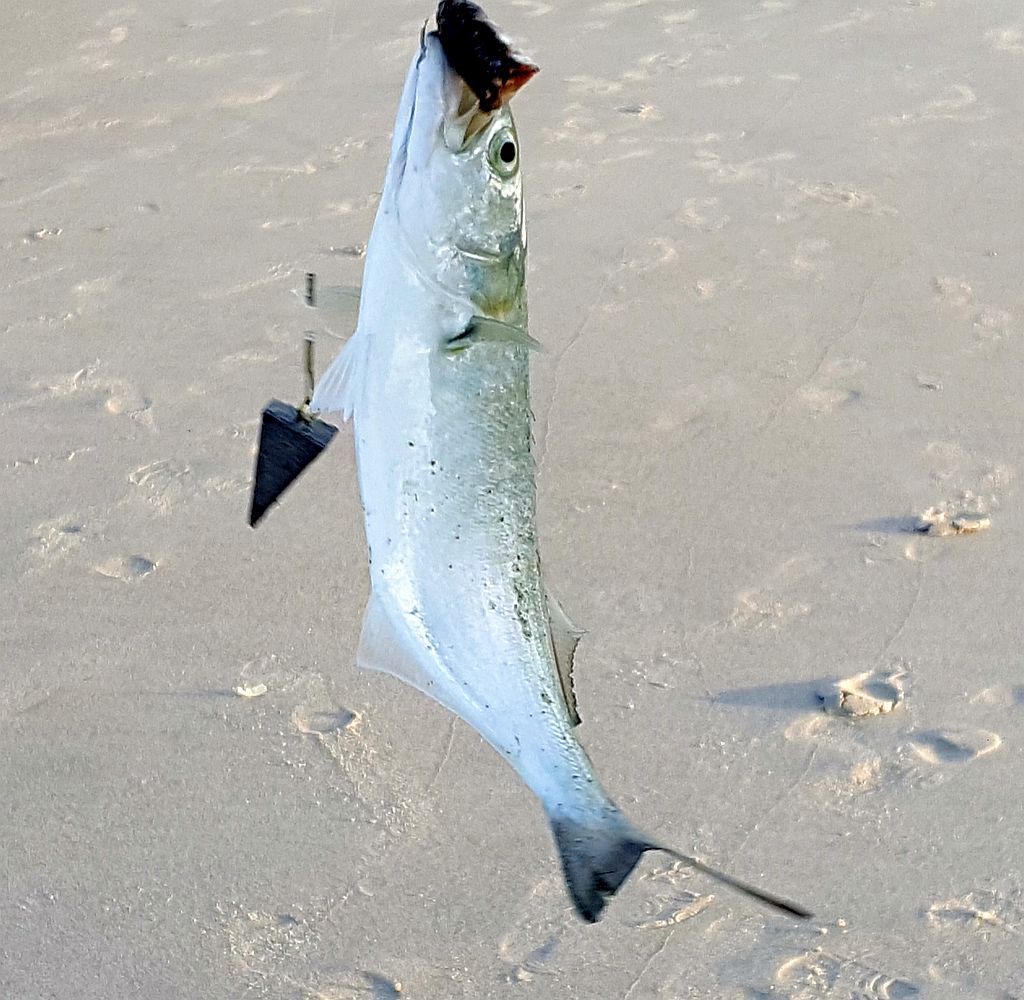 Until recently I have always had a problem with short strikers when fishing for bluefish. Until recently I have always had a problem with short strikers when fishing for bluefish. You can minimize it by adding a stinger hook to a whole finger mullet, or by cutting the mullet at an angle, in half. Hook the front half of the mullet from the bottom through the top of the head. Hook the bottom half from the inside through the top of the dorsal fin. "Bull" whiting are also in the surf this time of the year and like pompano, can be caught on sand fleas and strips of fresh or salted clams. A 1/0 circle hook on a standard dropper rig with enough weight to hold bottom is the standard rig used by most surf fishermen in the area. I tie my own using fluorocarbon leader material and small circle hooks with the loops about 12 to 14 inches apart. Tie a swivel on one end, and a 3" loop on the other end to secure the sinker. When using frozen clams, shrimp, or sand fleas for bait, make sure you completely thaw them out before putting a hook in the bait. A frozen sand flea will not stay on the hook as long as a sand flea that has been completely thawed out. This also applies to shrimp and clams. A trick I learned with clams, is to pack the meat in Kosher salt until the juices are drawn out. The clam meat gets tough and stays on the hook much longer. Hit the beaches early in the morning, preferably just after a low tide, just as it starts to come back in, and toss your baits into the deeper troughs between the sandbars. Although Pompano are capable of growing as large as 8 pounds, most of the fish caught in the surf in our area usually weigh between 2 and 4 pounds. When the weather cools down this month and the water temperatures in the surf drop, the Pompano bite should improve considerably in our area. Ponce Inlet Offshore and Nearshore 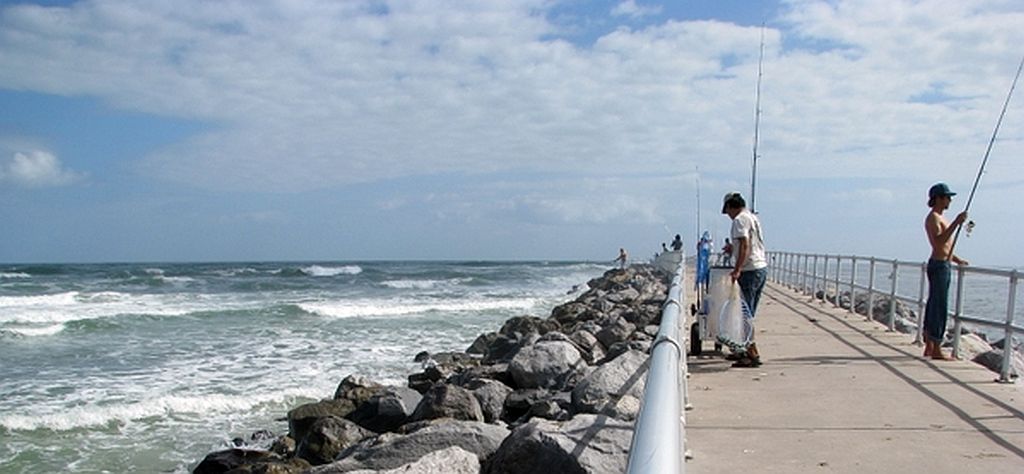 Offshore Offshore of Ponce Inlet, some Wahoo are still being caught by anglers who are high speed trolling over the Roll down north east of the inlet, and over the Steeples or the 27 to 28 Fathom Ridges. Trolling these same areas at normal, 5 to 7 knot speeds is also producing some sailfish and dolphin. The anglers slow trolling sea witch bait strip combos, naked ballyhoo, and lipped diving plugs on the 70 to 90 foot reefs have been picking up some nice king mackerel. The Rapala CD series has been a consistent producer for the past couple of weeks. Nearshore Nearshore anglers fishing off the jetties and rocky outcroppings near the inlet with shrimp, live fiddler crabs, or sand fleas, should continue catching a mixed bag of black drum, slot size redfish, and sheepshead throughout the month. Closer to the inlet and around the main channel, anglers fishing with 1/4 to 1/2 ounce silver Krocodile spoons, Gator spoons, or lipped X-Rap diving plugs have been catching bluefish, Jack Crevalle, ladyfish, and over slot redfish. Port Canaveral Offshore and Nearshore  Offshore King Mackerel is the main species that anglers out of Port Canaveral can expect to catch during January. For the past couple of weeks, the fishing for King Mackerel has been as good as it gets. Most captains fishing the 70 to 90 foot reefs have been catching 15 to 30 or more kingfish per boat by slow trolling frozen sardines, ballyhoo, or live mullet on wire stinger rigs. Over slot Bull redfish and shark are being caught in the Canaveral Bight on live or cut mullet, pinfish, croaker, and bonito chunks (primarily for shark). A few Wahoo up to 40 pounds and an occasional blackfin tuna have also been caught offshore this past month, and as long as water temperatures remain in the low 70s, the fishing should continue throughout the month. Nearshore The residential canals at Cocoa Beach and Merritt Island, and the bridge pilings on the 520 and 528 causeways, have been producing respectable size sea trout, small black drum, and sheephead. As the water temperatures drop, the fish should continue to concentrate into these areas. Small Jack Crevalle and some decent sized ladyfish have been feeding on glass minnows in the 3 to 6 foot depths of New Found Harbor and Banana River this past week. Sebastian Inlet Offshore and Nearshore 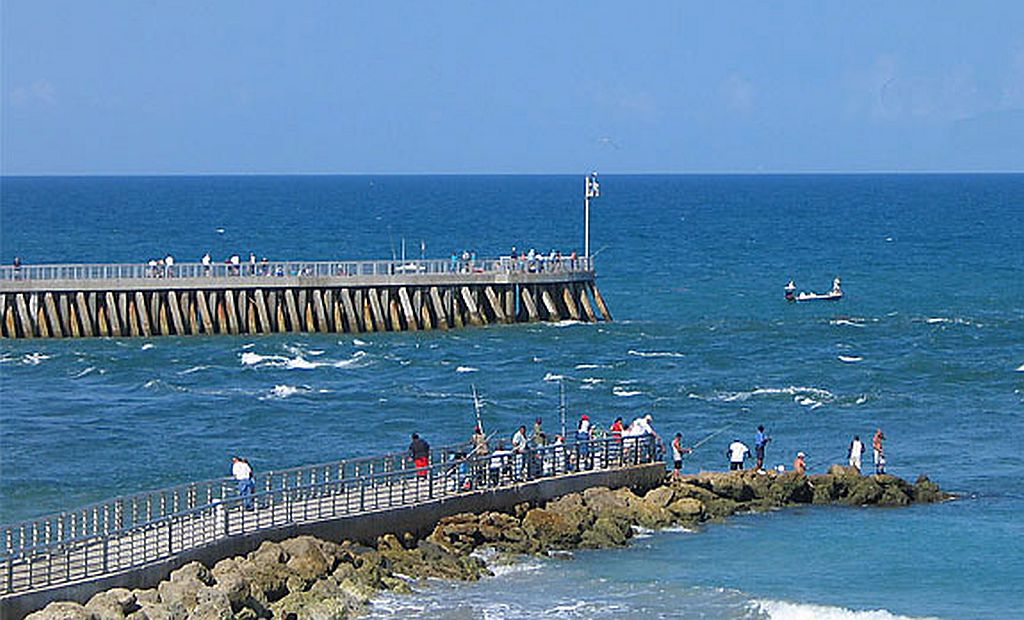 Offshore Targeting King Mackerel will be your best bet out of Sebastian Inlet for the next few weeks. For the past few days, the 65 to 70 foot reef northeast of the inlet has been holding good numbers of baitfish which has been pulling in the kingfish. The beaches north and south of the inlet have been producing nice catches of bluefish, Spanish mackerel, and Jack Cravelle. Nearshore The jetties and Inlet at Sebastian is always good fishing. Bluefish, jacks, pompano, Spanish mackerel, oversize bull redfish, flounder, and black drum are always on the menu at Sebastian to keep jetty anglers busy throughout the day and night. Snook (which are currently out of season) and bull oversize redfish are prime targets during the incoming tides on most days at the inlet but the outgoing tide at night usually produces the best bite. Live pilchards, mullet, croakers, and pinfish are the baits of choice for Snook and bull redfish. Although a lot of guys use hair jigs or jerkbaits dragged along the bottom with varying degrees of success for most species, the fishermen targeting flounder during the winter months prefer using live mud minnows or finger mullet on a knocker rig, a short sliding sinker rig, or a hookup jig head. Regardless of what method you use, Sebastian produces some very nice size flounder that remain in and around the Inlet after the migration, throughout the winter months. The flats at the west end of the inlet, and the area from Valkaria to Vero Beach has been producing snook, sea trout, pompano, ladyfish, bluefish, jacks, and scattered redfish. A few small schools of black drum have been roaming the deeper 3 to 6 foot flats and are being caught on live shrimp, sand fleas, and small pieces of cut crab. If you don't mind fishing around a crowd, the Inlet can be the place for some great fishing during January.
Haulover Canal 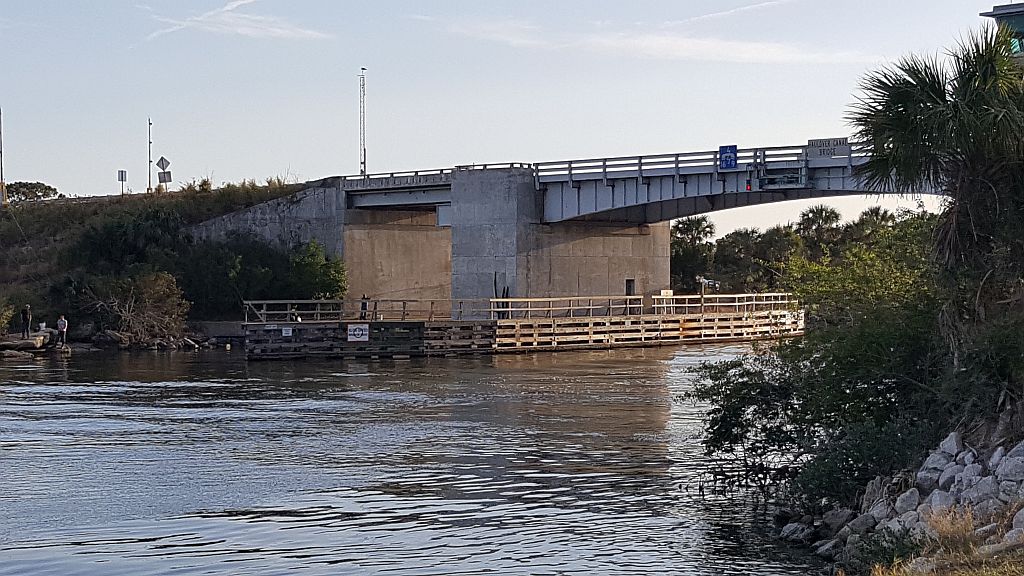 Throughout the year, Haulover Canal is always good fishing for bull Redfish and big Black Drum, and January is no exception. The deeper waters in the canal between the North Indian River and the Mosquito Lagoon act as a highway where you can usually find almost any species of fish cruising through.
Although it is best known for bull redfish and big black drum, the canal also harbors ladyfish, Snook, speckled sea trout, gag grouper, mangrove snapper, bluefish, ladyfish, tarpon, stingrays, and catfish.
When you drive over the bridge and see a group of boats anchored at either the mouth of the Indian River, or the Mosquito Lagoon, you can bet that the black drum or bull redfish bite is on. Fish the mouth of the canal that the direction that the current is moving to, and keep your baits on or just off of the bottom. A live blue crab split in half, with the top and all its legs removed is a hard to beat bait for bull Redfish and Black Drum.
Bait the crab onto a 5/0 to 6/0 hook, with a three foot length of 40 pound fluorocarbon leader, and 60# Power Pro or other braid as the main line, to keep the fish from breaking off on the submerged Coquina rock that line the canal. Half of a ladyfish or other large cut bait, a jumbo shrimp, or a live pinfish or croaker on a 5/0 or 6/0 hook are good alternate baits to use during the winter, but a fresh blue crab is hard to beat.
Nighttime fishing in the canal from a boat can produce some some really large fish. Fishing from the bank after dark is prohibited. Until next time,
Have a Happy New Year, Tight Lines and bent rods!
|
||||||||
| Link One | Link Two | Link Three | Link Four | Link Five | Unsubscribe to this newsletter |