Your December 2016 Mosquito Lagoon & Indian River Fishing Report
Published: Thu, 12/01/16
| Newsletter Issue # 88 | December 1, 2016 |
Mosquito Lagoon & Indian River Fishing |
|
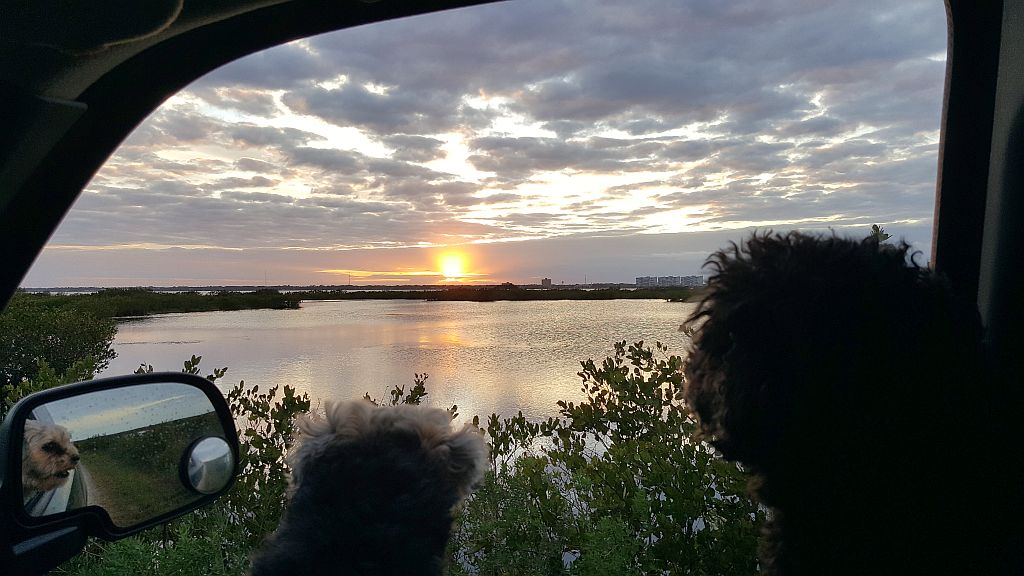 The Mosquito Lagoon and Indian River Despite the fishing pressure and the increased amount of development going on along our Coastline, the winter months on the Mosquito Lagoon and Indian River flats are always good for sight fishing, and this month will be no exception. Even though the water levels in the Mosquito Lagoon are still relatively high and the water clarity a bit dirty, in the aftermath of Hurricane Mathew, the overall water conditions have improved dramatically. The biggest enemy that sight fisherman encounter is the wind. It produces choppy water conditions that can stir up sediment on the bottom and hamper the ability of even an experienced angler to see the fish. Even experienced guides who have an "eye" for spotting fish on the sandy bottom and on the grass flats are challenged by windy days. With all that being said, when the temperatures fall into the low 50s and 60s, we should see some excellent fishing before and after the cold fronts for redfish and big spotted sea trout. The oversized, post spawn bull redfish that were hammered by anglers last month, should still be cooperative if you can locate the schools. When the weather is rough and windy, you can catch them on live or fresh dead mullet and some topwater baits. When the conditions are more favorable, you can catch them with almost anything you toss to them. Fly fishermen especially look forward to the winter months to target reds and big sea trout on the flats. During the colder months, the redfish and larger sea trout like to stay around the potholes looking for something to pounce on and any delicately placed fly imitating a baitfish or a crab dropped in front of a fish will usually get you a hookup. Anytime you can find cooler waters in the Mosquito Lagoon or Indian River, you will often find some of the best sea trout fishing in the world, and when the water temperatures stay cool for extended periods, the trout become really active. Right now, the trout are starting to move around a lot and with the amount of baitfish in the area, are fattening up for colder weather to come. Mostly smaller trout are being caught on the flats and along the transition edges of the flats where the water drops into the 3 to 6 foot depths. Live or D.O.A. Shrimp on popping corks, small topwater lures like the Heddon's Tiny Torpedo, and small jigs are catching good numbers of fish. The larger oversized spotted sea trout are being caught in shallower water around the potholes on live baits and anything resembling a baitfish. As of last week, schools of redfish are on the flats and the kayakers have been reporting good catches of black drum from the huge schools that are marauding the deeper water flats in the Mosquito Lagoon and Indian River. 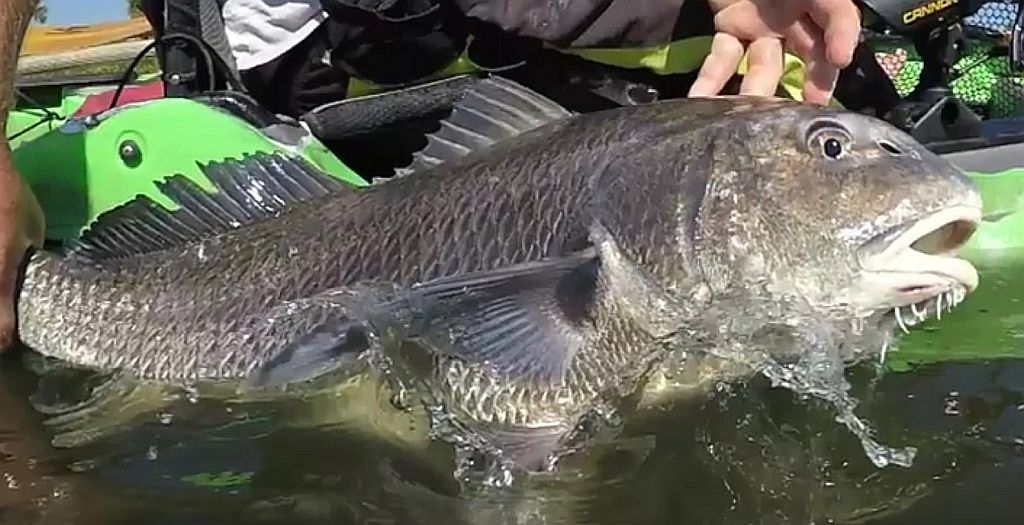 Gulp and soft plastic baits were the baits of choice but live, dead, or plastic shrimp will also produce. Most of the drum are in the 10 to 20 pount category but larger fish are also being caught. In addition to the usual redfish catch along the shoreline east of Parrish Park; bank fishermen on the Indian River along Catfish Creek and around the A. Max Brewer Causeway bridge have also been catching black drum on shrimp and fresh cut clams in the 12 to 20 pound category. Because portions of Peacocks Pocket road were washed out during the last hurricane, it will remain closed for the season and repairs until Feb. 15th, but a few fishermen I spoke with who walked the road past the barrier have been making some nice catches of sea trout and redfish on both sides of the road. They were fishing with jerk baits, D.O.A. shrimp, gold Johnson's spoons, and the smaller size Rapala Skitter
Walks.
Lastly, the waters in most of the Banana River Lagoon system, which were dirty throughout the past months, are exceptionally clean right now and are holding substantial numbers of mostly under slot size spotted sea trout. The sea trout have been hitting plastic paddle tail and jerk style baits, suspended lures, and lipped diving plugs that resemble a fingerling mullet. If the water in this section of the lagoon system continues to stay clean, we should have a some great fishing for redfish, black drum, and spotted sea trout this winter. ______________________________________________ Port Canaveral and Offshore Fishing The 70 to 90 foot reefs out of Port Canaveral are starting to hold decent numbers of Cobia and king mackerel. Slow trolling pogies, live or frozen sardines, or mullet, are your best baits right now. For anglers trolling skirted ballyhoo on the green to blue color edge, Dolphin and sailfish are still a good possibility. Follow the color edge until you find weeds or other flotsum around the area and then put your lines out. Most of the anglers targeting mahi and sails are also working the 180 and 250 foot reefs. Small dark colored skirts rigged over the ballyhoo seem to be producing the most bites which has been during the middle of the day and early afternoon. 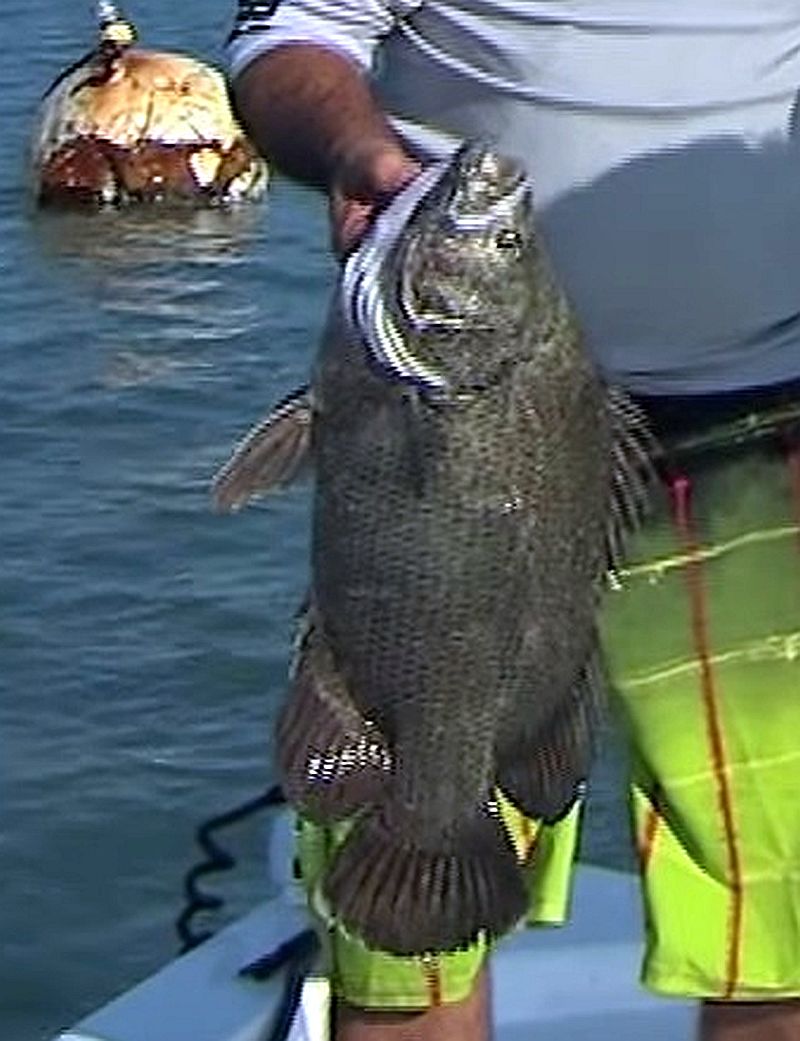 Tripletail are another tasty species that can be found around the weed patches or weed lines that are gathering somewhere between 4 and 8 miles from the Port. A free lined live shrimp works best for these guys. Flounder After the first decent cold front passes us by, a lot of local anglers out of Port Canaveral will either gear up their boats to slow troll from one end of the Port to the other looking for areas where the water flow might as an ambush point for flounder, or set up shop on shore waiting for a hungry flounder to pounce on their baits. The sea walls at Port's End Park along the west end of the Port, the rocks at the west end of Jetty Park, and the pier at Jetty Park are all favorite locations for flounder fishermen.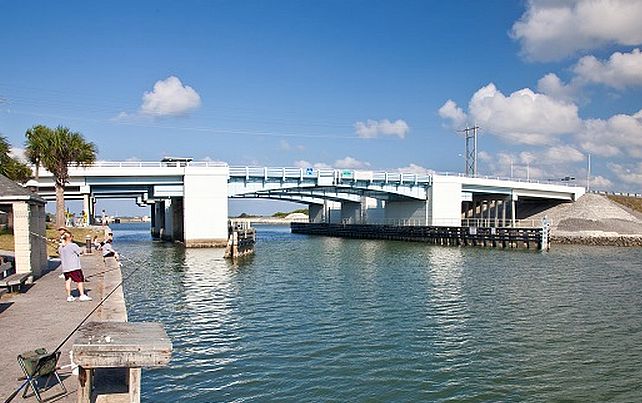 The baits of choice are live finger mullet, mud minnows, live shrimp, and jigs tipped with a small piece of shrimp. To be successful fishing for flounder, it's important to cover as much ground as possible to locate the fish. Cast out your bait of choice and bounce it slowly off the bottom as you reel in the line. Techniques vary, but keeping the bait on or close to the bottom and keeping the bait moving are essential to filling up your cooler. Surf Fishing For the next three months, Playalinda Beach in East Central Florida will be a major hotspot where some of the top catches of Pompano will be made. Playalinda Beach is 12 miles east of Titusville, Fl., immediately north of the Kennedy Space Center and the Cape Canaveral Air Force Station, and is the southernmost portion of the Canaveral National Seashore. The Canaveral National Seashore is the longest undeveloped beach on Florida's East Coast and lies within the Merritt Island National Wildlife Refuge. 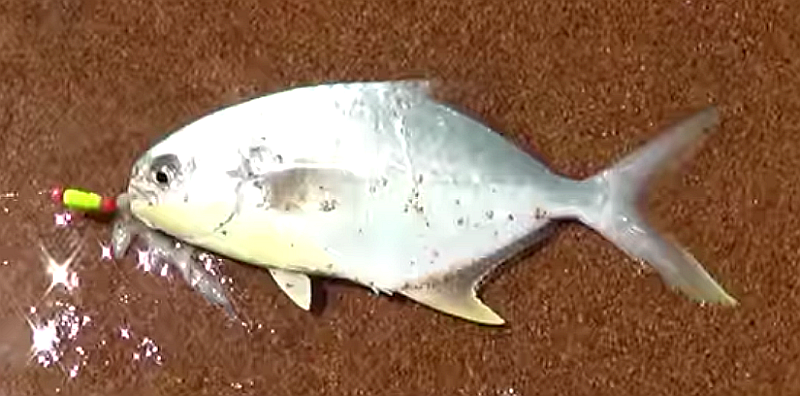 There are 13 parking lots with that provide access to the beach. Six have handicapped access ramps, and some have restrooms but there are no tackle shops or concessions at the beach. Get your bait and rigs in Titusville before you hit the beach and remember to pick up a free self issuing permit here or at the kiosk if you plan to fish the refuge or catch your own bait. The beach at Playalinda is narrow and drops sharply in most areas to form deep troughs which are within easy casting range of the beach. During the high tides, the troughs form a gathering area for crabs, sand fleas, small shrimp and baitfish that are pulled in with the backwash from the shore break and swells crossing offshore sandbars past the troughs. 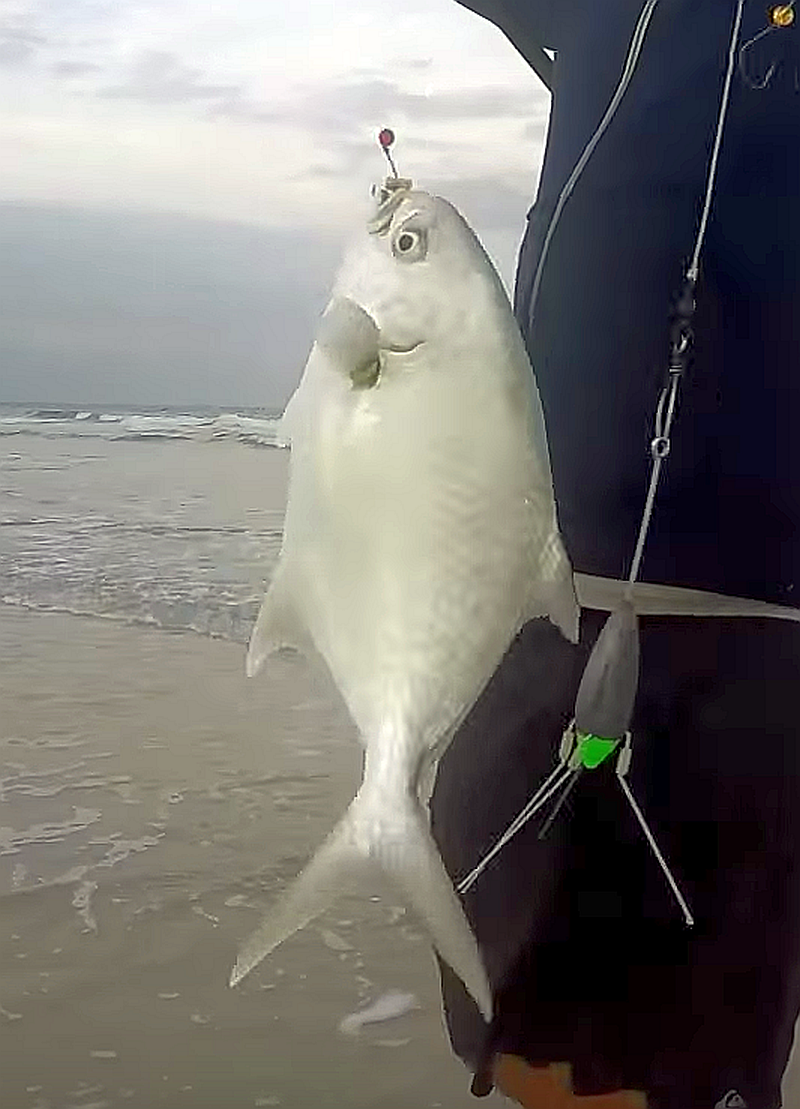 During high tides, the schools of pompano move in closer to the beach to actively feed in the holes and troughs. During low tide periods, the schoolsmove out with the tide into deeper water past the sandbars where longer casts are needed to catch them. During high tides, the schools of pompano move in closer to the beach to actively feed in the holes and troughs. During low tide periods, the schoolsmove out with the tide into deeper water past the sandbars where longer casts are needed to catch them.During Thanksgiving week, a lot of Pompano and Whiting were swimming along the beach, but the Bluefish bite has really been on fire. The guys using 7 1/2 to 8 foot spinning rods loaded with 10 to 20 pound test line and tossing silver Krocodile spoons have been hooking Blues like crazy. When the bluefish are running along our beaches in good numbers like they are now, you can also catch them with shallow diving plugs that resemble a baitfish. Use short nylon coated wire leaders or heavy mono fluorocarbon to prevent cutoffs. Use long shanked hooks with a short 30 pound fluorocarbon leader or a nylon coated wire leader to prevent cutoffs if you're using live or chunked mullet. The basic Pompano tackle for Playalinda Beach surf fishermen is an 8' to 12' surf spinning rod, a reel loaded with 12 to 20 lb test monofilament line, and a 1 to 3 hook dropper rig with a 1 to 4 ounce pyramid sinker. Bait up with live sand fleas, pieces of fresh cut clam, small pieces of fresh shrimp, or Fishbites. Starting in December, the relatively uninhabited beach will start getting crowded with fishermen targeting areas wher the pompano schools are actively feeding. It can be tight quarters when a group of fishermen are concentrating their casts into a small area, so practice good sportsmanship and be considerate of others. A $5 per vehicle entry fee is charged to fish Playalinda Beach, or you can purchase an annual pass for $35 at the guard station. In addition, a signed Refuge Sport Fishing permit must be carried on your person while fishing in the Merritt Island National Wildlife Refuge. It is available at the guard shack, kiosks, or can be downloaded HERE. The permit is self-issuing and simply assures that you have read and understand Merritt Island National Wildlife Refuge's fishing regulations. _____________________________________________ Sebastian Inlet Thanksgiving Day generally signals the beginning of the fall Flounder run at Sebastian Inlet. Generally at the beginning of the Northern cold fronts when the temperatures drop a few degrees, the flounder usually get up and running and this year will be no exception. 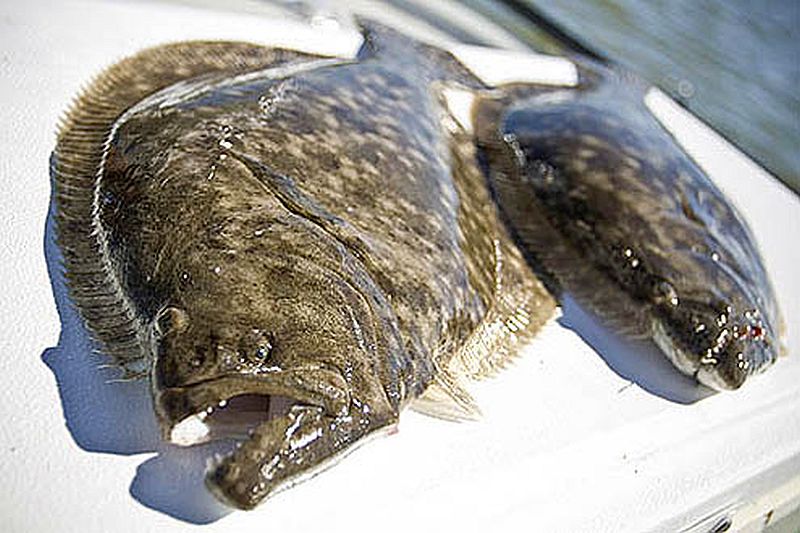 Usually by mid December, the larger 8 to 12 pound "Doormats" will start getting caught in the Inlet. This action usually continues throughout the month of January with live finger mullet accounting for the majority of the larger catches however, live mud minnows and shrimp also take a good share of doormats. Rig the baits on a sliding sinker "flounder setup" with a barrel sinker on the main line, above a swivel connecting to a short (12 inch or so) fluorocarbon leader to keep the bait on the bottom. Although boaters catch the majority of doormats, shore bound fishermen on the rocks or the catwalk at the State Road A1A bridge, also take a good share of fish. Boaters need to remember that anchoring in the marked channel west of the bridge is prohibited. _____________________________________________ Haulover Canal 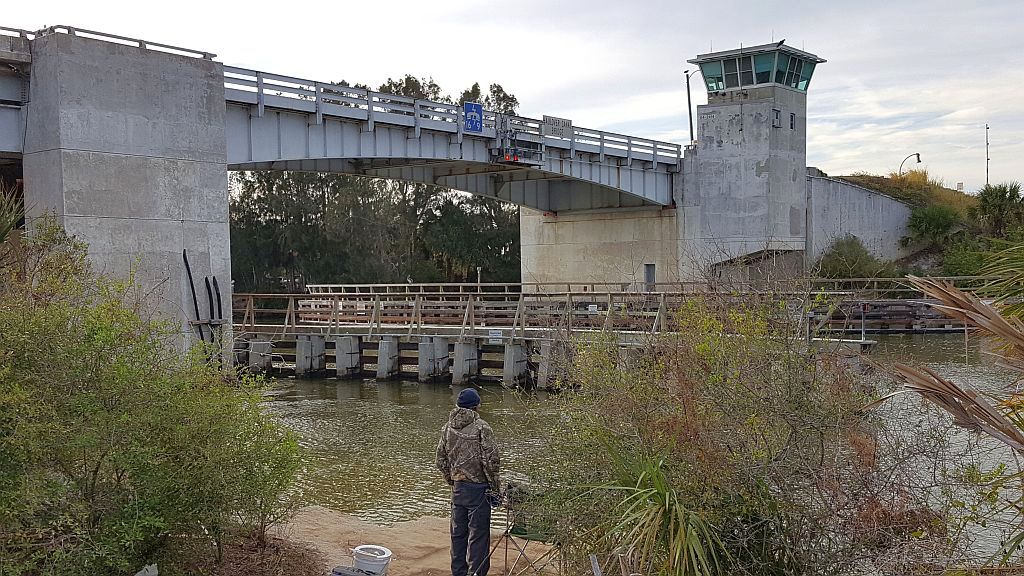 During Thanksgiving week, Haulover Canal fishermen were making some nice hauls of oversize Redfish and Black Drum up to 30 pounds. During Thanksgiving week, Haulover Canal fishermen were making some nice hauls of oversize Redfish and Black Drum up to 30 pounds.This time of the year, larger bull redfish and black drum can be found moving through the canal from the Mosquito Lagoon to the northern Indian River. Although most of the black drum that were caught last month were running in the10 to 15 pound class; landing a 30 pound plus fish in the canal during December is a common occurrence. Although half of a fresh live blue crab is by far the best bait for larger black drum and redfish, a live pinfish, silver mullet, large select shrimp, or a large chunk of ladyfish on a sliding sinker rig will also produce big fish. Using Power Pro or any other braid as your main line, heavy fluorocarbon leaders, and a 4/0 or 6/0 VMC circle hook as terminal tackle, is recommended to minimize cutoffs from the Coquina outcroppings in the canal. Bank fishing in Haulover Canal is not permitted at night, but boaters night fishing have been making some really nice catches of black drum and redfish. Since the nights have been getting colder, the shrimping around the A. Max Brewer bridge has been gradually improving. We can also expect the shrimping to improve north of the railroad bridge and along the banks of Haulover Canal during December. ________________________________________________ Till Next Month, Good Fishing & Tight Lines To You All |
|
| Link One | Link Two | Link Three | Link Four | Link Five | Unsubscribe to this newsletter |