Your October 2016 Mosquito Lagoon & Indian River Fishing Report
Published: Sat, 10/01/16
| Newsletter Issue # 86 | October 1, 2016 |
||
Mosquito Lagoon & Indian River Fishing |
|||
 The Mosquito Lagoon and Indian River
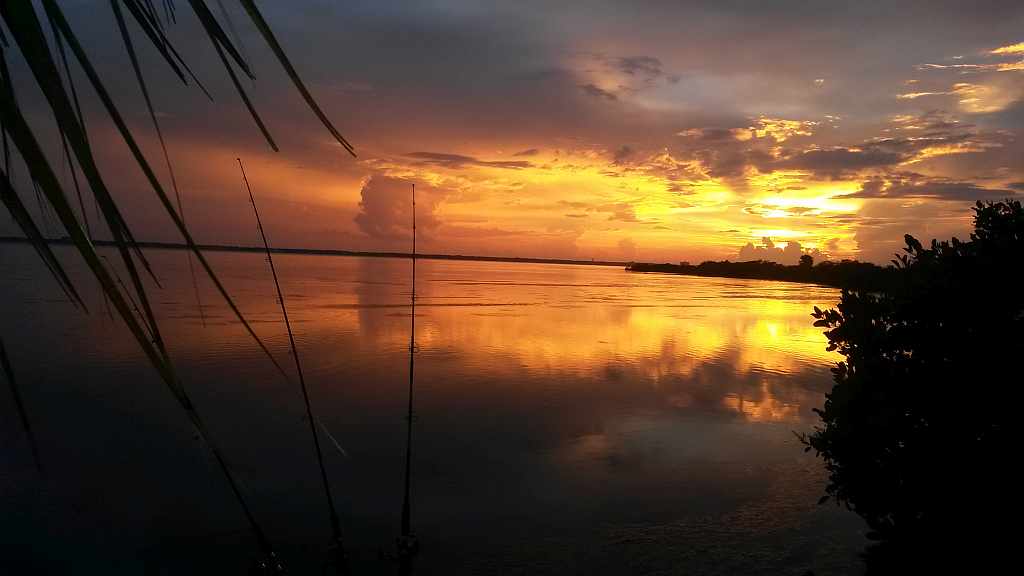
Historically October is a major transition month for redfish and sea trout in the Mosquito Lagoon and Indian River estuaries, and this year is no exception. Although the water levels in all of our lagoon systems are up, we continue to be plagued by the brown algae bloom that continues to destroy the excellent sight fishing conditions that the Mosquito Lagoon is noted for. Over the past ten years or so, almost 75% of the sea grasses in the Indian and Banana Rivers has been destroyed. The reason is debatable, but believed to be the year round application of fertilizers and the unfiltered dumping of drainage into the lagoon systems. During March of this year we experienced one of the worst fish kills in history in the Indian River Lagoon system but despite the kill, most of our guides are still reporting multiple charters with double digit catches of redfish and speckled sea trout. The sea trout population was the hardest hit during the fish kill but despite substantial losses, they are still plentiful in all our lagoon systems. Our area is world renowned for giant "gator" seatrout and this summer has again demonstrated why. Anglers have been landing 8 and 9 pound spotted sea trout in the 29 to 32 inch range throughout this past month with many more in the 4 to 6 pound category. As the weather starts to cool down during October and November, the sea trout become really ravenous predators in order to fatten up for the winter. During this period, Croaker and Pigfish under a Cajun Thunder popping cork is the best way to put them in the boat. Artificial bait fishermen like myself do well with soft plastic jerk baits, topwater plugs and spoons, preferably smeared up with some Pro-Cure or other scent. D.O.A. Shrimp will also get a fair share of fish. Redfish can be sight fished throughout the year and are undoubtedly the most versatile species found in our inshore waters. Unlike other populations of redfish found throughout our state, many of the fish caught sight fishing in the Mosquito Lagoon and Indian River lagoon systems are over 40" in length.
The Redfish action during September was noteworthy. The Mosquito Lagoon in particular was inundated with large schools of redfish tailing on shallow grass flats and although most of the schools were comprised of 50-75 fish, many schools of 200 to 300 redfish in the 20 to 30 inch category were also tailing the flats in the Tiger Shoal area and the no motor zone. During October, the Catfish Creek area in the Indian River is usually a good area for black drum and slot size redfish. An occasional bruiser like the one below can also be caught by bank fishermen using live or cut baits and shrimp. 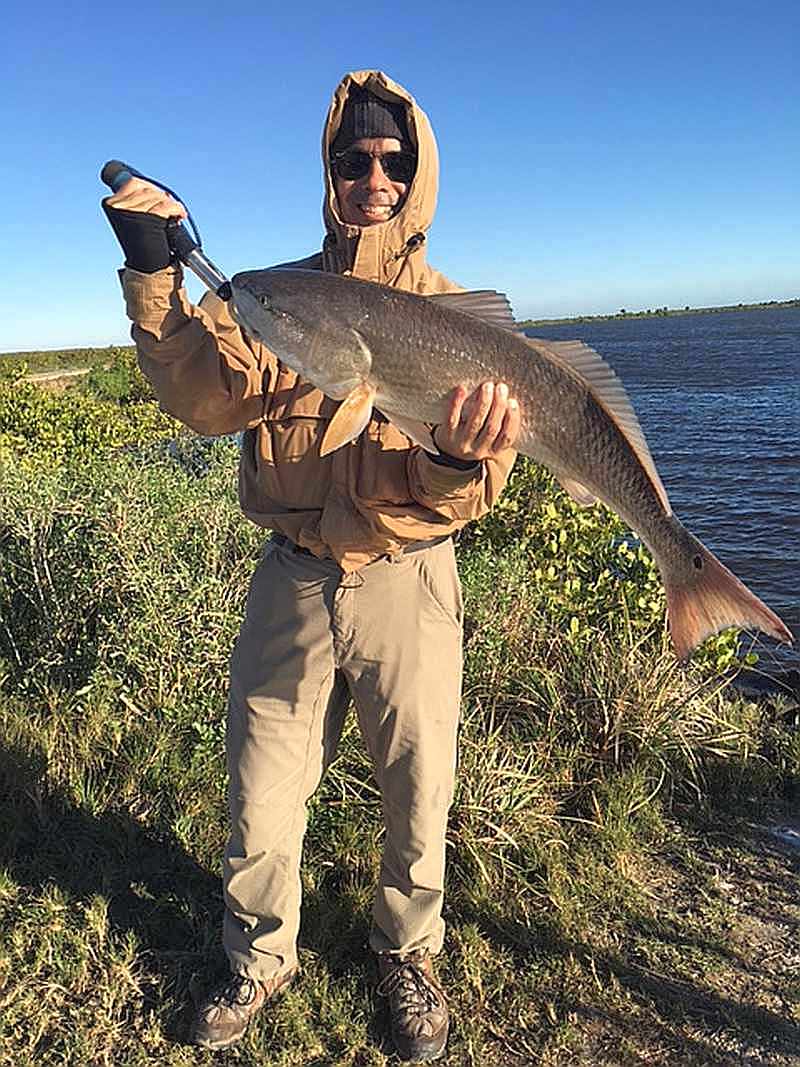 Around Ponce Inlet, bull redfish in the 20 to 30 pound category have schooled up in the inlet and around the ICW for their annual spawn. The higher water levels have caused the schools to break up a bit but this only moves them closer to the shorelines making for some great bank fishing. Croaker, Pigfish, shrimp, and cut baits will all produce well; as will jerk baits, D.O.A. shrimp, gold Johnson's spoons, crank baits, and topwater baits like Chug Bugs, Zara Spooks, Rapala Skitter Walks, and XPS Slim Dogs. Since the opening of Snook season September 1st., they have been showing up in good numbers throughout the lagoon systems in our area. Live bait fishermen using live croakers, pigfish, or large shrimp will have a better than average chance of hooking up with a 28" to 32" long Snook around the docks, close to the shorelines, on the grass flats, and around the oyster beds farther north. You never know when or where you are going to come across a slot size snook in our area but if you target ambush points around moving water, your chances improve dramatically. Lipped plugs, soft plastic baits and spoons will also take their fair share of Snook. _______________________________________ Offshore Fishing Once the weather settles down this month and the water continues to cool down, the offshore bite outside of Port Canaveral should continue to improve, especially for Wahoo and Sailfish. Wahoo fishing is generally better at sunrise. They are high speed predators that are caught on a variety of baits using a variety of tactics. High speed trolling on the on the shotgun line with a horse ballyhoo and a big black and red Islander is one of the many methods used to catch these speedsters. 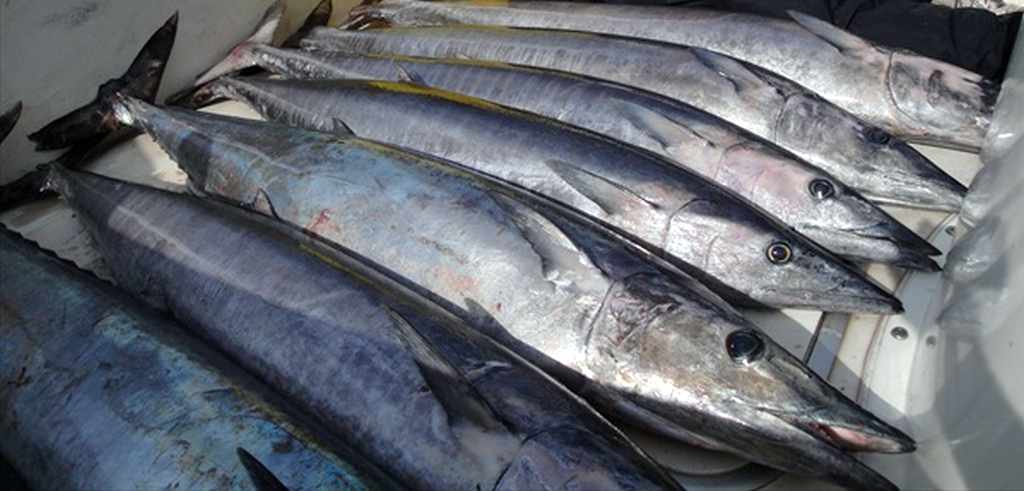 Slow trolling live baits for King Mackerel, small Dolphin, and Wahoo should improve as the month progresses. Most of the fish should be hanging around the 60 to 70 foot reefs in the South, and the 80 to 90 foot reefs in the North. Try fishing the cooler breaks where the green water meets with the dirty blue water all the way out to the western edge of the Gulf Stream. Once the weather breaks farther north around Ponce Inlet, offshore anglers trolling ballyhoo should also be able to pick up dolphin, sailfish, and Wahoo in the 150 to 400-foot depths. Up till now the Mahi bite has been sporadic with fish scattered here and there, however, as the month progresses, they should begin to run more consistently. Right now try working the 95 foot depths around the weed lines slow trolling live Pogies. If you can't find Pogies, the Mahi will also eat mullet. Slow trolling the 30 to 40 foot depths closer to shore this month can hook you up with a Tarpon, Bonito, Spanish Mackerel, Kingfish, or even a sailfish. The Kingfish bite is still doing well on the local reefs with anglers using stinger rigs and live Pogies but the bite has been on a day to day basis. One day you can limit out in the first hour of fishing and the next day with the same conditions you can't buy a bite. On days when the Pogies are hard to come by, use frozen cigar minnows either naked or with a kingbuster for some added attraction. Switch around the colors until you find one that produces. Sometimes naked baits work just as well or better than skirted baits. You just have to play around until you find what the fish want. Although most of the Kingfish caught will be in the 18 to 20 pound class, an occasional "smoker" kingfish in the mix is always possible. When we start getting some colder nights later on in the month and the water cools down to around 70 degrees, the Cobia will also start to show up again. The Captains I spoke with said that they were picking up a lot of shark bites when targeting mangrove snapper, Gag grouper, Triggerfish, and other bottom species. Hopefully, the bottom fishing will improve as the month progresses. Surf Fishing If you haven’t noticed, the fall Mullet run is still going strong along our coast, which means that surf fishermen along our beaches can expect to hook up with almost any predator that swims in Atlantic waters. 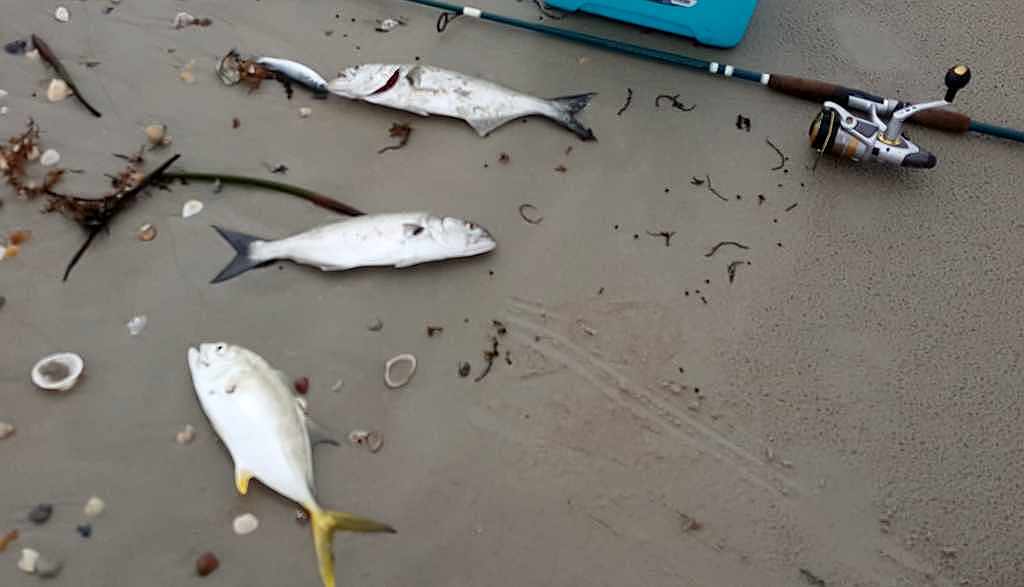 The majority of shark caught in the surf will be around 5 feet or less in length, but Bull Sharks, Nurse Sharks, and an occasional Hammerhead in the 8 to 10 foot category are always a possibility.
Bull sharks in particular can always be found along the beaches in our area. During the summer months, they swim into the Indian River and other estuaries to bear their young and during the spring and fall baitfish migrations, they can be found in the surf chasing the mullet up and down the beach.
When you're targeting sharks in the surf during the October baitfish migration, try to stay away from any swimmers in the area and keep out of the water after setting out your baits, especially when the water close to shore is dirty. The majority of shallow water shark attacks occur in dirty water conditions when baitfish are in the surf. October is also a good month for whiting and Pompano along our beaches. For whiting, use sand fleas or small pieces of shrimp on light surf rods or long 7' river rods. Start out by making short casts into the first trough and if you get no bites withing a reasonable amount of time, set your baits farther out past the second set of breakers using just enough lead to hold bottom. As the water cools down towards the end of the month, the Pompano bite will start to heat up. Sand fleas, cut pieces of clam, Fishbites, and small pieces of shrimp are all reliable baits for these tasty fish. ______________________________________
Haulover Canal
Last month the fishing for Bull Redfish, Black Drum, sea trout, and Snook has been stellar in and around Haulover Canal and October is no exception.  Fishing half of a fresh blue crab on a large 5/0 Owner hook, tied onto a 30 pound or heavier fluorocarbon leader, with a sliding sinker rig, will get a bull redfish to the bank without it getting cut off on the coquina outcroppings. Half of a ladyfish or large chunks of ladyfish can be substituted for blue crabs when fishing for bull reds with equal results.
The snook bite in Haulover Canal which was particularly good after dark last month, should continue throughout October. A live mullet on a jig head, a Rapala X-Rap Twitchin' Mullet, a Rapala X-Rap, or any other lipped diving plug will work well on snook in the canal. Be sure to use a 30 pound or heavier fluorocarbon leader to minimize break offs on the coquina. A couple of weeks ago I saw a couple of guys who were catching some nice black drum fishing from the bank using fresh clams for bait. Since the canal acts as a water highway between the Mosquito Lagoon and the Indian River, you can never be sure what you're going to catch when you fish Haulover! _____________________________________ Till Next Month, Good Fishing & Tight Lines To You All!
|
|||
| Link One | Link Two | Link Three | Link Four | Link Five | Unsubscribe to this newsletter |