Your June 2016 Mosquito Lagoon & Indian River Fishing Forecast
Published: Wed, 06/01/16
|
Newsletter Issue # 82 Fishing Forecast June 1, 2016 |
||||||||
Mosquito Lagoon & Indian River Fishing |
||||||||
he Mosquito Lagoon and Indian River Memorial Day marks the beginning of the summer doldrums on Florida’s east central coast and site fishing opportunities for redfish, black drum, and speckled sea trout have improved considerably despite the brown algae in many areas. Blue skies and slick calm weather conditions will make it easier for site fishermen to spot pushing schools and tailing redfish and black drum on the flats, and with the higher water levels in the Mosquito Lagoon, access to the shallower flats has become much easier to accomplish. The Pole and Troll zone in the central portion of the Mosquito Lagoon on the eastern shore near Tiger shoals has been producing some nice reds in the early morning hours on topwater plugs. Later in the day you can switch to cut ladyfish or a half of a blue crab soaked in the sandy pot holes. Some of larger sea trout are also being caught in this area using topwater baits in the early morning hours and live or cut baits later on in the day. The mullet have been moving into the river and the northern part of the lagoon system, and the sea trout bite right now is getting better despite the brown algae we are still experiencing in many areas. Fish a smaller size Skitterwalk or Chug Bug early in the morning around the edges of the mullet schools until about 8:00 am and then switch over to a saltwater Assassin soft plastic shad bait. The gold peppered shiner, native shiner, and opening night color patterns have been producing good catches of large trout right now. 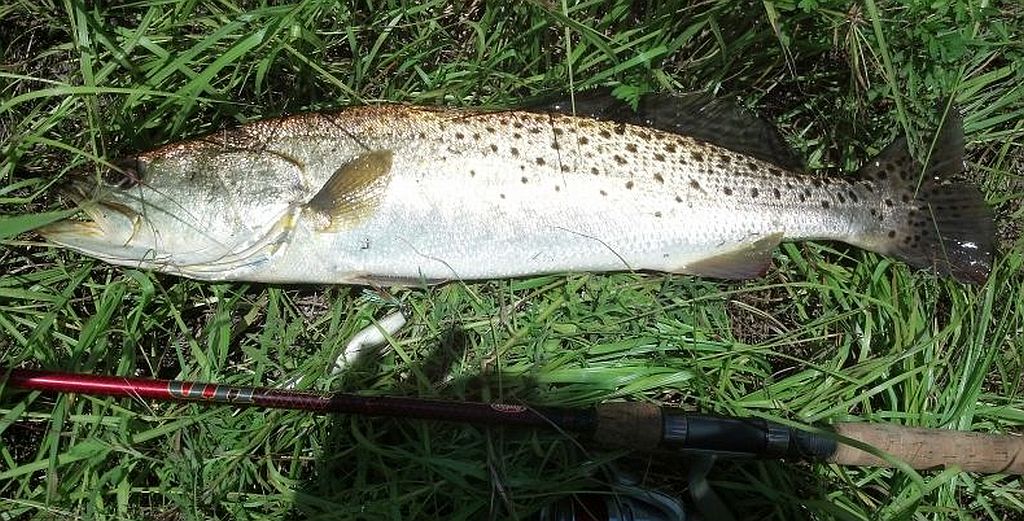 For live bait fishermen, free line a live mullet or a live shrimp around the mullet schools or if you're fishing in the Sebastian area, around the mangroves. Fish up to 30" are being caught in virtually all parts of our lagoon system. The snook bite is pretty good right now in the backwaters, especially around Ponce and Sebastian Inlets. Linesiders in the 25" to 40" range can be found around the docks, bridge pilings, and oyster bars on the western side of the Indian River from Vero Beach to Grant and also around Rose Bay and Spruce Creek near the Ponce Inlet area.  Live Croakers are by far the best bait to use for the larger snook. The smaller linesiders have been hitting Rapala XRaps or Twitchin Raps during low light conditions and at night around the docks and pilings. You can catch some really nice size snook after dark around the docks, pilings, and sea walls in the Titusville area, especially during the upcoming full moon we will be having on June 20th. Snook fishing in the surf from Patrick AFB down to Vero Beach should also be productive during June, especially for the larger fish. Live pinfish, pilchards, mullet, or croaker are generally the best baits, but jigheads with plastic tails fished very early and later on in the day will also produce fish. As most of you already know, the heaviest fish kill in memory occurred in the Indian and Banana Rivers during March of this year in Brevard County. From Titusville to Melbourne, Fl. thousands of sheepshead, redfish, sea trout, mullet, flounder, catfish, spade fish, small baitfish and even horseshoe crabs were stacked up along the shorelines. But for some reason, most of the Snook population was not affected. According to scientists, the blame was placed on the months long algal bloom and several days of overcast conditions that resulted in a significant drop in dissolved oxygen levels in the water column. The fish kill did not affect Brevard County's surf, or the Sebastian Inlet area of the Indian River where early summer Tarpon in the 50 to 80 pound category often cruise looking for schools of glass minnows. If we get blessed with westerly winds to keep the surf down, plenty of glass minnows will be showing up in our area making June a superior season for Tarpon. Fly fishermen in particular should enjoy some good fishing in the early morning hours before 9:00 am or 10:00 am when the glass minnows begin to move into deeper waters. Surf and near shore fishermen after Tarpon armed with a 10 to 12 weight fly rod, an intermediate fly line to pull the fly below the glass minnows, and one of the many suitable tarpon flies (like a red and black Black Death tarpon fly) or any similar pattern tied on a 1/0 Gamakatsu SC15 wide gap hook, should get good results. Beach Tarpon usually run anywhere from 50 to 150 pounds or more. During the month of June and throughout the summer months, juvenile Tarpon can often be seen rolling in the ICW and inside the freshwater creeks and canals in our area. Any oxygen depleted water that harbors bait can potentially hold juvenile tarpon. The slow moving waters around Shiloh Marsh Road and Patillo Creek often hold schools of juvenile Tarpon and Ladyfish. They are fun to catch on light spinning tackle and usually jump all over the place.
Spillways, drainage culverts, ponds, sloughs, and marsh canals are frequently overlooked areas where juvenile Tarpon can be caught. _________________________ Surf Fishing
June is a peak month to fish for Whiting a.k.a. "Southern Kingfish" in the Atlantic surf in East Central Florida.
Whiting are easy to catch and one of the sweetest tasting fish in the ocean. Because they usually only average less than a pound, you need a lot of them for a fish fry or a family size meal. 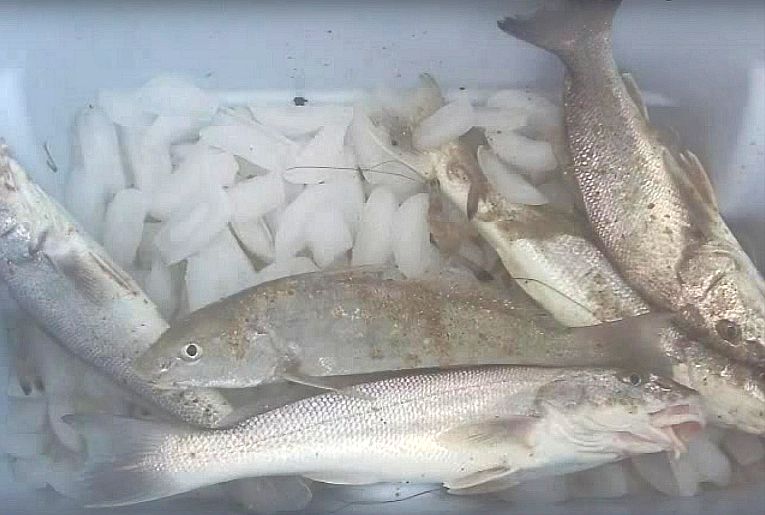 The big females, erroneously called Bull Whiting, when in their spawning mode gather in the surf along the deeper troughs in large numbers to feed on sand fleas and other crustaceans that are dislodged by the waves.
The surf zones along the Canaveral National Seashore south of New Smyrna Beach, Playalinda Beach east of Titusville, and the stretch of beach between Melbourne Beach and Sebastian Inlet are some of the best places to fish for whiting and Pompano, but any deep trough or hole is a potential holding area. Because the fish are generally closer to the beach in the first or second troughs, you can stow your long surf rod and pull out your "river rod" to fish for them. All you need is a 7' medium to medium/heavy action rod, a sliding sinker rig with a 1/2 oz. barrel sinker and a #2 hook, and 8 to 10 pound monofilament to catch a mess of these fish. Bait up with a live sand flea or a small piece of freshly peeled shrimp no larger than the tip of your finger. A whole shrimp or a large piece of shrimp often goes untouched, or stripped from the hook. Fishing the surf takes some experience. Look for uneven areas on the beach where the current has created a runoff or where shells have accumulated on the water line. Start fishing shallow and gradually work your way deeper until you locate fish. Most novice surf fishermen will overcast the feeding zone. There is a reason why it is called "surf fishing". Shark, tarpon, and snook will also be feeding in the surf between Melbourne Beach and the tip of Cape Canaveral throughout the month. Fishing with live croakers, or cut baits during the afternoon and evening periods for these fish seems to be the best bite. ________________________ Offshore
Kingfish are the most targeted species in East Central Florida right now, and although the kingfish bite in our region is good just about all year round, for the past week or so the bite has been really solid with most of the fish coming from the 70 to 90 foot reefs and wrecks. Later this month and into the summer months, Kingfish can also be caught on a variety of sandy shoals between Canaveral and Playalinda Beach where they can be found following the baitfish schools in the 25 to 40 foot depths. The standard technique for catching smoker kingfish is to slow troll with live baits on a standard two hook wire rig with Pogies, sardines, pilchards, or mullet. Use #3 or #4 wire or 60# multi stranded cable and a pair of #4 VMC 9626 extra strong treble hooks for your rigs. Slow trolling with live baitfish or a planer/lure combination works best on the kingfish in the 12 to 20 pound class. For the larger 30 to 40 pound fish, use bigger baits like a blue runner, bluefish, or a ribbon fish if they are available. Farther offshore the Gag Grouper bite is excellent right now on the 150 to 250 foot reefs and wrecks. Live Pinfish, Croakers, and Pogies on a standard bottom rig with a VMC 3x circle hook are the baits of choice for the larger fish. 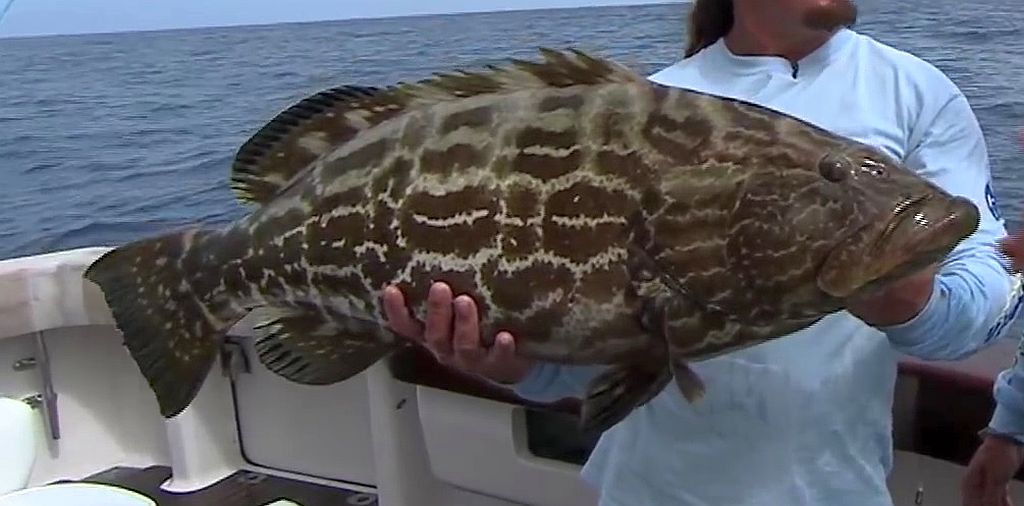 Williamson vertical jigs are also producing some nice catches of Gag Grouper in the 10 to 15 pound class but for the larger fish, most anglers are using live baits. Amberjack are also being caught on the 27 fathom ridge using live baits and the same rigs. Dolphin, blackfin tuna, and wahoo have been scattered this past week. Target any type of floating debris or temperature break that could potentially hold fish. Dragging ballyhoo around the rips and slicks is a good tactic for these fish.
_________________________
Freshwater 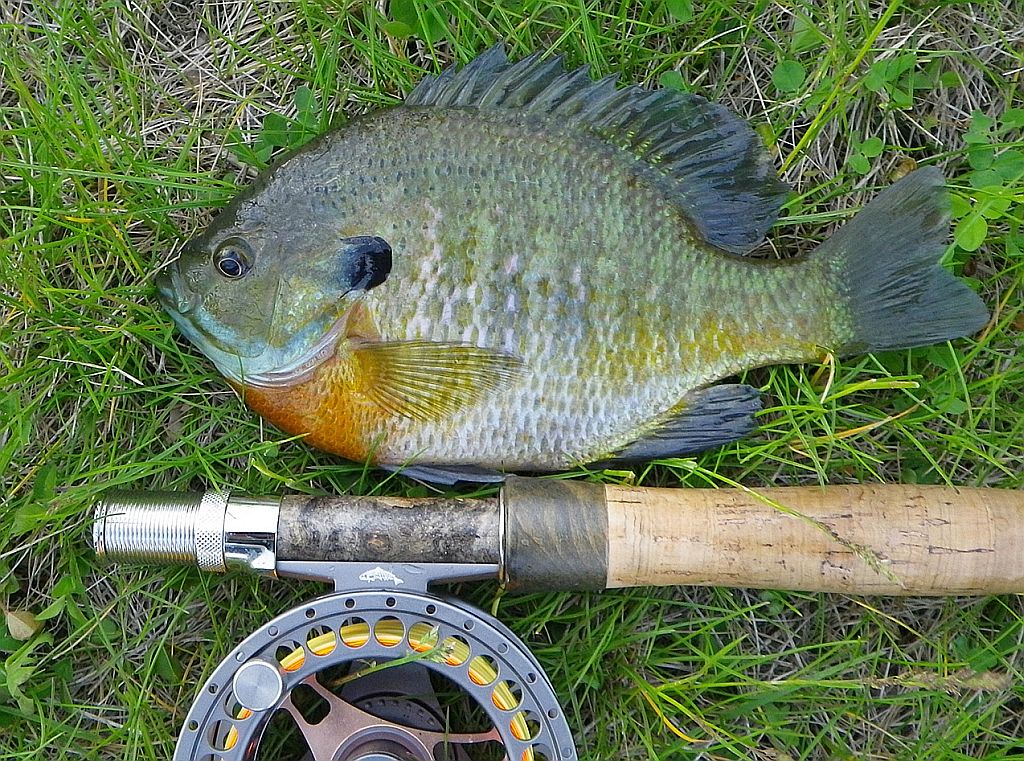 For you freshwater fishermen, May and June are peak months for catching a mess of spawning bluegills. For you freshwater fishermen, May and June are peak months for catching a mess of spawning bluegills. All you need is a cane pole, some crickets or earthworms, a bobber to keep the bait close to the bottom, and a spawning area in the backwaters or along a canal bank or sea wall and you're in business. Fly rodders sight casting with sinking spiders or #8 popping bugs in chartreuse or white can usually pick up a mess of fish in relatively short order. If you let a rubber legged spider sink motionless directly on top of a bed, a bluegill will quickly grab the intruder if it is in the area. ___________________________ Till Next Month, Good Fishing & Tight Lines!
|
||||||||
| Link One | Link Two | Link Three | Link Four | Link Five | Unsubscribe to this newsletter |