🐟 Your October 2021 Mosquito Lagoon & Indian River Fishing Report
Published: Fri, 10/01/21
| Newsletter Issue # 147 | October 1, 2021 |
||||||
Mosquito Lagoon & Indian River Fishing |
|||||||
|
The Mosquito Lagoon and Indian River:
Water levels in the Mosquito Lagoon and Indian River are up, allowing some large sea trout, redfish, and black drum access to shallow water marsh areas that were inaccessible during the summer months. In these spots, only anglers fishing in kayaks or canoes or wade fishermen will be able to get back far enough into the flooded marshes and mangrove areas where the fish are foraging. The best way to catch them in these areas is to stage at the entry points and fish with either live or cut baits, or noisy top water plugs that call the fish to the bait. In most areas of the Mosquito Lagoon, Indian River, and Banana River speckled sea trout are being caught around the mullet pods and tight against the shorelines. It's a good idea right now to stay away from the outflows where fresh water comes into the system if you are targeting sea trout. The out flows are holding a lot of juvenile tarpon, snook, and ladyfish. Not many sea trout. The most productive "go to" bait right now for sea trout in our area is a 4 or 5 inch Saltwater Assassin Sea Shad tail rigged on a 1/8 th oz. jig head. Right now, the Mullet, Gray Ghost, and Houdini colors are reported to be working best. Pardon Island, Cucumber Island, and Pelican Island in the Mosquito Lagoon; Black Point, Mullet Creek, and Snag Harbor down in the south end of our region in the Indian River, and if you are fishing the Banana River; Gordy Point, the flat just outside of Patrick AFB, and the Thousand Island area are all producing nice numbers of speckled sea trout. Topwater plugs such as the Rapala Skitter Walk, Chug Bug, Badonk-A-Donk, Xps Slim Dog or any bait that resemble a finger mullet are producing the larger fish. 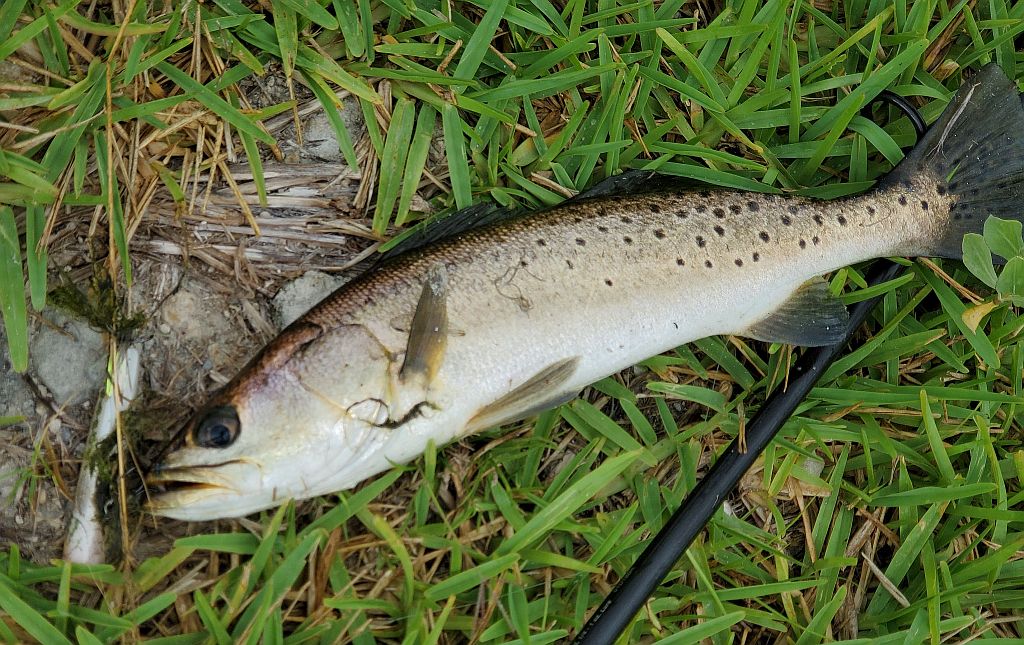 Most of the sea trout being caught are in the 1 to 2 pound range but we have been getting some larger fish in the 5 to 6 pound category. The Snook bite right now has also been really solid in our area and throughout the east central region; all of our inlets have Snook in them. The fish have been feeding at the change of the tide and about midway on the outgoing tide. They have been eating Croakers, mojarra, live shrimp, and just about any live bait or lure you can throw at them. The larger size snook have been inhaling large 10 to 12 inch mullet rigged on a 5/0 to 7/0 circle hook. In the New Smyrna area, the docks and mangroves are still holding good numbers of snook. Although most of the fish have been running less than 28 inches, you can still get a few fish in the slot. 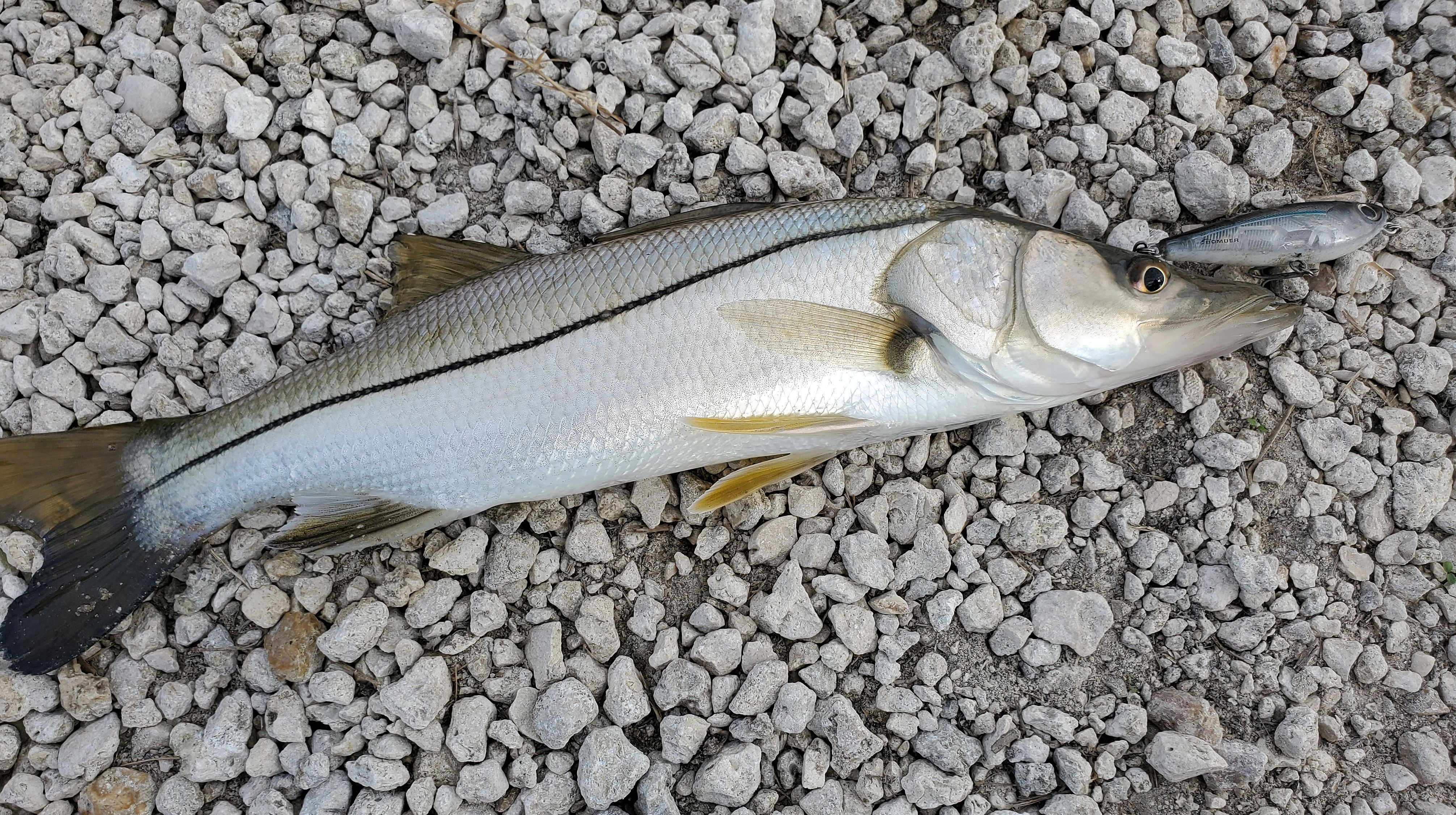 In the jetties and in Port Canaveral along the sea walls and docks, the snook bite has been really good, especially at night. The night bite has been literally off the charts with mostly artificial baits, especially swimbaits. Most of the snook in the inlets and in Port Canaveral are running are running anywhere from 29 to 40 inches. Every year during September and October "bull" redfish gather up to spawn in the deep water flats of the northern Indian River. In East Central Florida, these two months are the best times to target trophy bull redfish in our lagoon system. These fish are anywhere from 20 to 40 years old and can be found along the deep edges of sandbars, drop offs, and deep water canals where they can be caught using live baits, and cut or live ladyfish, mullet, or blue crabs. Large gold spoons, large swim baits, and a variety of topwater plugs are also effective, especially when sight fishing conditions are favorable. Upsize your tackle a bit when targeting bull reds. A lot of anglers use a 4000 or 5000 size reel with 20 or 30 pound Power Pro or other braid, and a 30 to 40 pound fluorocarbon leader. Fly fishermen usually gear up with a 9wt or 10wt outfit to tackle these bruisers. Schools of black drum have been spawning on the deeper flats and singles can be found almost anywhere in open water and along the ICW in our area. Black drum fishermen from Scottsmoor down to Parrish Park East of Titusville, all the way down past the NASA Causeway to Port St. John have been catching fish on shrimp, fiddler crabs, and cut blue crab. Black Drum feed by scent and often an old smelly shrimp will out fish a live or fresh dead shrimp. In clean water areas like the shallow weedy flats in East Gator Creek and Catfish Creek, you can sometimes sight fish for them using a 4 inch Saltwater Assassin Sea Shad smeared up with some Pro-Cure. Most of the drum caught in our area right now are running in the 15 to 25 pound category. Tarpon is the last species that can be caught during the month of October. The fish are still chasing mullet in the lagoon system and along our beaches. Look for inflows where fresh water is entering the lagoon system for juvenile tarpon, and sight cast to rolling fish in the ICW and along the beaches. 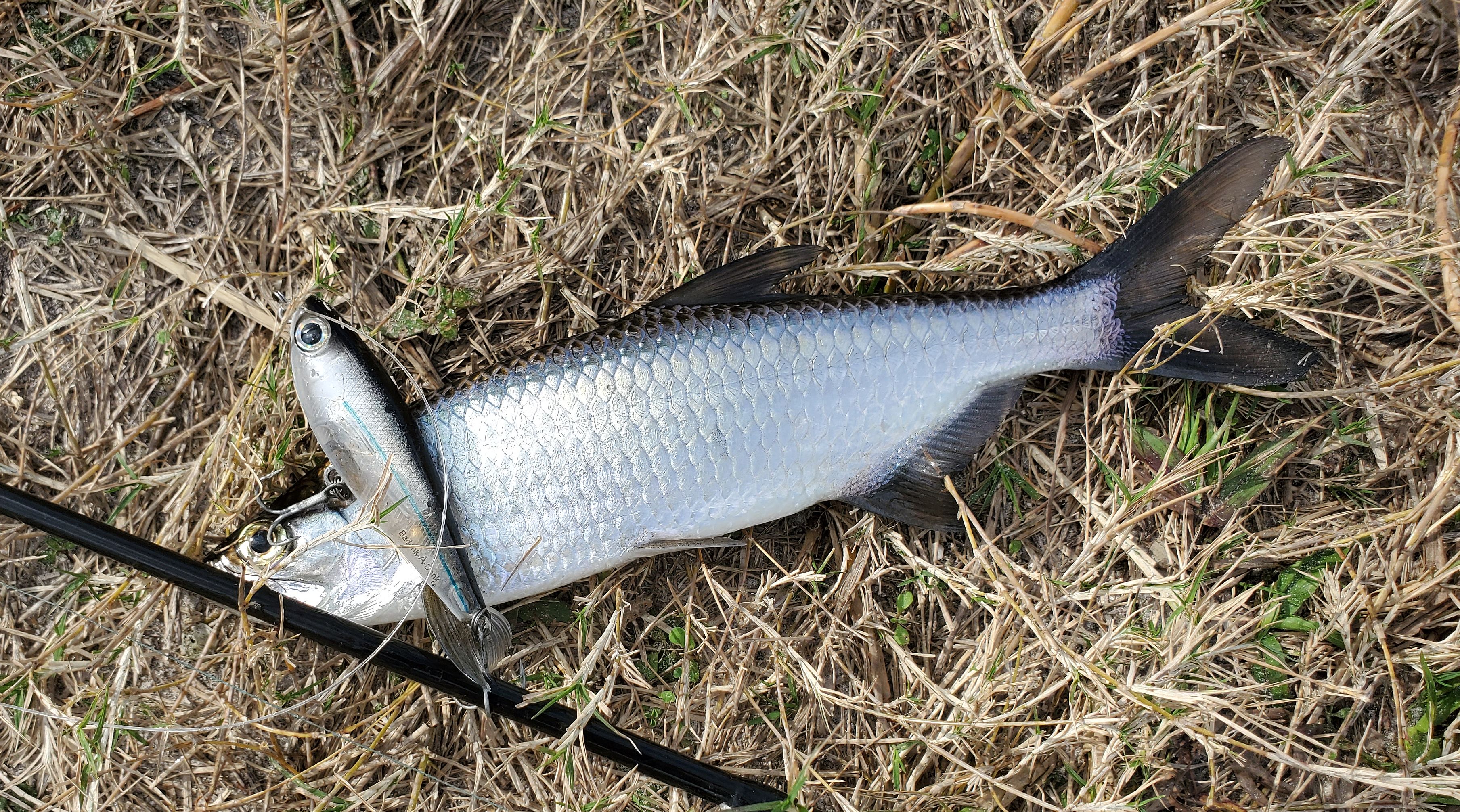 A few juvenile tarpon are still in the creeks in the Shiloh Road area and around the residential docks in the river system. The Vistas along the road going into the Canaveral National Seashore can be great fishing for juvenile tarpon depending on how cold the weather gets. When you can spot the fish, they will usually respond to a well placed bait or lure. The tarpon in our lagoon system are running between 15 to 60 pounds. The average beach tarpon has been running anywhere from 50 to 100 pounds. With the high water levels we have been experiencing, the fishing in the ditches and shallow ponds should be getting really good for big sea trout, redfish, and black drum along Peacocks Pocket road. If you don' t mind taking a long walk and losing a lot of fish and lures, Peacocks Pocket Road fished from either entrance my be for you. The marsh canal along the bank, and the mouths of the shallow ponds gives hardy anglers access to sea trout, redfish, and black drum. On the Indian River side of the road, the same opportunities exist. The road is densely overgrown and in several areas washed out making hiking difficult but there are some good fish in the "ditches" and the Indian River. Gold Johnson Sprite spoons, Creme WildEye Swim Shad, D.O.A. Jerk baits, and small Chug Bugs are normally the most productive baits. Look for single fish busting on baitfish along the bank of the marsh canal and cast ahead of the fish when you can. Port Canaveral and Nearshore Fishing: Offshore bottom fishing anglers will find a mixed bag of triggerfish, snappers, Scamps, Red Grouper, and Gag grouper out of Port Canaveral this month. The fish have been biting well in the larger reefs and high relief structure in 150 to 240 feet of water. 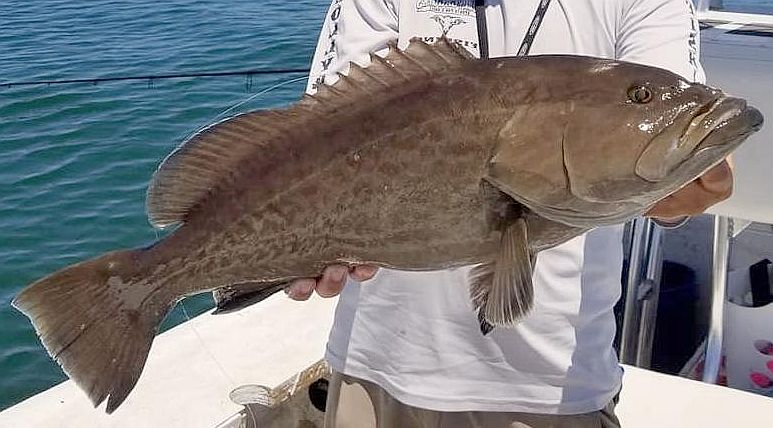 Grunt plugs, sardines, and any live bait fish are all great baits for grouper as are flutter jigs, vertical speed jigs, and a variety of deep jigs. As the grouper season this October progresses, the fish will start getting bigger with more 30 and 35 pound fish being caught. Jigs are extremely productive for grouper as long as the current is not running too strong. During September and October, cobia, kingfish, Spanish mackerel, big jacks, bonito, and tarpon are some of the predatory game fish that follow the baitfish run from Ponce Inlet, past Port Canaveral, all the way to Sebastian and Fort Pierce Inlet. When the big Manta Rays move in closer to shore, you can expect to find Cobia shadowing them and this past week, the Cobia have been seen and caught all over the place. Offshore anglers have been finding Cobia free swimming, tagging along manta rays or turtles, and even when slow trolling the reefs for kingfish, which is also hot right now. Some Wahoo, blackfin tuna, and a few mahi mahi have been mixed in with the kingfish. The most targeted spots for Cobia in our area are north of Port Canaveral toward the tip of the Cape, and south to Cocoa Beach past Patrick AFB. 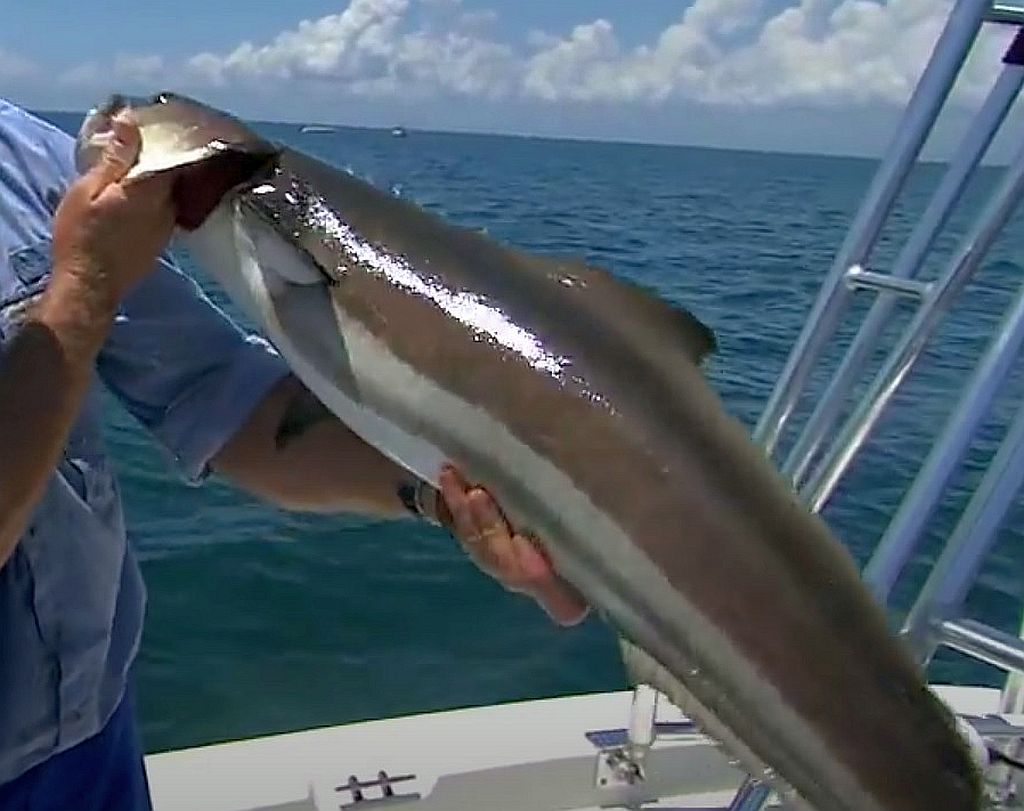 Kingfish is a staple in our area and are targeted in pretty much in the same areas as Cobia, including the waters north of Playalinda Beach and the Canaveral National Seashore. Slow trolling a live mullet or bunker on a stinger rig around the bait pods is the most effective method for catching kingfish in our area. When bait is hard to get, frozen minnows work almost as good. Bringing a box of minnows is always a good backup plan. Fishing the bait pods, small ledges, and scattered bottom structure as close as 5 or 6 miles from the beach is productive this time of the year. When the Kingfish bite is on, fish in the 20 to 30 pound range are common out of Port Canaveral with occasional "smokers" in the mix. The deep dropping guys running anywhere from 35 to 50 miles to fish out of Port Canaveral had been doing well with tilefish, rosefish, yellow edge grouper, Barrelfish, and other deep water species in 500 to 650 feet of water and deeper. Tilefish are easy to catch. great eating, and a whole squid or a piece of squid drifted just above the bottom on an electric reel is all you need to catch these fish. Tilefish have been running anywhere from 8 to well over 20 pounds last month but as of September 20, 2021, NOAA Fisheries closed the 2021 recreational harvest of golden tilefish in federal waters of the South Atlantic. The closure occurred because reports indicated that the recreational landings reached the established catch limit set for the year (2,316 fish). The recreational harvest of golden tilefish will resume January 1, 2022. Playalinda Beach Surf Fishing: October is arguably the best month for surf fishing in East Central Florida, and Playalinda Beach in the the Canaveral National Seashore is one of the better, least advertised of the Pompano "hot spots". The pompano are starting to fire off on our beaches for both surf anglers and small craft boaters fishing just off the beach. Sand fleas, fishbites, and shrimp are currently the baits of choice for surf anglers using standard 2 or 3 dropper rigs, regular pompano style jigs, and Goofy Jigs. 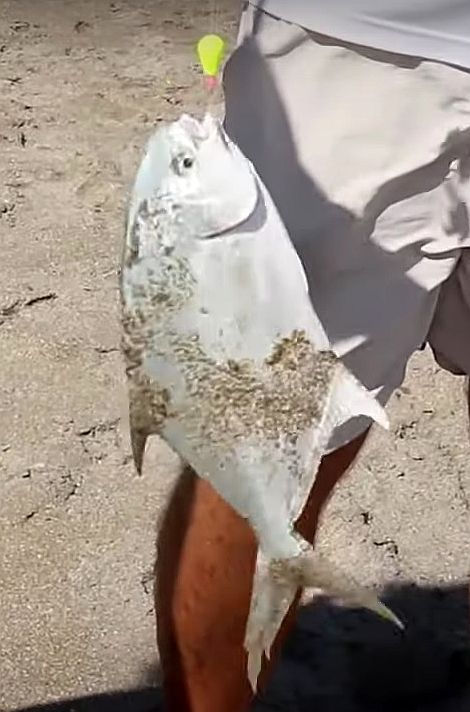 The migrating pompano schools move up and down the beach quite a bit, so when you get a bite or bites and the action stops, move up or down the beach in the direction of the current until you catch up with the school
and hopefully pick up some more bites. The migrating pompano schools move up and down the beach quite a bit, so when you get a bite or bites and the action stops, move up or down the beach in the direction of the current until you catch up with the school
and hopefully pick up some more bites. Most of our pompano are pretty small right now, in the 1 to 2 pound range, but you never know when you might hook up with a 4 or 5 pound fish, especially later on in the month when the weather cools down and the fish are running heavier. The larger pompano seem to run alone or in pairs and are caught mostly when the under size pompano push through the area. In surf fishing, water clarity is the key to a consistent bite, and for the past couple of weeks, the fishing conditions at Playalinda have been suited for pomps. For those of you who don't already know, a daily $10.00 per vehicle Park entrance fee is charged to fish Playalinda Beach; or you can purchase a $40.00 annual Canaveral National Seashore/Merritt Island National Wildlife Refuge Park Pass at the entrance booth. If you are 62 or older, you can buy a Senior Lifetime Pass for $10.00 or an America the Beautiful Annual Pass for $80.00. A signed Refuge Sport Fishing permit that must also be carried on your person while fishing in the Merritt Island National Wildlife Refuge is also necessary and can be picked up at the entrance booth, any of the kiosks, or by downloading it HERE. The self-issuing permit makes sure that you have read and understand all the rules and regulations pertaining to the Merritt Island National Wildlife Refuge. Haulover Canal: Every month we write about the variety of species that can be taken in Haulover Canal, but during the September and October spawning migration, virtually everybody fishes for "bull redfish". 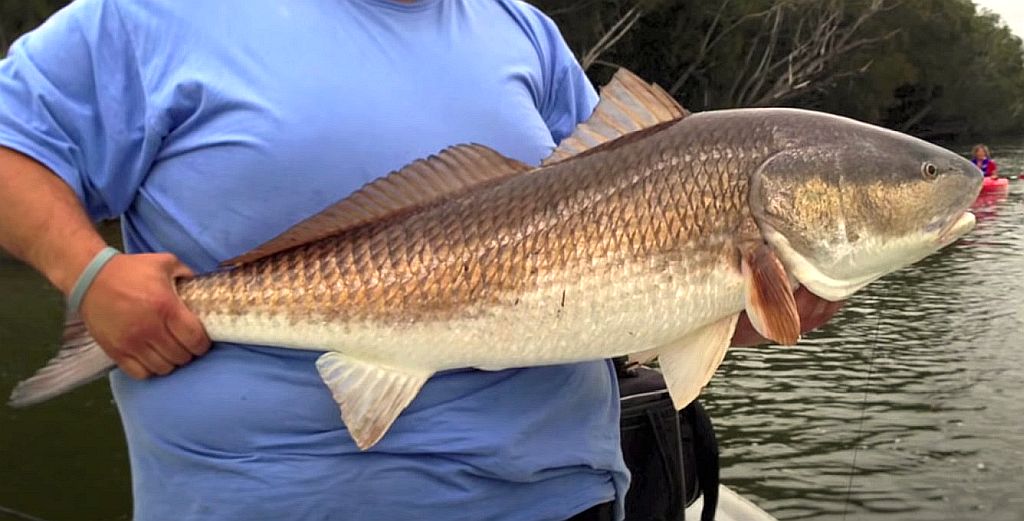 The unique population of redfish that we enjoy spend their entire lives in the shallow estuarine system, unlike the redfish in other coastal areas that migrate offshore to spawn. The fish use Haulover Canal to move from the Mosquito Lagoon into the deep water flats of the Indian River for their spawning ritual. The section of the five mile wide Indian River between Mims and Scottsmoor north of Titusville are where the reds gather into huge schools. If you spot a school pushing a wake or females daisy chaining near the surface, you're in luck. The larger fish usually lead the school so it's better to approach them from the side and cast in front of the leaders if you want a real trophy. As the reds move through the canal, bank fishermen using a a whole live blue crab, a large live bait sailors choice or mullet, or a large chunk bait have the opportunity of picking up a trophy red in the 40 pound plus category. Keep the bait on or near the bottom with an appropriate weight and use a heavy fluorocarbon leader with a 5/0 or 6/0 VMC circle hook as terminal tackle. Just about anybody who has fished at Haulover Canal will tell you that it's a good idea to use Power Pro or some other braided line as your main line. Braided lines are stronger and more resistant to cutoffs from the Coquina rocks that line the banks of the canal. The rocks can play hell with monofilament, especially with a really big fish. Although no night time bank fishing is allowed at Haulover Canal, anglers in kayaks and a variety of boats can be spotted night fishing almost any time of the year. IRL Clam Restoration Project: We continue to believe that the clam restoration project that has been going on in the Indian River Lagoon is essential to the health of all our lagoon systems.  Clams and oysters are filter feeders that clean suspended impurities from fresh and saltwater. Over harvesting of clams in past years is believed to be one of the causes of the continuous brown algae plague that we endure every year. Clams and oysters are filter feeders that clean suspended impurities from fresh and saltwater. Over harvesting of clams in past years is believed to be one of the causes of the continuous brown algae plague that we endure every year.When I first moved to Florida, I remember watching the fleets of clam skiffs from the NASA Causeway bridge. The clammers had long rakes that they used to fill up their sacs which they eventually unloaded at Port St. John boat ramp. Over harvesting decimated the fishery to the point that clamming was no longer viable however, the long term effect to our lagoon system was the build up of brown algae that blocked out the sunlight and killed off the sea grasses that makes the whole ecosystem function so perfectly. Unfortunately it took scientists at the University of Florida Whitney Labs until now to realize that our waters were not being adequately cleaned by the shellfish that we over harvested however, they have developed a "super clam" that is hardier and more tolerant to fluctuations of water chemistry that they have been introducing into the lagoon systems to filter the water. In partnership with locals who have existing clam leases, the "super clam" spats are being distributed and covered up with netting to protect them from predation in our lagoon systems until the clams reach spawning size (approximately 1"). Once adequate breeding populations have been introduced and stabilized in the waters of our lagoon systems, the sea grasses will again flourish creating the nursery for shrimp, crabs, fish, etc. that we all enjoy. The IRL Clam Restoration project is a long overdue necessity to restore the water quality in the Indian River Lagoon System back to it's previous state. To donate to this fund CLICK HERE. For tickets to the banquet CLICK HERE: Learn more about the project here: Video 1, Video 2 Until next time, Tight Lines and bent rods! |
|||||||
| Link One | Link Two | Link Three | Link Four | Link Five | Unsubscribe to this newsletter |