Your June 2021🐬 Mosquito Lagoon & Indian River Fishing Report
Published: Tue, 06/01/21
| Newsletter Issue # 143 | June 1, 2021 |
||||||
Mosquito Lagoon & Indian River Fishing |
|||||||
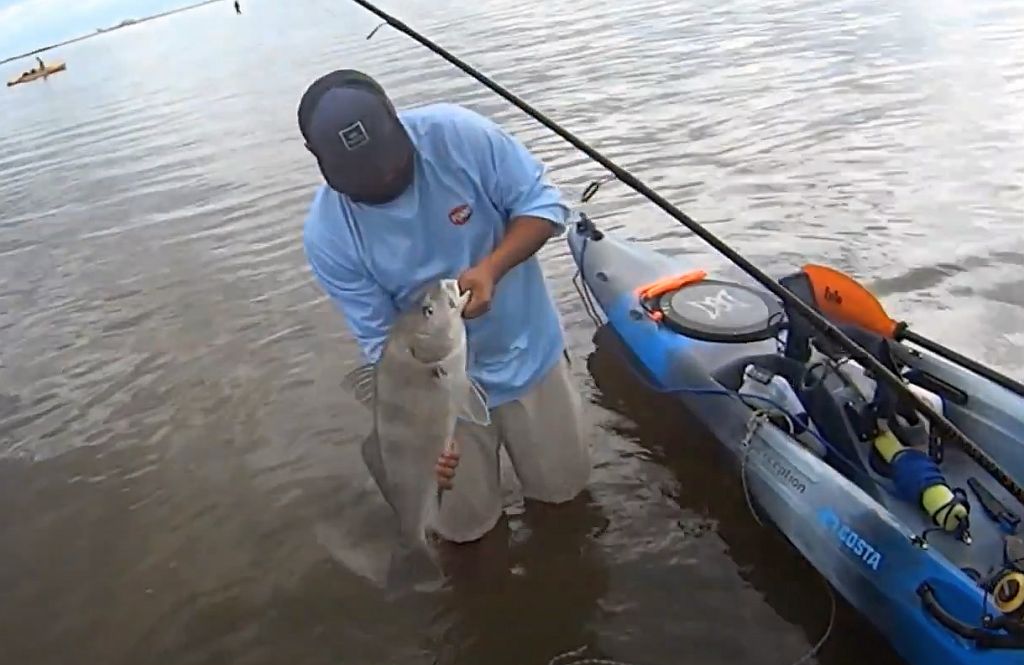 Mosquito Lagoon,Indian River and Banana River
Later on in the day, you can find the drum cruising around in the shallow flats.
When the glass minnow pods invade the residential canals in the Melbourne and Cocoa area, you can find tarpon in the 2 to 50 pound class around any of the outflows and residential canals. As the month progresses, tarpon in the 30 to 80 pound plus category can be found feeding on the bait pods in the main ICW channel. In the Titusville area, tarpon can be found prowling the deep water flats across from the Scottsmoor boat ramp down past the railroad bridge in the ICW. Conventional spin fishermen usually toss small spoons or soft plastic Shad Assassins for smaller tarpon, and a large porgy, mullet, or ladyfish under a float for the larger 40 to 100 pound fish. Playalinda and Surrounding Beaches Large numbers of whiting, pompano, and sharks along with a resurgence of bluefish and mackerel will continue to headline the catches along our beaches this month. From Playalinda Beach, to Cocoa Beach, to Sebastian Inlet; surf fishermen should continue to expect good catches of bull whiting, pompano, bluefish, and sharks. Because the schools of whiting and pompano are always on the move, some beaches will be hot one day and have a slim bite the next. It pays to pick up your gear and move to another section of the beach or entirely new beach until you find the migrating fish. 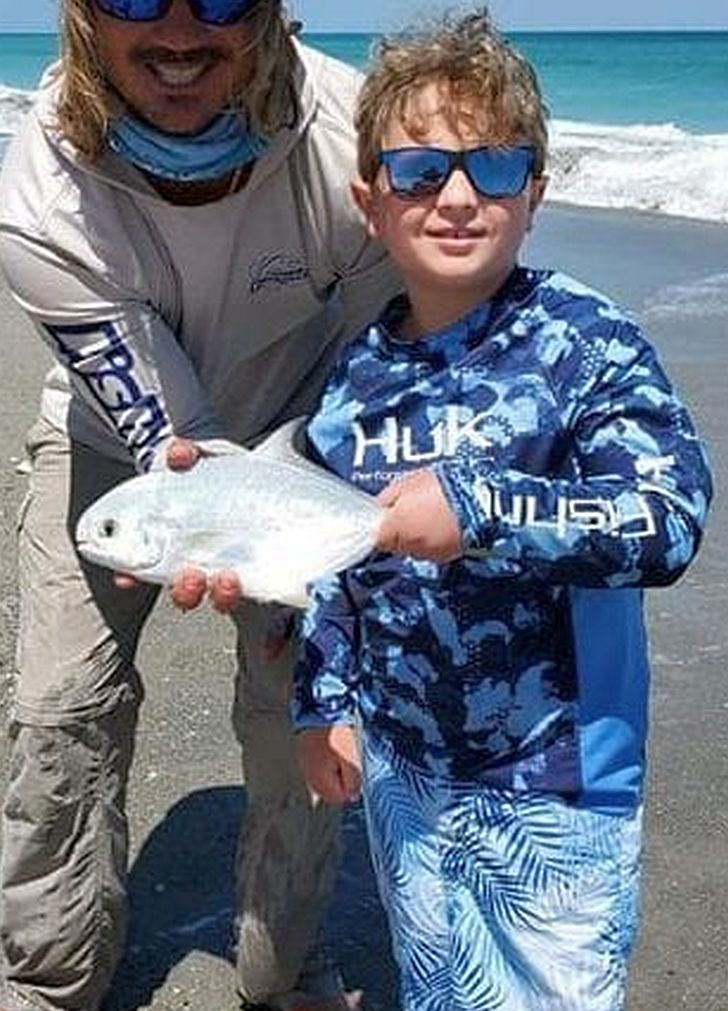 Pompano fishing should continue its upswing during June as the fish continue their migration back north coinciding with water temperatures. Pompano fishing should continue its upswing during June as the fish continue their migration back north coinciding with water temperatures. The schools have been scattered with separate groups of fish spread out from South Florida waters up into Volusia County. Tidal swings will dictate the numbers of fish caught with varying days producing results on either the outgoing or last of the incoming tide. Another trend that will remain consistent during June is the afternoon to evening bite, and whether the sun is overhead or setting. Whiting and pompano travel up and down the beach in small schools feeding on small crustaceans that they find in the troughs. They are often in the closest troughs from the beach where only a short cast is required to catch them. The deep water troughs between the sandbars farther out are where the biggest whiting and pompano schools are usually holding and where most surf fishermen try to target their casting. Breaks or cuts in a sandbar are hot spots that fish use to swim between the troughs. When you find the fish and the bite is on, you can catch a mess of pompano or whiting along any of our beaches with a surf rod, a 2 or 3 hook pompano dropper rig, some fresh shrimp and sand fleas, and enough lead to hold bottom. Although sand fleas in our area remain the top bait of choice tipped with white clam Fishbites in the electric chicken crab scent, fresh clam or small pieces of shrimp will also catch fish. Before you set your sand spikes up on the beach, take some time and read the beach. Watch how the waves are breaking and look for rip currents, wash outs, sloughs that form just past the shore breaks, and at the sand in the surf for areas where small shells are piling up. All these are areas where sand fleas, small clams, and crabs are being pulled out into the deeper troughs where the fish are holding. Bull whiting, black drum, and pompano often stage just outside of the rips to snatch up crustaceans as they are being pulled into the troughs. Don't automatically fish the same spot that you caught fish the previous day and expect the same results. The waves are constantly changing the structure of the beach and the fish are seldom in the same exact spot they were at the previous day. When you locate a likely looking area, the best way to find where the fish are feeding is to stake out several rods at varying distances from the beach. Keep the baits in the feeding zone and when you start catching fish set all your baits in that general area. The pompano in our area right now have been running 2 to 4 pounds. Shark fishing from the beach is still on fire and the blacktip migration pattern is in full swing. You can still see multiple airborne sharks clearing the surface just outside the breakers and coming into the first and second troughs to snatch up whiting and blue runners. 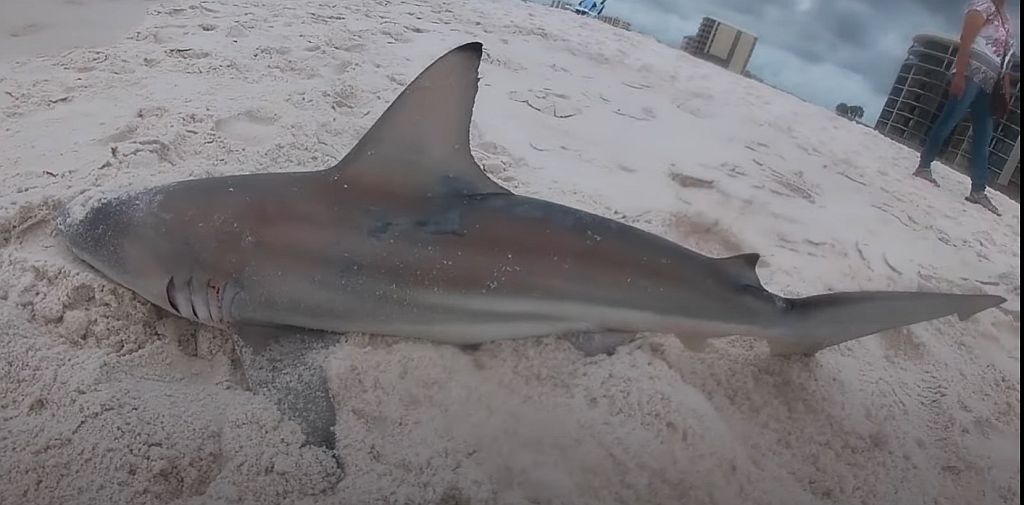 Although blacktips are the species we catch regularly, almost any species can be caught in the surf. Bonnet Heads, Blacktips, Nurse Shark, Atlantic sharp nose, Spinners, Sandbars, Lemon, and Bull shark are also caught along our coast. Baits of choice for shark fishermen are chunks of Bonita, stingray, mackerel, ladyfish, or mullet; but any bloody or oily fleshed fish can be used. When fishing for shark from shore in Florida waters, you must complete the Shark-Smart Fishing educational course at MyFWC.com/SharkCourse and obtain a free Shore-based Shark Fishing permit. Both are now required when fishing from shore. Learn more HERE. Most of the shark caught from the beaches in our area are under 100 pounds, but much larger fish are not uncommon. Port Canaveral Offshore and Nearshore Right now the conditions offshore out of Port Canaveral are beginning get really good for dolphin. Most dolphin will be hanging around weeds, rips, and color changes in the 130 to 250 foot depths along the western edge of the Gulf Stream. This past Memorial Day weekend, the 130 to 160 foot area was really productive for the guys targeting dolphin. Skirted or naked ballyhoo, flying fish, or mullet trolled at 4 to 6 knots was used by many anglers to get the dolphin to eat. Although blue and white or green and yellow skirts were reported to be the best colors; most anglers on bright sunny days go with the yellows, pinks, or bright blues, and on darker days, go with black red and purple colors. 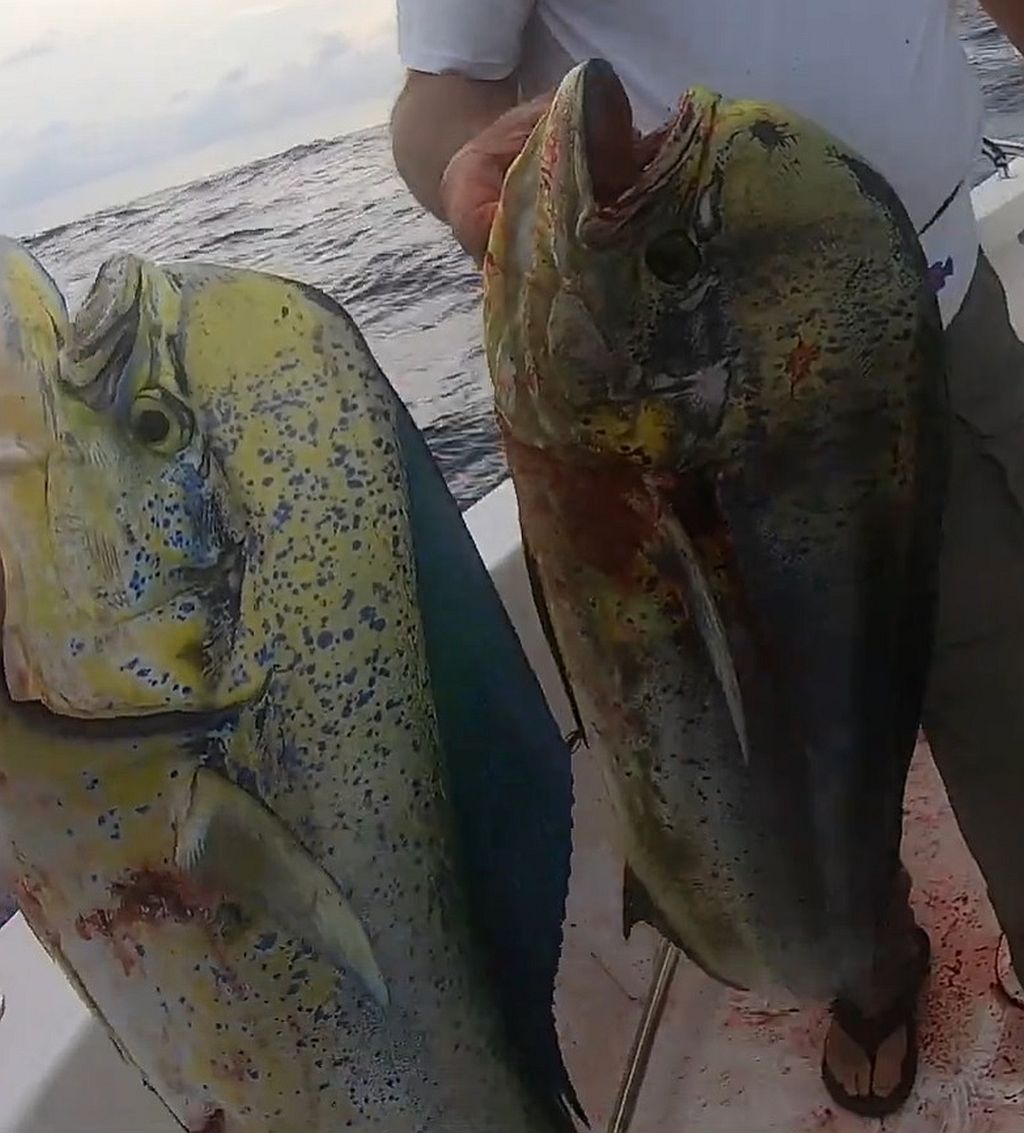 Look for birds working around any kind of rip or weeds which usually indicates where there is a little more bait, and where the action should be better. Our average dolphin is running from 6 to 10 pounds, but this past weekend we had fish coming into Port Canaveral weighing in excess of 20 pounds. During the summer months you can often find large smoker kingfish within sight of the beach, just past the last set of breakers. Larger King Mackerel are coming closer to the beach right now following the baitfish along the shorelines. The best time to fish for kingfish is early in the mornings and later in the afternoons around bait pods. The best bait has been bunker and now that the water has warmed up, live bait is much more readily available. If you can't get live bait, use frozen minnows. When there are baitfish around, chances are there will be larger fish feeding on them. Although slow trolling a live bait on a stinger rig is the preferred method for taking kings in our area, a lot of anglers flat line a live bait on a stinger rig with #4 wire or with 60# mono with good success for larger fish. We've already seen some nice buoy line kings and tarpon caught outside of the Port. The average size for kingfish in our area is in the 10 to 25 pound range, but larger fish outside of the Port up to 30 pounds are not uncommon. Farther offshore the black fin tuna bite along the 21 to 27 fathom ridge has been picking up in about 135 to 220 feet of water. Typically Blackfin Tuna like to strike small jet head type trolling feathers pulled close to the surface at a speed of 6 to 8 knots. Right now, most of our blackfin are running in the 15 to 20 pound range. Port Canaveral is one of the top grouper fishing charter destinations on the Eastern seaboard with the best action occurring from late Fall through Spring. Out on the wrecks and reefs in the 160 to 260 foot depths, the grouper bite has been good for anglers dropping fresh cut croakers, grunts, or bluefish. Out on the 27 fathom ridge, the cones, or the steeples, you can drop down a live bluefish, pogie, croaker, or any other large live bait and get hooked up with one of the big Gag Groupers that have been biting so well since the season opened up. A lot of anglers use 16 to 24 oz deep jigs or vertical jigs to get down to the fish with a good deal of success. A lot of scamp and red grouper are caught by deep jigging. This month you are likely to catch a variety of grouper species such as Gag, Scamp, Red, Black, Warsaw, and Snowy grouper. Groupers typically range anywhere from 15-40 lbs with some species exceeding 60 lbs. More anglers out of Port Canaveral have been running farther offshore to deep drop the 500 and 600 foot plus depths for a variety of deep water species that include tile fish, yellow edge, and snowy groupers. 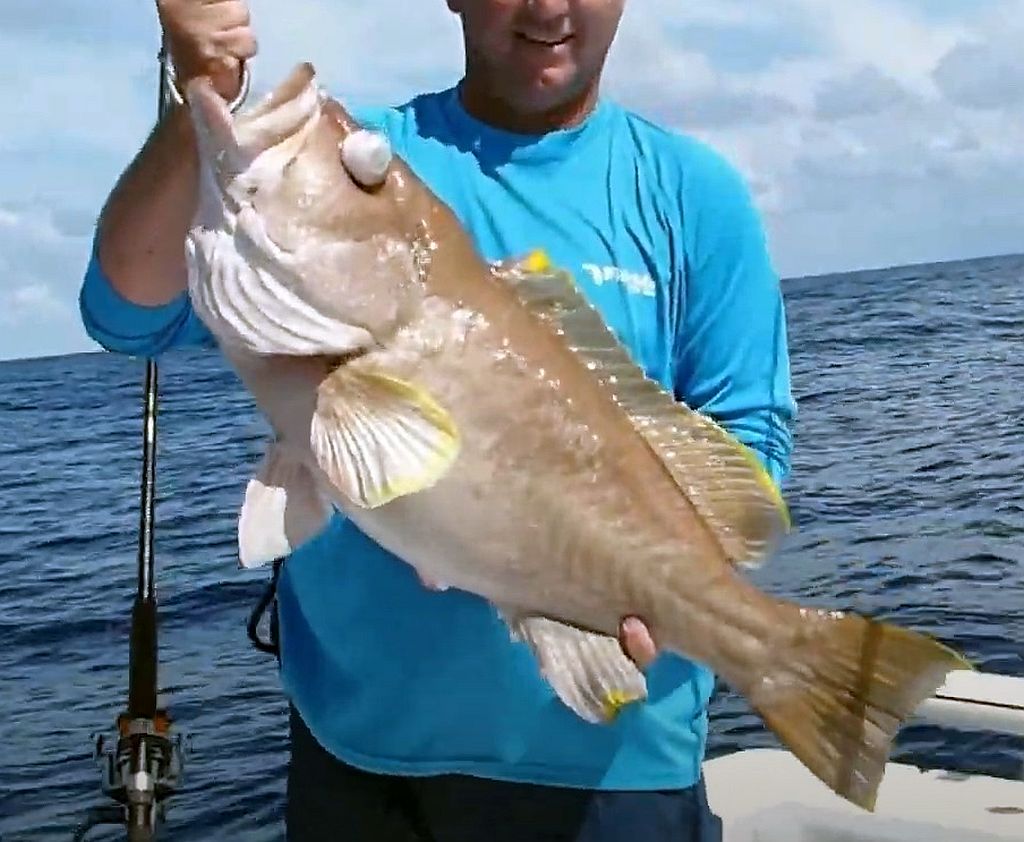 Electric reels with heavy weights are needed to hold bottom for these fish with squid being the predominant bait. Nearer to shore, good numbers of flounder are showing up inside Port Canaveral right now. Anglers are using live mud minnows, pilchards, fingerling mullet, or live shrimp on a knocker rig or a sliding sinker rig with a short fluorocarbon leader to keep the bait on the bottom to get hookups. A live bait on a jig head slowly dragged along the bottom is also a good way to pick up fish. Most of the flounder caught around and inside Port Canaveral are in the 2 to 3 pound category, but as the season progresses, fish in the 4 to 6 pound category will start showing up. Tight Lines and bent rods! |
|||||||
| Link One | Link Two | Link Three | Link Four | Link Five | Unsubscribe to this newsletter |