Your September 2020 Mosquito Lagoon & Indian River Fishing Report
Published: Tue, 09/01/20
| Newsletter Issue # 134 | September 1, 2020 |
||||||
Mosquito Lagoon & Indian River Fishing |
|||||||
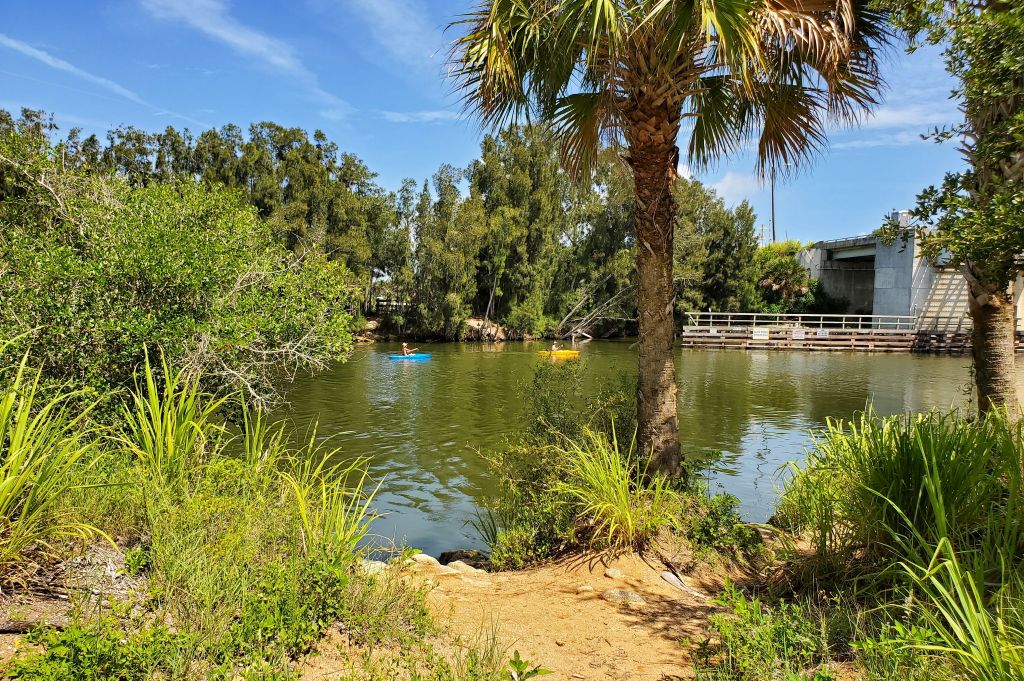 The Mosquito Lagoon and Indian River: The opening of Snook season this week has a lot of anglers scouting for snook spots in the Indian River, Banana River, and Mosquito Lagoon. The bad news for anglers again this year is the brown algae bloom that has the inshore waters in all the lagoons stained an ugly muddy color. Despite the wind, heat, rain, and algae blooms throughout the entire lagoon system, the redfish bite is doing really well in the Mosquito Lagoon and Indian River. Right now, the bigger bull reds are staging in their pre-spawning ritual and can be seen in the schools sort of floating up towards the surface and and then sinking down again. The outside edges of the deeper flats have been holding some of the larger reds and if you approach them slowly and cast ahead of the school, you should get a hookup. Cut pinfish or a live pinfish on a circle hook are reported to be the best baits, but fresh cut ladyfish, mullet, or a blue crab will also produce. Artificial D.O.A. JerkBaits, 6" Bass Assassins, Gold Spoons, and suspended baits also work well. Smear them up with some Pro-Cure to make them more attractive.  Fishing the residential docks in the Indian River Lagoon system has been and will continue to be productive for snook, tarpon, redfish, sheepshead, and large sea trout. The docks provide shade for the fish during the heat of the day and attract a plethora of organisms, crustaceans, and bait fish that the predators feast on. The fish hold tight under the docks in the shade, so accurate casts are necessary to catch them. A live bait, a pearl or white Bass Assassin or a Gulp shrimp on a 1/8 oz. jighead pitched under a dock will usually get accepted. The spotted sea trout bite in our lagoon systems has been sporadic. Getting out before daybreak is an absolute necessity and if you can find relatively clean water with grassy areas, the likelihood of hooking up increases dramatically. Anglers in the early morning hours using pigfish around the grassy edges of George's Bar, Tiger Shoal, and the False Channel Bar, when the mullet pods are in the area have been making some nice trout catches. Tossing topwater baits like a Chug Bug MadFlash, a SkitterWalk, or a Badonk-A-Donk around the bait pods is also productive during the early mornings. When the bite slows down, tie on a plastic paddletail or jerk bait and move out to deeper water along the edges of the flats. Most of our trout in the Mosquito Lagoon have been averaging 2 to 4 pounds. Although the Titusville area is not known for snook, there are plenty of them around the docks, bridge fenders in the ICW, pilings, and mangrove shorelines of the north Indian River and Mosquito Lagoon. With higher water levels this past week, the feeder creeks around north Shiloh Road have been holding slot size snook and juvenile tarpon up to 40" in length. The fish have been targeting glass minnows along the banks of the creeks throughout the day, but seem to be more active later on in the afternoons. The juvenile tarpon bite in the Mosquito Lagoon and Indian River has also been good for anglers targeting them. The larger fish have been hitting suspended and topwater baits resembling a finger mullet. Use smaller size lures when "fishing the ditches" or when targeting juvenile tarpon and ladyfish. North Shiloh Road, Patillo Creek, East Gator Creek, Bio Lab Road, the Vistas along Playalinda Beach Road, and several other shore based areas in the Merritt Island National Wildlife Refuge hold tarpon in the 5 to 60 pound range. Offshore and Nearshore Fishing: Our dolphin and kingfish bite is going to be relatively slow this month but farther offshore, the tilefish bite has been really good for anglers deep dropping cut or whole squid in 500 or 600 feet of water. Most deep droppers are running out of Port Canaveral anywhere from 35 to about 60 miles to fish for deepwater species. 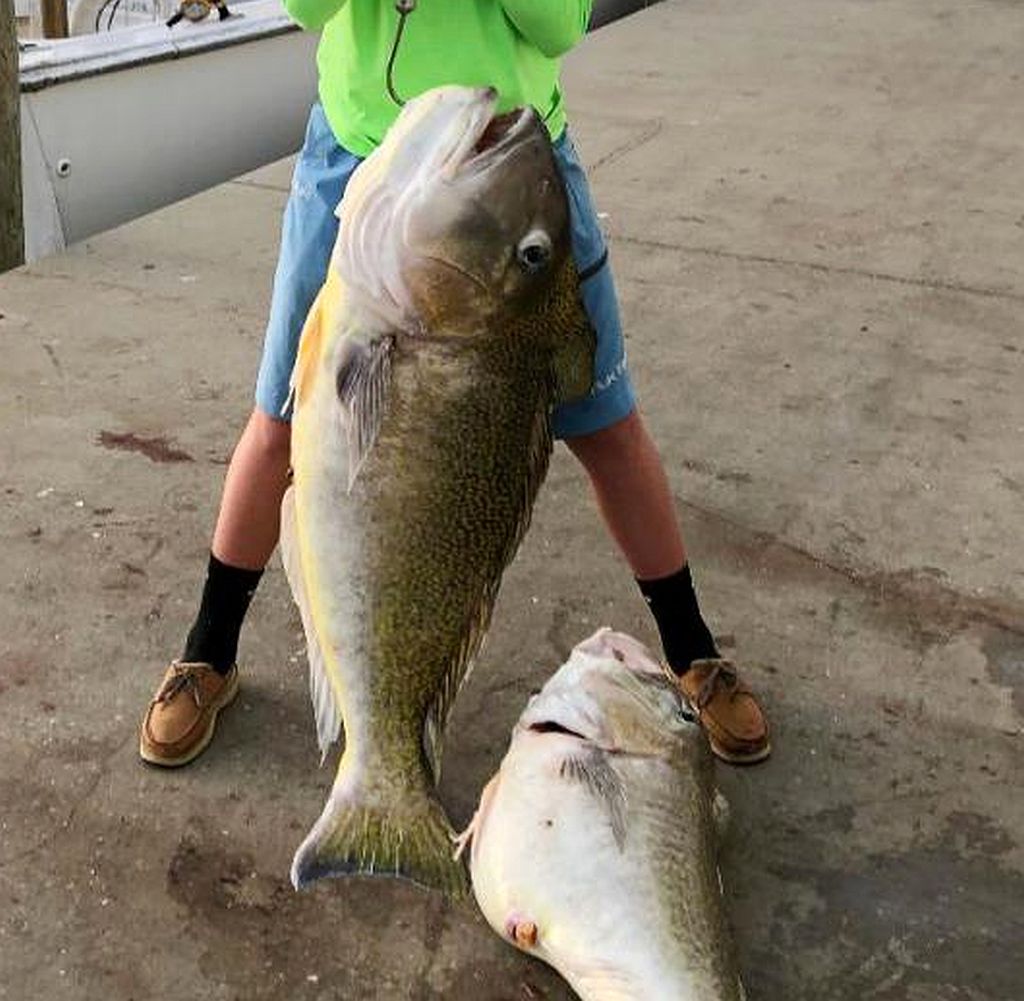 Tilefish well over 20 pounds are common catches right now as well as the other deep water species like yellowedge grouper, rosefish, etc. The best kingfish bite has been out on the 70 to 90 foot reefs. Anglers have been slow trolling naked live baits on stinger rigs or frozen sardines with dusters added. For anglers who don't like to mess with live baits; large spoons, Rapala CD-14 or CD-18, and Williamson Speed Pros have been working well. Right now the fish have been averaging 10 to 20 pounds with some larger kings up to 40 pounds closer to the beaches. The grouper bite in our area has been best on the reefs and wrecks that are located in 130 to 220 feet of water. Live blue runners, croakers, grunts, and large chunks of bonita or barracuda are considered to be the best baits for the larger red, gag, or scamp grouper over bottom structure. When using smaller baits, you will generally have problems with red snapper grabbing the baits before the grouper can get to them. Our average grouper is running from 12 to 20 pounds right with some of the gags topping the 30 pound category. Last month the Gag Grouper bite out of Port Canaveral had been going strong in the 150 to 250 foot depths. Anglers using large live baits, big chunk baits, and 16 to 24 oz. deep jigs tipped with a piece of ballyhoo were taking the most fish. Inlets And Beaches: The mullet are starting to run north of our beaches right now as the fall migration coming down from the Carolinas and Georgia begins to swing into high gear. September and October are always fantastic months to target Snook along the beaches and around any of our Inlets. As as the mullet become thicker along our beaches; Ponce Inlet, Port Canaveral, and Sebastian Inlet will be ground zero for big snook and a variety of other predatory species. Although the Inlet and jetties at Sebastian are most noted for the abundance of Snook; all of the inlets and beaches on the east coast of Florida will hold good numbers of Snook when the bait fish run starts to get thick along our beaches. The jetties and sea walls at Port Canaveral, the causeway bridge fenders at New Smyrna Beach and the bridge fenders at the A1A bridgte leading to Sebastian Inlet are great spots to target snook during September. Most anglers who fish the inlets use live croaker, pinfish, or mullet on a standard bottom rig to pick up snook and redfish. Large plugs, suspended twitch baits, and a variety of plastic and flair jigs also take their share of fish, especially during the evening hours. Anglers night fishing around the inlet jetties, cat walks, pilings, and sea walls have been casting large Rapala X-Rap 14 lures and large Saltwater Assassin 5" or 6" swim baits on big jig heads with 7/0 or 8/0 hooks and catching some nice snook. Baits smeared up with some Pro-Cure gel or other scent seem to get more action. On my visits to Playalinda Beach last week, the surf fishermen I spoke with were catching whiting, a few juvenile black drum, and pompano. When the finger mullet migration ramps up, snook, redfish, bluefish, and shark will be on the menu. Beach anglers that have been able to find some clean water conditions in the surf have already been catching some snook along our beaches on live baits, Flair jigs, and Rapala X-Raps. In the surf near Patrick Air Force Base, anglers using small pieces of live shrimp have been catching some margate and whiting using two and three hook pompano rigs. This area is also good for shook around the worm rock in the surf. A large mullet on a sliding sinker rig cast out past the worm rocks will usually get you a hookup if the fish are in the area. When the water conditions in the surf are "dirty", expect to see shark fishing ramping up. Fishing a live mullet or menhaden, or any live or bloody chunk bait will get you a hookup this month. To get the permit, you need to take an educational course at MyFWC.com/SharkCourse which consists of a quiz and some educational videos. After you create an account and pass the test, (which you can re-take if you fail) your certificate will have an ID code unique to you. You will then need to log in to GoOutdoorsFla.com , click “Purchase a License”, go to "Shore-based Shark Fishing Permit" and click “Add to Cart.” There you will type in your unique ID code to get your permit. It is a free add on to your fishing license that you need to print out and keep on you while fishing. The permit is geared to fishermen who target large sharks from the beach and takes about a half hour to complete. Although most of the sharks caught in the surf are less than a couple of feet long, many larger bull sharks, nurse sharks, black tips, and tigers are always a possibility in our area. New Smyrna Beach, Florida has been dubbed the "sharkbite capital" for good reason. But anglers targeting sharks in East Central Florida have been catching Black Tips, Fine Tooths, Spinners, Bulls, and Nurse sharks in all sizes from Sebastian, Canaveral, and especially up at Ponce Inlet on a regular basis. Bull Sharks are typically 150 to 200 pounds or more. Finetooth, Spinners, and Sandbars can weigh in anywhere from 20 to over 100 pounds. Gear up with a medium heavy to heavy action rod with a large capacity reel spooled with 60 to 100 pound braid and a single wire, multi-strand coated wire cable of around 270 pounds, or heavy 100 pound plus test mono leader if you're after the big boys. Haulover Canal: Haulover Canal fishermen this month will be targeting big black drum and oversize redfish that are traveling through the canal from the Mosquito Lagoon into the northern Indian River to spawn. The deep holes at both ends of Haulover are usually occupied this time of the year by boaters dunking live or cut baits hoping to hook into an oversize redfish. 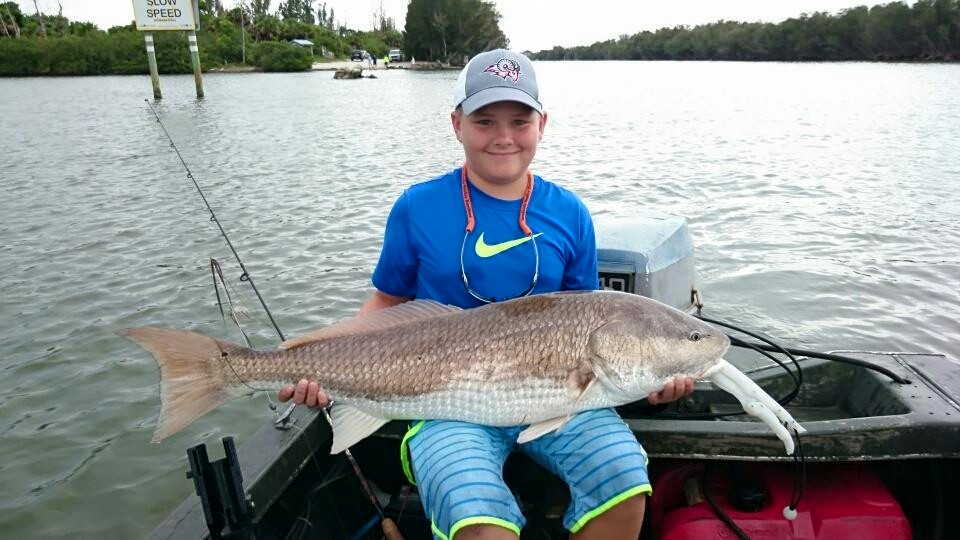 Fishermen also get into the action along the banks and close to the bridge pilings where the larger black drum hold in the deeper water. The average size drum being caught in Haulover right now is between 10 and 25 pounds. The guys targeting bull redfish have been using large chunks of ladyfish or mullet, half of a live blue crab, or a live mullet, pinfish, or croaker. Sliding sinker rigs, with a 5/0 or 6/0 VMC 7685 circle hook and either braid or mono as the main line is pretty much standard gear for reds. With Snook season opening up Sept. 1st, fishing topwater plugs or suspended twitch baits close to the shorelines from a drifting boat early in the morning, close to dusk, or at night can be productive on linesides, big sea trout, and tarpon in the canal. Freshwater Black Bass: 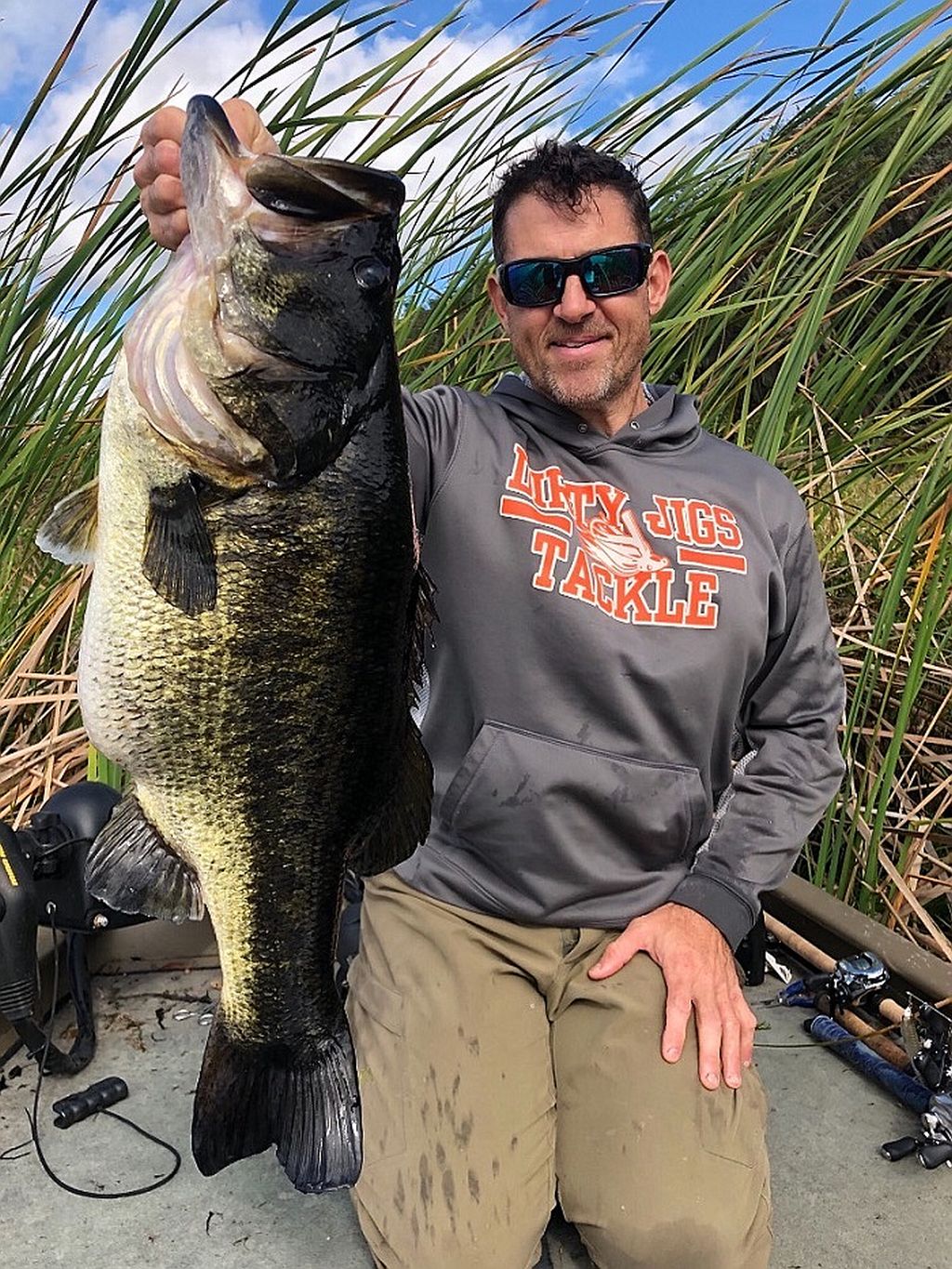 The Black Bass bite at Lake Toho (Lake Tohopekaliga) during the early morning hours has been on fire for the past weeks. The Black Bass bite at Lake Toho (Lake Tohopekaliga) during the early morning hours has been on fire for the past weeks. The fish are schooling up and busting up on shad at first light. Topwater plugs, swimbaits, and even frog lures have all been producing fish. The guides are reporting that catching 20 to 30 bass per trip before 8:30 a.m. is not uncommon. Later on in the day as the bite dwindles, fish live shiners next to the edges of the Hydrilla mats where the water is cooler. The bass can be found under the mats during the heat of the day where they wait to ambush any baitfish that gets too close. Most of the schooling bass are running 10" to 15" with some bigger bass in the 5 to 8 pound category. The Pic shows a 15-pound, 2-ounce bass that was recently caught in Polk County by Vance Mccullers. To date, the fish is the largest Hall of Fame Bass caught in Season 8 of the Florida Fish and Wildlife Conservation Commission’s (FWC) TrophyCatch program. Since the program began in 2012, it has awarded prizes for the catch and release of more than 10,000 largemouth bass in Florida's waters. The TrophyCatch program rewards anglers who provide documentation of their catch and release of largemouth bass weighing 8 pounds or heavier. In order to be eligible for prizes, anglers are required to submit photos or videos of their catch to TrophyCatch.com, showing the entire fish and it's weight on a scale, before releasing it back to the water. Until next time, Tight Lines and bent rods! |
|||||||
| Link One | Link Two | Link Three | Link Four | Link Five | Unsubscribe to this newsletter |