Your August 2020 Mosquito Lagoon & Indian River Fishing Report
Published: Sat, 08/01/20
| Newsletter Issue # 133 Fishing Forecast | August 1, 2020 | ||
Mosquito Lagoon & Indian River Fishing |
|||
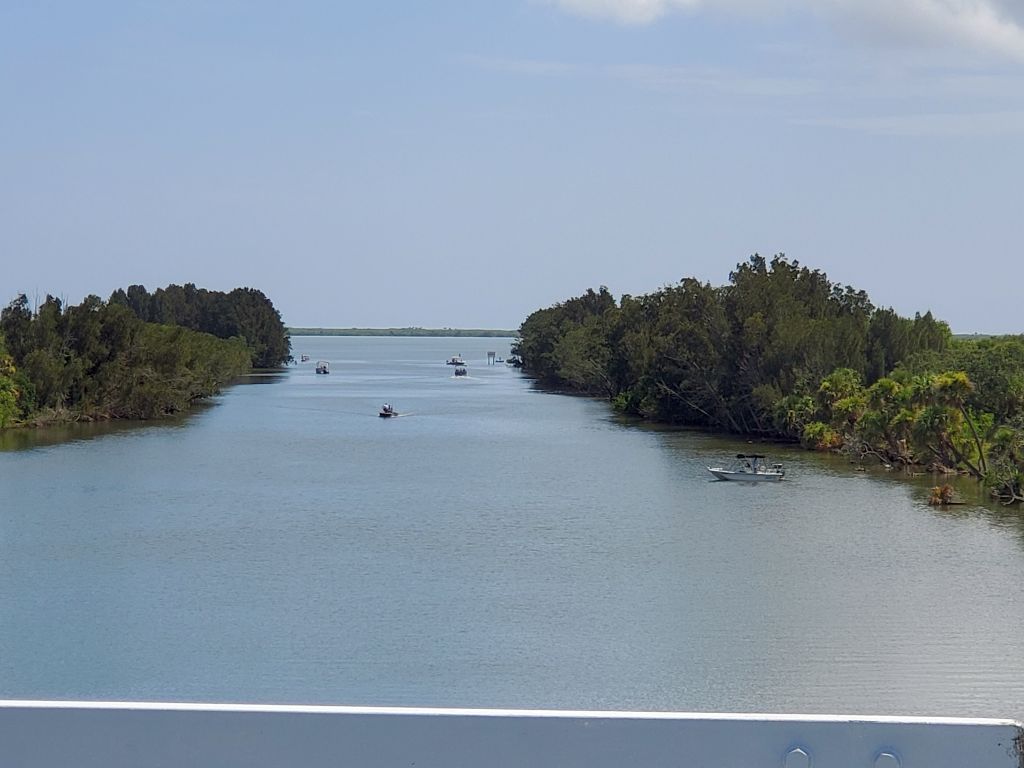 Mosquito Lagoon and Indian River Summer fishing conditions are here and on most days, the air temperatures in our area have been hovering around the 90 degree mark. This means that getting a line in the water before dawn is necessary if you plan on catching any fish. The predawn early morning hours up until about 9:00 am is when you can expect to find the best shallow water sight fishing opportunities for spotted sea trout and redfish. The speckled sea trout bite in the Mosquito Lagoon has been decent and a lot of big fish are being caught during the predawn hours, at dusk, and by night fishermen. The trout bite in the Mosquito Lagoon has been most consistent around George's Bar where a lot of anglers that are "oinking" pigfish over the bottom have been picking up good numbers of over slot size fish. Fishing a live pigfish, Croaker, pinfish, or finger mullet under a float is a proven tactic for catching "gator" size sea trout and redfish. During the early morning hours, artificial lure anglers like myself do well with topwater Zara Spooks, Chug Bugs, Skitter Walks, XPS Slim Dogs, or anything that resembles a finger mullet, especially when fished around the bait pods. Smear your hard baits with some Pro-Cure offshore formula gel to improve your hookup ratio.  Topwater catches have recently been a mix of over slot trout, 15 to 25 inch redfish, 18 to 30 inch snook, and tarpon up to 40 inches. In the Mosquito Lagoon, the middle section of Tiger Shoal along the false channel bar, the Klinker Islands west of the ICW, Cucumber Bar around Cucumber Island, and the Whale Tail southern flats are all good areas to try during the early morning hours. Mid August to mid October is when schools of big bull redfish begin to group up into 100 to 300 fish schools in our area to spawn.
Right now the bite for really big bull redfish is getting better by the day around Haulover Canal, the ICW channel around Edgewater, and Ponce Inlet. Bank angers, boaters, and fishermen in kayaks are catching some trophy size bull reds on cut mullet, pinfish, croaker, crab, or ladyfish using fish finder rigs fished flat on the bottom. You can also find some of those larger bull reds on the flats of the lower Mosquito Lagoon. Catch them on the same cut baits or on large soft plastics. Most of the breeder reds that are being caught right now are in the 40 to 45 inch category. 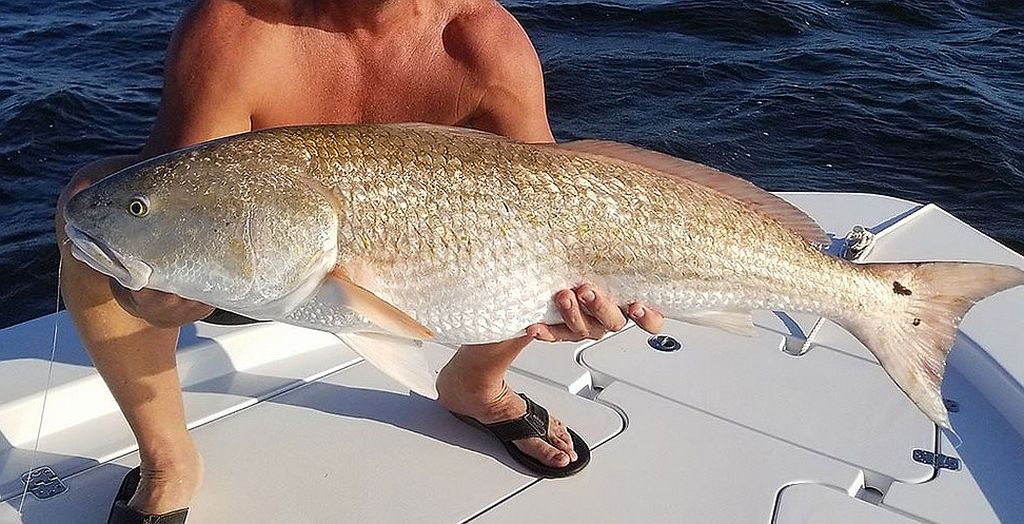 In the Indian River, the flats around the Black Point Wildlife area, Dummitt Cove just south of Haulover, and the Scotsmoor area in the northern portion of the river are all good places to target big sea trout and oversize redfish. The deep water flats located directly across the river from the Scotsmoor shallow boat launch that start at the Onion Farm and goes all the way up to the barrier at Shiloh Road is also a good area to target oversize redfish, black drum, tarpon, and ladyfish. The same cut baits and lures are used to fish for them in this area. August is when tarpon become more abundant in the Mosquito Lagoon, the Indian River, and the Banana River and right now the bite is on fire in all of these areas. You can spot schools of fish rolling in the ICW channels and some of the deeper basins of the Mosquito Lagoon, like Tiger Basin. During the middle of the day, live pigfish, pilchards, and croakers seem to be working the best on rolling fish. Artificial baits are most effective on Tarpon earlier and later in the day. Other good places to look for tarpon right now are the deeper flats of the Mosquito Lagoon and northern Indian River, the north and south side of the NASA Causeway, along the power lines right outside of the Port Malibar area, and the area from the Indian Mound Fish Camp north to Dick's Cut up in the Oak Hill and Edgewater areas. On an average day you can jump anywhere from 2 to 5 tarpon, but some days you can jump 8 to 12 fish. As we come into the new and full moons the bite will become stronger. Although the numbers of tarpon are not huge, the quality of fish has been much larger than what we normally have in our area. Our average tarpon have been running anywhere from 70 to well over 100 pounds right now. Juvenile tarpon from 3 to 50 pounds and ladyfish of all sizes can still be found in the backwaters and provide some great action on 7 wt to 9 wt fly tackle. Deceivers, crab patterns, Tarpon Bunny type flies, and anything that resembles a small baitfish or crab will catch fish. On light spinning gear, topwater baits like Badonk-A-Donks, XPS Slim Dogs, SkitterWalks, and Chug Bugs work better during overcast days, early mornings, and evening hours. Plastic baits, small suspended lures, and live baits also catch a good share of fish in the creek canals. The deep flats along the Pineda Causeway leading into Patrick AFB and the Vistas in the Canaveral National Seashore along the road heading to Playalinda Beach can also be productive areas to look for tarpon during the summer months.
You can easily spot them rolling in the residential canals, the mouths of the feeder creeks, and around the dredge holes almost any time of the day throughout the summer months. Offshore And Nearshore Fishing Kingfish are one of the easiest fish to catch in East Central Florida waters during the summer months. They are everywhere. At Ponce Inlet, anglers slow trolling live baits on stinger rigs, or large spoons and planer combos over the 70 to 90 foot reefs have been catching kingfish in the 15 to 20 pound category. Out of Port Canaveral, you can start right at the beaches and troll out to the 100 foot depths to catch them. All you need to do is find yourself a live or frozen bait, put it on a stinger rig and slow troll the closest piece of structure or around any of the closest bait pods. 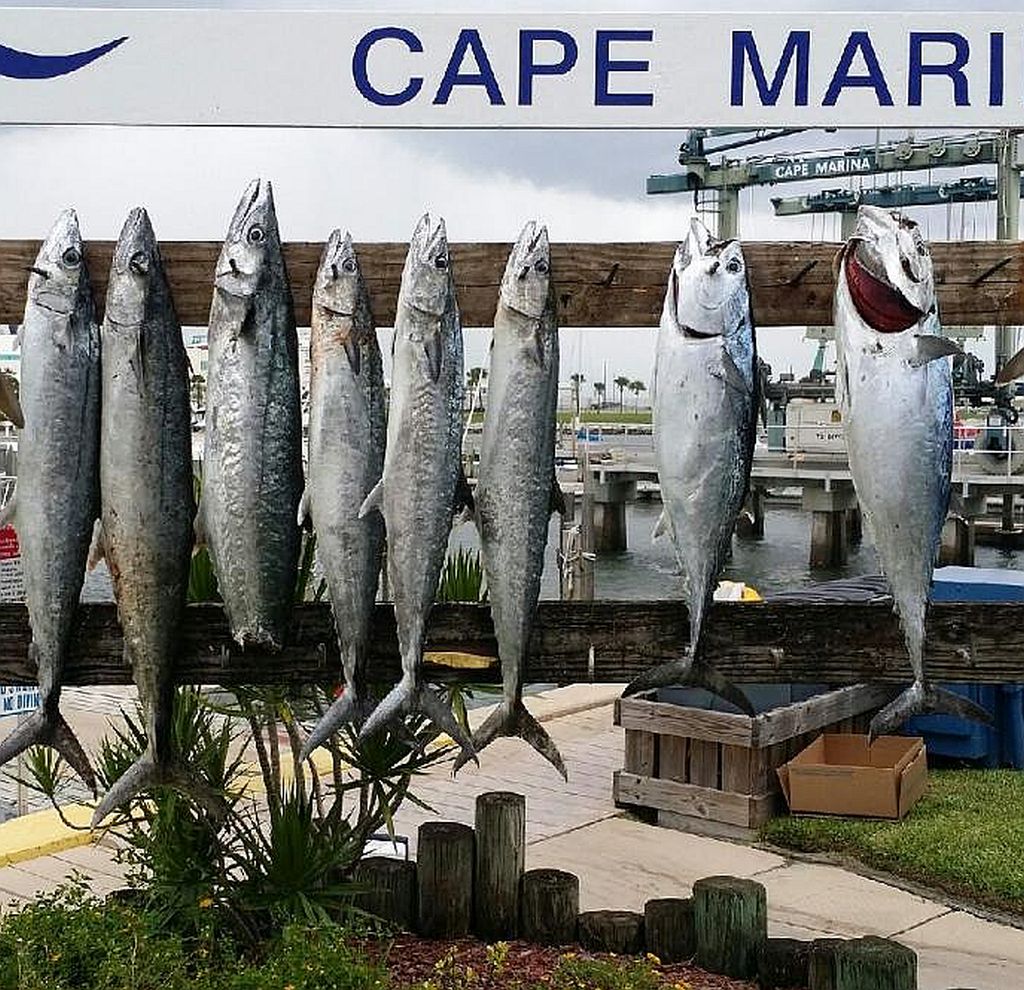 The big "smokers" usually start coming into our area in late July through early August. If you slow troll a live bluefish, blue runner, pogie, or ribbonfish at 1 to 2 knots you will have a good opportunity to catch one of these behemoths. Our average kingfish run from 15 to 30 pounds, but the "smokers" that come close to the beach can be well over 40 pounds. Although Kingfish are the staple species for near shore fishermen this month on the near shore wrecks and reefs out of Port Canaveral; dolphin, wahoo, and sailfish are also targeted species during the summer months. The 70-90 foot Chris Benson, Pelican Flats, and 8A areas are always hammered during August, but sometimes good numbers of kingfish are also found just east of Playalinda Beach north of Cape Canaveral, in the turning basins inside of the Port, and inside the main shipping channel. Occasionally huge schools of baitfish come into the 35 to 40 foot depths inside the Port. When this occurs, the kingfish will usually follow. 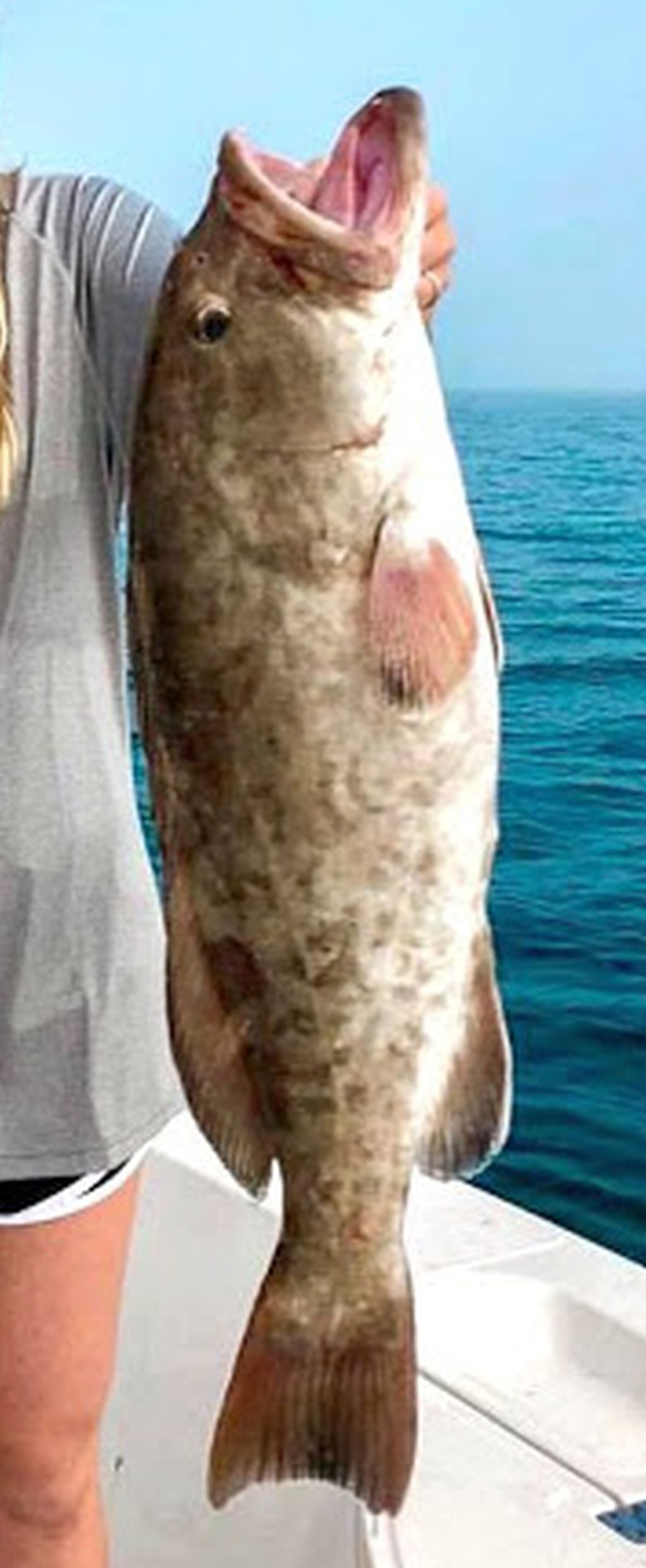 The grouper bite in our area this past week has been best on the reefs and wrecks that are in about 130 to 220 feet of water. The grouper bite in our area this past week has been best on the reefs and wrecks that are in about 130 to 220 feet of water. Live baits like blue runners, croakers, grunts and even large chunk baits like bonita or barracuda are best when targeting the bigger red, gag, or scamp grouper over bottom structure. Anglers using smaller baits, will generally will have problems with the red snapper grabbing the baits before the grouper can get to them. Our average grouper is running from 14 to 20 pounds right now, but some of the gag grouper are running up to the 30 pound range. The Gag Grouper bite out of the Port has been going strong in the 150 to 250 foot depths. Large live baits, large chunk baits, and 16 to 24 oz. deep jigs tipped with a piece of ballyhoo have been taking fish. Tripletail inshore along the buoys, crab trap lines, and floating debris is also on the agenda for August nearshore fishermen this month. Although they are primarily ocean fish, they enter the estuarine systems of the Indian and Halifax rivers. Although Tripletail normally remain close to or in the inlets, a few move through the locks at Port Canaveral into the Banana River. There is a 10 mile stretch of the Indian River between Grant and Wabasso where anglers historically catch 10 to 20 pounders, and occasionally even larger fish. But, the highest concentrations of Tripletail are along the 11 sea buoys marking the 46 foot channel into the entrance of Port Canaveral. The fish congregate along the huge chains holding the buoys and when conditions are right can be seen near the surface if they haven't been hammered by fishermen. They readily take live shrimp and small baitfish and can be caught using minimal weight on a small VMC circle hook. A simple leader rig weighted with a small split shot or light barrel sinker, or a 3/4 oz. jig head tipped with a fresh shrimp is all that's needed to catch them. Tripletail put up a good fight and are excellent table fare. ______________________________________________ Surf Fishing Although surf fishing during is normally tied to the baitfish run; during the summer months, whiting is the main species targeted along our beaches.
In lieu of long surf rods, many surf fishermen in our area use light tackle 7 1/2 foot "river rods" with a knocker or sliding sinker rig to fish whiting from the near shore troughs off the surf line. Sand fleas are the best bait, but small pieces of live or fresh dead shrimp, or Fishbites also work well. Along much of our coastline, shark fishing dominates surf fishing during the summer months. Almost any species of shark can be caught anywhere from the beach and along our inshore waters on a variety of live or chunk baits during the summer months. Most species caught in the surf will be under 5 feet in length, but Bull Sharks, Nurse Sharks, Black Tips, Bonnetheads and Hammerheads over 6 feet are always a possibility. Multiple strand nylon coated leaders, single wire leaders, or heavy mono is needed to prevent cutoffs, and heavier tackle is highly recommended to bring the fish in quickly for a safe release. 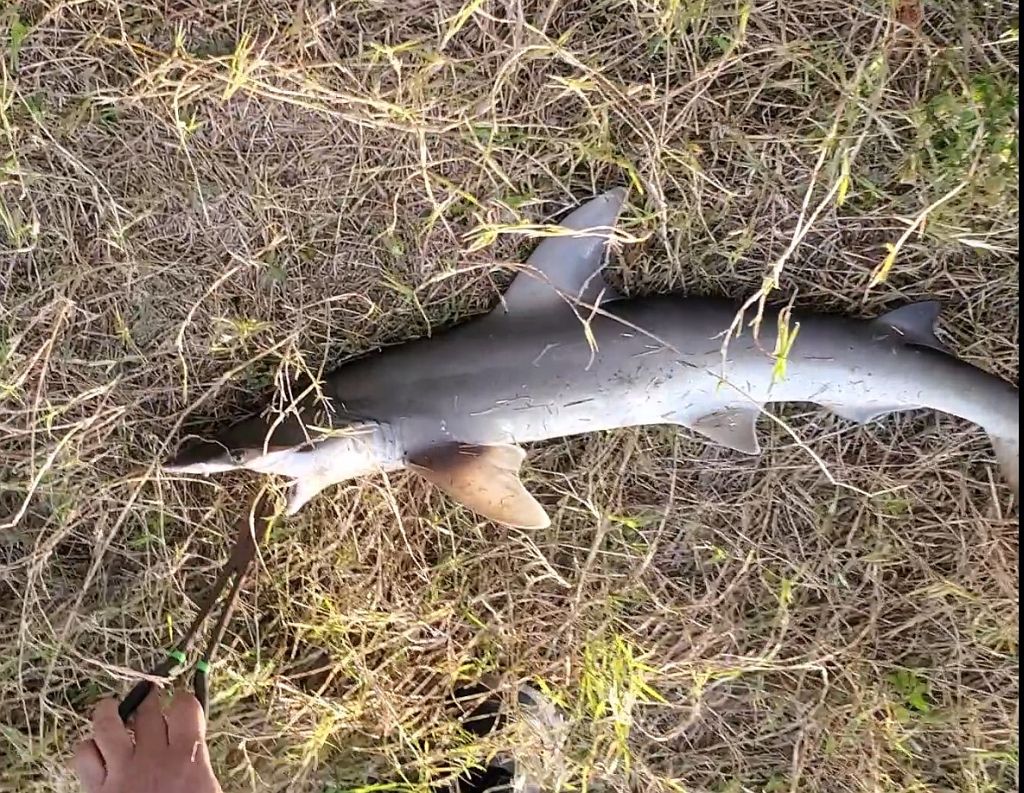 Both Bull Sharks and Bonnethead Sharks will follow schools of baitfish into the Indian River where they bear their young. Bull Sharks in particular are an aggressive species that is capable of living in fresh water and is often found hundreds of miles inland from the sea. They are one of the few species that will intentionally go after humans and are responsible for the majority of shark bites in the United States. If you enjoy wade fishing for sea trout and redfish like I do, pay attention to your surroundings this month for sharks and gators. ______________________________________
Haulover Canal
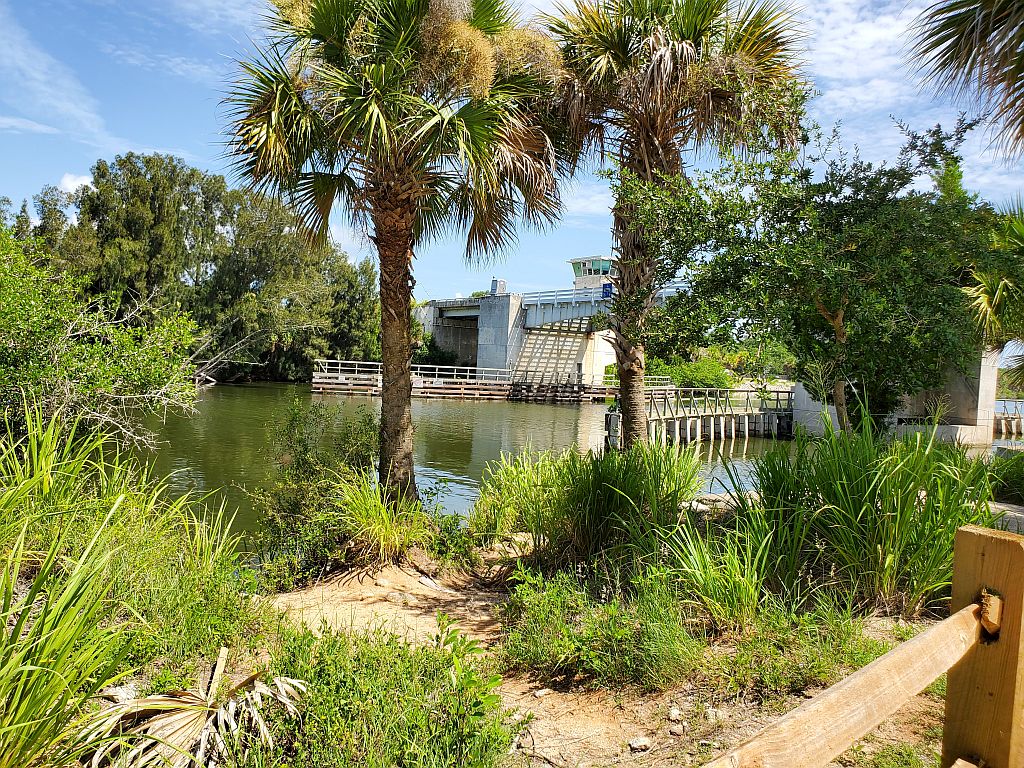 The bull redfish bite in Haulover Canal and the channels in the ICW has been getting better as the temperature soar. Bank fishermen, boaters, and kayak anglers have been catching some really big bull redfish on cut mullet, pinfish, croaker, crab, or ladyfish on fish finder rigs placed flat on the bottom. Schools of big breeder redfish have begun to group up into 100 to 300 fish schools to spawn. In our area, they travel from the Mosquito Lagoon through Haulover Canal into the northernmost deep water flats of the Indian River to conduct their spawning activity.  This means that it is a great time to target the deep waters of Haulover Canal, the bridges along the ICW channel, and the deep water flats north of Titusville to hookup with a redfish in the 40 inch plus category. Most of the breeder reds that are being caught right now are in the 40 to 45 inch category. As of this past week, the banks of the canal and the entrance to the canal at the Mosquito Lagoon side were crowded with anglers dunking a variety of baits hoping to hook up with one of these trophy fish. The canal is also known for huge black drum, snook along the shorelines, sea trout, mangrove snapper, sheepshead, and tarpon during the summer months. Sliding sinker rigs with a large 6/0 or 7/0 VMC circle hook and half of a fresh blue crab is considered to be the bait of choice for big redfish but live mullet, Croaker, pinfish, and large chunks of fresh cut ladyfish also work well. The black drum bite in the canal this past week has been improving with some slot size fish being caught by bank fishermen. Shrimp is the preferred bait of choice for black drum. Night fishing and shrimping by boat is allowed at Haulover Canal. Some quality snook, sea trout, and tarpon are caught by night fishermen using topwater plugs, suspended twitch baits, and a variety of soft plastics. A 5" or 6" Bass Assassin flipped along the shoreline in the canal is hard to beat during the evening hours. ______________________________________ Spiny Lobster
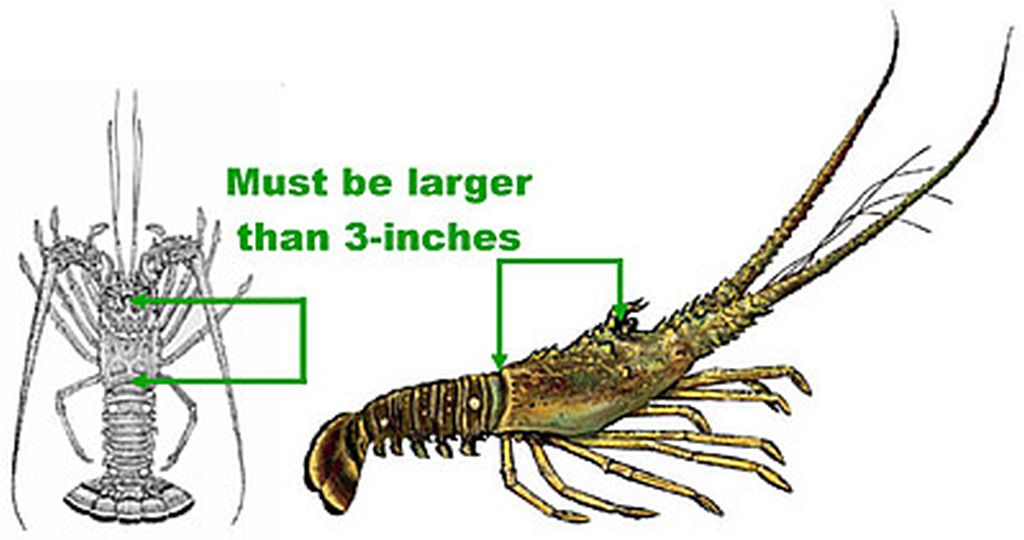
For additional information on harvesting Spiny Lobster Click Here. Till Next Month, Good Fishing & Tight Lines To You All!
|
|||
| Link One | Link Two | Link Three | Link Four | Link Five | Unsubscribe to this newsletter |