Your July 2020 Mosquito Lagoon & Indian River Fishing Report
Published: Wed, 07/01/20
| Newsletter Issue # 132 | July 1, 2020 |
||||||
Mosquito Lagoon & Indian River Fishing |
|||||||
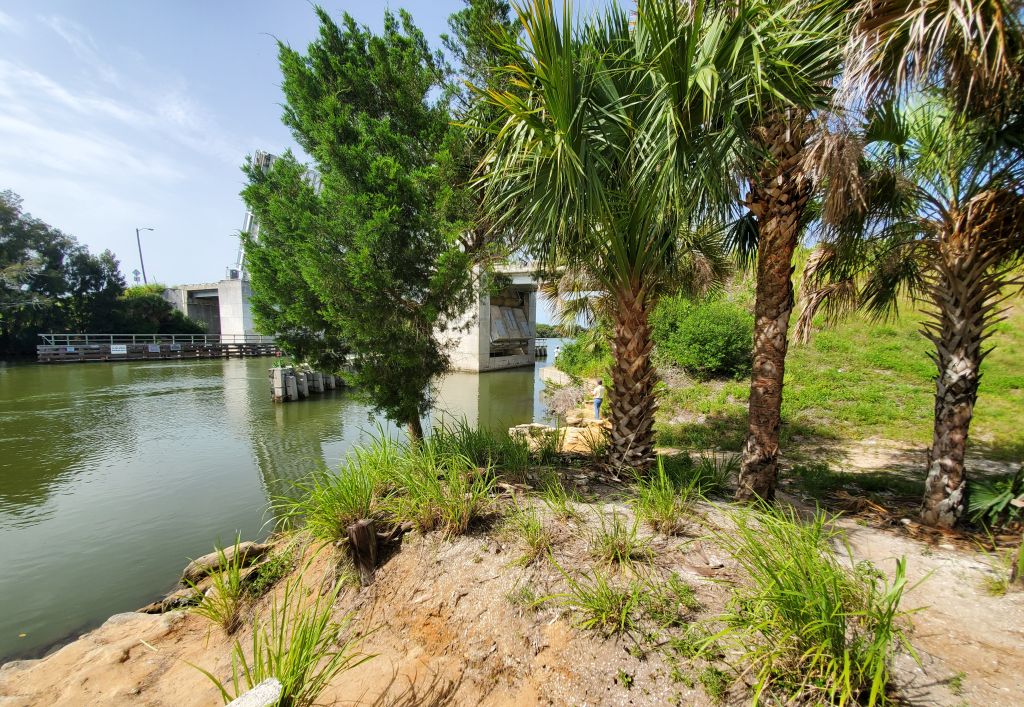 The Mosquito Lagoon and Indian River Summer is here, and so are the high temperatures and afternoon rain showers that make early morning, late afternoon, and night fishing the best times to be on the water. For the next few months the best approach to catching fish of any species will be getting out on the water at daybreak and targeting the schools of finger mullet that line the shorelines. Look for areas that have deep cuts, large points, or shallows with deep water access close by and start fishing topwater plugs like Rapala Skitterwalk and small jigs such as Gulp Shrimp. When the sun gets overhead and the bait pods get smaller, look along the mangrove shorelines, deeper pockets, and shadowy areas where the fish tend to hide and start tossing small jigs or live finger mullet tight against the shoreline. The spoil islands and sandbars around Tiger Shoals, George's Bar, and the False Channel Bar just outside of Haulover Canal are all good places to target larger speckled sea trout with pigfish or artificial baits. When using pigfish for bait, remember to Oink them. "Oinking" is a method used that will get trout to strike when most other baits are refused. When you freeline the pigfish down to the bottom, twitch the bait a few times to get it to pop up from the bottom. The pigfish will make an "Oinking" sound when it tries to get back to the bottom that drives sea trout crazy. A lot of guys like to fish live pigfish under a Cajun Thunder type float with just enough lead to keep the bait swimming above the sea grass. The noise and vibrations that the pigfish makes as it tries to hide in the grass and get back to the bottom will attract sea trout and redfish from quite a long distance. The trout in the Mosquito Lagoon are averaging around 2 pounds with a lot of larger fish in the mix. 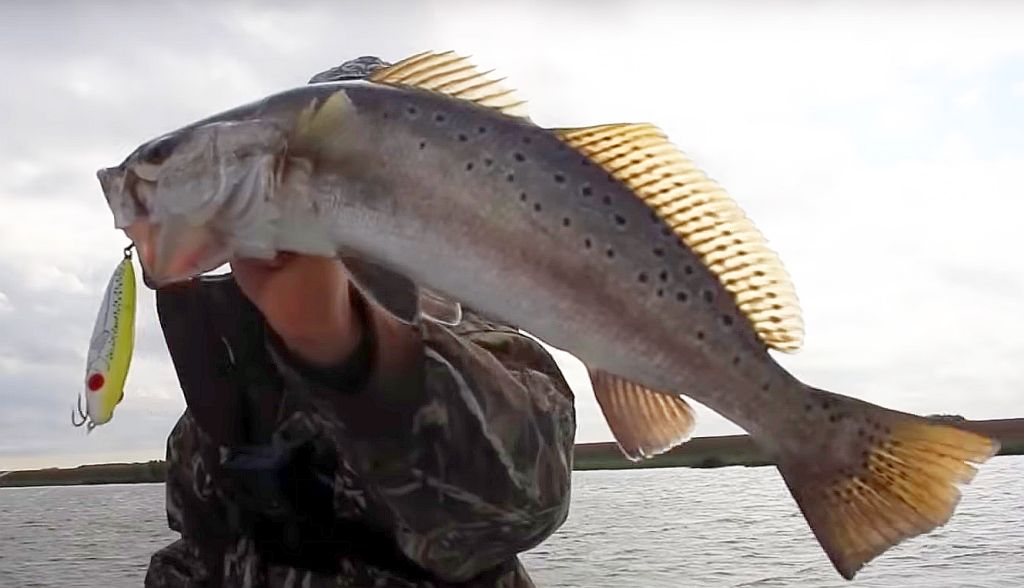 The trout bite in the Indian River has also been really good south of Sebastian, and from Melbourne up north past Port St. John. A few larger sea trout are also being caught in the shallower flats around the mullet pods in the northern Indian River during the early morning hours by anglers using smaller sized top water SkitterWalks, Chug Bugs, Zara Spooks, Mirrolures, or anything that resembles a mullet. Large 5 or 6 inch jerk baits like the Saltwater Assassin rigged weedless will also produce big trout during the early morning hours. The redfish bite has been improving over the last couple of weeks in all our lagoons. The redfish and a couple of large schools of small black drum have been cruising the shorelines feeding on the usual menu of bait fish and crustaceans. 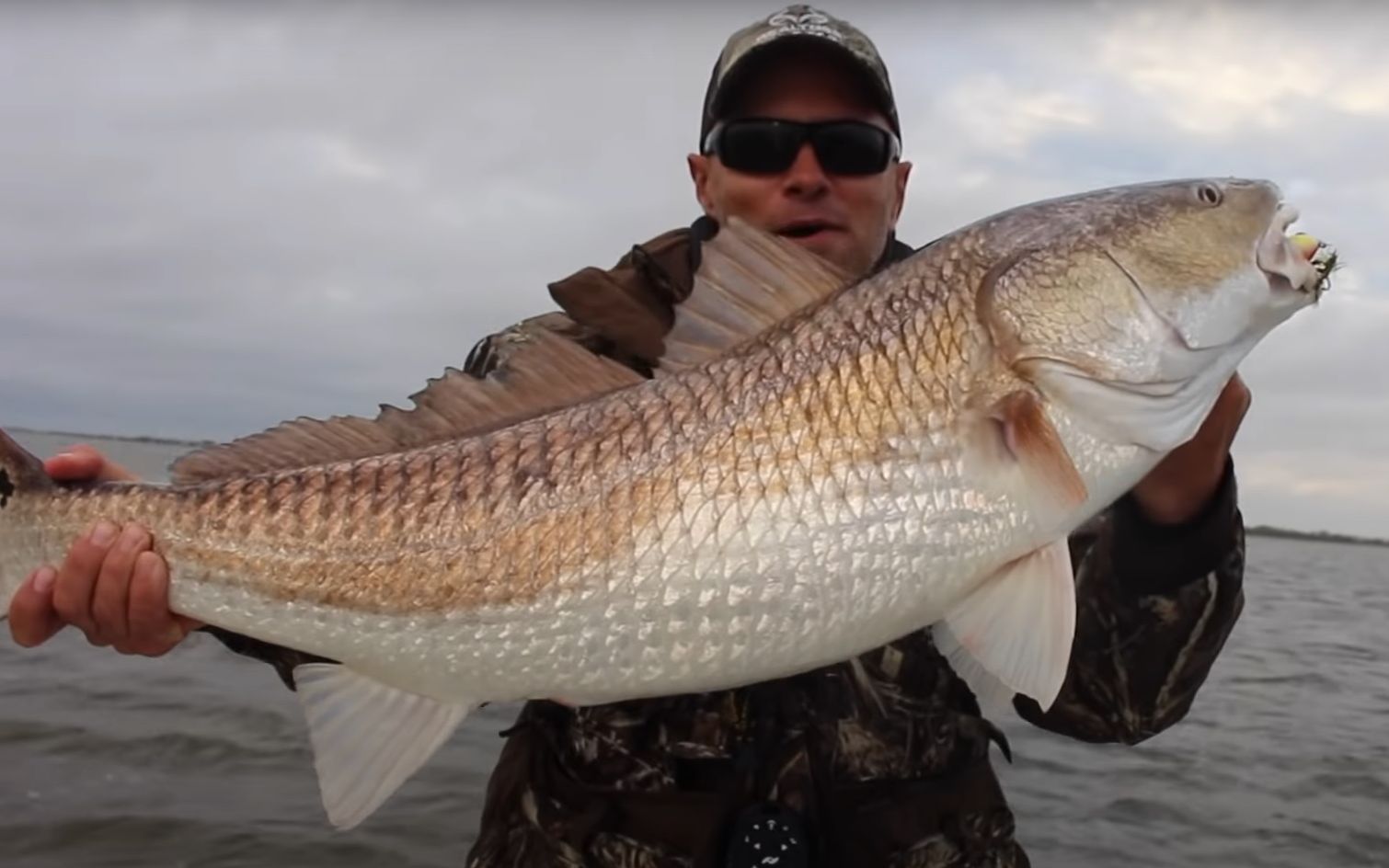 Baits of choice are live fingerling mullet, chunked ladyfish, cut mullet, shrimp, and sections of fresh blue crab. In the early morning hours you can catch them around the schools of finger mullet on plastic swim baits and topwater lures when conditions are right. If you get on a school of Black Drum you can catch them on sand fleas or shrimp on a small jighead or with a split shot and a small hook. The drum are running in the 4 to 9 pound category with some larger fish in the mix. Right now in the East Central region, Tarpon from 10 to the 100 plus pound category are all over the Indian and Banana River lagoon. The smaller fish can be found mostly around the residential canals and the creeks. These fish have been hitting on little pilchard style flies and small bass assassin panfish size lures. The larger tarpon have been feeding on threadfins, pilchards, and mullet. You can find them daisy chaining or laid up in the Indian River area where you can easily sight cast for them using flies, or small baits. Pogies, threadfin, pilchards, or small finger mullet are all good baits to use right now. The larger baits work but don't seem to be producing as well. The ICW from Rockledge to Port St. John, and the area from the NASA Causeway North to the Parrish Park area is where the majority of the larger Tarpon have been holding. For some reason, there are a lot of Sail Cats and Bull Sharks in these same areas. Last week a 5' 6" Bull Shark was caught in the area around the NASA Causeway, and another larger 9 foot shark was caught right at Rockledge this past Friday. The bank fishermen along the causeway, Gator Creek, and Catfish Creek loop, and around the bridge have been catching black drum and redfish on live shrimp, sections of blue crab, sand fleas, and fiddler crabs. Anglers fishing from the Titusville fishing piers have been catching sheepshead, black drum, and redfish from around the pilings. Small pieces of shrimp, sand fleas, or a fiddler crab on a small hook with enough split shot to get the bait down should get you a hookup. Heavier fluorocarbon leaders are recommended to keep the fish away from the pilings and minimize break offs. Just before and after the late afternoon thunderstorms that hit our area this time of the year is a good time to fish Peacocks Pocket Road, if you don't mind hiking to catch your fish. Since it has been closed to vehicle traffic and the road has grown over with vegetation, the fish are not under as much fishing pressure and seem easier to catch, especially when the culverts are flowing. The deeper areas in the marsh canal and the entrances to the shallow grassy ponds are good areas to target big sea trout and oversize redfish with Chug Bugs, jerk baits, or gold spoons smeared with some Pro-Cure. Expect to lose some lures and hooked fish to the heavy growth along the banks. Nearshore and Offshore The tarpon bite along the beach from Port Canaveral to Sebastian has been a little slow for the past weeks. Except for some glass minnows, there hasn't been much bait in the water closer to shore. July is when small craft anglers can take advantage of some heavyweight inshore activity with smoker kingfish close to the beaches. When the baitfish numbers on the small reefs just offshore of Playalinda Beach and the Canaveral National Seashore south of New Smyrna, the bigger smokers will become more active. Offshore fishermen this month can find Kingfish along the 70 to 90 foot reefs and some Dolphin farther out around the 550 feet depths. The Mangrove Snapper bite has also been good on the wrecks and reefs in 80 to 120 feet of water. Outside of Sebastian Inlet, the Mangrove Snapper have been congregating on the reefs mainly in the 60 to 150 foot zones; but they move around quite a bit. When you find concentrations of Mangrove Snapper, you want to get on them quickly because in a couple of days, they may not be there. Anglers have been catching them using small live baits or chunks of live or frozen sardine, pogie, or grunts for bait on 2/0 or 3/0 circle hooks, with 30 to 40 pound fluorocarbon leaders. Heavy chumming will bring them to the surface if they are the area. The trick is to heavily chum the area you are fishing. The guys who have been going out at night for Mangrove Snapper have found that it doesn't take much chumming to bring them up to the surface from the mid water column. The fish have been averaging 2 to 8 pounds, but many double digit fish in the 11 to 12 pound category are also being caught. The deep drop bite out of Port Canaveral has also been really good for tilefish in the 600 to 800 foot depths. Tilefish and other deep water species are being caught on blue runners, cut bonito belly, and cut squid. 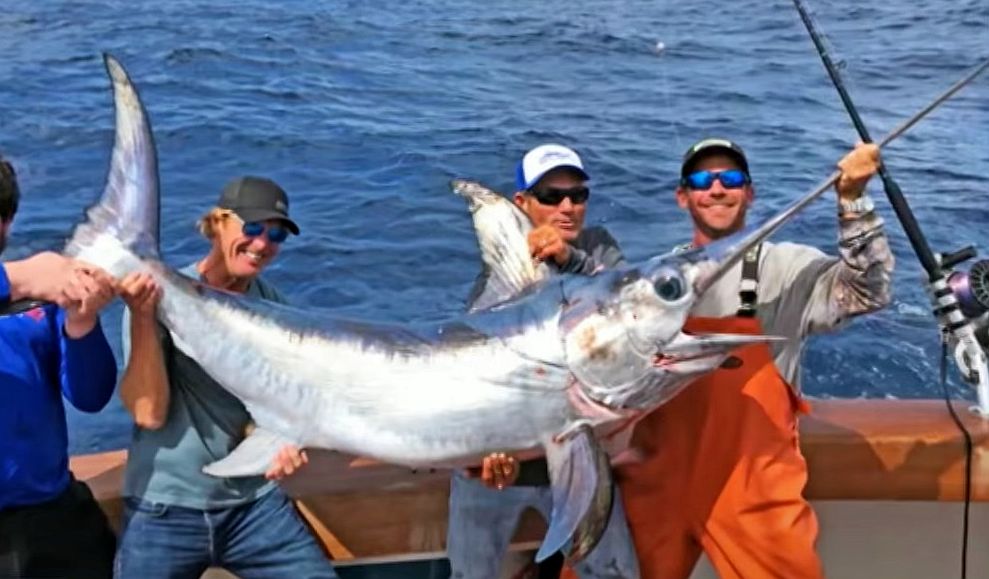 Daytime sword fishing is one of the hottest types of fishing right now in East Central Florida. On any given day out of Ponce Inlet, Port Canaveral or Sebastian Inlet, you will find quite a few boats deep dropping in the 1500 to 1800 foot depths for swordfish. At night many anglers chase swordfish working the 800 to 3,000 ft contours. Most fishermen typically start in the 1,500 to 1,800 ft depths and drift for 30 to 45 minutes. If they don't get a bite, they will usually pick up and move in shallower, or deeper farther out. When they get a bite they will power drift to remain at that same approximate depth. The majority of swordfish caught in our area weight between 50 to 100 pounds but every year many are caught well above that weight. July is a peak month in East Central Florida waters to fish for big Wahoo in the 50 to 60 pound plus category. Giants up to over 100 pounds come from the Oculina Bank, a rare deep water coral reef that parallels 130 miles of our coast from just South of St. Augustine to Fort Pierce. The section out of Port Canaveral is commonly referred to as the "cones" or "steeples" because of the sharply defined coral structure that raise up to 65 feet from the bottom. The reef is a bait rich feeding ground for dolphin, mackerel, wahoo, marlin, and other pelagics. Most captains targeting wahoo run spreads of high speed lures over the ridge at various depths, often in a zig zag pattern that covers more area. Surf Fishing July is when the whiting start getting thick along Playalinda Beach beach and most other areas in Central Florida. 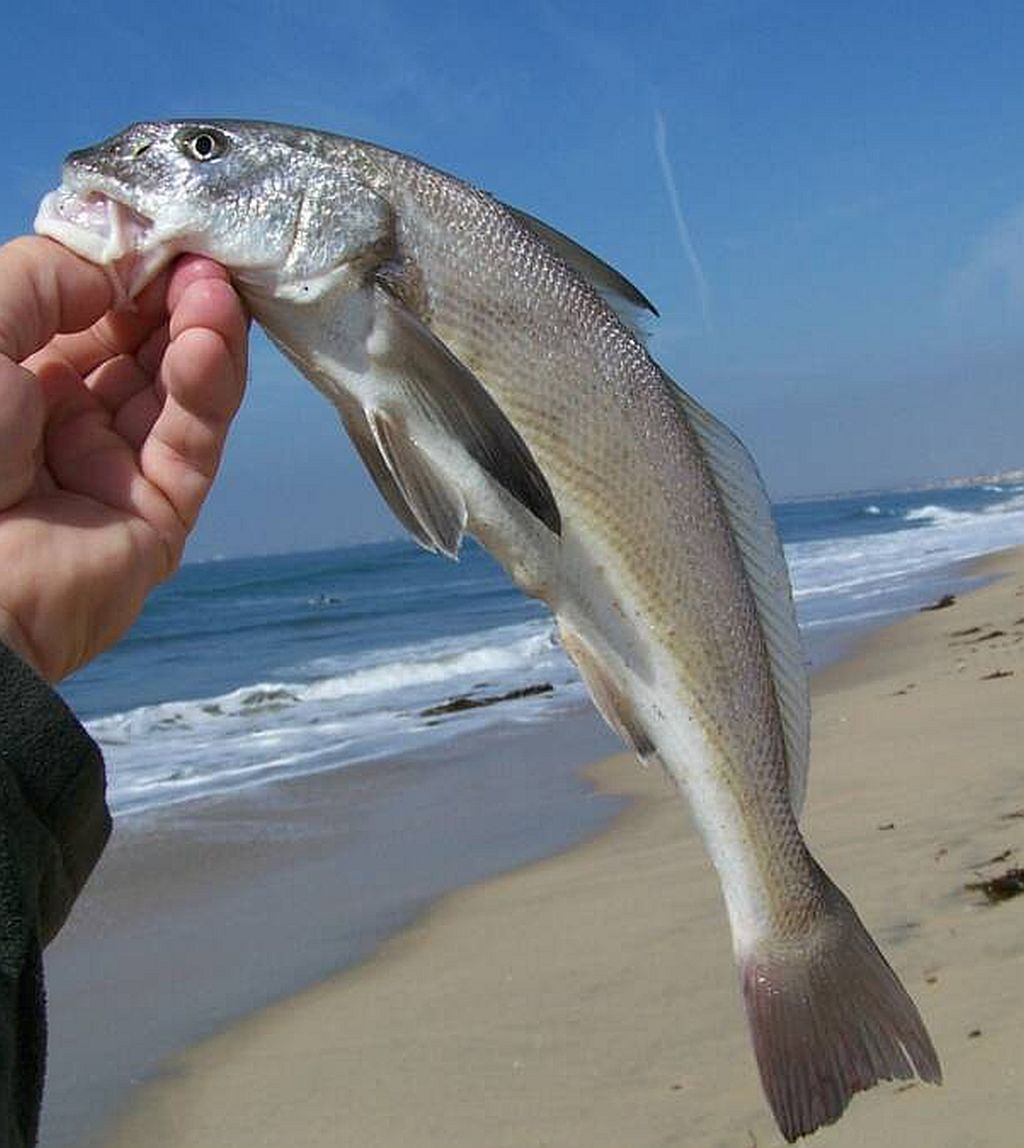 Along most areas at Playalinda the water drops off quickly and the water temperatures are cooler. Deep troughs will usually form immediately offshore of the shore break, followed by a sandbar, and then deeper water. The closest trough is normally where the best fishing is for whiting. Along most areas at Playalinda the water drops off quickly and the water temperatures are cooler. Deep troughs will usually form immediately offshore of the shore break, followed by a sandbar, and then deeper water. The closest trough is normally where the best fishing is for whiting.The best bite usually occurs during the early morning hours, at the middle to the end of an incoming tide. For whiting, use a 7' or 8' river rod and a sliding sinker rig with small hooks tipped with a small piece of fresh, peeled shrimp, or a sand flea. Fish the closest trough and adjust your casts as the tide changes. Shark fishing from our area beaches during July is productive for a variety of species. Blacktips, Bonnet Heads, Bull, and Nurse Sharks are some of the most commonly caught by surf fishermen. Live mullet, Croaker, ladyfish, and large bloody baits like bonito, etc. on a large 7/0 to 8/0 VMC circle hook crimped on a wire leader with 60 pound or heavier Power Pro as the main line is a good setup for catching larger fish. Most shark in our area average less than 100 pounds but almost every year, much larger fish are reported by surf fishermen. This month, the areas between Melbourne Beach and Vero Beach can be a good place to target Tarpon in the surf, but because of the lack of baitfish close to shore, the bite has been off. The larger fish have come into the river systems along the ICW throughout our area. Haulover Canal 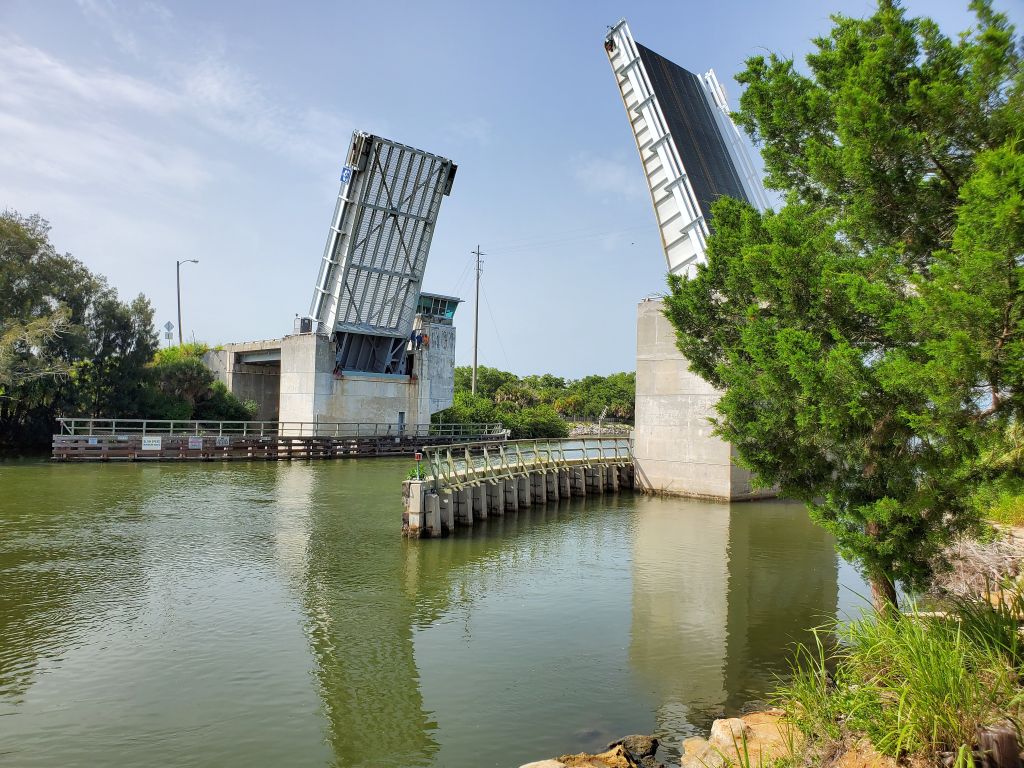 Haulover Canal has finally opened to vehicle traffic again but as of this past week, the bridge is closed for repairs. 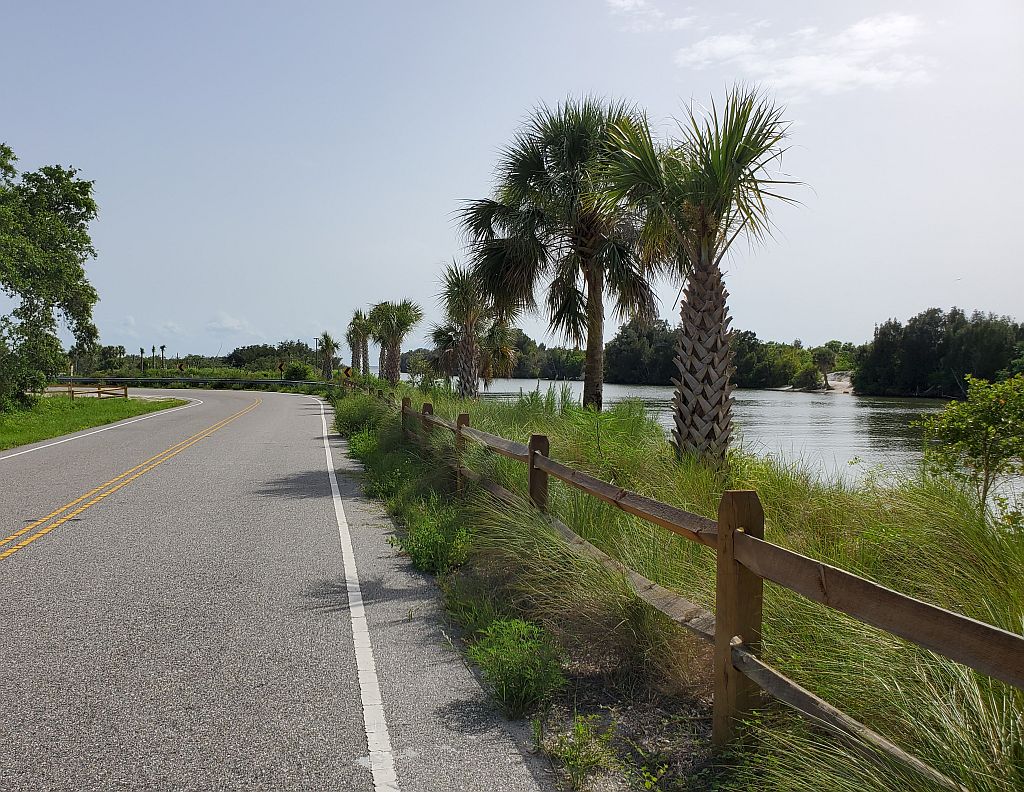 The boat launch at Bairs Cove has been reconfigured and a fence (above) now lines the southern edge of the canal prohibiting parking along the bank. You must now park your vehicle and walk to your fishing spot when fishing on the southwest bank of the canal. Although somewhat inconvenient, the net effect is fewer bank fishermen and fewer line tangles. The northwest access road that was closed due to the Covid 19 virus has also been opened up to the public for fishing. Last week the banks were lined with fishermen who were catching mainly Mangrove Snapper and black drum. I was told that a few oversize reds were also being caught, but the fishing in general was reported to be slower than usual. Most bank fishermen I spoke with were using cut baits and shrimp for bait. Only one angler was using half of a cut blue crab. Lobster Season The July 29-30 sport lobster season this year is just around the corner and some of the best spiny lobstering outside of the Florida Keys is available to our residents right outside of Port Canaveral. 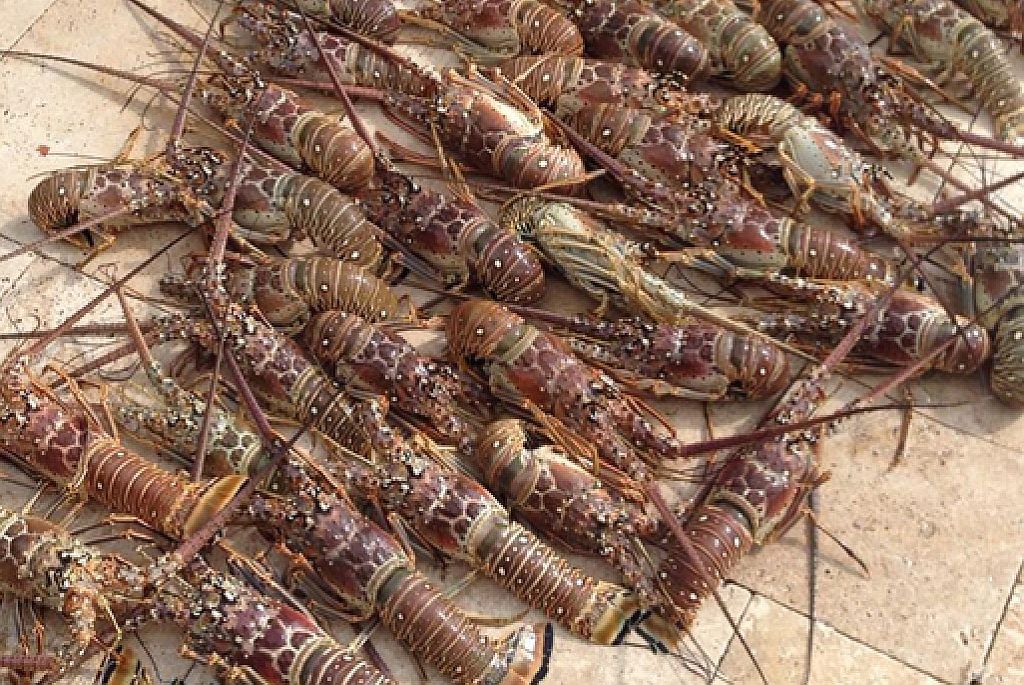 The East Centeral waters out of Ponce, Canaveral, and Sebastian Inlets produce some of the best lobstering in the entire state of Florida with "bugs" in the 6 to 8 pound category taken regularly . The East Centeral waters out of Ponce, Canaveral, and Sebastian Inlets produce some of the best lobstering in the entire state of Florida with "bugs" in the 6 to 8 pound category taken regularly .During the July 29th to 30th sport season, and the regular season that runs from August 6th. through March 31st, divers out of all three inlets will be hitting the 50 to 55 foot reefs in search of these tasty "bugs". Professional divers go as deep as 90 feet or more to fill their quotas with much larger "bugs". The largest lobster in our area are found in the 50 to 90 foot depths, however, small boaters who are unable to access these depths can still hunt them on the shallower water artificial reefs out of Ponce Inlet. Wabasso Beach is a popular area for beach divers. Snorkelers routinely swim out to 15 or 20 feet of water where some big spiny lobsters have been caught during past years. The Wabasso, Disney Beach area has produced "bugs" up to 15 pounds. Click on the icon below for additional information on the 2020 Florida Spiny Lobster Season. 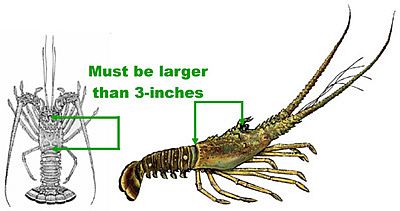 ____________________________________________________________________________________________________ Until next time, Tight Lines and bent rods! |
|||||||
| Link One | Link Two | Link Three | Link Four | Link Five | Unsubscribe to this newsletter |