Your March 2020🐟 Mosquito Lagoon & Indian River Fishing Forecast
Published: Sun, 03/01/20
Mosquito Lagoon & Indian River Fishing |
|||
|
Newsletter Issue # 126 Fishing Forecast March 1, 2020 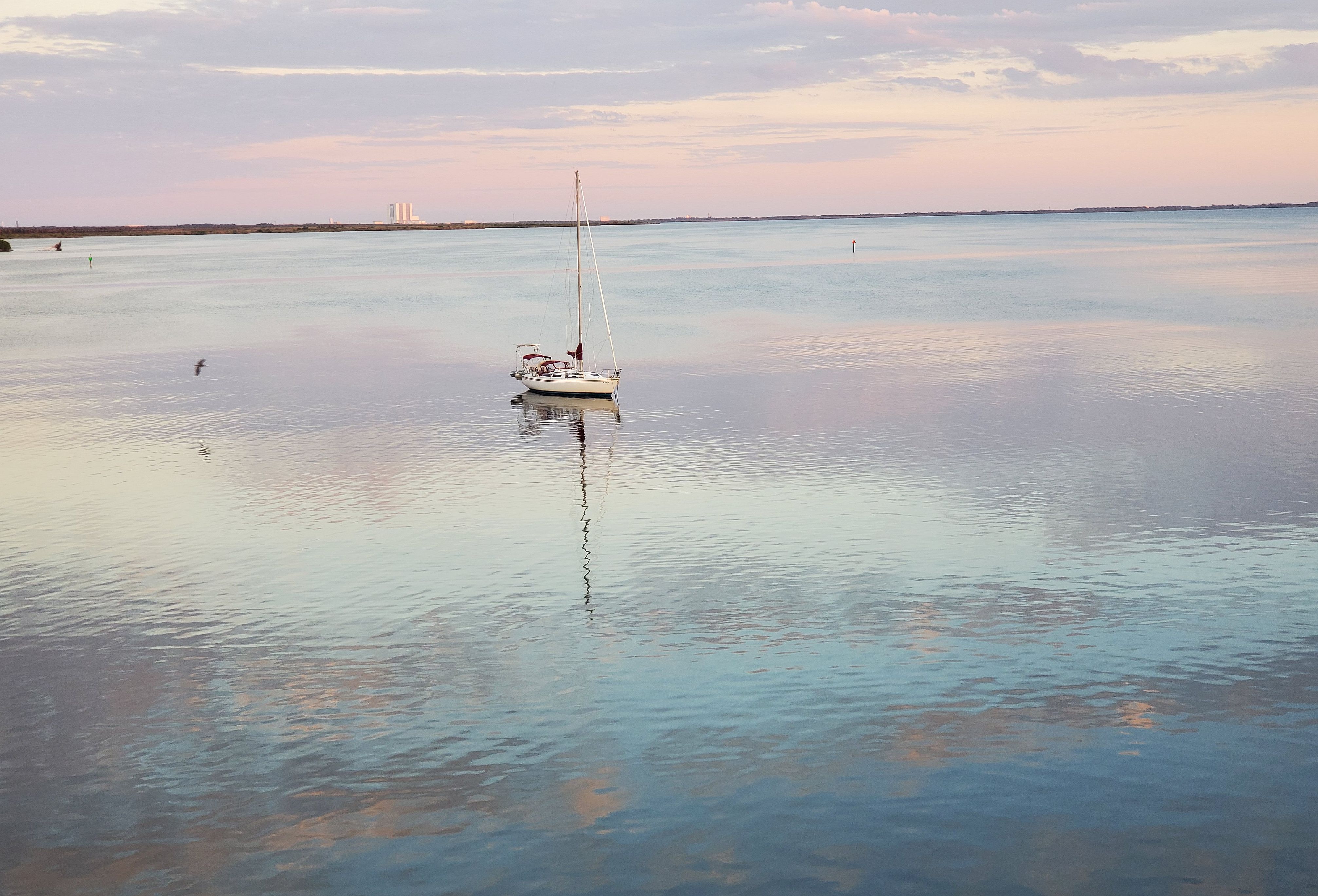 The Mosquito Lagoon and Indian River The low water levels and cooler water temperatures in the Mosquito Lagoon and Indian River have caused the black drum and redfish to school up into smaller pods. For the past few weeks, the warmer weather has been producing multiple "slams" of speckled sea trout, redfish, and black drum with a few baby tarpon, snook, and sheepshead thrown into the mix for anglers in both of our lagoons. Spotted sea trout and slot sized redfish have been scattered around the Klinker Islands and back bays on the east side of the Mosquito Lagoon. Saltwater Assassin sea shad tails rigged on a 1/8-ounce jig head in the "panhandle moon", "opening night", and "green hornet" colors have been the bait of choice that has been working well all this week. A lot of gator size sea trout were caught last week in the Mosquito Lagoon and northern portion of the Indian River by anglers fishing around the potholes in the flats on live shrimp, small fingerling mullet, and saltwater Assassin paddle tail baits. Jerk baits and Rapala Subwalkers are also good baits to use when fishing the potholes. With the dip in temperature we have been experiencing for the past couple of days, anglers can expect some excellent black drum action in the Mosquito Lagoon, northern Indian River and Banana River system. Look for smaller schools on the shallow flats of the Mosquito Lagoon during the morning hours. Larger schools have been holding around the edges of the ICW channel and near the spoil islands. Sections of blue crab, live shrimp and soft plastic baits smeared with Pro-Cure or tipped with a small piece of Fishbites are all producing good numbers of fish. 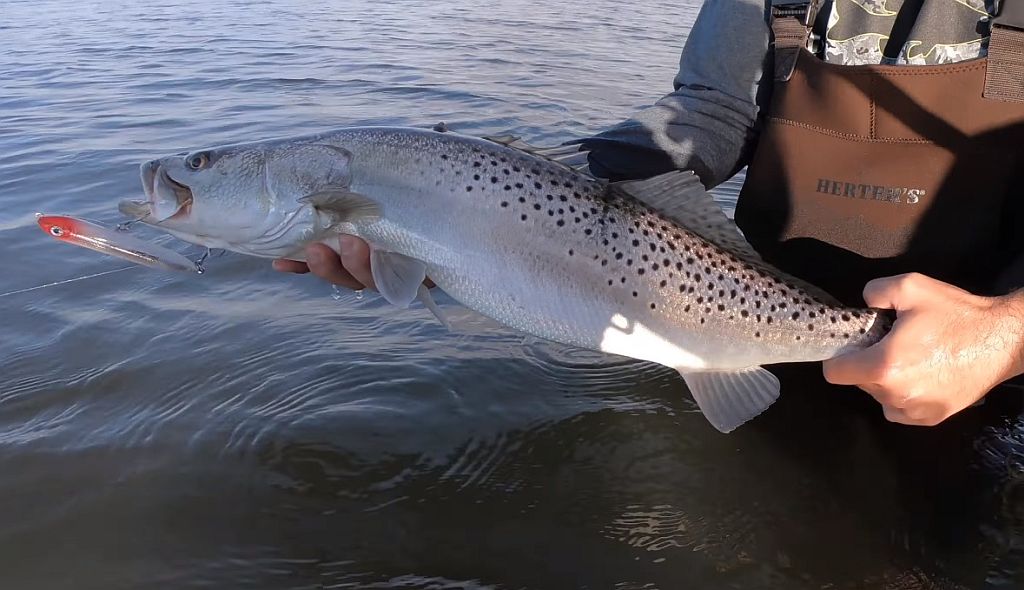 The cold front we are experiencing has also got the gator trout chewing baits. Use cut baits, live jumbo shrimp, live finger mullet or artificial baits worked painfully slow to catch them. Right now, anywhere from Titusville south to Palm Bay or the Grant area; the creeks, residential canals and anywhere you can get back out of the wind where the water temperature is about a degree or two warmer, the bite has been really good for snook, black drum, baby tarpon, big sea trout, ladyfish, and redfish. Live shrimp has been the best bait by far, but small live finger mullet will produce larger fish when you can find them. Anglers fishing a 4 inch Saltwater Assassin Sea Shad in the pink or chartreuse colors smeared up with some Pro-Cure gel have been catching good numbers of snook and sea trout in the dingy colored water. The more naturally colored patterns like the "green hornet" color is preferred when the water is clean and clear. Gold Johnson Sprite spoons have also been working well in colored water to find fish. The Carbide Ditch along the West bank of the Indian River north of the railroad bridge at Titusville up to Scottsmoor is still holding good numbers of spotted sea trout. The trout have been hitting Saltwater Assassin paddle tail baits, live shrimp, and cut baits. As the trout move onto the shallower flats, throw cut baits or live shrimp. The residential canals on the central Indian River and Banana River will be good areas to target during the cold fronts this month. Seatrout, black drum, redfish, sheepshead, tarpon, and snook are all canal residents that can be caught on live shrimp along the edge of the mangroves and from under the docks. In order to allow the shrimp to drift down into the water column naturally, avoid using any weight other than a small split shot. Tarpon in particular are most likely to hit a live shrimp as it sinks down through the water column. The low, clear water conditions have the fish bunched together, so when you locate a quality fish, keep fishing the same area. The fronts cause the redfish and sea trout to move into the deeper residential canals, the sheltered lee sides of the islands, and deep water areas where overhanging mangroves and trees protect the fish from the winds. Fly fishing in the canals or fishing with small live finger mullet on light spinning gear when the sun directly overhead will improve you chances of picking up a tarpon or snook. Gulp shrimp and paddletail baits also work well, but use weedless hooks to avoid getting snagged. The canals are full of places where you can get snagged. Canal fishing in these areas should remain good throughout the month and possibly longer. When the water temperatures begin to warm up again, the fish will move from the deeper water in the canals into the deeper sloughs and potholes on the flats. Playalinda and Area Beach Fishing At Playalinda beach, the surf fishing for whiting, pompano, black drum, and a variety of sharks has been good when conditions have been favorable. Along the beaches farther south around Patrick AFB, the fishing for whiting, pompano, margate, sheepshead, redfish, and black drum has also turned on when the water is clear. A beach re nourishment project that is going on at Satellite Beach right now has made the water in this area pretty dirty. However, the beaches north and south are cleaner and generally more productive for surf fishing anglers. Dirty water conditions in the surf usually means a lot of hard head catfish or stingrays. A calm surf with clean water conditions on an incoming tide is usually considered the best scenario for pompano fishing. This time of the year the pompano tend to feed in the deep troughs inshore of the second sandbar, so you need to be able to cast at least past the second line of breakers to get to them. Because fall and spring pompano migrations require long casts of at least 200 feet into the surf, most successful surf fishermen load their reels with 15 pound monofilament or braid, double pompano rigs made with 15 pound mono and 2/0 Eagle Claw circle hooks, and up to 4 oz. Sputnik weights to hold bottom. If you have room on the beach, set out 3 or 4 surf rods, 30 to 40 feet apart close to structure, a runout, or a rip. Learn to read the beach before you put out your sand spikes and waste a lot of time. On a low tide, fish the deeper back end of the deepest sandbar. On high tides, fish closer to the beach past the second set of breakers. It also pays to set your rods out at different distances from the beach until you locate where the schools are and which direction they are moving. 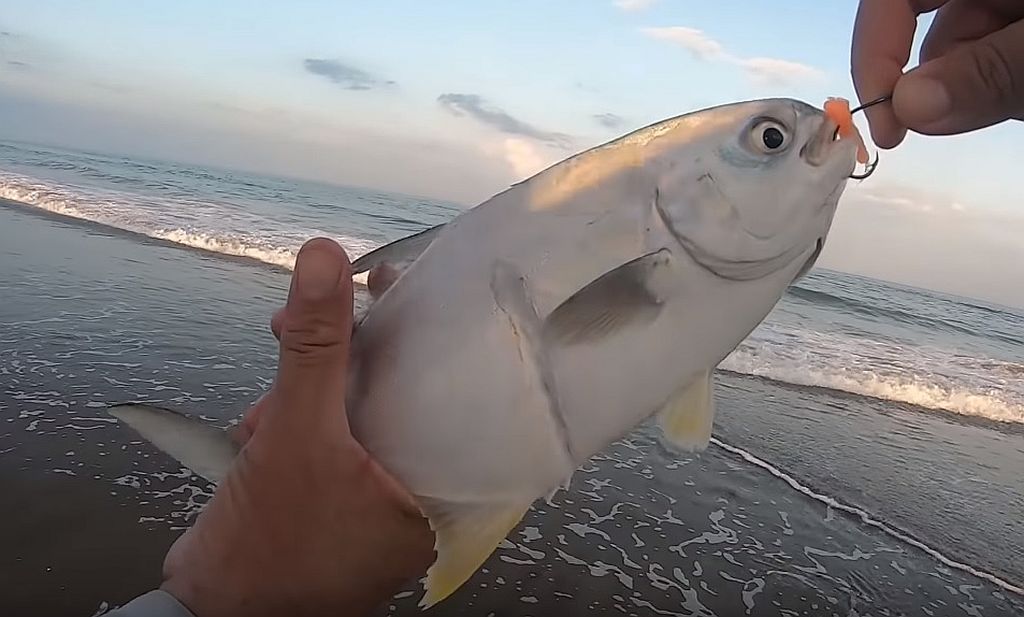 Although live sand fleas are by far the best bait for pompano and whiting, it always pays to take along some fresh shrimp, clams, blue crab, and Fishbites. Raking up sand fleas from the beach can be iffy this month, but you can usually buy a cup of live sand fleas from one of the local bait shops in our area at reasonable prices. I know several guys that swear by blanched sand fleas. They drop them in boiling water with a little bit of salt for a short time to toughen them up and throw them in a baggie until ready for use.. Blanched sand fleas stay on the hook better and supposedly catch more fish. Using salted clam strips or fishbites also work well and have the added benefit of staying on the hook longer. Right now at Playalinda Beach, a lot of pompano under the 11 inch limit are being caught, but as the month progresses we expect bigger fish to be in the surf. Apollo Beach south of New Smyrna Beach and several beach accesses between Melbourne Beach and Wabasso Beach are also good areas to target pompano, permit, and whiting in our area. The beaches farther north at Daytona and at Cocoa Beach will also hold pompano this month, but you have to search a bit to find them. The beaches there have a gradual slope. This past week pompano fans have been catching good numbers off the south end of the Wabasso Bridge (510). When I stopped by there last week, the rails were stacked with people casting mostly Fishbite tipped or nylon goofy type jigs to the fish. When fishing any of our area beaches, it always pays to set out a rod or two baited with crab or a fresh chunk bait. You may pick up a redfish, black drum, bluefish, or one of the many species of shark that roam our beaches. Port Canaveral Offshore and Nearshore Fishing On fishable days the offshore bite has been a little slow on the troll, but a lot of bonita, a few blackfin tuna, King mackerel, and some dolphin were caught during the past week on the 60 to 90 foot reefs. The problem has been the relentless seas that has kept everybody near shore on most days. The saving grace for the charter boat business has been the nearshore fishery for bull redfish and sharks. You can pickup bull redfish or sharks any day north of the port around Canaveral Bight on live baits. The offshore bottom bite out of Port Canaveral for mangrove snapper, mutton, red, lane snapper and a variety of sharks has been great when you can get out on the reefs. Bull sharks, sandbar sharks, a few sand tigers and fine tooths are also out there in good numbers along with some King Mackerel. Last Thursday for a few hours around sunset, 3 to 4 foot sharks were jumping almost everywhere you looked offshore. You could get a hookup almost as soon as the bait touched the water, but with the cold front and the previous swell has put a brake on the action for the time being. 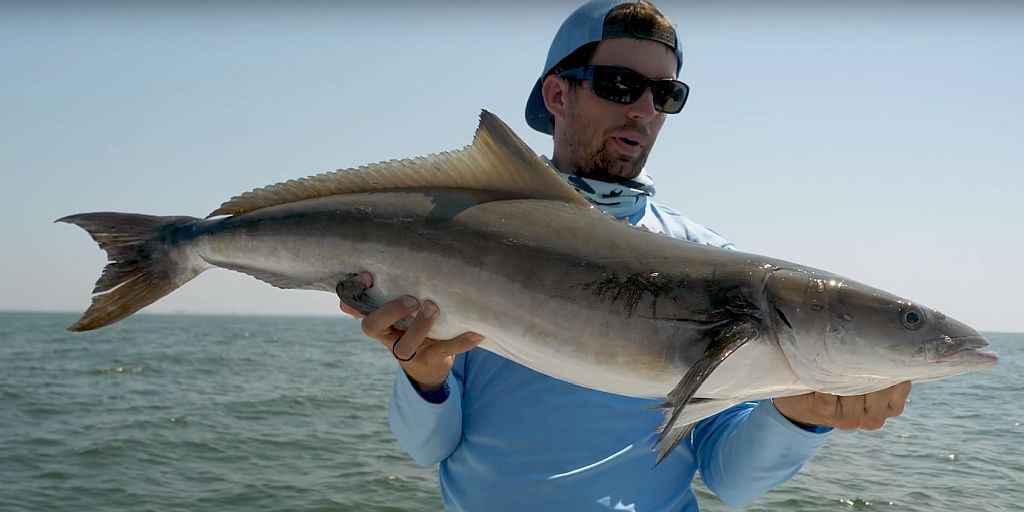 Although the Cobia bite has still not ramped up yet to the "March Madness" hype, nearshore anglers have been catching a few Cobia off the Manta Rays out from the beaches in the Cocoa area. Once the seas calm back down and the surface water temperatures hit 60 to 70 degrees, the Cobia bite will improve dramatically outside of both Port Canaveral and Sebastian Inlets. Within the first two weeks in March, we can expect Cobia to be outside of Port Canaveral in good numbers. The Mantra Rays that the Cobia shadow move according to water temperature and bait supplies, so when we see the giant rays coming nearshore, the cobia will be right there with them. This is why you should never pass up a cast to a Manta Ray. When the peak occurs, March Madness really sets in at Port Canaveral. The deep, 400 foot wide ship channel extends 3.5 miles offshore from the mouth of the port and plays a major role in attracting baitfish which in turn attract the cobia. Although Cobia hog the spotlight during March, the same water conditions and bait factors that attract them also pull king mackerel, big jacks, tarpon, bonito, and large Spanish mackerel inshore. Large "smoker" kingfish usually prowl around the schools of Spanish mackerel and blue runners during the morning hours before running out to the 35 and 40 foot depths after menhaden and mullet. You can also add tripletail to the nearshore fishery with fish in the 18 to 20 pound category milling around the buoys marking the ship channel. The tripletail bite inshore has been going strong with double digit catches in both quantity and quality. Around almost every structure in Port Canaveral, anglers are catching good numbers of sheepshead along with a few black drum and some pompano. Farther South from Vero to Sebastian, a lot of jacks and a few tripletail are being caught closer to the beach. Black Bass As the water temperatures in our lakes and rivers push into the high 60s and low 70s, largemouth bass in our area get serious about invading the warmer shallows to spawn.  The heaviest bedding activity occurs during the full and new moon phases which makes the full moon on March 10th, and the new moon on March 23 key periods. The four or five days before and after each moon phase are prime times to target bedding largemouths. The smaller males go into the grass lines in shallow water to fan out their beds first, and the females follow them in once the task is completed. Pitching weighted "creature" baits into the emergent grass or punching weighted baits through the thick hyacinth or water lettuce mats is a proven method of catching them in our area. Haulover Canal 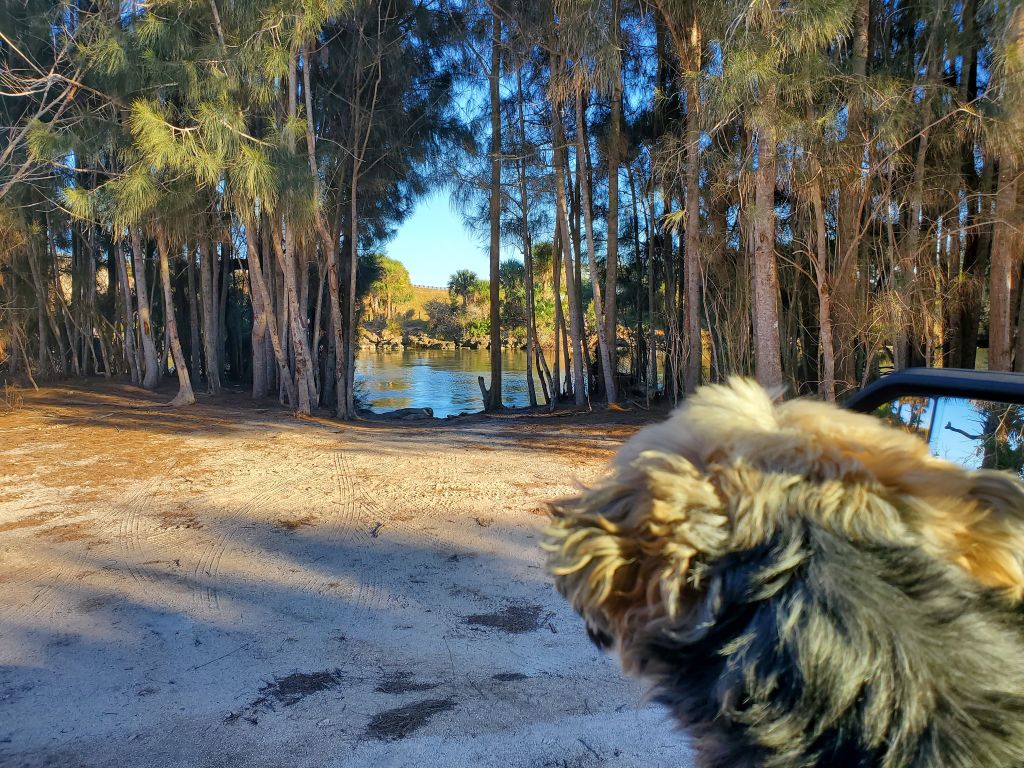 As of this date, Bairs Cove boat launch is still closed for renovation. Haulover Canal bank fishermen have been using the northwest and southeast areas for their bank fishing activities.
Most days at Haulover Canal, you will be able to find several bank fisherman dunking shrimp, live baits, sections of fresh blue crab, chunk baits, or fiddler crabs for black drum, redfish, mangrove snapper, and sheepshead. . Even with the cold snap we had this past week, the best fishing spots are usually occupied by anglers tending to two or more rods if you don't get out early. The most popular baits with Haulover bank fishermen are live or dead shrimp, fresh cut baits, sections of blue crab, and live pinfish or finger mullet. Right now the bite for black drum and over slot redfish has been pretty good. As the month progresses and the water gets warmer, the fishing in the canal should improve. The bite for mangrove snapper and sheepshead around the bridge and coquina outcroppings close to the abutments has been consistent, but many of the mangroves are under the size limit. Live shrimp on small 2/0 circle hooks or small chunks of fresh cut baitfish works well on mangroves. For sheepshead, fiddler crabs and live sand fleas have been doing the trick. Sport Shrimping Shrimping in the Indian River around Titusville has perked up a bit since last month. Although very few reports of "full pulls" have been received, the shrimp have been running in the river. 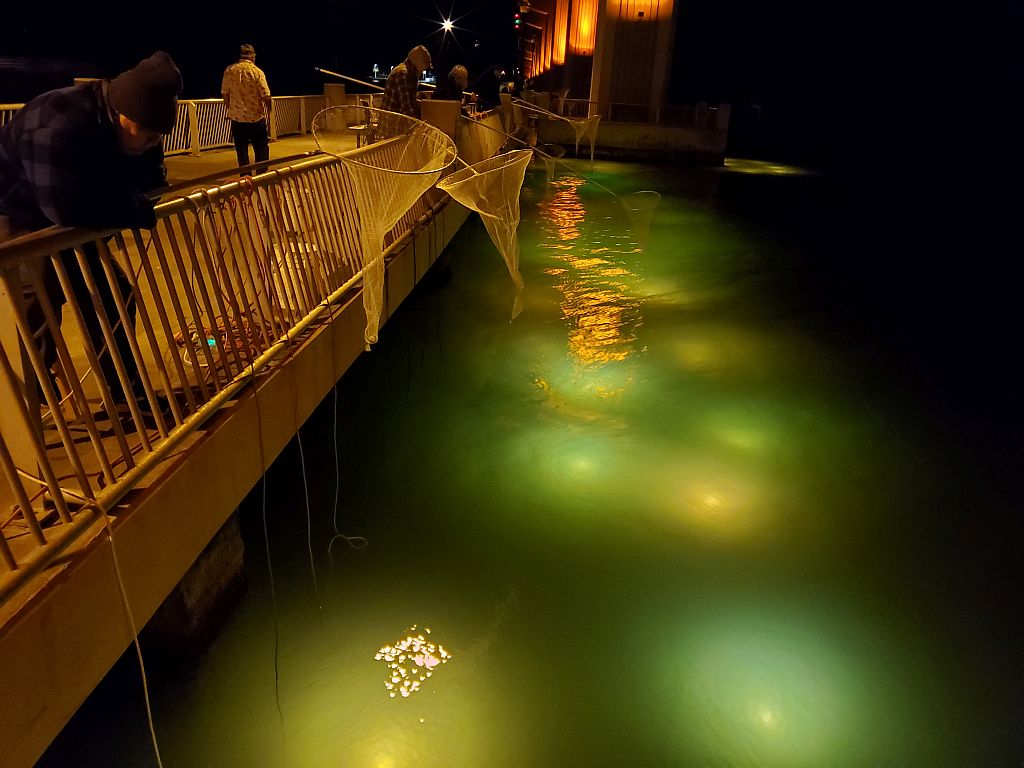 Shrimping from the two fishing piers at the A. Max Brewer bridge has improved and although the quantities are not great, the quality of the shrimp netted is. The shrimp in our area are generally much larger than those caught in the Oak Hill area. Several shrimpers on the fishing piers reported netting 100 plus jumbo shrimp in a couple of hours when they start running. On off nights, they can expect under 50, but you never know unless you try. The pic below shows the size of the shrimp in comparison to the 5 gallon bucket they are in. 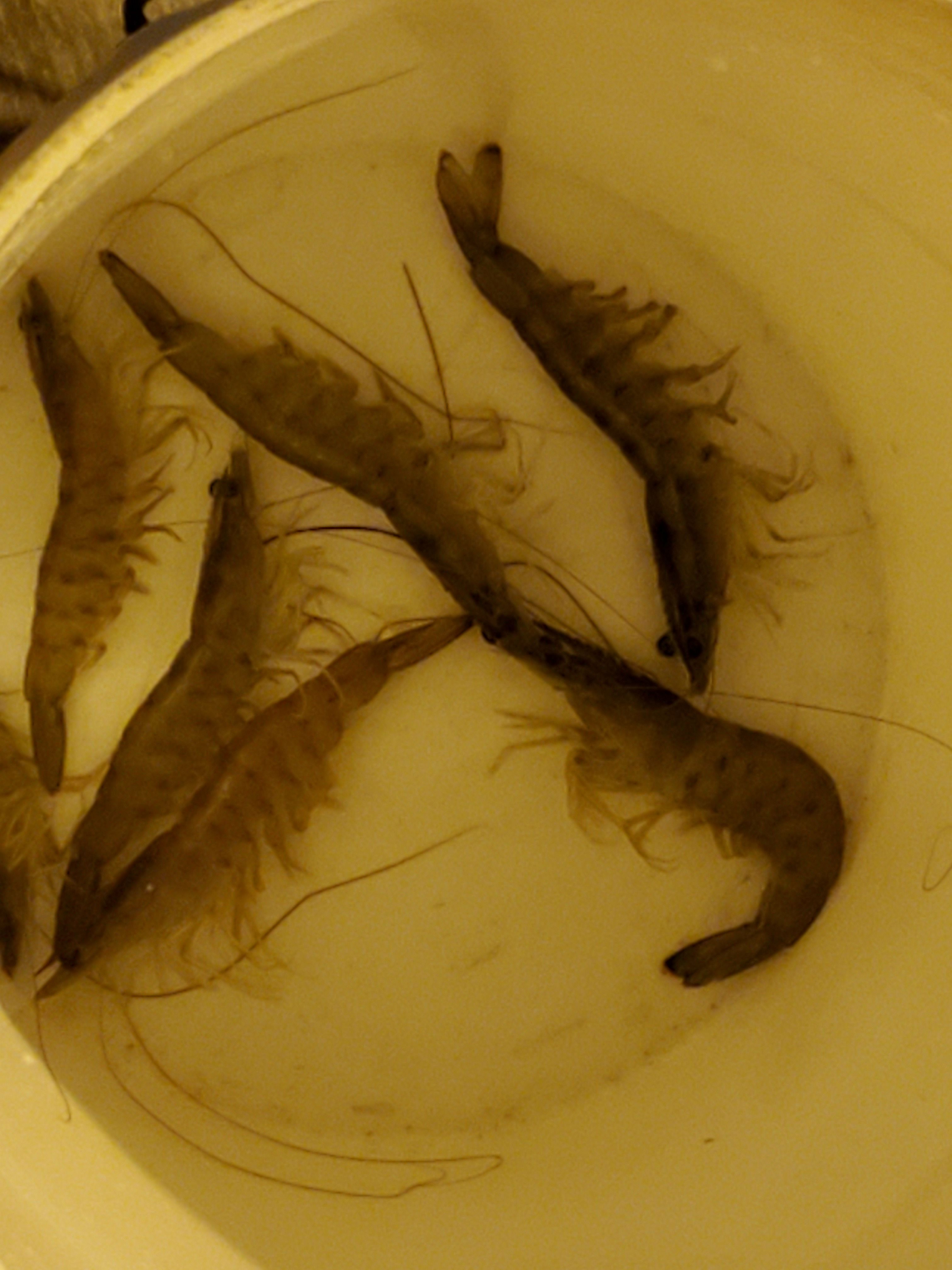 The guys cast netting from the small bridge going into the parking area usually do much better than the guys dip netting shrimp from the fishing piers. The shrimping reports from the guys dropping lights around the railroad bridge are a bit better. I suspect that the sea trout schools around the lights at the fishing piers are eating the shrimp before the shrimpers ever see them. It looks like a fish hatchery at times. Most of the locals tell me that the quantity of shrimp has been steadily declining over the past few years. The reasons vary, but I suspect the die off of sea grasses in our area due to the brown algae blooms caused by agricultural runoffs into the river as the culprit. Without the sea grasses, the entire ecosystem suffers, as the sea grasses provide a nursery for a multitude of fish species, invertebrates, and crustaceans. Time will tell! Until next time,
Tight Lines and bent rods!
|
|||