Your February 2020🐟 Mosquito Lagoon & Indian River Fishing Forecast
Published: Sat, 02/01/20
Mosquito Lagoon & Indian River Fishing |
|||
|
Newsletter Issue # 125 Fishing Forecast February 1, 2020 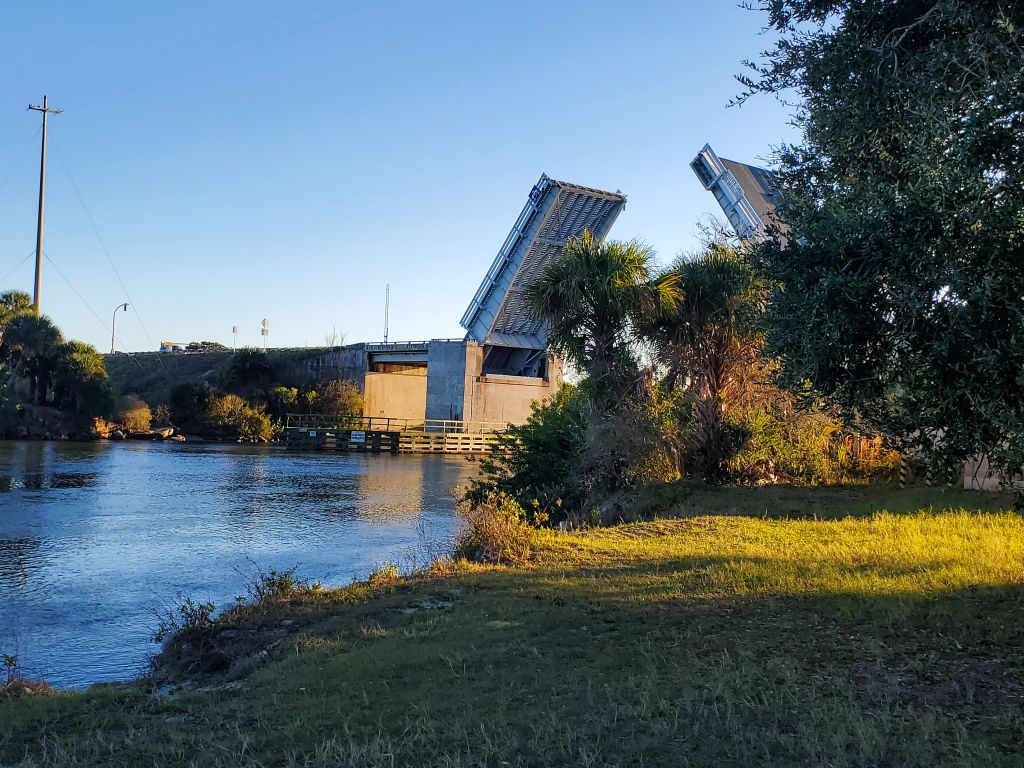 The Mosquito Lagoon and Indian River The cooler weather and clear water we have experienced in the Mosquito Lagoon last month has caused the redfish and black drum to school up into small to medium sized pods. Redfish are also starting to school up in the other lagoon systems and right now there are some smaller schools of bull reds in the upper Indian River in the deep water flats around Scotsmoor. With the warming trend last week, the trout and redfish have moved up a little bit into the shallows along the West shorelines of the northern Mosquito Lagoon from George's Bar north, anywhere you can find southern exposed islands. Live shrimp and white or Chicken on a chain colored paddle tail jigs seemed to be the most productive artificial baits. Farther south in the lagoon, cut blue crab, sand fleas, or live shrimp have been producing nice catches of black drum from the schools that are in the area. The smaller pods of black drum have been schooling on the shallow flats of the Mosquito Lagoon tailing during the morning hours, while larger schools are holding near spoil islands, drop offs, and the channel edges. Cut blue crab, live shrimp, or soft plastic baits tipped with Fishbites are all effective baits to get these fish to strike. 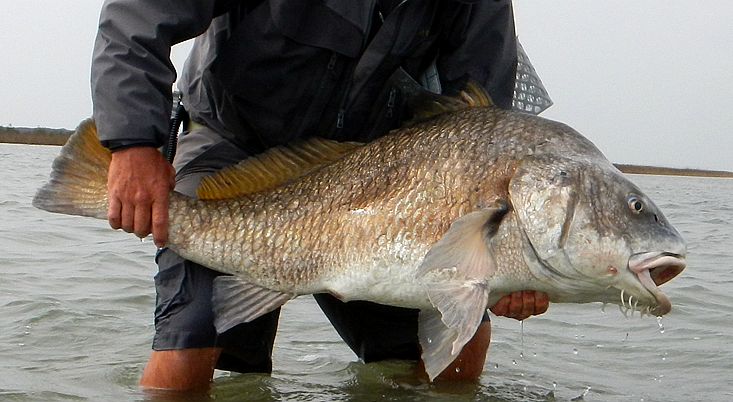 The best fishing for tailing black drum right now is early in the morning. In the Indian River, the Carbide Ditch from Scottsmoor all the way down to Titusville has been holding good numbers of spotted sea trout. In the ditch itself, the trout have been nailing Saltwater Assassin 4″ paddle tail baits. As the trout move onto the flats, throw cut baits or live shrimp. The water is way down in the river so you need a shallow draft boat or kayak to sight cast to these fish. The fish are laying up in only 9" to 12" of water so slow, subtle presentations with no weight are necessary. The black drum bite on the Indian River side has literally been on fire for the past few weeks with Saltwater Assassin 4″ paddle tails, live shrimp, and flies accounting for the majority of fish caught. The residential canals in the Cocoa area will be good areas to target during upcoming cold fronts. The fronts cause the redfish and sea trout to move into the deeper residential canals, the sheltered lee sides of the islands, and deep water areas where overhanging mangroves and trees protect the fish from the winds. Freelining a live shrimp on a small hook, preferably without any weight or leader, around a deep water dock in a residential canal is a proven way to catch fish. Let the bait drift to the bottom and work it very slowly along the bottom. If you prefer fishing artificial baits, a 4 inch Saltwater Assassin Sea Shad smeared up with some Pro-Cure gel is hard to beat for sea trout, redfish, and black drum, especially when the water is clean. When the water is dirty or heavily stained, use darker colored paddletail baits or a Gold Johnson's Sprite spoon to cover more water. Jigging a small spoon in deep water residential canals is an effective tactic that is seldom used. As the water temperatures begin to warm up, the fish will move from the deeper water canals into the deeper sloughs, potholes and depressions on the flats. During cold weather conditions, always use slow retrieves to attract more bites. The redfish bite farther south at Sebastion has turned on again, especially during an incoming tide where the water temperature is a little warmer. The best bite usually occurs during a mid morning incoming tide from the middle of the tide to the end. Live baits like mojarra, pinfish, and croaker (if you can find them) have been the best producing baits in that area. February 1st kicks off the opening of snook season for anglers on the Space Coast. With calmer seas and more consistent water temperatures forecasted this week, it should be a good time to get out on the water and put one in the cooler. Playalinda Beach This month surf fishermen with their pull-carts and magnum rods will be lining up along our beaches in search of Pompano. A relatively calm surf with clean water conditions is the best scenario for pompano fishing. Dirty water conditions usually means a lot of hard head catfish. 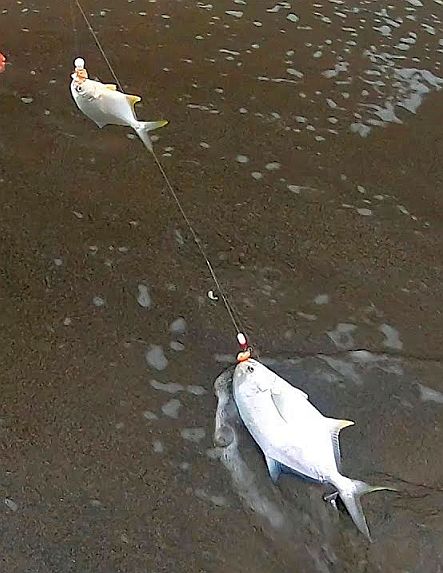 Pompano prefer feeding in the deep troughs inshore of a sandbar. Apollo Beach south of New Smyrna Beach, Playalinda Beach east of Titusville, and several beach accesses between Melbourne Beach and Wabasso Beach are prime areas. There are isolated holes along the flat beaches at Daytona and
Cocoa Beach that also hold pompano, but you have to search a bit to find them. Pompano prefer feeding in the deep troughs inshore of a sandbar. Apollo Beach south of New Smyrna Beach, Playalinda Beach east of Titusville, and several beach accesses between Melbourne Beach and Wabasso Beach are prime areas. There are isolated holes along the flat beaches at Daytona and
Cocoa Beach that also hold pompano, but you have to search a bit to find them.An incoming tide and full high tide are the best times to fish for pompano with either sand fleas, small pieces of clam, or fishbites. As a general rule, early morning incoming or full high tides are considered to be the best time to fish the surf, but any moving water can be productive, especially just before or just after a cold front rolls through. Although a rough surf is always difficult to fish, especially during really cold days, the fish are still out there if you can get past the breakers and hold bottom. Sputnik type 4 oz. to 5 oz. sinkers will hold bottom during a rough surf and if you are spooled with a thin diameter braided line, getting past the last set of breakers should not be a problem. Live sand fleas are tough to rake up during February, but a couple of our local bait shops usually keep them in stock. Fortunately, the Pompano, whiting, and black drum at Playalinda Beach find clams, small pieces of shrimp, and bright colored fishbites just as tasty. Using salted clam strips or fishbites have the added benefit of staying on the hook longer. Surf fishermen using live sand fleas on two and three dropper surf rigs have been catching good numbers of whiting and a few Pompano this past week at Playalinda at lots #2 to #4 and #10. Lots #8 and #9 are closed due to ramp work. Except for this past week, the water at Playalinda has been pretty clean and the pompano bite was pretty good. This past week the surf has been rough and the water is colored in many areas. The pic below was taken Friday. Lots of surf fishermen were out for Pompano, but because of the heavy surf and dirty water conditions, only a few were caught.  When surf fishing Playalinda during the warmer months, it's good to get out early, especially when the weather is good. Usually around 10:00 am beach goers will be walking up and down the beach or setting out blankets all over the area, especially at the lower numbered parking lots. During February when the air is chilly and the weather is "iffy", you may find yourself alone with a long stretch of beach all to yourself! Port Canaveral Offshore and Nearshore If you can get out on a fishable day when the winds are not coming straight out of the east, offshore fishing out of Port Canaveral is as good as it gets in our area. Sails, Mahi, AJs, ARS, and Kingfish are all being caught on Pelican and 8A out of the Port. Last week there were quite a few Kingfish and Cobia caught on the 70 to 90 foot reefs. Slow trolling live baits on a standard stinger rig is the preferred method for catching them, but live baits are hard to come by this time of the year. Have some dead sardines handy in case you’re struggling to locate the live ones. If you can’t find any bunker, try dropping a sabiki rig on a wreck or around some of the buoys on the way out for blue runners or thread fins. Live baits always perform better when you can find them. If you get out to the 27 fathom ridge, quite a few Wahoo are being caught by captains high speed trolling out of the Port. After our last cold front, a lot of cold water has moved south and actually pushed the GulfStream out a little farther, so it's past the 27 fathom ridge and the Cones. From Port Canaveral, all the way down to Sebastian Inlet, high speed trollers running 5 to 10 knots are landing good numbers of Wahoo on a regular basis. 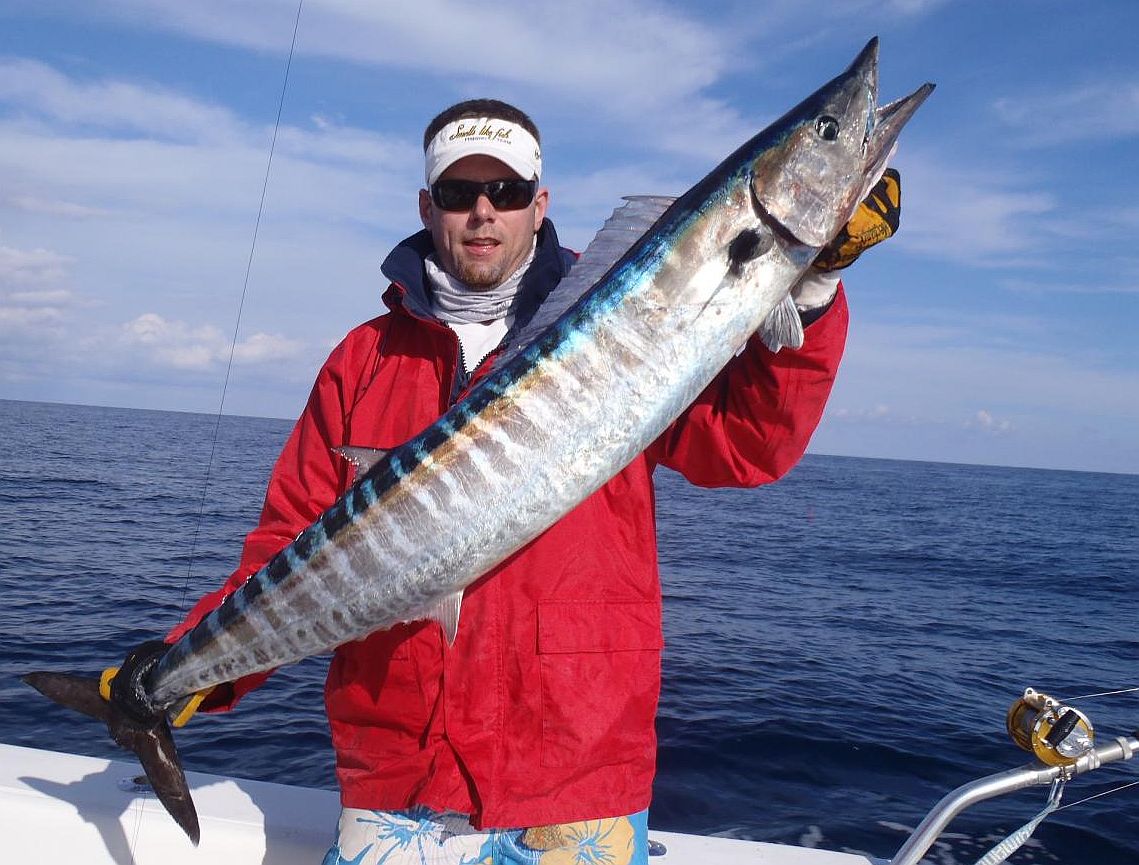 You don't need to put out a lot of lines to catch them, and running only 4 lines with one on the down rigger and the rest on top seems to be the most productive tactic. The captains are reporting that the most productive colors to drag are black and blue, purple and black, and red and black. A little farther offshore, the Mahi and sailfish have been doing much better. Although there are specific tactics for targeting each species, fishing small Islander lures with a small ballyhoo generally works on most species. For Wahoo, just amp up the trolling speed. A lot of guys catch more wahoo and mahi fishing for kingfish than targeting them directly. Closer inshore, the cobia and tripletail are hanging closer to the beach. Target weedlines, marker buoy lines, and any kind of floating structure for both species. For tripletail, use a small bucktail jig tipped with a piece of live shrimp or squid. You can add a small splitshot to get it down faster if needed. For cobia, a large bucktail with a whole squid works as good as anything. When water temperatures hit the 68 degree mark, start looking for Cobia that are tracking the Manta rays in the 50 to 90 foot depths offshore. St. Johns River Shad From the headwaters near Melbourne, Fl., the St. Johns River meanders more than 300 miles north to the Atlantic Ocean. This month through mid March, American Shad in the thousands migrate up the St. Johns River for their annual spawning run. St. Johns River American Shad and the related Hickory Shad can be tough to locate but because they require strong flowing current and a hard "washboard" type bottom for successful spawning, the bends of the river are prime locations to target. 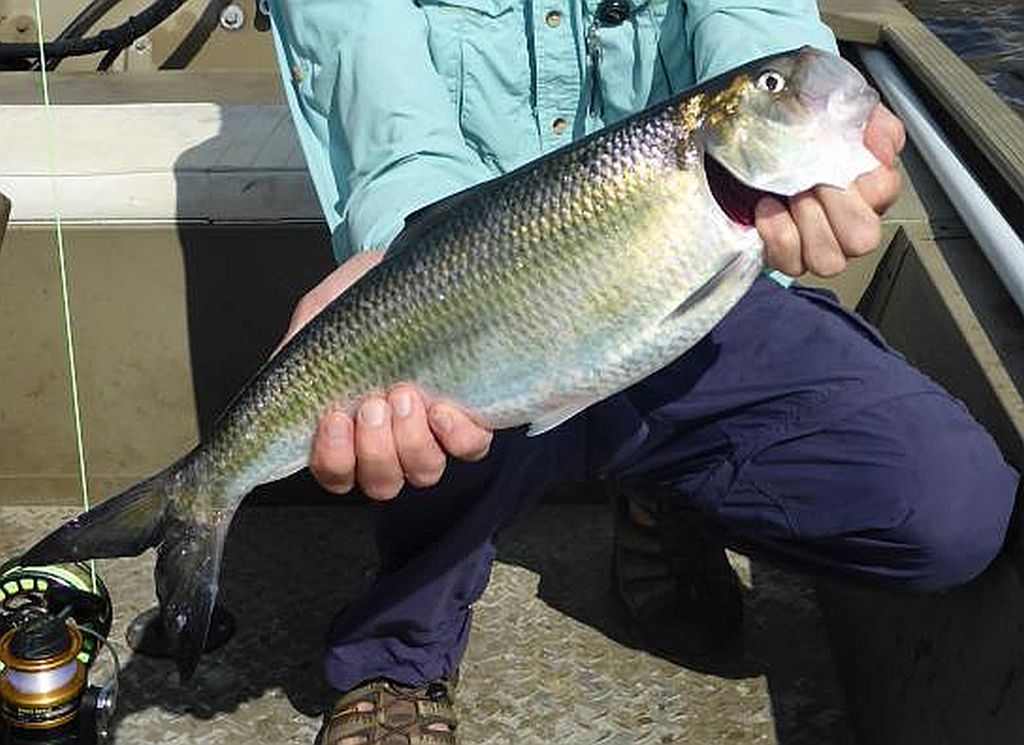 Although American shad swim through most of the river, they congregate in the section from Lake Monroe in Sanford, Fl. south to Highway 50. This makes the St. Johns from SR 520 west of Cocoa to the Monroe Canal (Government Cut) on the southeast corner of Lake Monroe in Sanford, Fl. prime areas to fish. The deep holes around Old Marina Isle and Mullet Lake, the bends around Lemon Bluff, and the numerous river bends south of SR 46 toward Puzzle Lake and southwest toward Hatbill Park are a few of the more productive areas. From the boat ramp at SR50, the southern part of the river is best for shad. The areas farther north require crossing Lake Cone wich is extremely shallow. Although shad are occasionally taken in the middle St. Johns River besteen lakes Poinsett and Winder, fewer numbers move as far south as SR 520 west of Cocoa. A popular way to locate shad is to search for them "flicking" on the surface. It is believed that they are feeding on grass shrimp and gambusia (mosquito fish) when they do this. Because water flow is important, many shad fishermen anchor near the shorline at the bends of the river and drift their baits through the deeper waters where the fish are likely to be spawning. Bright colored shad darts, small spoons, crappie jigs, tiny TerrorEyz, and plastic curly tail jigs are all popular baits that will produce fish. Some anglers slow troll several baits at varying depths with tandem Cather Shad rigs, shad darts, or small curly tail jigs, while others use fly rods and ultralight spinning gear while walking the river banks, especially during low water years. 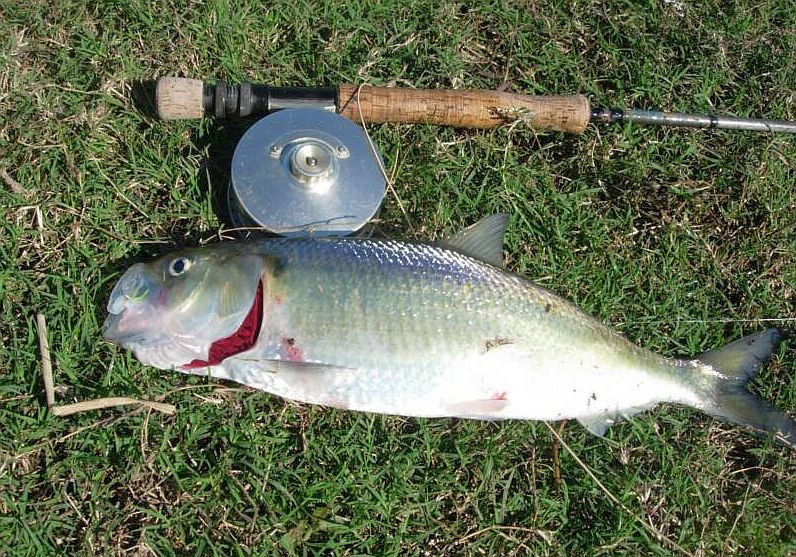 Fishing weighted minnow patterns in size 6 to 10 on a 5 wt fly outfit provides great sport. Use a floating fly line and vary leader length to get you fly to the bottom. American Shad run from 1 1/2 to 3 pounds in our area and although their sweet, delicate flesh is bony and seldom eaten, their roe is a delicacy. The bag limit is 10 per person and you need a saltwater and freshwater license to harvest them. Haulover Canal 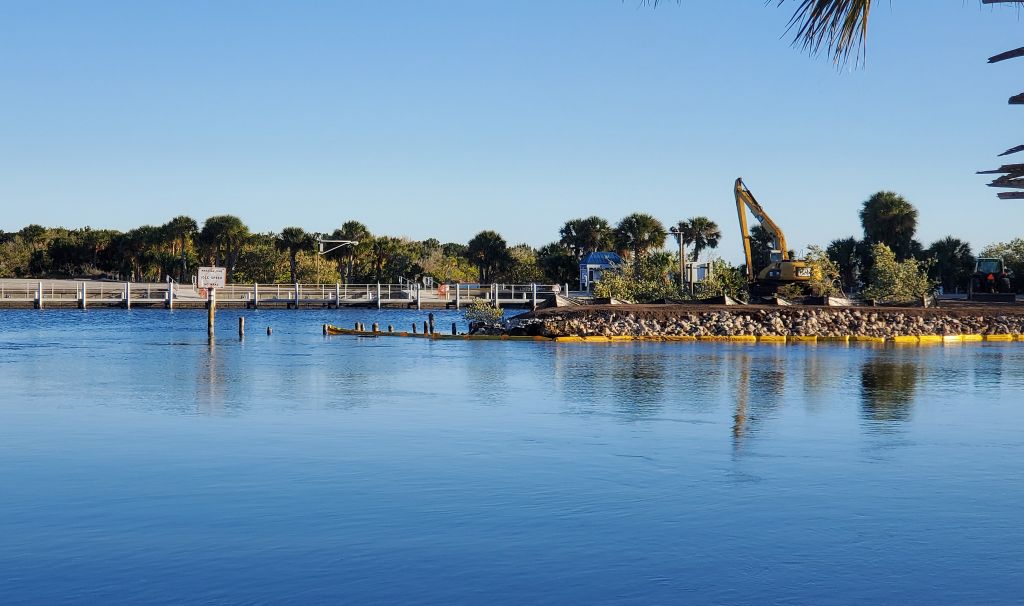 Because Bairs Cove boat launch is still closed to vehicle traffic for renovation; Haulover Canal bank fishermen have been relegated to using the northwest section for their bank fishing activities.
On most days at Haulover Canal, you will find a number of bank fisherman dunking shrimp, sections of fresh blue crab, chunk baits, clams, or fiddler crabs for black drum, redfish, mangrove snapper, and sheepshead. . As of last week, every day I managed to visit the area, all the best spots were already occupied by anglers tending to two or more rods. Shrimp, sections of blue crab, and cut baits were the most popular baits, but almost everyone I spoke with said that the bite was slow. The current in the canal has been pretty strong which is why almost every fishermen I spoke with was fed up about losing gear on the coquina rock outcroppings that line the bank in many areas. Last year during the beginning of February, anglers were making remarkable catches of oversize black drum and redfish in the over 40 inch category but so far this year, the bite has not been noteworthy. Although the bite for mangrove snapper around the bridge and coquina outcroppings has been consistent, a lot of fish caught are under the size limit. A couple of anglers using fiddler crabs for bait said that they had been catching good numbers of sheephead around the bridge, but they also noted that the bite around the pilings at both the fishing piers at Parrish Park was better than in the canal. Both of the fishing piers at the A. Max Brewer Causeway Bridge are open for fishing and shrimping. The fishing for black drum, smaller spotted sea trout, redfish, and sheepshead from both the piers has been pretty good, especially at night under the lights. The shrimp lights attract the sea trout that in turn bring in larger fish. Sometimes the area over the lights looks like a fish hatchery. 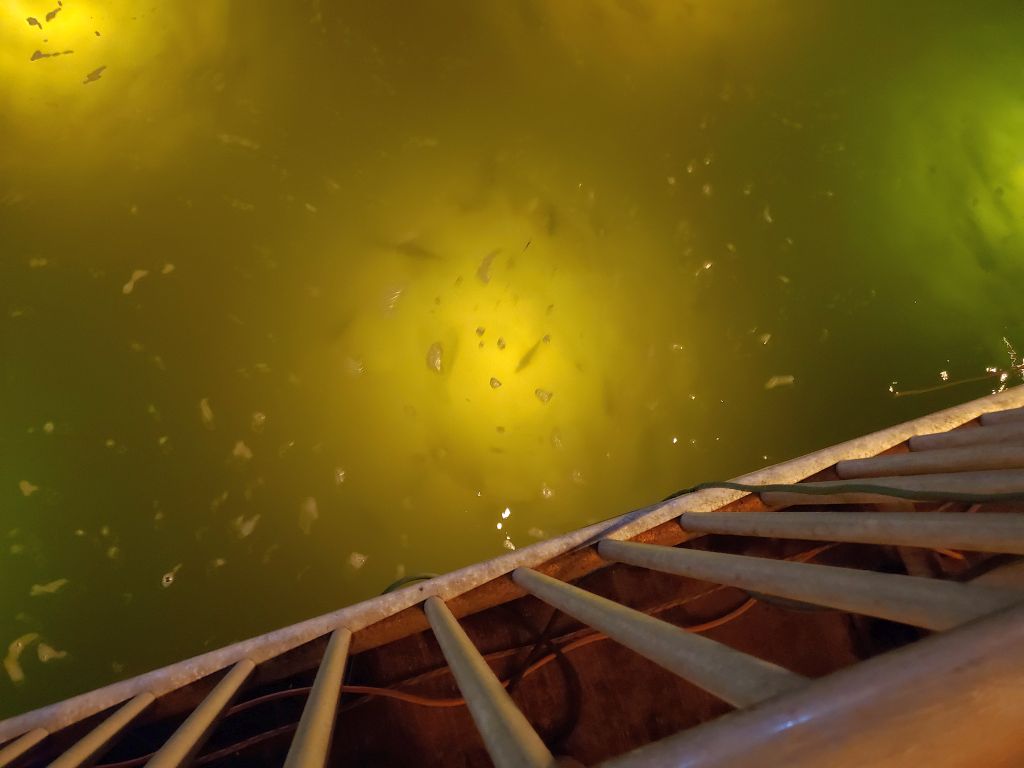 The cast netters at the small bridge going into the parking area have been doing much better than the guys dip netting shrimp from the fishing piers. Most of the locals dip netting off the piers tell me that "the shrimping should get better" or that "the run hasn't started yet". Every time I visit the pier I see people netting shrimp but I have yet to see a full 5 gallon bucket limit. I think the sea trout get the shrimp before the sport shrimpers. Until next time,
Tight Lines and bent rods!
|
|||