|
The Mosquito Lagoon and Indian River
Cooler temperatures have brought cleaner water into our lagoon systems making the sight fishing for redfish, black drum, and seatrout good to excellent in the most areas. All three of our lagoons have lots of trout, redfish, black drum, and some snook.
Although the fishing for spotted sea trout has been good to excellent for the past few weeks, it has not been consistent from day to day. Some days you can catch 20 to 30 or more fish, and other days you have to work for a bite.
The majority of larger upper and over slot sea trout are being caught with topwater "walk the dog" type plugs. Anglers casting DOA CAL shad tails, Saltwater Assassin Sea Shad tails, Z Man paddletail baits, and straight tail plastic baits on the flats have been decent catches of smaller sea trout, slot size redfish, and snook.
The topwater bite in the central part of the Mosquito Lagoon between Preachers Island and Cabbage Island has been pretty good from first light until about 9:00 in the morning.
For bigger fish, target the mullet pods with a Rapala Skitter Walk, Heddon's Tiny Torpedo, Chug Bug, or any topwater plug that resembles a finger mullet. After 7:30 am or 8:00 am, when the topwater bite drops off, switch to cut mullet, a chunk of ladyfish, or a sectioned blue crab for redfish. A live
jumbo shrimp or a pigfish suspended under a Cajun Thunder type float is preferred for big sea trout.
As of last week, most areas in the North Indian River have pretty clean water and the basic color patterns are all producing good catches. The key to staying busy with any of these baits from the early morning hours until noon-ish is to find areas with pods of fingerling mullet. Experiment with your retrieval speeds until you start catching fish, but as the water cools down, slower retrieves usually produce the most action.
The north Indian River along the causeway east of Parrish Park, around the A. Max Brewer Causeway bridge, the area north of the railroad bridge, and around the shorelines of Catfish Creek Loop and Peacocks Pocket Road has been producing some nice slot size redfish. Most anglers have been using live finger mullet, cut baits, and shrimp on the reds, and live or fresh dead shrimp on the black drum.
Fly fishermen tossing shrimp and crab patterns are also taking advantage of the clear water conditions to target gator sea trout, redfish, and black drum on the flats. Winter in East Central Florida is a prime time for fly fishermen who prefer sight casting to trophy fish in the Mosquito Lagoon and Indian River.
When the cold fronts start blowing out of the northwest in our area, it's time to start targeting the 8 to 10 foot deep saltwater canals and cuts that double as cold water sanctuaries for sea trout, redfish, black drum, and snook. From Daytona Beach to Sebastian Inlet the canals, docks, mangrove shoreline cuts, bulkheads, and even moored boats will be holding baitfish and crustaceans that the fish prey on.
Canal intersections often have dredge holes with deep layers of mud or silt that provides an additional 2 to 3 degrees of warmth to shrimp and baitfish. These areas tend to attract school trout under the 15 inch slot limit. Larger trout, snook, and redfish hunt for bait around the mangroves, docks, and boats with little to no human activity.
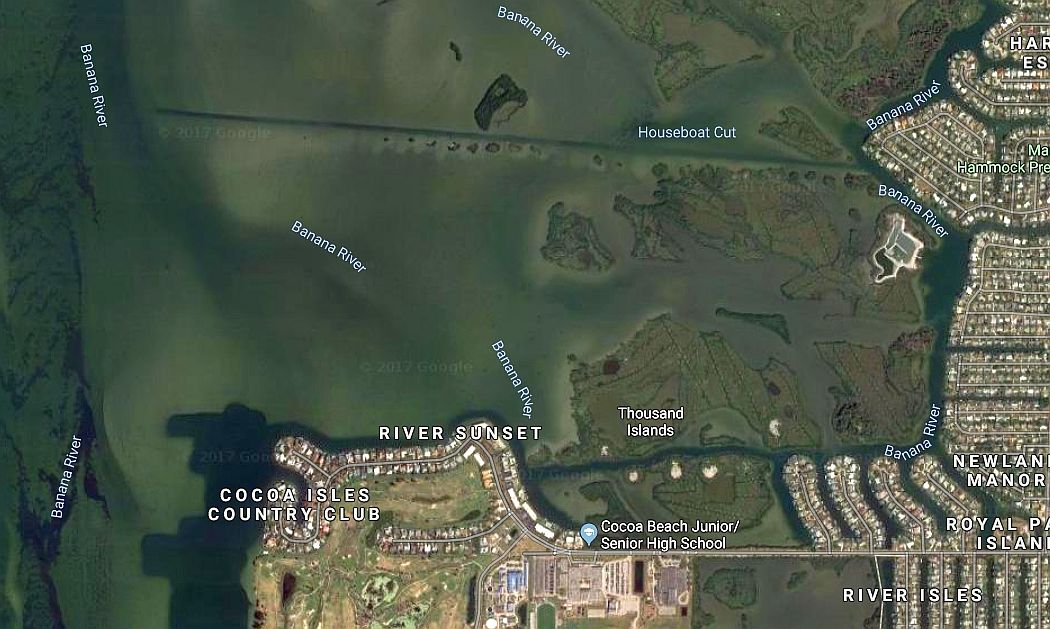
The residential canals and flats in the thousand Island area have been producing some smaller spotted sea trout and good numbers of silver trout.
Large wintertime snook can be found in the dredge holes and deeper water docks throughout the IRL system, the inlets at Sebastian and Ponce, and the Inlet and deep water turning basin at Port Canaveral. Canal snook are generally smaller juveniles.
Most of the redfish in the canals will also be smaller but are sometimes schooled up in good numbers.
The most successful technique for winter time canal fishing is a free swimming shrimp on light tackle with no leader, weights, or swivels to hinder it's swimming. Use a small single hook under the horn of the shrimp and present it about three feet below a small natural cork to keep it in above the bottom. The same technique can be used with finger mullet, mojarras, or pigfish. Just use a larger float.
During the winter months when the water temperatures are below 60 degrees, black drum in the Merritt Island and Cocoa Beach canals can be targeted by hooking a live shrimp with a small short shank hook and a small split shot about 18" above the hook. Cast to the docks, moored boats, and adjacent mangrove shorelines. Try checking with local bait shops to find which canals are producing the best. Although most of the drum will be in the slot, quite a few
fish in the 15 to 20 pound category are also caught in these areas.
Although the barriers are still up on many of the dyke roads in the Merritt Island National Wildlife Refuge, park your car and walk the roads. You can get some good exercise and great fishing opportunities this time of the year for sea trout and oversize redfish in the marsh canals and the mudflats along both sides of the road.
The water levels are high and the fish have been moving through the marsh canal traveling from pond to pond busting on baitfish along the banks as they find them. During the morning and late afternoon hours, look for big sea trout and redfish pushing wakes in the canal and busting baitfish along the banks.
A well placed gold Johnson's spoon, Chug Bug, D.O.A. Shrimp, or a soft plastic jerkbait can often trigger a strike.
Port Canaveral Nearshore and Offshore Fishing:
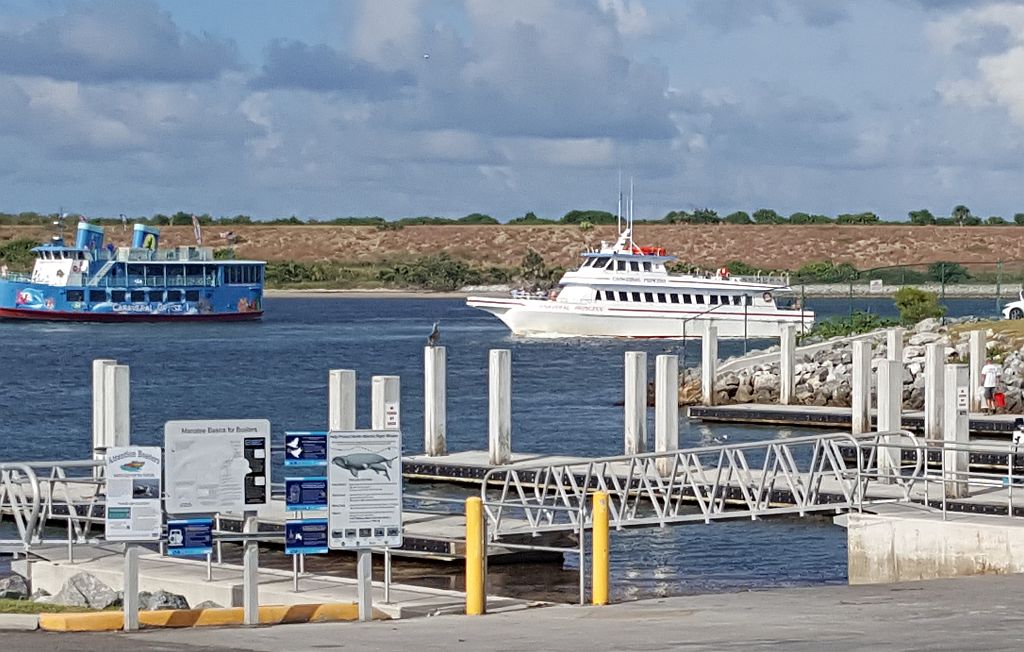
Canaveral Bight is a 5 mile stretch of shoreline immediately north of Port Canaveral that is a winter refuge from the the northwestern cold fronts that hit our area.
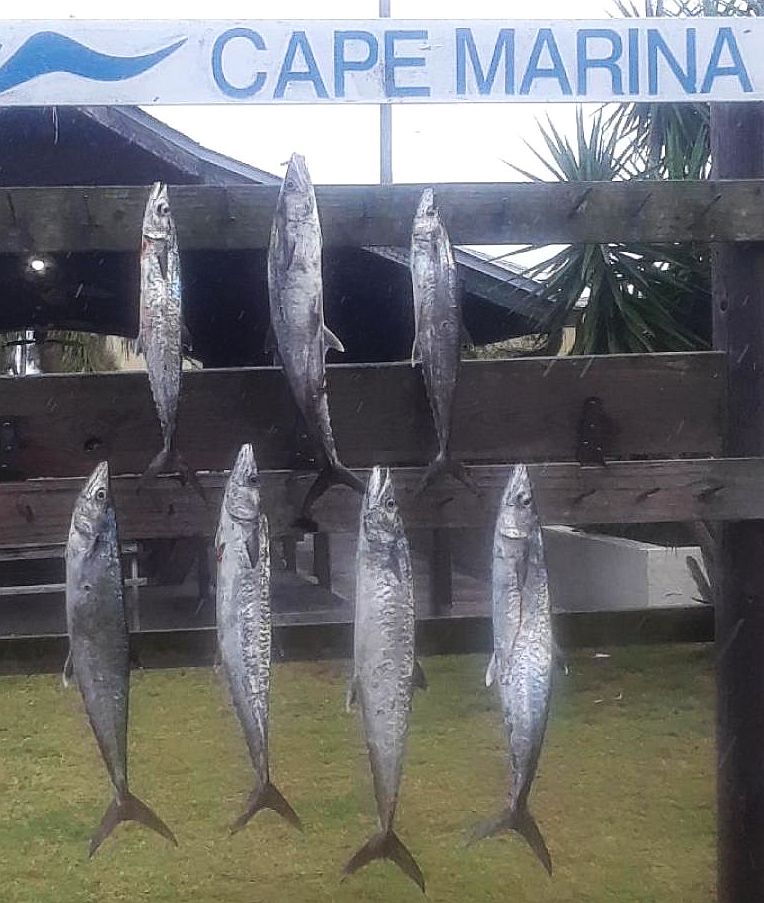
Between now and into February, the Canaveral Bight area will be a hotspot for bull redfish, good numbers of pompano, whiting, Spanish mackerel, bluefish, and an occasional tarpon around the bait pods.
Because of security concerns at the adjacent Canaveral Air Force Station, this area of the beach is closed to the public however, boaters have access to the Bight and can be seen in good numbers during the winter months anchoring just outside of the first break and casting toward the beach.
Farther offshore, the cobia, king mackerel, and plenty of sharks of all varieties are holding over the 70 to 120 foot reefs and wrecks throughout our area. Slow trolling mullet, pogies, and live or frozen sardines on stinger rigs will be your best bet right now.
Scattered cobia are being caught in 70 to 90 feet of water over the reefs and wrecks on jigs.
On good days when the seas are not in the 4 to 7 foot range, anglers that can get farther offshore are looking for color changes with temperature breaks and rips nearby to target wahoo, sailfish, and dolphin. Most anglers targeting dolphin and sails have been working the 180 and 250 foot reefs with small, dark colored skirts rigged over the ballyhoo.
Inside Port Canaveral:
Winter flounder will start coming into Port Canaveral in better numbers after the first serious cold front hits our area.
When our local flounder fishermen start targeting the sea walls at Port's End Park along the west end of Port Canaveral, the jetties at the west end of Jetty Park, and the pier at Jetty Park you can be sure that the winter flounder run is getting into full gear.
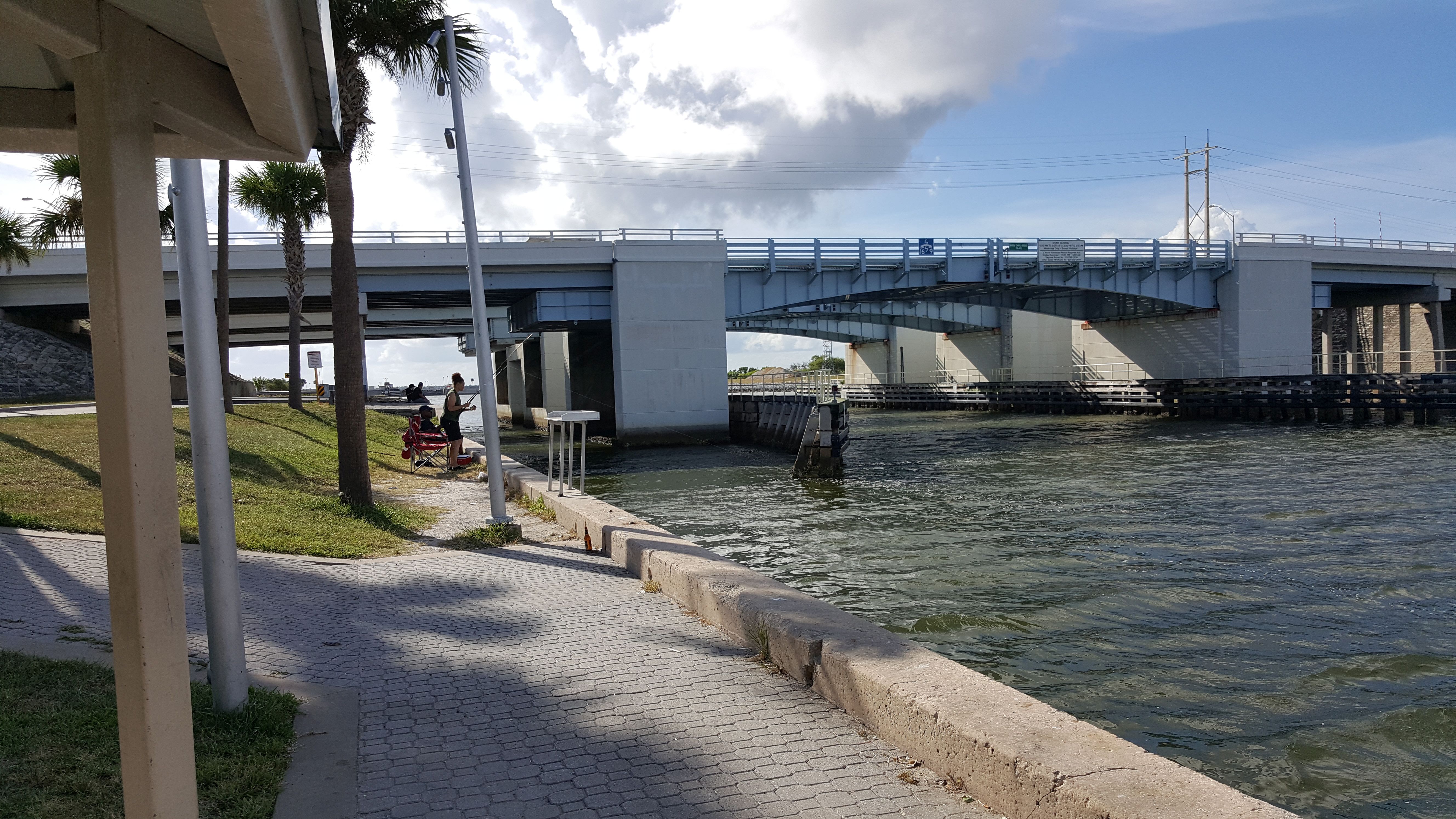
The majority of anglers targeting flounder use live finger mullet, mud minnows, live shrimp, or jigs tipped with a small piece of shrimp for bait. Although various techniques and rigs are used, bouncing the bait on or very close to the bottom and keeping the bait moving to cover as much ground as possible is essential to filling a cooler.
Most anglers rig their baits on a sliding sinker rig or a knocker rig to keep the bait right on the bottom. Use a very short fluorocarbon leader of about 12 inches or so on a sliding sinker rig with enough lead to keep the bait in the strike zone and occasionally hop it off the bottom to cover more area.
Because the current at Port Canaveral can vary greatly, a 1/4 oz. to 3/4 oz. barrel sinker on a sliding sinker rig is usually enough to hold your bait on the bottom where it belongs. Most winter flounder caught in our area are under 5 pounds but doormats in the 8 pound range are occasionally caught.
Ponce Inlet:
For the past 6 weeks or so, big bull redfish have been schooling up in areas near Ponce Inlet for their annual spawn. Every Fall around November and December, this epic redfish bite occurs at Ponce Inlet and several staging areas in the Inter Coastal Waterway around New Smyrna Beach and Edgewater.
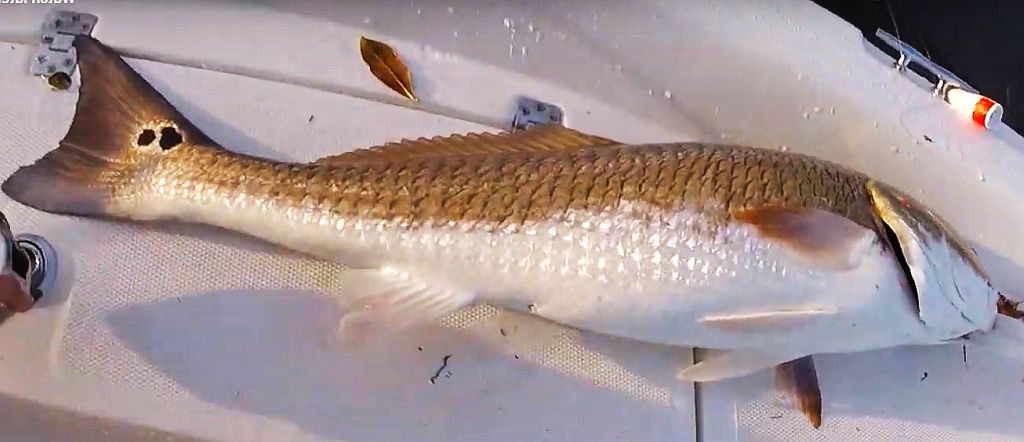
Although the run has almost ended for this year and the fish are widely scattered until early next spring, anglers can still expect occasional hookups with redfish in the 20 to 35 pound category.
During the height of the run, anglers fishing the Inlet were getting 10 to 15 hookups per day with bull redfish weighing up to 40 pounds.
|
Surf Fishing:
For the next few months in East Central Florida, Playalinda Beach, New Smyrna Beach, and Melbourne Beach will all be major pompano "hotspots" for surf casting anglers.
This week at South Melbourne Beach, the surf fishermen had weedless, crystal clear water conditions with WSW winds at 4 mph. The water temperature was in the range for pompano and although sand fleas are getting harder to find, they can be had on an outgoing tide.
Several surf fishermen reported good catches of pompano, Palometa, bluefish, permit, and whiting about 2 hours before the high tide started to pick up. All were catching fish on sand fleas and fishbites.
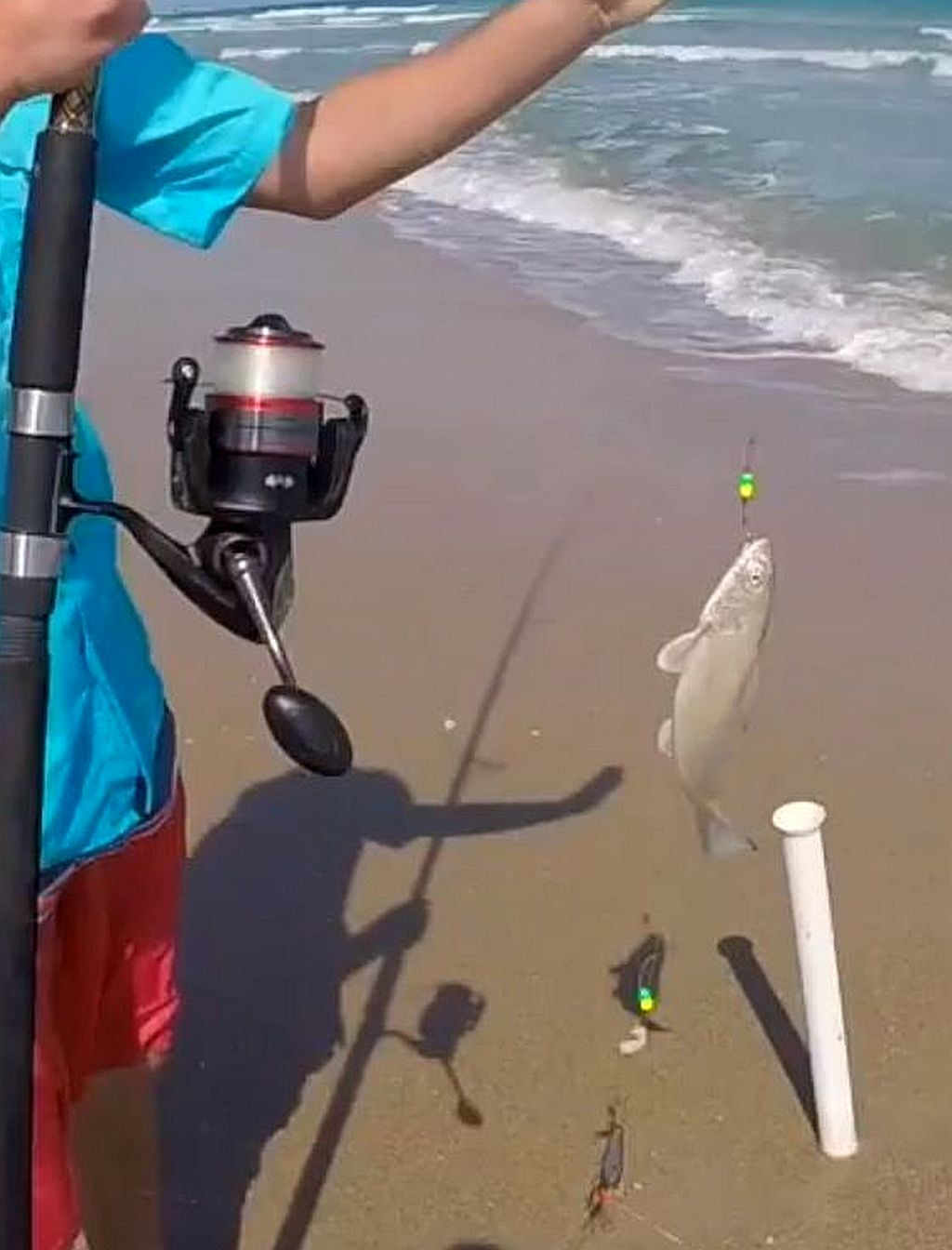 Surf fishermen at Playalinda Beach have mainly been catching whiting on sand fleas, shrimp, and fishbites during various stages of the incoming tides. Surf fishermen at Playalinda Beach have mainly been catching whiting on sand fleas, shrimp, and fishbites during various stages of the incoming tides.
Although the pompano bite at Playalinda hasn't materialized yet, it usually picks up after the first cold fronts hit us and the water cools down later on this month.
Playalinda Beach is relatively narrow and drops off sharply in many areas to form deep troughs that are within easy casting distance from the beach.
Most surf anglers try to fish the high tides when the pompano schools move in close to the beach and the schools are in the troughs feeding on crustaceans and baitfish that are pulledt out around the rips and cuts.
During low tides, the fish move out into deeper water just outside of the sandbars where longer casts are needed to catch them. Live sand fleas, small pieces of fresh cut clam, small pieces of shrimp, or Fishbites are all baits of choice for pompano.
During December, you can often have the beach at Playalinda all to yourself, especially during the weekdays. This is a good time to target sharks.
Last week several sharks in the 4 to 5 foot category were caught around lot #9 by anglers using chunked bluefish and mullet for bait. Lot #8 is usually the preferred area for shark fishing, but they are refurbishing the walkways and it is currently closed.
You need to get out early in the morning for the best action; the bite slows down and usually comes to a halt around 7:30 to 8:30 am.
Haulover Canal:
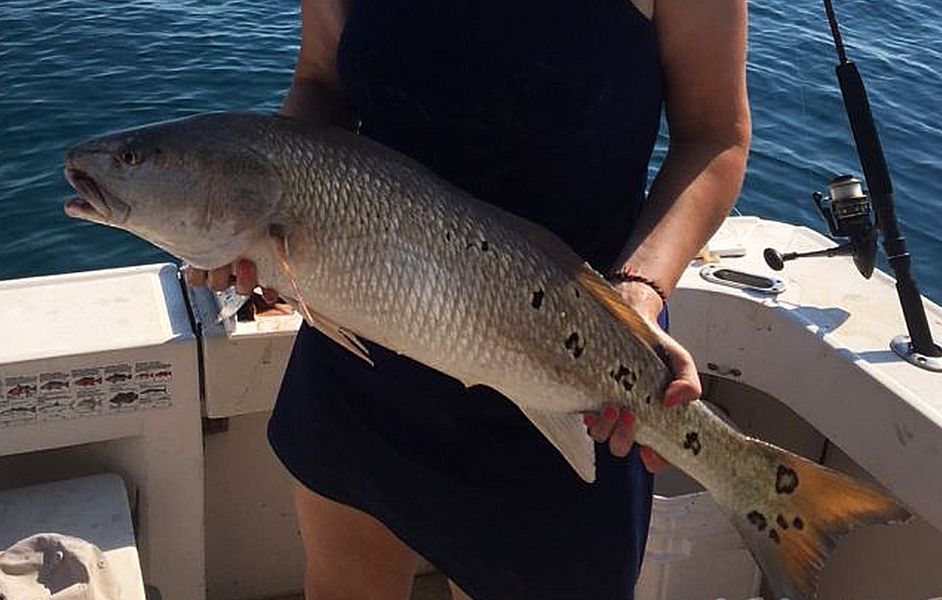
 During Thanksgiving week the bank fishermen at Haulover Canal were landing oversize Redfish, Black Drum, and Mangrove Snapper. During Thanksgiving week the bank fishermen at Haulover Canal were landing oversize Redfish, Black Drum, and Mangrove Snapper.
The black drum bite has been the most consistent with most guys using dead shrimp, pieces of blue crab, or clams for bait. Most of the drum caught were in the 10 to 14 pound class and over the 14" to 24" slot.
During the winter months, large bull redfish and black drum travel through the deeper waters of Haulover Canal from the Mosquito Lagoon to the deeper flats in the northern part of the Indian River.
Although most of the larger redfish were caught by bank fishermen using sections of blue crab or a whole blue crab for bait, chunks of ladyfish and mullet also work well.
A couple of bank fishermen I talked to last week were targeting Mangrove Snapper with live or fresh dead shrimp. Although a few fish were over the 10" minimum size, most of the fish I saw caught were under size and had to be released.
Regardless of what bait you're fishing with, it's a good idea to use a small diameter braided line like Power Pro as your main line to minimize cutoffs. Use a heavy fluorocarbon leader with a 5/0 or 6/0 VMC circle hook as terminal tackle.
Although not much night fishing is done at Haulover during the winter months, the guys that do go out at night often come in with nice catches of redfish, black drum, sea trout and snook. The same applies to shrimping along the banks of the canal.
If you hit it right when the weather cools down this month and the shrimp start running, you can often load up a 5 gallon bucket with large or jumbo shrimp from the banks of Haulover, the west side of the railroad bridge, or one of the fishing piers at the A. Max Brewer bridge.
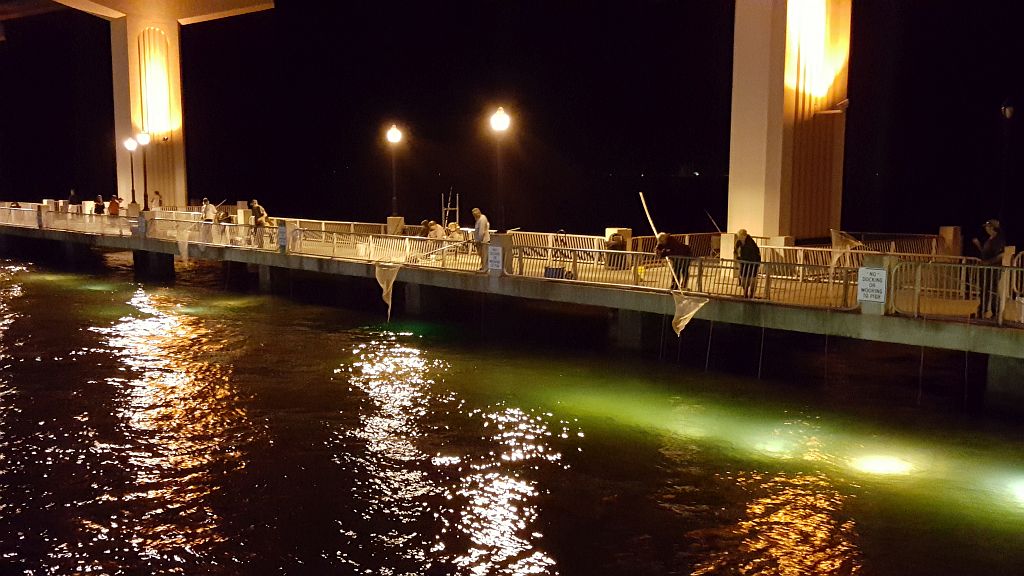
No bank fishing is permitted in Haulover Canal at night
Till Next Month, Good Fishing & Tight Lines To You All!
|