Your October 2019 Mosquito Lagoon & Indian River Fishing Report
Published: Tue, 10/01/19
| Newsletter Issue # 123 | October 1, 2019 |
||||||
Mosquito Lagoon & Indian River Fishing |
|||||||
 The Mosquito Lagoon and Indian River:
Our sea trout bite has been kind of crazy this year. It's good one day and crappy the next, but this past week has been as good as it gets around our area. Slot size trout East of Titusville from Parrish Park all the way down to the NASA Causeway have been hitting Rapala Skitter Walks, Twitchin Minnows, and 5" Saltwater Assassins in the Black Shad and Albino Shad colors. My personal favorite bait, the larger size Chug Bug, has also been catching slot size trout in these areas. Farther South from Melbourne to Palm Bay, the water is cleaner and where you can find concentrations of mullet, you will find large concentrations of speckled trout. If you're a black drum fisherman, you need to wet a line this week for sure. Right now there are schools of black drum roaming all over the Indian River from Scottsmoor down to Port St. John. You never know where they are going to be because they move around so much, but they're out in open water along the ICW channel spawning and on the deeper flats. 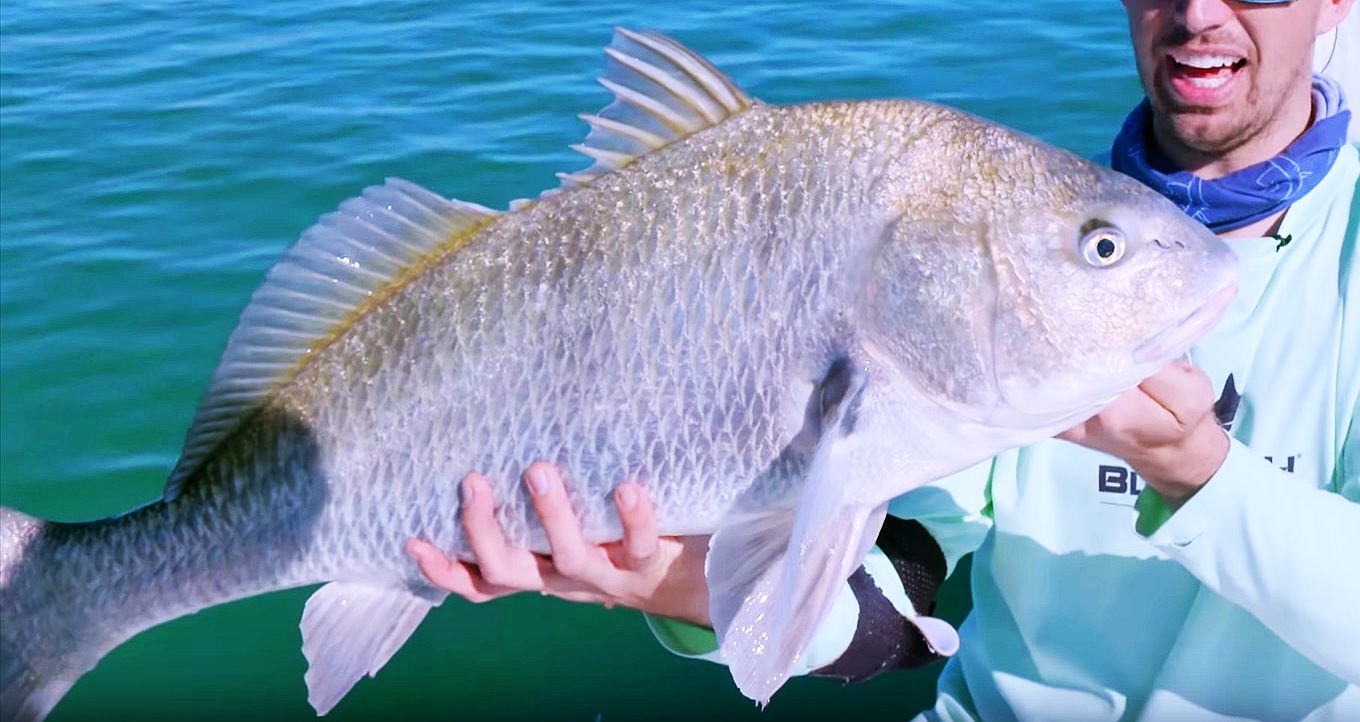 You can spot them by looking for freshly kicked up mud or sight casting to the schools when they are up on top. Black Drum typically feed by scent but right now for whatever reason, the "Pimp Daddy" color 4 inch Saltwater Assassin Sea Shad has been literally killing the drum. The fish have been crushing this bait which has a purple back and a chartreuse belly with a silver flake. None of the guides know what it's supposed to be, but the drum have been eating it like candy. Most of the drum caught right now have been in the 20 to 25 pound range and we can expect this activity to continue for the next 2 to 3 weeks. Around the Ponce Inlet jetties this past week, bull redfish have been the main attraction for anglers working the mouth of the inlet. Most anglers have been using a live or cut mullet on a sliding sinker rig but fresh cut blue crab, pinfish, and even pilchards have been working well. A few snook, bluefish, and sharks are also being caught around the mouth of the inlets. Farther south in the river around the dropoffs and deeper undercut banks, anglers have been catching pompano on Goofy Jigs and live sand fleas with sliding sinker rigs. Small nylon jigs in white, yellow, and chartreuse tipped with a small piece of shrimp or fishbites, also works well. During the winter months, when the water temperatures drop into the low 50s or 60s, the fishing pressure in our lagoon systems will start to ease up and the sight fishing bite for redfish, black drum, and big spotted sea trout will improve dramatically. The best time to fish is usually just before and after the cold fronts pass. Bank fishermen along the causeway East of Parrish Park, Catfish Creek Loop, Gator Creek, and around the Peacocks Pocket boat ramp have been making good catches of mostly slot size redfish, black drum, and spotted sea trout. Baits of choice are live fingerling mullet, live or fresh dead shrimp, sections of blue crab and cut mullet or ladyfish. The best bite is early in the morning and late afternoon up to an hour after sunset. If you don' t mind walking and losing a lot of fish and lures, try walking the overgrown road that used to be Peacocks Pocket Road. From the small boat launch to the first large pond, small schools of black drum, some large sea trout, and oversize redfish are being caught on a variety of artificial baits. Chug Bugs, gold Johnson Sprite spoons, Creme WildEye Swim Shad and D.O.A. Jerk baits are the most productive baits. Carry at least a couple of each if you want to fish the road. This specialized fishing is not for everyone but if you want to fish areas that have virtually no fishing pressure, it might be for you. IRL Clam Restoration Project: We believe that the clam restoration project that is now going on in the Indian River Lagoon is essential to the health of all our lagoon systems. Clams and oysters are filter feeders that clean suspended impurities from fresh and saltwater. The over harvesting of clams over the years is believed to be one of the causes of the continuous brown algae plague that we endure every year. When I first moved to Florida, I remember watching the fleets of clam skiffs from the NASA Causeway bridge. The clammers had long rakes that they used to fill up their sacs which they eventually unloaded at Port St. John boat ramp. Over harvesting decimated the fishery to the point that clamming was no longer viable however, the long term effect to our lagoon system was the build up of brown algae that blocked out the sunlight and killed off the sea grasses that makes the whole ecosystem function so perfectly. Unfortunately it took scientists at the University of Florida Whitney Labs until now to realize that our waters were not being adequately cleaned by the shellfish that we over harvested however, they have developed a "super clam" that is hardier and more tolerant to fluctuations of water chemistry that they have been introducing into the lagoon systems to filter the water. In partnership with locals who have existing clam leases, the "super clam" spats are being distributed and covered up with netting to protect them from predation in our lagoon systems until the clams reach spawning size (approximately 1"). Once adequate breeding populations have been introduced and stabilized in the waters of our lagoon systems, the sea grasses will again flourish creating the nursery for shrimp, crabs, fish, etc. that we all enjoy.  The IRL Clam restoration banquet is being held on October 5th. at the Cocoa Convention Center from 5:30 am to 10:30 pm. to raise funds for the much needed project. The IRL Clam restoration banquet is being held on October 5th. at the Cocoa Convention Center from 5:30 am to 10:30 pm. to raise funds for the much needed project.There is going to be a kids fishing tournament (6-12 years of age) that starts around 8:00 to 8:30 am with special guests that include Roland Martin, Capt. Jim Ross, Shawn Grisby, Bobby Lane, Blair Wiggins, and many others. The general admission is $50.00 to get in the door, which includes a Fish Fry and BBQ Dinner in the evening with chicken, ribs, and BBQ plus 1,000 clams for you to put in the local waters. Live and silent auctions will also be held in the evening to help raise money for the Indian River Lagoon Clam Restoration Project. $200 VIP tickets are also available that includes a Private Celebrity Dinner in the Porcher House. The IRL Clam Restoration project is a long overdue necessity to restore the water quality in the Indian River Lagoon System back to it's previous state. To donate to this fund CLICK HERE. For tickets to the banquet CLICK HERE: Learn more about the project here: Video 1, Video 2 Port Canaveral and Nearshore Fishing: We've had back to back hurricanes coming past our coast which has caused some dirty water, but as the water starts to clear and we start to see a decrease in the water temperature, we should see a lot more sailfish action, especially North of us around Ponce Inlet. 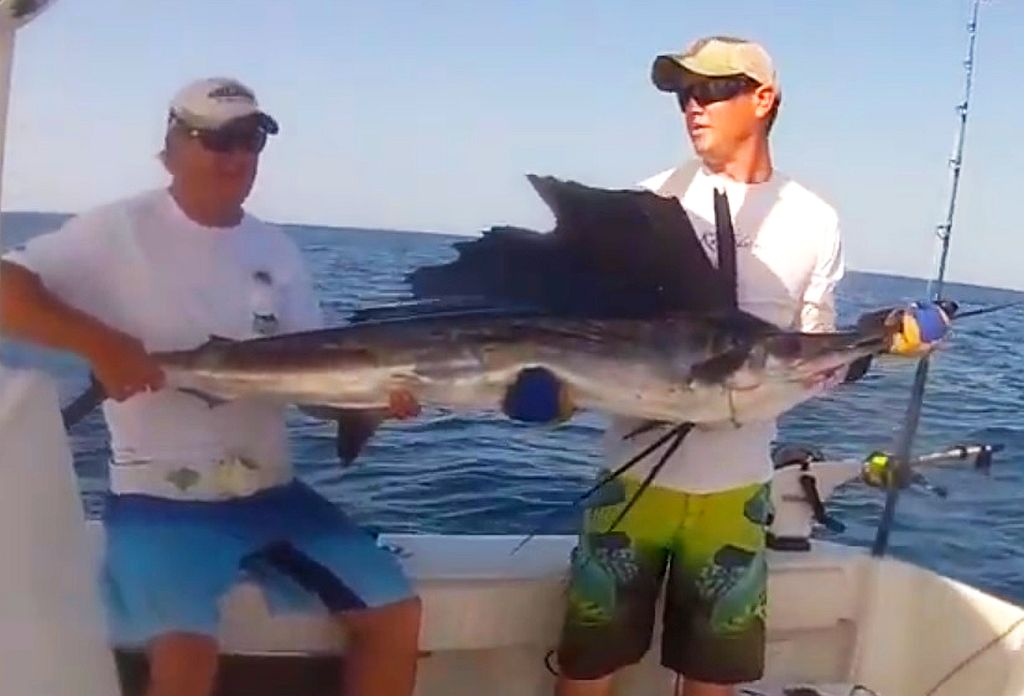 Naked chin weighted ballyhoos or small mullet trolled at 3 to 5 knots near rips, color changes, or temperature breaks in 200 to 300 feet of water along the Western edge of the Gulf Stream should give you a good chance of a hookup. If you use a skirt, use small skirts, but the best thing you can do to increase your hookup ratio is to pull one or two dredge style teasers to give the illusion of a school of bait. The sails like to heard bait schools and when they see a "straggler" they usually bust it. Expect hookups with dolphin and an occasional Wahoo when trolling skirted ballyhoo. Most of the sailfish caught in our area are in the 30 to 40 pound range but as the season progresses, we usually start seeing sails in the 50 pound plus range. The guys up at Ponce Inlet will be the first to reap the benefits of the October baitfish run of mullet, pilchards, menhaden, glass minnows and whatever else is migrating South along our beaches. Cobia, kingfish, Spanish mackerel, big jacks, bonito, and tarpon are some of the predatory game fish that will be closely following the baitfish run past Port Canaveral, all the way to Sebastian and Fort Pierce Inlet. When the big Manta Rays move closer inshore, Cobia will be shadowing them and during calm seas and bright days, sight fishermen will be pitching live baits and artificial lures to them. The most targeted areas are north of Canaveral toward the tip of the Cape and south to Cocoa Beach and Patrick AFB. Most of the guys launch at the Freddie Patrick boat ramp just west of Jetty Park, which is less than a mile from the open ocean. Kingfish are targeted in pretty much in the same areas including the waters north of Playalinda Beach and the Canaveral National Seashore. The most popular method for catching kingfish in our area is to troll a live mullet or menhaden on a stinger rig around the bait pods, over small ledges or scattered bottom structure out up to 5 or 6 miles from the beach. Kingfish in the 25 to 30 pound range are common right now out of Port Canaveral, but occasional "smoker" kingfish in the 50 pound plus range are also brought in on a pretty regular basis. Around Sebastian Inlet, most anglers targeting kingfish are concentrating their efforts along the inshore ledges and shallower reefs north and south of the inlet. The baitfish normally school up at first light over the shallower reefs in 15 to 20 feet of water north of the inlet where anglers targeting kingfish slow troll live baits for smaller fish up to 20 pounds. Around 9:00 am, as the sun rises, the baitfish will start moving into deeper water. These same shallow reefs can also hold impressive numbers of Tarpon. Jetty Fishing: Anglers fishing the Inlets and passes from Ponce Inlet all the way down to Sebastian have been catching plenty of fish, and the October bite is expected to be even better. Bull redfish and snook have been holding along the drop offs in the jetties and channels and the guys using large chunks of ladyfish, mullet, Spanish mackerel, or bluefish have been doing quite well. Most fishermen are using 3 to 4 ounce sliding sinker rigs with a 3 to 4 foot section of fluorocarbon leader and 6/0 Owner circle hooks to present their baits to the reds. Anglers using large live pinfish or Croakers have been picking up some nice snook free lining their baits on 5/0 or 6/0 hooks tied to 50 lb. fluorocarbon leaders. The fish have been running in the 20 to 40 inch range and are holding in the same areas as the redfish.  The snook bite at night out of Sebastian and Port Canaveral has been good for the past couple of weeks. The snook bite at night out of Sebastian and Port Canaveral has been good for the past couple of weeks.
Fishermen casting the Bone Chartreuse Rapala X-Rap have been catching some nice fish from this area at night around the lights. The same area is good for flounder if you fish with a live mullet or mud minnow with a fish finder rig. Bounce the bait around where the sandy bottom abuts the rocky shoreline. White hair jigs tipped with a small piece of shrimp cover more ground and often work just as well. The sea walls at Port's End Park along the west end of the Port, the rocky jetties at the west end of Jetty Park, and the pier at Jetty Park are all popular locations for winter flounder fishermen. Playalinda Beach Surf Fishing: The Fall months are when schools of Pompano start coming down the beach, and Playalinda Beach in the the Canaveral National Seashore is one of the better "hot spots" for Pompano in East Central Florida. 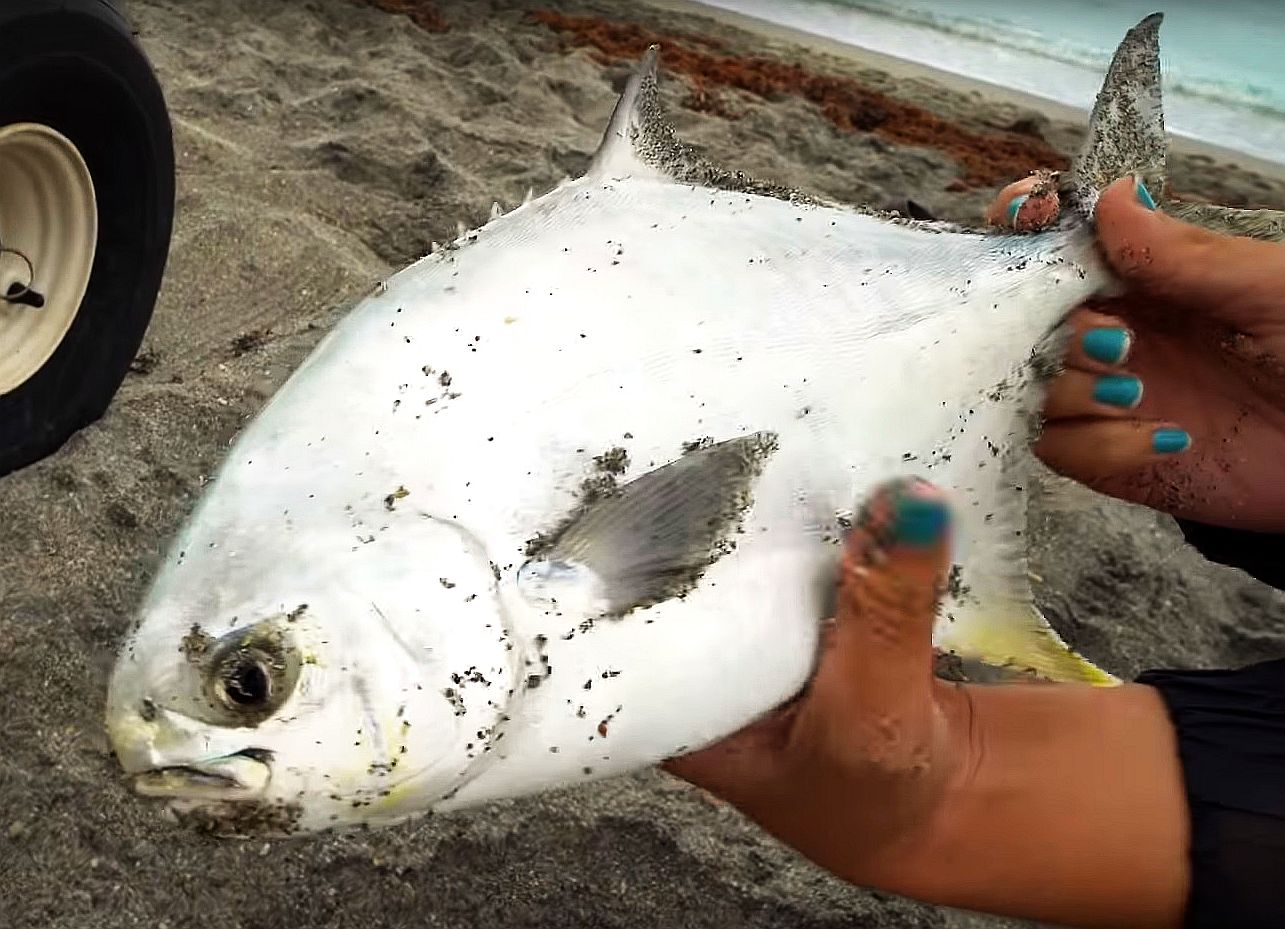 Located in the Merritt Island National Wildlife Refuge just north of the Kennedy Space Center and the Cape Canaveral Air Force Station, Playalinda Beach is the longest stretch of undeveloped beach on Florida's East Coast. Thirteen parking lots provide easy access to the beach and most of the access points have restroom facilities. Six of the parking areas are equipped with handicapped access ramps for disabled fishermen. Starting around October, especially during the weekdays, Playalinda Beach is often void of human activity and you can have the entire beach to yourself as you can see by the video below. 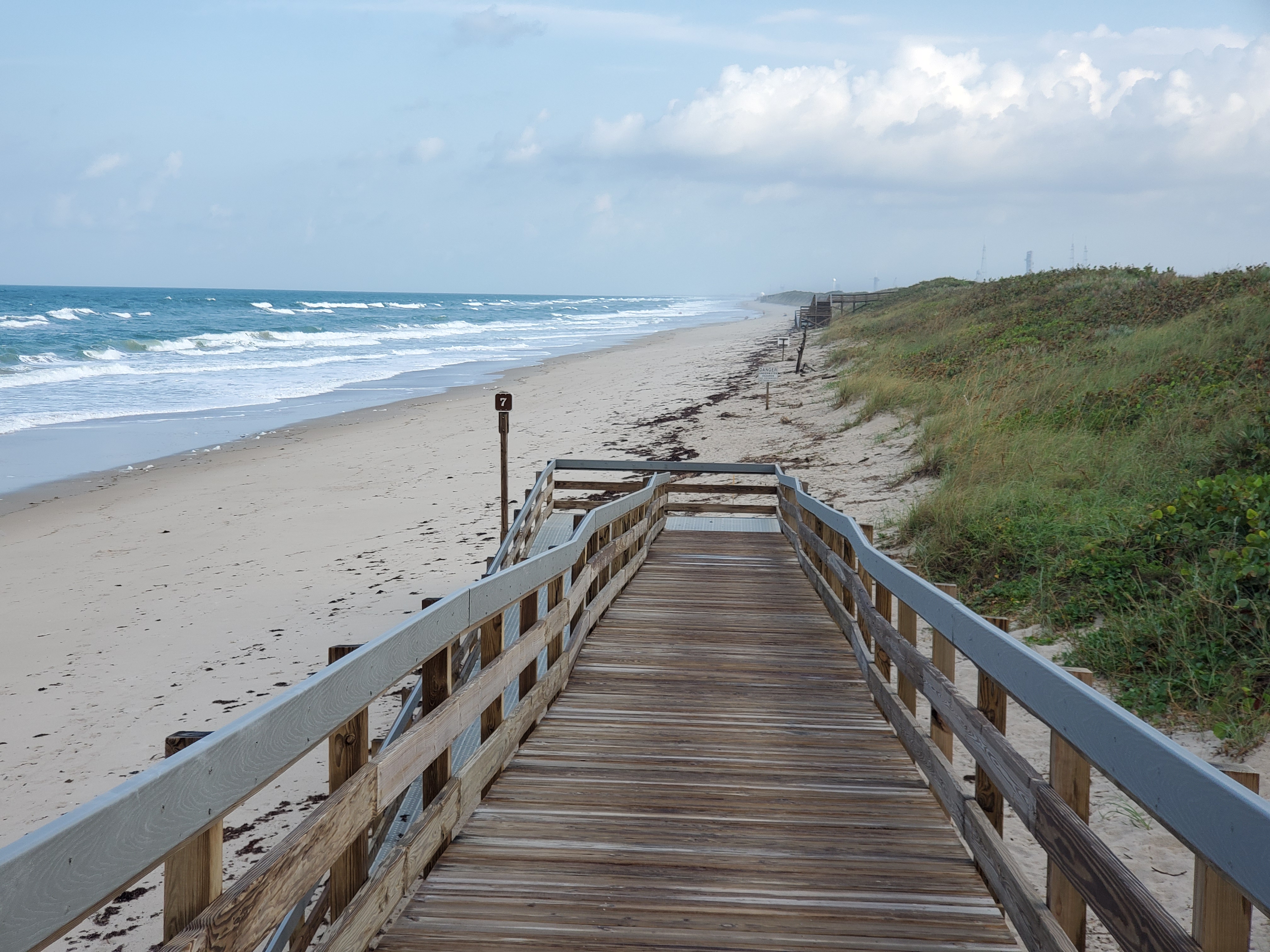 The beach at Playalinda drops off sharply in several areas forming deep troughs that are within easy casting distance from the beach. The last hurricane caused a bit of beach erosion that made a lot of the troughs easier to spot. Casting into the deep troughs with Goofy Jigs in orange, yellow, or chartreuse with a white or pink feather on it, or short tailed nylon jigs in yellow or pink, with a small piece of shrimp or a sand flea on it has been working really good in the surf for both pompano and whiting. Fishbites also work really well on Goofy Jigs and nylon jigs if you don't want to fool around with shrimp or sand fleas. Pink colored fishbites in the clam flavor have been working well on the whiting, pompano, and juvenile black drum. The best time to find schools of pompano and whiting moving in closer to the beach is during the incoming tides when small crabs, sand fleas, small shrimp and baitfish are pulled into the deeper troughs with the backwash from the shore breaks and swells that cross the offshore sandbars just past the troughs. During an outgoing tide, the schools move out into deeper water just past the sandbars where longer casts are needed to catch them. Most of the pompano that have been caught at Playalinda right now are running in the 2 to 4 pound category. When the fall run of baitfish are thick in the surf, net some up for bait and toss one out on a short wire leader to pick up some bluefish or Spanish mackerel that follow the schools. Chunked finger mullet, ladyfish, or fresh shrimp are also good baits for blues but when the surf is full of baitfish, I prefer tossing a 1/2 oz. silver Krockodile spoon into the surf for blues. A daily $10.00 per vehicle Park entrance fee is charged to fish Playalinda Beach, or you can purchase a $40.00 annual Canaveral National Seashore/Merritt Island National Wildlife Refuge Park Pass at the entrance booth. If you are 62 or older, you can buy a Senior Lifetime Pass for $10.00 or an America the Beautiful Annual Pass for $80.00. A signed Refuge Sport Fishing permit that must also be carried on your person while fishing in the Merritt Island National Wildlife Refuge is also necessary and can be picked up at the entrance booth, any of the kiosks, or by downloading it HERE. The self-issuing permit makes sure that you have read and understand all the rules and regulations pertaining to the Merritt Island National Wildlife Refuge. Freshwater Fishing: With the onset of cooler temperatures that we will be experiencing for the next four months or so, many East Central Florida anglers will be targeting Crappie. 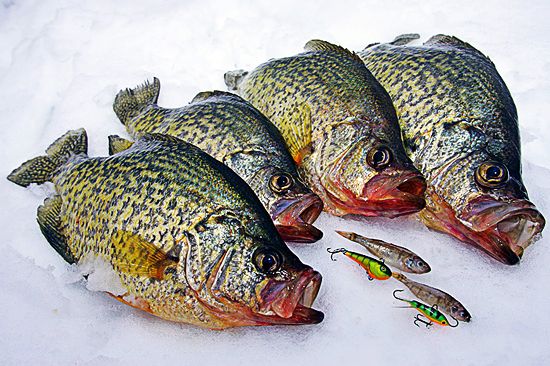 Lake Crescent, the big and little Lake George, Lake Monroe (near Sanford), Lake Jessup, Lake Washington on the upper St. Johns River, and Lake Harney are all great areas to target "Specs". Lake Crescent, the big and little Lake George, Lake Monroe (near Sanford), Lake Jessup, Lake Washington on the upper St. Johns River, and Lake Harney are all great areas to target "Specs".Lake Washington is almost 5 miles long and has a series of small, low ridges that run North to South which are gathering points for Crappie. Although the ridges are only about 6 inches high, a good fish finder will easily locate them. Most anglers slow troll over the ridges with small crappie jigs or live minnows until they locate a school and then cast to them. Lake Monroe near Sanford, Fl. is known for slab size crappie. Most are caught by slow trolling crappie jigs and tiny plugs but the biggest crappie go for small jigs, Bream Killers, Hal-Flies, or Beetlespins. Missouri minnows and grass shrimp are also great baits in most East Central Florida lakes for crappie and bream. Lake Harney is a 6,058 acre lake with excellent bass and crappie fishing, especially in the early spring. The St. Johns River enters the lake at the south end and exits at the north. The lake can be reached from the St. Johns River via ramps on Mullet Lake Rd. off of S.R. 46, and in Lemon Bluff south of Osteen. There is a public boat ramp located off of SR 46 that allows access to Lake Harney by following the St. Johns River north to the lake entrance. Lake Harney has good fishing for largemouth bass, Black Crappie, Bream, and Catfish. Haulover Canal: During the winter months "bull redfish" and big black drum move in greater numbers from the Mosquito Lagoon into the north Indian River, through Haulover Canal. This is when bank fishermen using half or a whole blue crab can pick up a trophy bull red up into the 40 pound category. 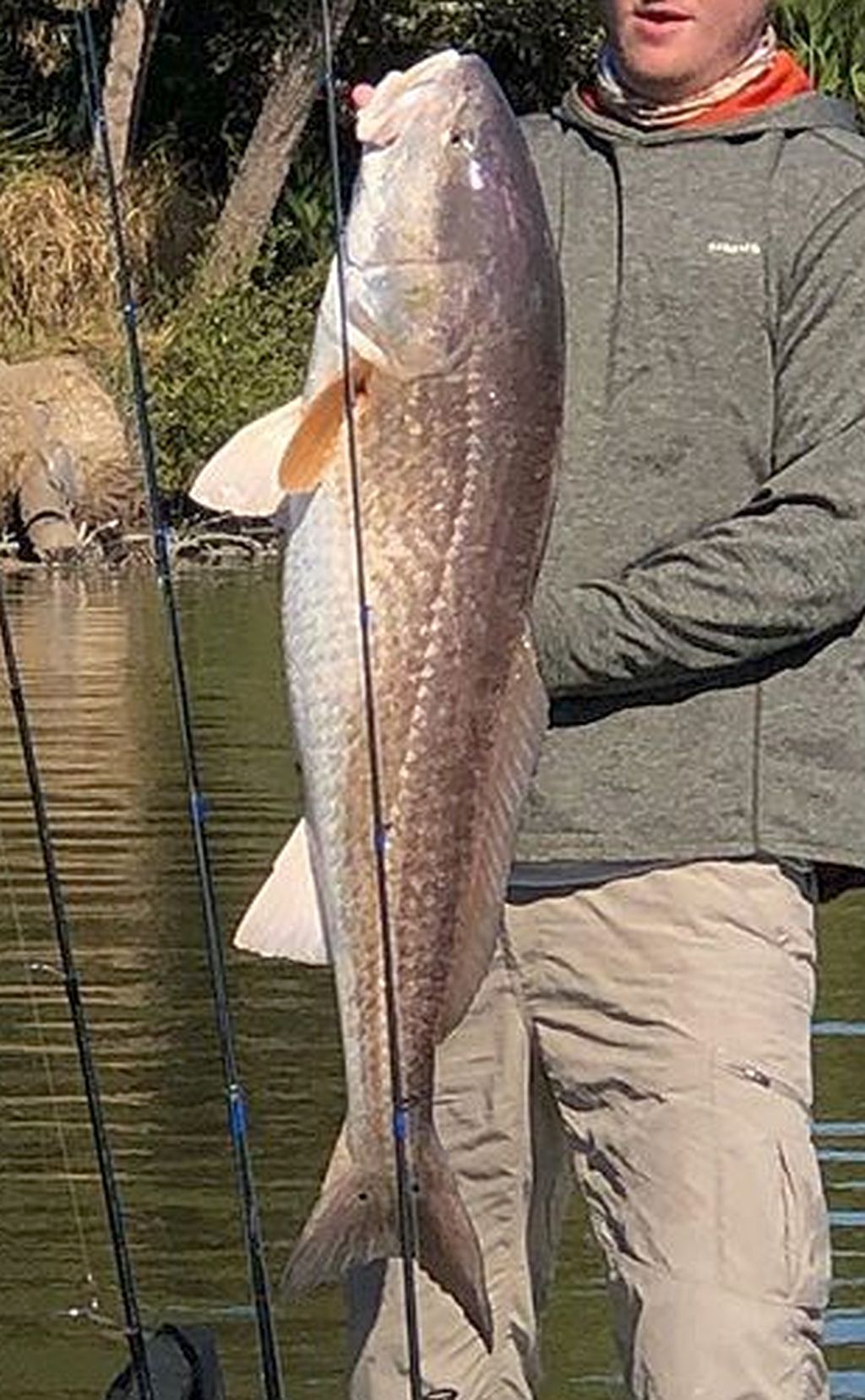 Although most of the redfish and a lot of black drum caught are well over the slot, a lot of legal size fish are also landed from Haulover. Most black drum caught for the next few weeks will be in the 20 to 30 pound plus range with a few in the 10 to 15 pound class. Live shrimp is by far the bait of choice at Haulover for drum, but fresh clam and blue crab sections are a close second. Under size Mangrove (Gray) Snapper are also a common catch around the bridge and coquina outcroppings at Haulover. Live shrimp and small jigs are baits of choice for these tasty fish. Just about anybody who has fished at Haulover Canal will tell you that it's a good idea to use Power Pro or some other braided line as your main line. An appropriate weight to keep the bait on the bottom and a heavy fluorocarbon leader with a 5/0 or 6/0 VMC circle hook completes the terminal tackle. Braided lines are stronger and more resistant to cutoffs from the Coquina rocks that line the banks of the canal. No night time bank fishing is allowed in Haulover Canal but anglers in kayaks and a variety of boats can be spotted night fishing almost any time of the year. Oversize black drum, bull redfish, snook, sea trout, Gag Grouper, Mangrove Snapper, and even tarpon can be caught during the evening hours and at night when in season. Plenty of Sea Manatees live in the canal that have absolutely no fear of people. They come up to the bank at times to feed on sea grasses and will occasionally bulldoze through your fishing line. If this happens, save as much line as you can and cut it off as soon as possible. Notify fish and game if possible. These gentle giants get beat up enough by the boat props. Until next time, Tight Lines and bent rods! |
|||||||
| Link One | Link Two | Link Three | Link Four | Link Five | Unsubscribe to this newsletter |