Your July 2019 Mosquito Lagoon & Indian River Fishing Report
Published: Mon, 07/01/19
| Newsletter Issue # 120 | July 1, 2019 |
||||||
Mosquito Lagoon & Indian River Fishing |
|||||||
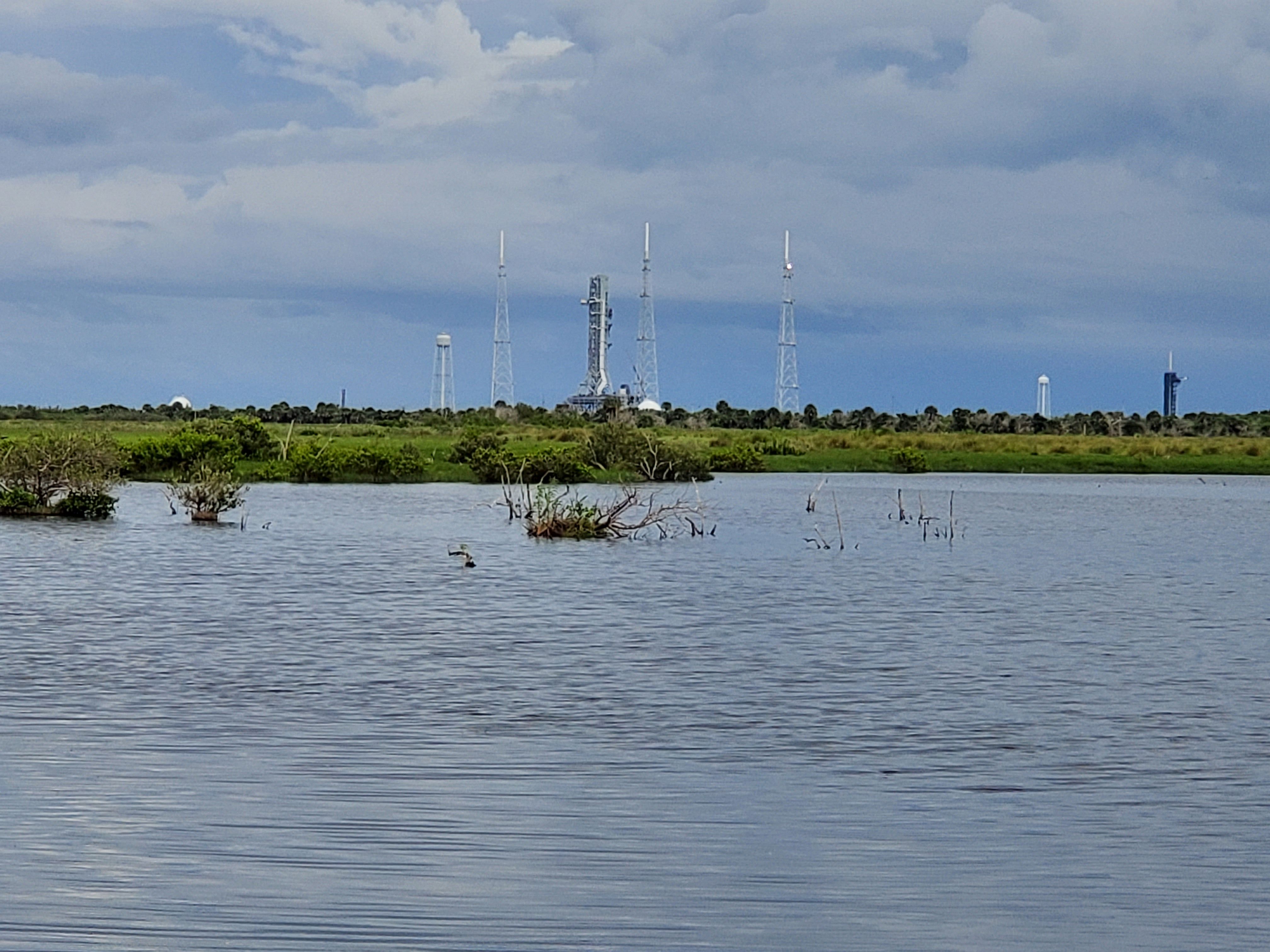 The Mosquito Lagoon and Indian River The fishing opportunities in East Central Florida this month are excellent for a variety of inshore and offshore species. The July Independence Day celebration is certain to bring a lot of fishermen into our area chasing bull redfish, big gator sea trout, snook, tarpon, and just about anything else that will hit a shrimp or artificial bait. Sight fishing for big reds and gator speckled sea trout can be spectacular on the shallow water grass flats of the Mosquito Lagoon and areas of the Indian River during the wee hours of the morning just before daybreak up to about 9:00 am and again in the late afternoon during the "magic" hour or so just before dusk. This is when the fish are actively feeding and easiest to catch. Night fishing along the causeway, from the fishing piers, and bridges can also provide some good fish. Schools of finger mullet run up and down the causeway and along the shorelines at night are easy picking for big sea trout and reds that shadow the schools. For the past week or so, the redfish bite in our area has been slow, but the bite for speckled trout, silver "sand" trout, and spotted weakfish has been on fire. If you want to catch speckled sea trout, hit a grass flat on the west side of the Mosquito Lagoon around the clinker islands, or down in the South end of the lagoon and fish any grass flat that has some mullet on it at first light with a Chug Bug. The "clinker islands" to the north of Haulover Canal and the shallow grass flats in the southern end of the lagoon around the Whale Tail are always good areas to target spotted sea trout, but anywhere you can find sea grass holding baitfish is a good area to fish. Live pigfish freelined or fished underneath a Cajun Thunder float has been the top bait for big "Gator" sea trout in both the Mosquito Lagoon and the Indian River. Put them on a 4/0 Kahle style hook and fish them near the grassy areas around pods of mullet. 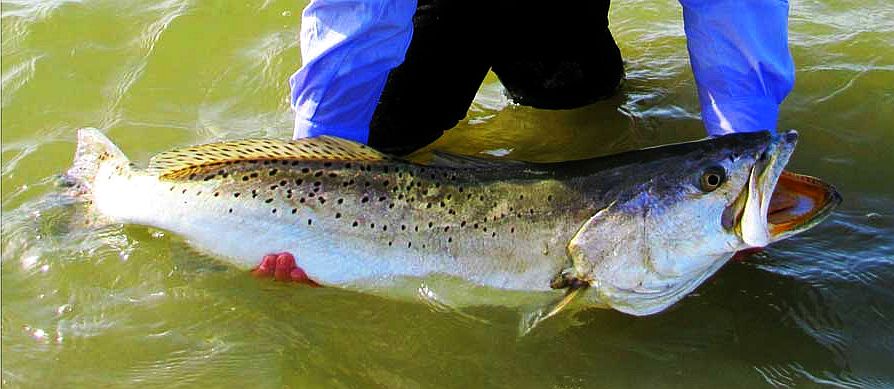 The pigfish will immediately head into the grass, but when this happens, give the bait a quick twitch or pull them out of the grass. This is called "oinking" by the local guides because every time you twitch them or pull them from the grass, they give a grunt or an "oink" which attracts the sea trout. A live pigfish under a float with enough lead to keep the bait just above the sea grass will call trout, snook, and redfish from quite a long distance. Early in the morning, try "walking the dog" with a Rapala Skitterwalk around the bait pods. The Bluegill pattern looks like a pinfish or a pigfish and the trout have been hitting those patterns really good right now. Many of the guides fishing a Saltwater Assassin Sea Shad in the Silver Mullet or Gray Ghost color have also been reporting good bites in the early mornings and even throughout the day. During July, most of the largest "gator" sea trout caught in our area are caught in the early morning hours of the shallower flats with smaller sized topwater baits. SkitterWalks, Chug Bugs, Mirrolures, Zara Spook Jr., and anything that resembles a silver mullet will produce trout if they are in the area. Large 5 to 6 inch jerk baits or paddletail baits rigged weedless and fished underneath the floating grass also picks up big fish when topwater bait fishing is next to impossible. A Z-Mann Pop Shadz or a 5 inch Saltwater Assassin rigged weedless on a 5/0 bass worm hook is just about weedless and is easy to fish along the surface in weedy areas. Most sea trout caught this month will be in the 1 to 3 pound category, but larger fish in the 9 pound plus category are always being caught on the flats by anglers using live pigfish. Silver trout are being caught in the deeper portions of the Mosquito Lagoon and in the channel of the ICW on live shrimp or a Saltwater Assassin Sea Shad on a 1/4 oz. jig head, especially the chartreuse colored jig head. Smear the bait up with some Pro-Cure Inshore formula for more bites. The spotted weakfish is normally a winter catch in our area but for the past few weeks, because of the cold water upwellings, we have had a lot of them in our area. You can find them suspended 5 or 10 feet just above the bottom on our nearshore wrecks and reefs in 25 to 55 feet of water. You can catch them by dropping a live shrimp down on a sliding sinker rig or a knocker rig. The Titusville fishing piers this month have been producing some good catches of black drum, sheepshead, and an occasional redfish if you can steer them away from the pilings. Most of the black drum are being caught on shrimp, and sections of cut crab seem to be the preferred bait for the reds. Late evening and night fishing seems to be the when most of the action happens. The black drum bite in the Mosquito Lagoon and Indian River has also started to turn on again. The fish have been schooling on the flats around the mullet pods in the Mosquito Lagoon and running along the deeper areas near the causeway and bridge pilings in the Indian River. If you're into fly fishing, you might enjoy throwing some patterns mimicking glass minnows around the creeks in the north Indian River for juvenile tarpon, big ladyfish, and snook. The shallow creeks off north Shiloh Road that were stagnant and pretty much void of fish last month have filled up with the recent rains and are holding fish in the early mornings and late towards dusk. Close to dusk some slot reds mixed with "rat" reds come into the creeks to forage on small bait fish and crustaceans. A well placed fly will usually get their attention. If you're into tarpon fishing, try the Vistas in the Canaveral National Seashore going to Playalinda Beach. During the summer months they hold some decent sized juvenile tarpon that can be caught on flies, paddletail baits, top water plugs, and countdown baits. 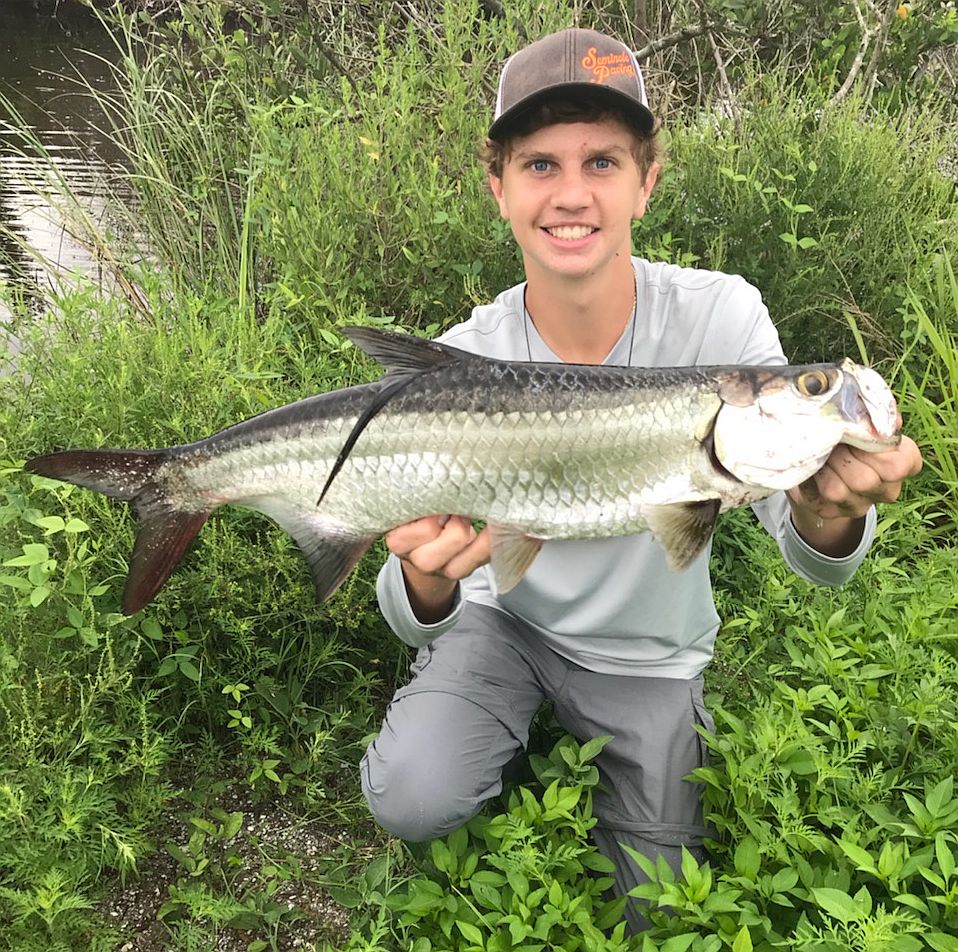 At Sebastian Inlet, the night time snook bite off the catwalks and jetties has been phenomenal. Large Storm swimbaits in the mullet or pogie colors are getting hammered if you fish them along the rocks. The Rapala X-Rap 14 lure in the black back or green back with silver sides is another great lure that has been slaying snook in this area. The average night time snook out of Sebastian right now has been running 36 to 40 inches in length, so make sure your tackle is geared to the fish. Nearshore and Offshore: Offshore, the mangrove snapper have been spawning this past week on most of the reefs and wrecks in our area. 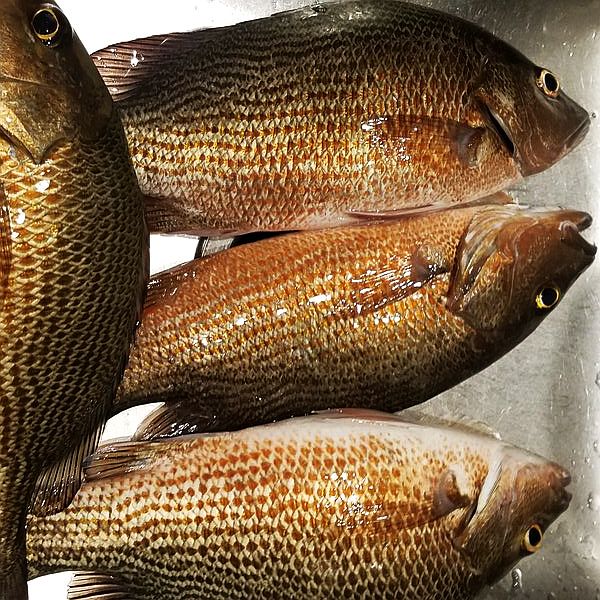 Chum bags will get them to come up in the water column where you can drift an unweighted piece of chunk bait to them when they come into your slick. Chum bags will get them to come up in the water column where you can drift an unweighted piece of chunk bait to them when they come into your slick.A black VMC 7387 circle hook in a 2/0 or 3/0 size is what most of the guys have been using right now for mangrove snapper. Most of the mangrove snapper have been averaging 2 to 5 pounds, but fish up to 12 pounds have been showing up on the dock this past week. The second week of June is typically tarpon central in our area, but they haven't been showing up in good numbers yet in East Central Florida. Although a few tarpon are being caught in the Canaveral and Ponce inlet area, most of the fish are still feeding on glass minnows and threadfin herring south of us from Sebastian to Vero Beach. Slow trolling or drifting around the threadfin herring schools with a live pilchard or live threadfin on a 7/0 size VMC 7385 circle hook should get you a shot at a tarpon in our area if they are around. Most of the fish showing up in our region right now are in the 40 to 50 pound range, but some fish up to 150 pounds have been caught during the past week. This week and for the next few weeks, the tarpon fishing in our area is expected to improve dramatically as the fish continue to move north. Red Snapper are allowed to be harvested in Atlantic State waters off of East Central Florida's coast with one stipulation; you can keep 2 fish per person 20" or longer, but you cannot cross into Federal waters at any given time during your fishing trip. If you do, you will fall under the Federal regulations and you are not allowed to possess any red snapper period. The exception for the closing in Federal waters is the "mini" South Atlantic region recreational red snapper season which commences July 12, 13, and 14, and again on the 19th and 20th of July. There is no shortage of red snapper on any of our deep water wrecks or reefs outside of 50 feet of water, and you can expect to see full party boats and booked charters during the one fish limit season searching for that one big keeper, all over the place. If you can get your baits past the red snapper, nice gag grouper or any of the other grouper species now open are biting well. Large live baits are producing the biggest fish. The deep drop bite out of Port Canaveral has also been good for tilefish in the 600 to 700 foot depths. Deep droppers using blue runners, cut bonito belly, and cut squid have been catching a lot of large Tilefish and other deep water species during the past week. Wahoo in the 50 to 60 pound range hold along the 27 fathom ridge that parallels our coast during the summer months. During July, fast trolling in a crisscrossing pattern over the ridge can produce some giants over 60 pounds. Closer to shore, the kingfish in our area will be only a few miles from the dropoffs along Playalinda Beach, north of the tip of Cape Canaveral starting in 40 feet to about 80 feet of water. Farther South in the region, you'll be able to find kingfish anywhere from 10 feet of water out to about 40 feet of water. Find where the bait pods are hanging and you will find the kingfish. The average size for king mackerel in our area right now is from 12 to 18 pounds but some "smoker" kings have been caught recently, some as big as 50 pounds. The bait fish on the inshore reefs north and south of Sebastian Inlet consistently hold kingfish up to 30 pounds and larger. Slow trolling blue runners, pogies, and sardines on stinger rigs is the preferred method for catching kingfish in our area. During July, many kayak fishermen in East Central Florida launch from the beach to get a chance to hook up with a nearshore Tarpon, Kingfish, or Cobia, usually within a couple miles off the beach. Kayak fishermen slow trolling live baits a quarter mile off the beach can expect to hook up with a kingfish, tarpon, bonita, jack cravelle, and a variety of shark. When fishing for tarpon from a kayak, keep it simple. A short piece of 60 to 100 pound test leader snelled onto a 8/0 or 9/0 VMC Circle hook with a live pogie, herring, pilchard, or mullet is all you need to catch a ride from a big tarpon. Most tarpon caught from a kayak will be under 100 pounds, but farther out in the 10 to 40 foot depths, tarpon in the 150 pound category are not uncommon. Kayak fishermen can also take advantage of the "Buoy Bass" bite out of Port Canaveral this July. Most tripletail caught just outside of the Port by kayak fishermen are in the 5 to 10 pound category. Later on in the fall, larger fish in the 20 and even 30 pound category are more prevalent, which is why Port Canaveral is credited with so many world records for Tripletail. Surf Fishing: The whiting are getting thick along Playalinda and our other Central Florida beaches. Surf fishing this month can be extremely productive if you can get out early and beat the crowds of sun worshipers to the beach. Along most areas at Playalinda, a deep trough usually forms immediately offshore of the shore break, followed by a sandbar and then deeper water. The closest trough is usually where the best fishing is for whiting, especially during an incoming tide. As the tide goes out, longer casts to the outside troughs become more productive. Don't cast directly on top of a sand bar which is normally where the surf starts to form. Instead target the troughs in between the surf. The calmer water is where the whiting school up to grab sand fleas, small crabs, etc. 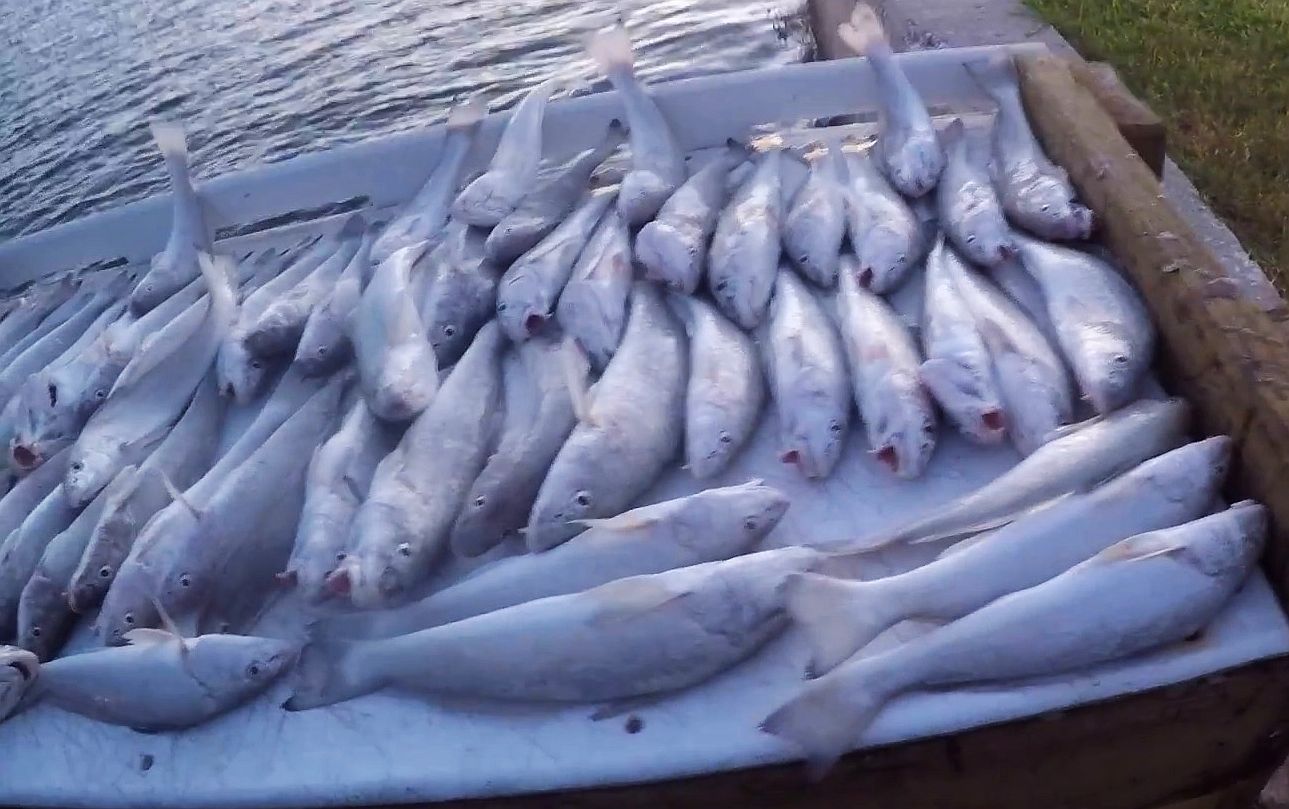 Use small hooks on and a light sliding sinker rig on a 7' river rod with a small piece of fresh, peeled shrimp, or a sand flea to target the whiting in the closest trough and adjust your casts as the tide changes. The best bite us usually during the early morning hours of the day during the middle to the end of an incoming tide. Right now we are experiencing an up-welling of colder water that has made fishing the beach a hit or miss proposition, but as the waters warms up, the fishing will improve dramatically. Shark fishing from our beaches during July is productive for a variety of species, but Blacktips, Bonnet Heads, Bull, and Nurse Sharks are the most commonly caught by surf fishermen. Live mullet, Croaker, ladyfish, and large bloody baits like bonito, etc. on a large 7/0 to 8/0 VMC circle hook crimped on a wire leader with 60 pound or heavier Power Pro as the main line will get you a hookup if they are in the area. Most beach caught shark in our area average less than 100 pounds in weight, but almost every year much larger fish are reported by surf fishermen. The area between Patrick Air Force Base and Vero Beach can be a good place to target shark and Tarpon in the surf. Although most of the tarpon right now are out beyond casting range, they move closer to the beach as the waters warm up during the summer months. If you are planning to target sharks from the shore, beginning July, 2019 you will need to complete a mandatory, no cost, educational course and possess a Shark Fishing Permit to be legal. 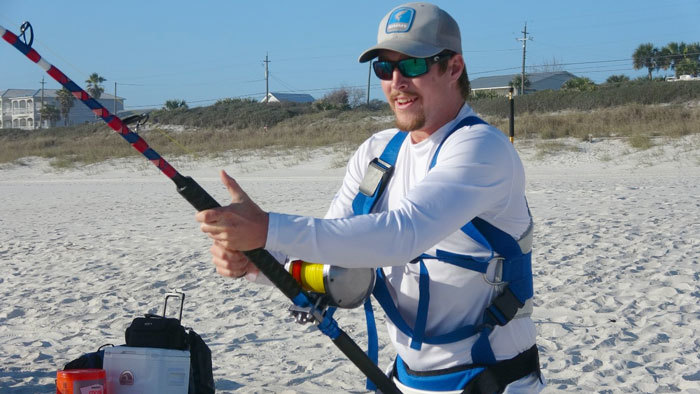 Both the Shore-based Shark-Smart Fishing educational course and Shore-based Shark Fishing Permit are now available online. To take the educational course, which must be completed before getting the permit, visit MyFWC.com/SharkCourse. The permit is required for all shore based shark anglers age 16 and older, including those 65 and older who are normally exempt from needing a fishing license. Anglers under 16 are required to take the educational course unless they are fishing with an adult who already holds the permit. Persons under 16 are not required to get the permit. The education and permit requirements also apply if you plan to fish from shore for any species of fish and will be:
For more information, visit MyFWC.com/Marine and click on “Recreational Regulations” and “Sharks.” Shore-based Shark-Smart Educational Course Instructions
Lobstering: It's time to put on your dive gear again for the July 24-25 statewide sport lobster season that is just around the corner. Click the pic below. 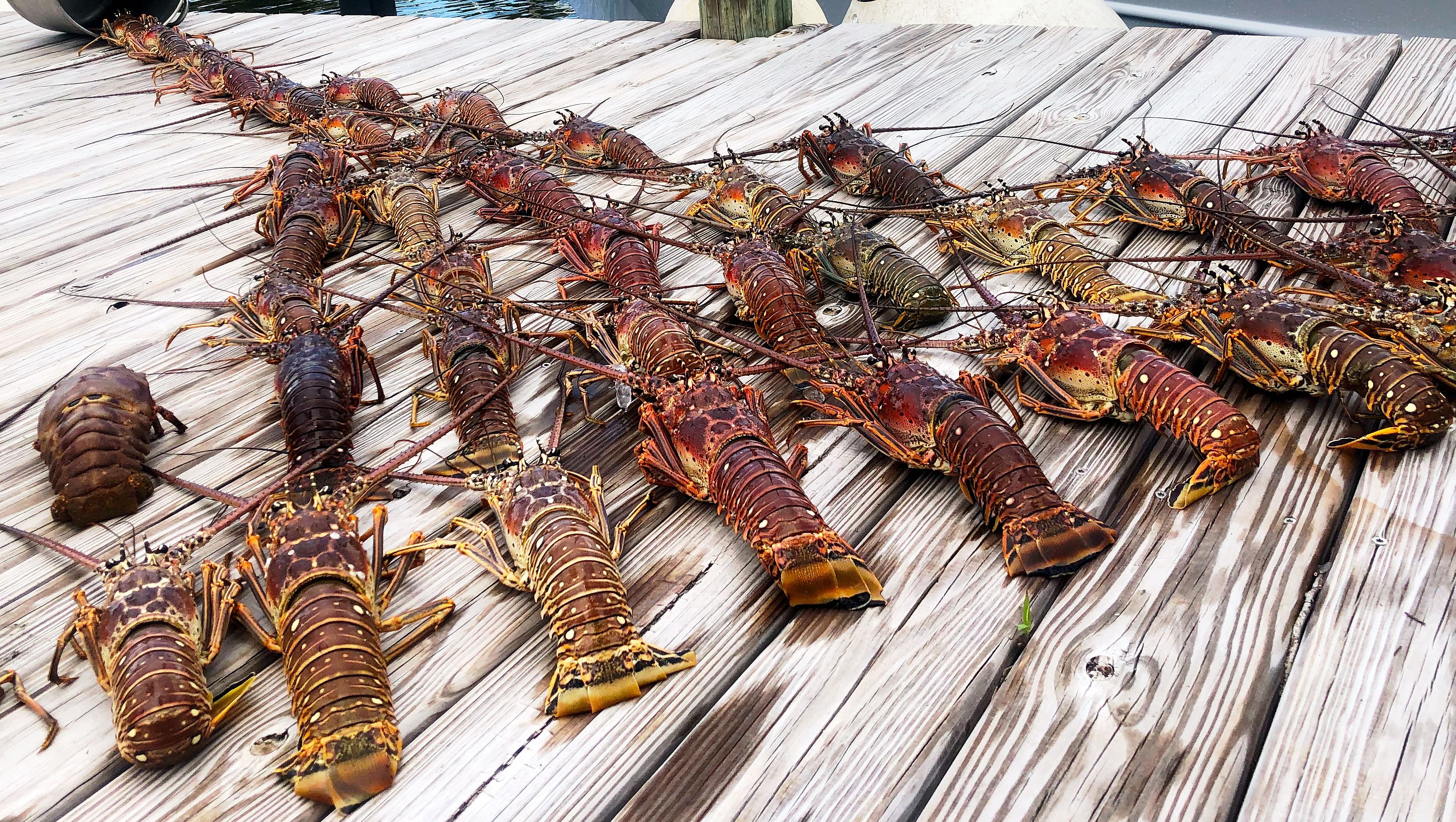 The Atlantic reefs just offshore of Volusia, Brevard, and Indian River counties provide some of the best spiny lobstering in the state for quality size "bugs" with five and six pound lobsters considered common. The largest bugs are found around low profile bottom structure in about 40 to 50 feet of water, particularly between Sebastian and Vero Beach. Better numbers and sizes of lobster for average divers come from 55 to 60 feet of water, but the more experienced divers using Nitrox dive on structure in the 80 to 90 foot depths to harvest some really huge "bugs". When inshore conditions are clear, the shallower reefs in the 25 to 30 foot depths that parallel the beach between Vero Beach and Sebastian Inlet, including Wabasso Beach, produce some good lobstering for snorkelers and those diving from the beach. Wabasso Beach has been a popular spot for beach divers for years. Snorkelers can easily swim out to 15 or 20 feet of water where some very large spiny lobsters have been caught during past years. The Wabasso, Disney Beach area produces "bugs" up to 15 pounds. Although the East Central waters out of Ponce and Canaveral Inlets are often overlooked by sport divers, they provide some of the best lobstering in the state of Florida, with 6 to 8 pound "bugs" considered a common catch. During the two day July 24th and 25th sport season, and the regular season (August 6th. to March 31st.), sport and professional divers out of all three of our inlets will be diving into the 50 to 60 foot reefs in search of these tasty crustaceans. Click on the size chart below for additional information on the 2019 Florida Spiny Lobster Season. 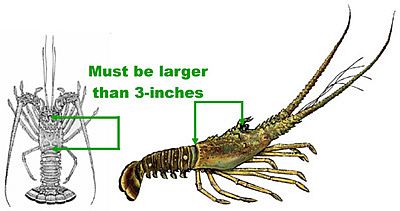 ____________________________________________________________________________________________________ Until next time, Tight Lines and bent rods! |
|||||||
| Link One | Link Two | Link Three | Link Four | Link Five | Unsubscribe to this newsletter |