Your February 2019 Mosquito Lagoon & Indian River Fishing Forecast
Published: Fri, 02/01/19
Mosquito Lagoon & Indian River Fishing |
|||
|
Newsletter Issue # 113 Fishing Forecast February 1, 2019 The Mosquito Lagoon and Indian River February fishing in the Mosquito Lagoon and Indian River can be very productive when the weather permits, but the lousy weather conditions we have had for the past few weeks has made sight fishing a very "iffy" proposition. The cold, windy conditions in the southern portion of the lagoon has colored the water in many areas making sight fishing difficult to impossible. Anglers targeting spotted sea trout and slot sized redfish have been doing pretty good in the Mosquito Lagoon on days when the wind has actually calmed down enough to cast to them. In the southern Mosquito Lagoon, northern Indian and Banana Rivers, the cold fronts will be pushing the sea trout, redfish, and black drum into the deeper water residential canals, main channels, and the deeper sloughs, potholes, and depressions on the deeper grass flats. On bright sunny days, the shallowest muddy bottom flats are generally good places to target. Although snook season reopens February 1st in our area; black drum, redfish, and smaller spotted sea trout will continue to be the three most sought after species for anglers to target this month in all our lagoon systems. The recent cold fronts are causing the redfish and sea trout to move into the deeper residential canals, the sheltered lee sides of the islands, and into deep water areas where overhanging mangroves and trees protect the fish from the winds. A fresh live freelined shrimp with a split shot sinker to get the bait down deep is a proven bait when fishing deep water residential canals. Light lines and smaller shrimp will bet more bites. If you prefer fishing with artificial baits, a 4 inch Saltwater Assassin Sea Shad is hard to beat for sea trout or redfish when the water is clean. Smear some Pro-Cure on your lures, fish your bait slower than usual, and use long casts to get more hookups. During murky or heavily stained water conditions, darker colors like the "Watermelon with Red Flake" or "Copper Penny" color are usually more productive. Gold Johnson's Sprite Spoons are also a good choice when you want to cover a lot of water, quickly. When the water temperatures start to warm up again, the fish will move back out of the deeper water canals into the deeper sloughs, potholes, and depressions on the flats. The most consistent fishing this past month in the Indian River Lagoon system has been the black drum bite that is expected to continue well into February. Big bull redfish are also roaming around with the black drum on most days, so anglers have the possibility of catching fish well over 40 inches on almost any given day. Saltwater Assassin jigs dipped or smeared up with Pro-Cure crab or shrimp scent have been working best on these fish. Black drum and a few scattered sheepshead can also be found around the bridge pilings, near wooden deep water docks, and in the proximity of rocky areas in the Mosquito Lagoon, north Indian River, and Haulover Canal. Anglers fishing around the bridge pilings from the two reopened fishing piers in Titusville have been landing some nice black drum, sheepshead, an occasional slot redfish, and the usual array of hard head catfish and stingrays. Night fishing around the concrete pilings is especially productive. 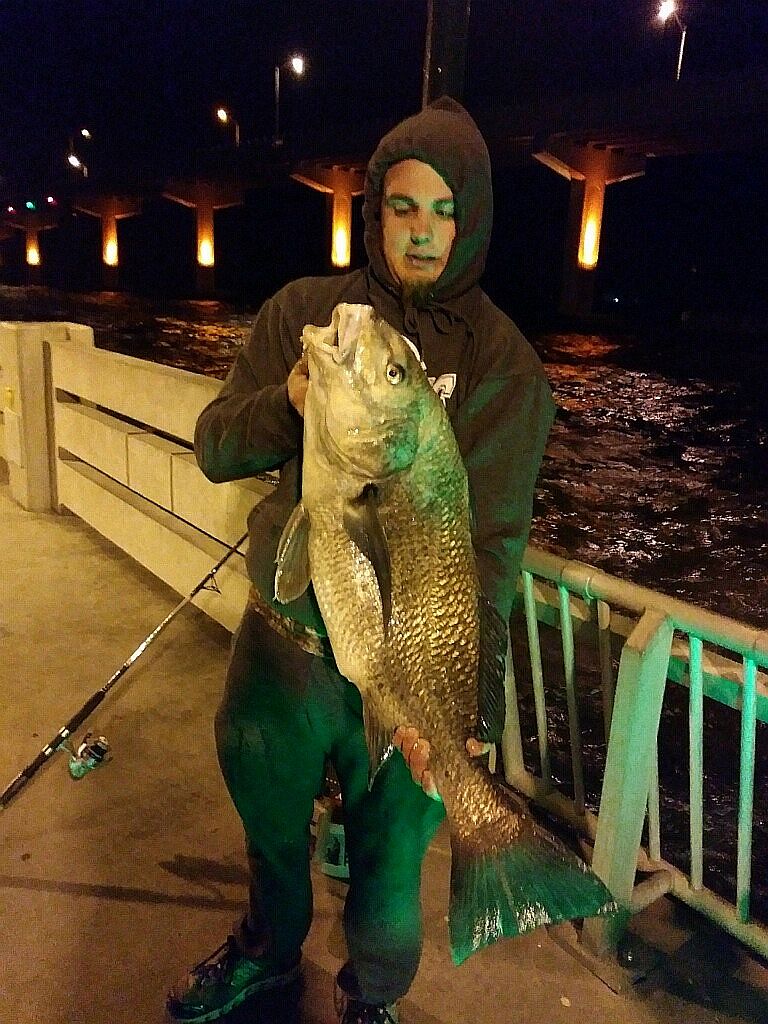 The angler above caught his trophy size drum last week from the upper fishing pier on a fresh dead shrimp. A long handled net or available shrimp net is recommended to land one of these guys. Although the best bait by far for black drum is a fresh live shrimp; small fiddler, mole crabs (sand flea), or sections of fresh blue crab are also very effective baits. The deeper waters of Patillo Creek are normally a good place to fish for slot size black drum during February. The schools travel between the islands along the deeper channels when the weather cools down and can be caught on live or fresh dead shrimp. On some days, a "stinky", almost rotted shrimp will catch more fish than a fresh live bait. On bright, sunny days when the water temperatures drop into the 60s and lower, the sea trout will position themselves over the sandy potholes in very shallow water along the shorelines where they can be spotted basking in the warm sun. Slowly wading the shorelines close to the bank is a proven tactic for catching these fish. Look for telltale movements around patches of sea grass and pay particular attention to the darker spots on the sandy bottoms. The fish spook easily in clear shallow water so long casts with light lines and smaller lures are necessary. The skinny flats along Bio Lab Road is an exceptional area to wade fish this month for the big females. As the sun rises and warms up the water, the fish can be spotted on the shallow muddy or sandy bottoms that gradually taper off into deeper grass flats. Usually the fish are not very active until they warm up a bit later on in the afternoon and can be targeted with a live jumbo shrimp, finger mullet, or a slowly fished plastic lure.  Peacocks Pocket road, L Pond road, Shiloh Road, Catfish Creek Loop, and most of the other roads in the Merritt Island National Wildlife Refuge are now closed to vehicle traffic, but you can still walk them and find some good fishing opportunities for sea trout and redfish. Peacocks Pocket road, L Pond road, Shiloh Road, Catfish Creek Loop, and most of the other roads in the Merritt Island National Wildlife Refuge are now closed to vehicle traffic, but you can still walk them and find some good fishing opportunities for sea trout and redfish. Very few anglers bother walking these unimproved roads, so the the fish in these areas have had very little fishing pressure. Pack a few gold spoons, DOA CAL jerkbaits, a couple of Chug Bugs, some extra leader material, a bottle of Pro-Cure, and a few bottles of water in a backpack; grab a couple of rods and you often have the entire area to yourself. Most of the roads now have a lot of growth along the banks, so a Machete could come in handy. Look for fish pushing water in the canals, busting bait along the banks, or swirls in almost any area, but concentrate on the culverts, deeper holes, and entrances to the shallow ponds. If you don't spot any fish, blind cast a gold Johnson Sprite spoon or Creme paddletail bait around likely looking areas. The fish can be anywhere this time of the year. Depending on the weather conditions and water levels, the ponds, culverts, and marsh canal along the roads can produce some great fishing. Playalinda Beach As of this report, Playalinda Beach has just reopened from the "government shutdown" and accurate surf fishing reports have been sparse.
Although the recent beach replenishing project has been creating a lot of dirty water conditions along our beaches and at the mouth of the Port, the long shore current will be moving from north to south again this week to help clean up the water and hopefully the return of the whiting, Pompano, bluefish and Spanish Mackerel in the surf. Surf fishermen using cut clam, small shrimp, or sand fleas on two or three dropper surf rigs have been catching whiting, juvenile black drum, and a few Pompano this past week at Playalinda at #8 and #10. The water at Playalinda is cleaner than farther south and the bite over the past couple of days has been pretty good. Most of the Pompano are being caught farther out past the last set of breakers on an incoming tide, but the fishermen at #8 were catching fish on an outgoing tide Tuesday afternoon in the second trough on shrimp, using short river rods and sliding sinker rigs. If you can endure the often rough weather conditions and don't mind the mostly desolate landscape of Playalinda Beach in East Central Florida, February can be a good month to target Pompano, juvenile black drum, whiting, bluefish and Spanish Mackerel. During the week, you will often find yourself alone on long stretches of beach like the one below at Lot #8 at Playalinda. As a general rule, early morning incoming or full high tides are considered to be the best time to fish the surf, but any moving water can be productive, especially just before or just after a cold front rolls through. A rough surf is always hard to fish, especially during really cold weather days, but the fish are still there if you can get to them past the breakers. Sputnik type 4 oz. or 5 oz. sinkers will hold bottom during a rough surf and if you are using a thin diameter braided line, getting past the last set of breakers should present no problem. Live sand fleas are tough to rake up during February, but the Pompano, whiting, and black drum at Playalinda Beach find clams, shrimp, and bright colored fishbites almost as tasty. Salted clam strips and fishbites have the added benefit of staying on the hook longer. Port Canaveral Offshore and Nearshore Offshore When the water temperature inshore hits the 68 degree mark and the seas are cooperating, start looking for Cobia that are following the rays in the 50 to 90 foot depths offshore. The Cobia really like to hang around pods of baitfish, temperature breaks, color changes, and large manta rays. If you can locate their hangout, you should find some fish. 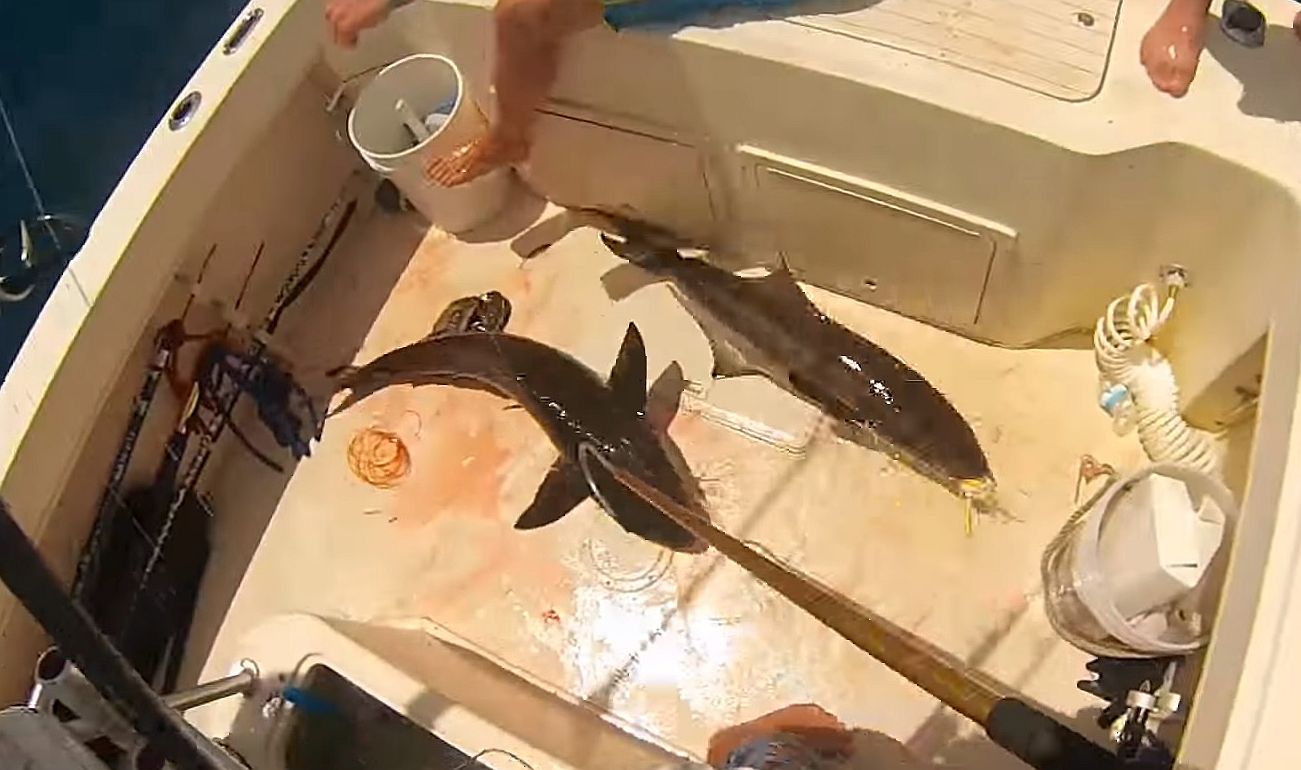 For anglers fishing outside of the 140 foot mark this month, look for dolphin, sailfish, and a few wahoo around structure. On most days, pulling small, dark colored skirts that look like bullet bonito or blackfin tuna will work well on these fish. King mackerel are a staple out of Port Canaveral that can be caught slow trolling spoons, plugs, strip baits, and live or frozen sardines over the 70 to 90 foot reefs. The bigger "smoker" Kingfish off of Playalinda and south to Canaveral Bight, Cocoa Beach, and Patrick AFB are also a possibility this month. In addition to Cobia, King Mackerel, Dolphin, and Wahoo; another species that is targeted by many anglers are the packs of Sailfish usually found southeast of Port Canaveral. Dragging a naked or skirted ballyhoo in the 160 to 280 foot depths will usually produce decent numbers of fish on the days that you can get offshore. If the bite is slow around the flotsam, temperature breaks, color changes and rips in the 180 to 260 foot depths, hit the 27 fathom ridge or the Cones and troll over the bottom structure located there. Both spots are popular out of the Port with most charter captains. Slow trolling frozen ballyhoo, sardines, or live mullet on wire stinger rigs is the preferred method used for smoker kings and sails. Occasionally the shrimp boats will anchor in the 130 to 150 foot depths to sort out their catch. If you can locate one, you have a good chance of catching a Blackfin tuna or a Cobia that often hang around the boats for the by catch. Haulover Canal 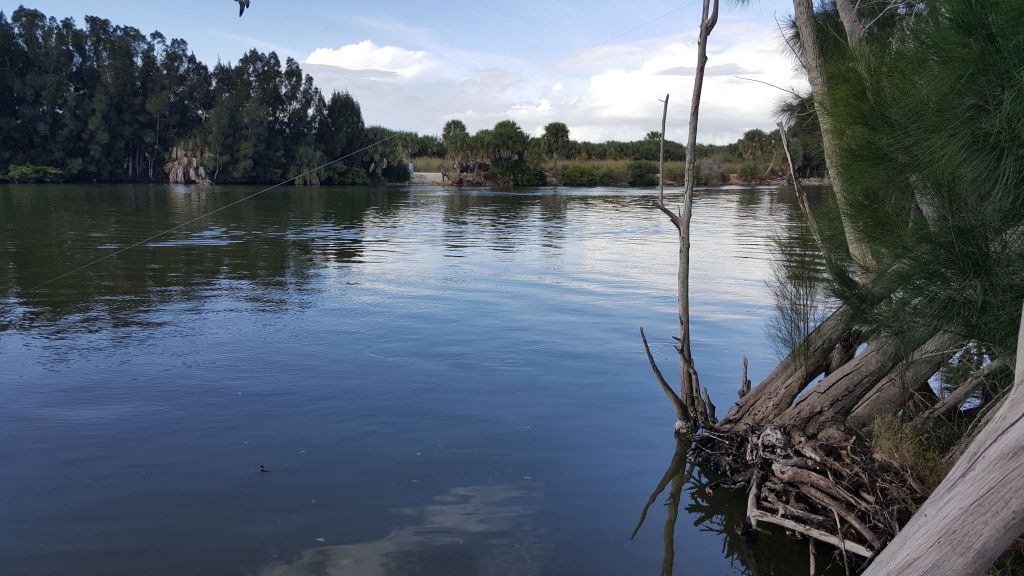 The bank fishermen at Haulover Canal are still catching black drum and oversize redfish in the over 40" category on a regular basis.
On most days at Haulover you will find a number of bank fisherman dunking shrimp, sections of fresh blue crab, chunk baits, or clams for black drum and redfish. According the owner of a bait shop in Titusville, last month was the best he has ever seen for catches of "really big" bull redfish that were over 40 inches in length, and this month is expected to be just as good. The biggest fish are being caught on a half, or whole blue crab, and select jumbo shrimp. Bank location doesn't seem to matter. As of this date, both of the fishing piers at the A. Max Brewer Causeway Bridge have been opened for fishing and shrimping. The best shrimping seems to be with the cast netters at the small bridge going into the parking area, but the locals keep telling me that "the shrimping should get better" in the upcoming weeks. Regardless, the fishing for black drum, sheepshead, and small undersize spotted sea trout from both the piers has been pretty good, especially at night under the lights. Until next time,
Tight Lines and bent rods!
|
|||