Your September 2018 Mosquito Lagoon & Indian River Fishing Report
Published: Sat, 09/01/18
| Newsletter Issue # 110 | September 1, 2018 |
||||||
Mosquito Lagoon & Indian River Fishing |
|||||||
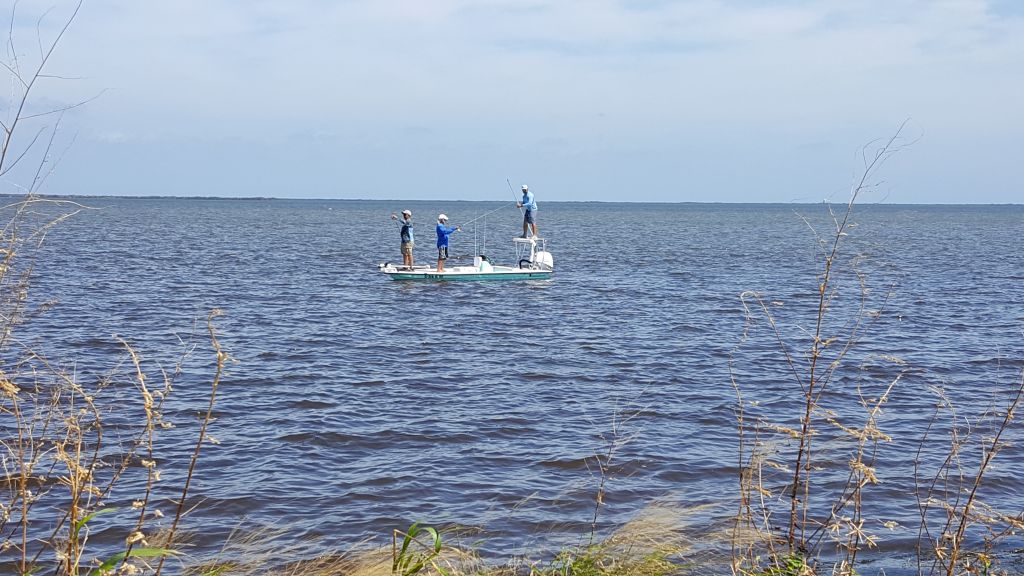 The Mosquito Lagoon and Indian River: Snook season opens today throughout East Central Florida, which means that we will now be able to keep some of our catch for the dinner table. The jetties and Inlet at Sebastian is noted for the year round abundance of Snook, but good numbers also stack up around the jetties and inlets at Ponce and Port Canaveral this time of the year. 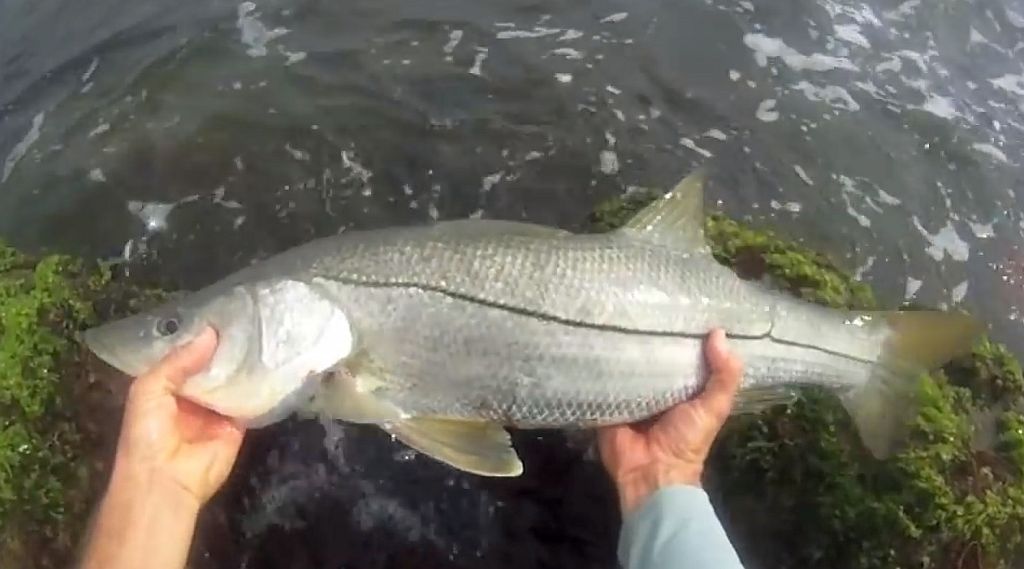 When the fall baitfish run begins to get thick around our beaches and inlets, the Snook bite at Ponce, Port Canaveral, and Sebastian Inlet will really be off the charts. The north and south causeway bridge fenders at New Smyrna Beach, the fenders along the A1A bridge that leads to Sebastian Inlet, and the jetties and sea walls along Port Canaveral are all be great places to catch Snook this month. Most of the guys targeting Snook along the inlets during the day are using 30 to 50# fluorocarbon leaders with 30# to 60# Power Pro or Sufix 832 braided lines and VMC 7385 circle hooks. The braided lines cast much farther and are much more resistant to abrasion against the rocks and pilings than monofilament.  When targeting snook in the inlets, fish live baits during the day, and Rapala X-Rap 14s at night near the jetties. If you lean towards using artificial baits like I do, try using a Rapala Super Shad if you like to troll, an X-Rap 14 if you like to cast off the jetties, or a
Twitch-N-Mullet if you like to cast off the docks and mangroves. When targeting snook in the inlets, fish live baits during the day, and Rapala X-Rap 14s at night near the jetties. If you lean towards using artificial baits like I do, try using a Rapala Super Shad if you like to troll, an X-Rap 14 if you like to cast off the jetties, or a
Twitch-N-Mullet if you like to cast off the docks and mangroves. Most of the snook will be in the 25" to 30" range, but if you use live pigfish, croaker, pinfish, or mullet down on the bottom around the jetties during the day, you can expect larger fish. The north Indian River in our area is not known for Snook, but night fishing along the lighted docks, bridge fenders, pilings, and mangrove shorelines can be productive during September. The last hurricane left a lot of docks in the Indian River in a state of disrepair, and these uninhabited docks are prime locations for big sea trout, redfish, and snook that prey on the baitfish that use the docks for shelter. August and September is when heavyweight redfish begin to form up into tight schools along the deeper water flats of the Indian River north of the railroad bridge at Titusville, and the Mosquito Lagoon to spawn. August was an unbelievable month for catching bull reds on the shallow flats, with many guides reporting multiple catches of 30 pound plus fish in the 43 to 50 inch category in only a foot of water on almost every trip. The bite this month is expected to remain as good and even better. Unlike other populations of redfish, the reds in our lagoon systems do not migrate offshore to spawn. They spend their lives in the shallow waters of the lagoon and travel through Haulover Canal to the deeper waters of the north Indian River to spawn. This past week, redfish in the 35 to 45 inch range have been aggressively hitting live pigfish in the southern end of the Mosquito Lagoon and out from BioLab Road in very shallow water. The fish have been on and cruising the edges of the flats and bars along The Whale’s Tail flat, Cucumber Bar, and the tip of the bar near Eddie Creek. Fresh cut chunks of ladyfish, sections of fresh blue crab, live pigfish, or a select jumbo live shrimp on a 4/0 to 5/0 VMC circle hook are all baits of choice for live bait fishermen. Gold spoons, D.O.A. Shrimp, jerkbaits, paddletail baits, and top water lures smeared up with a bit of Pro-Cure Inshore formula also work well for fishermen who prefer using artificial baits. 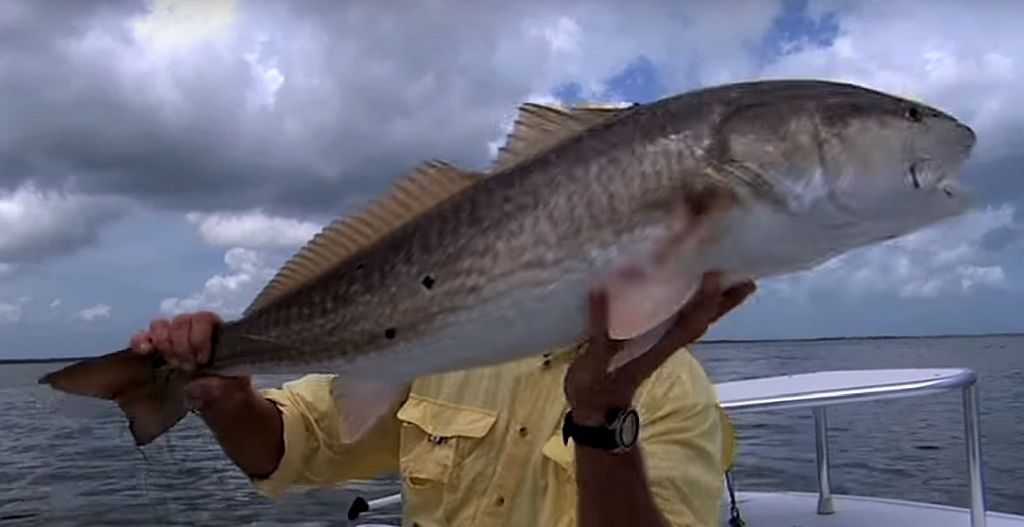 A lot of black drum are still being caught along the bridges and pilings throughout the Indian River Lagoon. The deeper sections of the lagoon are holding really nice size black drum. Haulover Canal, the klinker islands north of Haulover Canal, and any of the bridges crossing the river between Melbourne and Titusville are all holding black drum that are averaging 15 to 20 pounds. The best way to get them to strike is to use either a live shrimp or a cut crab on a jig head, a knocker rig, or a sliding sinker rig around the pilings. The speckled sea trout in our area have been scattered throughout the northern part of the Indian River. The mullet pods and areas with concentrations of glass minnows are where most of the trout will be holding. Chug Bugs, Zara Spooks, SkitterWalks, and XPS Slim Dog topwater baits will all work well early in the morning and later on toward dusk. During the rest of the day, try fishing a live shrimp or pigfish under a cork, or a paddletail soft bait fished in deeper water just off of a shallow flat. Although most of the trout that are being caught are under the slot, a good number, especially those caught on topwater baits have been in the 18 to 25 inch category. The trout bite in the Banana River has started to ramp up in areas where the water is clean, and a lot of speckled sea trout up to 4 and 5 pounds are reportedly being caught in these spots. 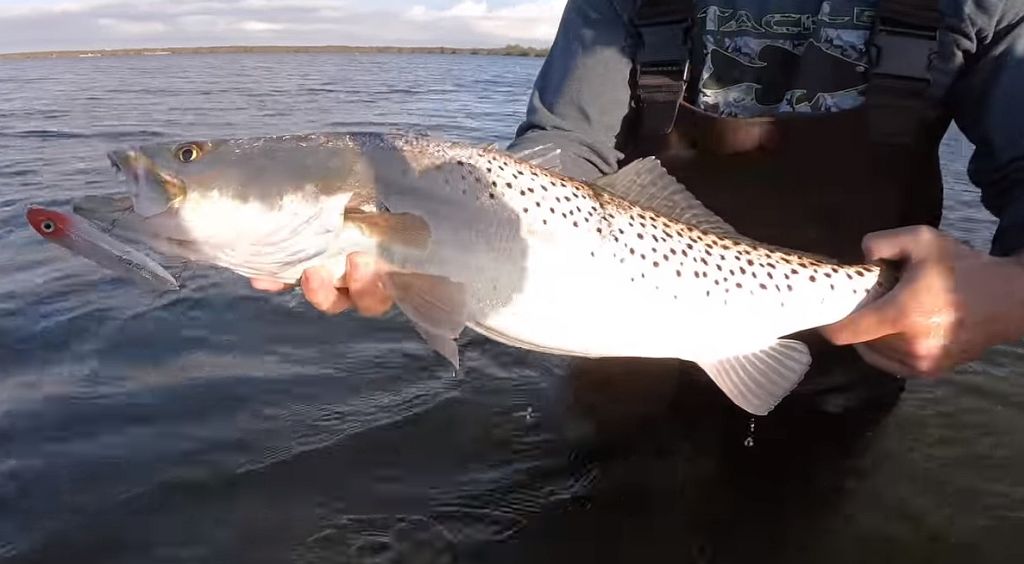 A good bit of clean water is beginning to show up again in the southern portions of the Banana River around the Pineda Causeway and farther south. The northern portion doesn't seem to be doing as well right now. Good numbers of flounder are congregating near all the inlet jetties around the docks, bridge pilings, and along some of the undercut banks in places like Spruce Creek. Anglers have been targeting them using live mud minnows, finger mullet, and 3 to 4 inch pilchards rigged on a jig head or sliding sinker rig with short fluorocarbon leaders. Catfish Creek Loop and Peacocks Pocket road in the Merritt Island National Wildlife Refuge are both still closed to vehicle traffic, however, if you don't mind walking the roads, you can be rewarded with some good fishing for sea trout and redfish. Look for fish in the deeper areas of the ponds and marsh canals. The larger sea trout and redfish will be cruising the banks of the canals after baitfish as they travel from pond to pond. If you decide to try "fishing the ditches", go early in the morning or a couple of hours before dusk and look for activity along the shorelines. Topwater Chug Bugs Gold Johnson Sprite spoons, and soft plastic swim baits smeared with some Pro-Cure all work well during these periods and during overcast days. This type of specialized "stream type" fishing requires stealth, patience, and persistence. The growth along the small ponds and canals makes casting difficult and landing a good fish challenging, but it is rewarding. Expect to lose some lures and hooked fish to the undergrowth. Do Not try wading the canals or ponds in this area. There are some huge gators that can do some serious damage to you. Offshore and Nearshore Fishing: Tuna is always on the menu and the blackfin tuna bite on the west side of the gulfstream starting at the 21 fathom ridge has been consistent. Most of our blackfin tuna are running from 15 to 30 pounds and are being caught by fishermen pulling dark colored cone shaped lures with metal or heavy plastic coated metal heads. The heavier metal heads are needed to keep the lures in the water at the higher 6 to 10 knot trolling speeds that the tuna prefer. If you're after yellowfin tuna, 99% of the tuna reside on the other side of the gulfstream where they can be spotted by looking for concentrations of birds diving on baitfish. Out of Port Canaveral it's a long ride, but the catch is worth the trip. Most of the yellowfin tuna caught out of the Port run from 30 to 80 pounds. Closer to shore during the month of September you can expect the Chris Benson, Pelican Flats, and 8A reefs hammered by anglers slow trolling pogies, live pilchards, and mullet on 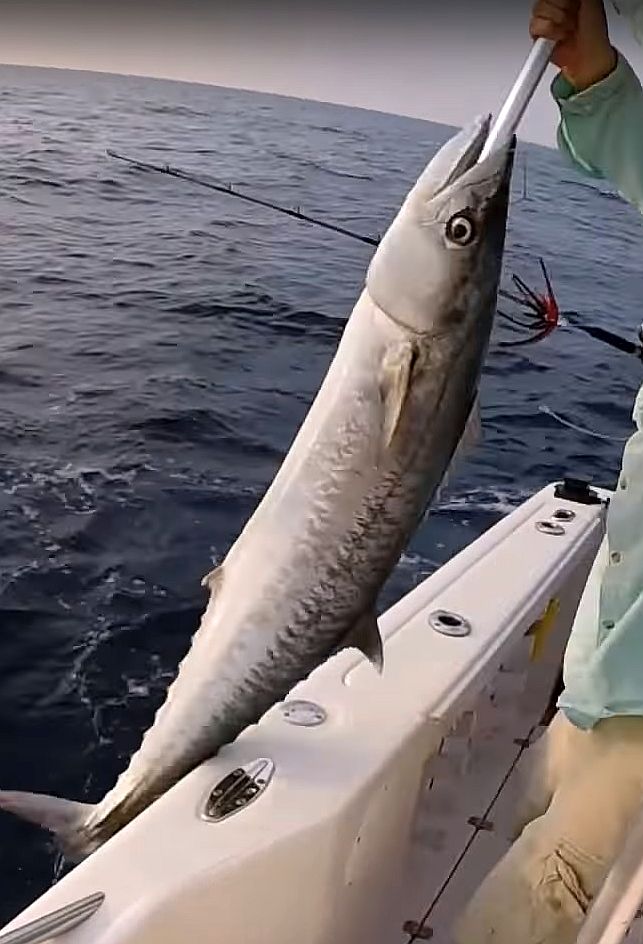 stinger rigs for Kingfish, dolphin, Sailfish, and an occasional Wahoo. stinger rigs for Kingfish, dolphin, Sailfish, and an occasional Wahoo. This past week the kingfish bite has been really insane on the 70 to 90 foot reefs, if you can manage to find some live bait to troll around. Slow trolling live pogies, pilchards, greenies, or mullet on a wire stinger rig, or trolling lipped diving plugs, chin weighted naked ballyhoo, or a cigar minnow with a pink king buster when bait is hard to find are all methods that will get you a hookup. The kings on the reefs have been in the 10 to 20 pound range, with an occasional "smoker" in the mix. During the full moon last week, the big smoker kings were coming into the beach to spawn and a lot of the larger fish have remained in the area. If you want to score with a really big knigfish, stay closer to the beaches in 20 to 40 feet of water. The average size king mackerel closer in is from 15 to 20 pounds, with many in the 40 pound plus range. Most of the guys have been jigging up some baits around the buoys and channel markers outside any of the inlets, or netting pogies along the beaches, especially between Sebastian and Canaveral. The pogie pods have not been as thick along the beaches as they had been for the prior few weeks. Small boat anglers out of Port Canaveral slow trolling live baits on stinger rigs only a few miles off of the beach can still expect to get an occasional hookup with a smoker kingfish until they decide to stay offshore. The recent full moon and near shore cold water up welling has continued to cause the kings to migrate between the beach and the 70 to 90 foot reefs searching for food. On one day the kings may be just off the beaches after pogies, the next day they may run out to the 40 to 50 foot depths after greenies and pilchards, or head farther offshore to the deeper reefs to chase sardines and blue runners. The water out on the 70 to 90 foot reefs in many places is exceptionally clean right now, and in many areas the visibility is 20 to 30 feet or more. 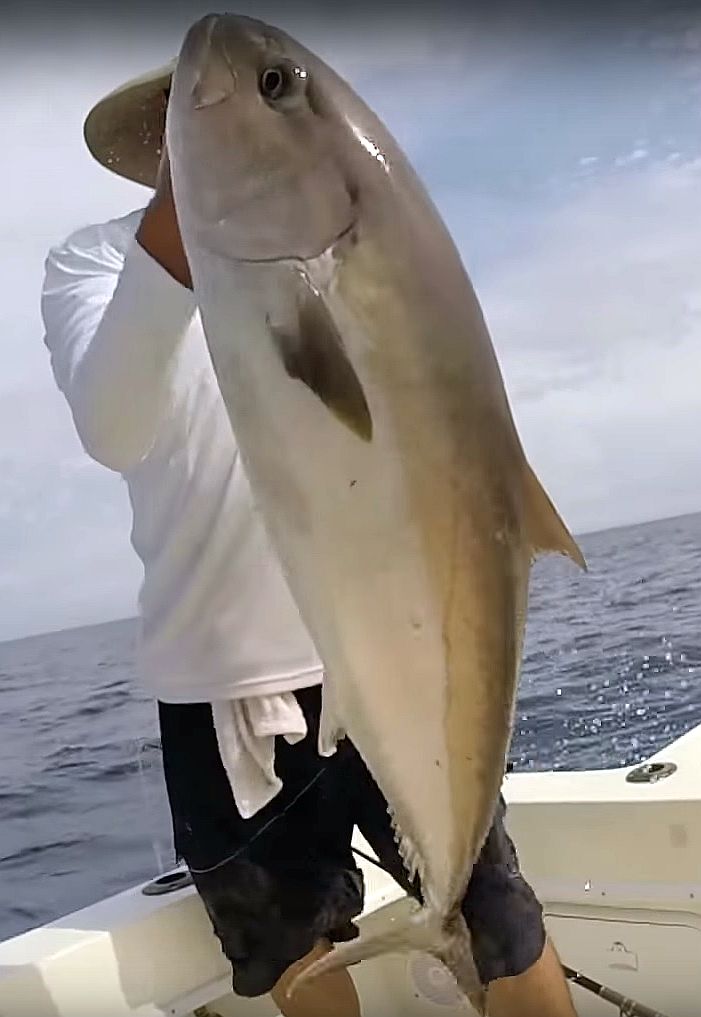 The Cobia bite last month was great and should continue throughout this month on all the wrecks and reefs out of Port Canaveral. Jig them up with 2 Oz. buck tails tipped with a whole squid and if they start getting picky and start to follow your jig to the surface, drop a live bait down. Many anglers are averaging 2 to 3 fish per trip. The Amberjack bite has also been hot for the past week on almost any piece of structure out of the Port using the same jigging technique as for Cobia. Off the 180 to 250 foot reefs, Gag grouper and Amberjack have been hitting large deep jigs, vertical speed jigs, and live pinfish, croaker, or grunts on standard bottom rigs. Closer inshore, from the Ponce Inlet area down to Port Canaveral, scattered Tarpon and Sharks have been following the shrimp boats vacuuming up the by-catch. If you can get one of the boats to sell or give you some freshly culled by-catch, use a large 6/0 VMC circle hook and drift it in the chum line. Some of the tarpon being caught in that area are topping the 100 pound range. One of the best areas in East Central Florida for catching bull redfish, mackerel, bluefish, big jacks, and shark during the summer months and as the fall mullet run moves south, is the 5 mile long stretch of shoreline north of Port Canaveral on the edge of the Cape Canaveral Air Force Station called Canaveral bight. The bight offers fishermen safety with comfort and consistent catches throughout the summer and winter months. During the fall and winter months, pompano, flounder, and whiting are on the menu. Locate the deeper sloughs and troughs where the fish tend to congregate and keep your engine running to keep a safe distance away from the breakers. Surf Fishing: During August, surf fishing from East Central Florida beaches was dominated by anglers targeting snook, whiting, black drum, and sharks. 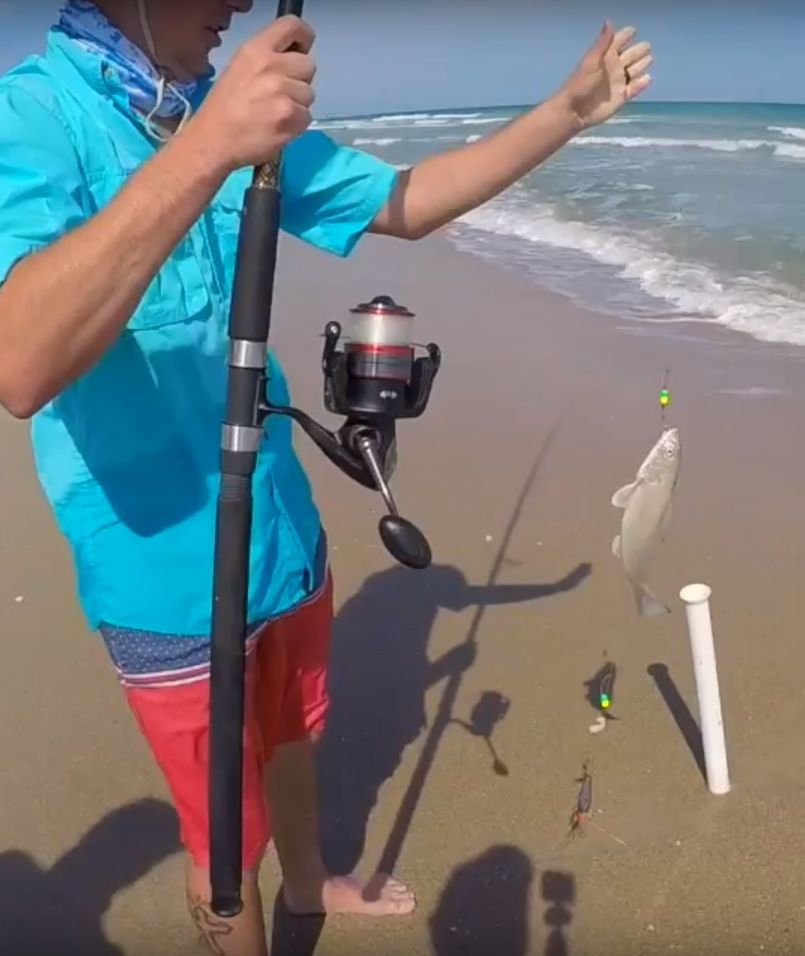 The key to successful surf fishing depends on a variety of factors but if you look for calm seas with little to no wind, clean water on a rising or falling tide, target the deeper troughs, get to the beach as early as possible, and use fresh shrimp or clams for bait, you almost can't go
wrong and should catch some whiting or pompano. The key to successful surf fishing depends on a variety of factors but if you look for calm seas with little to no wind, clean water on a rising or falling tide, target the deeper troughs, get to the beach as early as possible, and use fresh shrimp or clams for bait, you almost can't go
wrong and should catch some whiting or pompano.When the mullet arrive in full force along our beaches, many surf fishermen will be switching baits to target bluefish, Spanish mackerel, jacks, and a variety of other predators that follow the schools of baitfish into the surf. This is the time to change tactics, switch to lighter surf casting outfits, and start walking the beach and casting into the surf. Many surf fishermen use a 7 to 8 foot medium heavy spinning rod, a light reel spooled with 20 or 30 pound Power Pro or similar braid, and a length of 30 to 40 pound fluorocarbon leader. If you are going to stay in one spot and use live baits only, try free lining a live finger mullet into the surf. Attach 12 to 16 inches of 30 or 40 pound leader material to the main line with a barrel swivel, and tie on a 3/0 ti 5/0 circle hook. Use just enough split shot to drop the bait down below the baitfish school. If you prefer walking the beach, you need to bring along something to carry your tackle. I use a back pack to hold my basic tackle which includes 3/0, 4/0, and 5/0 Owner hooks, a spool of 30 and 40 pound fluorocarbon leader material, some barrel sinkers of various weights, a box of split shot, some swivels, at least two or three Gator spoons, Yo-Zuri Crystal Minnows, top water Pencil Poppers, and Rat-L-Trap Mag-Traps, a plastic fish stringer, a knife, and a pair of needle nose fishing pliers. You can add a Zip Lock bag to keep your cell phone dry if you want to take it along for pics, but the idea is to keep your back pack as light as possible (which I seldom do). Shark fishing also ramps up when the mullet run commences and you can catch almost any species in the surf during the runs. Almost any live or bloody chunk bait will get you a hookup but during the mullet run, a live or mullet cut in half is hard to beat. Normally, most shark caught in the surf are less than a couple of feet long, but much larger bull sharks, nurse sharks, black tips, and hammerheads are always a possibility in our area, especially when the bait schools are thick along the beaches. Use appropriate tackle for the species you are targeting. If you're after the big guys, a medium heavy to heavy action rod, a large capacity reel spooled with 60 to 100 pound braid, single wire, multi-strand coated wire, or heavy 80 to 100 pound test mono leaders are needed to prevent break offs . Haulover Canal: Most Haulover Canal fishermen this month will be targeting big black drum and oversize redfish that will be traveling through the canal into the northern Indian River to spawn; but Snook, Mangrove Snapper, and Sea Trout are always on the menu.
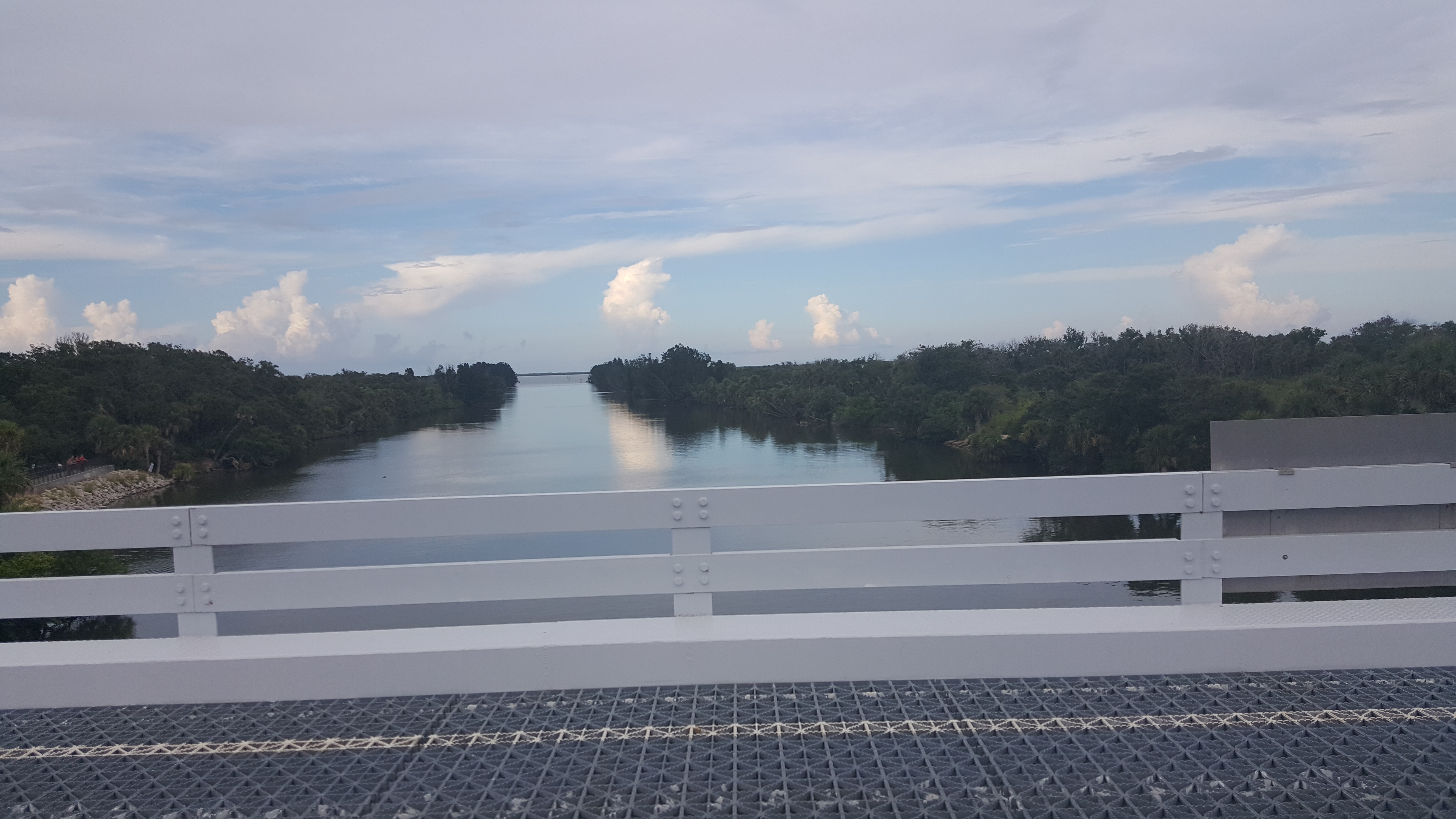 Littering along the banks of Haulover Canal is still causing problems but as of this date, daytime bank fishing is still permitted. Boat fishermen targeting redfish and black drum have been anchoring from the mouth of the Mosquito Lagoon, all the way up to the bridge pilings to fish. Half of a live blue crab or a live shrimp fished on a jig head or a sliding sinker rig with a short stout 12" - 15" leader around the bridge piling is the best way to hookup with an oversize drum. The drum in the canal have been averaging 15 to 25 pounds. Large chunks of cut ladyfish, live pinfish, and half of a live blue crab are baits of choice on a standard sliding sinker rig, with a 5/0 or 6/0 VMC 7685 circle hook on the business end for bull reds. When fishing from a boat with live baits, try using a knocker rig to get the bait on the bottom. Hook the bait close to the tail so it swims away from the sinker. Tossing topwater baits or suspended twitch baits to the shorelines from a drifting boat early in the morning, close to dusk, and at night is a also productive tactic for catching big sea trout, Snook, and tarpon in the canal. Until next time, Tight Lines and bent rods! |
|||||||
| Link One | Link Two | Link Three | Link Four | Link Five | Unsubscribe to this newsletter |