Your July 2018 Mosquito Lagoon & Indian River Fishing Report
Published: Sun, 07/01/18
| Newsletter Issue # 108 | July 1, 2018 |
||||||
Mosquito Lagoon & Indian River Fishing |
|||||||
 The Mosquito Lagoon and Indian River This weeks Independence Day celebration will bring a lot of fishermen into our area looking to catch redfish, sea trout, snook, tarpon, and just anything that swims. Fortunately, during July, the fishing opportunities in East Central Florida for these inshore species and a variety of offshore species is excellent. Summer is here, and so are the high temperatures and afternoon rain showers that make early morning, late afternoon, and night fishing the best times to be on the water. Sight fishing for reds and big sea trout on the shallow water grass flats of the Mosquito Lagoon can be fabulous early in the morning hours when the fish are actively feeding. Right now the redfish bite in our area has been really slow, but the speckled sea trout bite in all the lagoon systems, especially around the clinker islands north of Haulover Canal, and just about anywhere you can find some good sea grass has been unusually good. Use a live pigfish under a float with enough lead to keep the bait just above the sea grass. The noise and vibrations that the bait makes as it tries to hide in the grass will attract a gator sea trout from quite a long distance. A lot of larger speckled sea trout are also being caught in the shallower flats around the mullet pods during the early morning hours by anglers using the smaller sized top water SkitterWalks, Chug Bugs, Zara Spooks , Mirrolures, or anything that resembles a Silver Mullet. Larger 5 or 6 inch jerk baits also produce big trout during the early morning hours. A 5" Saltwater Assassin jerk bait rigged weedless and fished underneath the floating grass can produce some outstanding results. When floating weeds make fishing a topwater bait next to impossible, try switching over to a Z-Man Pop Shadz rigged weedless on a 5/0 bass worm hook. These soft plastic floating baits are killer on big sea trout, snook, or redfish in the weeds. It's virtually weedless and is easy to work along the surface in weedy areas. Most of the sea trout caught this month will be in the 1 to 4 pound category, but gator trout in the 9 pound plus category are always being hauled in from the flats by anglers using live pigfish throughout the day. This past week the black drum bite in both the Banana and Indian river has begun to turn on again. The fish are schooling on the flats underneath the schools of mullet and along the deeper holes near the causeway and bridge pilings. 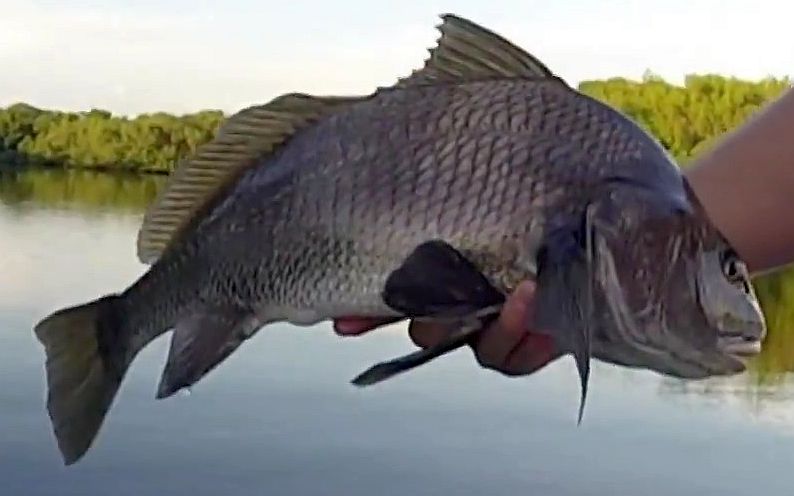 On calm mornings you can easily spot the schools of black drum schooling around on the shallower flats. The majority of the time, the drum will be schooling in 15 to 20 inches of water around the bait pods and are easily distinguished from the mullet by the big wakes they make as they forage along the bottom. Although most of the black drum are being caught on a live shrimp rigged weightless and free lined around the pods, fly fishermen using crab patterns and the guys tossing D.O.A. Shrimp on spinning outfits are also catching a good share of fish. The bank fishermen along Catfish Creek loop, the causeway, and around the fishing piers have also been catching black drum and redfish on fresh dead shrimp, sections of blue crab, and fiddler crabs. The fishermen who have been dropping their baits straight down from the Titusville fishing piers have been catching sheepshead, black drum, and redfish amongst the pilings. Small pieces of shrimp or a fiddler crab on a small hook with enough split shot to get the bait down is your best bet for getting a hookup. Use heavier fluorocarbon line to horse the fish away from the pilings and minimize breakoffs.  For the hardy fishermen who don't mind walking a little to catch a fish, try hiking Peacocks Pocket Road. Since it has been closed to vehicle traffic, the fish in the area are easy to catch, especially when the culverts are open and the water is running. The deeper areas in the marsh canal, and the drop offs along the grassy ponds are good areas to target big sea trout and oversize redfish with a topwater Chug Bug smeared with some Pro-Cure. Expect to lose a lot of hooked fish to the heavy growth along the "ditches". Nearshore and Offshore July is when many nearshore East Central Florida kayakers get a chance to hook up with Tarpon, Kingfish, and sometimes Cobia usually within a couple miles off the beach. With the combination of the full moon and the cold water upwelling into our near shore waters, the King Mackerel in our area don't know whether to go to the beach to spawn or to the warmer waters of the reefs to hang out. The kingfish have been moving between the 70 to 90 foot reefs, all the way back into literally 7 to 10 feet of water just outside the surf break and apparently haven't decided what to eat yet. They can hit the beach for pogies, go out to the 40 to 50 foot depths to eat greenies and pilchards, or run out to the reefs and eat sardines and blue runners. Regardless, you can catch fish in most of these areas right now in the 10 to 20 pound range if you locate the bait. Right now most of the areas in the 4 to 8 mile range out of Port Canaveral seem to be holding the best numbers of bait. Pogies are a little bit scarce, but the pilchards, greenies, and sardines in these areas are attracting kingfish in the 10 to 18 pound class. 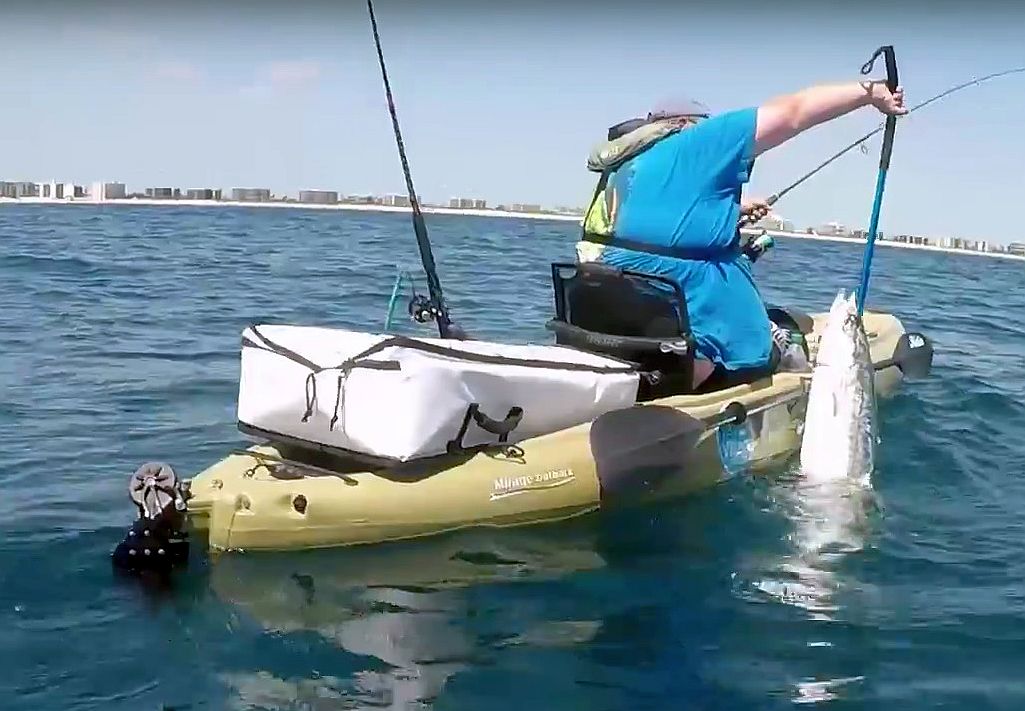 The buoy 2 area out of Port Canaveral and the party grounds out of Ponce Inlet are holding most of the smaller kings but larger "smokers" in the 40 pound category are also being caught. Slow trolling blue runners, pogies, and sardines on stinger rigs is the preferred method for catching kingfish. The king mackerel are about to spawn and are pretty aggressive right now, especially first thing in the morning and again mid-day to late afternoon once we get a little bit of sea breeze kicking up. The snapper bite offshore for Vermillion, Lane, Mangrove, and a variety of others has been good for the past few weeks . The Vermillion Snapper bite from Port Canaveral north to Ponce Inlet in 80 to 90 feet and deeper water was reportedly "off the charts". Baits of choice were finger mullet, cut squid, cut sardines and shrimp. The cold water up-welling we are now experiencing has brought the Mangrove Snapper in the 60 foot depths in the southern part of our region, to the 120 foot depths in the northern part, up from the bottom. The guys who have been going out at night targeting Mangrove Snapper have found that it doesn't take much chumming to bring them up to the surface from the mid water column. Free-lining a piece of chum on a small hook into the chum line has been producing some really nice mangrove snapper right now. Most of the fish are averaging 3 to 6 pounds, but a lot of double digit fish in the 11 to 12 pound category have been caught during the past few nights. The deep drop bite reported out of Port Canaveral has also been really good for tilefish in the 600 to 700 foot depths. A lot of big Tilefish and other deep water species are being caught on blue runners, cut bonito belly, and cut squid during the past week. The flounder bite on the nearshore wrecks out of Ponce Inlet and the port has also been ramping up this past week. Use mud minnows, finger mullet, or shrimp on a jig head or a fish finder rig to get hooked up. Surf Fishing and Kayaking July is when the whiting really start getting thick along Playalinda Beach beach and most other areas of Central Florida. Surf fishing this month can be extremely productive if you can get out early and beat the crowds of sun worshipers to the beach. Along most areas at Playalinda, a deep trough usually forms immediately offshore of the shore break, followed by a sandbar and then deeper water. The closest trough is usually where the best fishing is for whiting. Use small hooks on and a light sliding sinker rig on a 7' river rod with a small piece of fresh, peeled shrimp, or a sand flea to target the whiting in the closest trough and adjust your casts as the tide changes. The best bite us usually during the early morning hours of the day during the middle to the end of an incoming tide. Right now we are experiencing an up-welling of colder water that has made fishing the beach a hit or miss proposition, but as the waters warms up, the fishing will improve dramatically. Shark fishing from our beaches during July is productive for a variety of species, but Blacktips, Bonnet Heads, Bull, and Nurse Sharks are the most commonly caught by surf fishermen. Live mullet, Croaker, ladyfish, and large bloody baits like bonito, etc. on a large 7/0 to 8/0 VMC circle hook crimped on a wire leader with 60 pound or heavier Power Pro as the main line will get you a hookup if they are in the area. Most beach caught shark in our area average less than 100 pounds in weight, but almost every year much larger fish are reported by surf fishermen. This month, some areas between Melbourne Beach and Vero Beach can be a good place to target Tarpon in the surf. Most of the tarpon right now are out beyond casting range, but as the waters warm, they move closer to the beach. Kayak fishermen slow trolling live baits 1/4 mile off the beach can expect to hook up with a kingfish, tarpon, bonita, giant jack cravelle, or a variety of shark. Keep it simple for tarpon with a short piece of 60 to 100 pound test leader snelled onto a 8/0 or 9/0 VMC Circle hook. 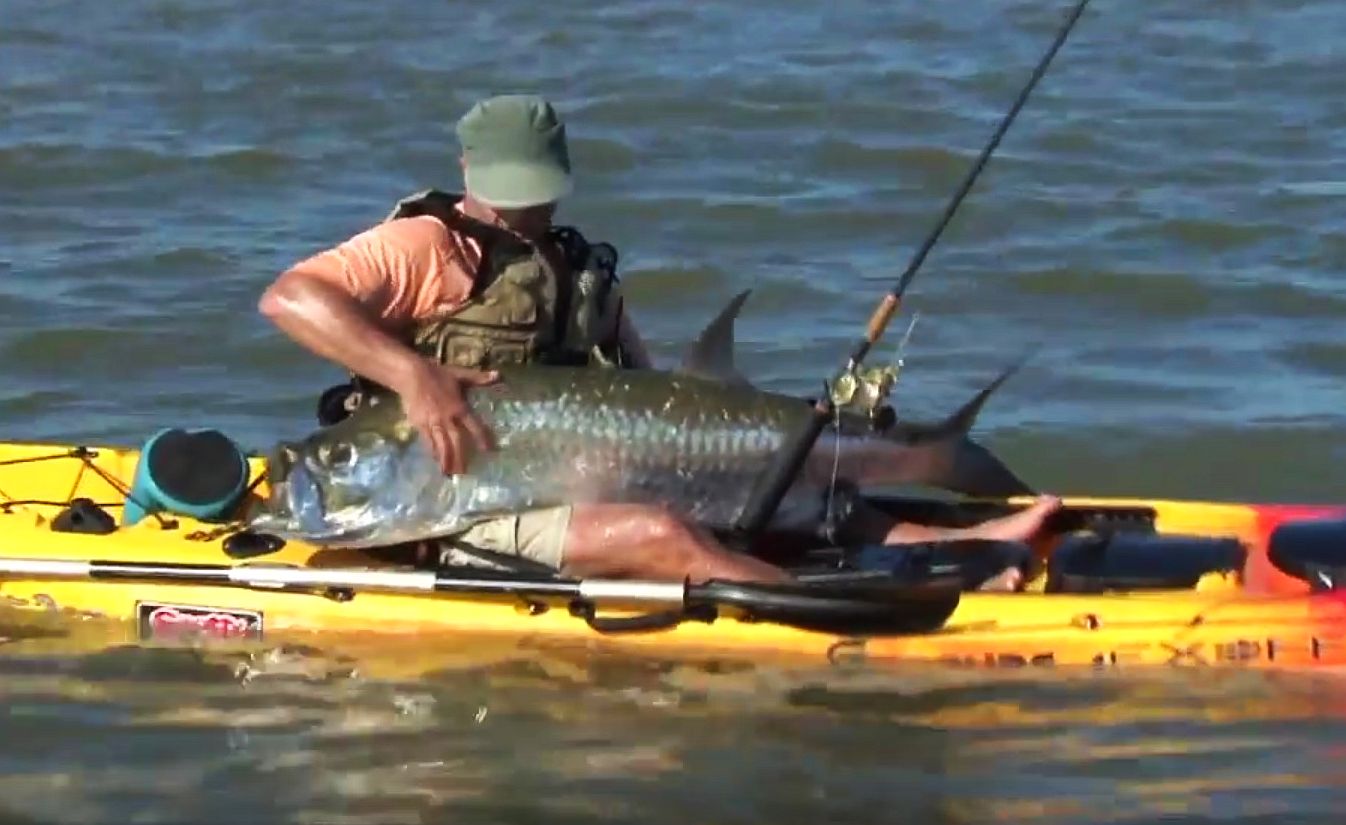 Most tarpon caught in the surf or from a kayak will be under 100 pounds, but farther out in the 10 to 40 foot depths, tarpon in the 150 pound category are not uncommon and can be targeted using live pogies, herring, mullet, or pilchards. Kayak fishermen can also take advantage of the "Buoy Bass" bite out of Port Canaveral this month. The tripletail that are being caught just outside the Port are now averaging between 5 to 10 pounds. In the fall they are caught well into the 20 and even 30 pound category, which is why Port Canaveral is credited with so many world records for Tripletail. Tripletail are ambush predators that like to lay around floating weeds, trash, crab traps, buoys, and other surface debris that attracts small crabs, shrimp,and juvenile fishes that they feed on. The best bait for Tripletail by far is a fresh live shrimp, but they will hit hair jigs, D.O.A. shrimp, and a variety of flies that imitate a shrimp or small baitfish. Lobstering The July 25-26 sport lobster season is just around the corner and some of the best spiny lobstering outside of the Florida Keys is available to our residents right outside of Port Canaveral.  The East Centeral waters out of Ponce, Canaveral, and Sebastian Inlets produce some of the best lobstering in the entire state of Florida with "bugs" in the 6 to 8 pound category taken regularly . The East Centeral waters out of Ponce, Canaveral, and Sebastian Inlets produce some of the best lobstering in the entire state of Florida with "bugs" in the 6 to 8 pound category taken regularly .During the July 25th to 26th sport season, and the regular season that opens on August 6th., divers out of all three inlets will be diving into the 50 to 55 foot reefs in search of these tasty crustaceans. Professional divers go as deep as 90 feet or more to fill their quotas with the larger "bugs". If the cold water up-welling is not widespread, the largest bugs should be found around low profile bottom structure in about 40 to 50 feet of water, particularly between Sebastian and Vero Beach. The largest bugs in our area are found in the 50 to 90 foot depths however, small boaters who cannot access these depths can still hunt them on the shallower water artificial reefs out of Ponce Inlet. The divers of the inshore reef south of Vero Beach to Sebastian Inlet also do surprisingly well during the early season before the reefs get picked over. Wabasso Beach is also a popular area for beach divers. Snorkelers can swim out to 15 or 20 feet of water where some giant spiny lobsters have been caught during past years. The Wabasso, Disney Beach area has produced "bugs" up to 15 pounds. But for size, the waters out of Port Canaveral, Sebastian Inlet, and Fort Pierce Inlet can't be beat. Click on the icon below for additional information on the 2018 Florida Spiny Lobster Season. 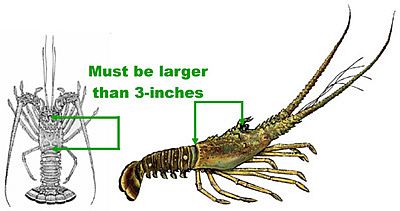 ____________________________________________________________________________________________________ Until next time, Tight Lines and bent rods! |
|||||||
| Link One | Link Two | Link Three | Link Four | Link Five | Unsubscribe to this newsletter |