Your August 2013 Mosquito Lagoon & Indian River Fishing Report
Published: Thu, 08/01/13
| Newsletter Issue # 48 Fishing Forecast |
August 1, 2013 | ||||
Mosquito Lagoon & Indian River Fishing | |||||
Mosquito Lagoon and Indian River
The "dog days" of August are upon us again!
Although late June and early July are great months to target spotted seatrout in Florida, August can also be productive if you fish during the right times. The thing to remember is that the hot summer weather affects sea trout and redfish just like we humans. During the heat of the day and even later in the afternoons, the sun has been heating the water up to the point that it still remains warm even when it gets closer to dusk. This is why the best time to target sea trout in August and throughout the summer months is at the crack of dawn, when the water has had time to cool overnight and the fish are the most active. Winter and spring is when we see our largest "gator" sea trout in East Central Florida, but you can catch a trophy gator trout (a fish over 8 pounds) any time of the year.  During August you will run into a lot of first year fish on the flats however, you can always hook into a huge gator trout that prey on the smaller "schoolies". Yes they are cannibalistic. Like many other species, sea trout will normally school together with other fish of the same size. When you catch a couple of 12 or 13 inch sea trout, you will probably continue catching fish of the same size until the school moves on. This also applies to redfish. School sea trout prefer areas where there is thick solid grass where they can easily hide from predators. Large gator sea trout are more solitary and prefer inhabiting ambush spots like drop offs, oyster bars or sandy potholes where they can more easily surprise their prey. Schoolie sea trout eat smaller baits and prefer live shrimp or small baitfish. Around our area, the shrimp run is from December through May, so if you are targeting gator sea trout, use baits that imitate their primary diet; large baitfish. Gator sea trout this time of the year are foraging primarily on a diet of mullet, pinfish, pigfish, sandperch and other smaller sea trout. The smaller number 08 size Rapala Skitter Walk Hardbait When the early morning topwater bite is over, usually before 9:00 am, you can switch to soft plastic jerk baits that go deeper into the water column. Make long casts, twitch the bait back and let it flutter down on the retrieve. The fish usually hit the bait on the drop. If you like to fish live baits, you can churn up some action by free lining a live pinfish or finger mullet or, if you like to fish with a bobber like my wife does; hook a live pigfish, pinfish or sandperch on a 2/0 VMC circle hook with 15 or 20 pound fluorocarbon leader under a Cajun Thunder float and plop the rig into the deeper (3 to 5 feet) flats. A live pigfish will attract trout from a long way off regardless of the time of day.
If you fish the Mosquito Lagoon, there are too many places to name however the Tiger Shoals area is a noted place for gator sea trout.
If you fish the Indian River, the flats north of Mims, the flats around the Scotsmoor boat launch, the flats just west of Peacocks Pocket road in the Merritt Island National Wildlife Refuge, Turnbull Basin and the areas around the Spoil Islands where you have a mixture of grass, deeper flats, pot holes and drop offs are all good for big sea trout. _______________________ Near Offshore Fishing Near the marker buoys, around the close near shore wrecks, along the docks in the port basin and rock jetties try fishing live finger mullet or mud minnows rigged on sliding sinker rigs or jig heads for flounder, bluefish, mangrove snapper and jacks. If we get large amounts of small baitfish like glass minnows, mullet or pogies around, you can also add Snook, redfish, spanish mackerel and ladyfish to the mix. Trolling or casting a size 10 through 14 Rapala X-Rap in the the bunker, silver with black back, or spotted minnow colors usually works well for these fish. You can find the hot feeding areas by looking for birds working along the surf zone. There should still be some big Tarpon cruising the 20 to 50-foot depths to keep your interest if you're not interested in any of the other species. 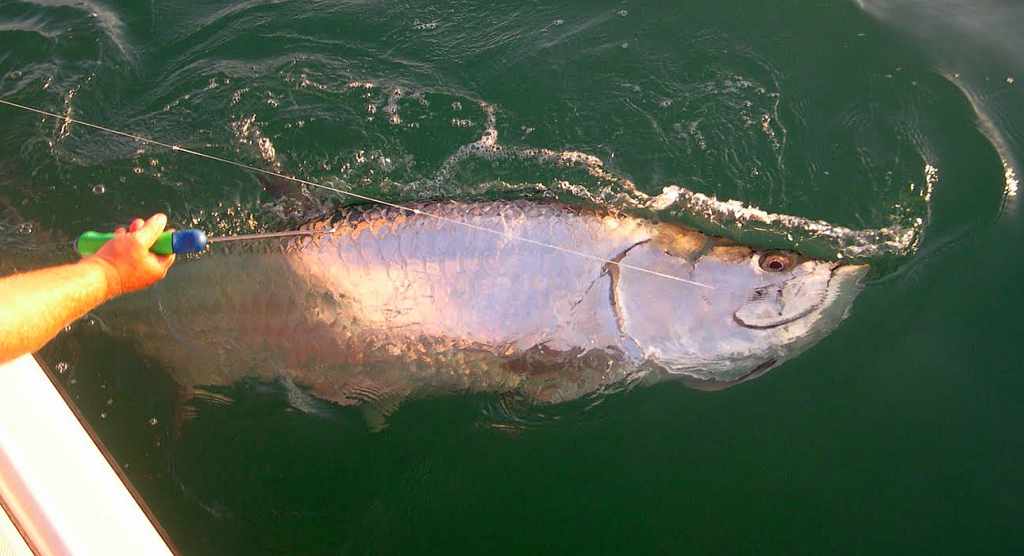 The King Mackerel (Kingfish) have moved closer inshore because of the spawn on this last moon cycle, and to get away from the colder water temperatures.
As the water temperatures warm up and begin to stabilize, the king mackerel will be returning to the 70 and 90 foot reefs. Some smoker kingfish have moved closer inshore and are being caught in 20 to 50 foot depths by anglers slow trolling live pogies on wire stinger rigs. C&H king busters have been working well when trolling in the slightly off colored waters just off of the beach. When trolling or drifting live baits for kingfish, there is an excellent chance this month that you will hook up with one of our local shark species. Spinner sharks, black tips, golden duskies and sharpnose sharks are just a few of the species you will run into when slow trolling or drifting in 10 to 60 foot depths, or even closer to shore. Most of the sharks being caught offshore are still running around 10 to 40 pounds however, there are some big bruisers out there. You never know when you can hook up with a 10 foot hammerhead. Playalinda Beach & South Surf Fishing
Late July and August is when the big brood female snook cruise certain areas of the surf in search of pilchards, mullet, pogies and Atlantic thread herring (pilchards). This activity will continue through the fall months when the baitfish really arrive in good numbers.
Some of the most productive areas for snook in East Central Florida are the coquina and worm rock beaches like the five mile stretch from Satellite Beach to Indialantic near Melbourne, Fl. and the sharp sloping beaches with well defined deep water troughs around Playalinda Beach east of Titusville and the beaches south between Melbourne Beach and Wabasso Beach.
The areas are only a short drive for anyone in Brevard County and offer rocky bottoms loaded with baitfish, crabs and other forage that attracts the snook and other predatory fish.
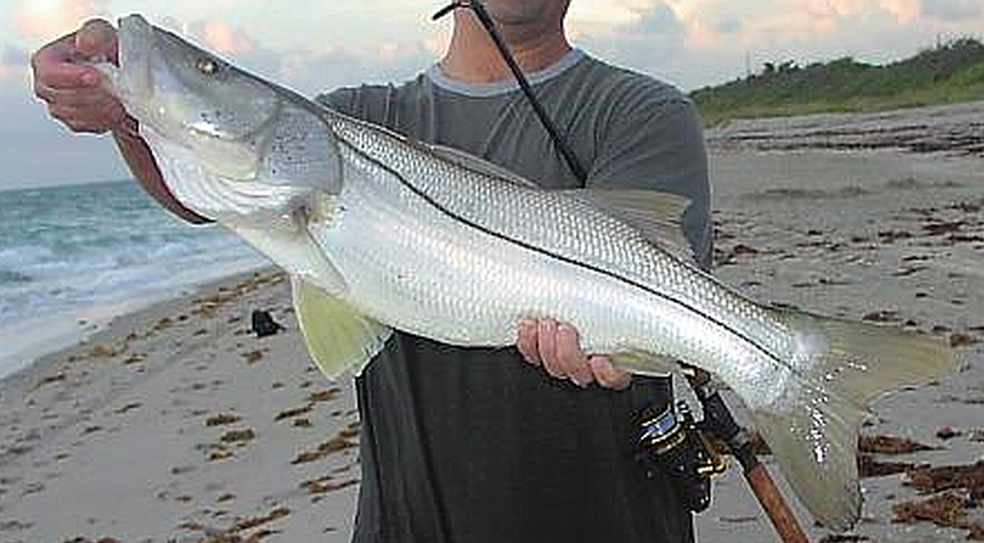 Big live baits are preferred for snook if you plan to score a big fish. Big live baits are preferred for snook if you plan to score a big fish. The "big bait, big fish" rule definitely applies to snook fishing.
Clean moving water is also an important element in snook fishing.
Don't be afraid to use an 8 to 12 inch live mullet or an over size pogy for big snook on a 4/0 or 5/0 vmc circle hook or J hook with the barb pressed down.
The best times to surf fish for snook is in the early mornings and late evenings hours when feeding activity generally increases.
The absolute best time is when an incoming high tide coincides with an early morning or late evening fishing trip. The first couple of hours after darkness sets in is also a choice time.
The summer snook closure is through August 31, which makes snook fishing catch and release only.
August is also when the whiting bite is in full swing along the beaches in most areas of Central Florida.
The guys who are getting out early in the morning regardless of the tide, armed with long surf rods with two or three dropper hook rigs, and 2 oz. to 4 oz. pyramid sinkers seem to be catching the most fish. Small pieces of shrimp and live sand fleas are the baits of choice.
If you can get out an hour before and after an incoming tide early in the morning, you will have the best chance of catching a mess of whiting. It's not necessary to make long casts when fishing for whiting. Whiting schools will often follow shallow troughs and frequently run in close to the surf line during an incoming tide.
With light spinning tackle, you can often catch whiting by flipping a small piece of shrimp into the surf line just a few feet in front of you. Just be sure you have enough weight on your line to get your bait close to the bottom.
When surf fishing for pompano, blues
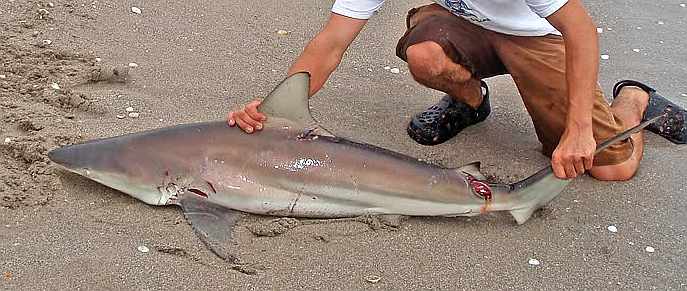 or mackerel, longer rods are usually needed to get your or mackerel, longer rods are usually needed to get your baits out to the fish.
Black tips, nurse sharks, bull sharks and bonnet heads, can all be caught in the surf using a variety of live and fresh cut baits.
The worm rock beaches around Patrick AFB and south are good areas to fish for shark and snook in the surf. The rocks attract baitfish schools which in turn attract the predators.
A favorite bait for this area is a live 12" mullet hooked through the nose with a heavy live bait hook tied to a 40# or 60# flourocarbon leader and a swivel on a conventional barrel sinker rig.
Unless you want to clear out a crowded beach area, it's a good idea to shark fish away from crowded beaches. ________________________ Haulover Canal
Haulover Canal fishing continues to be good for bull redfish, black drum, sea trout, mangrove snapper and sheepshead.
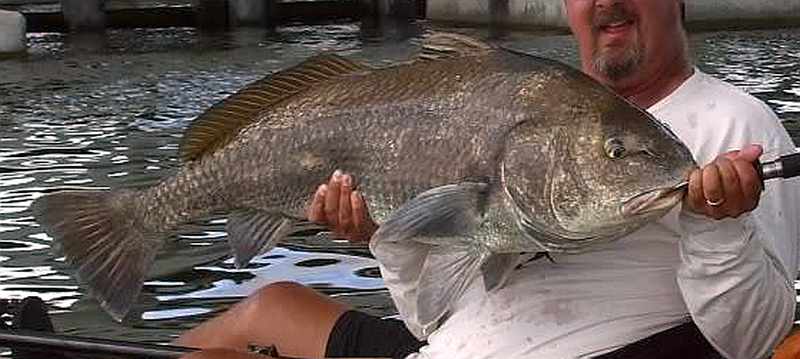 Jumbo live shrimp, pinfish, cut ladyfish and fresh crab continue to be the best baits to use inside the canal for both the reds and black drum. Jumbo live shrimp, pinfish, cut ladyfish and fresh crab continue to be the best baits to use inside the canal for both the reds and black drum. Live shrimp seems to be the best all round bait for black drum, with cut clams as a good second choice.
If you're trying to catch one of those "bull" redfish that cruise Haulover Canal from the bank , try using a live pinfish, finger mullet or blue crab rigged on a 5/0 vmc circle hook
Large chunks of ladyfish act like redfish candy for the bigger bulls.
The canal is still weedy when the current is running, so bank fishermen will have to put up with removing weeds from their lines on a regular basis or wait for the current to die down before fishing.
Boat fishermen congregate at the mouth of Haulover Canal and are using conventional barrel sinker rigs and single dropper rigs with pyramid sinkers to keep their baits just off the bottom.
Sheepshead fishermen are anchoring close to the bridge pilings and around the coquina rocks at the mouth of the Indian River using fiddlers, small live shrimp or bits of fresh dead shrimp on small light hooks with a great deal of success.
Lobster
Although the July 24 - 25 sport season for lobster is over, the regular lobster season opens on
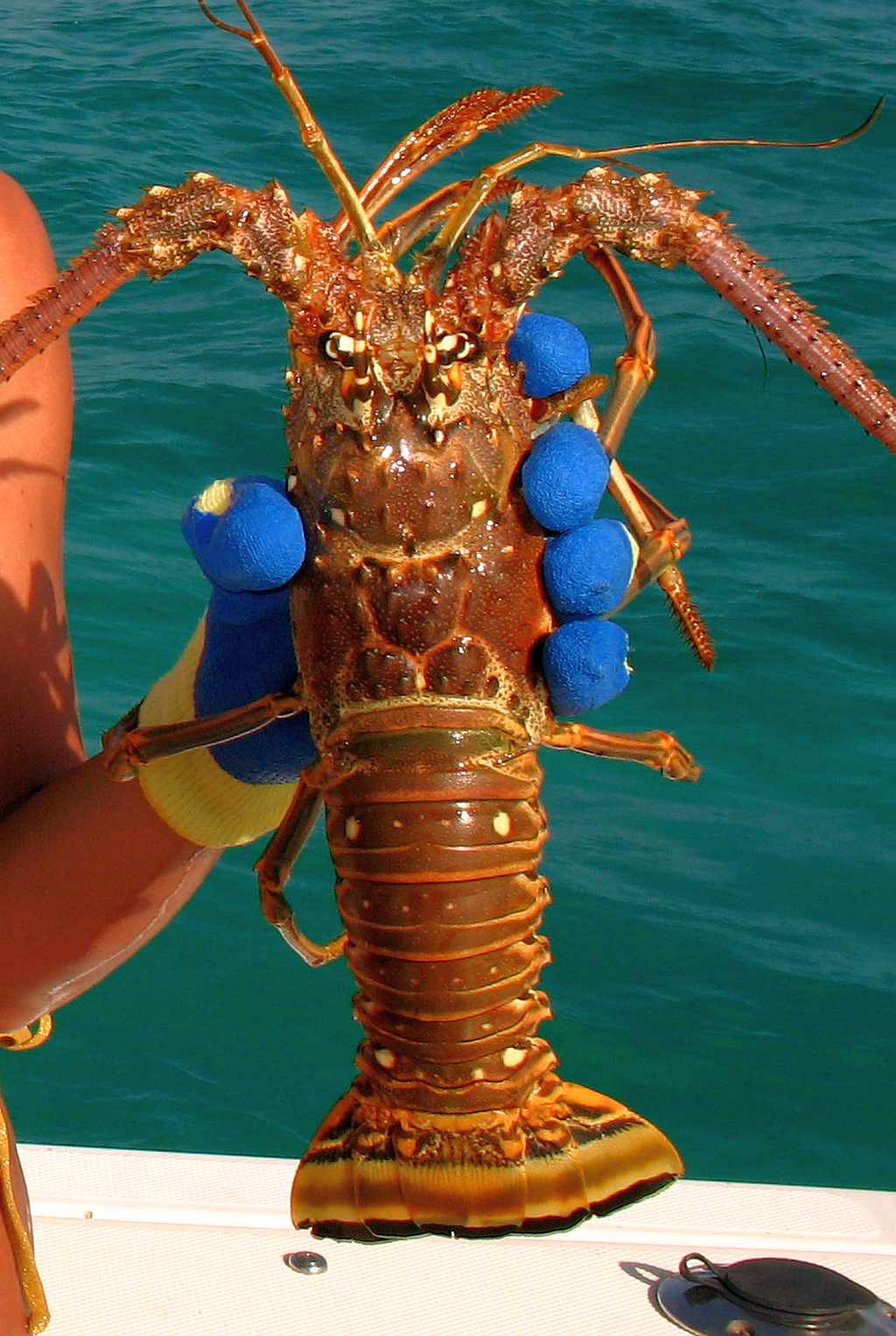 August 6th and you can expect lobster divers to be on the water en masse. August 6th and you can expect lobster divers to be on the water en masse.Almost everyone flocks down to the Florida Keys to get in on the lobster season however, for size there is no better lobstering than offshore Daytona, Canaveral, Sebastian or Fort Pierce. Not all the bugs are caught in 70 to 80 foot depths. Good numbers of quality size lobsters can be had along bottom structure in 40 to 50 foot depths and along the inshore reefs that parallel the beaches. When the water is clean, the surf between Wabasso Beach and Vero Beach is a great place to limit out on quality size lobsters. There have been some nice 14 pound lobsters taken from the inshore reef at Wabasso. For this part of the coast, water clarity is a prime consideration for harvesting lobster. If you plan on heading to one of our inshore reefs, take some time to call a local dive shop before heading out to check on the visibility. The 2013 season runs from Aug. 6 to March 31 with a 6 lobster per person per day bag limit applicable in our area. 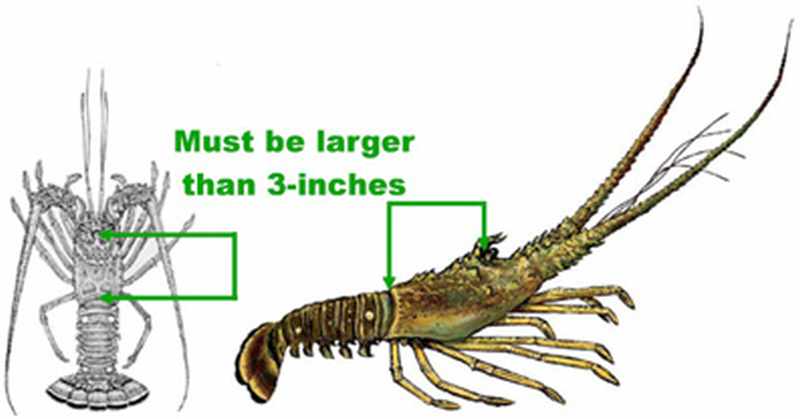 The minimum Carapace size remains at 3" measured while in the water.
Till Next Month, Good Fishing & Tight Lines To You All! | |||||

| Link One | Link Two | Link Three | Link Four | Link Five | Unsubscribe to this newsletter |