Your April 2013 Mosquito Lagoon & Indian River Fishing Forecast
Published: Mon, 04/01/13
| Newsletter Issue #44 Fishing Forecast |
April 1, 2013 | |||||||
Mosquito Lagoon & Indian River Fishing | ||||||||
he Mosquito Lagoon and Indian River
March has certainly lived up to it's reputation as being a windy month however March, April and May are typically three of the best fishing months of the year for BIG breeder "Gator Trout", bull redfish and schooling black drum.
The windy conditions we endured this March turned many potentially great days for sightfishing on the Mosquito Lagoon and Indian River, into days of blind casting or fishing with live bait.
Although the sightfishing has been challenging; most anglers who were hooking up with live finger mullet or cut baits during the really windy days, also had some great fishing for reds and sea trout on the flats when conditions permitted.
Cold weather always makes the fish school up tighter, and this dramatically improves
sight fishing. Right now, the sight fishing has been excellent with clear water and
lots of tailing fish.
Black Drum
Although the chilly weather is still with us, normal springtime weather conditions will return in April and we will start to see more black drum schooling up to spawn in the south end
of Mosquito Lagoon and the North Indian River Lagoon around Titusville.
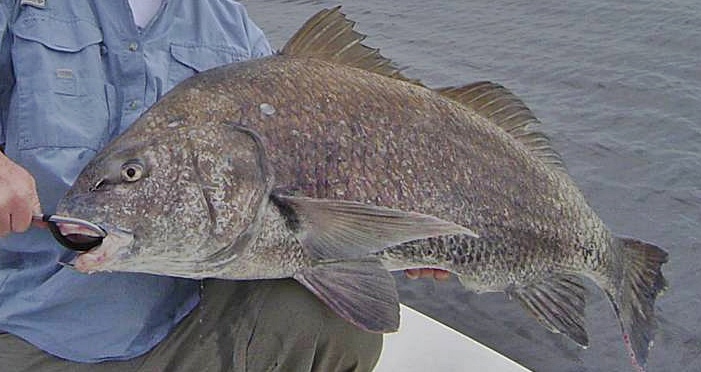 These fish are often found in deeper waters in the wide open, so we need lighter wind conditions to locate them. These fish are often found in deeper waters in the wide open, so we need lighter wind conditions to locate them.Schooling black drum are normally in the 5lb to 10lbs category with 10lbs being the norm however, expect to catch some fish upwards of 25lbs.
On schooling drum, fishing a live shrimp or a cut crab will get you a bite fast.
Scented jerk baits that look like shrimp also work well, and for the guys who like to fly fish, clouser minnows and shrimp patterns usually get the job done.
Redfish In the lagoons and creeks around Ponce Inlet, the recent cold fronts and resulting winds
have dropped water levels and forced the redfish back into big schools on
deep edges, creeks and sloughs.
As the water temperatures warm up in April, the schools of 400 to 500 redfish we see now will break up into smaller schools that can be found across the shallow grass flats and oyster flats farther north.
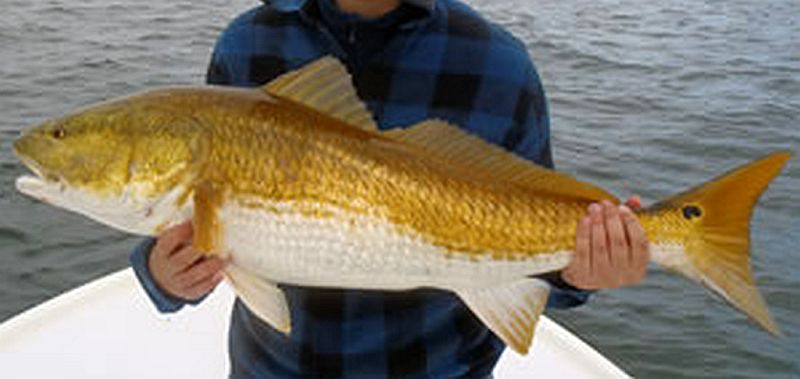 Schools of giant bull redfish in the 20lb to 40lb range are now located in the deeper portions of the Lagoons. Schools of giant bull redfish in the 20lb to 40lb range are now located in the deeper portions of the Lagoons. Some of
these fish are extremely spooky and tight lipped so when you find a
school, give them plenty of room and make long accurate casts to catch more fish.
For guys like myself who like to toss lures; gold Johson Sprite spoons, crankbaits,
suspended and top water plugs, and a variety of soft plastics will all produce fish.
DOA bait
busters, a 3" DOA CAL bait or GULP jerk shad in Gold or gold glitter on black, have been the most productive colors for
those of us who prefer targeting the Redfish schools with soft plastic
baits.
For those of us like my wife, who like using bait; live shrimp, live mullet, mud minnows, chunks of cut mullet and large fresh dead shrimp are the baits of choice for consistent light tackle Redfish catches.
Fly fishermen that are using sliders and crab patterns have been hooking up with 5 to 10 fish a day during the warmer days.
Black
or olive colored crab patterns seem to work best, but anything
remotely resembling a crab will get you a tailing redfish, especially on
the Mosquito Lagoon.
Spotted Sea Trout
The cold weather we had last month forced hundreds of giant gator sea trout to lay up in the super shallows sunning themselves in the sandy pot holes of
the Mosquito and the North Indian River Lagoons.
This is a normal activity for this time of the year and is why the Mosquito and Indian River Lagoons are noted for superior catches of gator sea trout.
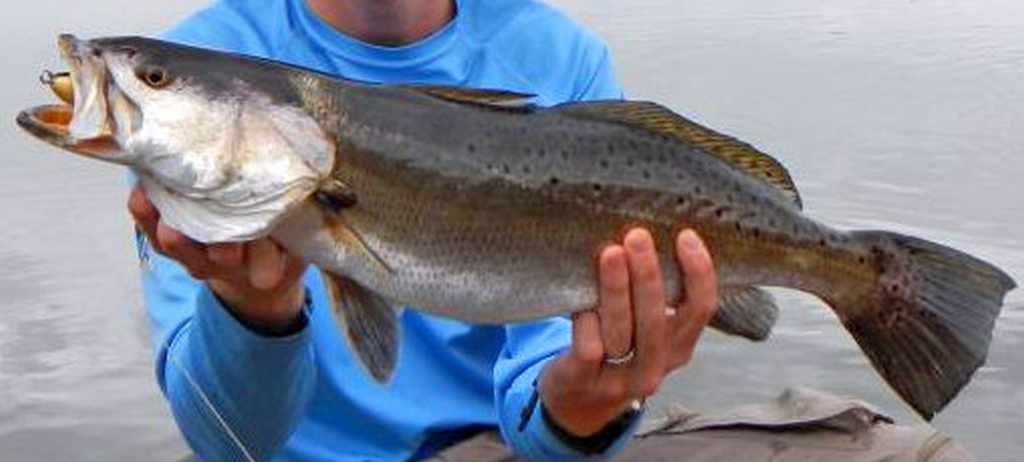 You can literally find hundreds of sea trout in the 10lb to 14lb range crammed like cord wood into shallow sandy spots. As the waters get warmer in April, these fish will start scattering to shadow the baitfish pods that invade the lagoons. You can literally find hundreds of sea trout in the 10lb to 14lb range crammed like cord wood into shallow sandy spots. As the waters get warmer in April, these fish will start scattering to shadow the baitfish pods that invade the lagoons.Big sea trout are notoriously lazy, especially during colder weather but they start feeding in earnest when the water temperatures hit 70 degrees.
As the water temperatures continue to rise, the schools of finger mullet
that have already begun to invade both of the lagoon systems will
increase in numbers and will spark the beginning of some great top water
fishing opportunities on the flats.
The fish will become more and more aggressive as their breeding
activity commences.
When this happens, start throwing topwater baits, suspending plugs, large silver spoons or soft plastics to catch fish.
As more mullet continue to invade the river systems and the baitfish become more concentrated on the shallow flats; topwater Chug Bugs or Rapala Skitterwalks should produce outstanding strikes early in the
mornings when worked slowly around the bait pods.
If you're into live bait, a live mullet, croaker or grunt is the ticket for scoring a big sea trout over 6lbs. A live mullet or shrimp is deadly on large seatrout in areas
where you have 3-5 feet of water, along the edges of the flats.
Fly fisherman will have a tougher time because of the clear water, but those using seaducers and deceivers will get their share of big fish.
You can expect to see lots of smaller trout stacked up on the deeper edges which is always a lot of fun.
If
catching a world-record class Gator Sea Trout is on your agenda, you should definitely
consider fishing the Indian River flats North of Mims to Scotsmoor, Fl. at first
light. As of this date Shiloh Marsh road is still not open to vehicle traffic. This is another area that is noted for bull redfish and big sea trout.
You can only drive up to the second barrier where you can then park and pull your kayak or canoe to the water to launch. Shrimping from the new fishing piers has been getting better, but the locals are still complaining that the run this year wasn't as good as in past years. I have to say that I hear this story every year!
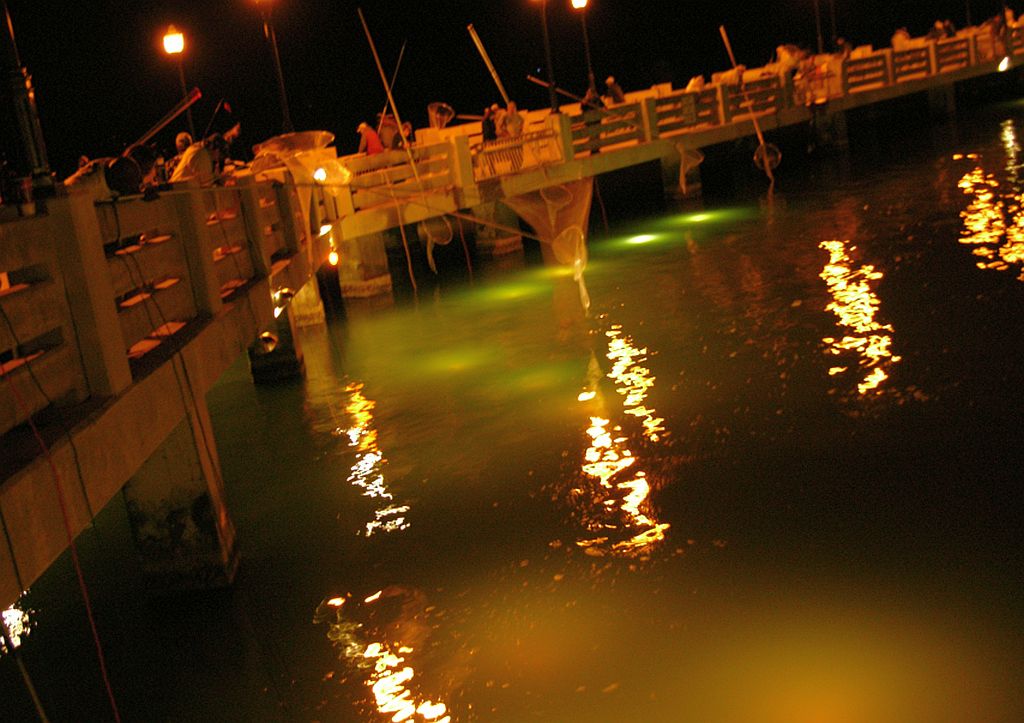 I visit the piers on a semi-regular basis to see how the "regulars" are doing and since January they seem to be making better catches of shrimp.
The concession area on the fishing pier has turned into the local gathering place and is usually loaded with people partying. Parking is at a premium so get there early to reserve a spot at the rail if you are into sport shrimping.
At night you can occasionally catch some keeper sea trout but most are under the slot.
Near Offshore Fishing out of Port Canaveral in April should be killer when the water temperatures hit 68 to 70 degrees.
Cobia
Average size Cobia have been arriving near offshore throughout the month of March, and as the Manta Rays start moving closer inshore, cobia should start appearing in greater numbers.
Singles and small pods of cobia will often shadow the Manta Rays and sea turtles where they can be easily sight cast to.
Find a Manta Ray or a large stingray and you should find a cobia.
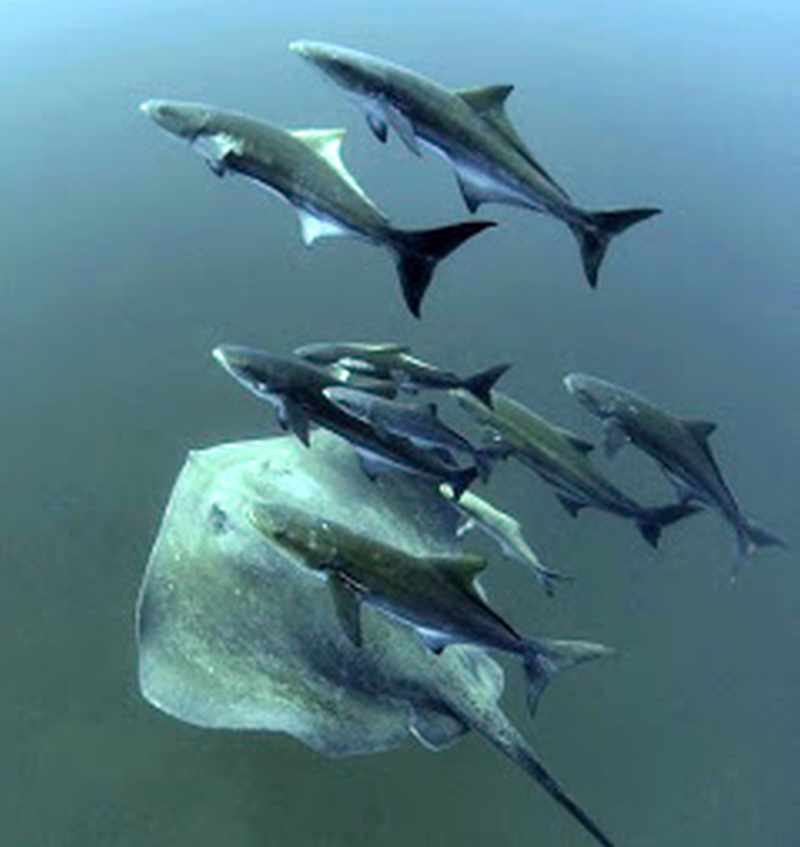
When leaving Port Canaveral, slowly head south when your depth finder reads 40 feet or so and keep your eyes peeled for fish.
Right now, Cobia are being caught from just a couple of miles south of Port Canaveral
to well past Patrick A.F.B. by fishermen using jigs, live bait fish and
live or gulp eels.
Kingfish, Tarpon, and Tripletail will also be showing up in increasing numbers during April. The kings, jacks and tarpon will be following the migrations of pogies, herring and mullet that migrate up and down the coast, just offshore, every year at about this time.
When the seas get calm enough, small boat owners have a good chance of hooking up with one of these bruisers on light tackle.
Tripletail
In my opinion, tripletail is one of the best eating fish in the ocean and April is when the they start showing up in greater numbers around the Port Canaveral ship channel markers, seaweed patches offshore, and just about any floating debris.
These "dinosaur" fish are extremely popular with small craft fishermen and can be easily found throughout the month of April just outside the Port.
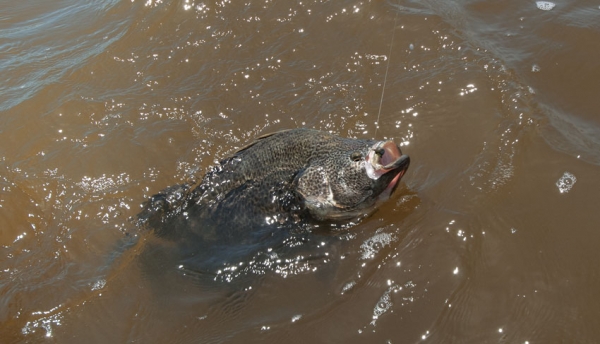 You can catch them using live or dead shrimp, small jigs, D.O.A. shrimp, or even soft plastic paddletail baits fished on light 8# to 10# line.
I recommend using Power Pro or some other braid with a long fluorocarbon leader in lieu of monofilament.
Till Next Month, Good Fishing & Tight Lines! | ||||||||

| Link One | Link Two | Link Three | Link Four | Link Five | Unsubscribe to this newsletter |