Your January 2013 Mosquito Lagoon & Indian River Fishing Forecast
Published: Tue, 01/01/13
| Newsletter Issue # 41 Fishing Forecast |
January 1, 2013 | |||||||
Mosquito Lagoon & Indian River Fishing | ||||||||
osquito Lagoon & Indian River Happy New Year everybody!
Redfish
The fishing in both the Mosquito and Indian River Lagoons has been excellent for giant bull redfish in the 25 pound and over category for the past month and should continue through at least the end of January. Windy conditions have made sight fishing difficult or impossible for the majority of days this past month, but when the winds did calm down the fish were eager to eat. Redfish are feeding aggressively in the deeper waters at first light on the colder mornings, and then moving on to the shallow flats as the sun rises in the sky.
Looking for signs of bait fish or birds feeding will help you find the big schools and get you into casting position.
Casting a DOA Shrimp or CAL jerkbait with a small bullet weight and a weedless hook to the fish is a good option or you can just use live baits. The key is a soft presentation, a precise retrieve and timing.
Although December and January provide some of the best redfish fishing in our East Central Florida lagoons, it also gives us some of the most difficult weather conditions to fish in. Cold fronts are a common winter phenomenon and when they pass through our area many fishermen just stay at home. Unlike us, fish are cold blooded. The optimum water temperature for redfish and sea trout is in the 70 degree range. When the water temperature drops below their optimum temperature preference, their metabolic processes slow down, they become lethargic and they require less food. When water temperatures stay too cold for an extended period of time like they did during the cold snap in January of 2010, the fish have nowhere to go to warm up and they die. During the winter months the temperatures in our lagoons seldom get as warm as the fish like, so they migrate into areas where the temperatures are closer to their liking. Since shallow water warms and cools more quickly than deep water, the fish will move into deeper areas as the cold fronts roll in and begin to chill down the water. 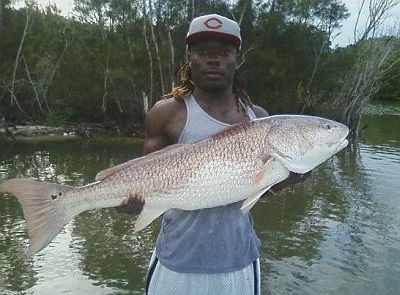 Savvy fishermen target fish during these periods in deeper water adjacent to shallow grass flats, in the main channels of the ICW, around power plant discharge outlets (i.e. Port St. John), in Haulover Canal and in around deepwater docks like those in the Banana River "Thousand Islands" area. Savvy fishermen target fish during these periods in deeper water adjacent to shallow grass flats, in the main channels of the ICW, around power plant discharge outlets (i.e. Port St. John), in Haulover Canal and in around deepwater docks like those in the Banana River "Thousand Islands" area.As the cold fronts pass through the area, look for the fish to move back into the shallows over dark or muddy bottoms to feed. These waters warm more quickly and attract hungry fish.
Some of the best winter fishing I have ever encountered was on a sunny cloudless day, on a shallow water Indian River mud flat, immediately after a cold front moved through the area. Because most redfish are feeding on crustaceans during the cold months here in central Florida, use small shrimp or crab imitations and fish them as slow as possible using light lines and long casts. Small baits work best during these periods.
Remember that the water is crystal clear during the winter months and the fish are spooky, so light lines and long casts are required. Since their metabolism has slowed down, the fish are reluctant to chase a bait so don't use live finger mullet or lures resembling bait fish unless you fish the baits super slow. Cut baits, clams, fiddler crabs, sand fleas and live or fresh dead shrimp work best immediately after a cold front moves through an area and are usually a better choice. When conditions are right the shallows will be loaded with redfish. Spotted Sea Trout Contrary to popular belief, the winter months are good fishing for spotted sea trout and weakfish. The cold fronts tend to concentrate the fish into deeper holes where they are easier to locate and target. When targeting these trout, fish the bait slowly and be patient. This time of the year most fish are sluggish and take their time feeding. Right now, smaller trout are being caught on the transition edges of the flats in 3 to 6 foot or deeper water with small jigs, small top water baits and live shrimp under popping corks. Most of these fish will have an average length of 16 to 18 inches. Some larger trout are being caught in shallower waters when the water temperatures get closer to the 70 to 75 degree range that they prefer. When the conditions are breezy, fish the protected areas around the spoil islands especially during the early morning hours. As the waters continue to clear up in January, sight casters will get shots at some of the really big gator trout that hole up in the sandy pot holes during the cold snaps.
January is one of the best times of the year for sight casting to world class 8 to 10 pound sea trout in East Central Florida, so take advantage of it. ___________________________ Playalinda Beach and Jetties
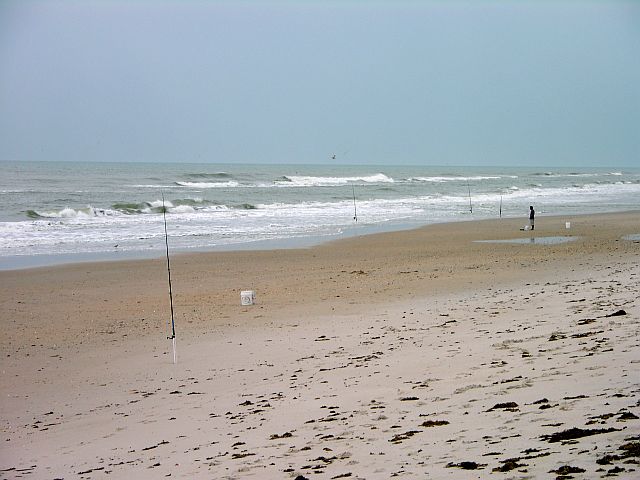 Fishing has been good along Florida's Space Coast and during the past few weeks local surf fishermen have been hooking up with lots of whiting, ladyfish, permit and a few decent sized pompano, mostly in the area around parking lot #8 at Playalinda Beach. Nice sized pompano are being caught along the beachs just south of the Cocoa Beach Pier by surf fishermen using sand fleas and clam strips. When targeting pompano, fish your baits between the sandbars in the deeper troughs just after low tide and preferable at first light for the best results. The secret to successful pompano fishing is to get out to the beach early. Right now the pompano in this area have been running between 2 and 3 pounds. This is especially true just after first light until the mid morning hours.
When targeting bluefish with spoons or small plugs, you will get more hookups using a faster than normal retrieve.
Right now the blues in the surf are running mostly under 20 inches in length. Inside Port Canaveral as well as inshore around old boat docks and other structure, sheepshead are also being caught by fishermen using small jig heads tipped with a piece of shrimp or a fiddler crab.
The guy below is a subscriber who fishes for sheepshead off the jetties on a regular basis.
Keep a tight line and let the fish nibble on the bait a bit before setting the hook for these bait stealers if you want to increase your chances.
The sheepshead that are being caught around the Port Jetties are running well over the minimum legal length of 12 inches but inshore, not many fish are being caught over the legal minimum length.
_____________________________
Near Offshore and Offshore
Due to the fish closures, bottom fishing out of Port Canaveral will be limited to amberjack and a few grouper. Red Snapper is still closed along with most of the other supposedly "over-fished" species.
 Gag grouper up to 20 pounds and amberjack up to the 50 pounds range have been hitting live baits on the 180 to 240 foot reefs off of Port Canaveral. Gag grouper up to 20 pounds and amberjack up to the 50 pounds range have been hitting live baits on the 180 to 240 foot reefs off of Port Canaveral. Cobia should still be holding on the near shore wrecks from 90 to 160 feet. Offshore fishermen slow trolling the reefs in January will be getting king mackerel and a few sailfish. The kingfish have been hitting sporadically around Pelican Flats reef but you can catch them from Chris Benson south to the Lumps just north of Pelican Flats. On calm sunny days you should be able to find tripletail and cobia around the Sargassum weed patches closer to shore. Free-lining a live shrimp or a small crab around the weed patches or close to any floating object could get you hooked up to a tripletail or even a cobia. ____________________________
SEBASTIAN INLET
 Blues, Pompano, Reds, Sea Trout, Flounder, Black Drum, Sheepshead and some Pompano are being caught in the inlet from the north jetty on a variety of baits depending on weather conditions. Blues, Pompano, Reds, Sea Trout, Flounder, Black Drum, Sheepshead and some Pompano are being caught in the inlet from the north jetty on a variety of baits depending on weather conditions.The pompano are being caught mainly on sand fleas and have been running around 16 to 20 inches in length.
Oversize bull reds and black drum are also on the menu at Sebastian as you can see from the photo. This 65 pounder was landed on 12-28-2012 after a 20 minute battle and measured in at 45inches.
The flounder migration is pretty much over with.
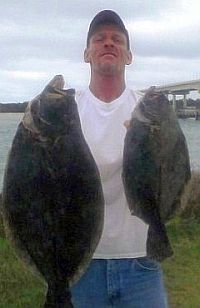 The fish that moved out with hurricane Sandy are coming back into the inlet but are mostly spawned out. The fish that moved out with hurricane Sandy are coming back into the inlet but are mostly spawned out. However, some nice catches are still being made on mud minnows, large live shrimp and finger mullet.
Offshore fishermen are
trolling in 120' - 180' of water and picking up Wahoo and Sailfish on a regular basis.
Most of the bigger wahoo are being caught off the downriggers in deeper water.
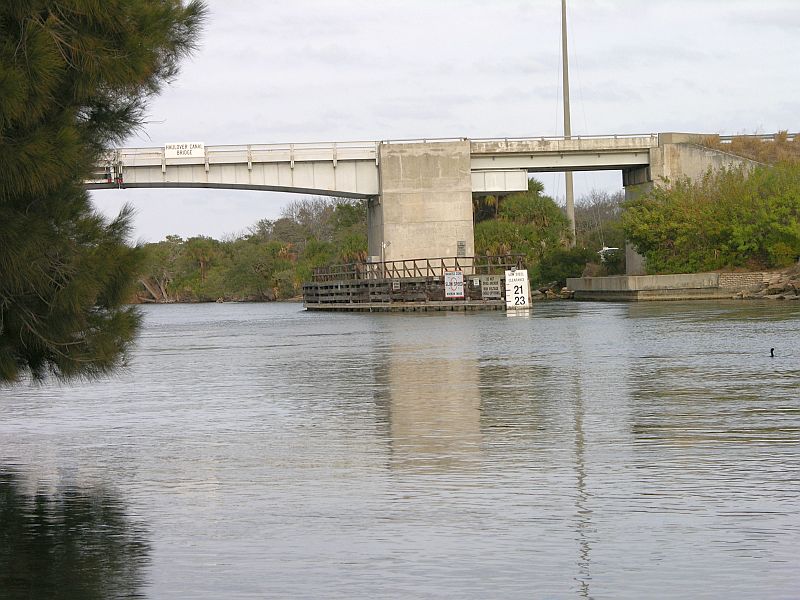 Haulover Canal fishing in January is always good for huge black drum and redfish. Haulover Canal fishing in January is always good for huge black drum and redfish.You can always find them moving through the deeper canal waters between the North Indian River and the Mosquito Lagoon.
If you are fishing from a boat, fish the mouth of the canal in the direction the current is flowing or drift a bait right on the bottom.
If you fish from the bank, make sure you use Power Pro or an equivilent to minimize the cutoffs from the coquina outcroppings.
Try baiting up with jumbo shrimp, live pinfish or finger mullet on a 5/0 hook and use heavy gear.
Using 60# Power Pro with a four to six foot length of 40# fluorocarbon leader will help keep fish from breaking off in the coquina.
Shrimping in the Haulover Canal gets going during the winter months, so you can expect to see more sport shrimpers anchoring along the banks and at the entrance of the canal dipping shrimp at night.
As the weather gets colder the shrimping generally gets better so January should be a great month.
Until next time, Tight Lines and a Happy New Year to All! | ||||||||
| Link One | Link Two | Link Three | Link Four | Link Five | Unsubscribe to this newsletter |