Your November 2012 Mosquito Lagoon & Indian River Fishing Report
Published: Thu, 11/01/12
| Newsletter Issue # 39 Fishing Forecast |
November 1, 2012 | |
Mosquito Lagoon & Indian River Fishing | ||
Mosquito Lagoon & Indian River
Lagoon Fishing
Well folks, another Halloween is over with and fall is upon us. The water levels in both the Mosquito Lagoon and Indian River Lagoon systems remain higher than normal, especially in the marsh areas of the Merritt Island National Wildlife Refuge.
The redfish and sea trout have been feeding on bait fish and crustaceans in grassy areas in water that is often less than a foot deep.
Air temperatures have cooled down quite a bit this week but the water is still relatively dirty because of all the water hurricane Sally dropped into our lagoon systems. This will probably make sight fishing for redfish on the flats a bit more challenging than usual, at least for part of November.
If you're still hoping to catch a trophy redfish this year, November may be the last best month to do it.
Shorter days have the silver mullet
on the move and the breeder redfish are schooled up
on the deeper water flats of the IRL and Mosquito Lagoon.
In some areas the water quality
is cleaning up nicely despite the hurricane and anglers have been making some epic catches
on top-water plugs and mullet imitation lures.
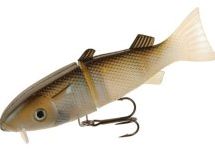 The Rapala Skitterwalk, the DOA shallow running Baitbuster or a DOA Big Fish lure will get you a hookup when presented properly. The Rapala Skitterwalk, the DOA shallow running Baitbuster or a DOA Big Fish lure will get you a hookup when presented properly. To catch the breeder redfish on the
lagoons, look for fast moving schools pushing up on the deeper edges
of the sandbars off the shallower flats.
Once you locate the fish, set up in front of them and present your lure
as though it's a baitfish running away from the school, then hang on.
These same lures fished early in the morning and evening on the shallow flats can produce some outstanding catches of sea trout. This time of year there is usually a lot of floating sea grass on the water. If this becomes an issue use a single hook DOA Baitbuster lure and you'll spend more time fishing, and less time stripping grass off your lures.
Bait fishermen are catching "bull" breeder redfish from the
schools that are still roaming the lagoons by staking out an area and dropping fresh chunks of ladyfish or cut mullet on the bottom. I've never seen a big red pass up a fresh cut chunk of ladyfish.
There are roaming schools of breeder redfish in the deeper
water areas north of Mims, across from the Scotsmoor boat landing in
the Indian River and from Georges Bar to the Wale Tale, in the Mosquito
Lagoon.
Remember,
these are spawning schools of redfish so for the sake of our future stock please don't get greedy and chase these breeders
all day long.
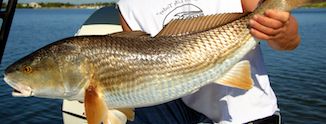 There is no longer a closed season for spotted sea trout in our region. The 15" to 20" per day slot, including one fish over 20" and the 4 fish bag limit remains for state waters up to Volusiia county. In Volusia County, the per day bag limit increases to 6 fish.
Since the Mosquito Lagoon covers both counties, it's a good idea to know where you are actually fishing if you keep your catch. In the Merritt Island National Wildlife Refuge marsh areas, there are
newly flooded grass beds everywhere. Many of these areas are loaded with big redfish and sea
trout, that most fishermen pass by.
 If you drive through Peacocks Pocket road very slowly and watch the
marsh for swirls, movement in the submerged grass or busting baitfish, it might benefit you to stop and make a
careful cast into the area. If you drive through Peacocks Pocket road very slowly and watch the
marsh for swirls, movement in the submerged grass or busting baitfish, it might benefit you to stop and make a
careful cast into the area.This is hard fishing but you can get them by casting weedless spoons, top water baits or jerk baits and slowly working the baits through the grass.
My wife usually fishes fresh frozen jumbo shrimp under a Cajun Thunder bobber rig and turns the tip of the hook into the body of the shrimp to make it semi weedless.
This rig takes its share of redfish if you're a patient fisherman. Unfortunately, I am not.
Playalinda Beach surf fishing usually picks up in November for pompano. 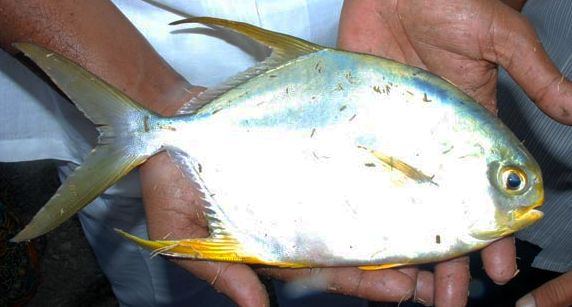 The cold fronts that normally hit our area during this time of the year coincide with the fall baitfish migration. The cold fronts that normally hit our area during this time of the year coincide with the fall baitfish migration. As the water starts to cool down, the fish will move into their winter feeding patterns up and down the beaches, along with the usual array of predatory game fish that shadow the baitfish migration.
Surf fishermen using mole crabs, bits of clam and small pieces of shrimp should pick up pompano as the water continues to cool down.
Anglers using small diamond jigs or Gotchas will do well when targeting Spanish Mackerel and small bluefish.
Larger Krocodile spoons on a short single strand of light leader wire or a piece of 50 pound fluorocarbon is just the ticket to catching larger bluefish and big jacks. The higher numbered parking spots along the Canaveral National Seashore at Playalinda Beach are usually where the most savvy surf fishermen choose to place their sand spikes.
The beaches from Melbourne Beach south to Sebastian Inlet have deeper troughs that harbor pompano and are also usually good fishing areas. Inlets and Near Shore
Near shore fishing for snook in and around the inlets will remain good until the water temperatures drop below 70 degrees. 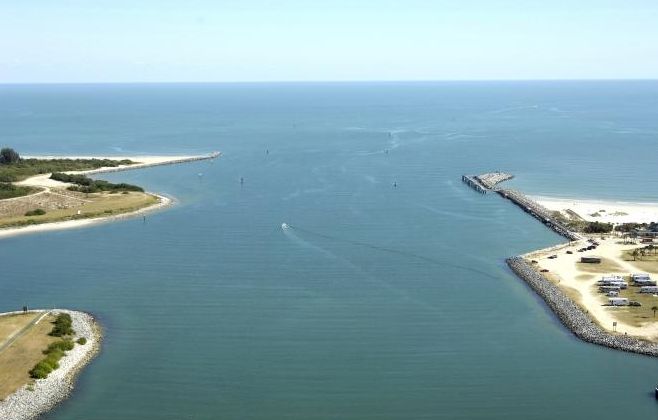 Night fishing for Snook around Ponce Inlet, Port Canaveral and Sebastian Inlets is good right now. Night fishing for Snook around Ponce Inlet, Port Canaveral and Sebastian Inlets is good right now.The baitfish are getting pushed into the jetties where Snook are waiting to gobble them up during slack tide periods or during the end of a high tide.
Drifting a live finger mullet on a sliding sinker rig during a slack tide period is a good way to keep your bait in the strike zone and pick up a snook.
Cast parallel to your drift and use a large enough barrel sinker to keep the bait in the strike zone in order to present a natural looking bait.
Use as small a hook as you can get away with for the size of the bait you are using attached to a three or four foot section of at least 30 pound fluorocarbon leader to complete the rig. After the first cold front passes the east winds will start howling and as the water temperature in the surf hits the 68 degree mark, flounder fishing will start to pick up.
The magic 68 degree mark prompts the flounder to move into the inlets for their annual spawning migration out to the ocean. Small 1 to 3 pound gulf flounder will start to appear first, followed by the doormat sized 3 to 14 pound southern flounder. Fishing live finger mullet, mud minnows or jumbo live shrimp on the bottom is the preferred method for catching these tasty fish.
If you prefer artificial baits, drift the lagoon side of the passes with a DOA CAL bait, 3" CAL Shad tail or 1/4 oz. bucktail jig fished right on the bottom. Pompano will often school on the lagoon side of the passes before moving out to the beaches to feed on sand fleas and other crustaceans when the water temperature starts to cool down so don't forget to give them a shot when things slow down. _____________________
Till next time,
Tight Lines To You All! | ||

| Link One | Link Two | Link Three | Link Four | Link Five | Unsubscribe to this newsletter |