Your October 2012 Mosquito Lagoon & Indian River Fishing Report
Published: Mon, 10/01/12
| Newsletter Issue # 38 Fishing Forecast |
October 1, 2012 | |||||||
Mosquito Lagoon & Indian River Fishing | ||||||||
It's the end of September and the fall mullet run is supposed to be going full bore in our region. There should be mind-boggling numbers of mullet everywhere in all our lagoons but except for in a few areas, they have not appeared in the numbers expected. The 4 inch Saltwater Assassin sea shad and the new "tapper tail" are working really good on the beaches and in both the lagoons.
If you put them on a jig head, they imitate the small finger mullet that are the favorite forage of redfish.
The relatively new Z-Man ElaZtech Scented Bait is also an excellent producer. One of these baits will stay on your hook all day long without being chewed up.
_______________________
Surf Fishing Surf fishing for Spanish mackerel along the beaches is a blast if conditions permit.
Surf Spanish in the 3 to 4 pound category usually start to appear in October chasing glass minnows up and down East Central Florida's beaches and fishermen using a 6 or 7 weight fly rod can have a blast catching them.
Despite their size, Spanish mackerel will fight all the way to the beach.
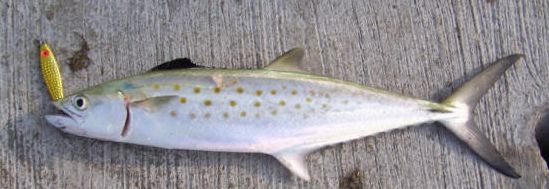 You can catch Spanish mackerel with almost any light colored streamer or Mylar on a hook. Anything reflective will bring a strike on almost every cast when they appear in the area.
Look for a west wind which will knock down the surf and allow the glass minnows to hold tight against the beach. These conditions will put the Spanish within an easy 60 foot or less cast.
If you try this, bring a good supply of lures. Spanish mackerel are a toothy fish and a couple of fish on a fly is probably the norm.
If you don't care for fly fishing, a light spinning rod with small spoons will get you plenty of fish.
Inlets and Jetties With the fall mullet run on, our East Coast inlets and jetties will be a popular location for anglers looking to score a mixed bag.
Flounder, bluefish, jacks, mangrove snapper, snook and breeder redfish all populate the inlets during the migratory baitfish run and anglers using a simple jig head and a live fingerling mullet can expect to score any of these species.
Port Canaveral should still be holding some stray tripletail around the buoy lines Offshore Fishing
Gag grouper are hitting right now on "the steeples" and "cones" in 240 to 260 feet of water.
Anglers are catching them on live blue runners or pinfish fished on a standard bottom rig. As you probably already know, there was a limited open season for red snapper in September. The 21 to 27 fathom ridges produced the best bite with squid out fishing live baits overall as the best bait of choice. Dolphin in the 7 to 12 pound range are starting to show up again around the weed lines in the 160 to 250 foot depths. Although most of the fish are scattered, they will begin to group up under the weed lines during the upcoming month. The easiest way to catch them right now is not trolling, but by pulling up to the weeds and "chunking" a bait on a 5/0 to 7/0 circle hook. Some of the fish you hook up to will be in the 15 pound plus range. 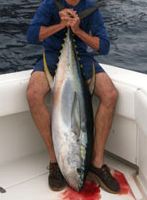 If you really want some good eating right now, the other side of the Gulfstream is holding yellowfin tuna. If you really want some good eating right now, the other side of the Gulfstream is holding yellowfin tuna. They are currently holding between the 85 and 105 mile mark.
Big "bite me" trolling lures trolled around 10 to 14 knots and the Williamson "coyote" trolled slower at around 7 to 10 knots both work really well and will generally get you the most bites. To find the schools, look for the birds and then get in front of the school so you don't run over them and put the school down. The average yellowfin right now is running about 40 pounds, but there are plenty of fish in the 60 pound plus category out there Till Next Month, Good Fishing & Tight Lines To You All! | ||||||||
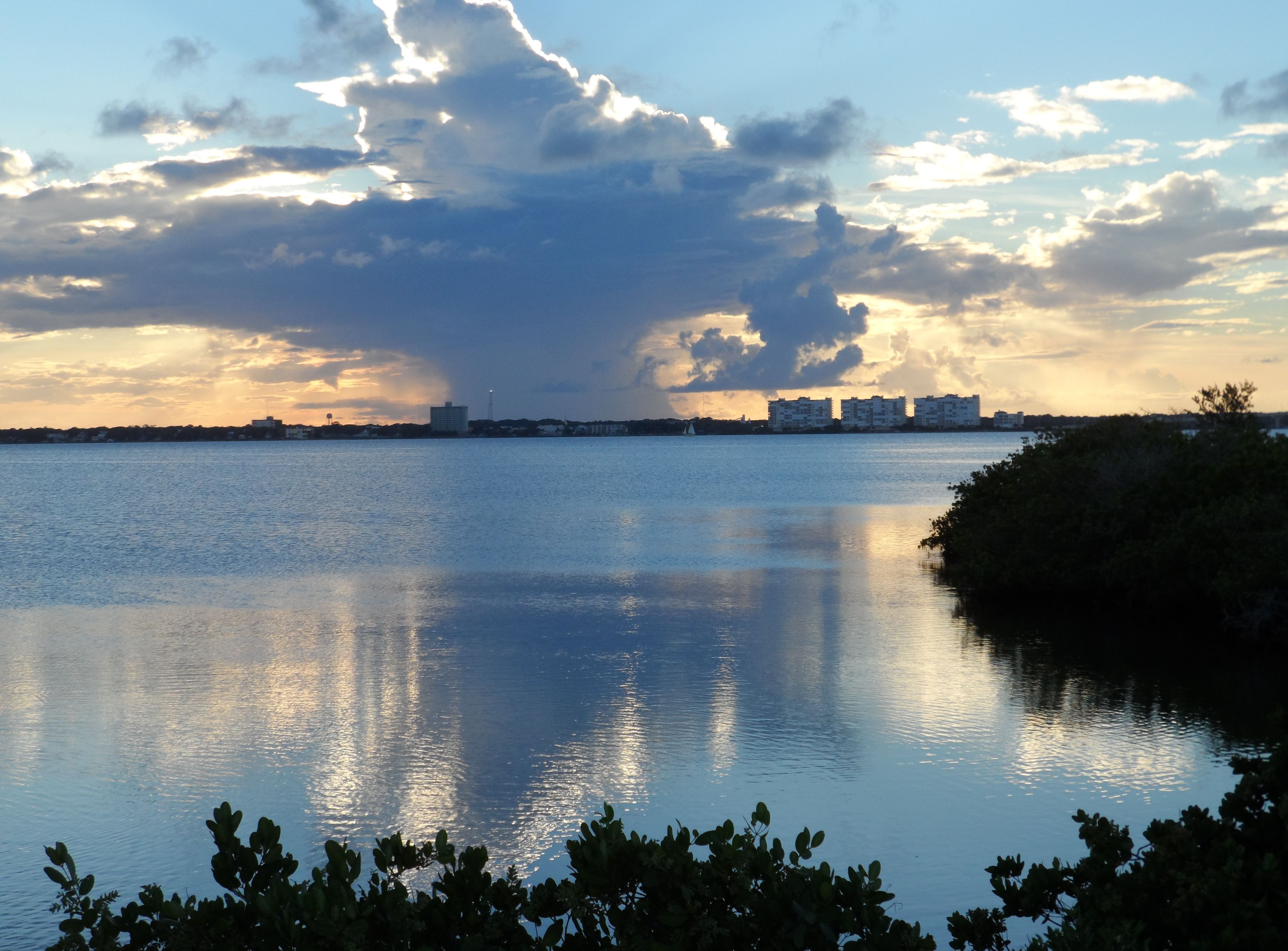
 Right now the redfish are hitting in a bunch of different areas but the fish that are being caught are not quite as large as what we are accustomed to catching during this time of year.
 | Link One | Link Two | Link Three | Link Four | Link Five | Unsubscribe to this newsletter |