Your July 2012 Mosquito Lagoon & Indian River Fishing Report
Published: Sun, 07/01/12
| Newsletter Issue # 35 Fishing Forecast |
July 1, 2012 | |||||||
Mosquito Lagoon & Indian River Fishing | ||||||||
The Pole and Troll zone on the eastern shore around Tiger shoals, the Dummit Cove flats on the Indian River and the flats near Scotsmoor boat landing are still producing lots of slot size and larger sea trout. Sea trout around the entire eastern region are holding around the grass and sand edges in the 4' to 5' depths in all three of our lagoons and are being caught on saltwater assassins 4" sea shad or a standard hookup 1/4 to 1/8 oz. jig head. Avocado redflake and "chicken on a chain" colors have been really hot these past weeks.
Larger sea trout in the 3 to 8 pound range have been striking Rapala SkitterWalk top water baits around the mullet pods in less than 2 feet of water throughout the entire day.
July's hot weather means getting out on the water before daybreak if you plan on catching the really decent size fish.
The earliest part of the morning, before daybreak, is when you should start sight fishing for tailing redfish on the flats. Before the mercury rises, the fish will be actively feeding on and around the shallow water grass flats.
Then as the sun rises overhead, start looking for sea trout and smaller redfish around the sandy pot holes. Almost all the guides are reporting that Mosquito Lagoon redfish are being caught in good numbers right now in the central and southern areas, especially at daybreak around the bait pods. Your best bet is to "walk the dog" around the bait pods near the spoil islands with Skitter Walks, Mirrorlures or Chug Bugs just at daybreak. Around mid morning or when the top water bite slows down, switch over to jigs, soft plastic jerk baits or gold Johnson spoons. The Creme, Berkley or Tsunami paddle tail baits in the Fire Tiger or shad imitation colors are all producing fish as are the DOA CAL jerk baits. Casting around the bait pods is the ticket for picking up single redfish and big sea trout. If you run up on a school of drum or reds, almost anything will get you fish but shrimp and small crabs are almost always a sure bet. In a Florida Sportsman magazine article some time ago, I read about using fiddler crabs for catching redfish and black drum, so I decided to give it a try. I had mixed results, but if there is a redfish or a drum in the area, they will eat them with gusto. An easy way to catch the fiddlers is to bury a plastic bucket in an area where they are active and come back to the spot in a day or so. Make sure the rim of the bucket or can is flush with the ground level and that you leave a little sand on the bottom. The fiddlers drop in the bucket and can't get out.
You can speed up the process buy "hearding" the fiddlers into the bucket. I've also found that the late afternoon bite in the Mosquito Lagoon and in the Merritt Island National Wildlife Refuge just before it gets dark can produce some great fishing. The fish have learned to resume their feeding activity as anglers are leaving the lagoon and the fishing pressure lightens up. For the past several days around the Merritt Island Wildlife Refuge in the north in the Indian River, hundreds of menhaden (pogies) have been washing up on the banks. 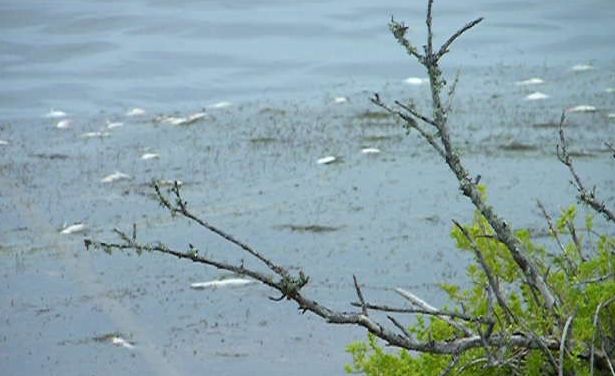 The fish and game people have no idea why the fish are dying in such numbers, but the fish kill apparently hasn't had any effect on the sea trout or redfish population in this part of the river. Because of all the rain we have endured, the tip for this month is to fish the culvert pipes that are flowing into the lagoon systems. Many species of fish congregate around the culverts looking for baitfish and can be caught using live fingerling mullet, a 4" assassin sea shad or various paddle tail soft baits. Although Haulover Canal is always good fishing. Late June and July is when savvy anglers start fishing in earnest for the huge "bull redfish" that cruise the canal's depths. Reports of anglers landing bull reds up to 50 pounds have been coming in this past week, and you can expect the action to continue throughout this month. Baits of choice are blue crab with the claws removed or cut in half, large chunks of fresh ladyfish and live finger mullet, pinfish or croaker. There is also an excellent chance of picking up a gag grouper in the canal if you fish near the ledges but to land them, you need to spool up with at least 60# braid and 40# leader. Houseboat Cut and Jones creek in the Thousand Islands area has been producing some really nice gator trout and slot redfish.
Just to the east of this area past Gordy Point and Brady's Island on the east shore of Merritt Island is also a hot area right now for gator sea trout and slot reds if you throw topwater baits around the mullet pods. Bass can still be found schooling on bait throughout the morning in the St. Johns and on Lake Harney. Bass fishermen are catching nice fish on top water plugs, crank baits and swim baits early in the morning. 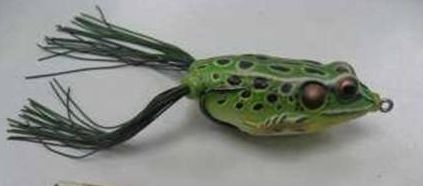 Fishing plastic frogs along the banks and near the lily pads are also accounting for some decent fish in Lake Harney. Fishing plastic frogs along the banks and near the lily pads are also accounting for some decent fish in Lake Harney.If you like bluegill fishing, try drifting the lake with crickets. Fish in the 3/4 to 1 pound range are now being caught on a regular basis. Port Canaveral & Beaches - Surf Fishing
Port Canaveral offers some spectacular fishing during July and the calmer, warmer summer months. When the ocean is flat you can expect to find king mackerel, cobia and tarpon roaming just outside the Port, and tripletail along the Canaveral buoy line. Big Jack Crevalle in the 20 to 30 pound category are cruising the near shore waters around the bait pods and inshore wrecks in less than 90 feet of water.
Almost any live bait will work if you use a 7/0 or 8/0 BMC circle hook on 50# or 60# florocarbon leader. Big tarpon in the 70 to 120 plus pound range are also being caught in the same general areas ith the jacks but closer in, around the 50' depths. If you decide to fish for silver kings, step up your leader size to 80# test or better. Right now kingfish and other predators are moving in close shadowing the schools of Atlantic menhaden (pogies) along the beach and along the Port Canaveral buoy line. Slow trolling live pogies can result in some outstanding catches of "smoker" kingfish. Snook, redfish, juvenile black drum and large jacks can also be caught in the surf along the Canaveral National Seashore and just outside the surf line. During June, July and August, Snook spend their time running the beaches from the Port well south past Patrick AFB. 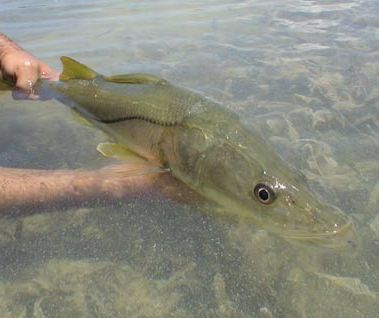 Because Snook typically won't go far from the inlet or port that they are acquainted with, they can generally be found pretty close to the inlets where the fall migration of mullet supplied them with their post spawn calories. Because Snook typically won't go far from the inlet or port that they are acquainted with, they can generally be found pretty close to the inlets where the fall migration of mullet supplied them with their post spawn calories.During certain times of the year, a spawning bite occurs on the beaches north and south of the entrance of Port Canaveral and during these periods, fish in the twenty pound plus category are frequently caught. Around Port Canaveral, snook are usually caught during the darkest hours of the night and into the early morning hours around the lighted docks and wharfs in the Port. During daylight hours, snook can become much less predictable. In the turning basin you will often see schools of monster snook that will refuse everything you throw at them. Flounder in the 14 to 18 in range are still being caught during the outgoing tides around Port Canaveral. Fresh dead mud minnows are the bait of choice for these tasty fish. A lot of flounder and mangrove snapper are also being caught around the jetties and other structure during calm conditions by anglers using small pinfish and live shrimp fished on the bottom. Surf fishermen from Playalinda Beach to Sebastian are catching whiting in good numbers.
Most fish are in the 12" to 15" category with some larger females in the mix.
Sand fleas (mole shrimp) are the best bait for whiting and the occasional pompano, black drum and redfish.
________________________
Offshore Grouper are now on the 27 fathom ridge and are being caught using live baits, large glow jigs and vertical speed jigs fished just above structure.
Till Next Month, Good Fishing & Tight Lines To You All! | ||||||||

| Link One | Link Two | Link Three | Link Four | Link Five | Unsubscribe to this newsletter |