Your May 2012 Mosquito Lagoon & Indian River Fishing Report
Published: Tue, 05/01/12
| Newsletter Issue # 33 Fishing Forecast |
May1, 2012 | |||||||
Mosquito Lagoon & Indian River Fishing | ||||||||
As the weather heats up on Florida's Space Coast and the love bugs begin their annual ritual this May, plenty of big gator trout and slot size redfish will be caught on the flats of the Mosquito Lagoon and northern Indian River.
This year, sea trout from 1 1/2 to over 5 pounds are plentiful in the shallow flats of both the Mosquito Lagoon and the northern Indian River. Because of the mild winter we had this year, the trout haven't bunched up as much as in previous years and with the influx of baitfish in both the lagoons, they are happily eating and growing to larger proportions. The redfish will be found along with the sea trout in the same areas of these shallow flats, usually around the pods of finger mullet. The finger mullet schools stir up small crabs and crustaceans that the redfish eagerly feed on, along with the occasional straggler mullet. When you find a school of mullet on the flats, stick around and fish the area. If the mullet are jumping a lot, start casting ahead of the school and you'll soon be catching fish. Sea trout will often follow redfish and sometimes even larger stingrays, waiting for them to flush out mullet or other forage to feed on. 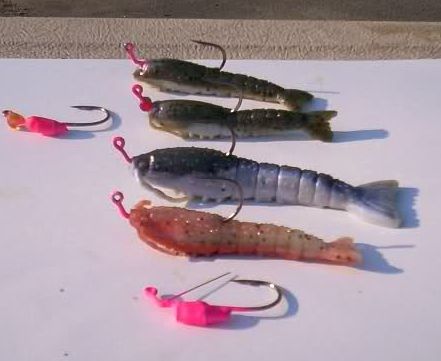 If you want to catch large quantities of fish, bounce a Gulp shrimp on a jig head off the bottom in three to five feet of water, along the edges of the flats. If you don't get a hookup in ten minutes or so, move off to another area. You can hook some big fish this way, but for every gator trout you catch, you will hook up with ten to fifteen smaller sized sea trout. Wade fishermen and those using kayaks, canoes and other shallow water craft, are catching from 30 to 80 sea trout a day in the shallow flats around the Kennedy space center.  The flats around the Peacocks Pocket Road shallow water boat launch are loaded with redfish, sea trout and schools of juvenile black drum. The flats around the Peacocks Pocket Road shallow water boat launch are loaded with redfish, sea trout and schools of juvenile black drum.Most of the successful fishermen are using Gulp sinking minnows, DOA CAL jerk baits, spoons and for gator sea trout; top water baits in the early morning, late afternoon and on overcast days. Live shrimp under a float is always a sure winner, but you have to put up with a lot of smaller fish. If you're bouncing jigs with Gulp baits, you'll need a lot of them. Jacks and ladyfish will chew up a bunch of them and in some areas what they miss, the puffers will get. Bank fishermen in the Merritt Island National Wildlife Refuge are also doing well in the north Indian River catching slot redfish and sea trout by still fishing live finger mullet or chunk baits. Most of the guys wade out far enough to cast to the drop off at the edge of the flats, and then wade back to the bank to set their rods and wait for a hit. Since I don't have the patience for this, I usually fish the salt marsh side with a variety of artificial baits. Although fishing pressure in this area has increased, there are still lots of nice fish in the marsh areas if you know how to catch them.
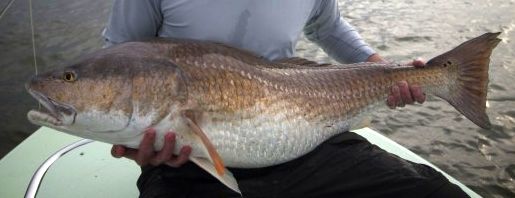
In the northern Indian River Lagoon above Titusville, some real monster redfish are being caught on both live and topwater baits.
 Unfortunately, Shiloh Marsh road remains closed for some unknown reason so access to this area is limited to foot traffic or bikes.
Early morning fishermen throwing top-water Storm Chug Bugs and Rapala Skitterwalks around the moving schools of finger mullet are catching some nice bull redfish and "gator" sea trout. Playalinda Beach and South
Surf casters who fish "the rocks" between Indialantic and Patrick Air Force Base during May will have great fishing for Black Margate, sheepshead, juvenile black drum, whiting, lookdowns, snook, pompano and even an occasional flounder.
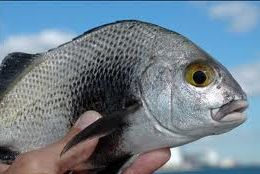 Sea Bream or Black Margate are excellent table fare and in some areas during May are often the most prevalent catch. Sea Bream or Black Margate are excellent table fare and in some areas during May are often the most prevalent catch. They average 2 to 4 pounds and are occasionally caught up to to 10 pounds around the coral heads.
The current 15 1/2 pound world record black margate was caught in Fort Pierce Inlet.
In the vicinity of Patrick AFB; shrimp, crabs, sand fleas and small baitfish are attracted to the coquina worm rock and dead coral heads that are visible in the surf during low tides. During these low tide periods, surfcasters who use long surf rods capable of casting well past the outcrops, do exceptionally well catching a mess of fish. Sometimes during really low tides, local surf fishermen use long 10 to 12 foot surf rods with 1/4 oz to 1/2 oz barrel sinkers, a swivel, and a small hook tipped with sand fleas or peeled shrimp to wade waist deep and drop baits into likely looking pockets of coquina. Don't try this method unless you're sure footed and the tide is less than three feet. Also make sure to keep your baits in water tight containers. There are a lot of sharks in this area. St. Johns River Right now the shad are spawning in full swing on the St Johns River and big bass
are taking
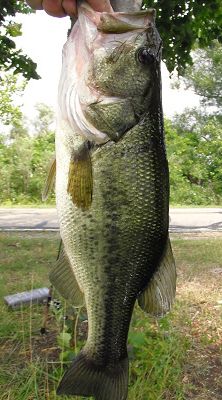 full advantage of the situation. full advantage of the situation. In the early mornings you can find them busting the surface loading up on shad.
Later on during
the day, it pays to fish the main river shell beds with a
Carolina rig to pick up some big fish.
The main river lily pad fields will also produce good fish throughout the upcoming month.
Local guides are reporting plenty of 30 to 50 fish days during the past few weeks, mostly with clients using artificial baits.
Not bad for a 6 hour trip!
If you prefer panfish, the bluegills catch is also in full swing and are great on the dinner table.
________________________
Near Offshore Fishing
Because of the extremely warm winter we experienced this year, cobia were extremely scattered and continually migrating through our coastal waters which lent to a relatively dismal season.
Although the warm water may have hurt the cobia fishing, it definitely helped the
kingfish and dolphin bite.
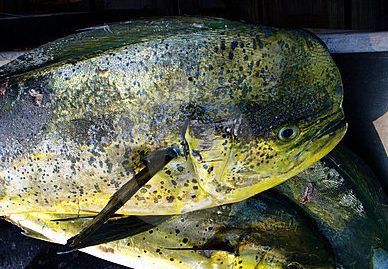 Throughout April, dolphin were
being caught by people trolling deeper waters fishing the reefs for kingfish. Although the fish weren't big, some 20- to 40- pounders started showing up at the end of the month. Throughout April, dolphin were
being caught by people trolling deeper waters fishing the reefs for kingfish. Although the fish weren't big, some 20- to 40- pounders started showing up at the end of the month.The dolphin run is expected to improve well into May and if we get a few days with a slight southeast breeze,
some nice weedlines could start forming which would make the dolphin fishing really hot.
In addition to dolphin, an occasional wahoo, sailfish or blackfin tuna should also be making their appearance. Troll naked ballyhoo rigged on mono leaders if you're targeting dolphin and sails.
The warm weather also kept the kingfish hanging around last month and some giant fish in the 30 to over 50 lb. range were caught around Cris Benson and the Coast Guard Bottom. Hopefully they will be around during May.
The kingfish on 8A and Pelican flats are running smaller but those
areas are also holding more dolphin and an occasional wahoo.
Grouper opens back up in May! Till Next Month, Good Fishing & Tight Lines To You All! | ||||||||

| Link One | Link Two | Link Three | Link Four | Link Five | Unsubscribe to this newsletter |