Your March 2012 Mosquito Lagoon & Indian River Fishing Report
Published: Thu, 03/01/12
| Newsletter Issue # 31 Fishing Forecast |
March 1, 2012 | |
Mosquito Lagoon & Indian River Fishing | ||
Mosquito Lagoon & Indian River Fishing February in the Mosquito Lagoon has been pretty awesome despite some poor weather conditions that have made sight fishing almost impossible at times. It's always tougher to blind cast for redfish and sea trout but when the weather doesn't cooperate, it's your only fall back option. When conditions
are tough, consider fishing in protected areas along the edges of the
flats and drop-offs
Although the March winds will continue to make fishing a challenge on the north Indian River and Mosquito Lagoons, there are plenty of big redfish roaming the deeper flats. Look for singles and small schools of slot sized reds on the shallower flats as the water warms up during the late morning and early afternoon hours. The adjacent waters close to the Mosquito Lagoon and the Indian River Lagoon near Scottsmoore and Mims, north of Titusville and the railroad bridge, are hotspots for reds and gator sea trout during March. More and more baitfish will be appearing in both lagoons as the water
warms up, and following them will be the redfish and larger sea trout.
March is when the large female spotted sea trout start to fatten up for the the spring spawn.
The Western grass flats on the Indian River from Scottsmoor down
to Mimms is a top place to start looking for these "gator" trout.
Target the
sandy potholes in the grass flats and you'll find both redfish and sea trout seeking the sun's warmth. The local power plant also provides loads of fun if you like catching sea trout, jacks and ladyfish on a cold Florida morning. You always have a chance of hooking up with a redfish, snook or even a tarpon close to the powerplant discharge. Right now you can find nice schools of black drum all over the Indian River, in the shallows from Peacocks Pocket, all the way up the East bank of the river. Fish the leeward side of the islands during the windy days and you will hook more fish.
Gulp jerk baits, jigs, peeled shrimp and cut bait account for most of the black drum catches. _______________________
Banana River No Motor Zone
 Fishing the Banana River no motor zone is always great, but March is usually one of the best months to pick up a trophy sea trout, bull redfish or oversize black drum. Fishing the Banana River no motor zone is always great, but March is usually one of the best months to pick up a trophy sea trout, bull redfish or oversize black drum. There is usually very little angling pressure around the pristine sea grass beds, which makes this area one of the few places I know of where you can still regularly see drum in the 30 pound plus category, peacefully tailing on the flats.
Redfish in the 15 to 30 lb. plus class are also now being caught on a regular basis by kayakers and canoe fishermen using medium size live shrimp or gulp shrimp jigs.
Near Offshore Fishing
Port Canaveral is where one of East Central Florida's biggest ocean events begins in early March; the inshore spring cobia run. The cobia swim with and follow the manta rays as the rays slowly migrate north along the coast.
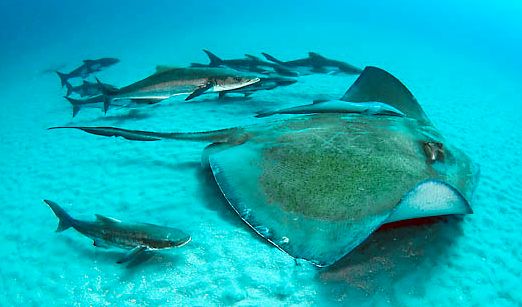 If everything runs on schedule, we should see cobia ganged up somewhere between Port Canaveral and Sebastian Inlet in early March. When the water temperatures hit the 67 - 70 degree mark, we can expect to see a solid run of baitfish and manta rays moving in to within 5 or 6 miles of the coast. Right now the cobia are starting to show up in the 40 to 60 foot depths where they are popping up and holding near bait pods well south of Port Canaveral. On the near-shore reefs and wrecks, kingfish have been hitting slow trolled live and dead baits on the 70 to 90 foot reef line. Since sight fishing is the main method used to catch cobia, look for days with calm seas and sunny skies between 10 am and 3 pm to find them. March is a windy month, so you need to have your rods packed in order to take advantage of every good fishing day possible.
If the fish haven't been pressured too much, bright colored jigs or grubs in chartreuse or lime green are a favorite cobia lure. White jigs spiced up with a brightly colored plastic worm or a gulp eel also work well. A favorite Canaveral rig is a two or three ounce, chartreuse colored jig with 40 or 50 pound test fluorocarbon leader, tossed with a 20 pound spinning outfit. Cast the jig to the side of the ray and let it sink on a tight line. If the fish doesn't take the jig on the drop, work it rapidly back to your boat and try again. There is never any doubt When a Cobia strikes, just set the hook hard and hang on. If the fish aren't intrested in artificial baits, the best "killer" live bait for cobia, if you don't mind paying the price, is a live eel. Another excellent cobia bait is a lively, six inch long shrimp, hooked through the tail with a 3/0 or 4/0 octopus or 5/0 or 7/0 circle hook. Make sure the shrimp is alive and lively, dead shrimp don't work. If you can net up some pogies (menhaden) hook them through the nose using a 3/0 or 4/0 octopus or a 5/0 or 7/0circle hook and liveline the bait to sighted Cobia. Live blue crabs, live mullet and pinfish also produce but day in and day out, the shrimp are the easiest to obtain and work as well as any other live bait. Occasionally, offshore water temperatures will run a couple of degrees higher than closer in towards the beach. When this occurs, cobia can be found along the 70 to 90 foot reefs like "Pelican Flats" out of Canaveral. The Chris Bensen and the 8-A reefs are also good spots to try earlier in the month. If you fish in Florida waters out to the 3 mile limit, you are allowed one cobia per person or six per vessel; which ever is less.
If you fish past the 3 mile limit in Federal waters, your limit is two per person and when transporting your catch through Florida state waters, you can't stop your boat until you reach your boat launch or dock.  Just outside of Port Canaveral, tripletail will also be a possibility. They will be holding around any floating debris, seaweed or shipping channel buoys. Just outside of Port Canaveral, tripletail will also be a possibility. They will be holding around any floating debris, seaweed or shipping channel buoys.
Tripletail are great eating fish and are very popular with small craft anglers because they are usually found within a few miles of the coast.
Free lined live shrimp, small jigs, or DOA artificial shrimp all work well.
If you enjoy catching Spanish mackerel, we occasionally get a small run in March along the beaches, the ocean piers and around the jetties.
The south jetty fishing pier at Port Canaveral, the Coca Beach Pier and the fishing piers in the Daytona Beach area can be hotspots for Spanish mackerel when they begin their run. Launch your boat at either Freddie Patrick Park adjacent to Sunrise Marina or at Port's End Park next to Scorpions New Port Marina. _________________________
Playalinda Beach  Surf fishermen will find pompano, whiting, bluefish and some Spanish mackerel in the surf during the upcoming month. Surf fishermen will find pompano, whiting, bluefish and some Spanish mackerel in the surf during the upcoming month.If you fish the Canaveral National Seashore at Playalinda Beach, start out at parking lot#7 or #8 and move on to #11 until you find fish.
March is windy so you have to choose your fishing days wisely but Playalinda Beach will stay relatively deserted throughout the month, especially during the weekdays.
St. Johns River If you are a freshwater fisherman, you need to know that some of the biggest bass of the year in East Cetral Florida are caught in March, in the St. Johns River and other lakes in our area. 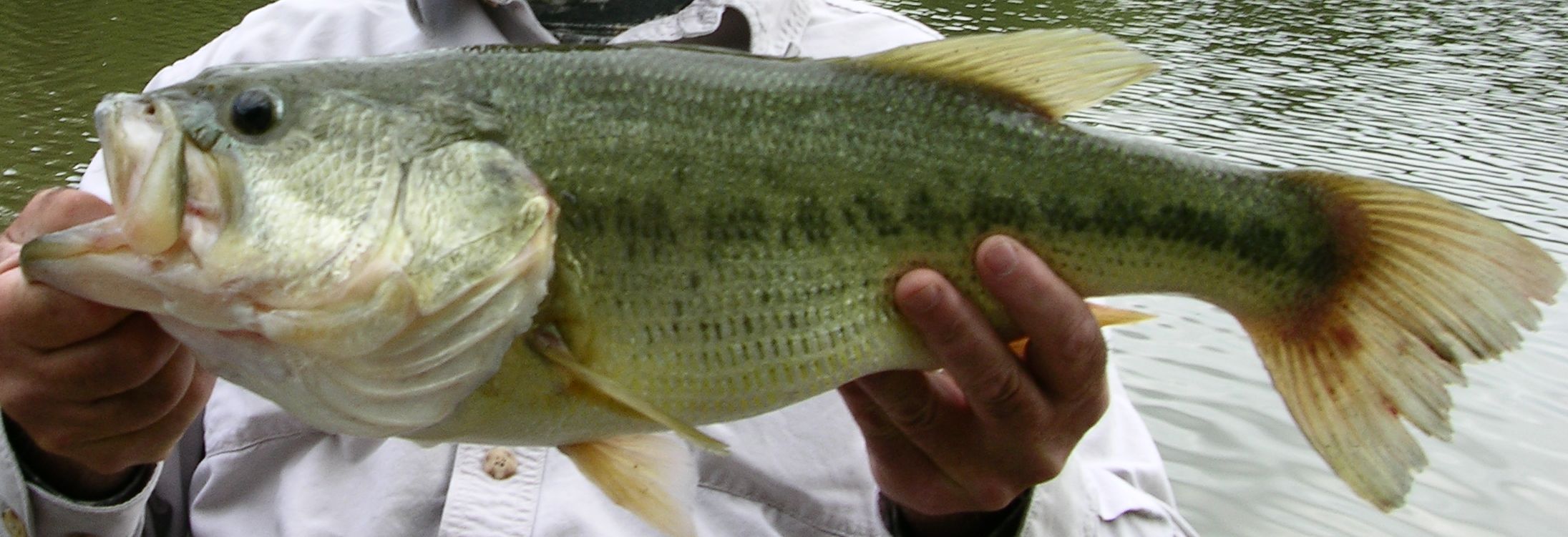 After the fall rains, the water levels in the upper St. Johns and other lakes like Harney (between Mims and Sanford), Lake Washington (west of Melbourne) and Lake Poinsett (west of Cocoa) should make for some dynamite fishing for the huge egg bearing females. Although some shad are still being caught in many areas of the St. Johns, the run is winding down. Check out the creeks and backwaters from Puzzle Lake south. Big plastic worms are one of the best baits you can use for big female largemouths. Till next time,
Tight Lines To You All! | ||


| Link One | Link Two | Link Three | Link Four | Link Five | Unsubscribe to this newsletter |