Your February 2012 Mosquito Lagoon & Indian River Fishing Forecast
Published: Wed, 02/01/12
| Newsletter Issue #30 Fishing Forecast |
February 1, 2012 | |||||||
Mosquito Lagoon & Indian River Fishing | ||||||||
osquito Lagoon & Indian River The water levels in the Mosquito Lagoon and upper Indian River lagoon are dangerously low right ow but the water has cleared up considerably.
There are sight fishing opportunities galore for redfish, sea trout, black drum, flounder and even an occasional cruising sheepshead. The low, gin clear water makes the fish extremely spooky so stealth and a long casts with light lines are the order of the day. Gold ¼ oz Aqua Dream, Johnson's or Aqua Dream spoons matched pitched from a 7 ft spinning rod will get
the job done.
When you find that the red fish are following your spoon but
not eating it, try changing the color.
February is the time of year when you can catch some really monster gator sea trout if you know how to target them.
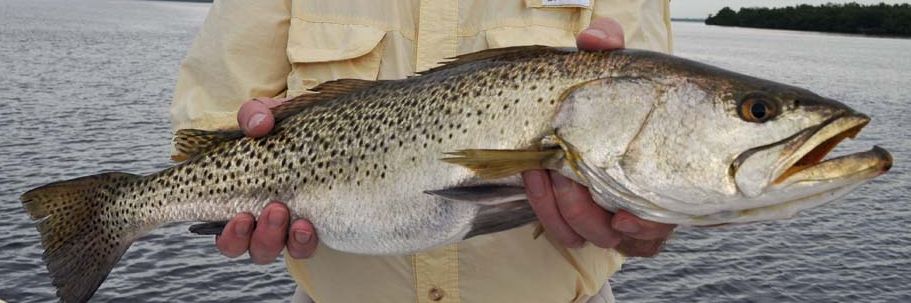 The really big ones don't behave the same way as school trout or stay in the same areas. The small "schoolies" don't feed with the bigger gator trout, mainly because they eat them.
If you're catching a bunch of small trout in an area, it is extremely rare to pick up a gator trout in the same spot. They are usually loners and seldom swim together as a school.
Gator trout are roamers and often wind up in extremely shallow water in the most unlikely spots. This is one reason I fish for them in the marsh areas of the Merritt Island National Wildlife Refuge.
Because they cover a lot of water in their quest for food, it's better to use artificial lures that also cover a lot of water, such as the Zara Spook top water, lead headed jigs with a 4" to 5" soft plastic tail, sub surface jerkbaits and 3" or 4" spoons.
With the exception of a live "grunt" under a Cajun Thunder rig, artificial lures are simply more effective than live bait.
I make it a point to carry at least 4 rods rigged with different baits. A top water, a jerkbait, a jig and a spoon.
In the Mosquito Lagoon during this time of year, the grassflats that have deeper channels on their outer edge are where you should target. The white sand holes form prime ambush points which is where you need to target. The biggest fish will be on the bottom that is a mix of sea grass and sandy potholes, in water from 1 to 3 feet deep.
Since gator trout are primarily finfish eaters and feed on baitfish all year round in both the lagoons, casting large top water or plastic jerk baits like the big Top Dog or He Dog MirrOLure is an effective way to catch them.
The IGFA record was caught in the Indian River Lagoon at Fort Pierce and weighed in at 17 pounds 7 ounces.
___________________________ St. Johns River
Every year from January through the end of March, silvery American shad from one to four pounds migrate up the St. Johns River for their annual spawn. Shad are hard fighters and frequent jumpers. Although most people just catch and release them, the roe of the females is delicious and their flesh, although somewhat bony, is great eating. This year the heavy rainfall in October flooded the upper St. Johns river basin, which has so far made this year's shad run pretty decent. Fishing for American shad and crappie has been excellent in the deep eroded river bends of the St. Johns River south of SR 46. 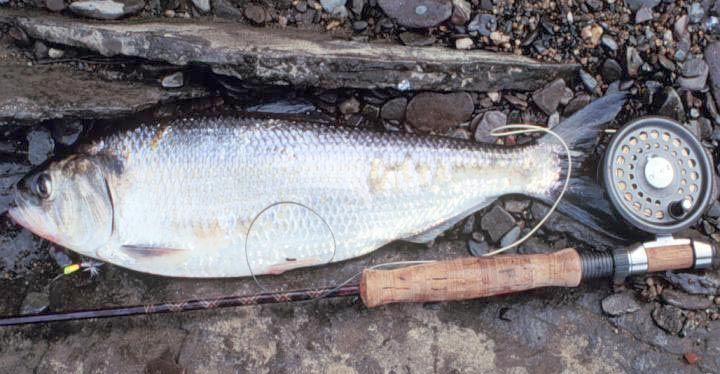 The deep holes and strong currents are where the larger 3 pound females can be found. The deep holes and strong currents are where the larger 3 pound females can be found.Excellent catches of shad are also being reported in areas from Lake Monroe in Sanford, Fl. to Puzzle Lake. The old Marina Isle and the Hatbill Park area west of Mims which includes both Lake Harney and Puzzle Lake, are also synonomous with shad this time of year. Although most of the catches are being made by slow trolling 1/16 ounce white Road Runners, fly fishermen using Crazy Charlies in orange or chartreuse colors are also catching their fair share of fish. Tandem crappie jigs, shad darts, small tube lures and small spoons also work well when you locate the schools. Although slow trolling with light spinning tackle is the preferred method of shad fishing, these fish were designed for fly fishermen. A five or six weight outfit rigged with sinking line and about six feet of 10# test leader is just the ticket for shad. Any weighted brightly colored shad fly, shad dart, etc. cast upstream and drifted along the bottom will catch you fish if a school is in the area. From time to time shad can be found anywhere from Hatbill Park, Marina Isle, Lemon Bluff, Puzzle Lake and Mullet Lake, or they might not be in any of those spots. The Fly Fisherman in Titusville (321.267.0348), Orlando Outfitters (407.896.8220), and Mosquito Creek Outdoors (407.464.2000) can advise you on what flies and gear to use and the areas that are currently located at. ___________________________ Playalinda Beach
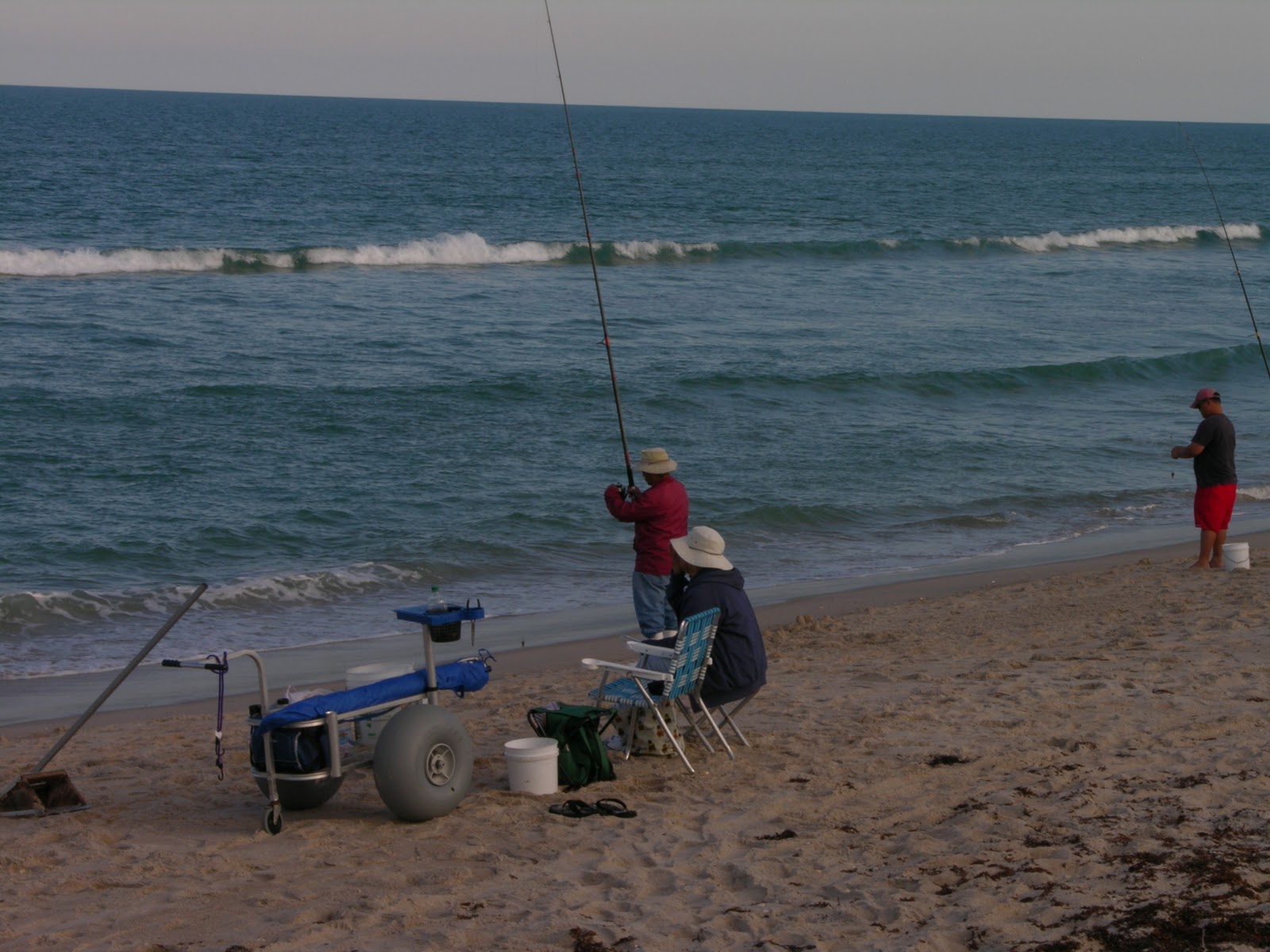 The water temperatures at Playalinda Beach right now is perfect for almost all species. The water temperatures at Playalinda Beach right now is perfect for almost all species.When the surf settles down enough to make surf fishing fun instead of work you can make good catches of whiting, pompano, bluefish and occasionally some Spanish mackerel. You can find the bigger fish out past the last set of breakers.
Sand fleas, small fresh shrimp,cut clams and cut mullet have been the most productive baits to use. Parking Lots #8 thru #10 are hot right now with #9 being the most productive last week. The lower lot numbers usually have more surfers and bathing activity. _____________________________
Near Offshore and Offshore
Between now and the end of March, the cold fronts will dictate how good the offshore fishery will be.
The calm days between the cold fronts will be good periods to fish for smaller kingfish in the 70 to 90 foot range southeast of Ponce Inlet, around the Pelican Flats area outside of Port Canaveral and on the offshore bars near Sebastian.
If the cold fronts bring in extreme temperature drops like we had last year, the kingfish will move south towards Ft. Pierce and Stewart.
The cobia fishing on the reefs and wrecks will also be subject to the weather.
If we have a mild winter, you can expect to pick up the bulk of salifish trolling between Sebastian and Cape Canaveral.
The offshore fishermen trolling ballyhoo are still getting quite a few sailfish and dolphin out of the port right now. They have been finding packs of sailfish jamming schools of bait into balls which I'm told is a sight to behold. 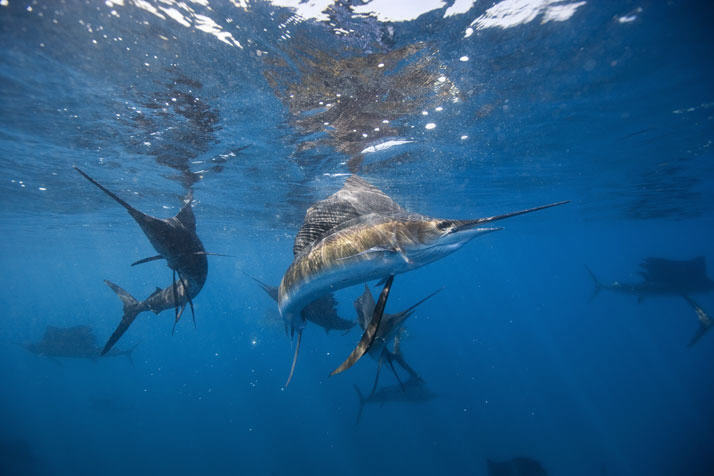 When the weather permits, tripletail and cobia will be around the Sargassum weed patches closer to shore.
Freelining a live shrimp or a small crab around the Sargassum could get you a tripletail or even a cobia. Until next time,
Tight Lines To All!
| ||||||||

| Link One | Link Two | Link Three | Link Four | Link Five | Unsubscribe to this newsletter |