Your September 2011 Mosquito Lagoon & Indian River Fishing Report
Published: Thu, 09/01/11
| Newsletter Issue # 25 Fishing Forecast |
September 1, 2011 | |
Mosquito Lagoon & Indian River Fishing | ||
The Mosquito Lagoon and Indian River:
If you plan on catching a trophy redfish in the Mosquito Lagoon, September and October is the best time of the year to make that happen.
The water quality in all three lagoons right now is very poor. An intensive bloom of brown algae has infested the lagoons and could become a serious threat.
The dark murky water blocks out sunlight killing sea grass beds and the decaying vegetation starves the water of dissolved oxygen. You can smell the stench when the wind is right. Despite this, there has been a good redfish and sea trout bite throughout this past month, early in the mornings and later on in the evenings just before dusk. The rising water temperatures in the middle of the day cause the fish to shut down in the shallows and move into cooler water. Look for slot size redfish tailing the shallows very early in the morning and then moving into the deeper pot holes and edges as the water warms up later on towards noon. These fish can be caught on a variety of baits but the preferred baits are top water baits like Storm's Rattlin' Chug Bug - 3.25" - Gizzard Shad If you fish live bait try pinfish, small croaker, small 6" lady fish or large finger mullet. From late August into September, the big breeder redfish begin to group up into larger schools in all of the lagoons in preparation for their annual spawn.
This is why September is probably your best chance to catch a really GIANT Bull Redfish with some exceeding forty pounds and occasionally a fifty pounder. 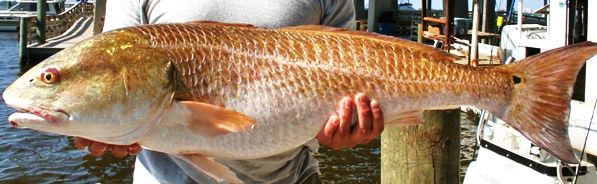 Blair sent me this video of what you can expect to catch during the upcoming month if you get lucky. Over the upcoming weeks, fishermen in the Mosquito Lagoon and northern Indian River can actually watch the pods of redfish grow in numbers into large schools of hundreds to thousands of fish if they hit the same areas on a daily basis. A live pinfish or croaker, a large chunk of fresh cut bait or a strategically placed plastic CAL jerkbait will hook you up. Be sure not to cast into the middle of the school. Watch the school and cast well ahead of where they are heading. The best sea trout bite has also been in the early morning hours. Target the bait schools with top water plugs like Chug Bugs, Top Dog Jr. or smaller Skitter Walks. 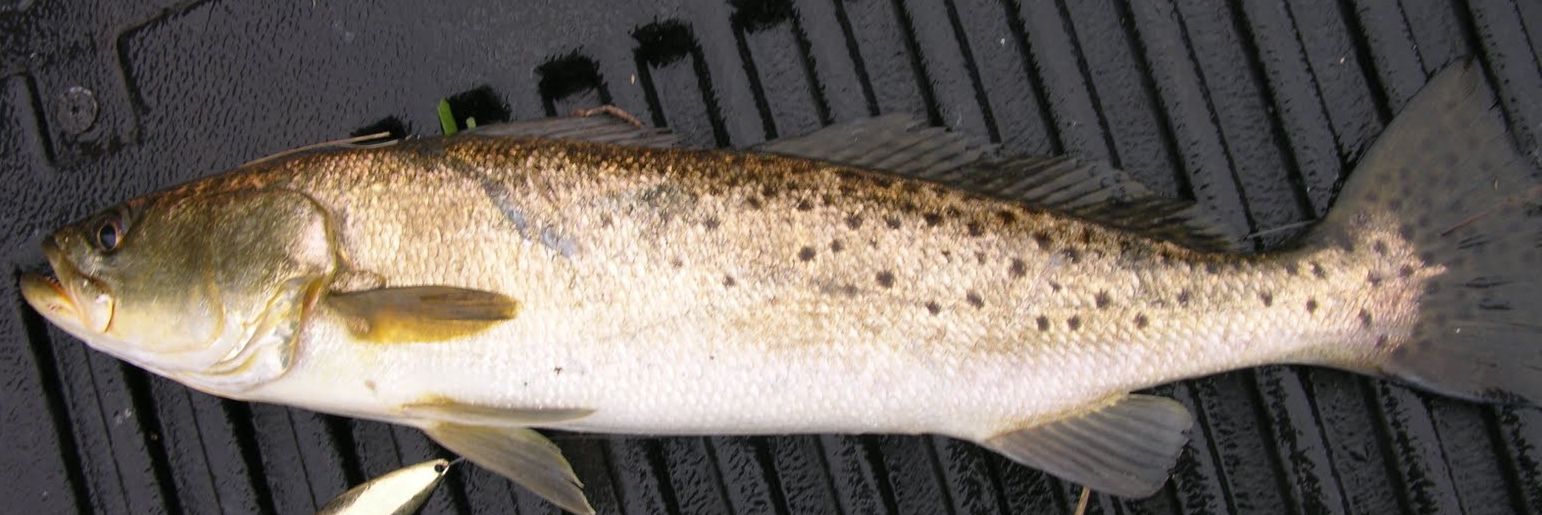 You can catch these fish on twich baits and live pin fish under a cork. My wife is particularly fond of using a Cajun Thunder rig with about 16" of fluorocarbon leader under it and a 4/0 Owner hook. Live shrimp work well but you get too many under size trout.
A few tarpon in the 20# to 100# range have been seen rolling in the ICW of the Mosquito Lagoon and even Haulover Canal, but there have not been the massive numbers like we've seen in past years. Hopefully, more tarpon will show up in the lagoons in September as more bait fish show up. _________________________
Merritt Island National Wildlife Refuge:
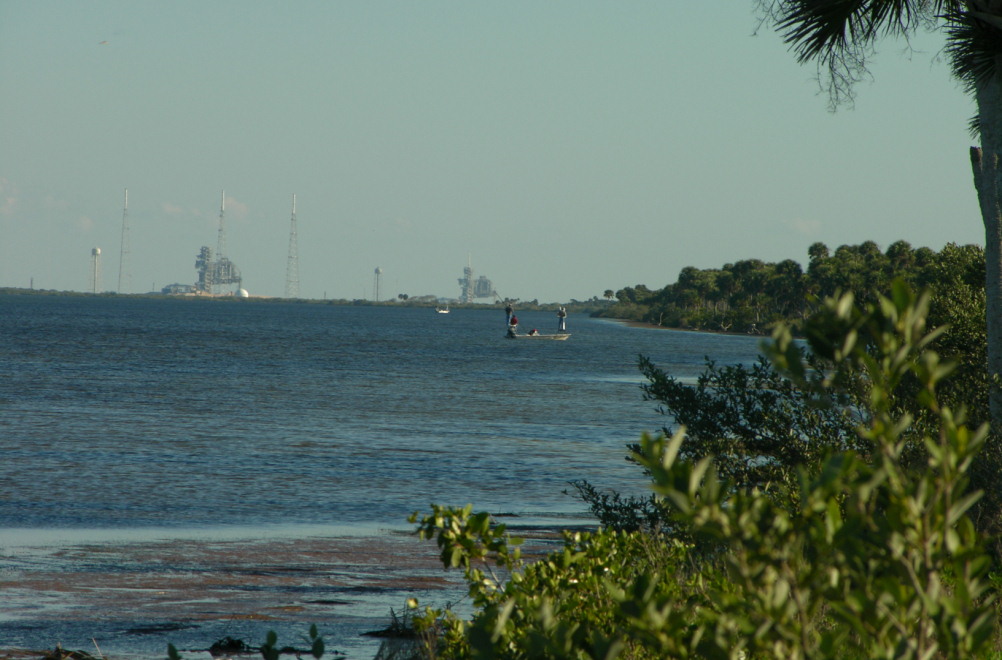
Southeast of Titusville in the waters that border the refuge black drum have been schooling in the hundreds to thousands.
These aren't the huge 40 pound plus fish that you can find in deeper water around bridge pilings. They average about 24" long and weigh in at about 5 to 10 pounds. The Black Drum gather to feed in shallow water on juvenile stone crabs and small shrimp sometimes by the thousands, and can be caught using light line with live or dead shrimp.
Fly fisherman in kayaks also take good numbers of drum using chartreuse or black Clouser Minnow
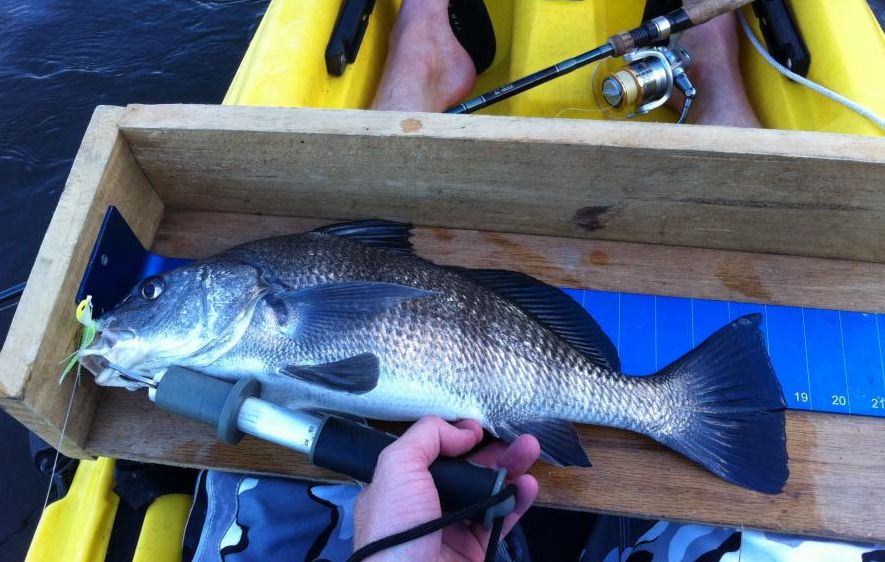 On calm days it's pretty easy finding the schools and when you do, you're in for some action. These guys are stubborn fighters, especially on a fly rod or light lined spinning outfit. On calm days it's pretty easy finding the schools and when you do, you're in for some action. These guys are stubborn fighters, especially on a fly rod or light lined spinning outfit.The small islands around Peacocks Pocket usually hold a school or two.
You can launch a shallow draft boat or kayak at Peacocks Pocket launch in the refuge, Parrish Park on SR 406 or at the Bair's Cove ramp at Haulover Canal off of SR 3.
_________________________ Sebastian Inlet 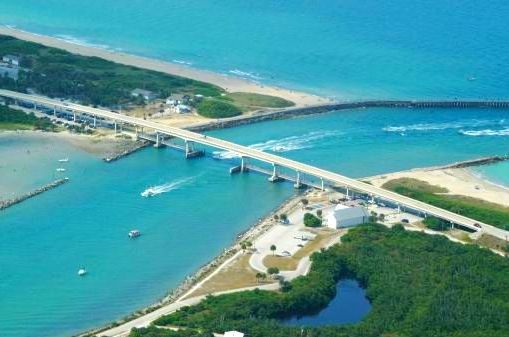 Snook anglers have been eagerly waiting for the September 1st kick off of the Atlantic coast snook fishing season. Snook anglers have been eagerly waiting for the September 1st kick off of the Atlantic coast snook fishing season. The regulations remain the same with a one snook per person per day, 28" to 32" slot recreational bag limit.
Although Sebastian Inlet is where hoards of fishermen will congreate on and along the jetties; other less renowned hotspots include the coral heads in the surf behind the officers club at Patrick AFB, the jetties outside of Port Canaveral, the turning basin and the waters inside Port Canaveral. The narrow inlet on SR A1A between Melbourne Beach and Wabasso Beach is best fished during daylight hours from the midpoint of an incoming tide, up until the end of the incoming tide, from the inlet side of the north jetty pier. A good 9 foot medium or heavy action rod coupled with a spinning reel spooled with 20# 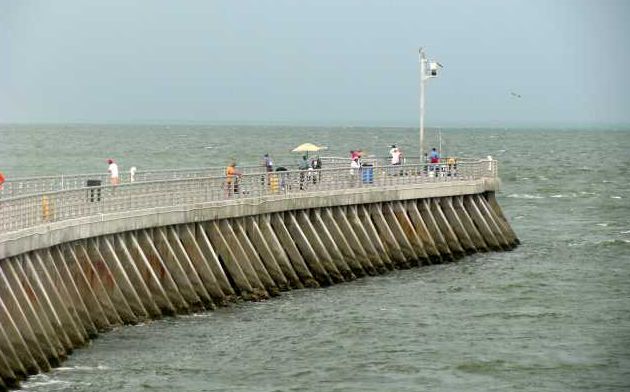 monofilament, attached to a 40# flourocarbon leader with a small swivel and #4 bait hook, is the ticket for a fishing live, extra large "jumbo" shrimp close to the bottom. monofilament, attached to a 40# flourocarbon leader with a small swivel and #4 bait hook, is the ticket for a fishing live, extra large "jumbo" shrimp close to the bottom. A small lake shot crimped just below the swivel will help drift the bait close to the bottom without getting hung.
Hook the shrimp under the horn, being careful not to hit the brain, and toss it up current for a slow drift. It's just like fly fishing a mountain stream for rainbow trout. Other favorite baits used by the Sebastian "regulars" include large live croakers, pigfish and finger mullet in that order, with jumbo shrimp being the favorite. If you decide on making the drive down to Sebastian, bring along a tackle box loaded with terminal tackle. The bottom is littered with hung rigs. ___________________________
Near Shore and Off Shore Fishing: September is normally the last best good weather month before the cold fronts begin coming in to screw up your near shore fishing plans. As long as the summer squalls stay away, a run to the other side of the Gulf Stream still isn't out of the question if you're after tuna.
The good news is that the cooler weather sparks the fall mullet run, which should be going full bore by October.
Mullet, pogies and other baits will be attracting more king mackerel, bonito, big jacks, cobia and tarpon near shore. Port Canaveral should be "command central" for king mackerel and cobia when they appear, along with other kingfish that should be coming inshore north of Sebastian Inlet. 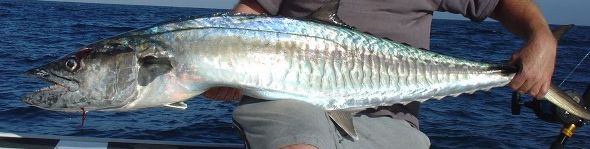 South of Melbourne Beach toward Sebastian, Wabasso and Vero Beach, you should also be seeing more and more tarpon running just outside the breakers. Fishermen outside of Ponce Inlet and Port Canaveral have been hooking good numbers of them all month.
If the kingfish and cobia for some reason don't move inshore, you'll still be able to pick them up around 8-A, Chris Benson, Pelican Flats and the other reefs in the area. Slow trolling pogies, mullet, blue runners or even juvenile bluefish can get you a hookup with a "smoker" kingfish
_____________________
Jetties: Jetty fishing for snook, redfish, mangrove snapper and flounder is still going strong. North of our area around Port Orange and Edgewater, the shrimp run is attracting a lot of decent sized flounder.  Flounder have also been traveling up the rivers from Sebastian and Ponce Inlets following the shrimp. Good flounder catches are still being reported between Sebastian Inlet and Honest John's Canal in the southern area of our region in the Indian River. The dock pilings, mangrove shorelines, oyster bars, sandy pot holes in the Indian River flats and dropoffs along the main ICW channel have been producing flounder in the 3 pound plus range. The best baits are live shrimp, jigs tipped with shrimp or sand fleas fished along the deeper edges and the drop-offs. Small yellow white, yellow or chartreuse colored jigs bounced off the bottom also pick off a good number of fish.
Use light line with a 10 - 15 pound flourocarbon shock leader when fishing around oyster bars and pilings. Till Next Month, Good Fishing & Tight Lines To You All! | ||

| Link One | Link Two | Link Three | Link Four | Link Five | Unsubscribe to this newsletter |