Your May 2011 Mosquito Lagoon & Indian River Fishing Report
Published: Sun, 05/01/11
| Newsletter Issue # 21 Fishing Forecast |
May1, 2011 | |||||||
Mosquito Lagoon & Indian River Fishing | ||||||||
As the weather heats up on Florida's Space Coast and the love bugs start their annual ritual, so does the fishing on all fronts.
The near-shore, inshore lagoons and St John's River are all hot right now and will continue to get even better as the water warms. If you don't care to fish artificial lures; live shrimp, live mullet, cut mullet and cut ladyfish are the best baits for redfish in both the Mosquito and Indian River lagoons. 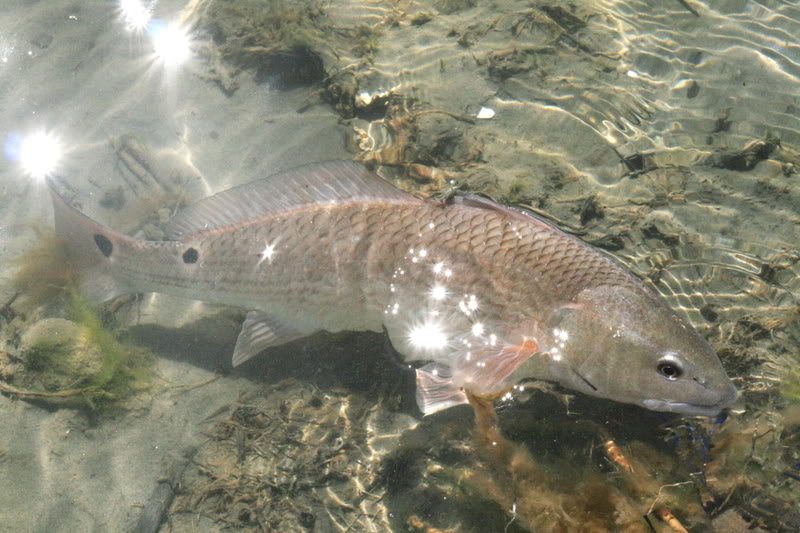 Schools of redfish can be found all over the Mosquito Lagoon and in the northern Indian River Lagoon above Titusville, some real monsters are being caught on both live and topwater baits. Schools of redfish can be found all over the Mosquito Lagoon and in the northern Indian River Lagoon above Titusville, some real monsters are being caught on both live and topwater baits.Early morning anglers fishing the flats who are throwing top-water Storm Chug Bugs and Rapala Skitterwalks are doing quite well catching the larger redfish and "gator" sea trout. Target the moving schools of finger mullet. Although the sea trout have been hitting topwater baits in both of the lagoons in the early morning hours, the topwater bite is pretty much over by 7:30 am. The late afternoon topwater bite has been sporadic lately, but as summer approaches it will continue to get better. To avoid the heat when the weather really heats up, you might consider fishing at night. If you can tolerate the mosquitoes, fishing in the total or partial darkness of night usually results in more quality fish and a really enjoyable fishing experience. If you do decide to go night fishing, you can expect cool, quiet conditions with no boats on the flats to compete with. The fish are less wary, and almost always hungry after being chased all day by impatient fishermen; plus you can enjoy the night sky full of constellations, shooting stars or maybe even a full moon. For me, nothing beats the thrill of a big fish hitting a topwater lure and at night it's even more exciting. The water levels in both of the lagoons and the St. Johns river are low right now, so be careful navigating if you decide to go on a night fishing trip. Sebastian Inlet is hot for snook right now. Whether you fish from a boat, the catwalk, or the jetties you will almost definitely pick up snook if you drift a live croaker or jumbo shrimp in the current.
Anglers using Flair Hawks, Redtail Hawks and nylon jigs tipped with a small piece of shrimp are also getting their share of 10 to 14 lb. snook.
If you are fishing discolored water try using a bone skitterwalk or a rapala xwalk. Bass assassins are also working well. 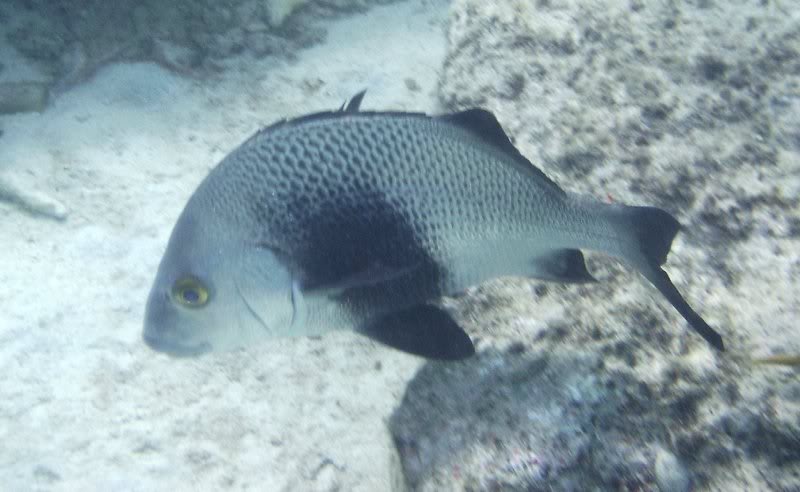 Playalinda Beach and South Playalinda Beach and SouthSurf casters who fish the nine mile stretch of beach between Indialantic and Patrick Air Force Base known by locals as "the rocks" will find exceptional fishing this month for sheepshead, small black drum, whiting, lookdowns, snook, black margate and even an occasional late season pompano or flounder.
The Black Margate that is sometimes mistakenly called "sea bream" is excellent on the table and is often the most prevalent catch. They run between 2 and 4 pounds, but occasionally 8 to 10 pounders are caught around "the rocks". The current world record black margate was caught in Fort Pierce Inlet and weighed in at 15 1/2 pounds. During low tides in this area, the exposed coral heads and coquina worm rock that attract a variety of predatory gamefish also harbor a wealth of marine life such as shrimp, crabs, sand fleas and small baitfish. Surfcasters who can lob a rig 70 yards or so past the outcrops will do best during the low tides. However when you hook a fish, you need to reel like hell with your rod held high, in order to bring your catch over the rocks without breaking off your fish. Savvy local surf fishermen using 10 to 12 foot surf rods with 1/4 oz to 1/2 oz barrel sinkers, a swivel, and a small hook tipped with sand fleas or peeled shrimp have learned to wade waist high and drop their baits into likely looking pockets in the coquina to catch a mess of fish. This method works best when the tides are less then three feet but you've got to be sure footed. It's also a good idea to pack your baits in water tight containers or you could be targeted by a hungry shark. I've seen this happen personally last year at Playalinda Beach, where two guys were wading in waist deep water with their bait in "fanny packs" around their waist. Two black tips came awfully close to them before I finally got their attention and advised them about the sharks. 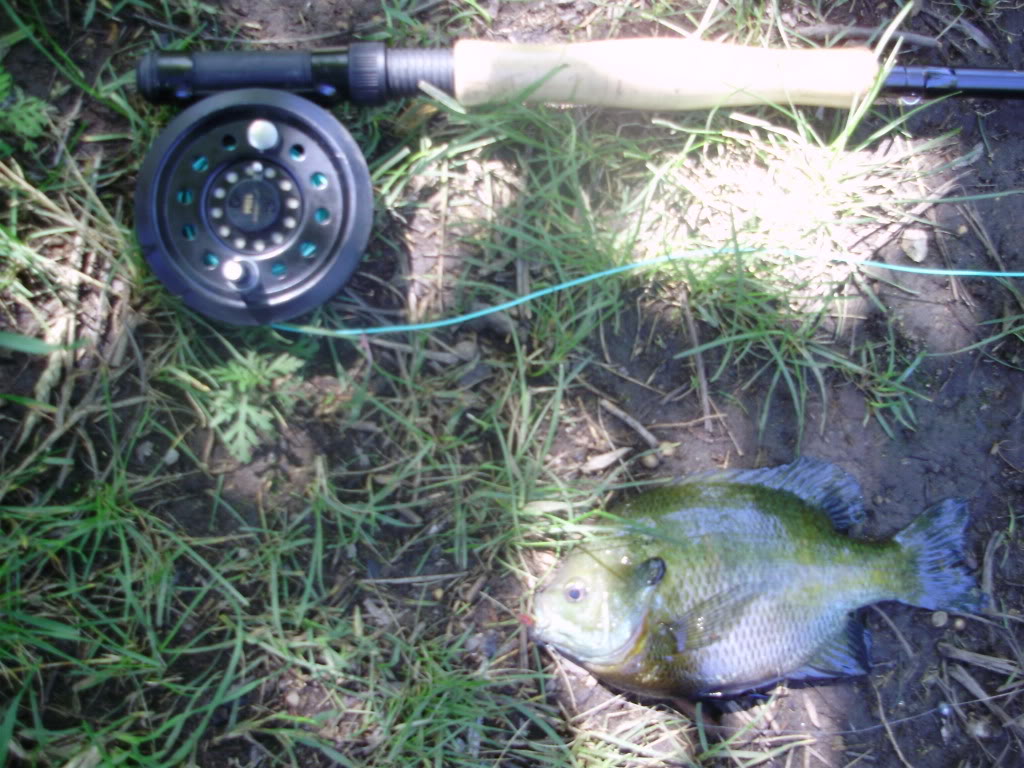 St. Johns River
If you launch your boat before daylight or just as the sky is starting to grow light, you'll find that the schools of sunshine and largemouth bass you run up on will be eagerly busting on top-water plugs. Most of the bass that you find will be schooled up feeding on shad and once the sun clears the horizon, the the topwater bite will be over. But don't stop fishing. If you have a little 4 or 5 weight fly rod, pull it out and grab a couple of chartreuse popping bugs or sinking spiders and start fishing for bluegill. From May until the end of June, depending in what areas you fish, these tasty brawlers will be on their spawning beds and will cream anything that intrudes on their nesting activity. If you spot a bedding area, toss in a popping bug, twitch it once and be ready for a "gill" to try and pull the rod from your hands. If a bedding bluegill could grow to 5 pounds, you'd never be able to land one on a fly rod. They become extremely aggressive during their spawning cycle and are easily caught on fly tackle or by just using crickets. Believe me, a mess of bluegill makes for a perfect fish fry ________________________ Near Offshore Fishing
Anglers heading out of Ponce, Canaveral and Sebastian Inlets during the month of May should be thinking deep in order to pick up the bigger "bull dolphin" around the weed lines and tide lines in 180 plus feet of water.
Look for tarpon up to 115 pounds, king mackerel in the 15 to 20 pound category, cobia, sharks, bonita and tripletail near offshore and just outside of Port Canaveral inlet. Right now there are a lot of tarpon and cobia out there. 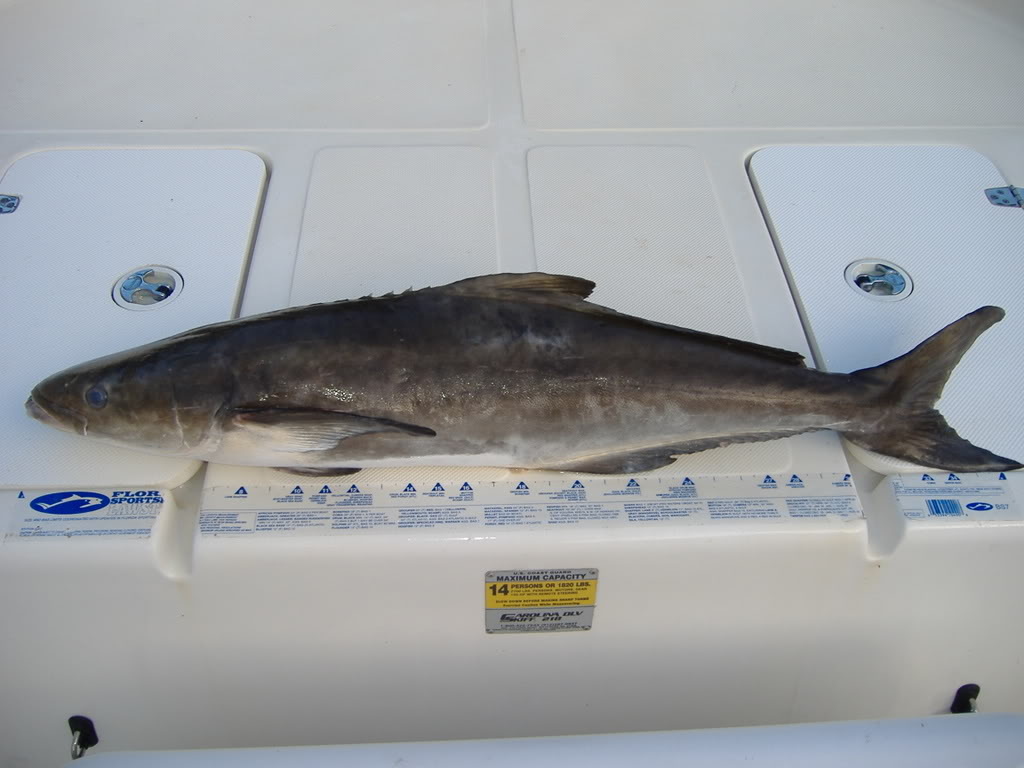 Sight fishing for cobia off of Port Canaveral can be even more spectacular as we head into May, than what we've been having. Cobia on rays are still being caught from Ponce Inlet south in 40 to 60 foot depths. Targeting the coastal reefs and wrecks in 70 feet or less water using live pinfish or menhaden will almost certainly get you a cobia. Sight fishing for cobia off of Port Canaveral can be even more spectacular as we head into May, than what we've been having. Cobia on rays are still being caught from Ponce Inlet south in 40 to 60 foot depths. Targeting the coastal reefs and wrecks in 70 feet or less water using live pinfish or menhaden will almost certainly get you a cobia. An average cobia is running somewhere between 20 to 30 lb.
As the water continues to warm, the fish should be moving even closer to the beaches, especially up north around Ponce Inlet.
Anglers fishing in 35 to 50 foot depths for king mackerel are also doing exceptionally well right now slow trolling skirted ballyhoo at 3 to 5 knots. The kings are working the bait pods from the 20 foot depths and are also being caught using pilchards and pogys.
Tripletail, snook and other gamefish are also really getting to their peak time this month. Port Canaveral Tripletail are still being caught in good numbers around the marker buoys along the ship channel and around floating debris and seaweed.
For me, Tripletail are one of the best eating fish in the ocean.
Till Next Month, Good Fishing & Tight Lines To You All! | ||||||||

| Link One | Link Two | Link Three | Link Four | Link Five | Unsubscribe to this newsletter |