Your May 2016 Mosquito Lagoon & Indian River Fishing Report
Published: Sun, 05/01/16
| Newsletter Issue # 81 Fishing Forecast | May1, 2016 | |||||||
Mosquito Lagoon & Indian River Fishing |
||||||||
This month is the best time to slide overboard and go wading on the flats along the edges of the sand bars for spotted sea trout throughout the entire Indian River Lagoon system. May and June are historically the best months to catch big female sea trout that are keying in on the pods of finger mullet in the shallows. Some really big gator trout in the 4 to 9 pound category are now roaming the flats and are being caught very early in the morning and at dusk around the mullet pods with top water plugs and live finger mullet. Almost any large top water bait worked to imitate an injured mullet will bring strikes. The large size Rapala Skitter Walk, MirrOlure Top Dog, Zara Spook, Badonka Donk, Chug Bug and XPS Slim Dog Hardbaits are favorite producers, especially when smeared up with some Pro-Cure. Twitch baits like Storm's Twitch Stick, Bomber's Saltwater Grade Mullet, or Offshore Angler's Red Eye Mullet also produce fish when worked around the mullet pods. And for live bait fishermen, it's hard to beat a live free lined mullet or a pigfish under a popping cork. As long as the brown algae doesn't present a problem, the most productive flats to fish are in the Mosquito Lagoon, however; the northern flats in the Indian River around Mims and the slightly deeper flats along the east side of the Merritt Island National Wildlife Refuge adjacent to Peacocks Pocket road also produce some very large sea trout. The areas in the north Mosquito Lagoon from Plantation Island to Slippery Creek, and from Tiger Shoal north to Three Sisters creek have been producing the largest fish. The "secret" to successful top water fishing is to get out and be on the water at first light. The bite usually ends around 9:00 am. but on overcast and rainy days, the bite can last quite a bit longer. After the early morning bite has subsided, the fish will usually move into the deeper 4 to 5 foot flats or waters adjacent to the shallower flats. This is the time to tie on a gold Johnson Sprite or Aqua Dream spoon, a soft plastic saltwater assassin, or a hair jig tipped with a Gulp shrimp for redfish, sea trout, ladyfish, or even a bluefish. When targeting the potholes on the shallow flats for sea trout or reds, a Z-Man, Saltwater Assassin, or Trigger X soft plastic bait on a light 1/16th or 1/8th ounce worm hook is tough to beat, especially when there is a lot of grass on the surface. As the number of finger mullet increase in the lagoon systems, fishing in the Merritt Island National Wildlife Refuge will improve considerably. As of this date, Peacocks Pocket road and all access roads to the marsh will be closed until May 15th for road repairs. The U. S. Fish and Wildlife Service said that L. Pond Road and Shiloh Road will be closed to vehicle traffic indefinitely until funds are available for road repairs. Some of the best fishing spots in the Refuge that were once easily accessed are now only available to hikers, bikers, or anglers using kayaks. Snook One of the most overlooked spots for Snook in our region are the deepwater channels at the mouth of the Port Canaveral and the deep water turning basins inside the Port. Large snook are drawn to deepwater habitats, and the channels in the Port are almost 50 feet deep in spots. This along with relatively minimal currents, make the deep waters in the Port a magnet for baitfish and predators alike. Unlike Sebastian and Ft. Pierce Inlets, Port Canaveral does not have the fast currents that provide an endless supply of baitfish with each tide change. The locks on the west end of the Port minimize the tidal flow. In addition, the security zones and limited shoreline access make it less popular to fishermen. Other than the Pier at Jetty Park, there are few spots for shoreline fishermen to cast. Boaters are somewhat limited because of the strictly enforced security measures in the Port. All boats under power or anchored must stay at least 25 feet from all docks and bulkheads, 100 feet from a berthed ship, and 200 feet from a naval vessel. The Trident Basin, the eastern most turning basin, and the west turning basin (when cruise ships are present) are closed to boaters. With all this in mind, the Snook population in the Port is unbelievable and they are huge. 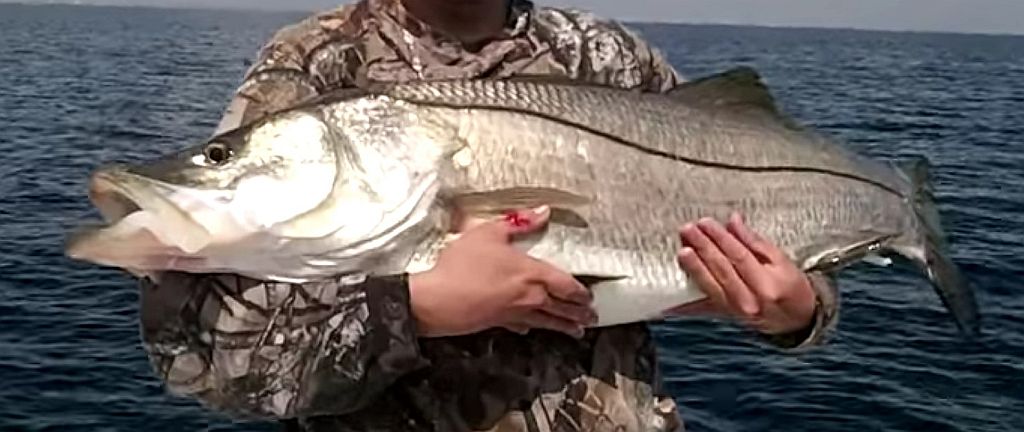 Although slot size snook are frequently caught, the majority of fish are in the 20 to 30 pound category. A few years ago a friend of mine took me as a guest to the Space Center where we saw huge Snook in the Trident Basin stacked up like cord wood. Most Snook are caught at night in the shaded zones around lighted wharfs, piers, and docks. Docks, pilings, and sea walls are tough on tackle, so heavy gear is mandatory. Wherever you find baitfish, the snook will not be far behind. Most night time anglers use stealth tactics and live mullet or croakers for bait. Some regulars prefer using DOA BaitBusters around schools of mullet, and a Mirrorlure 77M21 in a scaled mullet finish in the Big Game Classic Series when fishing around the north jetty at the mouth of the Port where the tide is stronger. You can launch your boat at Port's End Park or the new Freddie Patrick Park on the south side of the Port, just west of the jetty. Playalinda Beach and South
Between Indialantic north to the Canaveral National Seashore, surf fishermen can look forward to catching whiting, pompano, juvenile black drum, bluefish, Spanish mackerel, Snook, and a variety of shark.
If you're targeting Pompano, use sand fleas. If you're after a mess of Whiting for dinner, you can use sand fleas, fresh dead pieces of peeled shrimp, or fresh (unfrozen) clams. There is really no reason to use live shrimp when you're surf fishing. The best times to fish Playalinda beach is during the higher phase of the tidal cycle, about 2 hours on either side of peak high tide. If the tide occurs in the early morning hours, it's even better. Fish the troughs or deeper sloughs that form just past the shore break and the just past the sandbars that form about 30 yards out from that. As the waves approach the sandbar, they break up and reform again over the trough, only to break up again when they reach the shore. When the waves break onto the shoreline, the sand is churned up and the sand fleas that are burrowing in the sand are pulled into the troughs where the Pompano and whiting are waiting to grab them. Pompano and whiting cruise the troughs and often wait just offshore to grab the sand fleas as they are pulled out to sea. As the tide goes out and the trough becomes too shallow for the fish, they will move out past the sandbar where they can still be caught, however, this is when the bite usually ceases. Shark Almost every species of shark is available to fishermen in our area and many can be caught in the surf. Hammerheads, black tips, fine tooth, bull sharks, spinners, nurse shark, and other species are found close to shore in the relatively dirty waters of the surf zone, as well as on the East Central Florida reefs and wrecks. 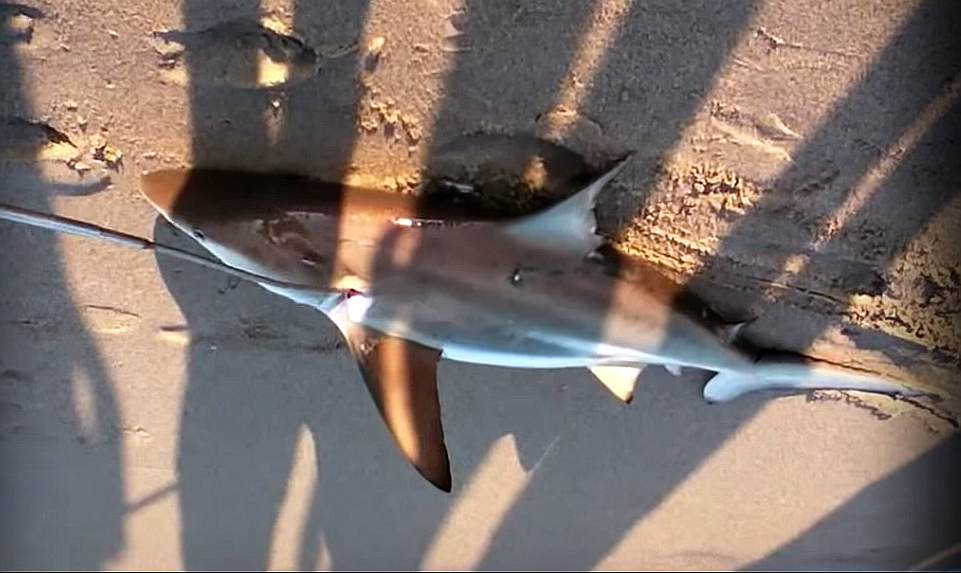 If you plan on targeting sharks you need a wire or cable leader and a large VMC circle hook with a chunk of Bonita, Mackerel, mullet, ladyfish or some other fresh (preferably bloody) fish. Stay away from bathers and surfers when shark fishing. Although we haven't had any shark attacks on surfers yet, its just a matter of time before a mistaken identity bite occurs and fishing around people in the water is an accident just waiting to happen. There are some really large sharks being caught right now in the surf and just off the beaches, sometimes in very shallow water. Most are chasing bait fish but mistaken identity bites occur every year. Most of the shark caught from the beach are in the 25 and 75 pound range, but bull sharks and hammerheads can easily exceed 200 pounds.
Use a sliding sinker rig with a small, heavy, live bait hook, and a live 8 -10" mullet for bait. You will either get a nice Snook or a nurse shark, but be prepared for break offs in this area. ________________________
Offshore and Near Offshore Fishing
Bull redfish in the 20 to 35 pound category are being caught near offshore out of Port Canaveral this month by anglers using live goggle eyes or mullet. Toss a goggle eye hooked through the nose on a 5/0 circle hook on a sliding sinker rig below a bait pod and hang on. For you bottom fishermen farther offshore, the recreational season for black, gag, red, yellowmouth, yellowfin, and tiger grouper along with scamp, red hind, rock hind, coney, and graysby opens up May 1st. in all Atlantic state waters, including all of Monroe County farther south us. Use this link for the regulations. For the rest of us who prefer fishing closer to shore, the word is that the run of dolphin out of Port Canaveral this year is the best anyone has seen in many years. The parking lots at Port Canaveral are full of boat trailers and they guys I spoke with said that the fish are out to about 30 miles. Skirted or plain ballyhoo are baits of choice trolled at 4 to 6 knots. Kingfish are another species that is being caught around the wrecks and reefs in 45 to 90 feet of water. The Pelican Flats and 8A reefs are favorite areas for kings and sailfish. Slow trolling a live or dead menhaden with a duster in front of it, on a wire stinger rig with a VMC 9626 model hook is the preferred method of catching these fish. May and June are also prime months for sailfish out of Port Canaveral. In the next few weeks the sails should start working their way up the coast into our area. Naked ballyhoo or skirted ballyhoo/Islander combinations in Dolphin and Pink trolled at 3 to 4 knots in the 120 to 250 foot depths should get you a shot at a hookup if you're targeting sails. A lot of the Captains also slow troll Pelican Flats and 8A with live baits in the 80 and 90 foot depths with a great deal of success. Most of the sailfish caught will be in the 35 to 45 pound range with a few larger ones in the mix. Till Next Month, Good Fishing & Tight Lines To You All!
|
||||||||
| Link One | Link Two | Link Three | Link Four | Link Five | Unsubscribe to this newsletter |