Your April 2016 Mosquito Lagoon & Indian River Fishing Forecast
Published: Fri, 04/01/16
|
Newsletter Issue # 80 Fishing Forecast April 1, 2016 |
||||||||
Mosquito Lagoon & Indian River Fishing |
||||||||
he Mosquito Lagoon and Indian River The windy fishing conditions we had during March will taper off and stabilize this month which should make fishing easier for gator spotted sea trout, redfish, and breeder black drum in the Mosquito Lagoon and Indian River systems.
Unfortunately, I can't make the same prediction for the Banana River Lagoon. For the past week or so, all the baitfish, puffers, catfish, redfish, sea trout, sheepshead, black drum and even stingrays that you will ever care to put a net around can be found in Northern Indian River and Banana River Lagoons floating on the surface or washed up along the banks. Many anglers have blamed the excessive use of fertilizers by homeowners along the residential canals in Merritt Island, Satellite Beach, and Cocoa Beach as the reason for the fish kill, but preliminary data from sensors managed by the St. Johns River Water Management District indicates that the fish kill is linked to low dissolved oxygen levels that are the likely result of the brown algae die off that has discolored waters in our area for the past several months. Regardless of the cause, it's time we start paying more attention to our resources. Justin Vaden of Titusville compiled this video of the Banana River Merritt Island National Wildlife Refuge fish kill and said it's the worst he has seen in 25 years. 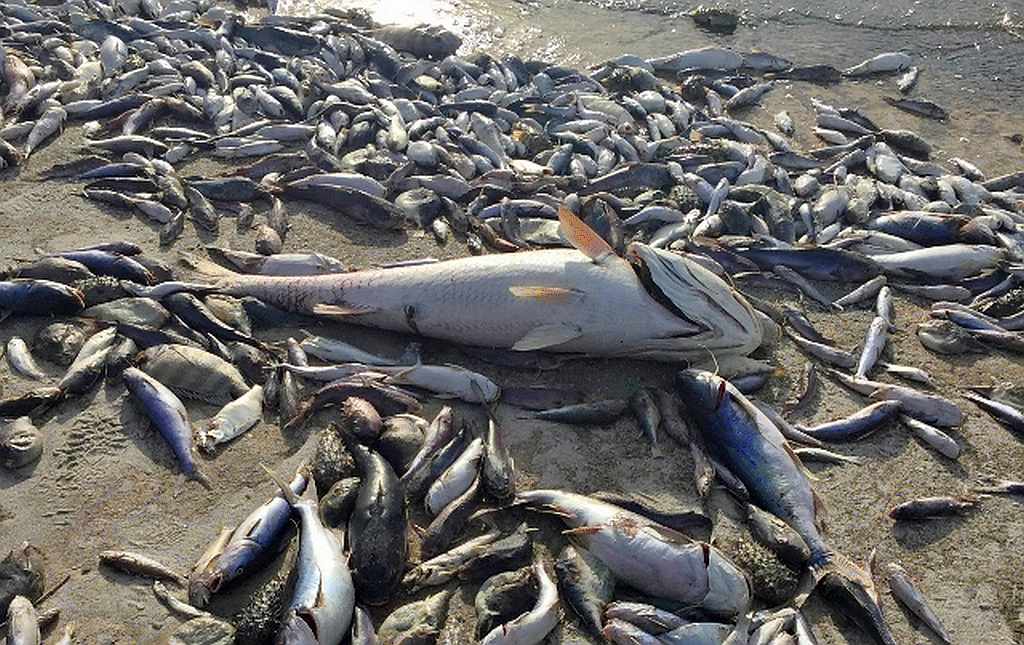 The good news is that the algae bloom responsible for this die off has remained south of the Kennedy Space Center and Titusville; at least for the time being. Most anglers fishing the Merritt Island National Wildlife Refuge are still catching redfish and nice sea trout in both the Mosquito Lagoon and northern Indian River on live shrimp, mud minnows, mullet, cut baits and a variety of artificial baits. As the weather patterns continue to stabilize this month and as the spring finger mullet run commences, some of the best top water sea trout fishing of the year will soon be available to us. Finger mullet, pigfish, Pinfish, glass minnows, mud minnows and shrimp are all on the menu for predators during April, but most of the redfish and larger sea trout caught this month will be actively feeding on bait fish. When baitfish become more concentrated on the shallow flats, topwater Chug Bugs, Rapala Skitterwalks, MirroLures, Zara Spooks, Skitter Pops or Bomber Badonk-A-Donks will start producing fish, especially when methodically worked around the bait pods. Gator sea trout feed on the surface during the early morning and late afternoon hours, and will produce violent strikes that will frequently send your lure, and often the fish, completely out of the water. Spotted sea trout will often hit a well worked Chug Bug or SkitterWalk type lure out of the water and come back for a second, third, or fourth hit. Unless they actually get stung by the hooks, hungry sea trout will often continue to strike at the lure all the way back to the boat. I've hooked many a fish that smashed the bait right at the shore as I was pulling my lure from the water. Many ambush predators will strike at your bait, miss, and quit following it. When this situation occurs, making an immediate cast back into the same spot will often get a reflex strike from the same fish. When working top water baits, begin fishing with a very slow retrieve and gradually speed it up until you start getting strikes or misses. Stopping the bait completely and waiting for the ripples to subside before resuming your retrieve, is also a good tactic to try when the fish get fussy. Making long casts and using a short length of fluorocarbon leader will generally get you more strikes and larger trout, especially in clear water conditions. D.O.A. CAL baits rigged weedless, larger paddle tail baits, suspending hard baits, and larger gold Johnson Sprite type spoons fished around the bait pods will also catch big sea trout during April. In the Merritt Island National Wildlife Refuge, the water levels in the marsh around Peacocks Pocket road are expected to rise even higher than they already are. Look for tailing fish and tell tale signs of moving sea grasses in very shallow (less than a foot deep) water. The newly flooded areas are magnets for redfish, juvenile black drum and sea trout foraging for fiddler crab, shrimp, mud minnows, and a variety of other crustaceans that hide in the grass. _________________________
Black Drum During March and April, huge female Black Drum begin their annual spawning ritual throughout the Mosquito Lagoon and Indian River Lagoon systems.
This is the time of year when fishermen hug the deepwater pilings around the bridges to fish for really big Black Drum. The fish below is in the 50 pound range. 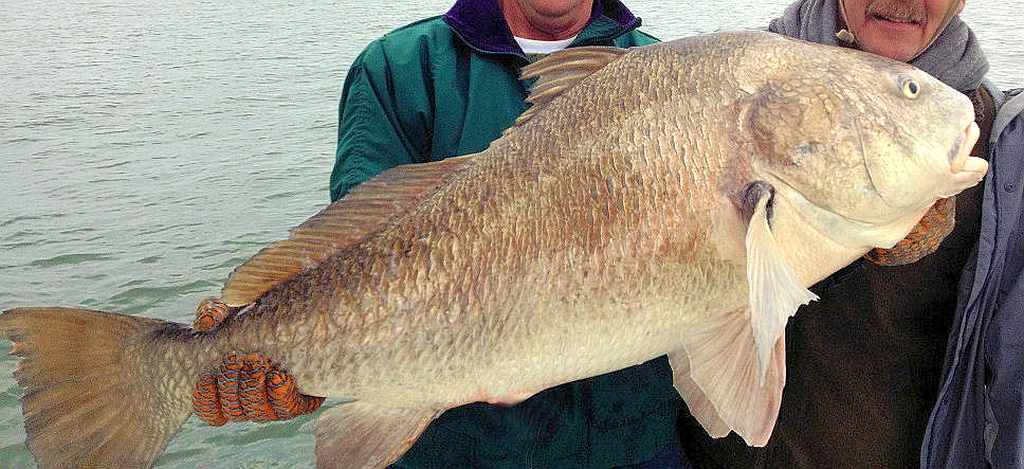 If you target these fish, use heavy tackle with at least 50 pound mono or braid and a long length of 80 pound or heavier fluorocarbon leader on a sliding sinker rig with a 6/0 or larger offset circle hook. The best bait is a fresh blue crab split in half, with the claws and top shell removed. Take along at least a half dozen live blue crab for a days worth of fishing and expect cutoffs. You can expect to hook black drum in the 20 to 40 pound and over category, along with some bull redfish. Unfortuntely, the fish often head for the cover of the pilings when hooked and break offs are common. Although juvenile black drum in the 4 to 12 pound category are excellent eating, the larger breeders are usually infected with worms and are not considered fit for human consumption. Most schooling black drum will weigh in at around 10 pounds and can be caught on live or fresh dead shrimp, pieces of clam, or a piece of fresh blue crab. I have caught them on white hair jigs dipped in some Pro-Cure Crab Oil and on white ZMann jerk baits on the flats. _________________________
Port Canaveral Offshore Fishing In April, when the conditions are right, Cobia can be caught within three to four miles off the beaches. Clean water, a clear sunny day, and temperatures in the 67 to 70 degree range is all you need for a successful day of sight fishing for cobia. Of course manta rays, turtles, temperature breaks, weed lines, and anything floating on or near the surface that the cobia can shadow would help considerably in locating the fish. When targeting springtime Cobia, you need to cover a lot of ground. Start out in deeper water and run into the 20 foot depths or less until you locate fish. Cobia aren't usually very finicky eaters, so a brightly colored bucktail jig or a fresh live bait will usually get a hookup. A stout rig with 50 or 60 pound braid as the main line, and a 60 or 80 pound fluorocarbon leader with an 8/0 circle hook is a good choice when fishing live baits. Early Cobia are smaller and usually under 40 pounds, however there is always the possibility of catching a 60 pound or better bruiser. The catch of cobia and kingfish below was taken at Sunrise Marina at the Port. 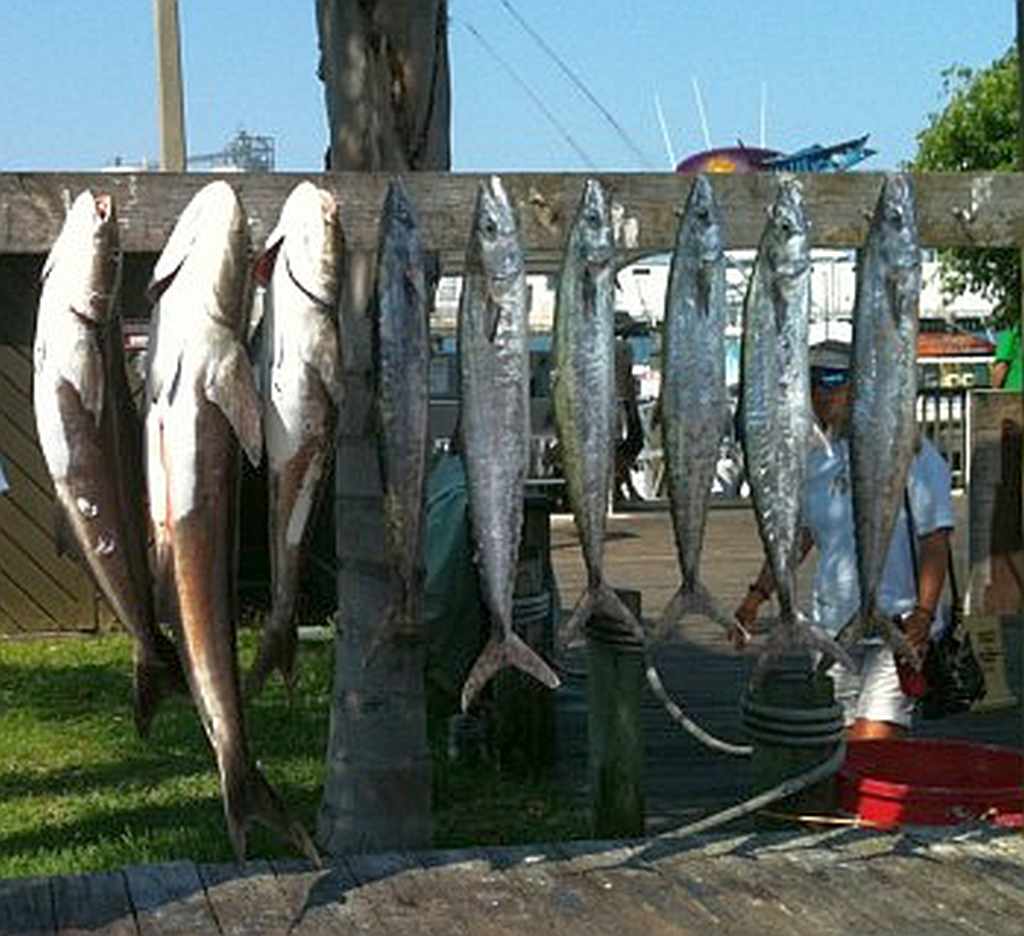 As long as the winds remain relatively calm, you can expect to find King Mackerel on the 70 to 90 foot reefs throughout the month of April. The larger smoker Kingfish in the 30 pound plus range should start showing up in better numbers this month, and any of our local reefs, shipwrecks, or structure that is holding bait should be holding the larger kings. Live pogies on wire stinger rigs have been the most productive bait for kings. Use Sabiki rigs over structure for bait, or just cast net the bait pods. When the seas get calm enough for anglers to make it back offshore, dragging ballyhoo along the western edge of the Gulf Stream should be productive for Wahoo, Sailfish, Blackfin Tuna, and scattered Dolphin. Along the Cocoa Beach area, you can expect to pick up Tarpon, Bluefish, a variety of shark and possibly some slot Redfish along the bait pods. This is also the time of the year for big Yellowfin Tuna for anglers willing to make the run out to the 120 buoy. Offshore Bottom Fishing With the cold fronts coming to an end, the bottom fishing out of Port Canaveral is just starting to heat up and April should be a stellar month. The cooler bottom water temperatures are keeping our grouper and snapper species very active this year providing for lots of bent rods and happy fishermen. Throughout March, the grouper catch has increased dramatically. The big spawning females are ravenous after releasing their eggs, and catching three or more fish per day should not be an uncommon feat this month. When grouper season opens May 1st. we should be into some great fishing. 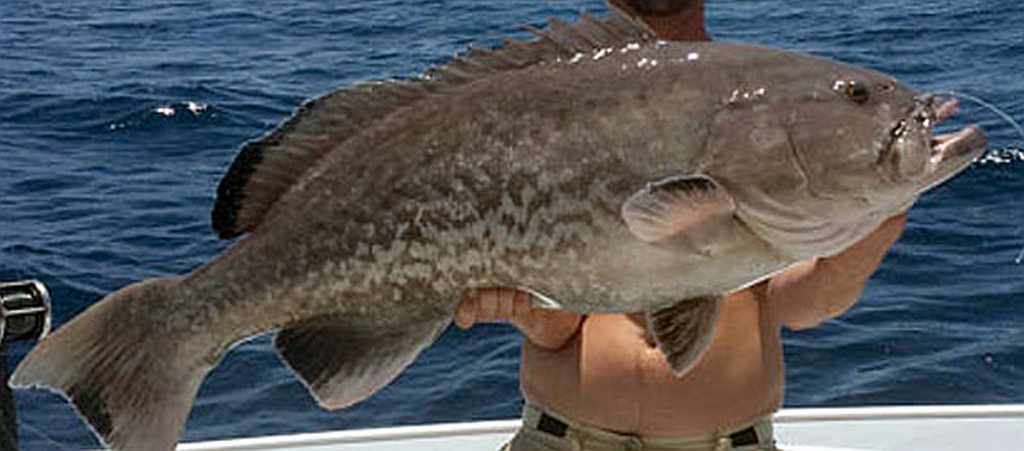 The Red snapper bite continues to be a mainstay, with 40 to 50 fish daily catches becoming almost a ritual. These fish show no signs of being endangered. Amberjack have also begun to settle in on the deeper wrecks and are nailing any live baits that drift through their area. Croaker, spots, pinfish, blue runners, and big mullet are all good choices for hooking into one of these brutes. There are also large schools of sandbar sharks prowling the same wrecks and reefs that harbor the amberjack, grouper, and snapper. Unfortunately, the sharks often get to the gamefish before they reach the surface, leaving only the heads of the fish on the line for the fishermen to admire. Bottom fishermen out of Port Canaveral can also expect to hook up with some of the migrating King Mackerel that move from spot to spot in large schools throughout the area. These fish will usually take any live or cut bait presented to them. __________________________ Sport Shrimping
Recreational shrimping from the two Titusville fishing piers has been sporadic to say the least. Even the Oak Hill shrimpers have been complaining about their pulls.
The Pink River Shrimp at Oak Hill always run smaller than those dipped around the railroad bridge and fishing piers in Titusville, but the quantities dipped are usually greater. So far this year, the size of the shrimp has improved but the pulls are still "not what they used to be", according to the regulars. Most of the decent pulls made at Oak Hill were made during the outgoing tide. An outgoing tide coupled with a Southeast or Southern wind, supposedly helps the shrimp run. The local shrimpers in Titusville have been dipping some nice size shrimp, but I have yet to hear a report about anyone getting a full 5 gallon limit on either of the piers. Although I have asked around, I still have not received any reports about the shrimping at the railroad bridge or in Haulover Canal. 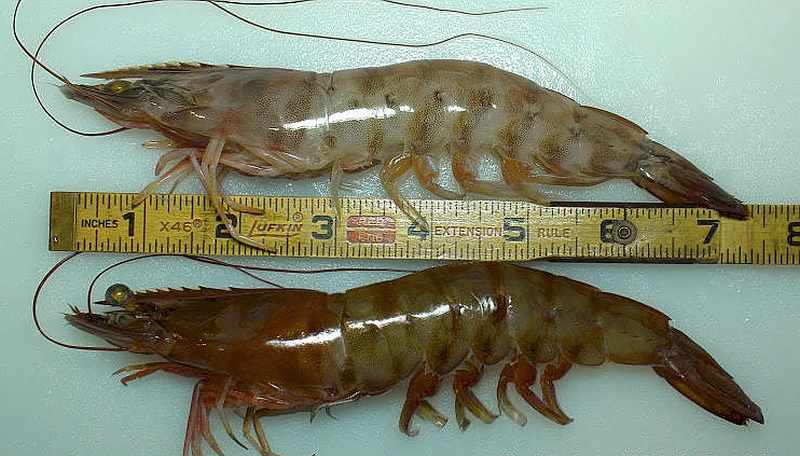 Recreational shrimping on the Titusville fishing piers is a lot of fun and can often turn into a party. Regardless of where you go shrimping, it is a lot of fun and even if you don't get a limit, the shrimp you catch yourself are absolutely nothing like the shrimp that you buy at the fish market. Freshly dipped shrimp are much sweeter and delicate tasting than anything you can purchase at the fish monger. All you need to get started is a shrimp net, some lights, and a 5 gallon bucket to store your catch. Here are some facts about sport shrimping that may interest you:
If you decide to go shrimping and you don't see any shrimp at the surface, remember that the shrimp you do see on the surface is only a small part of what actually drifts past you below the surface.
If you enjoy the taste of really sweet fresh shrimp, pack up your net, your shrimp lights, your family members, and a few adult beverages and head on up to the fishing pier at Titusville, the West side of the railroad bridge, or the Intracoastal Waterway at Oak Hill during an outgoing tide. Till Next Month, Good Fishing, Good Shrimping & Tight Lines!
|
||||||||

| Link One | Link Two | Link Three | Link Four | Link Five | Unsubscribe to this newsletter |