Your February 2016 Mosquito Lagoon & Indian River Fishing Forecast
Published: Mon, 02/01/16
| Newsletter Issue # 78 Fishing Forecast | February 1, 2016 | |||||
Mosquito Lagoon & Indian River Fishing |
||||||
Mosquito Lagoon & Indian River The gin clear water conditions that are normally associated with the Mosquito Lagoon and Indian River Lagoon systems during February are virtually non-existent. The combination of warm water and algae blooms has apparently created poor sight fishing conditions with dirty water appearing in all three of our lagoons. Most of the Black Drum that have been caught are in the 18" to 25" range, but I received reports from at least two fishermen who reported catching fish up to 30 pounds.
Peacocks Pocket Road was opened early (apparently for the bird watchers) and the fishing for reds and sea trout has been sporadic on both sides of the road. The water levels in the marsh are up and the fish are spread out over large areas of previously inaccessible flats where they have been foraging for small crustaceans, mud minnows, fiddler crabs, etc. The best time to fish for these fish is in the late afternoon when the water warms up. My wife managed to catch the 30" redfish below on a mud minnow last week close to dusk, and other fishermen have reported catching slot size and larger redfish on both sides of the road on shrimp, cut baits, and mud minnows.  The best bite during February is almost always during the late afternoon hours towards dusk, and in between the cold fronts when the gusts of arctic air have passed through the area. There's a group of hardcore sea trout fishermen in East Central Florida who pray for freezing temperatures every winter. As the air temperatures plunge into the 30s for several days and the water temperatures drop into the 50s, they head for the deep water canals at Cocoa Beach and the Merritt Island area to fish for big sea trout.
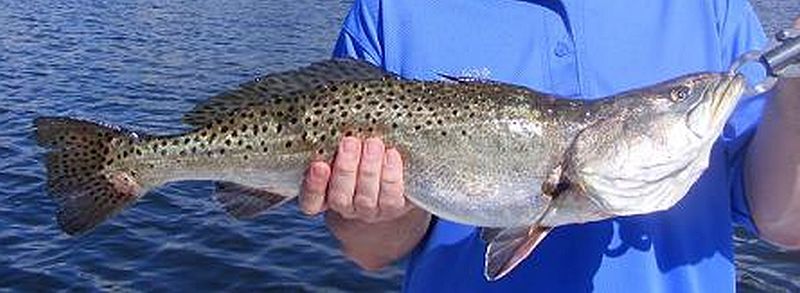 During warmer days, a live grunt or a live croaker fished under a Cajun Thunder popper rig is a deadly bait for big sea trout. A slow presentation with a D.O.A. CAL jerkbait, gold spoon, or topwater bait can also produce some nice fish. ___________________________
Sebastian Inlet 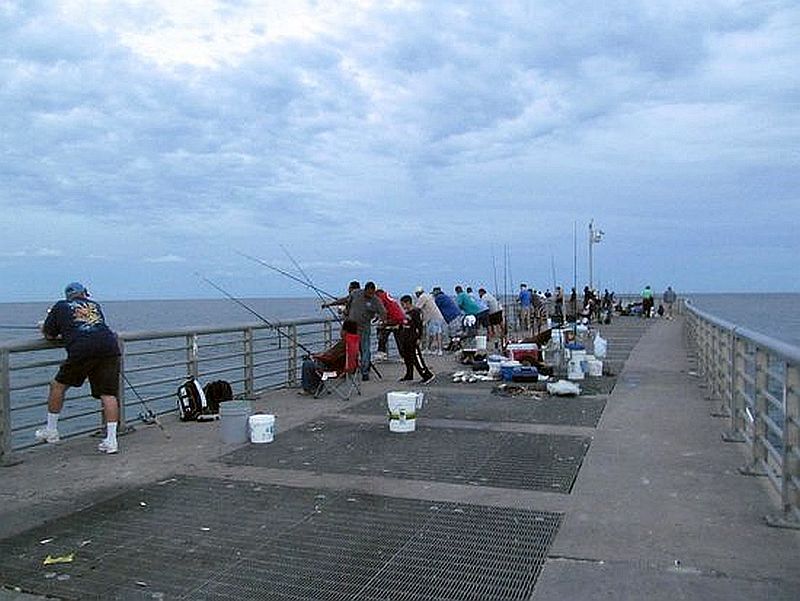 The 2016 Atlantic coast snook fishing season in Florida starts on Monday, February 1st, and will remain open through the end of May. The Florida Fish and Wildlife Conservation Commission allows anglers to keep one Snook per day that falls into the slot measurement of 28 inches to 33 inches in length. You can bet that on February 1st. you will see crowds of fishermen lining the 750 foot north jetty of Sebastian Inlet and other locations along the Atlantic coast fishing for a slot size Snook.Sebastian Inlet is arguably one of the best locations to target Snook along Florida's East Central Coast.
The strong outgoing tides at Sebastian pull shrimp, crabs, and a variety of bait fish from the Indian River though the inlet into the waiting maws of a variety of predators. A clean ocean water flush of the inlet completes the cycle that occurs during the incoming tides. Jetty and pier anglers target Snook with an assortment of plastic grub baits, bucktail jigs, From the inlet side, bank fishermen targeting Snook use an assortment of bucktail jigs, plastic grubs, flair jigs, spoons, and diving plugs, mostly during the evening hours.
At night you can usually find boaters power drifting the Inlet fishing for Snook using a variety of live baits. Live mullet, pigfish, croaker, pigfish, and jumbo shrimp with just enough lead to make a natural drift through the inlet usually results in hookups. If you decide to bring your boat to Sebastian Inlet during Februarey, don't leave without fishing the North jetty. Fresh cut baits fished just off the bottom will catch everything from Snook, bull redfish, big black drum, snapper, Spanish mackerel, bluefish, shark, to late season flounder.
If you have never fished Sebastian Inlet, visit http://www.sebastianinletdistrict.com/fishing.jhtml?method=list to check out the current fishing reports.
Sebastian Inlet Park is about 15 miles south of Melbourne Beach on State Road A1A.
___________________________
Playalinda And Surrounding Beaches 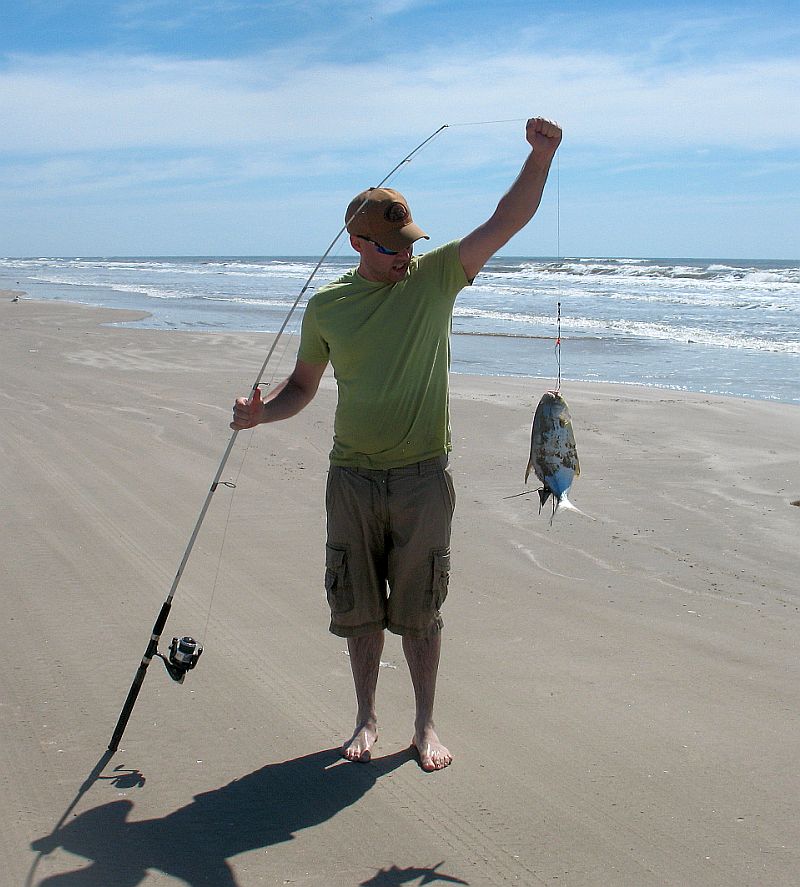 Along all of our East Central Florida beaches, Pompano will be the staple for the majority of surf anglers, with a mixed bag of whiting, slot size black drum, Spanish mackerel, and bluefish added into the mix. Along all of our East Central Florida beaches, Pompano will be the staple for the majority of surf anglers, with a mixed bag of whiting, slot size black drum, Spanish mackerel, and bluefish added into the mix.Playalinda Beach surf fishermen have reportedly been making decent catches of whiting, pompano, bluefish, and a few Spanish mackerel, but the fishing has been sporadic. As the colder weather moves in this month, the pompano fishing is expected to improve dramatically. Live sand fleas (mole crabs), fresh cut clams, and freshly peeled live shrimp seem to be the baits of choice for pompano and whiting. If you're interested in catching bluefish, Spanish mackerel, or an occasional redfish or shark, use live or fresh cut chunks of mullet for bait. Basic tackle for Playalinda Beach is an 8 to 9 foot spinning rod with 14 to 20 pound test monofilament. You can go with Power Pro or some other brand of braid to get longer casts and a better "feel", but long casts are not usually necessary at Playalinda. When the surf is calm, most anglers use a river rod with 10 pound test that they use for sea trout and reds. Basic terminal tackle is a 1 to 3 ounce pyramid sinker tied to the end of the line with an Improved Clinch Knot, and one or two drop loops tied 12-15 inches apart above the weight. For blues, Spanish mackerel, etc. use a basic sliding sinker rig with 20 to 30 pound fluorocarbon leaders and a long shank hook. During February, the beaches at Playalinda are pretty much desolate.During weekdays, you may often find yourself alone 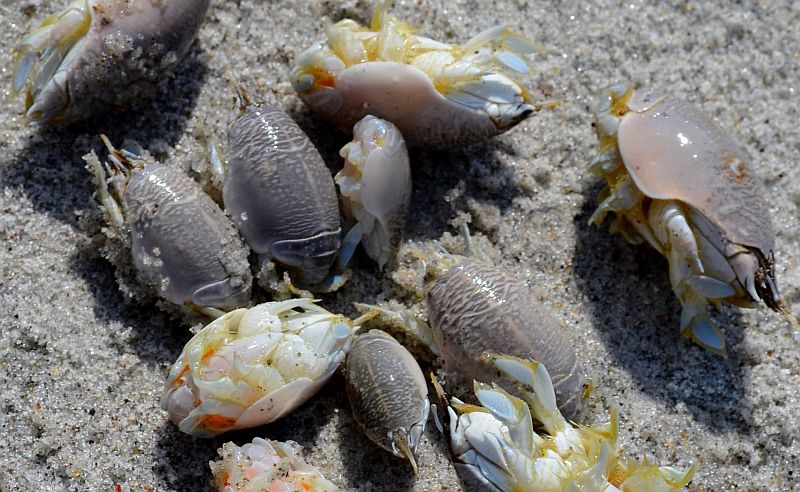 on the beach with only an occasional surf fisherman on the horizon. During weekends, it's not much more crowded. on the beach with only an occasional surf fisherman on the horizon. During weekends, it's not much more crowded. Although parking Lots #8 thru #11 are reported to be the most productive spots to fish, it pays to try some of the other lots, especially during the early morning hours and during the last couple of hours of an incoming tide. The beach is always changing, so a hot spot one day can be a bust a couple of days later. ____________________________
St. Johns River System Shad:
The American Shad fishery in the St. John's River is expected to be going "gang busters" this month, and according to several recent fishing reports, the annual spawning migration has already begun.
American Shad have started to run in the Lemmon Bluff, Marina Isle, and Lake Harney areas, and as the month progresses, they should continue moving into the Econ Creek and Puzzle Lake areas. Although the high water levels are still below the banks of the river, the increase in water levels in the St. John's in the Geneva area has caused the velocity of the current to increase. These are the conditions that American Shad prefer, which explains the reports of increased shad catches in this area. Historically, the deep holes around old the Marina Isle area, Mullet Lake Park, and the many deep bends between the State Road 46 bridge and Puzzle Lake east towards Hatbill Lake Park are known shad fishing hot spots. If we have the good run this year that is expected, the schools of American Shad should move past State Road 50, to as far as State Road 520. Although many fishermen believe that spawning shad do not eat during their spawning run, when they enter the river system they do eat shrimp and minnows. Most successful American Shad fishermen use ultralight spinning tackle or lightweight fly rods to catch pawning fish with lures that resemble small minnows or shrimp.  The shad prefer tiny artificial or live baits, and the light equipment gives anglers the ability to cast the tiny artificial baits that the shad seem to prefer. Spin fishermen use light action spinning rods with hair thin line to cast 1/16 or 1/32 oz. Blakesmore Road Runners to spawning shad. Pink and bright orange are the most popular colors in Shad Alley, but any bright colored shad dart, jig, or small spoon will catch fish. You can find them by slow trolling or blind casting a Road Runner on a spinning rod and moving from spot to spot. To get the right speed that the fish are feeding at, vary the speed of your trolling motor from 1/2 to 1 1/2 mph until you get a hit. Troll tandem Willow Blade Road Runners until you find a concentration of shad and then anchor and pull out your fly rod for some fun. The majority of American Shad caught will be in the 3 to 4 pound category, with occasional fish up to 6 pounds. If you plan on going shad fishing, there are plenty of launch ramps to put your boat in around the St. John's. The SR 46 ramp at Cameron Wright Park, the C.S. Lee Park ramp, the ramp at Mullet Lake Park north of SR 46, the ramps at Hatbill Park, SR 50 at the bridge, and the ramp at SR 520 are all convenient. American Shad are a hard fighting fish that often put up an aerial display when hooked on light tackle and are tasty table fare. Their delicious roe is a delicacy when lightly pan fried with butter, salt, pepper, and a bit of garlic. Black Crappie: During the last full moon, good catches of crappie were reported from all three of the big lakes; Harney, Monroe, and Jussep. The crappie moved up on the spawning beds during the last full moon and as the moon wanes, they will be moving into the deeper water in the river runs where they will hold waiting the new moon spawn. The crappie bite at Lake Monroe has been especially good, with reports of several limits being taken. 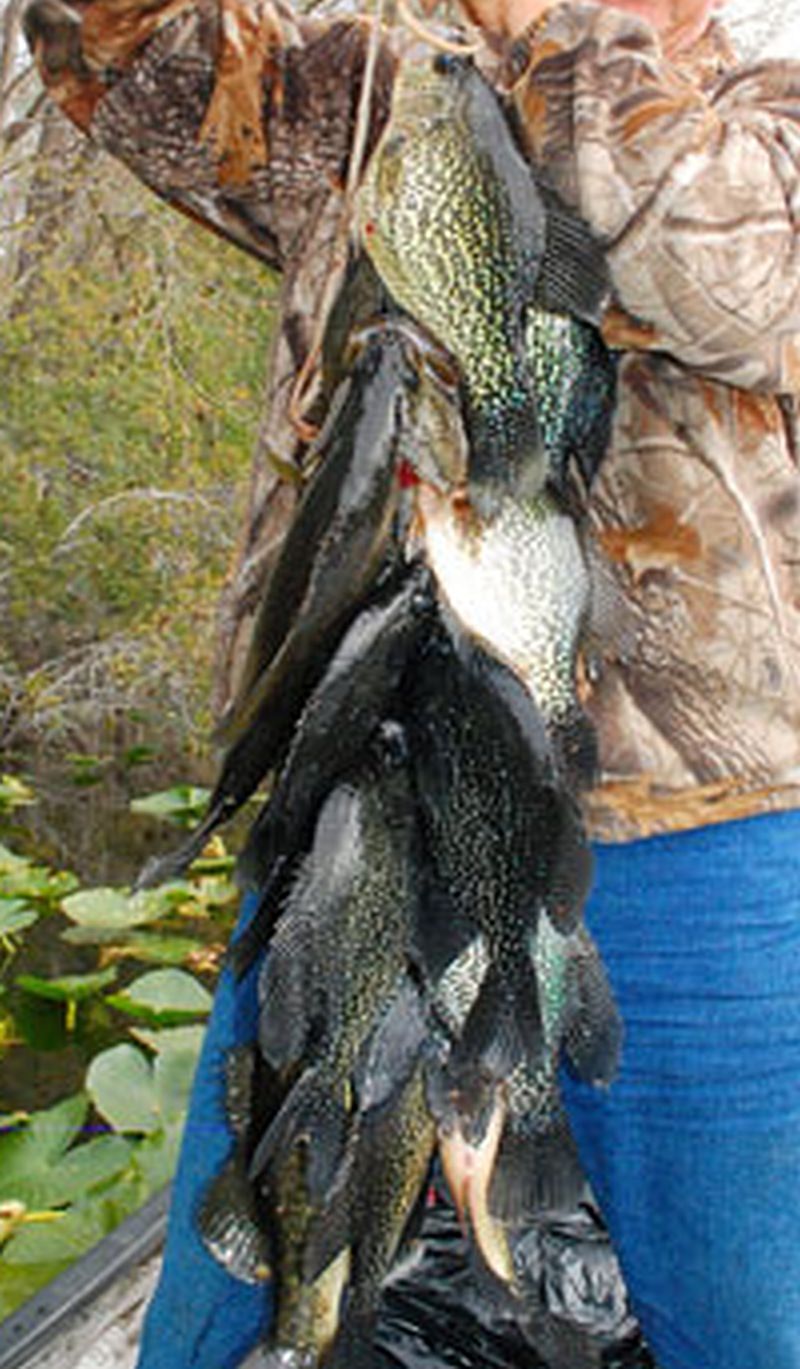 Black Crappie over 12" and two pounds are not uncommon in Lake Monroe. Black Crappie over 12" and two pounds are not uncommon in Lake Monroe. Schools of Crappie can be located all over the lake, but drifting and trolling near the river channel and just offshore from the power plant on the northwest shore is popular on this lake. Some nice catches of Striped bass have also been reported in the river, which is always a pleasant surprise. From late winter through early spring, Crappie move inshore to spawn and usually can be found around the bulrushes when they are available at the right depths. Although good catches of Crappie are being reported in the St. Johns River, the larger slab side Crappie are being caught in Lake Washington, west of Melbourne and in Lake Harney, north of SR 46 between Geneva and Mims. Both lakes are part of the St. Johns River system and consistently produce some nice catches of Crappie. You can access Lake Harney from the C.S.Lee Park boat ramp at the SR 46 bridge and Lake Washington from the Lake Washington Road ramp or from Camp Holly which is three miles south of the lake. Both lakes have lots of shoreline with plenty of shallow vegetation for spawning Crappie during full moon and new moon periods, and offer great slow trolling opportunities. ___________________________ Nearshore And Offshore During January and February, Tripletail become the primary focus of near shore anglers along the Port Canaveral buoy line and as the month progresses, their numbers will continue to increase.
Tripletail have a curious habit of floating on their side on or just under the surface of the water and drifting with the current They hang around any type of floating or submerged structure be it crab trap floats, a piece of wood flotsam, or in the case of Port Canaveral, the buoy line. Catch them by gently tossing a small DOA 1/8oz White C.A.L Jig Head  with
a shrimp tail, or a small live shrimp towards likely looking structure and allow the bait to drop to the bottom. If there is a fish around the structure, it will usually only take a couple of casts to get a hookup. with
a shrimp tail, or a small live shrimp towards likely looking structure and allow the bait to drop to the bottom. If there is a fish around the structure, it will usually only take a couple of casts to get a hookup. 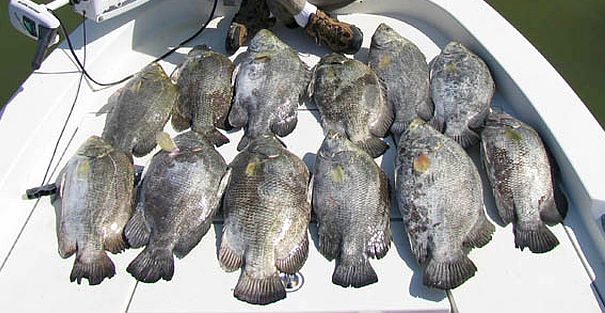 You get more fish by using light lines and making long casts, but when you get a hookup, horse the fish away from the structure before they break off. Tripletail are hard fighters and will head to a barnacle encrusted crab line or buoy chain in a heartbeat. They are also one of the tastiest eating fish in the ocean. The other hot item this month for near shore anglers is the King Mackerel. The Kingfish should be holding along the 70 to 90 foot reefs of 8A and North Pelican Flats. As long as the water temperatures stay above 68 degrees, the offshore King Mackerel bite along the inshore reefs and wrecks will remain pretty constant. As long as the weather holds, bottom fishing on the deeper structures should also stay pretty consistent. The snapper, Cobia, and sea bass will be in depths of 80 to 140 feet. The grouper and amberjack will be found along the 22-fathom ridge and deeper. Cobia and amberjack may also be present over the inshore wrecks like the Dutch, Carol Lee, and the Sub Wreck out of Port Canaveral. When the water temperatures reach the upper 60s, look for Cobia that are shadowing the Manta Rays to move in. Until next time,
|
||||||
| Link One | Link Two | Link Three | Link Four | Link Five | Unsubscribe to this newsletter |