|
he Mosquito Lagoon and Indian River
October is a major transition month for redfish and sea trout in the Mosquito Lagoon and Indian River estuaries, and for the next six weeks or so, you can expect good redfish and speckled trout catches on a daily basis.
The water levels in our lagoons are up and as the water temperatures begin to cool down in October, the fall silver mullet run will also begin to wind down.
During this time of the year, the bite can rapidly change from a mediocre fishing outing one day, to a full blown feeding frenzy the next, but around major weather changes like heavy thunderstorm activity or rapidly cooling temperatures caused by a front, the bite can often be outstanding.
The weather recently has prevented anglers fishing in the lagoons from doing much “sight” fishing lately, but decent catches are still being made by live bait fishermen using cut ladyfish and mullet.
Almost all of the redfish catches in the Indian, Banana, and Mosquito lagoons are being made with cut baits near the drop offs and around the islands where the fish can shelter.
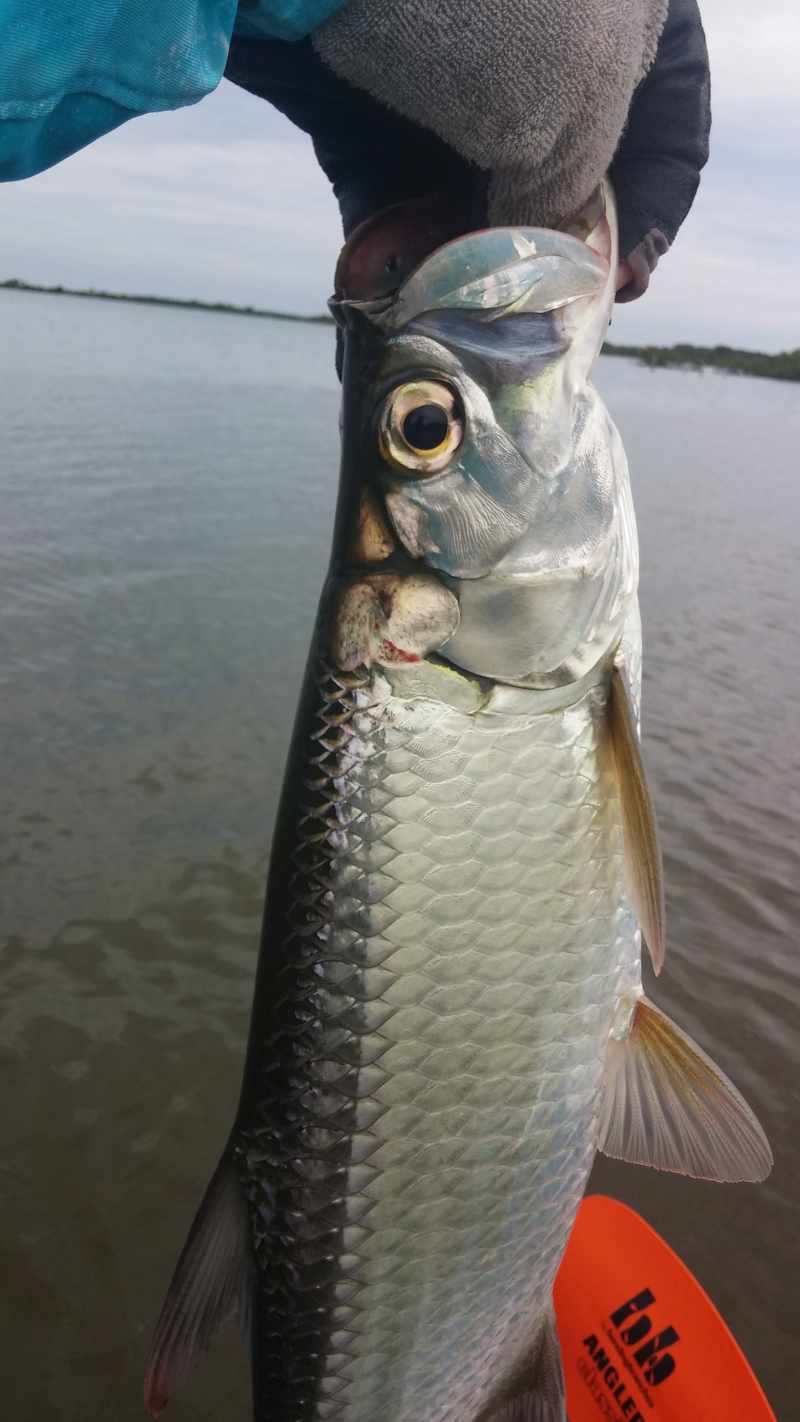 The "river" Tarpon have started moving out of the lagoons into the Atlantic Ocean, and the Snook are also on the move towards their wintering areas. The Tarpon and big Ladyfish that are still roaming the lagoons have been busting glass minnows, finger mullet and ballyhoo early in the morning
hours. The "river" Tarpon have started moving out of the lagoons into the Atlantic Ocean, and the Snook are also on the move towards their wintering areas. The Tarpon and big Ladyfish that are still roaming the lagoons have been busting glass minnows, finger mullet and ballyhoo early in the morning
hours.
In the Mosquito Lagoon, the Tiger Shoals area and farther North is usually a good place to target Tarpon during October.
In the Indian River, the Tarpon can usually be found from Scottsmoor down to the railroad bridge and around the Peacocks Pocket area.
The Patillo Creek area can also be a good area to check out for juvenile 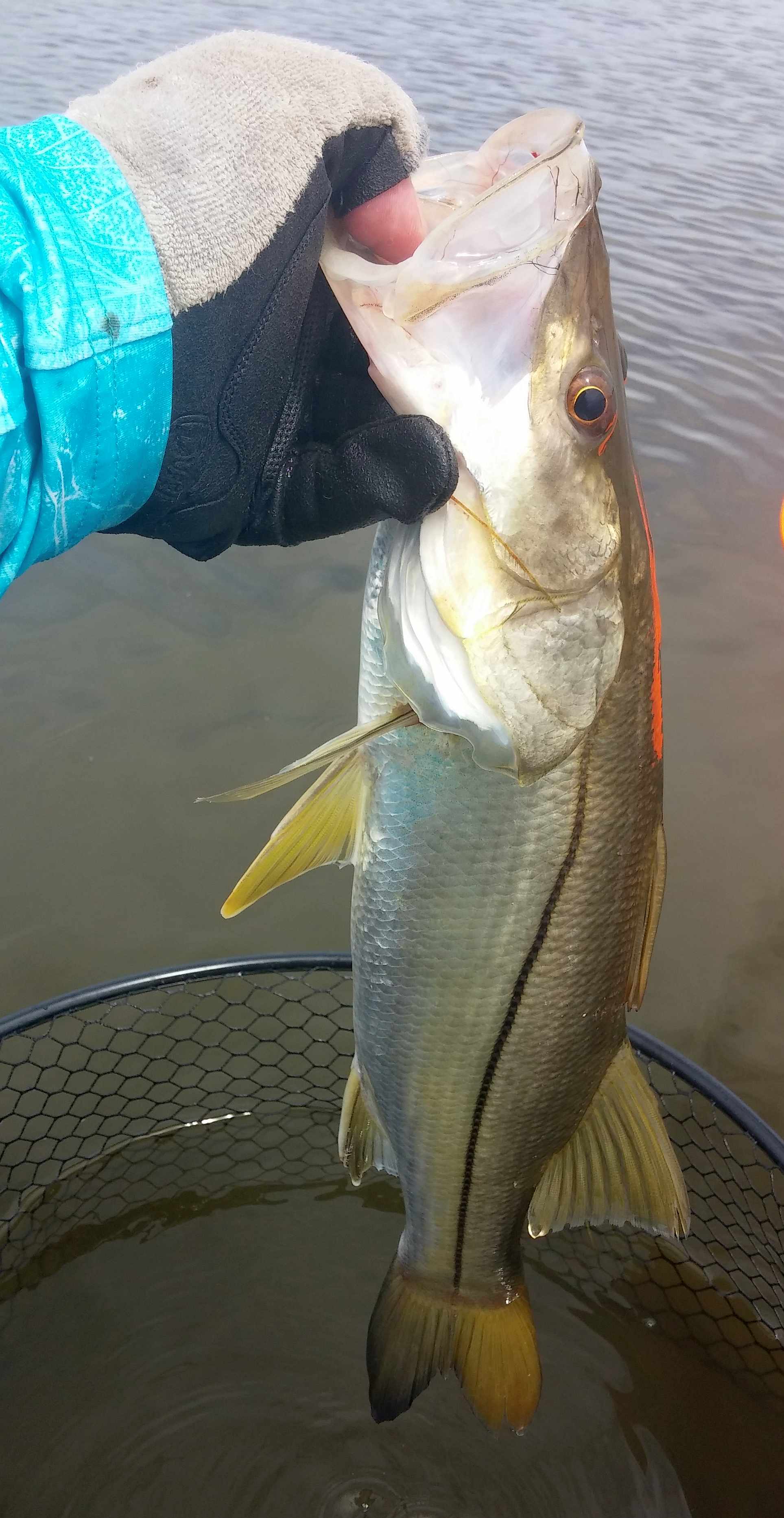 Tarpon and Snook. And, it always pays to check the culverts in the Indian River for juvenile Tarpon and Snook, especially when the
water is flowing from the marsh into the river. Tarpon and Snook. And, it always pays to check the culverts in the Indian River for juvenile Tarpon and Snook, especially when the
water is flowing from the marsh into the river.
Don't forget to check the culverts in the Indian River for Tarpon and Snook, especially when water is flowing.
The Snook in our area are scattered but as the water temperatures start cooling down, they will begin to become more concentrated. During the next month or so, the fish will be on the move to where they will be spending their winter.
During this period, try fishing the deep shorelines, around deep water docks, and deep water seawalls where they will be spending the winter.
Judging by the number of keeper Snook we have seen caught this summer, this fall should be a good year to catch one in the 10 to 15 pound category.

Flounder will start moving back into the backwaters, and bull redfish are still schooling by the hundreds to spawn in the North Indian River and Ponce Inlet areas.
October can be a good time for artificial bait fishermen using topwater baits, gold spoons, and soft plastic jerk baits to catch a bull redfish, but for bait fishermen using a live pigfish, fresh cut ladyfish or mullet, or a live shrimp for bait, a good fish can almost be guaranteed.
Since the water levels have been way up in the Mosquito Lagoon and the Indian River, fishing for Redfish from the bank has been pretty good for singles and doubles that are cruising the shorelines as well as for schools tailing on the shallow flats.
If you doubt me, just drive along the A. Max Brewer Causeway and see how many guys have rods staked out fishing crab, cut baits, and live mullet around the Marine Patrol station on any given afternoon.
Most of the Redfish caught around the Marine Patrol Station are running between 18" to 30", but some true "Bull Redfish" over 43" long are still being caught in the North Indian River deep water flats near Scottsmoor.

When the Redfish spawn is over, the big reds over 20 pounds will scatter, making them harder to catch until later on in the winter.
In the Cocoa Beach and Satellite Beach areas, the Speckled trout and Snook catch has been fair for fishermen using small twitch baits and suspending plugs around the schools of finger mullet.
 Some large "Gator" sea trout are following the bait pods when they can be found, and are picking off the stragglers.
They are being caught by fishermen free lining live fingerling mullet, using topwater baits, and slowly fishing suspending baits.
Although nothing can usually beat free lining a live mullet for big sea trout during October, topwater baits can produce just as well and sometimes even better.
I like using Chug Bugs smeared up with Pro-Cure Saltwater Formula Gel, SkitterWalks, and recently XPS silver and black topwater baits.
For the best topwater bite on artificial baits, fish early in the morning, late in the evening just at dusk, and during overcast periods.
As we get closer to November, instead of moving into deep water after daybreak, we will begin to see some giant gator trout moving into the shallows to spend the day laying in sand holes and sand sloughs.
A free lined mullet or carefully worked topwater bait is just the ticket for a sea trout in the 10 pound plus category during these periods.
_______________________
Port Canaveral Offshore
Once the weather settles down this month, look for the offshore bite to improve outside of the Port.
Slow trolling the 30 to 40 foot depths may hook you up with a Tarpon, Bonito, Spanish Mackerel or Kingfish. Most of the Kingfish will be in the 18 to 20 pound class with an occasional "smoker" king in the mix.
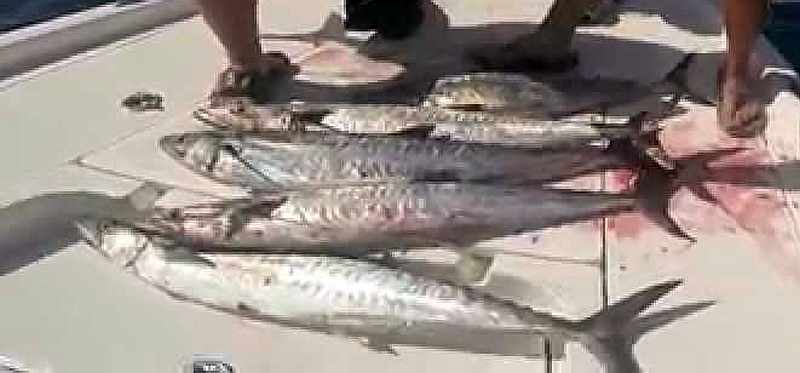
Slow trolling live baits for King Mackerel, small Dolphin and Wahoo should improve as the month progresses. Most of the fish should be hanging around the 60 to 70 foot reefs in the South, and the 80 to 90 foot reefs in the North.
Fish the color breaks where the green water meets with the dirty blue water all the way out to the western edge of the Gulf Stream.
Once the weather breaks farther north around Ponce Inlet, offshore anglers trolling ballyhoo should be able to pick up dolphin, sailfish, or Wahoo in the 150 to 400-foot depths.
The Captains I spoke with said that they were picking up a lot of shark bites when targeting mangrove snapper, Gag grouper, Triggerfish, and other bottom species.
Hopefully, the bottom fishing will improve as the month progresses.
_______________________
Surf Fishing
The mullet run along our coast is in full swing and the predators have been following them right into the surf.
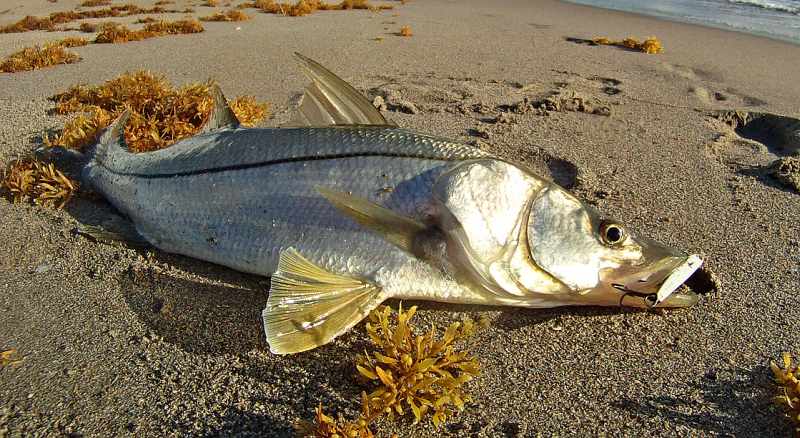
The Snook bite along the beaches and Jetties from Port Canaveral, all the way south to Sebastian has been on fire, according to several surf fishing buddies of mine.
Two days ago one of my surf fishing buddies netted some mullet at Melbourne Beach at the crack of dawn and picked up a 34 1/2" Snook, a 26" redfish, several Snook over and under the slot, and a couple of sharks. He was using a medium size mullet that he netted up for bait with a 1/2 oz. pinch weight.
The flounder bite is beginning to pick up offshore in the Ponce Inlet area and is slowly trickling down to the Space Coast.
A live mullet on a 3/4 oz. to 2 oz. jig head will keep the bait just off the bottom, depending on the current.
The average size for flounder in our area is anywhere from 3 to 6 pounds with some heavier.
Till Next Month, Good Fishing & Tight Lines To You All!
|