Your September 2015 Mosquito Lagoon & Indian River Fishing Report
Published: Tue, 09/01/15
| Newsletter Issue # 73 Fishing Forecast | September 1, 2015 | ||||
Mosquito Lagoon & Indian River Fishing |
|||||
Mosquito Lagoon and Indian River
Labor day is the official end of summer and the re-opening of Snook season in Central Florida waters.
It is also the beginning of the redfish spawn in all of our lagoon systems.
While most of the other redfish populations in the Southeast and Gulf of Mexico spawn offshore or in the inlets and passes during September and October, the redfish in the Titusville area of the Indian River and Mosquito Lagoon are unique in that they live and reproduce in the waters of our estuarine system.
If you're interested in landing some of the heavyweight "Bull Redfish" and having a fight you will never forget, you may want to fish the area between Titusville and Oak Hill during the next couple of months.
During the spawning period, the redfish will gather into schools that sometimes number into the hundreds. In years past, the schools used to number into the thousands but because of increased fishing pressure, the schools have really been hammered and as a result are smaller and more difficult to locate.
If you are not familiar with this area, it is best to hire one of our local guides. They keep track of the schools and know how to catch the spawning fish.
The largest concentrations of big redfish are generally found in the Indian River just North of Titusville, Fl. The schools usually roam the deeper water flats in 4 to 6 feet of water east of Mims and the Scottsmoor boat ramp.
Because the northern Indian River flats are deeper than most areas of the Mosquito Lagoon, many bull redfish migrate through Haulover Canal to spawn in the deeper waters of the river.
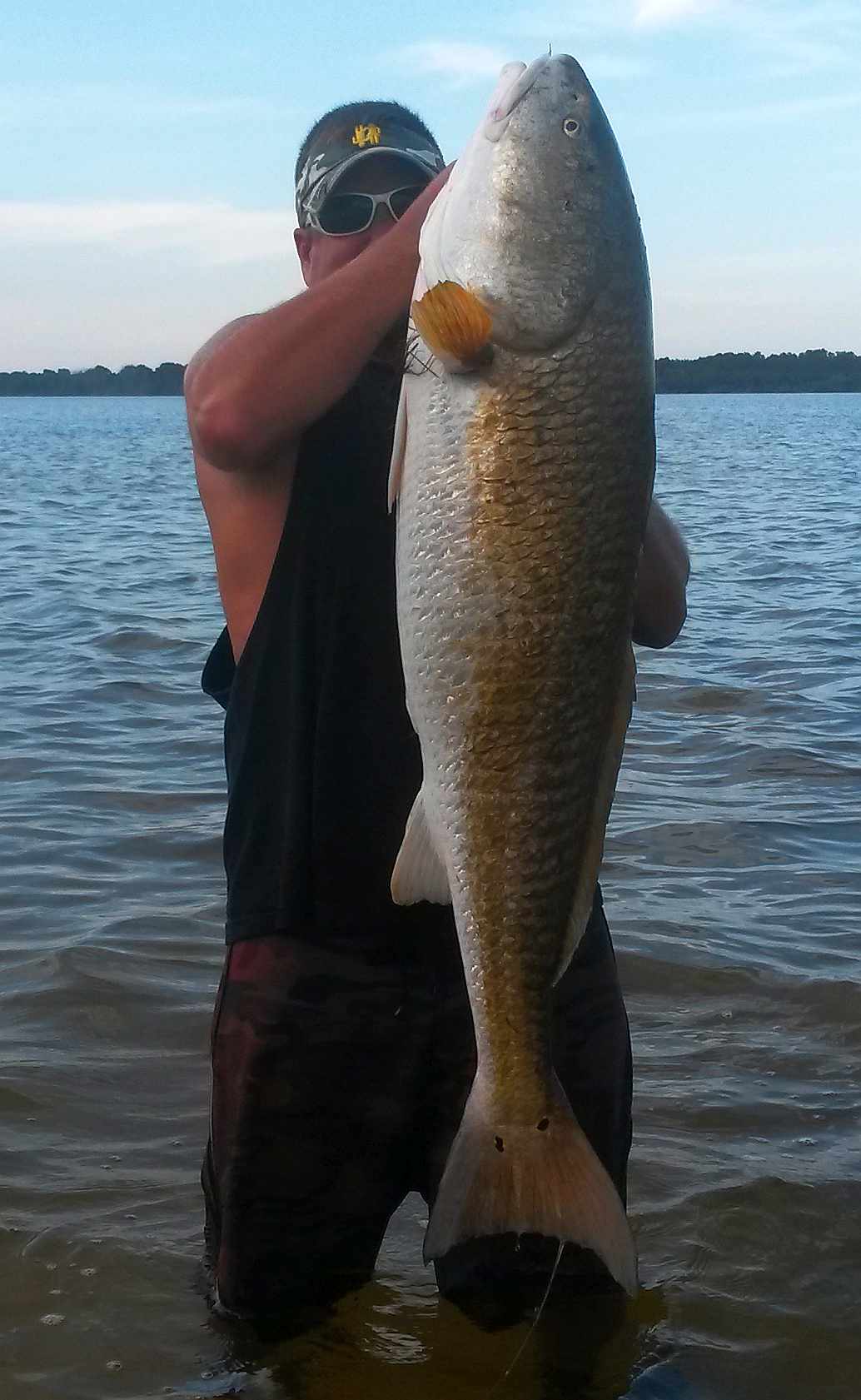 Although smaller slot size redfish are still being caught this time of the year, you always have a chance of picking up a "bull redfish" in the 30 pound plus category like Jason Cooper's fish shown here on the left. Although smaller slot size redfish are still being caught this time of the year, you always have a chance of picking up a "bull redfish" in the 30 pound plus category like Jason Cooper's fish shown here on the left. Most of the spawning females will be running in the 20 to 30 pound category.
Because our resident Redfish population live, spawn, and die in a relatively confined area; over the years due to the increased fishing pressure, they have become extremely wary and savvy to most lures being tossed at them.
However, during the fall spawning event the large breeder reds become voracious feeders and extremely aggressive, and unless they have been recently pressured, will strike almost anything cast in their direction.
A clear sky and relatively calm surface will make spotting the schools easier. If the school is moving, the lead fish is usually the largest and will push a wake you can easily spot. Try to approach the school from the front or side and cast ahead of the lead fish. Live pinfish, large mullet, or Croaker will attract the larger fish but a 3" or 5" Berkley Gulp shrimp on a 1/4 oz. jig is also a great bait.
I prefer fishing a topwater Chug Bug for redfish and sea trout as my "go to" bait of choice. If you cast a Pro-Cure smeared Chug Bug in front of the lead fish and work it away from the school, the chances are good that one or more of the fish will follow your lure and gobble up the bait.
The local guides recommend fishing 30 pound braid and a 40 pound fluorocarbon leader in order to land the fish quickly and minimize the stress put on the fish. I drop down to a 30 pound fluorocarbon leader when using topwater baits to present the bait more naturally.
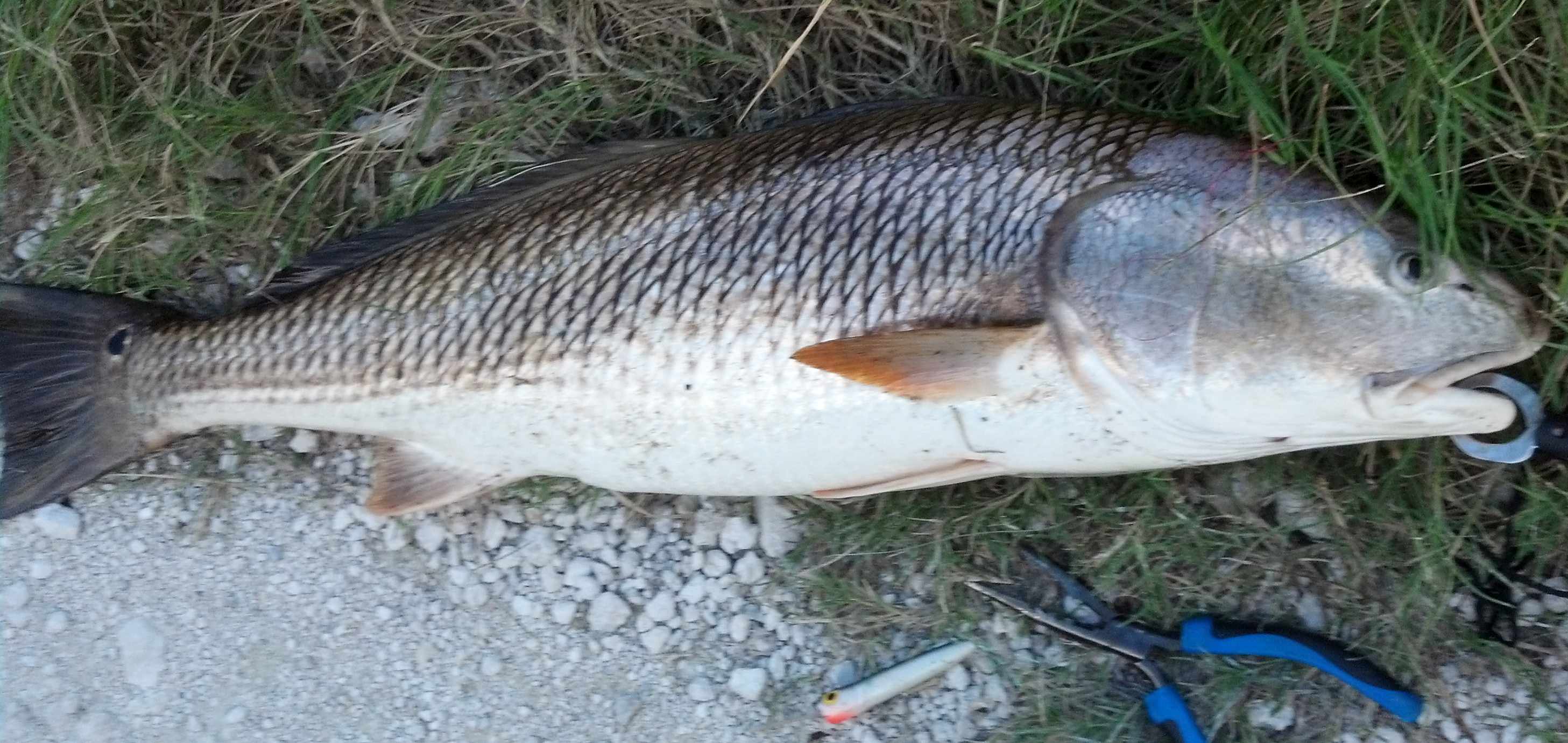
The 37" marsh Redfish below was caught on 10# Cajun Red line and a 20# fluorocarbon leader which allowed the Chug Bug to be worked correctly. Heavier leaders prevent topwater baits from appearing more "natural" and usually result in fewer strikes.
 If you're new to our area, the best boat ramps to use are Bair's Cove at Haulover Canal, the Beacon 42 boat ramp, and the Bio Lab Road boat ramp on the west side of the Mosquito Lagoon. A $5.00 permit/fee is required to use these ramps.
You can also make the run north from Parrish Park on SR 406 east of the Titusville bridge. If you are running a shallow draft boat, the shortest run is from the unimproved boat ramp at Scottsmoor.
Getting out on the water early and late is still the best all around fishing strategy.
Throughout this month, slot Redfish and sea trout will still be shadowing the schools of finger mullet that are working their way south through the estuaries.
The larger sea trout and redfish will be staging along the deeper ambush areas were schooling baitfish are forced to leave the relative safety of the shallow flats. Drop-offs, creek mouths, bridges, causeways, and points are all good spots to target.
In the Mosquito Lagoon, the Tiger Shoals area has been producing a lot of slot size reds.
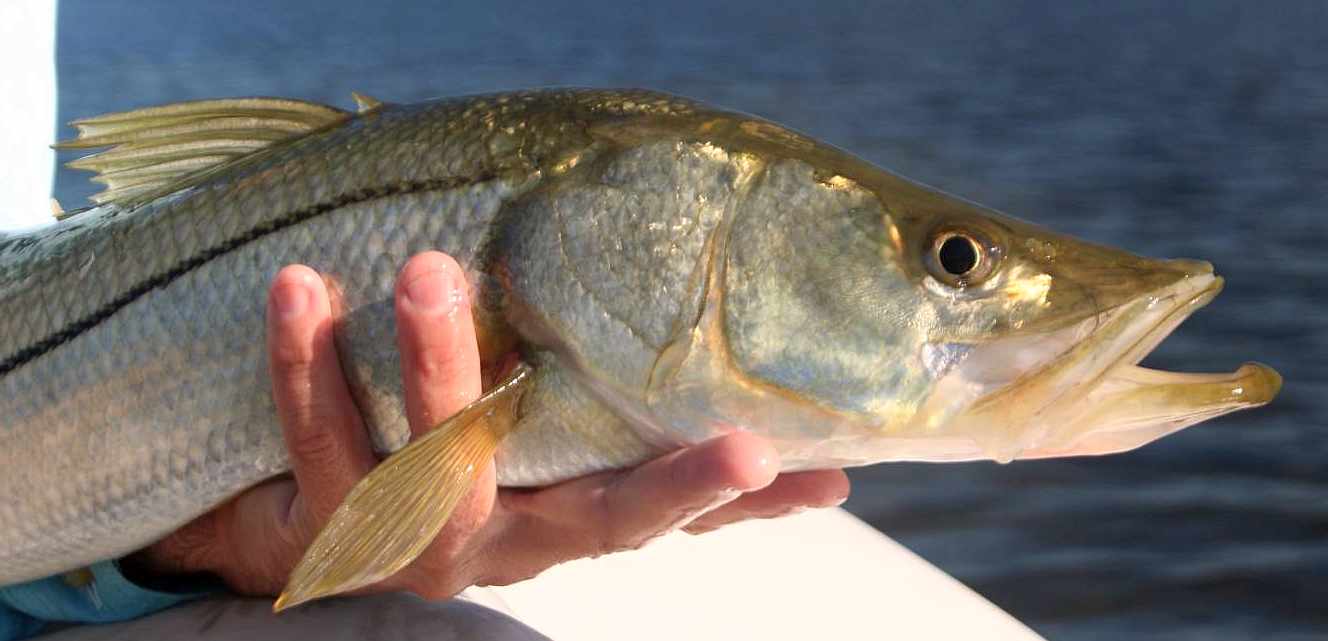 By the time you read this post, Snook season will already be reopened. By the time you read this post, Snook season will already be reopened. The jetties and deep water basins inside of Port Canaveral is home to a respectable population of Snook and is a good area to target.
Fish around the dock pilings, near the piers, or close to the jetties during dusk and low light periods with live mullet, grunt, or pogies on a sliding sinker rig with a 4/0 to 6/0 size VMC 7385 circle hook. When fishing around the jetties, you can also expect to pick up mangrove snapper, Ladyfish, flounder, Redfish, bluefish, and Jack Crevalle.
If you like to fish artificial baits, try using lipped diving plugs like the Rapala BX series, Rapala X-Raps, or MirroLures around the bridge pilings or along the jetties with some moving water. Any lure that resembles a mullet will work for Snook.
The late night Snook bite at Port Canaveral is hard to beat if you don't mind adhering to the somewhat restrictive security regulations they have in place.
The entire Port is a NO WAKE zone and boaters are prohibited from getting closer than 25 feet from the docks, and if a vessel is moored at anchor, the distance increases to 100 feet.
If you run and cast at the sea walls and under the lit docks with a hard bodied lipped plugs like a Rapala, Bomber, or a DOA Bait Buster, you can pick up some really nice fish.
You need stout tackle to horse the fish away from the structure when they hit or you will lose a lot of fish and plugs.
Snook are also found in many areas of the Mosquito Lagoon and Indian River during September. They hang very close to the shorelines around mangrove roots, sea walls, lit docks and overhanging vegetation. During the late evening hours, at night, and during low light conditions, Snook like to stage around ambush points at the bridges.
Usually sea trout are also very accommodating during September, if you fish the bait schools. The bigger fish will hit topwater baits in the early morning hours, during low light periods and at dusk. I usually have good catches of sea trout and ladyfish directly before and during a thunderstorm. But watch out for lightning.
Fishing during a thunderstorm also produces some very nice fish, but watch out for lightning.
Over the years, I have become a firm believer in using Pro-Cure Super Gel
_______________________
Surf Fishing
September is a prime month for surf fishermen in east central Florida. The beach Snook run that started in mid August had a few fish showing up in our area but greater numbers should be in the surf by September. The mass migration of silver mullet that takes place every fall along our coasts brings with the baitfish tarpon, Snook, bluefish, various species of shark, Spanish mackerel, and Jack Crevalle.
By the time you read this post, the Snook will already been running our beaches in greater numbers than they were last month.
The troughs and coral outcroppings around Patrick AFB are prime habitat for fall Snook as well as for near shore tarpon and several species of sharks.
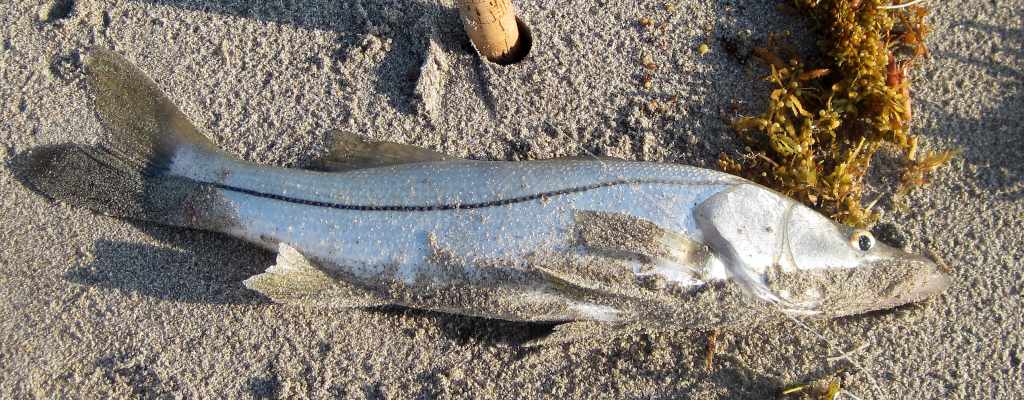 A live mullet or menhaden on a stout fast action, medium heavy spinning outfit loaded with 30 pound braid, a 40 pound fluorocarbon leader and a 4/0 to 6/0 VMC circle hook sliding sinker rig is all you need to catch one of these linesiders.
It's not necessary to make long casts to catch Snook in the surf. The Snook come close to shore to ambush the baitfish and can be caught in the washes of shore breaks, in the closest troughs, and often right at your feet.
A friend of mine who fishes Snook in the surf on a regular basis uses this technique.
Slide a ½ to 1 once barrel sinker onto your main line and tie on a swivel that serves as a stop for the weight and helps to keep the line from twisting as it rolls down the beach.
Tie on about 24 inches of heavy leader (30 to 50 pound test) and a 3/0 Daiichi Bleeding Bait circle hook. If Tarpon are in the area, step up the hook and leader size.
Use a live mullet for bait and start fishing the very edge of the surf, casting just beyond the white water. Walk slowly with the direction of the tidal flow, so your bait does not wash in with the waves.
The same technique will work for tarpon, just cast it out a little further and make sure your tackle and line capacity is adequate to handle the fish.
Fishing at first light, at night, or at dusk will be your best bet to hook up with a nice fat Snook.
_______________________
Near Offshore Fishing Anglers trolling skirted ballyhoo over the reefs and ridges in 90 to 240 foot depths have the potential of catching king mackerel, dolphin, Wahoo and scattered sailfish during the upcoming month. Look for rips, weeds, floating debris and other features that may hold these fish.
The Sailfish are always a possibility around the 70 to 150 foot depths when they are working schools of sardines, blue runners, and other baitfish.
When trolling, look for King Mackerel around the reefs and wrecks in the 65 to 90 foot depths. Slow trolling live mullet or pogies on a wire stinger rig can get you a hookup. The fish are averaging 15 to 20 pounds with an occasional 30 pound fish in the mix.
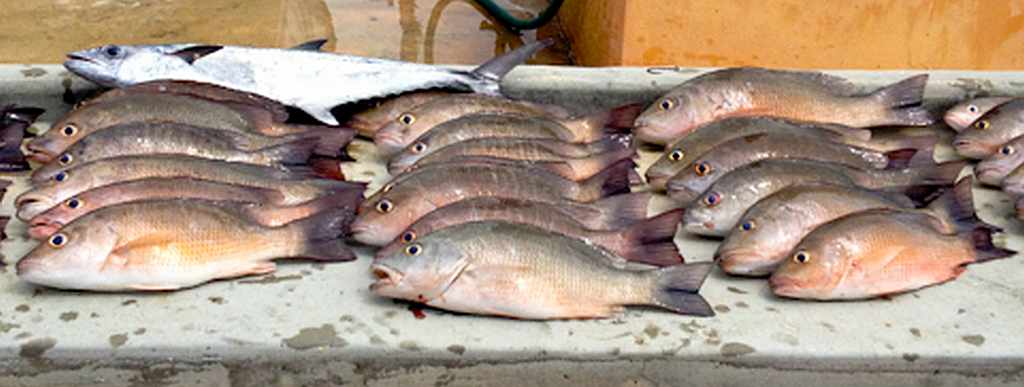 For anglers willing to anchor and chum for them, Mangrove snapper are being caught on the same wrecks like the sub, manacamp (Madaket), and lead (Ocean Venus) where the Kingfish are holding. For anglers willing to anchor and chum for them, Mangrove snapper are being caught on the same wrecks like the sub, manacamp (Madaket), and lead (Ocean Venus) where the Kingfish are holding.Most of the Mangrove snapper that are being caught have been hitting cut baits like squid, sardines, and pogies.
Amberjack along with the other snapper species will also be a good bet on all the wrecks in our area.
Shark, tarpon, and bonito are feeding closer in along the beaches and following the bait pods of Pogies and primarily glass minnows.
_______________________
Tarpon
Right now Tarpon are also in the Indian River and the deeper waters of all our lagoons. During the calmer days, you can see the fish rolling or suspending in the deeper areas of Tiger Basin in the Mosquito Lagoon and south of the railroad bridge in the Indian River. The river tarpon are running heavier this year and can be found in 5 to 6 feet of water. They're usually suckers for a lively free lined pigfish, pinfish, or mullet.
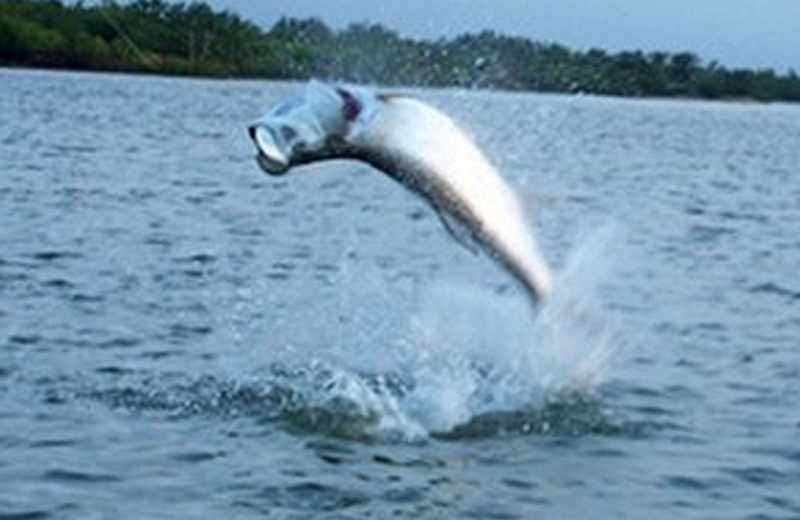 In the Indian River Lagoon, the tarpon have been keying in on white plastic baits or rabbit hair flies.
The average size for lagoon tarpon in our area is normally around 15 to 40 pounds, but this year fish in the 100 to 120 pound range are being caught in the Indian River from Titusville, south on a regular basis. The average size for Tarpon along our beaches has been around 80 pounds. Haulover Canal
Haulover Canal fishermen have been making decent catches of black drum, big bull redfish and mangrove snapper.
The redfish are moving from the Mosquito Lagoon through the deep waters of the canal to spawning areas in the northern Indian River.
As they pass through the canal, boat fishermen using half of a fresh blue crab for bait fished just off the bottom, have been picking up 20 and 30 pound fish.
The Bull Redfish below was caught on half of a fresh crab in Haulover.
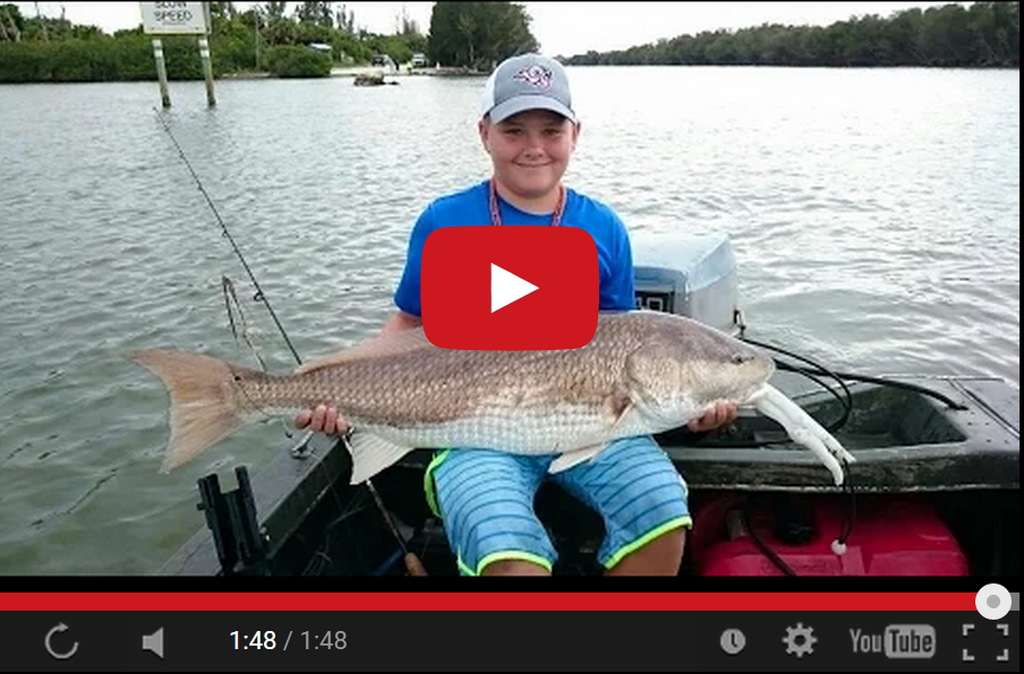 Cut clams, live jumbo shrimp, or a live pinfish fished just off the bottom on a sliding sinker rig with a fluorocarbon leader and a 6/0 or 7/0 vmc circle hook
Haulover Canal, and most of the deeper waters around our area bridges and causeways are still holding decent numbers of black drum.
The Black Drum have been running anywhere between 5 and 20 pounds and are being caught on shrimp and fresh cut clams fished on the bottom.
Fish can be caught in Haulover Canal throughout the year but September is usually an exceptional month.
______________________
Till Next Month, Good Fishing & Tight Lines To You All!
|
|||||
| STOP | |||||
| Link One | Link Two | Link Three | Link Four | Link Five | Unsubscribe to this newsletter |