Your August 2015 Mosquito Lagoon & Indian River Fishing Report
Published: Sat, 08/01/15
| Newsletter Issue # 72 Fishing Forecast | August 1, 2015 | ||||
Mosquito Lagoon & Indian River Fishing |
|||||
he
Mosquito Lagoon and Indian River
The dog days of August are almost upon us and the weather is really, really hot and muggy.
I don't believe in man made global warming but the local temperatures have made fishing the wee hours of the morning and late evening almost mandatory if you plan on catching anything. The redfish and sea trout bite has been on especially in the north Indian River around the deeper water flats at Scotsmoor, Black Point, and the Marsh Bay area a little south of Haulover Canal. Getting on the water before the sun hits is your best bet for catching quality fish and with the full moon coming up, night fishing will also be a good option. Popping corks with a DOA Shrimp or a swim bait, jigs, jerk baits, and topwater lures have all been catching nice sea trout along with some ladyfish and even bluefish in the north Indian River. You can chunk up some of the ladyfish or bluefish and use them to catch some of the big bull redfish if you toss them out onto the deeper water flats and don't mind waiting for something to pick it up. 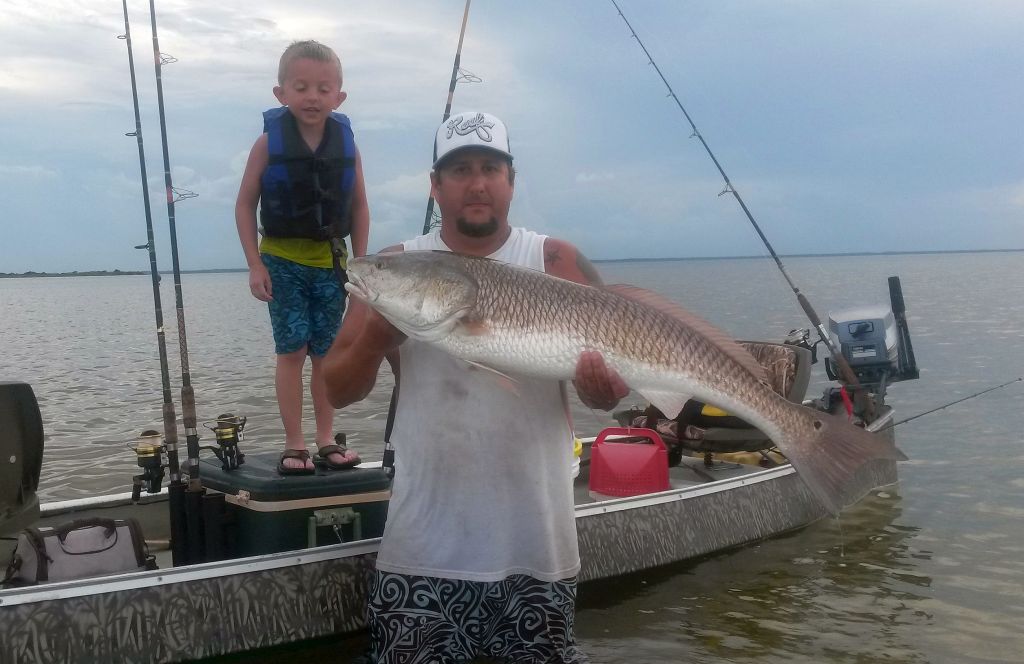 The deeper flats south of Onion Farm Island have been producing some 40" plus redfish on cut baits and live finger mullet as well as a few river Tarpon. Tarpon are in the lagoons and are being hooked on a semi regular basis by anglers targeting them with DOA Airheads, Baitbusters, and various live baits; but landing them is another thing. Slot size redfish are on the grass flats and cruising the shorelines in the early mornings foraging for crabs, mud minnows, finger mullet, etc. and around 9:00 am or so, the reds move into the deeper 3 to 5 foot depths just off the flats.
Four inch Saltwater Assassins in the Drunk Monkey color or a root beer colored DOA shrimp have been consistently producing slot size fish. In the early morning hours, top-water plugs are still giving good results on both redfish and seatrout provided you're not hampered by the floating grass.
On the super calm mornings when the water looks like glass, you can get gin up some vicious strikes using a Chug Bug or a "walk the dog" topwater bait.
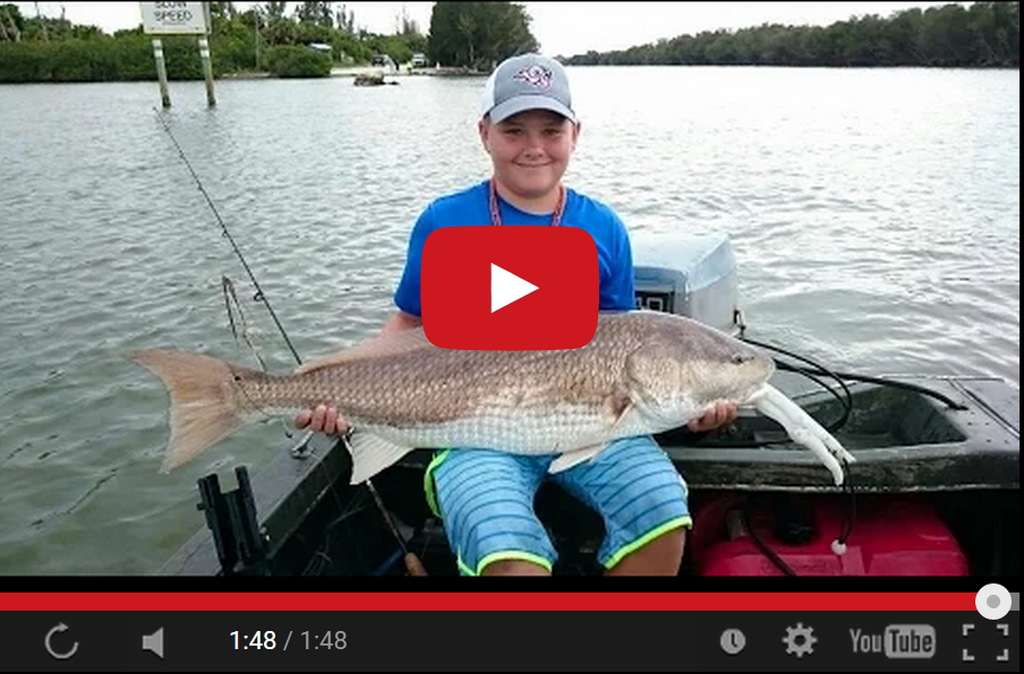
Start working the plug with a slow but steady retrieve and don't stop the action. If this doesn't produce, work the bait and stop it briefly. Often the strike will occur on the stop. Once heavy ripples form on the water's surface, try throwing a topwater plug with a rattle to stir up some action and make it audibly gurgle. The really large "Bull" reds will be holding in cooler waters along the deeper edges off the flats, the bridges, along the ICW channel, and all along Haulover Canal. Catch them with live or chunked pinfish, mullet, ladyfish, crab or shrimp like the fish below.
 Some interesting things have been happening in our general area lately due to the cold upwellings we have encountered. Bonefish are showing up a little farther south in our lagoon systems between the Vero Beach and Melbourne area, and farther south around the Sebastian flats. They are being pushed into the interior by the colder water systems off the coast and although they are small, they are great fun to catch. Some nice black drum and sheepshead are also being caught around the rocky outcroppings, dock pilings and in the deeper waters around the bridges by anglers using shrimp, clams, fiddlers and cut bait farther south and to Ponce Inlet.
Snook have also been pushed into the inlets where you can now find them around the inside flats, bars and dropoffs not around the outside jetties where you would normally find them this time of the year. If you are fishing the Ponce or Sebastian Inlets and you're not having any luck finding Snook, try fishing some of those little back bays and warm deeper water areas that still have baitfish in them and you should find fish. Offshore Fishing
The cold water upwellings have scattered the fish to some extent offshore, but they are still providing plenty of action.
If the cold water or a hurricane doesn't wreck the inshore waters just off the beaches, we should see lots of Tarpon and Kingfish shadowing the pods of pogies, glass minnows and other baitfish. Better numbers of Kingfish usually occur just east of Playalinda Beach, north of Cape Canaveral. The Tarpon should be rolling south of the cape in the Canaveral Bight. During the month of August, the main channel and turning basins at Port Canaveral can be a great place to target smoker kings.
Most fishermen overlook this fishery but when large schools of pogies and mullet are in the 40 foot depths, the kingfish will be following closely behind them. The main channel at Port Canaveral is 3 1/2 miles long with the large deep water turning basins connecting from the north side.
The Trident basin yields the best numbers of kingfish but it is off limits to boaters. The middle basin is part of the main section of the port and has some limitations but is the best area for kingfish. Fishing from the middle basin to the port entrance is usually pretty productive.
Slow trolling a large 10" mullet 20 feet or so behind your boat from the entrance to the port into the middle basin when the baitfish are thick can often get you a hookup from a smoker king.
The bait pods should be pulling in the larger kings south of Canaveral towards Patrick AFB. Historically, the Tarpon tend to work the pogies and glass minnows between Vero Beach and Sebastian Inlet where they become the favorite target of fly fishermen. You can expect the smaller Kingfish in the 15 to 20 pound range to be just north of Sebastian Inlet within a mile of the beach. Fish live baits for them early in the morning to get the best bite. Right now we are finding scattered Cobia, scattered King Mackerel, Dolphin, some Barracuda, Wahoo and Bonita, Mangrove Snapper, and just a variety of species on and over the wrecks and reefs. The best bet is to just keep hopping around the reefs and wrecks until you find one with pretty good action and stake it out. For some reason, smaller baits seem to be producing more fish right now. This is possibly due to the colder upwellings and generally cooler water conditions. Near shore fishermen running the beaches are doing well when they can locate the pogie pods and slow trolling or drifting baits for Tarpon, Kingfish, big Jacks and plenty of Shark. A friend of mine out of Port Canaveral this past Monday got 7 King Mackerel, 1 Bonito, 2 Barracuda, 2 Jacks and a sharpnose shark. Not bad for a slow day fishing! Another prime target for offshore anglers who are willing to make the long trip to the Gulf Stream during the summer months is Yellowfin Tuna.
Sport fishermen making the 65 mile plus run to the other side of the Gulf Stream usually first hunt for the birds to find the fish and then pull high speed lures like the Williamson Speed Pro at speeds up to 14 or 15 knots. The birds will be working over the actively feeding schools of tuna.
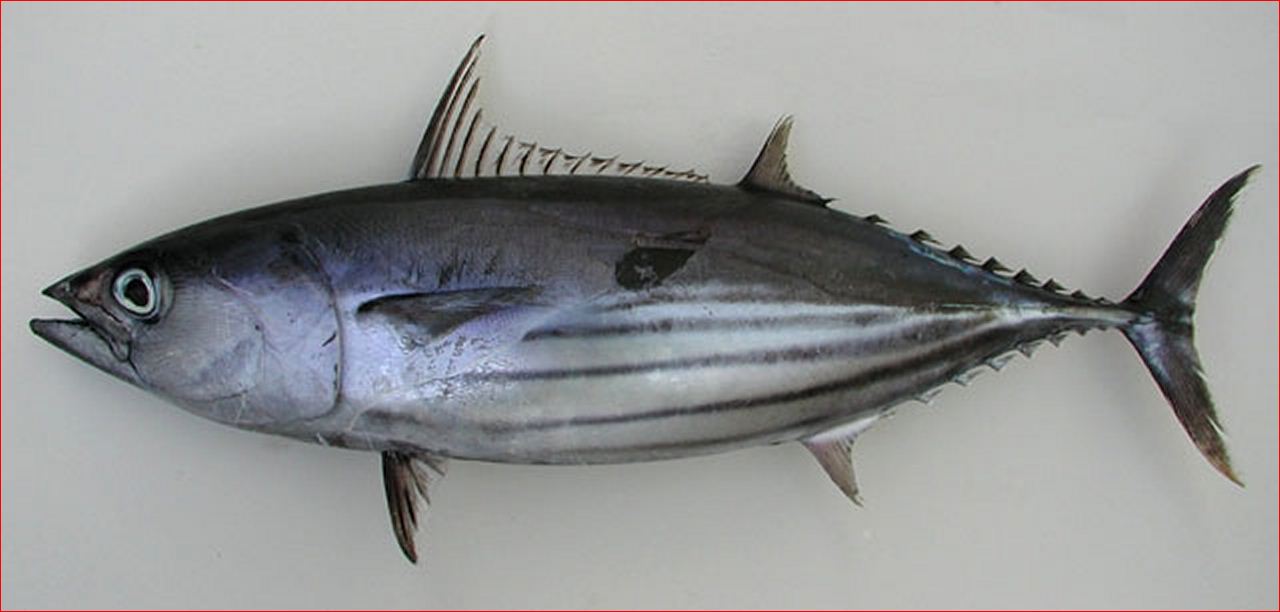
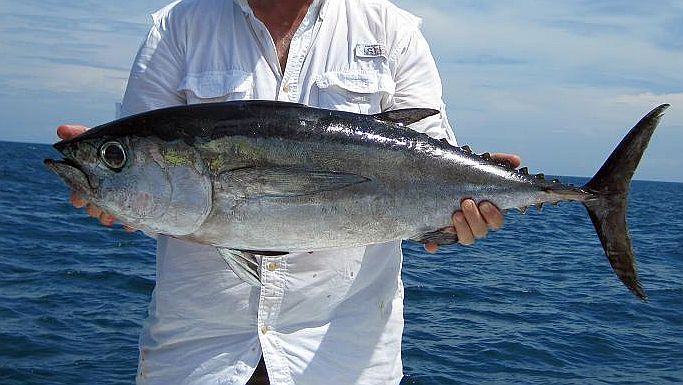
 The guys running out of New Smyrna Beach are running out as much as 100 to even 120 miles to find fish, but on most days a 75 to 90 mile run will get you into the Yellowfins. Skipjack, Blackfin tuna, big bull Dolphin, Wahoo, and even Blue Marlin are frequently caught while dragging baits. The average Yellowfin Tuna can run anywhere from 40 to 70 pounds, but fish up to 90 pounds are commonly caught. During August you can shark almost anywhere off the beach and along our inshore waters using a variety of live or chunk baits.
Most shark are relatively small and are less than 6 feet in length however, some hammerheads are running in the 8 to 10 foot category. When shark fishing, you never know what you're going to catch. It could be a 2 foot long Bonnet Head shark one day from the beach, to an 8 foot long hammerhead the next.
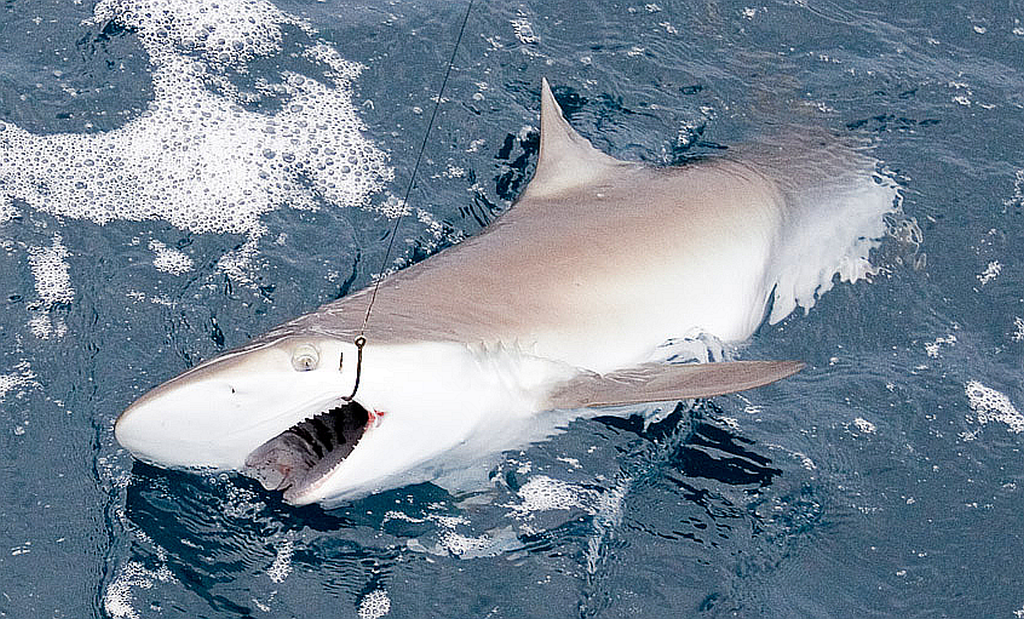 Dusky Shark
Bull Shark follow schools of baitfish and move into the Indian River during the summer to bear their young.
Waders in our area should pay particular attention when lobbing baits for redfish or sea trout. Last year a kayaker reported a large bull shark following a school of redfish in the north Indian River where it was trying to catch a red. Be careful wading. ______________________
Haulover Canal
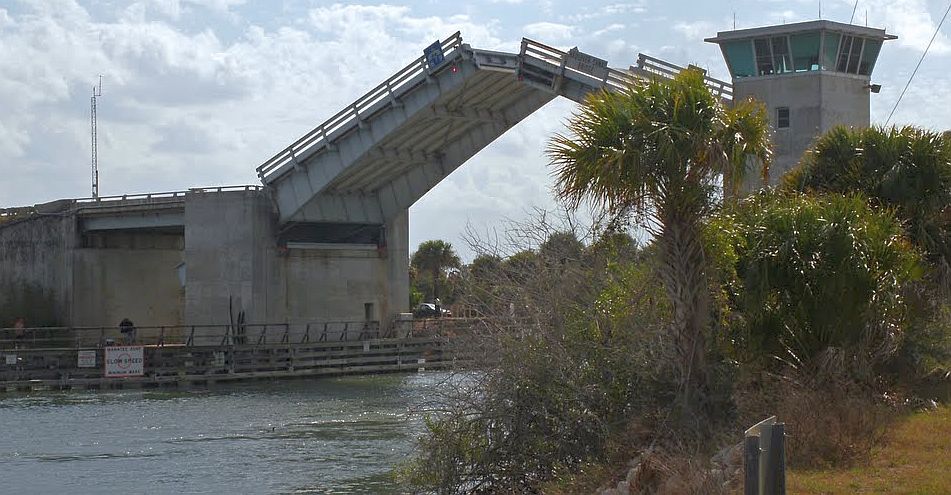 As the water temperatures continue to rise, Haulover Canal fishermen should be bringing in some better catches of oversize Redfish, Black Drum, Snook and Sea Trout, especially during the evening hours. As the water temperatures continue to rise, Haulover Canal fishermen should be bringing in some better catches of oversize Redfish, Black Drum, Snook and Sea Trout, especially during the evening hours.Haulover Canal boat fishermen have been hauling in some nice Redfish and Black Drum using sections of fresh crab, live mullet, live pinfish, fresh cut baits, and shrimp.
A standard sliding sinker rig on the bottom with a VMC 7685 circle hook and a fresh piece of sectioned crab or other bait will do the trick. Throughout the summer months we can always expect good fishing for bull redfish, black drum, sea trout, snook and and Tarpon at Haulover. The fish use the cooler waters of the canal as a "fish highway".
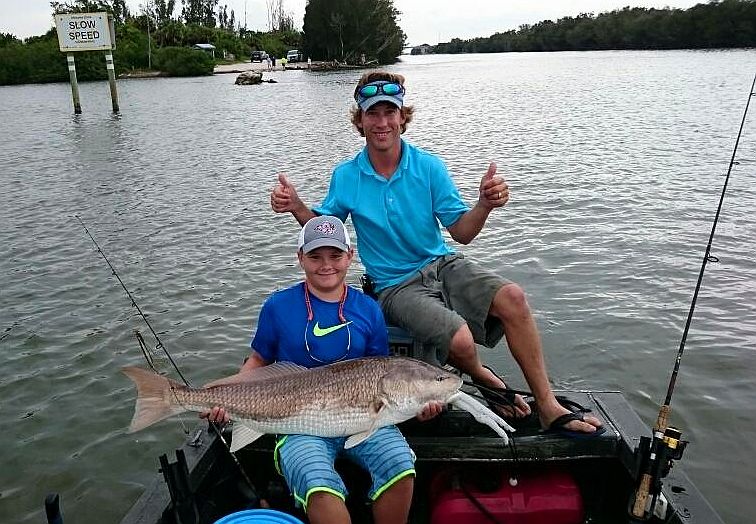 The next time you slowly cruise the length of the canal with your fish finder on, check it out and see for yourself.
I haven't received any reports about the summer shrimping activity in the canal, but usually the pulls are sporadic this time of the year.
Till Next Month, Good Fishing & Tight Lines To You All!
|
|||||

| Link One | Link Two | Link Three | Link Four | Link Five | Unsubscribe to this newsletter |