Your June 2015 Mosquito Lagoon & Indian River Fishing Forecast
Published: Mon, 06/01/15
|
Newsletter Issue # 70 Fishing Forecast June 1, 2015 |
||||||||
Mosquito Lagoon & Indian River Fishing |
||||||||
he Mosquito Lagoon and Indian River Summer fishing conditions have arrived on the Mosquito Lagoon and Indian River. The humidity and heat makes fishing sometimes brutal during daylight hours, so savvy anglers have learned to take advantage of the early mornings, late evenings, and cooler nights to target their fish. Fishermen who adjust to this routine during June, July, and August will catch more and larger fish. The predawn hours between 5 am and sunrise and the late afternoon hours after the thunderstorms recede are the best times to target redfish, sea trout and Snook. If you like to fish at night, like I occasionally do, try using some of the "day glow" lures like the DOA Shrimp, the Paul Brown's Soft-Dine or Soft-Dine XL Suspending Twitchbait in Dayglow finish. Fishing the baits very slowly will produce the most hits. Early in the morning look for sea trout and redfish in the skinny waters around concentrations of bait fish and toss your favorite top water plug around the outside of the bait pods to stir up some action. I personally like Chug Bugs and SkitterWalks smeared up with Pro-Cure If you are a late sleeper and have to fish during the heat of the day during the summer, target the docks that have deep water access, or fish the outside edges of the deep water flats with cut ladyfish or fresh cut mullet. A fresh cut chunk of ladyfish is "redfish candy" and the trout don't often pass it up either. 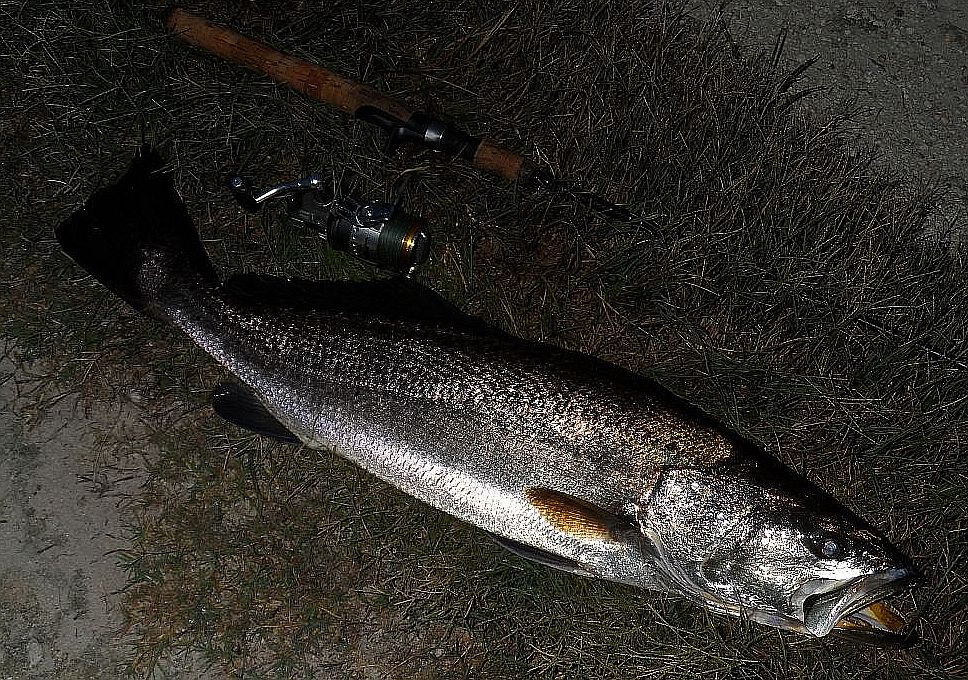 The fish will move into deeper water once the heat turns up so fishing the shallow flats is basically a waste of time. The southern part of the Mosquito Lagoon is currently experiencing an algae bloom which severely limits sight fishing with flies or artificial lures. During the upcoming months, this area is best fished using live mullet, pigfish, pinfish, or fresh cut mullet or ladyfish for bait. For the most part, the Indian and Banana Rivers are still looking relatively clean and free from the algae bloom. The smaller sea trout and some large redfish are holding in the dropoffs in 3 to 5 feet of water. Crank baits like the Rapala shallow Shad Rap or the size 8 X-Rap with the olive green back and silver sides have been working well in these areas. Soft plastic jerk baits like the saltwater Assassin 4 inch sea shad fished alone or on a 1/8 oz. to ¼ oZ. jighead under a rattling cork are also producing nice catches. The 5" Boss Shiner rigged on the new 5/0 size 1/8 oz. Saltwater Assassin swim hook does a killer job imitating a live finger mullet when you fish it underneath the mullet pods. Although Snook fishing closes on the first of June, you can still practice catch and release. The Snook bite has been outstanding in the Indian River Lagoon and although the fish have been pretty spooky, bait fishermen using live croaker are catching large "gator" sea trout and nice sized Snook around the mangrove shorelines and numerous spoil islands in the Indian River. Most of the Snook have been running around 2 to 7 pounds, but if you freeline a live bait around the spoil islands, you may run into a fish in the 30 pound range. Most of our sea trout are averaging 15 to 20 inches, but a lot of fish over 30 " are now being caught mostly in the Northern section of the Indian River. 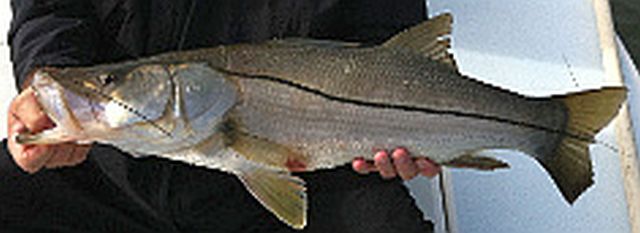 Fishing for Snook in the surf from Patrick AFB down to Vero Beach should also be productive during June, especially for larger fish. Live pinfish, pilchards, or croaker are generally the best baits, but jigheads with plastic tails fished very early and later on in the day will also produce fish. There are also reports of small tarpon, ladyfish, and jacks moving north up the IRL shadowing pods of glass minnows and finger mullet. Tarpon offshore are cruising the beaches eating pogies while the smaller fish are roaming the lagoons eating finger mullet.
The smaller lagoon Tarpon are running anywhere from 10 to 70 pounds and the beach Tarpon from 50 to 150 pounds.
Juvenile Tarpon are a blast to catch and with the summer rains in sight, they will be rolling in the ICW and inside the freshwater creeks and canals. In our area they can be found in any oxygen depleted water that harbors bait.
Try the slow moving waters around Shiloh Marsh Road and Patillo Creek for juvenile Tarpon and Ladyfish. Drainage culverts, spillways, ponds, sloughs, and marsh canals are all often overlooked areas where juvenile Tarpon can be caught. _________________________
Surf Fishing
 The months of May and June are peak times to fish for Whiting along the Atlantic surf in East Central Florida.
Whiting are one of the easiest fish to catch and one of the sweetest tasting fish in the ocean. Unfortunately, they usually run less than a pound and you need a mess of them for a fish fry or a man sized meal. 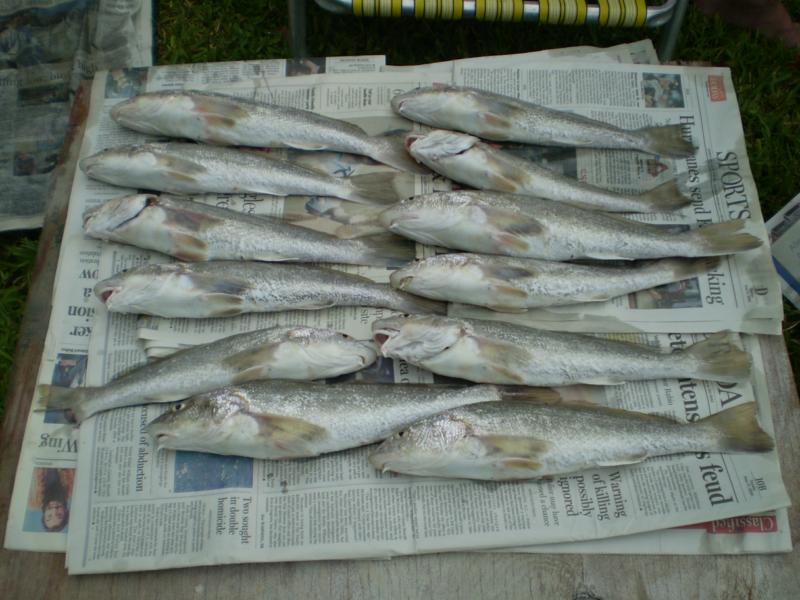 Bull Whiting, (actually spawning females) are in their spawning mode and are in the surf in large numbers. They gather in schools to feed on sand fleas and other crustaceans in the deeper troughs and holes that are dislodged by the surf.
The deeper surf zones along the Canaveral National Seashore south of New Smyrna Beach, Playalinda Beach east of Titusville, and the stretch of beach between Melbourne Beach and Sebastian Inlet are some of the best places to target "southern kingfish", but any deep trough or hole is a potential hot spot. Stow your long surf rods when fishing for Whiting and pull out your light tackle river rod. Generally the fish will be closer to the beach in the first or second trough where a simple lob will get to the fish. A sliding sinker rig with a 1/2 oz. barrel sinker and a #2 hook with 8 to 10 pound mono is all you need to catch a mess of Whiting in the surf. Bait up with a sand flea or a small piece of fresh peeled shrimp no larger than the tip of your finger. Larger pieces will usually go untouched or stripped from your hook. Don't waste your time with a sand spike to hold your rod. Instead get out in the surf and hold your rod to get a feel for the light strike. If you are having problems setting the hook, change to a small light wire circle hook. Look for areas on the beach where shells have accumulated or there is a runoff and start pitching your bait shallow and gradually deeper until you find fish. Most surf fishermen overcast the feeding zone. ________________________
Near Offshore
Kingfish are the most targeted species in East Central Florida right now and are being caught in the 60 to 90 foot depths using live pogies, pilchards, greenies, or mullet slow trolled around structure on a stinger rig. Use #3 or #4 wire or 60# multi stranded cable and a pair of #4 VMC 9626 extra strong treble hooks for your rigs. Most of the kings being caught are in the 15 to 20 pound range with some 40 pounders in the mix. 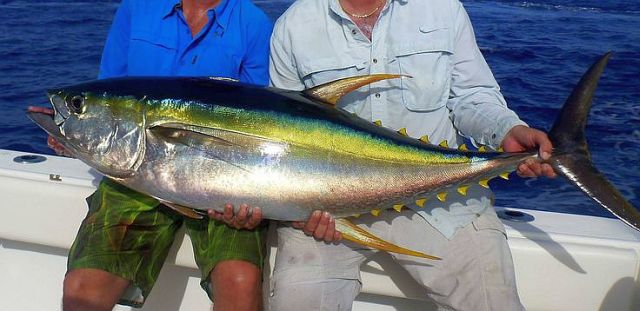 Tunas are also on the menu starting this month. Anglers out of Port Canaveral are running over to the east side of the Gulf Stream primarily to catch Yellowfin tuna when the weather permits, but also for Blackfin and Skipjack tuna. The best lure to catch most tuna is a simple Cedar Plug but skirt or diving plugs in black and purple, red and black or green and black also work well. The average Yellowfin is running about 60 pounds, the average Blackfin about 10 to 20 pounds and the Skipjacks are running about half that size. Mahi or Dolphin is another fish that is targeted during June in our area and as summer progresses, they will be moving in closer to shore. The best bet is to troll a small to medium size ballyhoo with a skirt at about 6 or 7 knots around the weeds, rips and temperature breaks. The Dolphin right are averaging around 10 pounds, but larger fish in the 20 to 60 pound range have been caught earlier this spring.
_________________________
Till Next Month, Good Fishing & Tight Lines!
|
||||||||

| Link One | Link Two | Link Three | Link Four | Link Five | Unsubscribe to this newsletter |