Your May 2015 Mosquito Lagoon & Indian River Fishing Report
Published: Fri, 05/01/15
| Newsletter Issue # 69 Fishing Forecast | May1, 2015 | |||||||
Mosquito Lagoon & Indian River Fishing |
||||||||
Continue to expect some great spring fishing for big sea trout, redfish, and black drum in all of our lagoons throughout the month of May. The sea trout bite in particular has been on fire since the bait fish began showing up in the lagoons. Redfish and trout are mixed in with the bait in the early mornings on the shallow grass flats. By late morning as the sun continues to rise, the fish seem to be moving into the deeper 4 to 5 foot flats and waters adjacent to the shallower flats. Fishing topwater plugs and soft plastic baits rigged weedless first thing in the morning is just the ticket for big sea trout as is a live mullet or a live shrimp for smaller trout. Gold spoons and jigs tipped with a Gulp shrimp are also producing some nice catches. As the day moves on, put away the topwater plugs and tie on an Aqua Dream Spoon or a gold Johnson Sprite for redfish, or a soft 5" plastic saltwater assassin or hair jig in deeper water for sea trout, ladyfish and possibly even some bluefish. A Z-Man, Saltwater Assassin or Trigger X soft plastic bait on a light 1/16th or 1/8th ounce worm hook is hard to beat when targeting the potholes for sea trout and reds. The Black Drum are still roaming around in big schools and can be caught using live shrimp. Smaller schools of redfish seem to be on the flats all day long looking for mullet, pinfish, shrimp, and crabs. Some tarpon are beginning to show up around the New Smyrna Beach and Edgewater areas in the Mosquito Lagoon, and as the month progresses, we should be seeing more of them in the area. The docks around the New Smyrna area have been pretty good for sea trout, Snook and jacks. Twitch baits, 5" saltwater assassins on a jig head, and large shrimp have been the "go to" baits for these fish. Some really big gator sea trout in the 4 to 8 pound category are roaming the flats and are being caught very early in the morning and just at dusk around the mullet pods with topwater plugs. Big sea trout are naturally spooky and they grow big by being super cautious. Making long casts with lighter lines will help you score on these bigger fish, especially when the water is as clear as it is right now Since the reopening of Peacocks Pocket Road, the water levels in the Merritt Island National Wildlife Refuge have been way down and fishing has not been very consistent. The fish are spread out and the vegetation in most areas makes fishing artificial baits extremely difficult. Fishing topwater baits is productive in many areas, but the gators make topwater fishing a chore. They keep following the baits and when you do hook a fish, you need to pay particular attention to your surroundings when landing it. The most productive method for fishing the marsh is with a topwater bait during overcast days, low light conditions, and just at dusk. A Chug Bug or Skitterwalk doesn't get caught up in the weeds as much as a spoon, soft plastic lure or even live baits.  If you see birds circling or signs of fleeing baitfish, there is probably a school of jacks in the area. These fish are great sport and pretty much under rated in our area but pound for pound they put up a great fight. Chug Bugs, SkitterWalks, Rapala X Raps, and shallow Shad Raps all work for these predators. If you're a fly fisherman and want a really good battle, try targeting them with streamer flies or popping bugs. The average Jack Crevalle is running about 5 pounds, with some going as heavy as 8 pounds. Playalinda Beach and South
Surf fishermen can look forward to catching some nice whiting, juvenile black drum, redfish, pompano, Snook, and tons of sharks between Indialantic and north to the Canaveral National Seashore.
Sharks of almost every species are everywhere this week in our area. Hammerheads, black tips, fine tooth, bull sharks, spinners, and others are close to shore in the dirty water in the surf zone, as well as on the reefs and wrecks in East Central Florida. 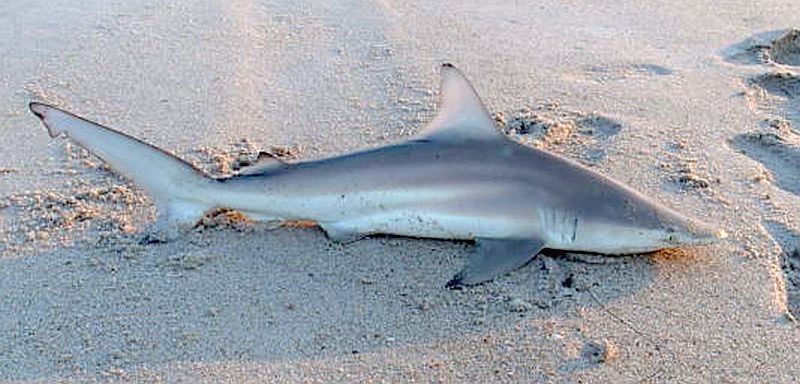 If you want to target sharks, tie on a wire leader and a big VMC circle hook with a chunk of Bonita, Mackerel, mullet, ladyfish or some other fresh fish, but be careful if you're fishing in the surf. We haven't had any shark attacks on surfers yet but within the next couple of weeks, its just a matter of time before a mistaken identity bite occurs. There are some really big sharks being caught right now in the surf and just off the beaches. If you're targeting Pompano and Whiting, use sand fleas, peeled fresh dead shrimp, or fresh (not frozen) clams. There is no need to use live shrimp when surf fishing.
Fish Playalinda during the higher phase of the tidal cycle, about 2 hours on either side of peak high tide. It's even better when the tide occurs in the early morning hours.
Normally at Playalinda, a trough or deeper slough forms just past the shore break and then about thirty yards out from that a sandbar forms.
When the waves approach the sandbar, they break up and then reform a bit over the trough only to break up again when reaching the shore.
When each wave breaks on the shoreline, it churns up the sand and with it small invertebrates (primarily sand fleas) that are burrowing in the sand.
Pompano and whiting will cruise the troughs and just offshore to grab the sand fleas as they are pulled out to sea, then as the tide recedes and the trough gets too shallow for the fish, they will move out past the sandbar where they can still be caught, but this is when the bite usually stops.
________________________
Near Offshore Fishing
Now through June is prime time for sailfish out of Port Canaveral as they start working their way up the coast into our area in the next few weeks or months.
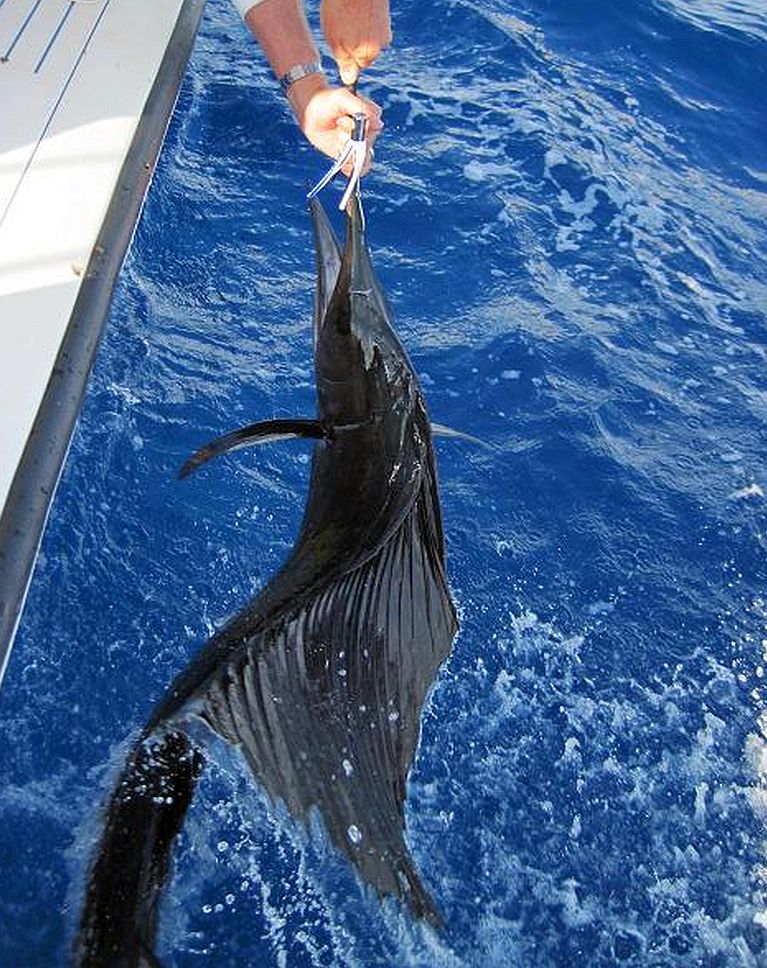 If you're targeting sailfish, try trolling a naked ballyhoo at 3 to 4 knots in the 120 to 240 foot depths and you should have a good shot at picking one up.
Skirted Ballyhoo/Islander combos in Pink and Dolphin colors also get their share of hits. A lot of guys like to slow troll the 80 to 90 foot reefs like Pelican Flats and 8A with live baits.
The Sailfish action should continue throughout May well into the mid June. Sailfish will often strike live baits with their bills to kill or stun it and then circle around to eat the bait. When you see the rod "kick" or feel a hard knock, drop your reel into free spool to let the bait drop back until you feel the sail pick up the bait, then engage the reel for a solid hookup.
Most of the sails being caught in this part of the State right now are in the 30 to 45 pound range.
I've had some good reports of Cobia being caught off the beaches from Canaveral north to New Smyrna Beach. Most anglers in our area do a lot of sight fishing for Cobia in lieu of jigging around structure. When sight fishing, look for free swimming fish around the bait pods, manta rays, leather back turtles, or other debris that might hold fish. When you spot a Cobia, pitch a live mullet, menhaden, croaker, pinfish, or an eel at the fish. Many anglers like using white/chartreuse or red/white buck tail jigs either bare or with a soft plastic on the jig as a trailer. Our Cobia are averaging about 25 pounds, but lots of fish over 50 pounds have been caught. 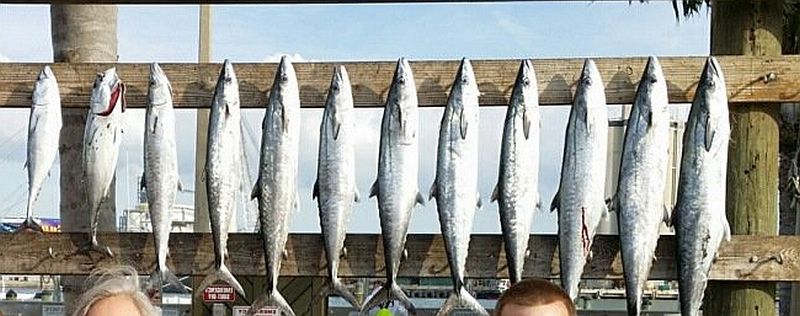 Kingfish are another species that is being caught around the wrecks and reefs in 45 to 90 feet of water. The 8A and Pelican Flats reefs are favorite areas for kings.
Try slow trolling a live or dead menhaden with a duster in front of it on a wire stinger rig with a VMC 9626 model hook. The shark are averaging between 25 and 75 pounds with some bulls and hammerheads in the 200 pound plus range.
Till Next Month, Good Fishing & Tight Lines To You All!
|
||||||||

| Link One | Link Two | Link Three | Link Four | Link Five | Unsubscribe to this newsletter |